

A Heterogeneous In Vitro Three Dimensional Model of Tumour-Stroma Interactions Regulating Sprouting Angiogenesis
Open accessThe DOI matches its Crossref record; 67 of the 67 references it cites were found in a registry or an index.
Abstract
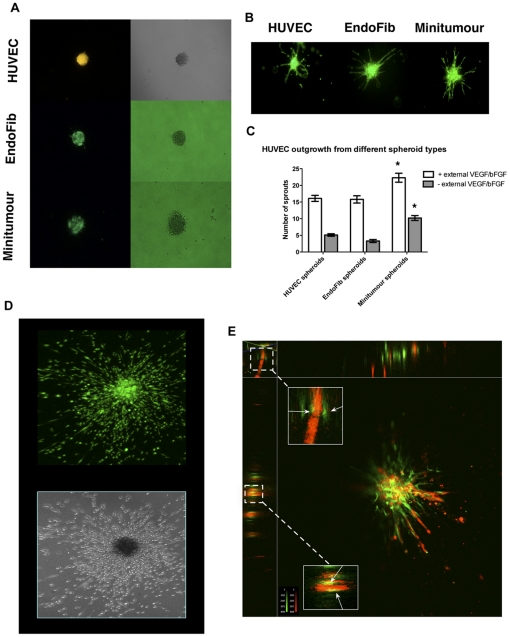
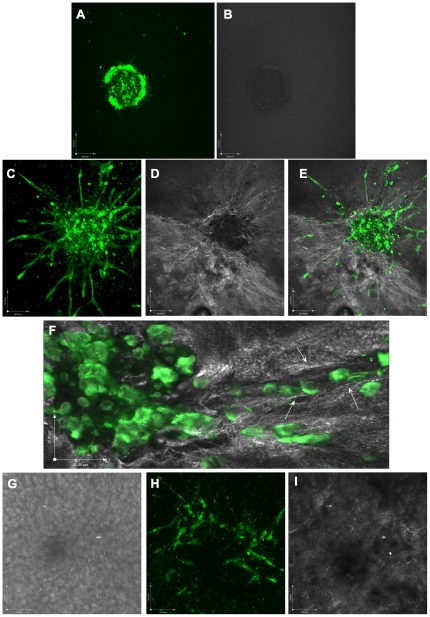
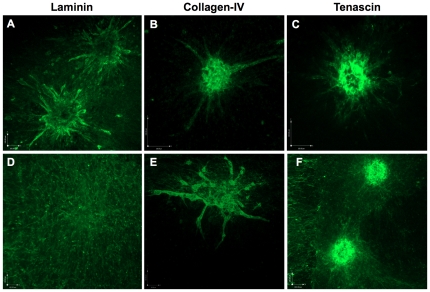
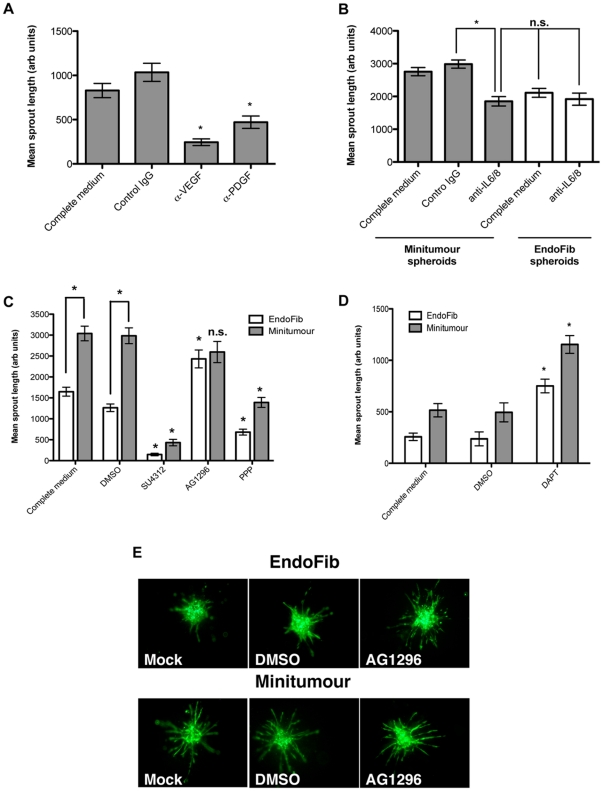
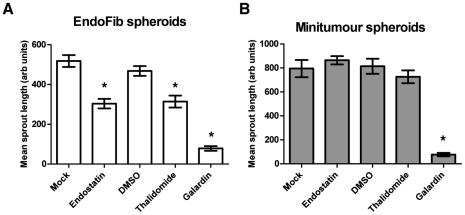
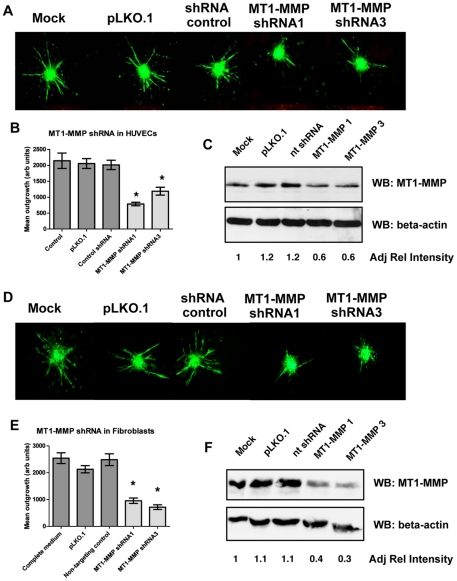
Angiogenesis, the formation of new blood vessels, is an essential process for tumour progression and is an area of significant therapeutic interest. Different in vitro systems and more complex in vivo systems have been described for the study of tumour angiogenesis. However, there are few human 3D in vitro systems described to date which mimic the cellular heterogeneity and complexity of angiogenesis within the tumour microenvironment. In this study we describe the Minitumour model--a 3 dimensional human spheroid-based system consisting of endothelial cells and fibroblasts in co-culture with the breast cancer cell line MDA-MB-231, for the study of tumour angiogenesis in vitro. After implantation in collagen-I gels, Minitumour spheroids form quantifiable endothelial capillary-like structures. The endothelial cell pre-capillary sprouts are supported by the fibroblasts, which act as mural cells, and their growth is increased by the presence of cancer cells. Characterisation of the Minitumour model using small molecule inhibitors and inhibitory antibodies show that endothelial sprout formation is dependent on growth factors and cytokines known to be important for tumour angiogenesis. The model also shows a response to anti-angiogenic agents similar to previously described in vivo data. We demonstrate that independent manipulation of the different cell types is possible, using common molecular techniques, before incorporation into the model. This aspect of Minitumour spheroid analysis makes this model ideal for high content studies of gene function in individual cell types, allowing for the dissection of their roles in cell-cell interactions. Finally, using this technique, we were able to show the requirement of the metalloproteinase MT1-MMP in endothelial cells and fibroblasts, but not cancer cells, for sprouting angiogenesis.
Overview
The claims and statistics of this paper haven’t been checked yet.
Free: it reads the open-access text and checks the first 5 claims that cite a source we can check. Create a free account to check every claim.
Integrity signals
Registry
Cites
Statistics
Figures
Verification
Claims the paper makes
The claims and statistics of this paper haven’t been checked yet.
Free: it reads the open-access text and checks the first 5 claims that cite a source we can check. Create a free account to check every claim.
Claims other papers make about this one
Each is checked against this paper’s own text: does it say what the citing paper says it does?
The source backs part of the claim, not all of it — or backs it for a different population, condition or comparison.
In the citing paper
“Using a 3D human breast cancer spheroid model, angiogenesis sprout formation was found to be dependent on VEGF and fi broblast growth factor (FGF) [54].”
From 3D In Vitro Model (R)evolution: Unveiling Tumor–Stroma Interactions (2021) · cites this paper as [54]
Experimental — accuracy not yet measured
Self-check
Percentages, sums and reported differences re-computed from the paper’s own numbers.
The self-check needs the paper’s full text.
Citations
Cites
Kalluri, R., & Zeisberg, M. (2006) · Nature Reviews Cancer · doi:10.1038/nrc1877 · Cited by 4,538 · cited 3×
“While the full complexity of their role is still not fully understood, the importance of these cells in tumour invasion, progression and metastasis has been widely documented [19,20].”
BackgroundDissemination and growth of cancer cells in metastatic sites
Chambers, A. F., Groom, A. C., & MacDonald, I. C. (2002) · Nature Reviews Cancer · doi:10.1038/nrc865 · Cited by 3,911 · cited 1×
“which is also essential for the metastatic process [6,7,8].”
BackgroundThe third dimension bridges the gap between cell culture and live tissue
Pampaloni, F., Reynaud, E. G., & Stelzer, E. H. K. (2007) · Nature Reviews Molecular Cell Biology · doi:10.1038/nrm2236 · Cited by 2,817
Role of platelet-derived growth factors in physiology and medicine
Andrae, J., Gallini, R., & Betsholtz, C. (2008) · Genes & Development · doi:10.1101/gad.1653708 · Cited by 2,438 · cited 1×
“Antibodies to the growth factors VEGF-A and PDGF-B were tested, due to their recognized roles in tumour angiogenesis and stromal activation [11,41,42].”
BackgroundMolecular regulation of angiogenesis and lymphangiogenesis
Adams, R. H., & Alitalo, K. (2007) · Nature Reviews Molecular Cell Biology · doi:10.1038/nrm2183 · Cited by 2,019 · cited 1×
“Antibodies to the growth factors VEGF-A and PDGF-B were tested, due to their recognized roles in tumour angiogenesis and stromal activation [11,41,42].”
BackgroundDll4 signalling through Notch1 regulates formation of tip cells during angiogenesis
Hellström, M., Phng, L.-K., Hofmann, J. J., Wallgard, E., Coultas, L., Lindblom, P., Alva, J., Nilsson, A.-K., Karlsson, L., Gaiano, N., et al. (2007) · Nature · doi:10.1038/nature05571 · Cited by 1,775 · cited 1×
“(Dll4) signalling [11,50].”
Friends or foes — bipolar effects of the tumour stroma in cancer
Mueller, M. M., & Fusenig, N. E. (2004) · Nature Reviews Cancer · doi:10.1038/nrc1477 · Cited by 1,765 · cited 14×
“It is involved in endothelial cell migration and sprouting, and it has also been shown to up-regulate VEGF expression, and therefore tumour angiogenesis, through increased transcriptional activation [58].”
BackgroundInfluentialKubota, Y., Kleinman, H. K., Martin, G. R., & Lawley, T. J. (1988) · The Journal of cell biology · doi:10.1083/jcb.107.4.1589 · Cited by 1,209 · cited 2×
“Several of these models also consist of variations of the tube formation assay, where endothelial cells are cultured in different matrix compositions, such as matrigel, fibrin or collagen, to form cord like structures in vitro [14,15,16].”
BackgroundAnti-Angiogenesis: New Concept for Therapy of Solid Tumors
Folkman, J. (1972) · Annals of Surgery · doi:10.1097/00000658-197203000-00014 · Cited by 1,171 · cited 1×
“through Judah Folkman’s pioneering work [5].”
Chiquet-Ehrismann, R., Mackie, E. J., Pearson, C. A., & Sakakura, T. (1986) · Cell · doi:10.1016/0092-8674(86)90374-0 · Cited by 992 · cited 1×
“Its secretion is increased in neoplastic tissue, where stromal fibroblasts are thought to be its major source [36,37].”
Background
Cited by
Items 101–128 of 128
3D Modeling: Insights into the Metabolic Reprogramming of Cholangiocarcinoma Cells
Ciufolini, G., Zampieri, S., Cesaroni, S., Pasquale, V., Bonanomi, M., Gaglio, D., Sacco, E., Vanoni, M., Pastore, M., Marra, F., et al. (2024) · Cells · doi:10.3390/cells13181536 · Cited by 8
“Moreover, 3D models facilitate the study of the tumor microenvironment’s impact on cancer metabolism, providing insights into hypoxia-induced metabolic reprogramming, nutrient supply, and byproduct accumulation [6].”
BackgroundInfluence of ClearT and ClearT2 Agitation Conditions in the Fluorescence Imaging of 3D Spheroids
Silva, D. N., Costa, E. C., Rodrigues, C. F., de Melo‐Diogo, D., Correia, I. J., & Moreira, A. F. (2020) · International Journal of Molecular Sciences · doi:10.3390/ijms22010266 · Cited by 7
Real‐Time Analysis of Endogenous Wnt Signalling in 3D Mesenchymal Stromal Cells
Saleh, F., Carstairs, A., Etheridge, S. L., & Genever, P. G. (2016) · Stem Cells International · doi:10.1155/2016/7132529 · Cited by 6
Kulms, D., & Meier, F. E. (2017) · Elsevier eBooks · doi:10.1016/b978-0-12-810545-0.00003-6 · Cited by 5
3-D Tissue Modelling and Virtual Pathology as New Approaches to Study Ductal Carcinoma In Situ
Booth, M. E., Nash, C. E., Roberts, N. P., Magee, D., Treanor, D. E., Hanby, A. M., & Speirs, V. (2015) · Alternatives to Laboratory Animals · doi:10.1177/026119291504300605 · Cited by 6
In Vitro Three-Dimensional Cell Cultures as Tool for Precision Medicine
Silvestri, A., Schumacher, D., Silvestrov, M., Schäfer, R., Reinhard, C., Hoffmann, J., Boehnke, K., & Regenbrecht, C. R. A. (2017) · Springer eBooks · doi:10.1007/978-3-319-53661-3_14 · Cited by 5
Wu, Z., Zeng, B., Seah, D. H., Ng, I. Z. R., Ding, R. H., Zhang, T., Kalaichelvan, M., You, R., & Fong, E. L. S. (2025) · Advanced Materials · doi:10.1002/adma.202512252 · Cited by 5
Wu, Y. B., Guo, B., & Ghosh, G. (2015) · Annals of Biomedical Engineering · doi:10.1007/s10439-015-1254-2 · Cited by 4
Characterization of in vitro 3D cultures
Mousavi, N. (2021) · Apmis · doi:10.1111/apm.13168 · Cited by 3
Hooper, R. C., Jacoby, A. M., Asanbe, O. A., Osoria, H. L., Morrison, K. A., Hernandez, K. A., Boyko, T. V., Joyce, J., Landford, W. N., & Spector, J. A. (2016) · Plastic & Reconstructive Surgery · doi:10.1097/prs.0000000000002470 · Cited by 3
The Scientific Value of Non-Clinical Animal Studies in Drug Development
van Meer, P. J. K. (2013) · Utrecht University Repository (Utrecht University) · Cited by 8
Wang, Y., Chen, D.-Q., Chen, M., Ji, K., Ma, D., & Zhou, L. (2018) · Journal of Visualized Experiments · doi:10.3791/57183 · Cited by 2
Prashantha, K., Amita, K., & Muthappa, M. (2023) · Biointerphases · doi:10.1116/6.0002372 · Cited by 5
Biomaterial strategies to modulate cancer
McNeeley, K. M., Lyon, J. G., & Bellamkonda, R. V. (2013) · Elsevier eBooks · doi:10.1533/9780857096760.4.417 · Cited by 1
Cell–biomaterial interactions for blood vessel formation
Kusuma, S., Dickinson, L. E., & Gerecht, S. (2014) · Elsevier eBooks · doi:10.1533/9780857096715.3.350 · Cited by 2
Biopharmaceuticals as Challenges to the Regulatory System
Ebbers, H. C. (2012) · Utrecht University Repository (Utrecht University) · Cited by 2
In vitro bioengineering applications of melt electrowritten and hydrogel composite scaffolds
Barnes, D. A. (2021) · Queensland University of Technology · doi:10.5204/thesis.eprints.212352 · Cited by 1
Generation of Tumour-stroma Minispheroids for Drug Efficacy Testing
Watters, M., & Szegezdi, É. (2017) · BIO-PROTOCOL · doi:10.21769/bioprotoc.2091
Lighterness, A. (2018) · Queensland University of Technology · doi:10.5204/thesis.eprints.122616
Chauca-Torres, N. E. (2019) · Digital Library of Theses and Dissertations (Universidade de São Paulo) · doi:10.11606/d.42.2019.tde-26112019-164558
Modified polyethylene glycol hydrogels for growth factor delivery and controlled tissue invasion
Gustafsson, C. A. (2019) · Open University of Cape Town (University of Cape Town)
Engineering breast cancer models in vitro with 3D bioprinting
Krajina, B. A., & Campos, D. F. D. (2020) · Elsevier eBooks · doi:10.1016/b978-0-12-818128-7.00017-4
Cancer Stem Cells and Therapeutic Angiogenesis
Bhagavatheeswaran, S., & Balakrishnan, A. (2020) · Springer eBooks · doi:10.1007/978-981-15-5120-8_11
Tissue Engineered Models to Study Bone Metastasis and Metastatic Bone Disease
Mierswa, S. C., Santamaria, G., & Leach, J. K. (2024) · Springer eBooks · doi:10.1007/978-3-031-52001-3_3 · Cited by 1
Goodarzi, S. (2021) · theses.fr (ABES) · doi:10.70675/b0a0d503z93b4z464bz93d6z36d6613fb371 · Cited by 1
Pandit, D., & Sharma, P. (2026) · Mini-Reviews in Medicinal Chemistry · doi:10.2174/0113895575442733260324060815
Metadata
- Authors
- Correa de Sampaio, P., Auslaender, D., Krubasik, D., Failla, A. V., Skepper, J. N., Murphy, G., & English, W. R.
- Affiliations
- University of Cambridge (GB)
- Cancer Research UK (GB)
- Corresponding author
- English, William R.
- Venue
- PLoS ONE
- Publisher
- Public Library of Science (PLoS)
- Published
- 2012-02-20
- Volume
- 7
- Issue
- 2
- Pages
- e30753
- ISSN
- 1932-6203 (ISSN-L)
- PMC
- PMC3282728
- OpenAlex
- W1971828920
- Cited by
- 127
- References
- 67
- Citations by year
- 2026: 1 · 2025: 2 · 2024: 5 · 2023: 4 · 2022: 4 · 2021: 16 · 2020: 11 · 2019: 3 · 2018: 13 · 2017: 12 · 2016: 15 · 2015: 11 · 2014: 14 · 2013: 12 · 2012: 4
- FWCI
- 5.28
- Type
- journal article
- Language
- en
- Open access
- gold
- doi.org
- Locations
- PLoS ONE (publishedVersion, cc-by)
- Europe PMC (PubMed Central) (publishedVersion, cc-by)
- PubMed Central (publishedVersion, cc-by)
- PubMed (publishedVersion)
- White Rose Research Online (University of Leeds, The University of Sheffield, University of York) (acceptedVersion)
- DOAJ (DOAJ: Directory of Open Access Journals) (submittedVersion)
- Figshare (submittedVersion, cc-by)
- UEA Digital Repository (University of East Anglia) (submittedVersion)
- Funders
- Cancer Research UK
- British Heart Foundation (FS/03/055/15910)
- Deutscher Akademischer Austauschdienst
- Fundação para a Ciência e a Tecnologia (SFRH/BD/35884/2007)
- Topics
- Life Sciences › Biochemistry, Genetics and Molecular Biology › Molecular Biology › Angiogenesis and VEGF in Cancer
- Health Sciences › Medicine › Oncology › Cancer Cells and Metastasis
- Physical Sciences › Mathematics › Modeling and Simulation › Mathematical Biology Tumor Growth
- Keywords
- tumor angiogenesis, sprouting angiogenesis, tumor microenvironment, breast cancer, MDA-MB-231 cells, endothelial cells, fibroblasts, mural cells, collagen I gel, angiogenesis inhibitors, MT1-MMP, cell-cell interactions, cytokines and growth factors
- MeSH terms
- Cell Communication, Extracellular Matrix, Fibroblasts, Humans, Luminescent Measurements, Models, Biological, Neoplasms, Neovascularization, Pathologic, Tumor Cells, Cultured, Signal Transduction, Stromal Cells, Spheroids, Cellular, Angiogenesis Inhibitors, Gene Silencing, Intercellular Signaling Peptides and Proteins, Microscopy, Fluorescence, Multiphoton, Cell Proliferation, Matrix Metalloproteinase 14, Human Umbilical Vein Endothelial Cells
About these checks
Registry, retraction, Cites and statistics results are computed, not judged, with one exception: a printed reference that no index lists is read once by a model before it counts as a citation error. Claims are extracted by a model and kept only when their quote appears verbatim in the text; each cited source is then checked, with a model’s help, for whether it says what the claim relies on. Those verdicts can be wrong — read the claim’s quote and the cited source before relying on one.
Statistics and arithmetic are recomputed, not judged.
Confidence bands are shown only for fields calibrated on our annotated test set. None is calibrated yet, so no band is shown.
What counts as a claim ›How we measure confidence ›How we check this ›
Are you an author, or do you see a problem with this page? Request a review
Data sources
Bibliographic data: Semantic Scholar, OpenAlex, Crossref.
Contains information from the Semantic Scholar Academic Graph Datasets, made available under the ODC Attribution License (ODC-BY 1.0).
Semantic Scholar’s data is described in: Kinney, R., et al. (2023). The Semantic Scholar Open Data Platform. arXiv:2301.10140.
