

The DOI matches its Crossref record; 28 of the 28 references it cites were found in a registry or an index.
Conductive Polymer Combined Silk Fiber Bundle for Bioelectrical Signal Recording
Open accessAbstract
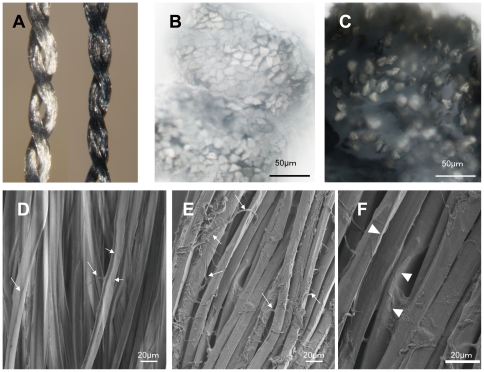
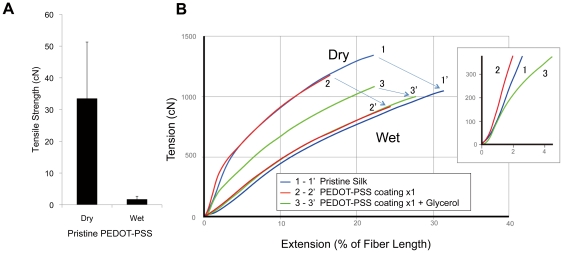
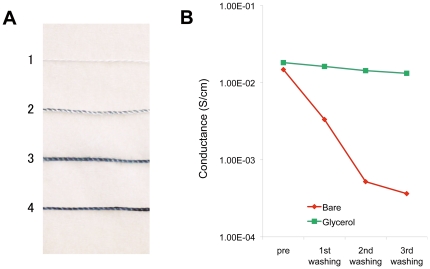
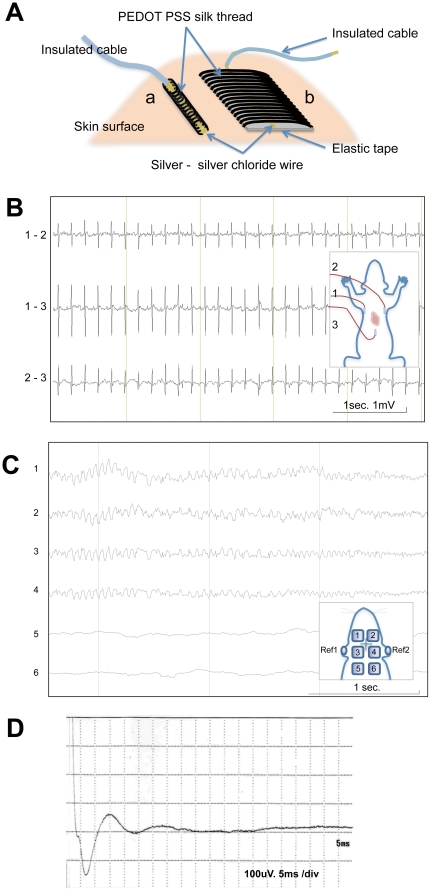
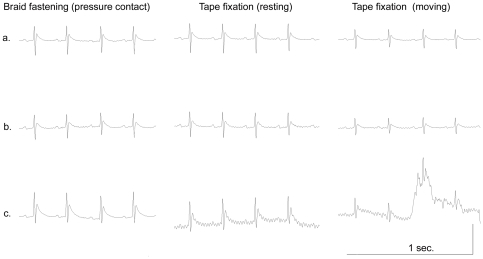
Electrode materials for recording biomedical signals, such as electrocardiography (ECG), electroencephalography (EEG) and evoked potentials data, are expected to be soft, hydrophilic and electroconductive to minimize the stress imposed on living tissue, especially during long-term monitoring. We have developed and characterized string-shaped electrodes made from conductive polymer with silk fiber bundles (thread), which offer a new biocompatible stress free interface with living tissue in both wet and dry conditions.An electroconductive polyelectrolyte, poly(3,4-ethylenedioxythiophene)-poly(styrenesulfonate) (PEDOT-PSS) was electrochemically combined with silk thread made from natural Bombyx mori. The polymer composite 280 µm thread exhibited a conductivity of 0.00117 S/cm (which corresponds to a DC resistance of 2.62 Mohm/cm). The addition of glycerol to the PEDOT-PSS silk thread improved the conductivity to 0.102 S/cm (20.6 kohm/cm). The wettability of PEDOT-PSS was controlled with glycerol, which improved its durability in water and washing cycles. The glycerol treated PEDOT-PSS silk thread showed a tensile strength of 1000 cN in both wet and dry states. Without using any electrolytes, pastes or solutions, the thread directly collects electrical signals from living tissue and transmits them through metal cables. ECG, EEG, and sensory evoked potential (SEP) signals were recorded from experimental animals by using this thread placed on the skin. PEDOT-PSS silk glycerol composite thread offers a new class of biocompatible electrodes in the field of biomedical and health promotion that does not induce stress in the subjects.
Overview
The claims and statistics of this paper haven’t been checked yet.
Run the check — free, no account needed. It reads the open-access text and checks the sources it cites.
Integrity signals
Registry
Cites
Statistics
Figures
Verification
Claims the paper makes
The claims and statistics of this paper haven’t been checked yet.
Run the check — free, no account needed. It reads the open-access text and checks the sources it cites.
Self-check
Percentages, sums and reported differences re-computed from the paper’s own numbers.
The self-check needs the paper’s full text.
Citations
Cites
Dissolvable films of silk fibroin for ultrathin conformal bio-integrated electronics
Kim, D.-H., Viventi, J., Amsden, J. J., Xiao, J., Vigeland, L., Kim, Y.-S., Blanco, J. A., Panilaitis, B., Frechette, E. S., Contreras, D., et al. (2010) · Nature Materials · doi:10.1038/nmat2745 · Cited by 1,721
Kim, Y. H., Sachse, C., Machala, M. L., May, C., Müller‐Meskamp, L., & Leo, K. (2011) · Advanced Functional Materials · doi:10.1002/adfm.201002290 · Cited by 1,498
Mechanism of silk processing in insects and spiders
Jin, H., & Kaplan, D. L. (2003) · Nature · doi:10.1038/nature01809 · Cited by 1,391
KIM, J. Y., Jung, J.-H., Lee, D. E., & Joo, J. S. (2002) · Synthetic Metals · doi:10.1016/s0379-6779(01)00576-8 · Cited by 1,101
Poly(alkylenedioxythiophene)s—new, very stable conducting polymers
Heywang, G., & Jonas, F. (1992) · Advanced Materials · doi:10.1002/adma.19920040213 · Cited by 1,054
Mechanical properties of brain tissue in tension
Miller, K., & Chinzei, K. (2002) · Journal of Biomechanics · doi:10.1016/s0021-9290(01)00234-2 · Cited by 636
Richardson-Burns, S. M., Hendricks, J. L., Foster, B., Povlich, L. K., Kim, D., & Martin, D. C. (2006) · Biomaterials · doi:10.1016/j.biomaterials.2006.11.026 · Cited by 505
Polymer Photovoltaic Cells with Conducting Polymer Anodes
Zhang, F., Johansson, M., Andersson, M. R., Hummelen, J. C., & Inganäs, O. (2002) · Advanced Materials · doi:10.1002/1521-4095(20020503)14:9 · Cited by 501
Mechanical characterization of PEDOT:PSS thin films
Lang, U., Naujoks, N., & Dual, J. (2008) · Synthetic Metals · doi:10.1016/j.synthmet.2008.11.005 · Cited by 366
Molecular organic light-emitting diodes using highly conducting polymers as anodes
Kim, W. H., Mäkinen, A. J., Nikolov, N., Shashidhar, R., Kim, H., & Kafafi, Z. H. (2002) · Applied Physics Letters · doi:10.1063/1.1480100 · Cited by 339
Cited by
Sorted by citations
Current and Novel Polymeric Biomaterials for Neural Tissue Engineering
Boni, R., Ali, A., Shavandi, A., & Clarkson, A. N. (2018) · Journal of Biomedical Science · doi:10.1186/s12929-018-0491-8 · Cited by 439
Heart Rate Variability-Based Driver Drowsiness Detection and Its Validation With EEG
Fujiwara, K., Abe, E., Kamata, K., Nakayama, C., Suzuki, Y., Yamakawa, T., Hiraoka, T., Kano, M., Sumi, Y., Masuda, F., et al. (2018) · IEEE Transactions on Biomedical Engineering · doi:10.1109/tbme.2018.2879346 · Cited by 271
Machine-Washable PEDOT:PSS Dyed Silk Yarns for Electronic Textiles
Ryan, J. D., Mengistie, D. A., Gabrielsson, R., Lund, A., & Müller, C. (2017) · ACS Applied Materials & Interfaces · doi:10.1021/acsami.7b00530 · Cited by 245
Natural fiber reinforced conductive polymer composites as functional materials: A review
AL-Oqla, F. M., Sapuan, S. M., Anwer, T., Jawaid, M., & Hoque, M. E. (2015) · Synthetic Metals · doi:10.1016/j.synthmet.2015.04.014 · Cited by 228
Silva, N. H. C. S., Vilela, C., Marrucho, I. M., Freire, C. S. R., Neto, C. P., & Silvestre, A. J. D. (2014) · Journal of Materials Chemistry B · doi:10.1039/c4tb00168k · Cited by 206
Fully Textile, PEDOT:PSS Based Electrodes for Wearable ECG Monitoring Systems
Pani, D., Dessì, A., Saenz-Cogollo, J. F., Barabino, G., Fraboni, B., & Bonfiglio, A. (2015) · IEEE Transactions on Biomedical Engineering · doi:10.1109/tbme.2015.2465936 · Cited by 202
Silver nanowire coated threads for electrically conductive textiles
Atwa, Y., Maheshwari, N., & Goldthorpe, I. A. (2015) · Journal of Materials Chemistry C · doi:10.1039/c5tc00380f · Cited by 173
Li, Q., Chen, G., Cui, Y., Ji, S., Liu, Z., Wan, C., Liu, Y., Lu, Y., Wang, C., Zhang, N., et al. (2021) · ACS Nano · doi:10.1021/acsnano.1c01431 · Cited by 173
Intelligent Medical Garments with Graphene-Functionalized Smart-Cloth ECG Sensors
Yapici, M. K., & Alkhidir, T. (2017) · Sensors · doi:10.3390/s17040875 · Cited by 171
Soft Fiber Electronics Based on Semiconducting Polymer
Sun, F., Jiang, H., Wang, H., Zhong, Y., Xu, Y., Xing, Y., Yu, M., Feng, L., Tang, Z., Liu, J., et al. (2023) · Chemical Reviews · doi:10.1021/acs.chemrev.2c00720 · Cited by 167
Semiconducting Polymers for Neural Applications
Dimov, I. B., Moser, M., Malliaras, G. G., & McCulloch, I. A. (2022) · Chemical Reviews · doi:10.1021/acs.chemrev.1c00685 · Cited by 163
Bombyx mori Silk Fibers: An Outstanding Family of Materials
Pereira, R. F. P., Silva, M. M. P., & Bermudez, V. D. Z. (2014) · Macromolecular Materials and Engineering · doi:10.1002/mame.201400276 · Cited by 138
Nature-derived materials for the fabrication of functional biodevices
Pradhan, S., Brooks, A. K., & Yadavalli, V. K. (2020) · Materials Today Bio · doi:10.1016/j.mtbio.2020.100065 · Cited by 135
Heo, J. S., Hossain, M. F., & Kim, I.-S. (2020) · Sensors · doi:10.3390/s20143927 · Cited by 135
Kim, S., Kwon, S., & Na, S. (2019) · Composites Part B Engineering · doi:10.1016/j.compositesb.2019.03.035 · Cited by 124
Liman, M. L. R., Islam, M. T., & Hossain, M. M. (2021) · Advanced Electronic Materials · doi:10.1002/aelm.202100578 · Cited by 122
Macroscale Biomolecular Electronics and Ionics
Amdursky, N., Głowacki, E. D., & Meredith, P. (2018) · Advanced Materials · doi:10.1002/adma.201802221 · Cited by 120
Seiti, M., Giuri, A., Corcione, C. E., & Ferraris, E. (2023) · Biomaterials Advances · doi:10.1016/j.bioadv.2023.213655 · Cited by 116
Khan, S., Ul‐Islam, M., Khattak, W. A., Ullah, M. W., & Park, J. K. (2015) · Carbohydrate Polymers · doi:10.1016/j.carbpol.2015.03.055 · Cited by 113
Validation of wearable textile electrodes for ECG monitoring
Tsukada, Y. T., Tokita, M., Murata, H., Hirasawa, Y., Yodogawa, K., Iwasaki, Y., Asai, K., Shimizu, W., Kasai, N., Nakashima, H., et al. (2019) · Heart and Vessels · doi:10.1007/s00380-019-01347-8 · Cited by 107
Self-citationBio-hybrid muscle cell-based actuators
Ricotti, L., & Menciassi, A. (2012) · Biomedical Microdevices · doi:10.1007/s10544-012-9697-9 · Cited by 104
Shi, C., Hu, F., Wu, R., Xu, Z., Shao, G., Yu, R., & Liu, X. Y. (2021) · Advanced Materials · doi:10.1002/adma.202005910 · Cited by 102
Pani, D., Achilli, A., & Bonfiglio, A. (2018) · Advanced Materials Technologies · doi:10.1002/admt.201800008 · Cited by 100
Bettucci, O., Matrone, G. M., & Santoro, F. (2021) · Advanced Materials Technologies · doi:10.1002/admt.202100293 · Cited by 93
Review on Innovative Piezoelectric Materials for Mechanical Energy Harvesting
Clementi, G., Cottone, F., Michele, A. D., Gammaitoni, L., Mattarelli, M., Perna, G., López-Suárez, M., Baglio, S., Trigona, C., & Neri, I. (2022) · Energies · doi:10.3390/en15176227 · Cited by 92
Engineering the Comfort‐of‐Wear for Next Generation Wearables
Shimura, T., Sato, S., Zalar, P., & Matsuhisa, N. (2023) · Advanced Electronic Materials · doi:10.1002/aelm.202200512 · Cited by 86
Glycerol/PEDOT:PSS coated woven fabric as a flexible heating element on textiles
Moraes, M. R., Alves, A. C., Toptan, F., Martins, M. S., Vieira, E. M. F., Paleo, A. J., Souto, A. P., Santos, W. L. F., Esteves, M. D. F., & Zille, A. (2017) · Journal of Materials Chemistry C · doi:10.1039/c7tc00486a · Cited by 83
Highly conductive graphene-coated silk fabricated via a repeated coating-reduction approach
Lu, Z., Mao, C., & Zhang, H. (2015) · Journal of Materials Chemistry C · doi:10.1039/c5tc00917k · Cited by 82
Mirabedini, A., Foroughi, J., & Wallace, G. G. (2016) · RSC Advances · doi:10.1039/c6ra05626a · Cited by 82
Das, S., Sharma, M., Saharia, D., Sarma, K. K., Muir, E. M., & Bora, U. (2017) · Biomedical Materials · doi:10.1088/1748-605x/aa7802 · Cited by 81
Khan, S., Ul‐Islam, M., Ullah, M. W., Israr, M., Jang, J. H., & Park, J. K. (2017) · International Journal of Biological Macromolecules · doi:10.1016/j.ijbiomac.2017.09.064 · Cited by 80
The Feature, Performance, and Prospect of Advanced Electrodes for Electroencephalogram
Liu, Q., Yang, L., Zhang, Z., Yang, H., Zhang, Y., & Wu, J. (2023) · Biosensors · doi:10.3390/bios13010101 · Cited by 77
Zhao, H., Zhu, B., Luo, S., Lin, H., Nakao, A., Yamashita, Y., & Yu, H. (2013) · ACS Applied Materials & Interfaces · doi:10.1021/am400135c · Cited by 77
Design and Characterization of Screen-Printed Textile Electrodes for ECG Monitoring
Achilli, A., Bonfiglio, A., & Pani, D. (2018) · IEEE Sensors Journal · doi:10.1109/jsen.2018.2819202 · Cited by 75
Photopatternable PEDOT:PSS/PEG hybrid thin film with moisture stability and sensitivity
Zhu, Z., Yang, G., Li, R., & Pan, T. (2017) · Microsystems & Nanoengineering · doi:10.1038/micronano.2017.4 · Cited by 75
Srivastava, A. K., Bhartia, B., Mukhopadhyay, K., & Sharma, A. (2015) · Sensors and Actuators A Physical · doi:10.1016/j.sna.2015.10.041 · Cited by 70
The Power of Silk Technology for Energy Applications
Strassburg, S. H., Zainuddin, S., & Scheibel, T. (2021) · Advanced Energy Materials · doi:10.1002/aenm.202100519 · Cited by 70
Micropatterning PEDOT:PSS layers
Charlot, B., Sassine, G., Garraud, A., Sorli, B., Giani, A., & Combette, P. (2012) · Microsystem Technologies · doi:10.1007/s00542-012-1696-5 · Cited by 68
Chen, Y., Pei, W., Chen, S., Wu, X. M., Zhao, S.-S., Wang, H., & Chen, H. (2013) · Sensors and Actuators B Chemical · doi:10.1016/j.snb.2013.07.075 · Cited by 64
Higgins, S. G., Fiego, A. L., Patrick, I., Creamer, A., & Stevens, M. M. (2020) · Advanced Materials Technologies · doi:10.1002/admt.202000384 · Cited by 64
Magaz, A., Spencer, B. F., Hardy, J. G., Li, X., Gough, J. E., & Blaker, J. J. (2020) · ACS Biomaterials Science & Engineering · doi:10.1021/acsbiomaterials.0c01239 · Cited by 61
Khan, A., Haque, M. N., Kabiraz, D. C., Yeasin, A., Rashid, H. A., Sarker, A. C., & Hossain, G. (2022) · Sensors and Actuators A Physical · doi:10.1016/j.sna.2022.114093 · Cited by 57
Fukuma, N., Hasumi, E., Fujiu, K., Waki, K., Toyooka, T., Komuro, I., & Ohe, K. (2019) · Scientific Reports · doi:10.1038/s41598-019-48267-1 · Cited by 53
Fabrication of conductive fabric as textile electrode for ECG monitoring
Zhou, Y., Ding, X. B., Zhang, J., Duan, Y., Hu, J., & Yang, X. (2014) · Fibers and Polymers · doi:10.1007/s12221-014-2260-y · Cited by 51
Use of Silk Proteins to Form Organic, Flexible, Degradable Biosensors for Metabolite Monitoring
Xu, M., Jiang, Y., Pradhan, S., & Yadavalli, V. K. (2019) · Frontiers in Materials · doi:10.3389/fmats.2019.00331 · Cited by 50
Khan, S., Ul‐Islam, M., Ullah, M. W., Kim, Y., & Park, J. K. (2015) · Cellulose · doi:10.1007/s10570-015-0683-2 · Cited by 48
Recent Progress in Development and Applications of Ionic Polymer–Metal Composite
Park, S., Kim, S., Park, S. H., Lee, J., Kim, H., & Kim, M. K. (2022) · Micromachines · doi:10.3390/mi13081290 · Cited by 47
In situ polymerization of polypyrrole on cotton fabrics as flexible electrothermal materials
Xie, J., Pan, W., Guo, Z., Jiao, S. S., & Yang, L. P. (2019) · Journal of Engineered Fibers and Fabrics · doi:10.1177/1558925019827447 · Cited by 46
Onggar, T., Kruppke, I., & Cherif, C. (2020) · Polymers · doi:10.3390/polym12122867 · Cited by 46
Efficacy of Various Dry Electrode‐Based ECG Sensors: A Review
Kumar, G., Duggal, B., Singh, J. P., & Shrivastava, Y. (2024) · Journal of Biomedical Materials Research Part A · doi:10.1002/jbm.a.37845 · Cited by 44
Guo, Z., Xie, W., Gao, Q., Wang, D., Gao, F., Li, S., & Zhao, L. (2017) · International Journal of Biological Macromolecules · doi:10.1016/j.ijbiomac.2017.12.029 · Cited by 44
Zhuang, A., Huang, X., Fan, S., Yao, X., Zhu, B., & Zhang, Y. (2021) · ACS Applied Materials & Interfaces · doi:10.1021/acsami.1c16855 · Cited by 43
Mobile Silk Fibroin Electrode for Manipulation and Electrical Stimulation of Adherent Cells
Teshima, T., Nakashima, H., Kasai, N., Sasaki, S., Tanaka, A., Tsukada, S., & Sumitomo, K. (2016) · Advanced Functional Materials · doi:10.1002/adfm.201603302 · Cited by 41
Self-citationsEMG Sensor Using Polypyrrole-Coated Nonwoven Fabric Sheet for Practical Control of Prosthetic Hand
Jiang, Y., Togane, M., Lu, B., & Yokoi, H. (2017) · Frontiers in Neuroscience · doi:10.3389/fnins.2017.00033 · Cited by 41
Conductive polymer yarns for electronic textiles
Qu, H., & Skorobogatiy, M. A. (2015) · Elsevier eBooks · doi:10.1016/b978-0-08-100201-8.00003-5 · Cited by 40
Darshan, G. H., Kong, D., Gautrot, J. E., & Vootla, S. K. (2017) · Macromolecular Bioscience · doi:10.1002/mabi.201600443 · Cited by 40
Jain, K., Wang, Z., Garma, L. D., Engel, E. R., Çınar, G., Fager, C., Larsson, P. A., & Wågberg, L. (2022) · Applied Materials Today · doi:10.1016/j.apmt.2022.101703 · Cited by 40
Electronic properties of Poly(1,6-heptadiynes) electrospun fibrous non-woven mat
Magisetty, R., Kumar, P., Gore, P. M., Ganivada, M. N., Shukla, A., Kandasubramanian, B., & Shunmugam, R. (2018) · Materials Chemistry and Physics · doi:10.1016/j.matchemphys.2018.11.020 · Cited by 39
Trindade, I. G., Martins, F., & Baptista, P. (2015) · Synthetic Metals · doi:10.1016/j.synthmet.2015.09.024 · Cited by 37
Choi, C. M., Kwon, S., & Na, S. (2017) · Journal of Industrial and Engineering Chemistry · doi:10.1016/j.jiec.2017.02.009 · Cited by 37
Bioengineering of spider silks for the production of biomedical materials
BITTENCOURT, D. M. D. C., Oliveira, P., Michalczechen-Lacerda, V. A., Rosinha, G. M. S., Jones, J. A., & Rech, E. L. (2022) · Frontiers in Bioengineering and Biotechnology · doi:10.3389/fbioe.2022.958486 · Cited by 36
Sock-Type Wearable Sensor for Estimating Lower Leg Muscle Activity Using Distal EMG Signals
Isezaki, T., Kadone, H., Niijima, A., Aoki, R., Watanabe, T., Kimura, T., & Suzuki, K. (2019) · Sensors · doi:10.3390/s19081954 · Cited by 35
Flexible cellulose/polyvinyl alcohol/PEDOT:PSS electrodes for ECG monitoring
Wang, Y., Zhong, X., Wang, W., & Yu, D. (2021) · Cellulose · doi:10.1007/s10570-021-03818-6 · Cited by 35
Silk-Templated Nanomaterial Interfaces for Wearables and Bioelectronics: Advances and Prospects
Ahmed, A. K. R., Bain, S., Prottoy, Z. H., Morsada, Z., Islam, M. T., Hossain, M. M., & Shkir, M. (2021) · ACS Materials Letters · doi:10.1021/acsmaterialslett.1c00618 · Cited by 35
Dynamic Surface Electromyography Using Stretchable Screen-Printed Textile Electrodes
Spanu, A., Botter, A., Zedda, A., Cerone, G. L., Bonfiglio, A., & Pani, D. (2021) · IEEE Transactions on Neural Systems and Rehabilitation Engineering · doi:10.1109/tnsre.2021.3104972 · Cited by 32
Niijima, A., Takeda, T., Tanaka, K., Aoki, R., & Koike, Y. (2021) · Proceedings of the ACM on Interactive Mobile Wearable and Ubiquitous Technologies · doi:10.1145/3478110 · Cited by 32
Kang, T. W., Lee, J., Kwon, Y., Lee, Y. J., & Yeo, W. (2024) · Advanced NanoBiomed Research · doi:10.1002/anbr.202300169 · Cited by 33
Protein and Polysaccharide-Based Electroactive and Conductive Materials for Biomedical Applications
Hu, X., Ricci, S. L., Naranjo, S., Hill, Z., & Gawason, P. (2021) · Molecules · doi:10.3390/molecules26154499 · Cited by 31
Technology platforms for remote monitoring of vital signs in the new era of telemedicine
Zhao, F., Li, M., & Tsien, J. Z. (2015) · Expert Review of Medical Devices · doi:10.1586/17434440.2015.1050957 · Cited by 31
Single-Wall Carbon Nanotube-Coated Cotton Yarn for Electrocardiography Transmission
Zhao, Y., Cao, Y., Liu, J., Zhan, Z., Li, X., & Li, W. J. (2018) · Micromachines · doi:10.3390/mi9030132 · Cited by 31
Monitoring neural stem cell differentiation using PEDOT–PSS based MEA
Furukawa, Y., Shimada, A., Kato, K., Iwata, H., & Torimitsu, K. (2013) · Biochimica et Biophysica Acta (BBA) - General Subjects · doi:10.1016/j.bbagen.2013.01.022 · Cited by 29
Self-citationNakayama, C., Fujiwara, K., Sumi, Y., Matsuo, M., Kano, M., & Kadotani, H. (2019) · Physiological Measurement · doi:10.1088/1361-6579/ab57be · Cited by 29
Hardy, J. G., Khaing, Z. Z., Xin, S., Tien, L. W., Ghezzi, C. E., Mouser, D. J., Sukhavasi, R. C., Preda, R. C., Gil, E. S., Kaplan, D. L., et al. (2015) · Journal of Biomaterials Science Polymer Edition · doi:10.1080/09205063.2015.1090181 · Cited by 27
Experiments of Posture Estimation on Vehicles Using Wearable Acceleration Sensors
Yamato, Y. (2017) · IEEE International Conference on Big Data Security on Cloud, IEEE International Conference on High Performance and Smart Computing, and IEEE International Conference on Intelligent Data and Security (BigDataSecurity/HPSC/IDS) · doi:10.1109/bigdatasecurity.2017.8 · Cited by 27
Sayyad, P. W., Al-Nashash, H. A., Al–Othman, A., & Al-Sayah, M. H. (2025) · IEEE Transactions on Components Packaging and Manufacturing Technology · doi:10.1109/tcpmt.2025.3539978 · Cited by 26
Proposal of Vital Data Analysis Platform using Wearable Sensor
Yamato, Y. (2017) · IIAE International Conference on Industrial Application Engineering (ICIAE) · doi:10.12792/iciae2017.027 · Cited by 26
Kodama, T., Kamata, K., Fujiwara, K., Kano, M., Yamakawa, T., Yuki, I., & Murayama, Y. (2018) · IEEE Transactions on Neural Systems and Rehabilitation Engineering · doi:10.1109/tnsre.2018.2834554 · Cited by 26
Matsumura, S., Watanabe, K., Saijo, N., Ooishi, Y., Kimura, T., & Kashino, M. (2021) · Frontiers in Sports and Active Living · doi:10.3389/fspor.2021.712439 · Cited by 25
Silk Fibroin-Sheathed Conducting Polymer Wires as Organic Connectors for Biosensors
Jiang, Y., Xu, M., & Yadavalli, V. K. (2019) · Biosensors · doi:10.3390/bios9030103 · Cited by 25
Buś, S., Jędrzejewski, K., & Guzik, P. (2022) · Journal of Clinical Medicine · doi:10.3390/jcm11144004 · Cited by 24
Phamornnak, C., Han, B., Spencer, B. F., Ashton, M., Blanford, C. F., Hardy, J. G., Blaker, J. J., & Cartmell, S. H. (2022) · Biomaterials Advances · doi:10.1016/j.bioadv.2022.213094 · Cited by 24
Dry Fiber-Based Electrodes for Electrophysiology Applications
Eskandarian, L., Pajootan, E., Toossi, A., & Naguib, H. E. (2023) · Advanced Fiber Materials · doi:10.1007/s42765-023-00263-x · Cited by 24
Bano, S., Rao, R. R., & Kundu, S. C. (2015) · Polymer Journal · doi:10.1038/pj.2015.69 · Cited by 23
Mohamed, O., Al–Othman, A., Al-Nashash, H. A., Tawalbeh, M., AlMomani, F. A., & Rezakazemi, M. (2021) · Chemosphere · doi:10.1016/j.chemosphere.2021.129680 · Cited by 23
Predicting Changes in Cognitive Performance Using Heart Rate Variability
Tsunoda, K., Chiba, A., YOSHIDA, K., Watanabe, T., & Mizuno, O. (2017) · IEICE Transactions on Information and Systems · doi:10.1587/transinf.2016ofp0002 · Cited by 23
Thermal conductivity of single silk fibroin fibers measured from the 3ω method
Tong, T., Li, Y., Wu, C., Ma, C., Yang, J., & Wei, Z. (2022) · International Journal of Thermal Sciences · doi:10.1016/j.ijthermalsci.2022.108057 · Cited by 22
Electroactive Silk Fibroin Films for Electrochemically Enhanced Delivery of Drugs
Taghi, M., Harper, G. R., Municoy, S., Ashton, M., Townsend, D. J., Alsharif, G., Oikonomou, V. K., Fırlak, M., Au‐Yong, S., Murdock, B. E., et al. (2020) · Macromolecular Materials and Engineering · doi:10.1002/mame.202000130 · Cited by 22
Polat, T. G., Ateş, K., Bilgin, S., Duman, O., Özen, Ş., & Tunç, S. (2019) · Colloids and Surfaces A Physicochemical and Engineering Aspects · doi:10.1016/j.colsurfa.2019.123751 · Cited by 20
Lichtenstein, M. P., Pérez, E., Ballesteros, L. A., Sunol, C. E., & Casañ-Pastor, N. (2017) · Applied Materials Today · doi:10.1016/j.apmt.2016.12.002 · Cited by 19
Transparent Conductive Silk Film with a PEDOT–OH Nano Layer as an Electroactive Cell Interface
Zhuang, A., Pan, Q., Qian, Y., Fan, S., Yao, X., Song, L., Zhu, B., & Zhang, Y. (2021) · ACS Biomaterials Science & Engineering · doi:10.1021/acsbiomaterials.0c01665 · Cited by 19
Niijima, A., Isezaki, T., Aoki, R., Watanabe, T., & Yamada, T. (2017) · ACM International Symposium on Wearable Computers (ISWC) · doi:10.1145/3123021.3123068 · Cited by 19
Inácio, P. M. C., Mestre, A. L. G., Medeiros, M. C. R., Asgarifar, S., Elamine, Y., Canudo, J., Santos, J. M. A., Bragança, J., Morgado, J., Biscarini, F., et al. (2017) · IEEE Sensors Journal · doi:10.1109/jsen.2017.2703834 · Cited by 18
A Survey on Fatigue and Drowsiness Detection Techniques in Driving
Rather, A. A., Sofi, T. A., & Mukhtar, N. (2021) · International Conference on Computing, Communication, and Intelligent Systems (ICCCIS) · doi:10.1109/icccis51004.2021.9397224 · Cited by 18
All-Organic Conductive Biomaterial as an Electroactive Cell Interface
Zhuang, A., Bian, Y., Zhou, J., Fan, S., Shao, H., Hu, X., Zhu, B., & Zhang, Y. (2018) · ACS Applied Materials & Interfaces · doi:10.1021/acsami.8b13820 · Cited by 18
Jiang, Y., Sakoda, S., Togane, M., Morishita, S., Lu, B., & Yokoi, H. (2015) · Proceedings of IEEE Sensors/Proceedings of IEEE Sensors ... · doi:10.1109/icsens.2015.7370380 · Cited by 16
Xiao, X., Dong, K., Li, C., Wu, G., Zhou, H., & Gu, Y. (2018) · Textile Research Journal · doi:10.1177/0040517518786275 · Cited by 16
Shimauchi, S., Eguchi, K., Aoki, R., Fukui, M., & Harada, N. (2021) · IEEE Access · doi:10.1109/access.2021.3070604 · Cited by 15
Filtration-processed biomass nanofiber electrodes for flexible bioelectronics
Ando, D., Teshima, T., Zurita, F., Hu, P., Ogura, K., Kondo, K., Weiß, L. J. K., Hirano‐Iwata, A., Becherer, M., Alexander, J., et al. (2022) · Journal of Nanobiotechnology · doi:10.1186/s12951-022-01684-3 · Cited by 15
Pani, D., Dessì, A., Gusai, E., Saenz-Cogollo, J. F., Barabino, G., Fraboni, B., & Bonfiglio, A. (2015) · Annual International Conference of the IEEE Engineering in Medicine and Biology Society (EMBC) · doi:10.1109/embc.2015.7319072 · Cited by 15
Ikeda, T., Ashihara, T., Iwasaki, Y., Ono, M., Kagiyama, N., Kimura, T., KUSANO, K. F., Kohno, R., Saku, K., Sasano, T., et al. (2025) · Circulation Journal · doi:10.1253/circj.cj-24-0960 · Cited by 14
Metadata
- Authors
- Tsukada, S., Nakashima, H., & Torimitsu, K.
- Affiliations
- NTT (Japan) (JP)
- Corresponding author
- Tsukada, Shingo
- Venue
- PLoS ONE
- Publisher
- Public Library of Science (PLoS)
- Published
- 2012-04-06
- Volume
- 7
- Issue
- 4
- Pages
- e33689
- ISSN
- 1932-6203 (ISSN-L)
- PMC
- PMC3320891
- OpenAlex
- W2084865356
- Cited by
- 163
- References
- 28
- Citations by year
- 2026: 2 · 2025: 5 · 2024: 7 · 2023: 10 · 2022: 15 · 2021: 22 · 2020: 9 · 2019: 17 · 2018: 16 · 2017: 20 · 2016: 9 · 2015: 17 · 2014: 7 · 2013: 5 · 2012: 2
- FWCI
- 7.80
- Type
- journal article
- Language
- en
- Open access
- gold
- doi.org
- Locations
- PLoS ONE (publishedVersion, cc-by)
- PubMed Central (publishedVersion, cc-by)
- PubMed (publishedVersion)
- DOAJ (DOAJ: Directory of Open Access Journals) (submittedVersion, cc-by-sa)
- Topics
- Physical Sciences › Materials Science › Polymers and Plastics › Conducting polymers and applications
- Life Sciences › Neuroscience › Cellular and Molecular Neuroscience › Neuroscience and Neural Engineering
- Physical Sciences › Engineering › Biomedical Engineering › Advanced Sensor and Energy Harvesting Materials
- Keywords
- conducting polymers, PEDOT:PSS, biocompatible electrodes, electrocardiogram, EEG, sensory evoked potentials, glycerol additive, wettability, tensile strength, skin electrodes, long-term monitoring
- MeSH terms
- Animals, Biocompatible Materials, Electric Conductivity, Electrocardiography, Electrodes, Electroencephalography, Evoked Potentials, Somatosensory, Glycerol, Humans, Microscopy, Electron, Scanning, Polystyrenes, Bombyx, Tensile Strength, Thiophenes, Water, Wettability, Rats, Sprague-Dawley, Silk, Rats, Electrochemical Techniques
About these checks
Registry, retraction, Cites and statistics results are computed, not judged, with one exception: a printed reference that no index lists is read once by a model before it counts as a citation error. Claims are extracted by a model and kept only when their quote appears verbatim in the text; each cited source is then checked, with a model’s help, for whether it says what the claim relies on. Those verdicts can be wrong — read the claim’s quote and the cited source before relying on one.
Statistics and arithmetic are recomputed, not judged.
Confidence bands are shown only for fields calibrated on our annotated test set. None is calibrated yet, so no band is shown.
What counts as a claim ›How we measure confidence ›How we check this ›
Are you an author, or do you see a problem with this page? Request a review
