

The DOI matches its Crossref record; 86 of the 88 references it cites were found in a registry or an index.
A Meta-Analysis of Probiotic Efficacy for Gastrointestinal Diseases
Open accessAbstract
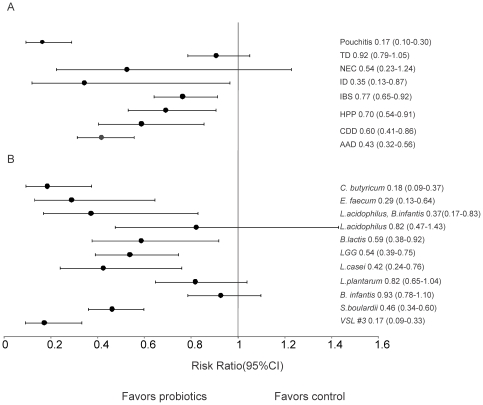
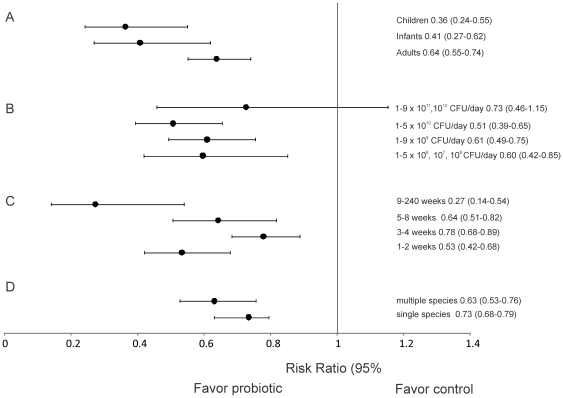
BACKGROUND: Meta-analyses on the effects of probiotics on specific gastrointestinal diseases have generally shown positive effects on disease prevention and treatment; however, the relative efficacy of probiotic use for treatment and prevention across different gastrointestinal diseases, with differing etiology and mechanisms of action, has not been addressed. METHODS/PRINCIPAL FINDINGS: We included randomized controlled trials in humans that used a specified probiotic in the treatment or prevention of Pouchitis, Infectious diarrhea, Irritable Bowel Syndrome, Helicobacter pylori, Clostridium difficile Disease, Antibiotic Associated Diarrhea, Traveler's Diarrhea, or Necrotizing Enterocolitis. Random effects models were used to evaluate efficacy as pooled relative risks across the eight diseases as well as across probiotic species, single vs. multiple species, patient ages, dosages, and length of treatment. Probiotics had a positive significant effect across all eight gastrointestinal diseases with a relative risk of 0.58 (95% (CI) 0.51-0.65). Six of the eight diseases: Pouchitis, Infectious diarrhea, Irritable Bowel Syndrome, Helicobacter pylori, Clostridium difficile Disease, and Antibiotic Associated Diarrhea, showed positive significant effects. Traveler's Diarrhea and Necrotizing Enterocolitis did not show significant effects of probiotcs. Of the 11 species and species mixtures, all showed positive significant effects except for Lactobacillus acidophilus, Lactobacillus plantarum, and Bifidobacterium infantis. Across all diseases and probiotic species, positive significant effects of probiotics were observed for all age groups, single vs. multiple species, and treatment lengths. CONCLUSIONS/SIGNIFICANCE: Probiotics are generally beneficial in treatment and prevention of gastrointestinal diseases. Efficacy was not observed for Traveler's Diarrhea or Necrotizing Enterocolitis or for the probiotic species L. acidophilus, L. plantarum, and B. infantis. When choosing to use probiotics in the treatment or prevention of gastrointestinal disease, the type of disease and probiotic species (strain) are the most important factors to take into consideration.
Overview
The claims and statistics of this paper haven’t been checked yet.
Run the check — free, no account needed. It reads the open-access text and checks the sources it cites.
Integrity signals
Registry
Cites
Statistics
Figures
Verification
Claims the paper makes
The claims and statistics of this paper haven’t been checked yet.
Run the check — free, no account needed. It reads the open-access text and checks the sources it cites.
Claims other papers make about this one
Each is checked against this paper’s own text: does it say what the citing paper says it does?
The source backs part of the claim, not all of it — or backs it for a different population, condition or comparison.
In the citing paper
“Probiotic efficacy is well established to be strain-, dose-, and formulation-specific, with clinical benefit demonstrated only for selected organisms and indications rather than for probiotics as a class.52-54”
From Safety and efficacy concerns in Indian probiotics: Insights from whole-genome sequencing and in vitro assessment (2026) · cites this paper as [54]
Experimental — accuracy not yet measured
Self-check
Percentages, sums and reported differences re-computed from the paper’s own numbers.
The self-check needs the paper’s full text.
Citations
Cites
Bias in meta-analysis detected by a simple, graphical test
Egger, M., Smith, G. D., Schneider, M., & Minder, C. (1997) · BMJ · doi:10.1136/bmj.315.7109.629 · Cited by 56,722
Assessing the quality of reports of randomized clinical trials: Is blinding necessary?
Jadad, A. R., Moore, R. A., Carroll, D., Jenkinson, C., Reynolds, D. J. M., Gavaghan, D. J., & McQuay, H. J. (1996) · Controlled Clinical Trials · doi:10.1016/0197-2456(95)00134-4 · Cited by 17,582
Operating characteristics of a rank correlation test for publication bias
Begg, C. B., & Mazumdar, M. (1994) · Biometrics · doi:10.2307/2533446 · Cited by 16,955
Gionchetti, P., Rizzello, F., Venturi, A., Brigidi, P., Matteuzzi, D., Bazzocchi, G., Poggioli, G., Miglioli, M., & Campieri, M. (2000) · Gastroenterology · doi:10.1053/gast.2000.9370 · Cited by 1,485
Functional food science and gastrointestinal physiology and function
Salminen, S., Bouley, C., Boutron, M.-C., Cummings, J. H., Franck, A., Gibson, G. R., Isolauri, E., Moreau, M.-C., Roberfroid, M., & Rowland, I. (1998) · British Journal of Nutrition · doi:10.1079/bjn19980108 · Cited by 1,398
Saavedra, J. M., Bauman, N. A., Perman, J. A., Yolken, R. H., Saavedra, J. M., Bauman, N. A., & Oung, I. (1994) · The Lancet · doi:10.1016/s0140-6736(94)91708-6 · Cited by 958
Mimura, T., Rizzello, F., Helwig, U., Poggioli, G., Schreiber, S., Talbot, I. C., Nicholls, R. J., Gionchetti, P., Campieri, M., & Kamm, M. A. (2003) · Gut · doi:10.1136/gut.53.1.108 · Cited by 912
McFarland, L. V. (2006) · The American Journal of Gastroenterology · doi:10.1111/j.1572-0241.2006.00465.x · Cited by 872
McFarland, L. V. (1994) · JAMA · doi:10.1001/jama.1994.03510480037031 · Cited by 862
Whorwell, P. J., Altringer, L., Morel, J., Bond, Y., Charbonneau, D., O'Mahony, L., Kiely, B., Shanahan, F., & Quigley, E. M. M. (2006) · The American Journal of Gastroenterology · doi:10.1111/j.1572-0241.2006.00734.x · Cited by 799
Research works printed but not linked: 3
- J Boulloche, 1994, Management of acute diarrhoea in infants and young children: controlled study of the anti-diarrhoeal efficacy of killed L. acidophilus (LB Strain) versus a placebo and a reference drug (loperamide)., Ann Pediatr, 41, 457
- JY Bodilis, 1983, Controlled clinical trial of Lacteol Fort compared with a placebo and reference drug in the treatment of acute diarrhea in the adult., Med Actuelle, 10, 232
- M Simren, 2006, Effects of Lactobacillus plantarum 299v on symptoms and rectal sensitivity in patients with irritable bowel syndrome (IBS) - A randomized, double-blind controlled trial., Gastroenterology, 130, A600
Cited by
Sorted by citations
Items 201–300 of 474
Ekmekçiu, I., Fiebiger, U., Stingl, K., Bereswill, S., & Heimesaat, M. M. (2017) · Gut Pathogens · doi:10.1186/s13099-017-0168-y · Cited by 25
Probiotic Supplements and Food Products: Comparison for Different Targets
Mollakhalili‐Meybodi, N., Mortazavian, A. M., Sohrabvandi, S., da Cruz, A. G., & Mohammadi, R. (2017) · Applied food biotechnology · doi:10.22037/afb.v4i3.16420 · Cited by 30
Mitchell, L. K., & Davies, P. S. W. (2021) · European Journal of Clinical Nutrition · doi:10.1038/s41430-021-01027-9 · Cited by 28
Heil, E. L., Harris, A. D., Brown, C. H., Seung, H., Thom, K. A., von Rosenvinge, E. C., Sorongon, S., Pineles, L. L., Goodman, K. E., & Leekha, S. (2021) · Clinical Infectious Diseases · doi:10.1093/cid/ciab417 · Cited by 24
Probiotics and Functional Gastrointestinal Disorders in Pediatric Age: A Narrative Review
Capozza, M., Laforgia, N., Rizzo, V., Salvatore, S., Guandalini, S., & Baldassarre, M. (2022) · Frontiers in Pediatrics · doi:10.3389/fped.2022.805466 · Cited by 24
Effects of probiotics and its fermented milk on constipation: a systematic review
Yan, J., Wu, M., Zhao, W. K., Kwok, L., & Zhang, W. (2023) · Food Science and Human Wellness · doi:10.1016/j.fshw.2023.03.024 · Cited by 23
Geeraerts, S., Ducatelle, R., Haesebrouck, F., & Immerseel, F. V. (2015) · Journal of Gastroenterology and Hepatology · doi:10.1111/jgh.12957 · Cited by 23
Yang, J., McDowell, A., Kim, E. K., Seo, H., Yum, K., Lee, W. H., Jee, Y., & Kim, Y. (2019) · Experimental & Molecular Medicine · doi:10.1038/s12276-019-0288-1 · Cited by 23
Panpetch, W., Phuengmaung, P., Cheibchalard, T., Somboonna, N., Leelahavanichkul, A., & Tumwasorn, S. (2021) · Frontiers in Microbiology · doi:10.3389/fmicb.2021.745299 · Cited by 22
Serine-rich repeat proteins: well-known yet little-understood bacterial adhesins
Cinar, M. S., Niyas, A. M. M., & Avci, F. Y. (2023) · Journal of Bacteriology · doi:10.1128/jb.00241-23 · Cited by 23
The Mexican consensus on probiotics in gastroenterology
Valdovinos, M. A., Montijo, E., y Abreu, A. T. A., Heller, S., Garay, A. G. G., Nogales, D. B., Bielsa-Fernández, M. V., Bojórquez-Ramos, M. D. C., Bosques‐Padilla, F., Burguete-García, A. I., et al. (2017) · Revista de Gastroenterología de México (English Edition) · doi:10.1016/j.rgmxen.2017.03.003 · Cited by 22
Abraham, L., Raise, A., Beney, L., Lapaquette, P., & Rieu, A. (2025) · Gut Microbes · doi:10.1080/19490976.2025.2552344 · Cited by 24
Treating irritable bowel syndrome through an interdisciplinary approach
Nelkowska, D. D. (2019) · Annals of Gastroenterology · doi:10.20524/aog.2019.0441 · Cited by 21
Current status of probiotics for prevention and management of gastrointestinal cancers
Khan, A. A., Nema, V., & Khan, Z. (2020) · Expert Opinion on Biological Therapy · doi:10.1080/14712598.2021.1828858 · Cited by 20
Hayes, C. L., Natividad, J. M., Jury, J., Martín, R., Langella, P., & Verdu, E. F. (2014) · Beneficial Microbes · doi:10.3920/bm2013.0039 · Cited by 21
Current and Evolving Methods to Visualize Biological Data in Cancer Research
Chia, P. L., Gedye, C. A., Boutros, P. C., Wheatley‐Price, P., & John, T. (2016) · JNCI Journal of the National Cancer Institute · doi:10.1093/jnci/djw031 · Cited by 23
Vindigni, S. M., Broussard, E. K., & Surawicz, C. M. (2013) · Expert Review of Gastroenterology & Hepatology · doi:10.1586/17474124.2013.832501 · Cited by 21
Hill, C., & Sanders, M. E. (2013) · Gut Microbes · doi:10.4161/gmic.25143 · Cited by 21
Edelstein, C. A., Kassam, Z., Daw, J. R., Smith, M. B., & Kelly, C. R. (2015) · Clinical Research and Regulatory Affairs · doi:10.3109/10601333.2015.1046602 · Cited by 20
Woloszynek, S., Pastor, S. J., Mell, J. C., Nandi, N., Sokhansanj, B. A., & ROSEN, G. L. (2016) · International review of cytology · doi:10.1016/bs.ircmb.2016.01.003 · Cited by 20
Fermented Milk Consumption and Common Infections in Children Attending Day‐Care Centers
Продеус, А. П., Niborski, V., Schrezenmeir, J., Gorelov, A., Shcherbina, A., & Rumyantsev, A. G. (2016) · Journal of Pediatric Gastroenterology and Nutrition · doi:10.1097/mpg.0000000000001248 · Cited by 20
Probiotics for the Treatment of Symptomatic Uncomplicated Diverticular Disease
Scarpignato, C., Bertele', A., & Tursi, A. (2016) · Journal of Clinical Gastroenterology · doi:10.1097/mcg.0000000000000641 · Cited by 20
Muresan, I. A. P., Pop, L. L., & Dumitrascu, D. L. (2019) · Medicine and Pharmacy Reports · doi:10.15386/mpr-1375 · Cited by 20
Johnstone, J., Meade, M. O., Marshall, J., Heyland, D. K., Surette, M. G., Bowdish, D. M. E., Lauzier, F., Thabane, L., Cook, D. J., & For the PROSPECT Investigators and the Canadian Critical Care Trials Group (2015) · Pilot and Feasibility Studies · doi:10.1186/s40814-015-0013-3 · Cited by 22
Shukla, G., Kamboj, S., & Sharma, B. (2019) · Probiotics and Antimicrobial Proteins · doi:10.1007/s12602-018-9506-8 · Cited by 20
Najafi, S., Sotoodehnejadnematalahi, F., Amiri, M. M., Pourshafie, M. R., & Rohani, M. (2023) · Biomedicines · doi:10.3390/biomedicines11061675 · Cited by 20
The Case for a More Holistic Approach to Dry Eye Disease: Is It Time to Move beyond Antibiotics?
Tavakoli, A., & Flanagan, J. (2019) · Antibiotics · doi:10.3390/antibiotics8030088 · Cited by 19
Probiotic fermented foods and health promotion
Ouwehand, A. C., & Röytiö, H. (2014) · Elsevier eBooks · doi:10.1016/b978-1-78242-015-6.00001-3 · Cited by 19
Genomic and functional diversity of cultivated Bifidobacterium from human gut microbiota
Li, W., Liang, H., He, W., Gao, X., Wu, Z., Hu, T., Lin, X., Wang, M., Zhong, Y., Zhang, H., et al. (2024) · Heliyon · doi:10.1016/j.heliyon.2024.e27270 · Cited by 18
Machine learning for metabolomics research in drug discovery
Martinelli, D. D. (2023) · Intelligence-Based Medicine · doi:10.1016/j.ibmed.2023.100101 · Cited by 19
Yang, J., Meng, L., Li, Y., & Huang, H. (2023) · Food & Function · doi:10.1039/d3fo02110f · Cited by 18
Publication biases in probiotics
Million, M., & Raoult, D. (2012) · European Journal of Epidemiology · doi:10.1007/s10654-012-9740-4 · Cited by 18
Souza, D. G., Senchenkova, E. Y., Russell, J., & Granger, D. N. (2015) · Inflammatory Bowel Diseases · doi:10.1097/mib.0000000000000331 · Cited by 18
Manipulation of the Microbiota Using Probiotics
Grimm, V., & Riedel, C. U. (2016) · Advances in experimental medicine and biology · doi:10.1007/978-3-319-31248-4_8 · Cited by 17
Resource Competition and Host Feedbacks Underlie Regime Shifts in Gut Microbiota
Guittar, J. L., Koffel, T., Shade, A. L., Klausmeier, C. A., & Litchman, E. (2021) · The American Naturalist · doi:10.1086/714527 · Cited by 17
St-Amant, A., & Bergdahl, A. (2023) · Clinical Nutrition ESPEN · doi:10.1016/j.clnesp.2023.01.016 · Cited by 18
Non- saccharomyces yeast probiotics: revealing relevance and potential
Vergara, S. C., Alaniz, M. J. L., Mestre, M. V., Vázquez, F., Nally, M. C., & Maturano, Y. P. (2023) · FEMS Yeast Research · doi:10.1093/femsyr/foad041 · Cited by 18
Janiaud, P., Lajoinie, A., Cour‐Andlauer, F., Cornu, C., Cochat, P., Cucherat, M., Gueyffier, F., & Kassaï, B. (2015) · Journal of Clinical Epidemiology · doi:10.1016/j.jclinepi.2015.06.021 · Cited by 17
The role of gut microbiota in hepatitis B disease progression and treatment
Chen, B., Huang, H. J., & Pan, C. Q. (2021) · Journal of Viral Hepatitis · doi:10.1111/jvh.13595 · Cited by 17
Hepburn, N. J., Garaiová, I., Williams, E. A., Michael, D. R., & Plummer, S. (2013) · Beneficial Microbes · doi:10.3920/bm2013.0012 · Cited by 17
Joukar, F., Mavaddati, S., Mansour‐Ghanaei, F., & Samadani, A. A. (2019) · Journal of Gastrointestinal Cancer · doi:10.1007/s12029-019-00237-6 · Cited by 17
Agraib, L. M., Yamani, M. I., Rayyan, Y. M., Sneineh, A. T. A., Tamimi, T., & Tayyem, R. (2021) · Drug Metabolism and Personalized Therapy · doi:10.1515/dmpt-2021-0150 · Cited by 16
Fagnant, H. S., Isidean, S. D., Wilson, L., Bukhari, A. S., Allen, J. T., Agans, R., Lee, D. M., Hatch‐McChesney, A., Whitney, C. C., Sullo, E., et al. (2023) · Advances in Nutrition · doi:10.1016/j.advnut.2023.02.002 · Cited by 17
The impact of live dietary microbes on health: A scoping review
Iyer, A. B., Mukherjee, A., Gómez‐Sala, B., O’Connor, E. M., Kenny, J. G., & Cotter, P. D. (2024) · Journal of Food Science · doi:10.1111/1750-3841.16893 · Cited by 18
Kaku, N., Matsumoto, N., Sasaki, D., Tsuda, K., Kosai, K., Uno, N., Morinaga, Y., Tagami, A., Adachi, S., Hasegawa, H., et al. (2020) · Journal of Infection and Chemotherapy · doi:10.1016/j.jiac.2020.03.008 · Cited by 16
Probiotics for the Chemoprotective Role against the Toxic Effect of Cancer Chemotherapy
Waziri, A., Bharti, C., Aslam, M., Jamil, P., Mirza, M. A., Javed, M. N., Pottoo, U., Ahmadi, A., & Alam, M. S. (2021) · Anti-Cancer Agents in Medicinal Chemistry · doi:10.2174/1871520621666210514000615 · Cited by 17
Hou, Y., Wang, F., Tan, Z., Cui, J., & Jia, S. (2020) · Korean Journal of Chemical Engineering · doi:10.1007/s11814-019-0466-9 · Cited by 16
Prevention and Control of Diseases by Use of Pro- and Prebiotics (Synbiotics)
Shafi, A., Farooq, U., Akram, K., Hayat, Z., & Murtaza, M. A. (2014) · Food Reviews International · doi:10.1080/87559129.2014.929142 · Cited by 16
Advancements in Novel Live Biotherapeutic Products for Clostridioides difficile Infection Prevention
Lavoie, T., Appaneal, H. J., & LaPlante, K. L. (2023) · Clinical Infectious Diseases · doi:10.1093/cid/ciad639 · Cited by 15
Alfano, A., Donnarumma, G., Cimini, D., Fusco, A., Marzaioli, I., ROSA, M. D., & Schiraldi, C. (2015) · Biotechnology Progress · doi:10.1002/btpr.2037 · Cited by 15
Probiotics and prebiotics in pediatric diarrheal disorders
Vandenplas, Y., Greef, E. D., Hauser, B., Devreker, T., & Veereman-Wauters, G. (2013) · Expert Opinion on Pharmacotherapy · doi:10.1517/14656566.2013.771632 · Cited by 15
Hata, K., Ishii, H., Anzai, H., Ishihara, S., Nozawa, H., Kawai, K., Kiyomatsu, T., & Watanabe, T. (2017) · Inflammatory Bowel Diseases · doi:10.1097/mib.0000000000001094 · Cited by 15
Current Trends and Future Prospective of Prebiotics as Therapeutic Food
Biswal, P., Pal, A., & Das, A. P. (2017) · Elsevier eBooks · doi:10.1016/b978-0-12-811520-6.00003-9 · Cited by 15
Historical aspects of probiotic use to prevent necrotising enterocolitis in preterm babies
Jarrett, P., Meczner, A., Costeloe, K., & Fleming, P. (2019) · Early Human Development · doi:10.1016/j.earlhumdev.2019.05.015 · Cited by 15
Rahman, A., Alqaisi, S., & Nath, J. (2023) · Cureus · doi:10.7759/cureus.38049 · Cited by 14
Importance of pressure plasticity during compression of probiotic tablet formulations
Byl, E., Bladt, P., Lebeer, S., & Kiekens, F. (2019) · European Journal of Pharmaceutics and Biopharmaceutics · doi:10.1016/j.ejpb.2019.10.001 · Cited by 14
Les probiotiques et leur place en médecine humaine
Butel, M. J. (2014) · Journal des Anti-infectieux · doi:10.1016/j.antinf.2014.01.010 · Cited by 14
Common questions about Clostridium difficile infection.
Winslow, B. T., Onysko, M. K., Thompson, K. A., Caldwell, K. E., & Ehlers, G. H. (2014) · PubMed · Cited by 13
Shin, M., Ban, O., Jung, Y. H., Yang, J., & Kim, Y. (2021) · Letters in Applied Microbiology · doi:10.1111/lam.13449 · Cited by 13
Mianzhi, Y., & Shah, N. P. (2015) · Critical Reviews in Food Science and Nutrition · doi:10.1080/10408398.2015.1023761 · Cited by 15
Carnero-Gregorio, M., Molares-Vila, A., Corbalán-Rivas, A., Taboada, C. V., & Rodríguez‐Cerdeira, C. (2018) · Probiotics and Antimicrobial Proteins · doi:10.1007/s12602-017-9372-9 · Cited by 13
Umeano, L., Iftikhar, S., Alhaddad, S. F., Paulsingh, C. N., Riaz, M. F., Garg, G., & Mohammed, L. (2024) · Cureus · doi:10.7759/cureus.58306 · Cited by 13
Martin, J. S. H., Mawer, D. P. C., & Wilcox, M. H. (2013) · Current Opinion in Infectious Diseases · doi:10.1097/01.qco.0000433319.82618.8f · Cited by 12
Non-Pharmacologic Therapies for Atopic Dermatitis
Lio, P. (2013) · Current Allergy and Asthma Reports · doi:10.1007/s11882-013-0371-y · Cited by 12
Olayanju, A., Mellor, D. D., Khatri, Y., & Pickles, N. A. (2022) · Nutrition and Health · doi:10.1177/02601060221095678 · Cited by 13
Development of Streptococcus pneumoniae Vaccines Using Live Vectors
Wang, S., & Curtiss, R. (2014) · Vaccines · doi:10.3390/vaccines2010049 · Cited by 12
Microencapsulation of Saccharomyces boulardii using vegan and vegetarian wall materials
Savoldi, T. E., Scheufele, F. B., Drunkler, D. A., da Silva, G. J., de Lima, J. D., Maestre, K. L., Triques, C. C., da Silva, E. A., & Fiorese, M. L. (2022) · Journal of Food Processing and Preservation · doi:10.1111/jfpp.16596 · Cited by 11
Valdovinos-García, L. R., y Abreu, A. T. A., & Valdovinos-Díaz, M. Á. (2018) · Revista de Gastroenterología de México · doi:10.1016/j.rgmx.2018.05.004 · Cited by 11
Translating probiotic science into practice
Chambers, L., Avery, A., Dalrymple, J., Farrell, L., Gibson, G. R., Harrington, J. M., Rijkers, G. T., Rowland, I. R., Spiro, A., Varela‐Moreiras, G., et al. (2019) · Nutrition Bulletin · doi:10.1111/nbu.12385 · Cited by 12
Wu, Z., Du, X., & ZHENG, J. (2013) · Chinese Medical Journal · doi:10.3760/cma.j.issn.0366-6999.20130744 · Cited by 11
Jansma, J., Thome, N. U., Schwalbe, M., Chatziioannou, A. C., Elsayed, S. S., van Wezel, G. P., den Abbeele, P. V., van Hemert, S., & Aidy, S. E. (2023) · Gut Microbes · doi:10.1080/19490976.2023.2232506 · Cited by 13
Minaz, A., Alam, R., Jiwani, U., Vadsaria, K., Khan, A., Ishaq, A., Sultan, S., Mohsin, M., Sharif, A., Nisar, Y. B., et al. (2024) · Journal of Global Health · doi:10.7189/jogh.14.04236 · Cited by 12
Antiviral Mechanisms Related to Lactic Acid Bacteria and Fermented Food Products
Özel, Z. B., & Öztürk, H. İ. (2020) · Biotech Studies · doi:10.38042/biost.2020.29.01.03 · Cited by 10
Ghorbani-Choboghlo, H., Nikaein, D., Khosravi, A., Rahmani, R., & Farahnejad, Z. (2019) · Iranian Journal of Microbiology · doi:10.18502/ijm.v11i2.1082 · Cited by 10
Tlaskalová-Hogenová, H., Kverka, M., Verdu, E. F., & Wells, J. M. (2015) · Elsevier eBooks · doi:10.1016/b978-0-12-415847-4.00008-2 · Cited by 10
Bucci, C., Tremolaterra, F., Gallotta, S., Fortunato, A., Cappello, C., Ciacci, C., & Iovino, P. (2013) · Techniques in Coloproctology · doi:10.1007/s10151-013-1055-2 · Cited by 12
Effects Of Probiotic Consumption On Absence Seizures
Akkol, S. (2017) · Journal of the Turkish Epilepsi Society · doi:10.14744/epilepsi.2017.59389 · Cited by 10
Broad-Spectrum Antibiotic Abuse and its Connection to Obesity
Czaja, K. (2017) · Journal of Nutritional Health & Food Science · doi:10.15226/jnhfs.2017.001102 · Cited by 9
Factors, impacts and possible solutions of antibiotic resistance: Review article
Geta, K. (2019) · World Scientific News · Cited by 9
Bouasker, S., Nodland, S., & Millette, M. (2024) · Microorganisms · doi:10.3390/microorganisms12061036 · Cited by 10
Ho, T. M., Yousefvand, A., Suhonen, H., Saris, P. E. J., & Mikkonen, K. S. (2024) · Future Foods · doi:10.1016/j.fufo.2024.100437 · Cited by 9
Shi, J., Zhao, Q., Liang, Z., Cui, H., Liu, Y., Cheng, Y., & Zhang, M. (2024) · Environmental Health and Preventive Medicine · doi:10.1265/ehpm.24-00202 · Cited by 9
Barakat, H., Sakr, S. S., Alfheeaid, H. A., Alsaleem, K. A., Alhomaid, R. M., El-Messery, T. M., Ebeid, T. A., & Abdul-Hafeez, E. Y. (2026) · Antioxidants · doi:10.3390/antiox15050533 · Cited by 11
Genomic and Phenotypic Safety Assessment of Probiotic Bacillus coagulans Strain JBI-YZ6.3
Zhang, Y., Overbeck, T. J., Skebba, V. P., & Gandhi, N. N. (2024) · Probiotics and Antimicrobial Proteins · doi:10.1007/s12602-024-10305-4 · Cited by 10
Pastrana, L. M., González-González, R., Estévez, N., Pereira, L., Amado, I. R., Fuciños, P., Fuciños, C., Rúa, M. L., Alonso, E., & Troncoso, R. Á. (2016) · Elsevier eBooks · doi:10.1016/b978-0-444-63666-9.00007-8 · Cited by 9
Lira, G. V. D. A. G., de Oliveira, M. H., Peixoto, D. M., & SARINHO, E. S. C. (2015) · Jornal de Pediatria (Versão em Português) · doi:10.1016/j.jpedp.2015.07.005 · Cited by 9
Rolfe, R. J., Ryan, E. T., & LaRocque, R. C. (2023) · Annals of Internal Medicine · doi:10.7326/aitc202309190 · Cited by 9
Javier Cano, W., Fernando Carcelén, C., Miguel Ara, G., William Quevedo, G., Arnaldo Alvarado, S., & Ronald Jiménez, A. (2016) · Revista de Investigaciones Veterinarias del Perú · doi:10.15381/rivep.v27i1.11458 · Cited by 9
Dandin, Ö., Akin, M. L., Balta, A. Z., Yücel, E., Karakaş, D. Ö., Demırbaş, S., ÖZDEMİR, S., & Haholu, A. (2013) · Indian Journal of Surgery · doi:10.1007/s12262-013-0923-3 · Cited by 9
Vandenplas, Y., Huys, G. R. B., & Daube, G. (2015) · Jornal de Pediatria (Versão em Português) · doi:10.1016/j.jpedp.2014.08.006 · Cited by 9
Nutraceutical and Functional Foods in Cancer Management and Therapy
Bajaj, S., & Manchanda, S. (2018) · Advances in human services and public health (AHSPH) book series · doi:10.4018/978-1-5225-3267-5.ch012 · Cited by 8
Xia, Q., Lei, Y., Wang, J., & Wang, Q. (2023) · Open Life Sciences · doi:10.1515/biol-2022-0741 · Cited by 8
Onyon, C., & Dawson, T. (2018) · Paediatrics and Child Health · doi:10.1016/j.paed.2018.08.010 · Cited by 9
Busch, R., Gruenwald, J., & Dudek, S. (2013) · Food and Nutrition Sciences · doi:10.4236/fns.2013.411a003 · Cited by 8
Clostridium difficile in paediatric populations
Upton, D. A., & Canadian Paediatric Society (2014) · Paediatrics & Child Health · doi:10.1093/pch/19.1.43 · Cited by 8
Huuskonen, L., Lyra, A., Lee, E. J., Ryu, J., Jeong, H., Baek, J. H., Seo, Y., Shin, M. K., Tiihonen, K., Pesonen, T., et al. (2022) · Dermato · doi:10.3390/dermato2020005 · Cited by 9
Lau, V. I., Xie, F., Fowler, R., Rochwerg, B. N., Johnstone, J., Lauzier, F., Marshall, J. C., Basmaji, J., Henderson, W. R., Khwaja, K. A., et al. (2022) · Canadian Journal of Anesthesia/Journal canadien d anesthésie · doi:10.1007/s12630-022-02335-9 · Cited by 7
Disorders of intestinal microbiocenosis: expanding the application of probiotics
Трухан, Д. И. (2022) · Meditsinskiy sovet = Medical Council · doi:10.21518/2079-701x-2022-16-7-132-143 · Cited by 7
Mecanismos de acción de los probióticos en la inhibición de microorganismos cariogénicos
López, Y. L. P., Rosas, R. T., & Argueta‐Figueroa, L. (2023) · Revista Médica Clínica Las Condes · doi:10.1016/j.rmclc.2023.03.010 · Cited by 7
Doar, N. W., & Samuthiram, S. D. (2023) · Cureus · doi:10.7759/cureus.40261 · Cited by 7
Metadata
- Authors
- Ritchie, M. L., & Romanuk, T. N.
- Affiliations
- Dalhousie University (CA)
- Corresponding author
- Ritchie, Marina L.
- Venue
- PLoS ONE
- Publisher
- Public Library of Science (PLoS)
- Published
- 2012-04-18
- Volume
- 7
- Issue
- 4
- Pages
- e34938
- ISSN
- 1932-6203 (ISSN-L)
- PMC
- PMC3329544
- OpenAlex
- W2010508425
- Cited by
- 474
- References
- 88
- Citations by year
- 2026: 16 · 2025: 23 · 2024: 24 · 2023: 33 · 2022: 31 · 2021: 43 · 2020: 37 · 2019: 34 · 2018: 34 · 2017: 36 · 2016: 41 · 2015: 44 · 2014: 28 · 2013: 35 · 2012: 14
- FWCI
- 5.09
- Type
- journal article
- Language
- en
- Open access
- gold
- doi.org
- Locations
- PLoS ONE (publishedVersion, cc-by)
- Europe PMC (PubMed Central) (publishedVersion, cc-by)
- PubMed Central (publishedVersion, cc-by)
- PubMed (publishedVersion)
- RePEc: Research Papers in Economics (submittedVersion)
- DalSpace (Dalhousie University) (submittedVersion)
- DOAJ (DOAJ: Directory of Open Access Journals) (submittedVersion, cc-by-sa)
- Figshare (submittedVersion, cc-by)
- Funders
- Natural Sciences and Engineering Research Council of Canada
- Topics
- Life Sciences › Agricultural and Biological Sciences › Food Science › Probiotics and Fermented Foods
- Health Sciences › Medicine › Gastroenterology › Gastrointestinal motility and disorders
- Life Sciences › Biochemistry, Genetics and Molecular Biology › Molecular Biology › Gut microbiota and health
- Keywords
- probiotics, gastrointestinal diseases, probiotic efficacy, pouchitis, infectious diarrhea, irritable bowel syndrome, Helicobacter pylori, antibiotic-associated diarrhea, traveler's diarrhea, necrotizing enterocolitis, Lactobacillus acidophilus, Lactobacillus plantarum, Bifidobacterium infantis, disease prevention
- MeSH terms
- Age Factors, Gastrointestinal Diseases, Humans, Randomized Controlled Trials as Topic, Treatment Outcome, Publication Bias, Probiotics
About these checks
Registry, retraction, Cites and statistics results are computed, not judged, with one exception: a printed reference that no index lists is read once by a model before it counts as a citation error. Claims are extracted by a model and kept only when their quote appears verbatim in the text; each cited source is then checked, with a model’s help, for whether it says what the claim relies on. Those verdicts can be wrong — read the claim’s quote and the cited source before relying on one.
Statistics and arithmetic are recomputed, not judged.
Confidence bands are shown only for fields calibrated on our annotated test set. None is calibrated yet, so no band is shown.
What counts as a claim ›How we measure confidence ›How we check this ›
Are you an author, or do you see a problem with this page? Request a review
