

The DOI matches its Crossref record; 79 of the 81 references it cites were found in a registry or an index.
Interoception across Modalities: On the Relationship between Cardiac Awareness and the Sensitivity for Gastric Functions
Open accessAbstract
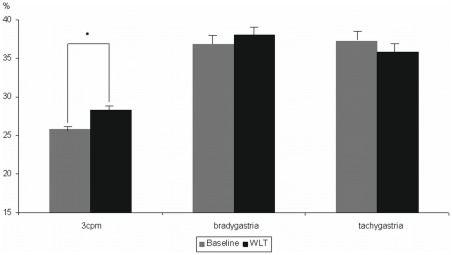
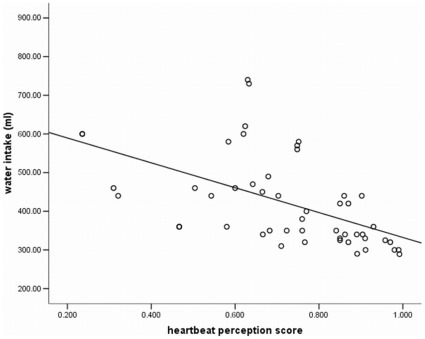
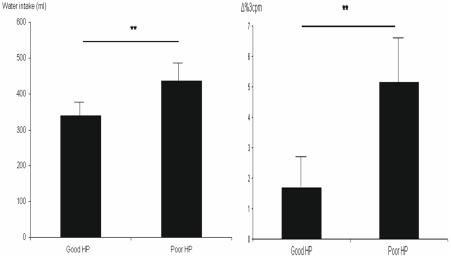
The individual sensitivity for ones internal bodily signals ("interoceptive awareness") has been shown to be of relevance for a broad range of cognitive and affective functions. Interoceptive awareness has been primarily assessed via measuring the sensitivity for ones cardiac signals ("cardiac awareness") which can be non-invasively measured by heartbeat perception tasks. It is an open question whether cardiac awareness is related to the sensitivity for other bodily, visceral functions. This study investigated the relationship between cardiac awareness and the sensitivity for gastric functions in healthy female persons by using non-invasive methods. Heartbeat perception as a measure for cardiac awareness was assessed by a heartbeat tracking task and gastric sensitivity was assessed by a water load test. Gastric myoelectrical activity was measured by electrogastrography (EGG) and subjective feelings of fullness, valence, arousal and nausea were assessed. The results show that cardiac awareness was inversely correlated with ingested water volume and with normogastric activity after water load. However, persons with good and poor cardiac awareness did not differ in their subjective ratings of fullness, nausea and affective feelings after drinking. This suggests that good heartbeat perceivers ingested less water because they subjectively felt more intense signals of fullness during this lower amount of water intake compared to poor heartbeat perceivers who ingested more water until feeling the same signs of fullness. These findings demonstrate that cardiac awareness is related to greater sensitivity for gastric functions, suggesting that there is a general sensitivity for interoceptive processes across the gastric and cardiac modality.
Overview
The claims and statistics of this paper haven’t been checked yet.
Run the check — free, no account needed. It reads the open-access text and checks the sources it cites.
Integrity signals
Registry
Cites
Statistics
Figures
Verification
Claims the paper makes
The claims and statistics of this paper haven’t been checked yet.
Run the check — free, no account needed. It reads the open-access text and checks the sources it cites.
Claims other papers make about this one
Each is checked against this paper’s own text: does it say what the citing paper says it does?
The source backs part of the claim, not all of it — or backs it for a different population, condition or comparison.
In the citing paper
“Increasing hunger through fasting also appears to increase cardiac accuracy, suggesting potential overlap in the processing of these interoceptive signals (Herbert, Herbert, et al., 2012).”
From Atypical interoception as a common risk factor for psychopathology: A review (2021) · cites this paper as Herbert, Herbert, et al., 2012
Experimental — accuracy not yet measuredThe cited source says what the claim attributes to it.
In the citing paper
“Electrogastrography has also been used to assess gastric activity non-invasively, with activity being linked to neural responses in interoceptive regions (Rebollo et al., 2018) and cardiac perception (Herbert, Muth, et al., 2012), for example.”
From Atypical interoception as a common risk factor for psychopathology: A review (2021) · cites this paper as Herbert, Muth, et al., 2012
The cited source says what the claim attributes to it.
In the citing paper
“As such, participants’ ability to perceive their heartbeat was negatively correlated with amount of water consumed in the original water load task (Herbert, Muth, et al., 2012).”
From Atypical interoception as a common risk factor for psychopathology: A review (2021) · cites this paper as Herbert, Muth, et al., 2012
The cited source says what the claim attributes to it.
In the citing paper
“Some studies have found moderate correlations between perception of different internal states, such as heartbeat and gastric distension (Herbert, Muth, et al., 2012; Van Dyck et al., 2016; Whitehead and Drescher, 1980), or between rectal distention and both cold perception and heat-induced pain (Horing et al., 2013).”
From Atypical interoception as a common risk factor for psychopathology: A review (2021) · cites this paper as Herbert, Muth, et al., 2012
The cited source says what the claim attributes to it.
In the citing paper
“Although HBD can be reliably detected, the assumption that HBD serves as an indicator of “general” IA for bodily signals is still unresolved (Herbert et al., 2012; Ferentzi et al., 2019).”
From Mindfulness, Interoception, and the Body: A Contemporary Perspective (2019) · cites this paper as Herbert et al., 2012
Self-check
Percentages, sums and reported differences re-computed from the paper’s own numbers.
The self-check needs the paper’s full text.
Citations
Cites
(1970) · Cited by 24,983
(1994) · DigitalGeorgetown (Georgetown University Library) · Cited by 10,542
DESCARTES' ERROR: Emotion, Reason, and the Human Brain
Marg, E. (1995) · Optometry and Vision Science · doi:10.1002/j.1538-9235.1995.tb03988.x · Cited by 8,178
How do you feel — now? The anterior insula and human awareness
(Bud) Craig, A. D. (2009) · Nature Reviews Neuroscience · doi:10.1038/nrn2555 · Cited by 6,657 · cited 1×
“It has been proposed [20–22] that interoceptive afferent inputs provide somatotopically organized cortical representations of the physiological condition of the body and converge via an iterative posterior to anterior re-mapping within the insula in order to give rise to a progressive incorporation with multimodal inf…”
BackgroundCognitive, social, and physiological determinants of emotional state.
Schachter, S., & Singer, J. (1962) · Psychological Review · doi:10.1037/h0046234 · Cited by 6,223
How do you feel? Interoception: The sense of the physiological condition of the body
Craig, A. D. (2002) · Nature Reviews Neuroscience · doi:10.1038/nrn894 · Cited by 6,006
The feeling of what happens: body and emotion in the making of consciousness
(2000) · Choice Reviews Online · doi:10.5860/choice.37-6553 · Cited by 6,001
On Methods in the Analysis of Profile Data
Greenhouse, S. W., & Geisser, S. (1959) · Psychometrika · doi:10.1007/bf02289823 · Cited by 4,946
(2001) · doi:10.1017/cbo9780511546396 · Cited by 4,482
JAMES, W. (1884) · Mind · doi:10.1093/mind/os-ix.34.188 · Cited by 3,446
Research works printed but not linked: 4
- GE Jones, 1994, Perception of visceral sensations: a review of recent findings, methodologies, and future directions.
- C Tosetti, 1999, Reproducibility of a water load test in healthy subjects and symptom profile compared to patients with functional dyspepsia., Gastroenterology, 116, A336
- GE Boeckxstaens, 1999, Is a drink test a valuable tool to study proximal gastric function?, Gastroenterology, 116, A960
- MD Jokerst, 1997, Modified sham feeding with pleasant and disgusting foods: cephalic-vagal influences on gastric myoelectric activity., Gastroenterology, 112, A755
Cited by
Sorted by citations
Knowing your own heart: Distinguishing interoceptive accuracy from interoceptive awareness
Garfinkel, S. N., Seth, A. K., Barrett, A. B., Suzuki, K., & Critchley, H. D. (2015) · Biological Psychology · doi:10.1016/j.biopsycho.2014.11.004 · Cited by 1,624
The multidimensional assessment of interoceptive awareness (MAIA)
Mehling, W. E., Price, C., Daubenmier, J. J., Acree, M., Bartmess, E., & Stewart, A. (2012) · PLoS ONE · doi:10.1371/journal.pone.0048230 · Cited by 1,429
Interoception, contemplative practice, and health
Farb, N., Daubenmier, J., Price, C. J., Gard, T., Kerr, C., Dunn, B. D., Klein, A. C., Paulus, M. P., & Mehling, W. E. (2015) · Frontiers in Psychology · doi:10.3389/fpsyg.2015.00763 · Cited by 650
Avery, J. A., Drevets, W. C., Moseman, S. E., Bodurka, J., Barcalow, J. C., & Simmons, W. K. (2014) · Biological Psychiatry · doi:10.1016/j.biopsych.2013.11.027 · Cited by 442
The neurobiology of interoception in health and disease
Quadt, L., Critchley, H., & Garfinkel, S. N. (2018) · Annals of the New York Academy of Sciences · doi:10.1111/nyas.13915 · Cited by 488
Metadata
- Authors
- Herbert, B. M., Muth, E. R., Pollatos, O., & Herbert, C.
- Affiliations
- Universitätsklinikum Tübingen (DE)
- Clemson University (US)
- University of Potsdam (DE)
- University of Würzburg (DE)
- Corresponding author
- Herbert, Beate M.
- Venue
- PLoS ONE
- Publisher
- Public Library of Science (PLoS)
- Published
- 2012-05-11
- Volume
- 7
- Issue
- 5
- Pages
- e36646
- ISSN
- 1932-6203 (ISSN-L)
- PMC
- PMC3350494
- OpenAlex
- W2053715498
- Cited by
- 287
- References
- 81
- Citations by year
- 2026: 6 · 2025: 18 · 2024: 21 · 2023: 24 · 2022: 24 · 2021: 24 · 2020: 31 · 2019: 18 · 2018: 21 · 2017: 22 · 2016: 21 · 2015: 21 · 2014: 17 · 2013: 16 · 2012: 3
- FWCI
- 13.02
- Type
- journal article
- Language
- en
- Open access
- gold
- doi.org
- Locations
- PLoS ONE (publishedVersion, cc-by)
- Europe PMC (PubMed Central) (publishedVersion, cc-by)
- PubMed Central (publishedVersion, cc-by)
- PubMed (publishedVersion)
- RePEc: Research Papers in Economics (submittedVersion)
- DOAJ (DOAJ: Directory of Open Access Journals) (submittedVersion, cc-by-sa)
- publish.UP (University of Potsdam) (submittedVersion)
- Online Publication Service of Würzburg University (Würzburg University) (submittedVersion, cc-by)
- Topics
- Health Sciences › Medicine › Psychiatry and Mental health › Psychosomatic Disorders and Their Treatments
- Health Sciences › Medicine › Cardiology and Cardiovascular Medicine › Heart Rate Variability and Autonomic Control
- Health Sciences › Medicine › Gastroenterology › Gastrointestinal motility and disorders
- Keywords
- interoception, interoceptive awareness, heartbeat perception, water load test, electrogastrography, gastric myoelectrical activity, satiety, nausea, visceral sensation
- MeSH terms
- Adult, Awareness, Drinking, Electrocardiography, Female, Heart Rate, Humans, Middle Aged, Psychophysiology, Sensation, Stomach, Young Adult
About these checks
Registry, retraction, Cites and statistics results are computed, not judged, with one exception: a printed reference that no index lists is read once by a model before it counts as a citation error. Claims are extracted by a model and kept only when their quote appears verbatim in the text; each cited source is then checked, with a model’s help, for whether it says what the claim relies on. Those verdicts can be wrong — read the claim’s quote and the cited source before relying on one.
Statistics and arithmetic are recomputed, not judged.
Confidence bands are shown only for fields calibrated on our annotated test set. None is calibrated yet, so no band is shown.
What counts as a claim ›How we measure confidence ›How we check this ›
Are you an author, or do you see a problem with this page? Request a review
