

The DOI matches its Crossref record; 79 of the 81 references it cites were found in a registry or an index.
Interoception across Modalities: On the Relationship between Cardiac Awareness and the Sensitivity for Gastric Functions
Open accessAbstract
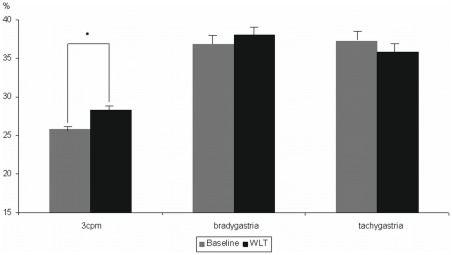
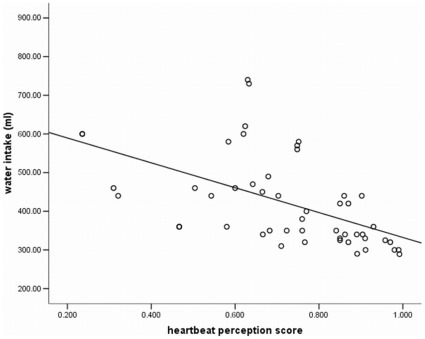
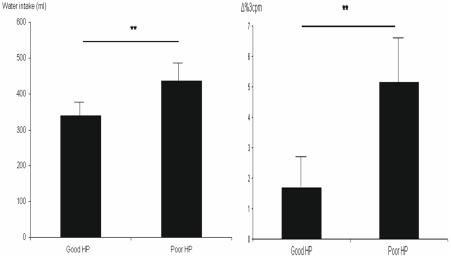
The individual sensitivity for ones internal bodily signals ("interoceptive awareness") has been shown to be of relevance for a broad range of cognitive and affective functions. Interoceptive awareness has been primarily assessed via measuring the sensitivity for ones cardiac signals ("cardiac awareness") which can be non-invasively measured by heartbeat perception tasks. It is an open question whether cardiac awareness is related to the sensitivity for other bodily, visceral functions. This study investigated the relationship between cardiac awareness and the sensitivity for gastric functions in healthy female persons by using non-invasive methods. Heartbeat perception as a measure for cardiac awareness was assessed by a heartbeat tracking task and gastric sensitivity was assessed by a water load test. Gastric myoelectrical activity was measured by electrogastrography (EGG) and subjective feelings of fullness, valence, arousal and nausea were assessed. The results show that cardiac awareness was inversely correlated with ingested water volume and with normogastric activity after water load. However, persons with good and poor cardiac awareness did not differ in their subjective ratings of fullness, nausea and affective feelings after drinking. This suggests that good heartbeat perceivers ingested less water because they subjectively felt more intense signals of fullness during this lower amount of water intake compared to poor heartbeat perceivers who ingested more water until feeling the same signs of fullness. These findings demonstrate that cardiac awareness is related to greater sensitivity for gastric functions, suggesting that there is a general sensitivity for interoceptive processes across the gastric and cardiac modality.
Overview
The claims and statistics of this paper haven’t been checked yet.
Run the check — free, no account needed. It reads the open-access text and checks the sources it cites.
Integrity signals
Registry
Cites
Statistics
Figures
Verification
Claims the paper makes
The claims and statistics of this paper haven’t been checked yet.
Run the check — free, no account needed. It reads the open-access text and checks the sources it cites.
Claims other papers make about this one
Each is checked against this paper’s own text: does it say what the citing paper says it does?
The source backs part of the claim, not all of it — or backs it for a different population, condition or comparison.
In the citing paper
“Increasing hunger through fasting also appears to increase cardiac accuracy, suggesting potential overlap in the processing of these interoceptive signals (Herbert, Herbert, et al., 2012).”
From Atypical interoception as a common risk factor for psychopathology: A review (2021) · cites this paper as Herbert, Herbert, et al., 2012
Experimental — accuracy not yet measuredThe cited source says what the claim attributes to it.
In the citing paper
“Electrogastrography has also been used to assess gastric activity non-invasively, with activity being linked to neural responses in interoceptive regions (Rebollo et al., 2018) and cardiac perception (Herbert, Muth, et al., 2012), for example.”
From Atypical interoception as a common risk factor for psychopathology: A review (2021) · cites this paper as Herbert, Muth, et al., 2012
The cited source says what the claim attributes to it.
In the citing paper
“As such, participants’ ability to perceive their heartbeat was negatively correlated with amount of water consumed in the original water load task (Herbert, Muth, et al., 2012).”
From Atypical interoception as a common risk factor for psychopathology: A review (2021) · cites this paper as Herbert, Muth, et al., 2012
The cited source says what the claim attributes to it.
In the citing paper
“Some studies have found moderate correlations between perception of different internal states, such as heartbeat and gastric distension (Herbert, Muth, et al., 2012; Van Dyck et al., 2016; Whitehead and Drescher, 1980), or between rectal distention and both cold perception and heat-induced pain (Horing et al., 2013).”
From Atypical interoception as a common risk factor for psychopathology: A review (2021) · cites this paper as Herbert, Muth, et al., 2012
The cited source says what the claim attributes to it.
In the citing paper
“Although HBD can be reliably detected, the assumption that HBD serves as an indicator of “general” IA for bodily signals is still unresolved (Herbert et al., 2012; Ferentzi et al., 2019).”
From Mindfulness, Interoception, and the Body: A Contemporary Perspective (2019) · cites this paper as Herbert et al., 2012
Self-check
Percentages, sums and reported differences re-computed from the paper’s own numbers.
The self-check needs the paper’s full text.
Citations
Cites
(1970) · Cited by 24,983
(1994) · DigitalGeorgetown (Georgetown University Library) · Cited by 10,542
DESCARTES' ERROR: Emotion, Reason, and the Human Brain
Marg, E. (1995) · Optometry and Vision Science · doi:10.1002/j.1538-9235.1995.tb03988.x · Cited by 8,178
How do you feel — now? The anterior insula and human awareness
(Bud) Craig, A. D. (2009) · Nature Reviews Neuroscience · doi:10.1038/nrn2555 · Cited by 6,657 · cited 1×
“It has been proposed [20–22] that interoceptive afferent inputs provide somatotopically organized cortical representations of the physiological condition of the body and converge via an iterative posterior to anterior re-mapping within the insula in order to give rise to a progressive incorporation with multimodal inf…”
BackgroundCognitive, social, and physiological determinants of emotional state.
Schachter, S., & Singer, J. (1962) · Psychological Review · doi:10.1037/h0046234 · Cited by 6,223
How do you feel? Interoception: The sense of the physiological condition of the body
Craig, A. D. (2002) · Nature Reviews Neuroscience · doi:10.1038/nrn894 · Cited by 6,006
The feeling of what happens: body and emotion in the making of consciousness
(2000) · Choice Reviews Online · doi:10.5860/choice.37-6553 · Cited by 6,001
On Methods in the Analysis of Profile Data
Greenhouse, S. W., & Geisser, S. (1959) · Psychometrika · doi:10.1007/bf02289823 · Cited by 4,946
(2001) · doi:10.1017/cbo9780511546396 · Cited by 4,482
JAMES, W. (1884) · Mind · doi:10.1093/mind/os-ix.34.188 · Cited by 3,446
Research works printed but not linked: 4
- GE Jones, 1994, Perception of visceral sensations: a review of recent findings, methodologies, and future directions.
- C Tosetti, 1999, Reproducibility of a water load test in healthy subjects and symptom profile compared to patients with functional dyspepsia., Gastroenterology, 116, A336
- GE Boeckxstaens, 1999, Is a drink test a valuable tool to study proximal gastric function?, Gastroenterology, 116, A960
- MD Jokerst, 1997, Modified sham feeding with pleasant and disgusting foods: cephalic-vagal influences on gastric myoelectric activity., Gastroenterology, 112, A755
Cited by
Sorted by citations
Knowing your own heart: Distinguishing interoceptive accuracy from interoceptive awareness
Garfinkel, S. N., Seth, A. K., Barrett, A. B., Suzuki, K., & Critchley, H. D. (2015) · Biological Psychology · doi:10.1016/j.biopsycho.2014.11.004 · Cited by 1,624
The multidimensional assessment of interoceptive awareness (MAIA)
Mehling, W. E., Price, C., Daubenmier, J. J., Acree, M., Bartmess, E., & Stewart, A. (2012) · PLoS ONE · doi:10.1371/journal.pone.0048230 · Cited by 1,429
Interoception, contemplative practice, and health
Farb, N., Daubenmier, J., Price, C. J., Gard, T., Kerr, C., Dunn, B. D., Klein, A. C., Paulus, M. P., & Mehling, W. E. (2015) · Frontiers in Psychology · doi:10.3389/fpsyg.2015.00763 · Cited by 650
Avery, J. A., Drevets, W. C., Moseman, S. E., Bodurka, J., Barcalow, J. C., & Simmons, W. K. (2014) · Biological Psychiatry · doi:10.1016/j.biopsych.2013.11.027 · Cited by 442
The neurobiology of interoception in health and disease
Quadt, L., Critchley, H., & Garfinkel, S. N. (2018) · Annals of the New York Academy of Sciences · doi:10.1111/nyas.13915 · Cited by 488
Interoception and psychopathology: A developmental neuroscience perspective
Murphy, J., Brewer, R., Catmur, C., & Bird, G. (2017) · Developmental Cognitive Neuroscience · doi:10.1016/j.dcn.2016.12.006 · Cited by 404
Garfinkel, S. N., & Critchley, H. D. (2013) · Social Cognitive and Affective Neuroscience · doi:10.1093/scan/nss140 · Cited by 386
Can interoception improve the pragmatic search for biomarkers in psychiatry?
Khalsa, S. S., & Lapidus, R. C. (2016) · Frontiers in Psychiatry · doi:10.3389/fpsyt.2016.00121 · Cited by 366
Interoceptive dimensions across cardiac and respiratory axes
Garfinkel, S. N., Manassei, M. F., Hamilton-Fletcher, G., In den Bosch, Y., Critchley, H. D., & Engels, M. (2016) · Philosophical Transactions of the Royal Society B: Biological Sciences · doi:10.1098/rstb.2016.0014 · Cited by 326
Bornemann, B., Herbert, B. M., Mehling, W. E., & Singer, T. (2015) · Frontiers in Psychology · doi:10.3389/fpsyg.2014.01504 · Cited by 349
Self-citationInteroception beyond homeostasis: affect cognition and mental health
Tsakiris, M., & Critchley, H. (2016) · Philosophical Transactions of the Royal Society B: Biological Sciences · doi:10.1098/rstb.2016.0002 · Cited by 314
On the origin of interoception
Ceunen, E., Vlaeyen, J. W. S., & Van Diest, I. (2016) · Frontiers in Psychology · doi:10.3389/fpsyg.2016.00743 · Cited by 329
‘Bodily precision’: A predictive coding account of individual differences in interoceptive accuracy
Ainley, V., Apps, M. A. J., Fotopoulou, A., & Tsakiris, M. (2016) · Philosophical Transactions of the Royal Society B: Biological Sciences · doi:10.1098/rstb.2016.0003 · Cited by 285
Harshaw, C. (2015) · Psychological Bulletin · doi:10.1037/a0038101 · Cited by 302
Mindfulness, Interoception, and the Body: A Contemporary Perspective
Gibson, J. (2019) · Frontiers in Psychology · doi:10.3389/fpsyg.2019.02012 · Cited by 278
Testing the independence of self-reported interoceptive accuracy and attention
Murphy, J., Brewer, R., Plans, D., Khalsa, S. S., Catmur, C., & Bird, G. (2020) · Quarterly Journal of Experimental Psychology · doi:10.1177/1747021819879826 · Cited by 235
Jenkinson, P. M., Taylor, L., & Laws, K. R. (2018) · Journal of Psychosomatic Research · doi:10.1016/j.jpsychores.2018.04.005 · Cited by 227
Intuitive eating is associated with interoceptive sensitivity. Effects on body mass index
Herbert, B. M., Blechert, J., Hautzinger, M., Matthias, E., & Herbert, C. (2013) · Appetite · doi:10.1016/j.appet.2013.06.082 · Cited by 220
Self-citationAnterior insular cortex mediates bodily sensibility and social anxiety
Terasawa, Y., Shibata, M., Moriguchi, Y., & Umeda, S. (2013) · Social Cognitive and Affective Neuroscience · doi:10.1093/scan/nss108 · Cited by 224
Qin, P., Wang, M., & Northoff, G. (2020) · Neuroscience & Biobehavioral Reviews · doi:10.1016/j.neubiorev.2020.05.004 · Cited by 223
Murphy, J., Catmur, C., & Bird, G. (2017) · Journal of Experimental Psychology General · doi:10.1037/xge0000366 · Cited by 231
Bornemann, B., & Singer, T. (2017) · Psychophysiology · doi:10.1111/psyp.12790 · Cited by 204
Attenuated interoceptive sensitivity in overweight and obese individuals
Herbert, B. M., & Pollatos, O. (2014) · Eating Behaviors · doi:10.1016/j.eatbeh.2014.06.002 · Cited by 221
Self-citationPain in the body. Altered interoception in chronic pain conditions: a systematic review
Di Lernia, D., Serino, S., & Riva, G. (2016) · Neuroscience & Biobehavioral Reviews · doi:10.1016/j.neubiorev.2016.09.015 · Cited by 190
Major Depressive Disorder Is Associated with Impaired Interoceptive Accuracy: A Systematic Review
Eggart, M., Lange, A., Binser, M. J., Queri, S., & Müller-Oerlinghausen, B. (2019) · Brain Sciences · doi:10.3390/brainsci9060131 · Cited by 209
Murphy, J., Brewer, R., Hobson, H., Catmur, C., & Bird, G. (2018) · Biological Psychology · doi:10.1016/j.biopsycho.2018.05.010 · Cited by 180
Atypical interoception as a common risk factor for psychopathology: A review
Brewer, R., Murphy, J., & Bird, G. (2021) · Neuroscience & Biobehavioral Reviews · doi:10.1016/j.neubiorev.2021.07.036 · Cited by 180
Food related processes in the insular cortex
Frank, S., Kullmann, S., & Veit, R. (2013) · Frontiers in Human Neuroscience · doi:10.3389/fnhum.2013.00499 · Cited by 186
Interoceptive sensitivity predicts sensitivity to the emotions of others
Terasawa, Y., Moriguchi, Y., Tochizawa, S., & Umeda, S. (2014) · Cognition and Emotion · doi:10.1080/02699931.2014.888988 · Cited by 175
Tajadura-Jiménez, A., & Tsakiris, M. (2014) · Journal of Experimental Psychology: General · doi:10.1037/a0033171 · Cited by 167
Interoception and gender: What aspects should we pay attention to?
Grabauskaitė, A., Baranauskas, M., & Griškova-Bulanova, I. (2017) · Consciousness and Cognition · doi:10.1016/j.concog.2016.11.002 · Cited by 167
Improvement of Interoceptive Processes after an 8-Week Body Scan Intervention
Fischer, D., Messner, M., & Pollatos, O. (2017) · Frontiers in Human Neuroscience · doi:10.3389/fnhum.2017.00452 · Cited by 159
Self-citationMaking sense of what you sense: disentangling interoceptive awareness, sensibility and accuracy
Forkmann, T., Scherer, A., Meessen, J., Michal, M., Schächinger, H., Vögele, C., & Schulz, A. (2016) · International Journal of Psychophysiology · doi:10.1016/j.ijpsycho.2016.09.019 · Cited by 155
Ainley, V., & Manos Tsakiris, A. (2013) · PLoS ONE · doi:10.1371/journal.pone.0055568 · Cited by 162
Crucianelli, L., Krahé, C., Jenkinson, P. M., & Fotopoulou, A. (2017) · Cortex · doi:10.1016/j.cortex.2017.04.018 · Cited by 155
Ma‐Kellams, C. (2014) · Frontiers in Psychology · doi:10.3389/fpsyg.2014.01379 · Cited by 178
van Dyck, Z., Vögele, C., Blechert, J., Lutz, A. P. C., Schulz, A., & Herbert, B. M. (2016) · PLOS ONE · doi:10.1371/journal.pone.0163574 · Cited by 153
Self-citationFollow your breath: respiratory interoceptive accuracy in experienced meditators
Daubenmier, J., Sze, J., Kerr, C. E., Kemeny, M. E., & Mehling, W. (2013) · Psychophysiology · doi:10.1111/psyp.12057 · Cited by 148
Kever, A., Pollatos, O., Vermeulen, N., & Grynberg, D. (2015) · Personality and Individual Differences · doi:10.1016/j.paid.2015.07.014 · Cited by 145
Self-citationMultichannel Investigation of Interoception: Sensitivity Is Not a Generalizable Feature
Ferentzi, E., Bogdány, T., Szabolcs, Z., Csala, B., Horváth, Á., & Köteles, F. G. (2018) · Frontiers in Human Neuroscience · doi:10.3389/fnhum.2018.00223 · Cited by 139
Changes in interoceptive processes following brain stimulation
Pollatos, O., Herbert, B. M., Mai, S., & Kammer, T. (2016) · Philosophical Transactions of the Royal Society B Biological Sciences · doi:10.1098/rstb.2016.0016 · Cited by 140
Self-citationIndividual differences in the interoceptive states of hunger, fullness and thirst
Stevenson, R. J., Mahmut, M. K., & Rooney, K. B. (2015) · Appetite · doi:10.1016/j.appet.2015.06.008 · Cited by 132
Schaefer, M., Egloff, B., Gerlach, A. L., & Witthöft, M. (2014) · Biological Psychology · doi:10.1016/j.biopsycho.2014.05.012 · Cited by 130
Exploring the relationship between mindfulness and cardiac perception
Parkin, L., Morgan, R., Rosselli, A., Howard, M., Sheppard, A., Evans, D., Hawkins, A., Martinelli, M., Golden, A.-M., Dalgleish, T., et al. (2014) · Mindfulness · doi:10.1007/s12671-012-0181-7 · Cited by 122
Ainley, V., Maister, L., Brokfeld, J., Farmer, H., & Manos Tsakiris, A. (2013) · Consciousness and Cognition · doi:10.1016/j.concog.2013.08.004 · Cited by 121
Mindful eating: what we know so far
Tapper, K. (2022) · Nutrition Bulletin · doi:10.1111/nbu.12559 · Cited by 118
The hippocampus and the regulation of human food intake.
Stevenson, R. J., & Francis, H. (2017) · Psychological Bulletin · doi:10.1037/bul0000109 · Cited by 114
Michal, M., Reuchlein, B., Adler, J., Reiner, I., Beutel, M. E., Vögele, C., Schächinger, H., & Schulz, A. (2014) · PLoS ONE · doi:10.1371/journal.pone.0089823 · Cited by 111
Can mindfulness influence weight management related eating behaviors? If so, how?
Tapper, K. (2017) · Clinical Psychology Review · doi:10.1016/j.cpr.2017.03.003 · Cited by 103
Mind-Body Interactions in Anxiety and Somatic Symptoms
Mallorquí-Bagué, N., Bulbena, A., Pailhez, G., Garfinkel, S. N., & Critchley, H. D. (2016) · Harvard Review of Psychiatry · doi:10.1097/hrp.0000000000000085 · Cited by 96
Heartfelt imitation: high interoceptive awareness is linked to greater automatic imitation
Ainley, V., Brass, M., & Tsakiris, M. (2014) · Neuropsychologia · doi:10.1016/j.neuropsychologia.2014.05.010 · Cited by 87
A multidimensional and multi-feature framework for cardiac interoception
Fittipaldi, S., Abrevaya, S., Fuente, A. D. L., Pascariello, G. O., Hesse, E., Birba, A., Salamone, P., Hildebrandt, M., Martí, S. A., Pautassi, R. M., et al. (2020) · NeuroImage · doi:10.1016/j.neuroimage.2020.116677 · Cited by 90
Integration of interoceptive exposure in eating disorder treatment.
Boswell, J. F., Anderson, L. M., & Anderson, D. A. (2015) · Clinical Psychology Science and Practice · doi:10.1111/cpsp.12103 · Cited by 92
Pang, J., Tang, X., Li, H., Hu, Q., Cui, H., Zhang, L., Li, W., Zhu, Z., Wang, J., & Li, C. (2019) · Frontiers in Psychiatry · doi:10.3389/fpsyt.2019.00616 · Cited by 85
van de Veer, E., van Herpen, E., & van Trijp, J. C. M. (2015) · Journal of Consumer Research · doi:10.1093/jcr/ucv058 · Cited by 91
Ainley, V., Tsakiris, M., Pollatos, O., Schulz, A., & Herbert, B. M. (2020) · Biological Psychology · doi:10.1016/j.biopsycho.2020.107870 · Cited by 88
Self-citationShoji, M., Mehling, W. E., Hautzinger, M., & Herbert, B. M. (2018) · Frontiers in Psychology · doi:10.3389/fpsyg.2018.01855 · Cited by 87
Self-citationThe Role of the Skin in Interoception: A Neglected Organ?
Crucianelli, L., & Ehrsson, H. H. (2022) · Perspectives on Psychological Science · doi:10.1177/17456916221094509 · Cited by 89
Interoceptive sensitivity, body image dissatisfaction, and body awareness in healthy individuals
Emanuelsen, L., Drew, R., & Köteles, F. G. (2014) · Scandinavian Journal of Psychology · doi:10.1111/sjop.12183 · Cited by 100
Sex differences in interoceptive accuracy: A meta-analysis
Prentice, F., & Murphy, J. (2021) · Neuroscience & Biobehavioral Reviews · doi:10.1016/j.neubiorev.2021.11.030 · Cited by 109
Gabriele, E., Spooner, R. L., Brewer, R., & Murphy, J. (2021) · Biological Psychology · doi:10.1016/j.biopsycho.2021.108243 · Cited by 85
Giuliani, N. R., & Berkman, E. T. (2015) · Psychological Inquiry · doi:10.1080/1047840x.2015.955072 · Cited by 84
Ferentzi, E., Drew, R., Tihanyi, B. T., & Köteles, F. (2018) · Physiology & Behavior · doi:10.1016/j.physbeh.2017.11.015 · Cited by 93
Interoceptive sensitivity, body weight and eating behavior in children: a prospective study
Koch, A., & Pollatos, O. (2014) · Frontiers in Psychology · doi:10.3389/fpsyg.2014.01003 · Cited by 81
Self-citationDesmedt, O., Luminet, O., Maurage, P., & Corneille, O. (2025) · Perspectives on Psychological Science · doi:10.1177/17456916231191537 · Cited by 80
Crucianelli, L., Enmalm, A., & Ehrsson, H. H. (2022) · Biological Psychology · doi:10.1016/j.biopsycho.2022.108355 · Cited by 81
I can feel my heartbeat: dancers have increased interoceptive accuracy
Christensen, J. F., Gaigg, S. B., & Calvo‐Merino, B. (2018) · Psychophysiology · doi:10.1111/psyp.13008 · Cited by 74
Koch, A., & Pollatos, O. (2014) · Psychophysiology · doi:10.1111/psyp.12233 · Cited by 77
Self-citationWillem, C., Gandolphe, M., Roussel, M., Verkindt, H., Pattou, F. N., & Nandrino, J. (2019) · Eating and Weight Disorders - Studies on Anorexia Bulimia and Obesity · doi:10.1007/s40519-019-00738-0 · Cited by 91
Diminished Interoceptive Awareness in Fibromyalgia Syndrome
Duschek, S., Montoro, C. I., & del Paso, G. A. R. (2015) · Behavioral Medicine · doi:10.1080/08964289.2015.1094442 · Cited by 77
Ferentzi, E., Köteles, F., Csala, B., Drew, R., Tihanyi, B. T., Pulay-Kottlár, G., & Doering, B. K. (2017) · Personality and Individual Differences · doi:10.1016/j.paid.2016.07.034 · Cited by 75
Closing the gap between the inside and the outside: interoceptive sensitivity and social distances
Ferri, F., Ardizzi, M., Ambrosecchia, M., & Gallese, V. (2013) · PLoS ONE · doi:10.1371/journal.pone.0075758 · Cited by 74
Wolters, C., Gerlach, A. L., & Pohl, A. (2022) · PLoS ONE · doi:10.1371/journal.pone.0271717 · Cited by 80
Attenuated sensitivity to the emotions of others by insular lesion
Terasawa, Y., Kurosaki, Y., Ibata, Y., Moriguchi, Y., & Umeda, S. (2015) · Frontiers in Psychology · doi:10.3389/fpsyg.2015.01314 · Cited by 78
Atypical Self-Focus Effect on Interoceptive Accuracy in Anorexia Nervosa
Pollatos, O., Herbert, B. M., Berberich, G., Zaudig, M., Krauseneck, T., & Tsakiris, M. (2016) · Frontiers in Human Neuroscience · doi:10.3389/fnhum.2016.00484 · Cited by 70
Self-citationJarrahi, B., Mantini, D., Balsters, J. H., Michels, L., Kessler, T. M., Mehnert, U., & Kollias, S. (2015) · Human Brain Mapping · doi:10.1002/hbm.22929 · Cited by 74
Do interoceptive accuracy and interoceptive sensibility predict emotion regulation?
Schuette, S., Zucker, N. L., & Smoski, M. J. (2020) · Psychological Research · doi:10.1007/s00426-020-01369-2 · Cited by 70
Yao, B., & Thakkar, K. N. (2021) · Neuroscience & Biobehavioral Reviews · doi:10.1016/j.neubiorev.2021.11.016 · Cited by 78
Young, H. A., Williams, C., Pink, A. E., Freegard, G., Owens, A. L., & Benton, D. (2017) · PLoS ONE · doi:10.1371/journal.pone.0186312 · Cited by 79
Enhanced cortical processing of cardio-afferent signals in anorexia nervosa
Lutz, A., Schulz, A., Voderholzer, U., Koch, S., Dyck, Z. V., & Vögele, C. (2019) · Clinical Neurophysiology · doi:10.1016/j.clinph.2019.06.009 · Cited by 69
Brain-heart interactions are modulated across the respiratory cycle via interoceptive attention
Zaccaro, A., Perrucci, M. G., Parrotta, E., Costantini, M., & Ferri, F. (2022) · NeuroImage · doi:10.1016/j.neuroimage.2022.119548 · Cited by 75
The Role of Interoception in the Pathogenesis and Treatment of Anorexia Nervosa: A Narrative Review
Jacquemot, A., & Park, R. (2020) · Frontiers in Psychiatry · doi:10.3389/fpsyt.2020.00281 · Cited by 72
Mata, F., Verdejo-Roman, J., Soriano-Mas, C., & Verdejo-Garcia, A. (2015) · Appetite · doi:10.1016/j.appet.2015.03.024 · Cited by 65
Short‐term food deprivation increases amplitudes of heartbeat‐evoked potentials
Schulz, A., de Sá, D. S. F., Dierolf, A. M., Lutz, A., Dyck, Z. V., Vögele, C., & Schächinger, H. (2014) · Psychophysiology · doi:10.1111/psyp.12388 · Cited by 71
Inflammation-induced pain sensitization in men and women
Wegner, A., Elsenbruch, S., Rebernik, L., Roderigo, T., Engelbrecht, E., Jäger, M., Engler, H., Schedlowski, M., & Benson, S. (2015) · Pain · doi:10.1097/j.pain.0000000000000256 · Cited by 70
An interoceptive model of bulimia nervosa: A neurobiological systematic review
Klabunde, M., Collado, D., & Bohon, C. (2017) · Journal of Psychiatric Research · doi:10.1016/j.jpsychires.2017.06.009 · Cited by 72
Autism spectrum disorder and interoception: Abnormalities in global integration?
Hatfield, T. R., Brown, R. F., Giummarra, M. J., & Lenggenhager, B. (2019) · Autism · doi:10.1177/1362361317738392 · Cited by 64
Lackner, R. J., & Fresco, D. M. (2016) · Behaviour Research and Therapy · doi:10.1016/j.brat.2016.08.007 · Cited by 63
Löffler, A., Foell, J., & Bekrater‐Bodmann, R. (2018) · Current Psychiatry Reports · doi:10.1007/s11920-018-0890-2 · Cited by 79
The Relationship Between Pain and Interoception: A Systematic Review and Meta-Analysis
Horsburgh, A., Summers, S. J., Lewis, A., Keegan, R. J., & Flood, A. P. (2024) · Journal of Pain · doi:10.1016/j.jpain.2024.01.341 · Cited by 72
Normal interoceptive accuracy in women with bulimia nervosa
Pollatos, O., & Georgiou, E. (2016) · Psychiatry Research · doi:10.1016/j.psychres.2016.04.072 · Cited by 60
Self-citationInteraction of physical activity and interoception in children
Georgiou, E., Matthias, E., Kobel, S., Kettner, S., Dreyhaupt, J., Steinacker, J. M., & Pollatos, O. (2015) · Frontiers in Psychology · doi:10.3389/fpsyg.2015.00502 · Cited by 59
Self-citationBoswell, J. F., Anderson, L. M., Oswald, J. M., Reilly, E. E., Gorrell, S., & Anderson, D. A. (2019) · Behaviour Research and Therapy · doi:10.1016/j.brat.2019.02.004 · Cited by 56
Interoception and Its Role for Eating, Obesity, and Eating Disorders
Herbert, B. M. (2020) · European Journal of Health Psychology · doi:10.1027/2512-8442/a000062 · Cited by 70
Self-citationSchulz, A., Back, S. N., Schaan, V., Bertsch, K., & Vögele, C. (2021) · Biological Psychology · doi:10.1016/j.biopsycho.2021.108168 · Cited by 60
The effect of mindful eating on subsequent intake of a high calorie snack
Seguias, L., & Tapper, K. (2017) · Appetite · doi:10.1016/j.appet.2017.10.041 · Cited by 52
Fischer, D., Berberich, G., Zaudig, M., Krauseneck, T., Weiss, S. A., & Pollatos, O. (2016) · Frontiers in Psychiatry · doi:10.3389/fpsyt.2016.00199 · Cited by 54
Self-citationJakubczyk, A., Skrzeszewski, J., Trucco, E. M., Suszek, H., Zaorska, J., Nowakowska, M., Michalska, A., Wojnar, M., & Kopera, M. (2019) · Drug and Alcohol Dependence · doi:10.1016/j.drugalcdep.2019.01.036 · Cited by 52
Siddiqui, S. Y., Athar, A., Khan, M. A., Abbas, S., Saeed, Y., Khan, M. F., & Hussain, M. (2020) · Journal of Medical Imaging and Health Informatics · doi:10.1166/jmihi.2020.2996 · Cited by 50
The impact of traumatic childhood experiences on interoception: disregarding one’s own body
Schmitz, M., Back, S. N., Seitz, K. I., Harbrecht, N. K., Streckert, L., Schulz, A., Herpertz, S. C., & Bertsch, K. (2023) · Borderline Personality Disorder and Emotion Dysregulation · doi:10.1186/s40479-023-00212-5 · Cited by 68
Metadata
- Authors
- Herbert, B. M., Muth, E. R., Pollatos, O., & Herbert, C.
- Affiliations
- Universitätsklinikum Tübingen (DE)
- Clemson University (US)
- University of Potsdam (DE)
- University of Würzburg (DE)
- Corresponding author
- Herbert, Beate M.
- Venue
- PLoS ONE
- Publisher
- Public Library of Science (PLoS)
- Published
- 2012-05-11
- Volume
- 7
- Issue
- 5
- Pages
- e36646
- ISSN
- 1932-6203 (ISSN-L)
- PMC
- PMC3350494
- OpenAlex
- W2053715498
- Cited by
- 287
- References
- 81
- Citations by year
- 2026: 6 · 2025: 18 · 2024: 21 · 2023: 24 · 2022: 24 · 2021: 24 · 2020: 31 · 2019: 18 · 2018: 21 · 2017: 22 · 2016: 21 · 2015: 21 · 2014: 17 · 2013: 16 · 2012: 3
- FWCI
- 13.02
- Type
- journal article
- Language
- en
- Open access
- gold
- doi.org
- Locations
- PLoS ONE (publishedVersion, cc-by)
- Europe PMC (PubMed Central) (publishedVersion, cc-by)
- PubMed Central (publishedVersion, cc-by)
- PubMed (publishedVersion)
- RePEc: Research Papers in Economics (submittedVersion)
- DOAJ (DOAJ: Directory of Open Access Journals) (submittedVersion, cc-by-sa)
- publish.UP (University of Potsdam) (submittedVersion)
- Online Publication Service of Würzburg University (Würzburg University) (submittedVersion, cc-by)
- Topics
- Health Sciences › Medicine › Psychiatry and Mental health › Psychosomatic Disorders and Their Treatments
- Health Sciences › Medicine › Cardiology and Cardiovascular Medicine › Heart Rate Variability and Autonomic Control
- Health Sciences › Medicine › Gastroenterology › Gastrointestinal motility and disorders
- Keywords
- interoception, interoceptive awareness, heartbeat perception, water load test, electrogastrography, gastric myoelectrical activity, satiety, nausea, visceral sensation
- MeSH terms
- Adult, Awareness, Drinking, Electrocardiography, Female, Heart Rate, Humans, Middle Aged, Psychophysiology, Sensation, Stomach, Young Adult
About these checks
Registry, retraction, Cites and statistics results are computed, not judged, with one exception: a printed reference that no index lists is read once by a model before it counts as a citation error. Claims are extracted by a model and kept only when their quote appears verbatim in the text; each cited source is then checked, with a model’s help, for whether it says what the claim relies on. Those verdicts can be wrong — read the claim’s quote and the cited source before relying on one.
Statistics and arithmetic are recomputed, not judged.
Confidence bands are shown only for fields calibrated on our annotated test set. None is calibrated yet, so no band is shown.
What counts as a claim ›How we measure confidence ›How we check this ›
Are you an author, or do you see a problem with this page? Request a review
