

The DOI matches its Crossref record; 49 of the 50 references it cites were found in a registry or an index.
Telomeres, Age and Reproduction in a Long-Lived Reptile
Open accessAbstract
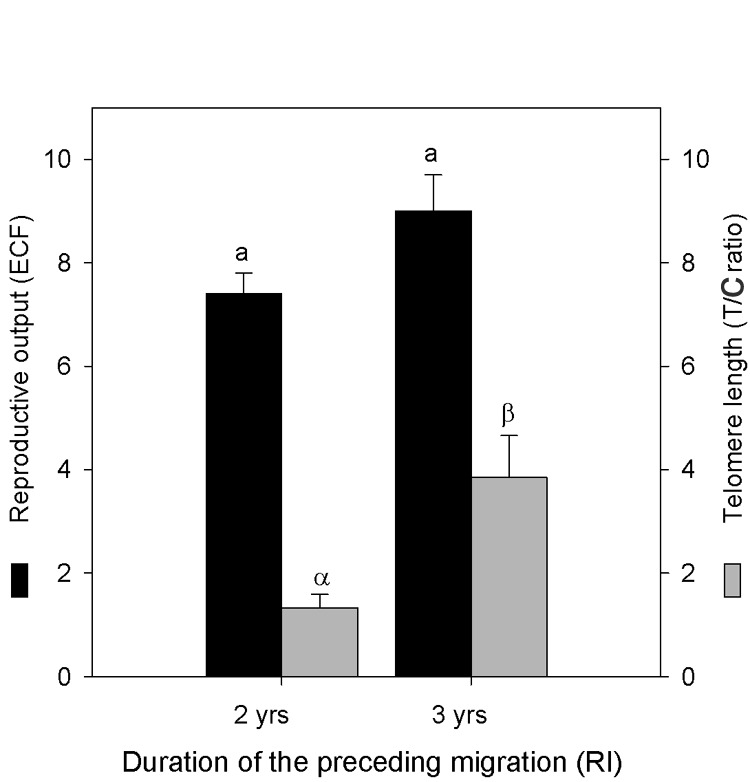
A major interest has recently emerged in understanding how telomere shortening, mechanism triggering cell senescence, is linked to organism ageing and life history traits in wild species. However, the links between telomere length and key history traits such as reproductive performances have received little attention and remain unclear to date. The leatherback turtle Dermochelys coriacea is a long-lived species showing rapid growth at early stages of life, one of the highest reproductive outputs observed in vertebrates and a dichotomised reproductive pattern related to migrations lasting 2 or 3 years, supposedly associated with different environmental conditions. Here we tested the prediction of blood telomere shortening with age in this species and investigated the relationship between blood telomere length and reproductive performances in leatherback turtles nesting in French Guiana. We found that blood telomere length did not differ between hatchlings and adults. The absence of blood telomere shortening with age may be related to an early high telomerase activity. This telomere-restoring enzyme was formerly suggested to be involved in preventing early telomere attrition in early fast-growing and long-lived species, including squamate reptiles. We found that within one nesting cycle, adult females having performed shorter migrations prior to the considered nesting season had shorter blood telomeres and lower reproductive output. We propose that shorter blood telomeres may result from higher oxidative stress in individuals breeding more frequently (i.e., higher costs of reproduction) and/or restoring more quickly their body reserves in cooler feeding areas during preceding migration (i.e., higher foraging costs). This first study on telomeres in the giant leatherback turtle suggests that blood telomere length predicts not only survival chances, but also reproductive performances. Telomeres may therefore be a promising new tool to evaluate individual reproductive quality which could be useful in such species of conservation concern.
Overview
The claims and statistics of this paper haven’t been checked yet.
Run the check — free, no account needed. It reads the open-access text and checks the sources it cites.
Integrity signals
Registry
Cites
Statistics
Figures
Verification
Claims the paper makes
The claims and statistics of this paper haven’t been checked yet.
Run the check — free, no account needed. It reads the open-access text and checks the sources it cites.
Claims other papers make about this one
Each is checked against this paper’s own text: does it say what the citing paper says it does?
The source backs part of the claim, not all of it — or backs it for a different population, condition or comparison.
In the citing paper
“Inhibition of ROS and unique telomerase and perhaps DNA repair mechanisms make turtles’ longevity possible.317”
From Inflammation and aging: signaling pathways and intervention therapies (2023) · cites this paper as [317]
Experimental — accuracy not yet measured
Self-check
Percentages, sums and reported differences re-computed from the paper’s own numbers.
The self-check needs the paper’s full text.
Citations
Cites
Crawley, M. J. (2007) · Medical Entomology and Zoology · Cited by 5,431
Extension of Life-Span by Introduction of Telomerase into Normal Human Cells
Bodnar, A. G., Ouellette, M., Frolkis, M., Holt, S. E., Chiu, C.-P., Morin, G. B., Harley, C. B., Shay, J. W., Lichtsteiner, S., & Wright, W. E. (1998) · Science · doi:10.1126/science.279.5349.349 · Cited by 4,975
Telomere measurement by quantitative PCR
Cawthon, R. (2002) · Nucleic Acids Research · doi:10.1093/nar/30.10.e47 · Cited by 3,550
Accelerated telomere shortening in response to life stress
Epel, E. S., Blackburn, E. H., Lin, J., Dhabhar, F. S., Adler, N. E., Morrow, J. D., & Cawthon, R. M. (2004) · Proceedings of the National Academy of Sciences · doi:10.1073/pnas.0407162101 · Cited by 3,002
Oxidative stress shortens telomeres
von Zglinicki, T. (2002) · Trends in Biochemical Sciences · doi:10.1016/s0968-0004(02)02110-2 · Cited by 2,524
Telomere states and cell fates
Blackburn, E. H. (2000) · Nature · doi:10.1038/35040500 · Cited by 1,396
The Biology of Sea Turtles, Volume I
(2017) · CRC Press eBooks · doi:10.1201/9780203737088 · Cited by 728
Telomere length in early life predicts lifespan
Heidinger, B. J., Blount, J. D., Boner, W., Griffiths, K., Metcalfe, N. B., & Monaghan, P. (2012) · Proceedings of the National Academy of Sciences · doi:10.1073/pnas.1113306109 · Cited by 713
Telomere Length as an Indicator of Biological Aging
Bénétos, A., Okuda, K., Lajemi, M., Kimura, M., Thomas, F., Skurnick, J., Labat, C., Bean, K., & Aviv, A. (2001) · Hypertension · doi:10.1161/01.hyp.37.2.381 · Cited by 628
Metcalfe, N. B., & Alonso‐Álvarez, C. (2010) · Functional Ecology · doi:10.1111/j.1365-2435.2010.01750.x · Cited by 559
Research works printed but not linked: 1
- MJ Crawley, 2007, The R book. J. Wiley & Sons Ltd, Chichester, UK.
Cited by
Sorted by citations
Inflammation and aging: signaling pathways and intervention therapies
Li, X., Li, C., Zhang, W., Wang, Y., Qian, P., & Huang, H. (2023) · Signal Transduction and Targeted Therapy · doi:10.1038/s41392-023-01502-8 · Cited by 1,443
“Inhibition of ROS and unique telomerase and perhaps DNA repair mechanisms make turtles’ longevity possible.(317) Centenarian human models Unlike artificial models, the centenarian model, as a naturally occurring model, has become an indispensable tool for human beings to decipher longevity.”
BackgroundAre we working towards global research priorities for management and conservation of sea turtles?
Rees, A., Alfaro‐Shigueto, J., Barata, P. C. R., Bjorndal, K. A., Bolten, A. B., Bourjea, J., Broderick, A. C., Campbell, L. M., Cardona, L., Carreras, C., et al. (2016) · Endangered Species Research · doi:10.3354/esr00801 · Cited by 268
“However, while telomere length analysis has been promising in some cases (Hatase et al. 2008), others have found no link with age (Girondot & Garcia 1999, Plot et al. 2012).”
BackgroundSomatic growth and telomere dynamics in vertebrates: relationships, mechanisms and consequences
Monaghan, P., & Ozanne, S. E. (2018) · Philosophical Transactions of the Royal Society B Biological Sciences · doi:10.1098/rstb.2016.0446 · Cited by 248
The association between stressors and telomeres in non‐human vertebrates: a meta‐analysis
Chatelain, M., Drobniak, S. M., & Szulkin, M. (2019) · Ecology Letters · doi:10.1111/ele.13426 · Cited by 237
Angelier, F., Costantini, D., Blévin, P., & Chastel, O. (2017) · General and Comparative Endocrinology · doi:10.1016/j.ygcen.2017.07.007 · Cited by 174
Alternative Animal Models of Aging Research
Holtze, S., Gorshkova, E. A., Braude, S. H., Cellerino, A., Dammann, P., Hildebrandt, T. B., Hoeflich, A., Hoffmann, S., Koch, P., Tozzini, E. T., et al. (2021) · Frontiers in Molecular Biosciences · doi:10.3389/fmolb.2021.660959 · Cited by 137
Telomeres shorten more slowly in slow-aging wild animals than in fast-aging ones
Dantzer, B., & Fletcher, Q. E. (2015) · Experimental Gerontology · doi:10.1016/j.exger.2015.08.012 · Cited by 106
Ectothermic telomeres: it's time they came in from the cold
Olsson, M. M., Wapstra, E., & Friesen, C. R. (2018) · Philosophical Transactions of the Royal Society B Biological Sciences · doi:10.1098/rstb.2016.0449 · Cited by 103
Shorter telomeres precede population extinction in wild lizards
Dupoué, A., Rutschmann, A., Galliard, J. L., Clobert, J., Angelier, F., Marciau, C., Ruault, S., Miles, D. B., & Meylan, S. (2017) · Scientific Reports · doi:10.1038/s41598-017-17323-z · Cited by 90
Stier, A., Reichert, S., Criscuolo, F., & Bize, P. (2015) · Experimental Gerontology · doi:10.1016/j.exger.2015.09.001 · Cited by 93
“…fuscus Captive/Wil d C/L C: ↔ ; L: ↗ (young)/↘ (old) Young: No, Old: Yes (TeloLength) Ujvari et al. 2009 Sand lizard Lacerta agilis Wild C ↗ (F); ↔ (M) na Olsson et al. 2010 Leatherback turtle Dermochelys coriacea Wild C ↔ na Plot et al. 2012 Fish Black sea bream Acanthopagrus schlegeli…”
Self-citationIs telomere length a molecular marker of individual quality? Insights from a long‐lived bird
Angelier, F., Weimerskirch, H., Barbraud, C., & Chastel, O. (2019) · Functional Ecology · doi:10.1111/1365-2435.13307 · Cited by 87
Sudyka, J. (2019) · BioEssays · doi:10.1002/bies.201900095 · Cited by 81
Age and Heat Stress as Determinants of Telomere Length in a Long-Lived Fish, the Siberian Sturgeon
Simide, R., Angelier, F., Gaillard, S., & Stier, A. (2016) · Physiological and Biochemical Zoology · doi:10.1086/687378 · Cited by 76
Hoelzl, F., Smith, S., Cornils, J. S., Aydinonat, D., Bieber, C., & Ruf, T. (2016) · Scientific Reports · doi:10.1038/srep36856 · Cited by 74
Sudyka, J., Arct, A., Drobniak, S. M., Dubiec, A., Gustafsson, L., & Cichoń, M. (2014) · Journal of Evolutionary Biology · doi:10.1111/jeb.12479 · Cited by 72
“Previous studies suggested the existence of a link between breeding effort and telomere dynamics, but as the reproductive effort was not experimentally manipulated, such outcomes are open for alternative explanations (Bauch et al., 2012; Plot et al., 2012).”
BackgroundEnvironmental perturbations influence telomere dynamics in long-lived birds in their natural habitat
Mizutani, Y., Tomita, N., Niizuma, Y., & Yoda, K. (2013) · Biology Letters · doi:10.1098/rsbl.2013.0511 · Cited by 73
“Telomere dynamics (the rate at which the lengths of telomeres change over time) have been the subject of intense investigation as a molecular marker for individual quality [1,2] and life expectancy [3–5].”
BackgroundTraits Shared by Marine Megafauna and Their Relationships With Ecosystem Functions and Services
Tavares, D. C., de Moura, J. F., Acevedo‐Trejos, E., & Merico, A. (2019) · Frontiers in Marine Science · doi:10.3389/fmars.2019.00262 · Cited by 76
Evolutionary ecology of telomeres: a review
Olsson, M. M., Wapstra, E., & Friesen, C. R. (2017) · Annals of the New York Academy of Sciences · doi:10.1111/nyas.13443 · Cited by 64
Number of Children and Telomere Length in Women: A Prospective, Longitudinal Evaluation
Barha, C. K., Hanna, C. W., Salvante, K. G., Wilson, S. L., Robinson, W. P., Altman, R. M., & Nepomnaschy, P. A. (2016) · PLoS ONE · doi:10.1371/journal.pone.0146424 · Cited by 59
Telomere length reflects individual quality in free-living adult king penguins
Vaillant, M. L., Viblanc, V. A., Saraux, C., Bohec, C. L., Maho, Y. L., Kato, A., Criscuolo, F., & Ropert‐Coudert, Y. (2015) · Polar Biology · doi:10.1007/s00300-015-1766-0 · Cited by 64
“2006), leatherback turtles Dermochelys coriacea (Plot et al. 2012) or common terns Sterna hirundo (Bauch et al.”
BackgroundSelf-citationAge-related sex differences in body condition and telomere dynamics of red-sided garter snakes
Rollings, N., Uhrig, E. J., Krohmer, R. W., Waye, H. L., Mason, R. T., Olsson, M. M., Whittington, C. M., & Friesen, C. R. (2017) · Proceedings of the Royal Society B Biological Sciences · doi:10.1098/rspb.2016.2146 · Cited by 59
“7 Quantifying telomere length 152 Telomere length was measured using real-time quantitative PCR (qPCR) as we have done 153 previously [78] using the 18S ribosomal RNA (18S) gene as the non-variable in copy number 154 reference gene [78-80]; see supplement more details.”
MethodEffects of developmental conditions on growth, stress and telomeres in black‐legged kittiwake chicks
Young, R. C., Welcker, J., Barger, C. P., Hatch, S. A., Merkling, T., Kitaiskaia, E. V., Haussmann, M. F., & Kitaysky, A. S. (2017) · Molecular Ecology · doi:10.1111/mec.14121 · Cited by 56
Curvilinear telomere length dynamics in a squamate reptile
Újvári, B., Biro, P. A., Charters, J. E., Brown, G. P., Heasman, K., Beckmann, C., & Madsen, T. R. L. (2016) · Functional Ecology · doi:10.1111/1365-2435.12764 · Cited by 56
Migration and stress during reproduction govern telomere dynamics in a seabird
Schultner, J., Moe, B., Chastel, O., Bech, C., & Kitaysky, A. S. (2014) · Biology Letters · doi:10.1098/rsbl.2013.0889 · Cited by 50
“In addition, extending migration is suggested to allow the recovery from a stressful reproductive period [8].”
BackgroundSchultner, J., Moe, B., Chastel, O., Tartu, S., Bech, C., & Kitaysky, A. (2013) · Marine Ecology Progress Series · doi:10.3354/meps10603 · Cited by 44
Telomere dynamics in a lizard with morph‐specific reproductive investment and self‐maintenance
Rollings, N., Friesen, C. R., Sudyka, J., Whittington, C. M., Giraudeau, M., Wilson, M. R., & Olsson, M. M. (2017) · Ecology and Evolution · doi:10.1002/ece3.2712 · Cited by 39
Sex‐ And tissue‐specific differences in telomere length in a reptile
Rollings, N., Friesen, C. R., Whittington, C. M., Johansson, R., Shine, R., & Olsson, M. M. (2019) · Ecology and Evolution · doi:10.1002/ece3.5164 · Cited by 39
“The 18S gene (92 bp amplicon in Anolis) was selected as the ref‐ erence gene as it had previously been validated in reptiles (Plot et al., 2012; Rollings, Uhrig, et al., 2017).”
MethodBiological clocks as age estimation markers in animals: a systematic review and meta‐analysis
Clercq, L. L., Kotzé, A., Grobler, J. P., & Dalton, D. L. (2023) · Biological reviews/Biological reviews of the Cambridge Philosophical Society · doi:10.1111/brv.12992 · Cited by 42
“In terms of age-related telomere studies, telomere length has been shown to decline with age in American alligators (Scott et al ., 2006; Bae et al ., 2021), as well as loggerhead sea turtles (Hatase et al ., 2008; Plot et al ., 2012).”
BackgroundBauch, C., Gatt, M. C., Granadeiro, J. P., Verhulst, S., & Catry, P. (2020) · Molecular Ecology · doi:10.1111/mec.15399 · Cited by 33
The Power of Stress: The Telo-Hormesis Hypothesis
Burbano, M. S. J., & Gilson, É. (2021) · Cells · doi:10.3390/cells10051156 · Cited by 37
Cerchiara, J. A., Risques, R. A., Prunkard, D. E., Smith, J. R., Kane, O. J., & Boersma, P. D. (2017) · Ecology and Evolution · doi:10.1002/ece3.3128 · Cited by 32
Phillips, K. P., Jorgensen, T. H., Jolliffe, K. G., & Richardson, D. S. (2017) · Journal of Evolutionary Biology · doi:10.1111/jeb.13152 · Cited by 25
Long‐term effects of superoxide and DNA repair on lizard telomeres
Olsson, M. M., Friesen, C. R., Rollings, N., Sudyka, J., Lindsay, W. R., Whittington, C. M., & Wilson, M. R. (2018) · Molecular Ecology · doi:10.1111/mec.14913 · Cited by 25
Early‐breeding females experience greater telomere loss
Graham, J. L., Bauer, C. M., Heidinger, B. J., Ketterson, E. D., & Greives, T. J. (2018) · Molecular Ecology · doi:10.1111/mec.14952 · Cited by 24
Panasiak, L., Dobosz, S., & Ocalewicz, K. (2020) · Genes · doi:10.3390/genes11070786 · Cited by 24
Atema, E., Mulder, G., van Noordwijk, A. J., & Verhulst, S. (2019) · Molecular Ecology Resources · doi:10.1111/1755-0998.12996 · Cited by 24
Elevated reproduction does not affect telomere dynamics and oxidative stress
Sudyka, J., Casasole, G., Rutkowska, J., & Cichoń, M. (2016) · Behavioral Ecology and Sociobiology · doi:10.1007/s00265-016-2226-8 · Cited by 22
“Indeed, it has been already demonstrated that reproduction triggers telomere loss in both correlative (Kotrschal et al. 2007; Heidinger et al. 2012; Plot et al. 2012; Bauch et al. 2013) and experimental studies (Reichert et al. 2014; Sudyka et al. 2014).”
BackgroundComparative cellular biogerontology: Where do we stand?
Alper, S. J., Bronikowski, A. M., & Harper, J. M. (2015) · Experimental Gerontology · doi:10.1016/j.exger.2015.08.018 · Cited by 22
Age at maturation has sex- and temperature-specific effects on telomere length in a fish
Noreikienė, K., Kuparinen, A. K., & Merilä, J. (2017) · Oecologia · doi:10.1007/s00442-017-3913-5 · Cited by 19
Telomere dynamics in relation to experimentally increased locomotion costs and fitness in great tits
Atema, E., van Noordwijk, A. J., & Verhulst, S. (2021) · Molecular Ecology · doi:10.1111/mec.16162 · Cited by 17
“Nevertheless, the general tendency is a positive relation between telomere length and reproductive success (Eastwood et al., 2019; Pauliny et al., 2006; Plot et al., 2012; Le Vaillant et al., 2015).”
BackgroundNontraditional systems in aging research: an update
Mikuła‐Pietrasik, J., Pakuła, M., Markowska, M., Uruski, P., Szczepaniak‐Chicheł, L., Tykarski, A., & Książek, K. (2020) · Cellular and Molecular Life Sciences · doi:10.1007/s00018-020-03658-w · Cited by 15
Longitudinal dynamics and behavioural correlates of telomeres in male wire‐tailed manakins
Vernasco, B. J., Dakin, R., Majer, A. D., Haussmann, M. F., Ryder, T. B., & Moore, I. T. (2020) · Functional Ecology · doi:10.1111/1365-2435.13715 · Cited by 17
Ravindran, S., Froy, H., Underwood, S., Dorrens, J., Seeker, L. A., Watt, K., Wilbourn, R. V., Pilkington, J. G., Harrington, L. A., Pemberton, J. M., et al. (2021) · Molecular Ecology · doi:10.1111/mec.16175 · Cited by 15
“…positive associations between TL and reproductive traits (Angelier et al., 2019; Barha et al., 2016; Criscuolo et al., 2018; Le Vaillant et al., 2015; Parolini et al., 2017; Pauliny et al., 2006; Plot et al., 2012) or detected no significant relationship (Hoelzl et al., 2016; Johnsen et al., 2017).”
BackgroundYoung, R., Orben, R. A., Will, A., & Kitaysky, A. (2016) · Marine Ecology Progress Series · doi:10.3354/meps12022 · Cited by 15
“Short TL and loss of TL may be related to variation in migration distance (Plot et al. 2012), elevated breeding stress (Schultner et al. 2014a), lower survival (Salomons et al. 2009, Barrett et al. 2013), or poorquality wintering habitat (Angelier et al. 2013), making telomere dynamics a good…”
Covariation in superoxide, sperm telomere length and sperm velocity in a polymorphic reptile
Friesen, C. R., Rollings, N., Wilson, M. R., Whittington, C. M., Shine, R., & Olsson, M. M. (2020) · Behavioral Ecology and Sociobiology · doi:10.1007/s00265-020-02855-8 · Cited by 14
“…(Qiagen, Chadstone, VIC, Australia) according to published protocols (Rollings et al. 2017a, b) using techniques developed by Criscuolo et al. (2009) and Plot et al. (2012) and with the 18S ribosomal RNA (18S) gene as the non-variable copy number reference gene (Rollings et al. 2017a, b).”
MethodValidating the use of oral swabs for telomere length assessment in dogs
Dutra, L. M. L., de Souza, F. S., Friberg, I. M., Araújo, M., Vasconcellos, A. D. S., & Young, R. J. (2020) · Journal of Veterinary Behavior · doi:10.1016/j.jveb.2020.07.011 · Cited by 12
Telomere length in Agave tequilana Weber plants during the in vitro to ex vitro transition
Rescalvo-Morales, A., Monja-Mio, K. M., Robert, M. L., & Sánchez‐Teyer, L. F. (2018) · Plant Cell Tissue and Organ Culture (PCTOC) · doi:10.1007/s11240-018-1499-1 · Cited by 11
Multifactorial processes to slowing the biological clock: Insights from a comparative approach
Sanchez, J. R., Milton, S., Corbit, K. C., & Buffenstein, R. (2015) · Experimental Gerontology · doi:10.1016/j.exger.2015.08.017 · Cited by 10
“…there is little evidence of immunosenescence (Zimmerman et al., 2013), while telomere length was found not to vary between hatchlings and adults of the European freshwater turtle Emys orbicularis (Girondot and Garcia, 1998) or the leatherback sea turtle Dermochelys coriacea (Plot et al., 2012).”
BackgroundTelomeres and telomerase: active but complex players in life-history decisions
Frydrychová, R. Č., Konopová, B., Peška, V., Brejcha, M., & Sábová, M. (2023) · Biogerontology · doi:10.1007/s10522-023-10060-z · Cited by 8
“…activity in somatic cells of other ectothermic vertebrates such as snakes, lizards, and turtles (Reptilia) (Paitz et al. 2004; Olsson et al. 2010; Plot et al. 2012; Rollings et al. 2017; Ujvari et al. 2017; Singchat et al. 2019; Barlian and Riani 2020; Burraco et al. 2020), which are also…”
Friesen, C. R., Wilson, M. R., Rollings, N., Sudyka, J., Giraudeau, M., Whittington, C. M., & Olsson, M. M. (2021) · Journal of Experimental Biology · doi:10.1242/jeb.242164 · Cited by 7
French, S. S., Virgin, E. E., Ki, K. C., Maryon, D., Goode, A. B. C., & Pasachnik, S. A. (2021) · Journal of Herpetology · doi:10.1670/20-099 · Cited by 6
“…be a contributing factor along with other reproductive costs (i.e. energy expenditure) that limit investment into future reproductive events (Plot et al., 2012; Stier et al., 2012; Costantini and Dell’Omo, 2015; Costantini et al., 2016), or lead to reduced longevity or survival probability…”
BackgroundMeter, B., Kratochvíl, L., Kubička, L., & Starostová, Z. (2022) · Frontiers in Physiology · doi:10.3389/fphys.2022.917460 · Cited by 6
“The 18S ribosomal RNA genes (18S) had a primer pair already validated previously in reptiles (Plot et al., 2012; Rollings et al., 2017).”
BackgroundMethodEckhardt, F. S., Pauliny, A., Rollings, N., Mutschmann, F., Olsson, M. M., Kraus, C., & Kappeler, P. M. (2020) · BMC Evolutionary Biology · doi:10.1186/s12862-020-01724-2 · Cited by 8
Noreikienė, K., Jaatinen, K., Steele, B. B., & Öst, M. (2020) · Journal für Ornithologie · doi:10.1007/s10336-020-01847-9 · Cited by 8
The effects of costly telomere maintenance on lifespan: reproductive tradeoffs in sand lizards
Olsson, M. M., Miller, E., Rollings, N., Lillie, M., Hufton, J., Hansson, A., & Wapstra, E. (2024) · Evolution · doi:10.1093/evolut/qpae181 · Cited by 5
“…salar ; McLennan et al., 2018), cave-dwelling amphibians ( Proteus anguinus ; Voituron et al., 2023), leatherback turtles ( Dermochelys coriacea ; Plot et al., 2012), sand lizards (Olsson et al., 2018a), common lizards ( Lacerta vivipara ) (McLennan et al., 2019), tropical pythons ( Liasis…”
Glen, C. G., Ponciano, J. M., Gillooly, J. F., Torres‐Sánchez, M., Mustin, W., Bolten, A. B., & Bjorndal, K. A. (2025) · Communications Biology · doi:10.1038/s42003-025-08717-1 · Cited by 4
“However, in wild leatherback turtles the stress of reproducing at a higher frequency had negative physiological effects 59 , suggesting a trade-off between current and future reproduction that in fl uences lifetime reproductive success 60 .”
Shorter telomeres are associated with shell anomalies in a long‐lived tortoise
Mira‐Jover, A., Rodríguez‐Caro, R. C., Noguera, J. C., Fritz, U., Kehlmaier, C., de la Fuente, M. I. G., Giménez, A., & Graciá, E. (2024) · Journal of Zoology · doi:10.1111/jzo.13154 · Cited by 4
How Old Is a Turtle? Challenges in Interpreting Age Information in Sea Turtles
Morales-Mérida, B. A., Pilcher, N. J., & Girondot, M. (2024) · Ecologies · doi:10.3390/ecologies5040031 · Cited by 4
Transmissible cancer and longitudinal telomere dynamics in Tasmanian devils (Sarcophilus harrisii)
Madsen, T. R. L., Klaassen, M., Raven, N., Dujon, A. M., Jennings, G., Frédéric Thomas, A., Hamede, R., & Újvári, B. (2022) · Molecular Ecology · doi:10.1111/mec.16721 · Cited by 2
“…during the first years of life followed by a decrease in TL in older individuals (e.g., Ujvari et al., 2017); (iv) no change in TL with increasing age (e.g., Plot et al., 2012); and (v) an increase in TL with increasing age (Adwan Shekhidem et al., 2019; for a recent review see Remot et al., 2021).”
BackgroundAltitude‐ and Sex‐Specific Telomere Dynamics in the Montane Salamander Pachytriton cheni
Shi, J., Zhang, Z., He, Z., Sun, Q., Wu, S., Zhang, C., Liu, M., Bai, Y., Wang, S., Wang, Z., et al. (2025) · Molecular Ecology · doi:10.1111/mec.70174 · Cited by 2
“…RNA (18S rRNA) gene is one of the most frequently considered and utilised housekeeping genes for this purpose, and its application is well-documented in previous research, including studies on ectotherms (Rollings et al. 2017; Giraudeau et al. 2016; Plot et al. 2012; Zamora-Camacho et al. 2023).”
Power, M. L., Ransome, R. D., Romaine, L., Jones, G., & Teeling, E. C. (2025) · Proceedings of the National Academy of Sciences · doi:10.1073/pnas.2515125122 · Cited by 2
“…context, individual quality refers to intrinsic differences among individuals in their physiological condition, genetic predisposition, and ability to allocate resources efficiently, enabling better somatic maintenance, longer lifespan, and higher cumulative reproductive success ( 25 , 31 – 34 ).”
Aging Process in Dermal Fibroblast Cell Culture of Green Turtle (Chelonia mydas)
Barlian, A., & Riani, Y. D. (2020) · 3BIO Journal of Biological Science Technology and Management · doi:10.5614/3bio.2020.2.2.2 · Cited by 2
“In Dermochelys coriacea, another member of Cheloniidae family, a study also shows similar results in which telomere shortening does not occur in blood cell embryo or adult organism [20].”
ResultLardy, S., Gasparini, J., Corbel, H., Frantz, A., Perret, S., Zahn, S., Criscuolo, F., & Jacquin, L. (2017) · Journal of Experimental Zoology Part A Ecological and Integrative Physiology · doi:10.1002/jez.2142 · Cited by 2
Self-citationOlsson, M. M., Miller, E., Rollings, N., & Wapstra, E. (2025) · Functional Ecology · doi:10.1111/1365-2435.70163 · Cited by 1
Flashy male Jamaican anoles Anolis grahami show accelerated telomere attrition
Passos, L. F. (2022) · Herpetological Journal · doi:10.33256/32.2.8084 · Cited by 1
Stress and reproduction in reptiles
Korzan, W. J., & Summers, C. H. (2024) · Elsevier eBooks · doi:10.1016/b978-0-443-16022-6.00008-1 · Cited by 1
A short story: senescence in an annual reptile, Labord’s chameleon (Furcifer labordi)
Eckhardt, F. S. (2020) · doi:10.53846/goediss-8355 · Cited by 1
Clercq, L. L. (2023) · Scientometrics · doi:10.1007/s11192-023-04880-6 · Cited by 2
Friesen, C. R., Wilson, M. R., Rollings, N., Sudyka, J., Giraudeau, M., Whittington, C. M., & Olsson, M. M. (2020) · bioRxiv (Cold Spring Harbor Laboratory) · doi:10.1101/2020.12.23.424255
Pacoń, J., Cholewińska, P., Wojnarowski, K., Kruszyński, W., & Wołoszyńska, M. (2024) · Research Square · doi:10.21203/rs.3.rs-3830342/v1
Through the Lens of Age: Using Dog Photographs to Uncover Welfare and Stress
Dutra, L. M. L., Vasconcellos, A. D. S., & Young, R. J. (2024) · Pets · doi:10.3390/pets1030026
“For the reference gene, 18S primers were utilized, with the sense primer (5 ′ -GAGGTGAAATTCTTGGACCGG-3 ′ ) and antisense primer (5 ′ -CGAACCTCCGACTTTCGTTCT-3 ′ ) derived from [24].”
Telomere Tales: Exploring the Impact of Stress, Sociality, and Exercise on Dogs’ Cellular Aging
Dutra, L. M. L., de Souza, F. S., Vasconcellos, A. D. S., Young, R. J., & Schork, I. G. (2025) · Veterinary Sciences · doi:10.3390/vetsci12050491
“The master mix preparation for the qPCR reaction followed the protocol established by [19] and validated for dog samples by [21].”
Is Telomere Length Optimized in Hatchling Sand Lizards?
Olsson, M. M., Miller, E., Rollings, N., Wapstra, E., & Shine, R. (2025) · Evolution & Development · doi:10.1111/ede.70020
“…salar ) (McLennan et al. 2018), cave ‐ dwelling amphibians ( Proteus anguinus ) (Voituron et al. 2023), leatherback turtles ( Dermo-chelys coriacea ) (Plot et al. 2012), sand lizards (Olsson et al. 2024), common lizards ( Lacerta vivipara ) (McLennan et al. 2019), highland populations of ocellated…”
Glen, C. G., Lebreton, J., Mustin, W., & Bjorndal, K. A. (2025) · Ecology and Evolution · doi:10.1002/ece3.72430
D’Angiolo, M. (2021) · theses.fr (ABES) · doi:10.70675/b4a54c23z9d95z4c65zac44z6e1809fed4fe
Depeux, C. (2020) · theses.fr (ABES) · doi:10.70675/91b4b095za4d3z4888za7f6za92218580ee1
Telomere dynamics and life-history traits
Remot, F. (2022) · theses.fr (ABES) · doi:10.70675/4f13b16fzd2b9z4e95z8af2z29581b8addb4
Leukocyte telomere shortening in mice revisited
Pessoa, J., & de Jesus, B. B. (2026) · Discover Aging · doi:10.1007/s44518-026-00010-5
“Additionally, blood telomere length did not differ between hatchlings and adults of the leatherback turtle ( Dermochelys coria-cea ) [57].”
Metadata
- Authors
- Plot, V., Criscuolo, F., Zahn, S., & Georges, J.-Y.
- Affiliations
- Centre National de la Recherche Scientifique (FR)
- Corresponding author
- Plot, Virginie
- Venue
- PLoS ONE
- Publisher
- Public Library of Science (PLoS)
- Published
- 2012-07-13
- Volume
- 7
- Issue
- 7
- Pages
- e40855
- ISSN
- 1932-6203 (ISSN-L)
- PMC
- PMC3396605
- OpenAlex
- W2048943014
- Cited by
- 80
- References
- 50
- Citations by year
- 2026: 1 · 2025: 7 · 2024: 6 · 2023: 4 · 2022: 4 · 2021: 7 · 2020: 12 · 2019: 6 · 2018: 6 · 2017: 10 · 2016: 7 · 2015: 6 · 2014: 2 · 2013: 2
- FWCI
- 3.16
- Type
- journal article
- Language
- en
- Open access
- gold
- doi.org
- Locations
- PLoS ONE (publishedVersion, cc-by)
- Europe PMC (PubMed Central) (publishedVersion, cc-by)
- PubMed Central (publishedVersion, cc-by)
- PubMed (publishedVersion)
- HAL (submittedVersion)
- DOAJ (DOAJ: Directory of Open Access Journals) (submittedVersion)
- Funders
- Agence Nationale de la Recherche (ANR-07-JCJC-0122)
- Topics
- Physical Sciences › Environmental Science › Nature and Landscape Conservation › Turtle Biology and Conservation
- Life Sciences › Biochemistry, Genetics and Molecular Biology › Cell Biology › Telomeres, Telomerase, and Senescence
- Life Sciences › Agricultural and Biological Sciences › Ecology, Evolution, Behavior and Systematics › Animal Behavior and Reproduction
- Keywords
- telomere length, Dermochelys coriacea, aging, reproductive output, telomerase activity, cellular senescence, sea turtle migration, oxidative stress, foraging costs, life-history traits
- MeSH terms
- Animals, DNA, Female, French Guiana, Longevity, Models, Biological, Reproduction, Turtles, Telomere, Clutch Size, Telomere Homeostasis
About these checks
Registry, retraction, Cites and statistics results are computed, not judged, with one exception: a printed reference that no index lists is read once by a model before it counts as a citation error. Claims are extracted by a model and kept only when their quote appears verbatim in the text; each cited source is then checked, with a model’s help, for whether it says what the claim relies on. Those verdicts can be wrong — read the claim’s quote and the cited source before relying on one.
Statistics and arithmetic are recomputed, not judged.
Confidence bands are shown only for fields calibrated on our annotated test set. None is calibrated yet, so no band is shown.
What counts as a claim ›How we measure confidence ›How we check this ›
Are you an author, or do you see a problem with this page? Request a review
