

The DOI matches its Crossref record; 63 of the 63 references it cites were found in a registry or an index.
Probiotic Bacteria Regulate Intestinal Epithelial Permeability in Experimental Ileitis by a TNF-Dependent Mechanism
Open accessAbstract
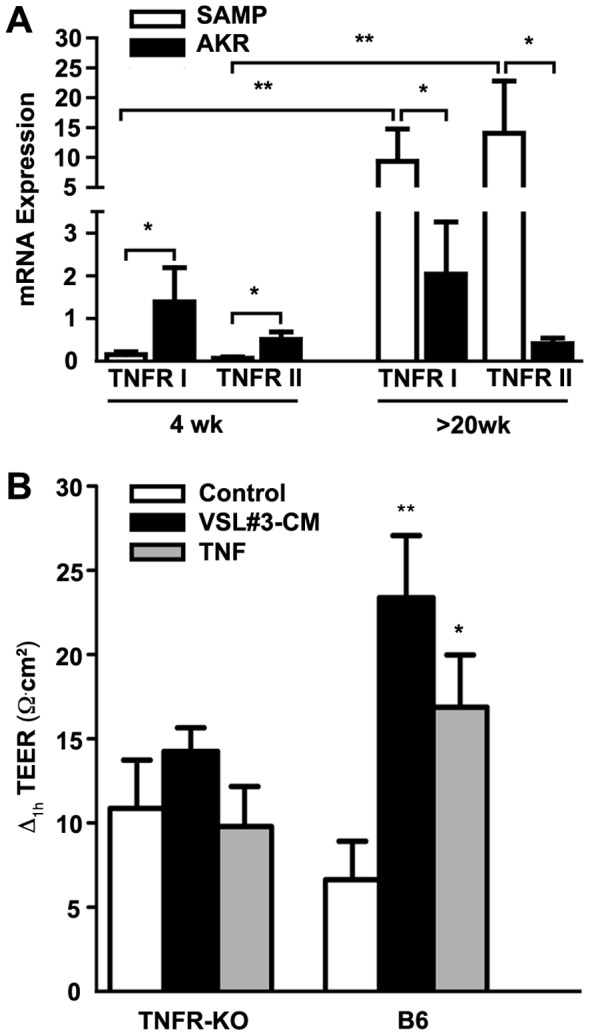
BACKGROUND: We previously showed that the probiotic mixture, VSL#3, prevents the onset of ileitis in SAMP/YitFc (SAMP) mice, and this effect was associated with stimulation of epithelial-derived TNF. The aim of this study was to determine the mechanism(s) of VSL#3-mediated protection on epithelial barrier function and to further investigate the "paradoxical" effects of TNF in preventing SAMP ileitis. METHODS: Permeability was evaluated in SAMP mice prior to the onset of inflammation and during established disease by measuring transepithelial electrical resistance (TEER) on ex vivo-cultured ilea following exposure to VSL#3 conditioned media (CM), TNF or VSL#3-CM + anti-TNF. Tight junction (TJ) proteins were assessed by qRT-PCR, Western blot, and confocal microscopy, and TNFRI/TNFRII expression measured in freshly isolated intestinal epithelial cells (IEC) from SAMP and control AKR mice. RESULTS: Culture with either VSL#3-CM or TNF resulted in decreased ileal paracellular permeability in pre-inflamed SAMP, but not SAMP with established disease, while addition of anti-TNF abrogated these effects. Modulation of the TJ proteins, claudin-2 and occludin, occurred with a significant decrease in claudin-2 and increase in occludin following stimulation with VSL#3-CM or TNF. TNF protein levels increased in supernatants of SAMP ilea incubated with VSL#3-CM compared to vehicle, while IEC-derived TNFR mRNA expression decreased in young, and was elevated in inflamed, SAMP versus AKR mice. CONCLUSIONS: Our data demonstrate that the previously established efficacy of VSL#3 in preventing SAMP ileitis is due to direct innate and homeostatic effects of TNF on the gut epithelium, modulation of the TJ proteins, claudin-2 and occludin, and overall improvement of intestinal permeability.
Overview
The claims and statistics of this paper haven’t been checked yet.
Run the check — free, no account needed. It reads the open-access text and checks the sources it cites.
Integrity signals
Registry
Cites
Statistics
Figures
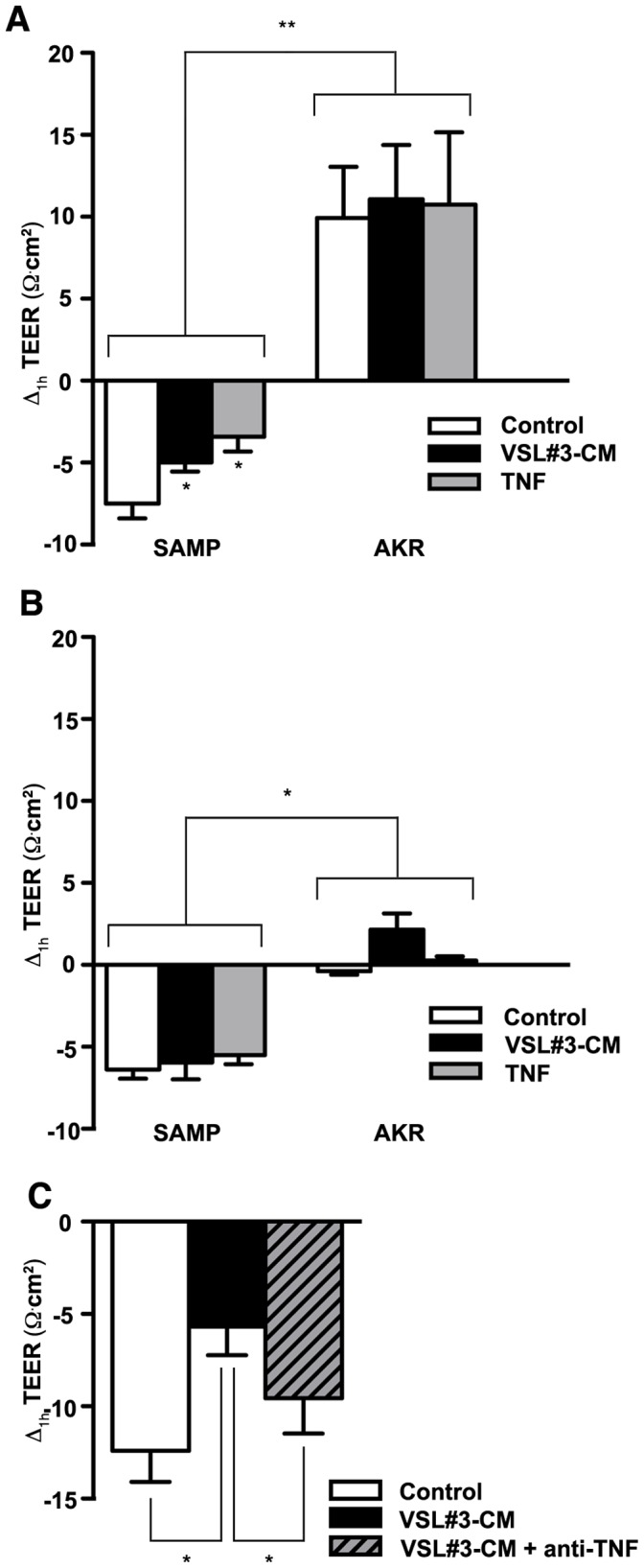
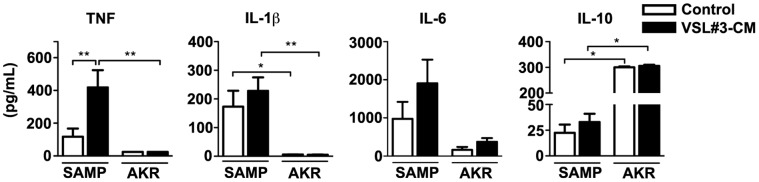
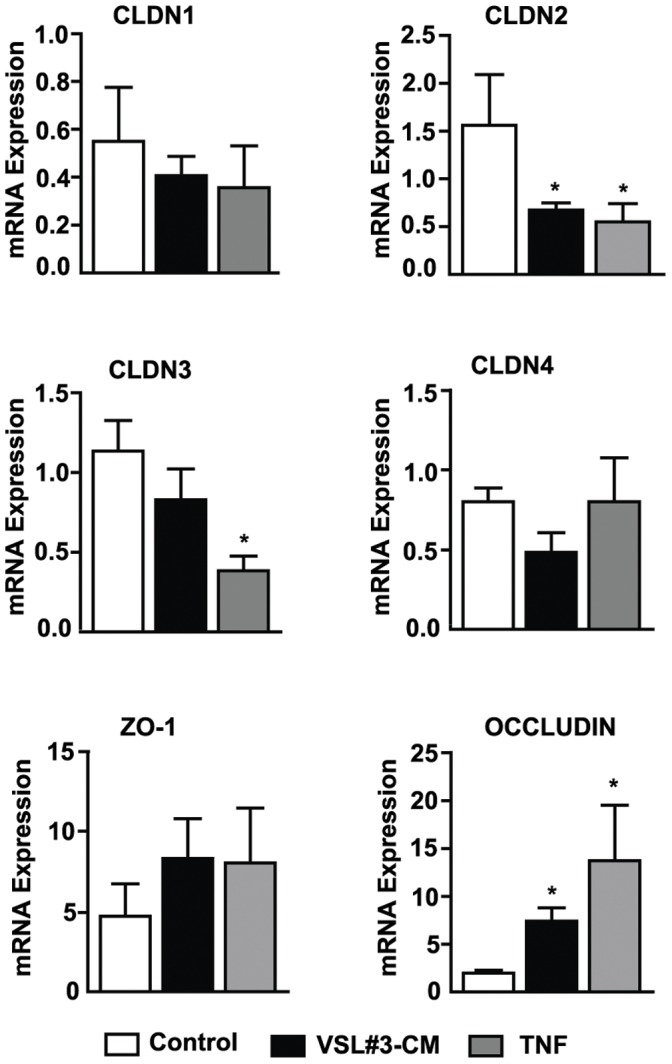
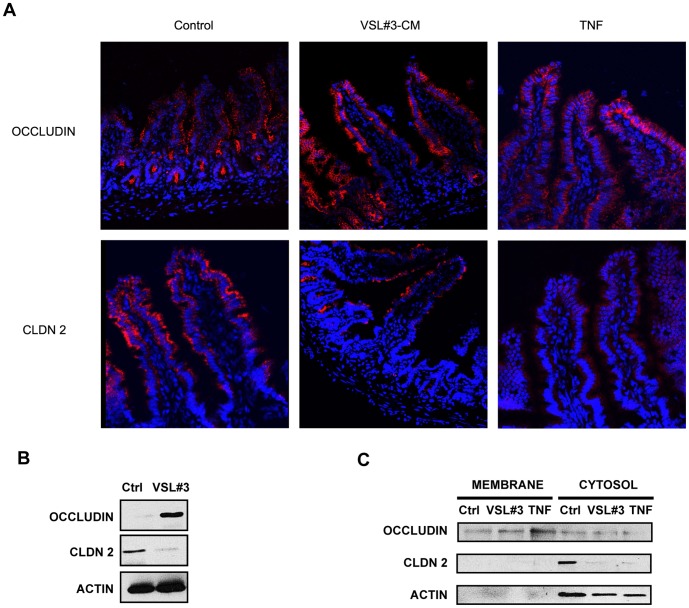
Verification
Claims the paper makes
The claims and statistics of this paper haven’t been checked yet.
Run the check — free, no account needed. It reads the open-access text and checks the sources it cites.
Claims other papers make about this one
Each is checked against this paper’s own text: does it say what the citing paper says it does?
In the citing paper
“Various studies have reported the beneficial effects of probiotics by enhancing intestinal epithelial integrity, protecting from barrier disruption, stimulating a healthy homeostasis of the mucosal immune system and suppressing pathogenic bacterial growth (Ait-Belgnaoui et al., 2012;Corridoni et al., 2012;Patel et al., 2012;Sartor, 2005;Zareie et al., 2006).”
From The Gut-Brain Axis in Parkinson’s Disease: Possibilities for Food-Based Therapies (2017) · cites this paper as Corridoni et al., 2012
Self-check
Percentages, sums and reported differences re-computed from the paper’s own numbers.
The self-check needs the paper’s full text.
Citations
Cites
Recognition of Commensal Microflora by Toll-Like Receptors Is Required for Intestinal Homeostasis
Rakoff-Nahoum, S., Paglino, J., Eslami-Varzaneh, F., Edberg, S., & Medzhitov, R. (2004) · Cell · doi:10.1016/j.cell.2004.07.002 · Cited by 4,251
Maintenance infliximab for Crohn's disease: the ACCENT I randomised trial
Hanauer, S. B., Feagan, B. G., Lichtenstein, G. R., Mayer, L., Schreiber, S., Colombel, J., Rachmilewitz, D., Wolf, D. C., Olson, A. D., Bao, W., et al. (2002) · The Lancet · doi:10.1016/s0140-6736(02)08512-4 · Cited by 4,164
Infliximab for Induction and Maintenance Therapy for Ulcerative Colitis
Rutgeerts, P. J., Sandborn, W. J., Feagan, B. G., Reinisch, W., Olson, A. D., Johanns, J., Travers, S., Rachmilewitz, D., Hanauer, S. B., Lichtenstein, G. R., et al. (2005) · New England Journal of Medicine · doi:10.1056/nejmoa050516 · Cited by 3,910
IKKβ Links Inflammation and Tumorigenesis in a Mouse Model of Colitis-Associated Cancer
Greten, F. R., Eckmann, L., Greten, T. F., Park, J. M., Li, Z.-W., Egan, L. J., Kagnoff, M. F., & Karin, M. (2004) · Cell · doi:10.1016/j.cell.2004.07.013 · Cited by 2,433
Heller, F., Florian, P., Bojarski, C., Richter, J. F., Christ, M., Hillenbrand, B., Mankertz, J., Gitter, A. H., Bürgel, N., Fromm, M., et al. (2005) · Gastroenterology · doi:10.1016/j.gastro.2005.05.002 · Cited by 1,232
Zeißig, S., Bürgel, N., Günzel, D., Richter, J. F., Mankertz, J., Wahnschaffe, U., Kroesen, A. J., Zeitz, M., Fromm, M., & Schulzke, J. (2006) · Gut · doi:10.1136/gut.2006.094375 · Cited by 1,218
Complex Phenotype of Mice Lacking Occludin, a Component of Tight Junction Strands
Saitou, M., Furuse, M., Sasaki, H., Schulzke, J.-D., Fromm, M., Takano, H., Noda, T., & Tsukita, S. (2000) · Molecular Biology of the Cell · doi:10.1091/mbc.11.12.4131 · Cited by 1,195
Epithelial NEMO links innate immunity to chronic intestinal inflammation
Nenci, A., Becker, C., Wullaert, A., Gareus, R., Loo, G., Danese, S., Huth, M., Nikolaev, A., Neufert, C. F., Madison, B., et al. (2007) · Nature · doi:10.1038/nature05698 · Cited by 1,077
Heller, F., Florian, P., Bojarski, C., et al. (2005) · Gastroenterology · doi:10.1053/j.gastro.2005.05.002 · Cited by 1,016
Balda, M. S., Whitney, J. A., Flores, C., González, S., Cereijido, M., & Matter, K. (1996) · The Journal of Cell Biology · doi:10.1083/jcb.134.4.1031 · Cited by 884
Cited by
Sorted by citations
Intestinal permeability – a new target for disease prevention and therapy
Bischoff, S. C., Barbara, G., Buurman, W., Ockhuizen, T., Schulzke, J.-D., Serino, M., Tilg, H., Watson, A., & Wells, J. M. (2014) · BMC Gastroenterology · doi:10.1186/s12876-014-0189-7 · Cited by 1,755
Kelly, J. R., Kennedy, P. J., Cryan, J. F., Dinan, T. G., Clarke, G., & Hyland, N. P. (2015) · Frontiers in Cellular Neuroscience · doi:10.3389/fncel.2015.00392 · Cited by 1,110
Pastorelli, L., Salvo, C. D., Mercado, J. R., Vecchi, M. L., & Pizarro, T. T. (2013) · Frontiers in Immunology · doi:10.3389/fimmu.2013.00280 · Cited by 446
Self-citationIntestinal Inflammation and Mucosal Barrier Function
de Medina, F. S., Romero‐Calvo, I., Mascaraque, C., & Martínez‐Augustin, O. (2014) · Inflammatory Bowel Diseases · doi:10.1097/mib.0000000000000204 · Cited by 435
Tsilingiri, K., & Rescigno, M. (2012) · Beneficial Microbes · doi:10.3920/bm2012.0046 · Cited by 411
Metadata
- Authors
- Corridoni, D., Pastorelli, L., Mattioli, B., Locovei, S., Ishikawa, D., Arseneau, K. O., Chieppa, M., Cominelli, F., & Pizarro, T. T.
- Affiliations
- Case Western Reserve University (US)
- Gastroenterology Hospital "Saverio de Bellis" (IT)
- Corresponding author
- Pizarro, Theresa T.
- ORCID
- Venue
- PLoS ONE
- Publisher
- Public Library of Science (PLoS)
- Published
- 2012-07-25
- Volume
- 7
- Issue
- 7
- Pages
- e42067
- ISSN
- 1932-6203 (ISSN-L)
- PMC
- PMC3405026
- OpenAlex
- W2035314723
- Cited by
- 118
- References
- 62
- Citations by year
- 2026: 4 · 2025: 7 · 2024: 4 · 2023: 5 · 2022: 14 · 2021: 9 · 2020: 12 · 2019: 5 · 2018: 4 · 2017: 11 · 2016: 11 · 2015: 9 · 2014: 10 · 2013: 12 · 2012: 1
- FWCI
- 15.74
- Type
- journal article
- Language
- en
- Open access
- gold
- doi.org
- Locations
- PLoS ONE (publishedVersion, cc-by)
- Europe PMC (PubMed Central) (publishedVersion, cc-by)
- PubMed Central (publishedVersion, cc-by)
- PubMed (publishedVersion)
- Archivio Istituzionale della Ricerca (Universita Degli Studi Di Milano) (submittedVersion, other-oa)
- DOAJ (DOAJ: Directory of Open Access Journals) (submittedVersion, cc-by-sa)
- AIRUS (submittedVersion)
- Funders
- Associazione Italiana per la Ricerca sul Cancro (MFAG 10684)
- National Institutes of Health (DK091222,, DK042191, DK055812)
- National Institute of Diabetes and Digestive and Kidney Diseases (DK 091222, DK 055812, P01DK091222, R01DK055812, R01DK056762, R56DK042191, DK042191, R37DK042191, R01DK042191, R56DK055812, DK-056762)
- Topics
- Life Sciences › Agricultural and Biological Sciences › Food Science › Probiotics and Fermented Foods
- Health Sciences › Medicine › Gastroenterology › Inflammatory Bowel Disease
- Health Sciences › Medicine › Gastroenterology › Gastrointestinal motility and disorders
- Keywords
- probiotics, VSL#3, ileitis, intestinal permeability, epithelial barrier function, TNF-α, tight junction proteins, claudin-2, occludin, paracellular permeability, inflammatory bowel disease
- MeSH terms
- Animals, Bacteria, Gene Expression Regulation, Homeostasis, Ileitis, Intestinal Mucosa, Permeability, Tumor Necrosis Factor-alpha, Receptors, Tumor Necrosis Factor, Tight Junctions, Probiotics, Mice
About these checks
Registry, retraction, Cites and statistics results are computed, not judged, with one exception: a printed reference that no index lists is read once by a model before it counts as a citation error. Claims are extracted by a model and kept only when their quote appears verbatim in the text; each cited source is then checked, with a model’s help, for whether it says what the claim relies on. Those verdicts can be wrong — read the claim’s quote and the cited source before relying on one.
Statistics and arithmetic are recomputed, not judged.
Confidence bands are shown only for fields calibrated on our annotated test set. None is calibrated yet, so no band is shown.
What counts as a claim ›How we measure confidence ›How we check this ›
Are you an author, or do you see a problem with this page? Request a review
