

The DOI matches its Crossref record; 50 of the 50 references it cites were found in a registry or an index.
Depressive Symptoms and Cortisol Rhythmicity Predict Survival in Patients with Renal Cell Carcinoma: Role of Inflammatory Signaling
Open accessAbstract
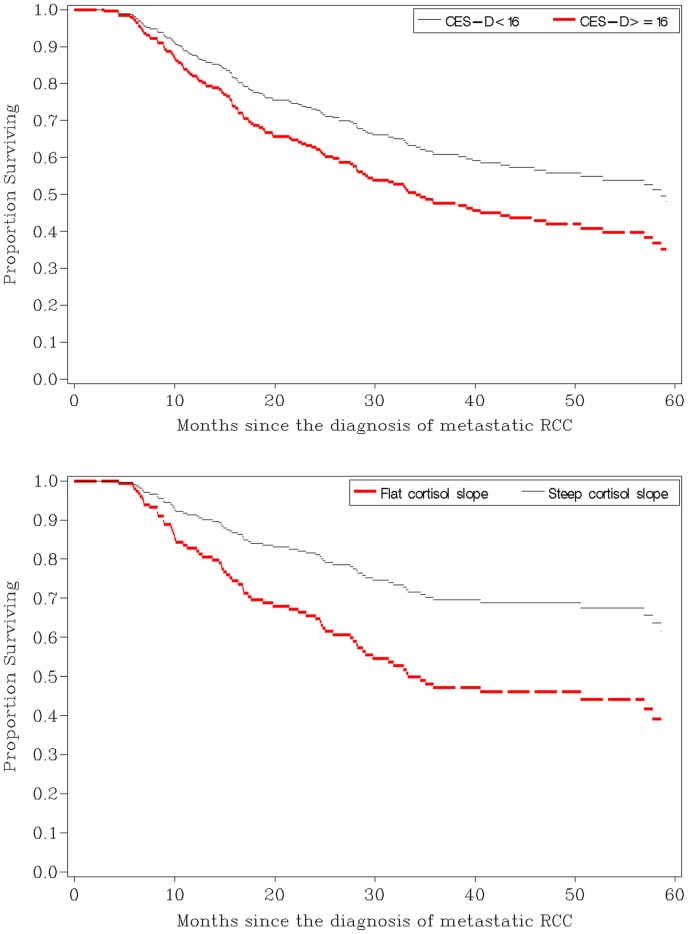
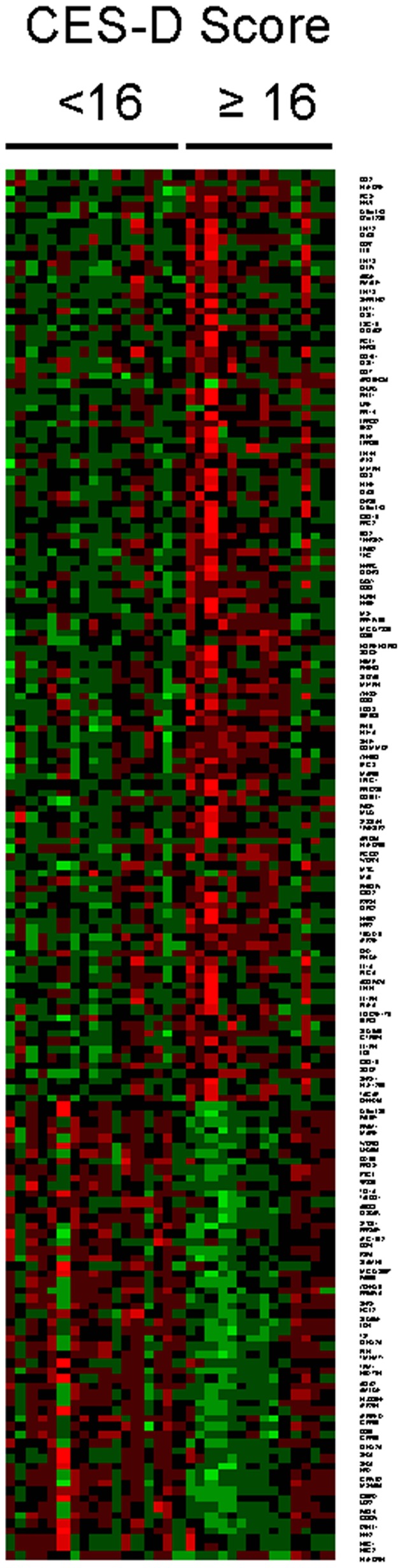
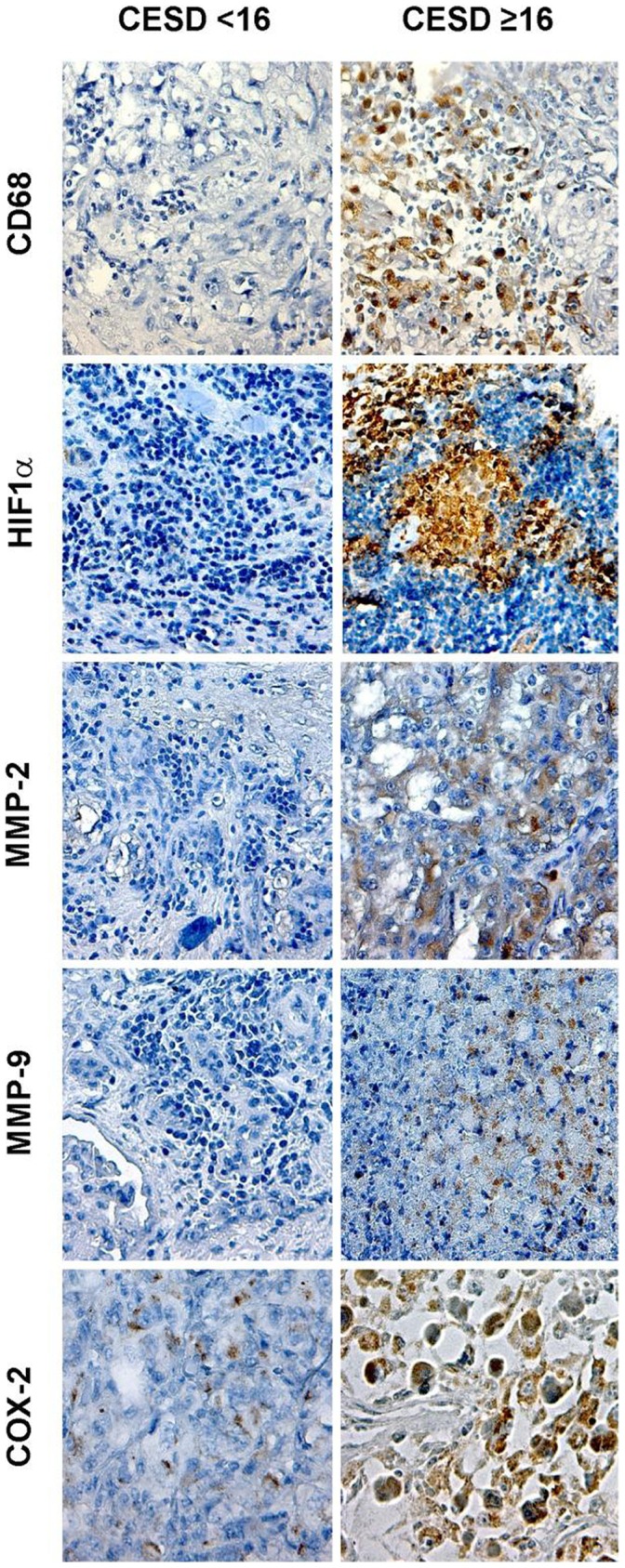
PURPOSE: Evidence has supported the association between psychological factors and cancer biology; however, findings are equivocal on the role of psychosocial factors in cancer progression. This study generates a hypothesis of mechanistic variables by examining the clinical effects of psychosocial factors and cortisol dysregulation in patients with metastatic renal cell carcinoma (RCC) and examines associated activation of transcription control pathways. METHODS: Patients with metastatic RCC (n = 217) were prospectively enrolled in this study. Patients completed questionnaires (Centers for Epidemiologic Studies-Depression; SF-36 Health Status Survey; Duke Social Support Index; Coping Operations Preference Enquiry; organized and non-organized religious activity; and intrinsic religiosity), and provided blood and saliva samples. Cortisol levels and whole genome transcriptional profiling were assessed to identify potential alterations in circadian rhythms and genomic pathways. RESULTS: Separate Cox regression models, controlling for disease risk category, revealed that CES-D scores (p = 0.05, HR = 1.5, 95% CI for HR: 1.00-2.23) and cortisol slope (p = 0.002; HR = 1.9; 95%CI for HR: 1.27-2.97) were significantly associated with decreased survival. Only cortisol slope and risk category remained significant in the complete model. Functional genomic analyses linked depressive symptoms to increased expression of pro-inflammatory and pro-metastatic genes in circulating leukocytes. 116 transcripts were found to be upregulated by an average of 50% or more in high CES-D patients, and 57 transcripts downregulated by at least 50%. These changes were also found in the tumor in a subset of patients. CONCLUSION: These findings identify depressive symptoms as a key predictor of survival in renal cell carcinoma patients with potential links to dysregulation of cortisol and inflammatory biology.
Overview
The claims and statistics of this paper haven’t been checked yet.
Run the check — free, no account needed. It reads the open-access text and checks the sources it cites.
Integrity signals
Registry
Cites
Statistics
Figures
Verification
Claims the paper makes
The claims and statistics of this paper haven’t been checked yet.
Run the check — free, no account needed. It reads the open-access text and checks the sources it cites.
Claims other papers make about this one
Each is checked against this paper’s own text: does it say what the citing paper says it does?
The source backs part of the claim, not all of it — or backs it for a different population, condition or comparison.
In the citing paper
“and earlier cancer-related mortality [20–22]”
From A randomized controlled trial of a multi-modal palliative care intervention to promote advance care planning and psychological well-being among adults with advanced cancer: study protocol. (2022) · cites this paper as [20]
Experimental — accuracy not yet measured
Self-check
Percentages, sums and reported differences re-computed from the paper’s own numbers.
The self-check needs the paper’s full text.
Citations
Cites
The CES-D Scale: A Self-Report Depression Scale for Research in the General Population
Radloff, L. S. (1977) · Applied Psychological Measurement · doi:10.1177/014662167700100306 · Cited by 53,267
SF-36 health survey: Manual and interpretation guide
Ware, J. (2003) · Medical Entomology and Zoology · Cited by 11,424
You want to measure coping but your protocol’ too long: Consider the brief cope
Carver, C. S. (1997) · International Journal of Behavioral Medicine · doi:10.1207/s15327558ijbm0401_6 · Cited by 7,361
Microenvironmental regulation of metastasis
Joyce, J. A., & Pollard, J. W. (2009) · Nature Reviews Cancer · doi:10.1038/nrc2618 · Cited by 3,684
Development of Monocytes, Macrophages, and Dendritic Cells
Geissmann, F., Manz, M. G., Jung, S., Sieweke, M. H., Merad, M., & Ley, K. (2010) · Science · doi:10.1126/science.1178331 · Cited by 3,049
MAQC Consortium, Shi, L., Shi, L., Reid, L. H., Jones, W. D., Shippy, R., Warrington, J. A., Baker, S. C., Collins, P. J., de Longueville, F., et al. (2006) · Nature Biotechnology · doi:10.1038/nbt1239 · Cited by 2,126
Metastasis: a question of life or death
Mehlen, P., & Puisieux, A. (2006) · Nature reviews. Cancer · doi:10.1038/nrc1886 · Cited by 1,919
Stress, depression, the immune system, and cancer
Reiche, E. M. V., Nunes, S. O. V., & Morimoto, H. K. (2004) · The Lancet Oncology · doi:10.1016/s1470-2045(04)01597-9 · Cited by 1,364
Chronic stress promotes tumor growth and angiogenesis in a mouse model of ovarian carcinoma
Thaker, P. H., Han, L. Y., Kamat, A. A., Arevalo, J. M., Takahashi, R., Lu, C., Jennings, N. B., Armaiz-Pena, G., Bankson, J. A., Ravoori, M., et al. (2006) · Nature Medicine · doi:10.1038/nm1447 · Cited by 1,320
Self-citationGOstat: find statistically overrepresented Gene Ontologies within a group of genes
Beißbarth, T., & Speed, T. P. (2004) · Bioinformatics · doi:10.1093/bioinformatics/bth088 · Cited by 1,256
Research works printed but not linked: 1
- [46]Geissmann F, Manz MG, Jung S, Sieweke MH, Merad M, et al (2010) Development of monocytes, macrophages, and dendritic cells. Science 327: 656– 661. 20133564 PMC2887389
Cited by
Sorted by citations
Handbook of Religion and Health
Koenig, H. G., VanderWeele, T. J., & Peteet, J. R. (2023) · doi:10.1093/oso/9780190088859.001.0001 · Cited by 1,160
Adam, E. K., Quinn, M. E., Tavernier, R., McQuillan, M. T., Dahlke, K. A., & Gilbert, K. E. (2017) · Psychoneuroendocrinology · doi:10.1016/j.psyneuen.2017.05.018 · Cited by 905
Cole, S. W. (2014) · PLoS Genetics · doi:10.1371/journal.pgen.1004601 · Cited by 415
Self-citationThe impact of psychosocial stress and stress management on immune responses in patients with cancer
Antoni, M. H., & Dhabhar, F. S. (2019) · Cancer · doi:10.1002/cncr.31943 · Cited by 419
Depression in cancer: The many biobehavioral pathways driving tumor progression
Bortolato, B., Hyphantis, T. N., Valpione, S., Perini, G., Maes, M. H. J., Morris, G., Kubera, M., Köhler, C. A., Fernandes, B. S., Stubbs, B., et al. (2016) · Cancer Treatment Reviews · doi:10.1016/j.ctrv.2016.11.004 · Cited by 399
Metadata
- Authors
- Cohen, L., Cole, S. W., Sood, A. K., Prinsloo, S., Kirschbaum, C., Arevalo, J. M. G., Jennings, N. B., Scott, S., Vence, L., Wei, Q., Kentor, D., Radvanyi, L., Tannir, N., Jonasch, E., Tamboli, P., & Pisters, L.
- Affiliations
- The University of Texas MD Anderson Cancer Center (US)
- Technische Universität Dresden (DE)
- University of California, Los Angeles (US)
- Corresponding author
- Cohen, Lorenzo
- ORCID
- Venue
- PLoS ONE
- Publisher
- Public Library of Science (PLoS)
- Published
- 2012-08-01
- Volume
- 7
- Issue
- 8
- Pages
- e42324
- ISSN
- 1932-6203 (ISSN-L)
- PMC
- PMC3409855
- OpenAlex
- W2106923873
- Cited by
- 197
- References
- 50
- Citations by year
- 2026: 8 · 2025: 4 · 2024: 6 · 2023: 46 · 2022: 14 · 2021: 8 · 2020: 11 · 2019: 6 · 2018: 10 · 2017: 18 · 2016: 19 · 2015: 14 · 2014: 18 · 2013: 12 · 2012: 3
- FWCI
- 10.70
- Type
- journal article
- Language
- en
- Open access
- gold
- doi.org
- Locations
- PLoS ONE (publishedVersion, cc-by)
- Europe PMC (PubMed Central) (publishedVersion, cc-by)
- PubMed Central (publishedVersion, cc-by)
- PubMed (publishedVersion)
- DOAJ (DOAJ: Directory of Open Access Journals) (submittedVersion, cc-by-sa)
- Funders
- Dana Foundation
- National Institutes of Health (CA-16 672, NCI #CA16672)
- University of Texas MD Anderson Cancer Center (#CA16672, NCI CA16672)
- National Cancer Institute (CA 109298, NCI CA 16672, CA-16672, R01CA110793, CA 110793, R01CA109298, R01CA116778, CA-116778, P30CA016672)
- National Center for Complementary and Integrative Health (K01AT008485)
- Topics
- Life Sciences › Biochemistry, Genetics and Molecular Biology › Cancer Research › Cancer, Stress, Anesthesia, and Immune Response
- Life Sciences › Neuroscience › Behavioral Neuroscience › Stress Responses and Cortisol
- Health Sciences › Medicine › Oncology › Renal cell carcinoma treatment
- Keywords
- depressive symptoms, cortisol, circadian rhythm, metastatic renal cell carcinoma, survival, inflammation, pro-inflammatory genes, circulating leukocytes, tumor transcriptome, psychosocial factors, religious activities, social support, coping, tumor progression
- MeSH terms
- Aged, Carcinoma, Renal Cell, Depression, Female, Humans, Hydrocortisone, Inflammation, Kidney Neoplasms, Male, Middle Aged, Transcription, Genetic, Signal Transduction, Genome, Human, Survival Rate, Disease-Free Survival, Gene Expression Profiling
About these checks
Registry, retraction, Cites and statistics results are computed, not judged, with one exception: a printed reference that no index lists is read once by a model before it counts as a citation error. Claims are extracted by a model and kept only when their quote appears verbatim in the text; each cited source is then checked, with a model’s help, for whether it says what the claim relies on. Those verdicts can be wrong — read the claim’s quote and the cited source before relying on one.
Statistics and arithmetic are recomputed, not judged.
Confidence bands are shown only for fields calibrated on our annotated test set. None is calibrated yet, so no band is shown.
What counts as a claim ›How we measure confidence ›How we check this ›
Are you an author, or do you see a problem with this page? Request a review
