

Sphingosine 1-Phosphate Modulates Antigen Capture by Murine Langerhans Cells via the S1P2 Receptor Subtype
Open accessThe DOI matches its Crossref record; 67 of the 67 references it cites were found in a registry or an index.
Abstract
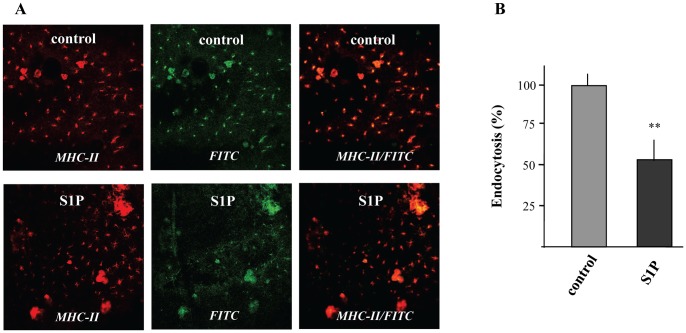
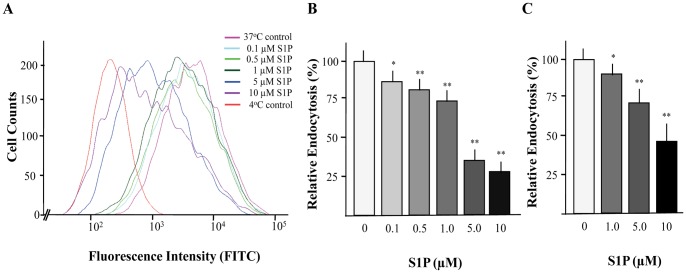
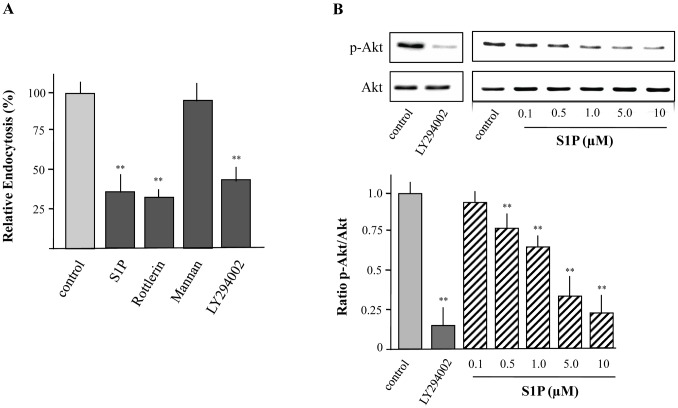
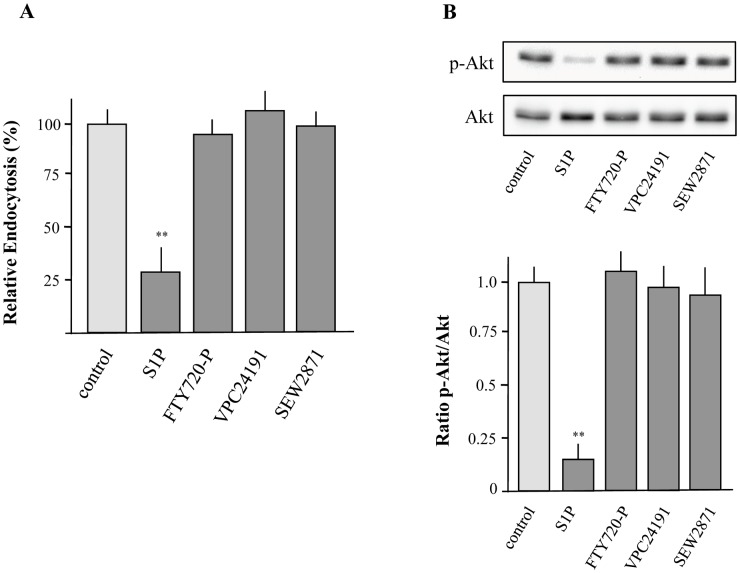
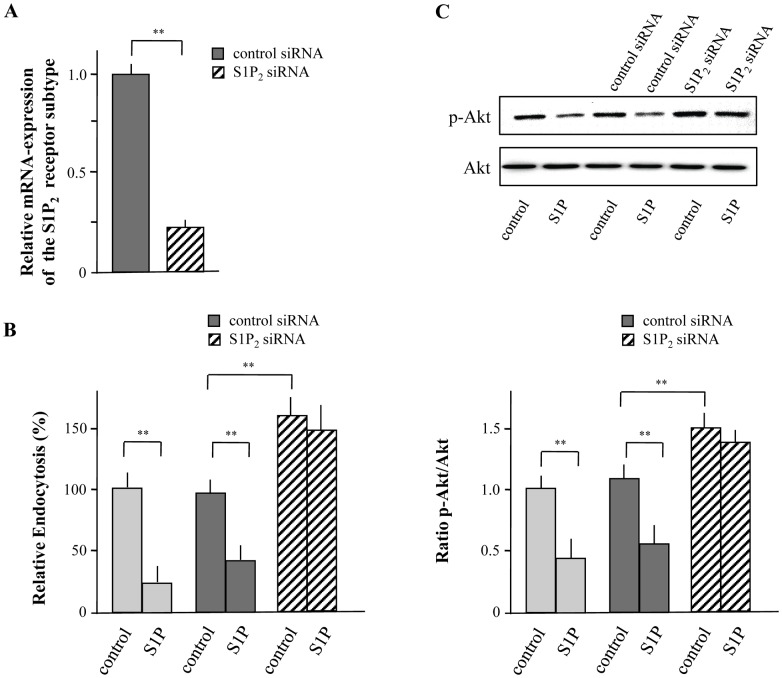
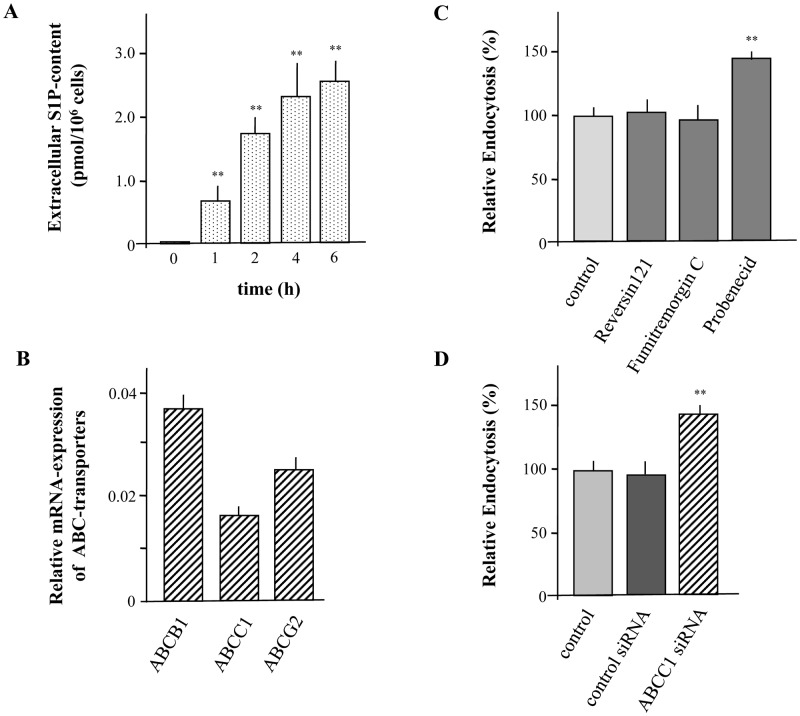
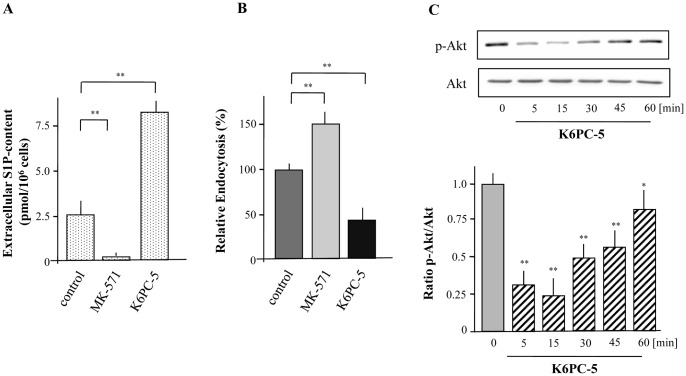
Dendritic cells (DCs) play a pivotal role in the development of cutaneous contact hypersensitivity (CHS) and atopic dermatitis as they capture and process antigen and present it to T lymphocytes in the lymphoid organs. Recently, it has been indicated that a topical application of the sphingolipid sphingosine 1-phosphate (S1P) prevents the inflammatory response in CHS, but the molecular mechanism is not fully elucidated. Here we indicate that treatment of mice with S1P is connected with an impaired antigen uptake by Langerhans cells (LCs), the initial step of CHS. Most of the known actions of S1P are mediated by a family of five specific G protein-coupled receptors. Our results indicate that S1P inhibits macropinocytosis of the murine LC line XS52 via S1P(2) receptor stimulation followed by a reduced phosphatidylinositol 3-kinase (PI3K) activity. As down-regulation of S1P(2) not only diminished S1P-mediated action but also enhanced the basal activity of LCs on antigen capture, an autocrine action of S1P has been assumed. Actually, S1P is continuously produced by LCs and secreted via the ATP binding cassette transporter ABCC1 to the extracellular environment. Consequently, inhibition of ABCC1, which decreased extracellular S1P levels, markedly increased the antigen uptake by LCs. Moreover, stimulation of sphingosine kinase activity, the crucial enzyme for S1P formation, is connected not only with enhanced S1P levels but also with diminished antigen capture. These results indicate that S1P is essential in LC homeostasis and influences skin immunity. This is of importance as previous reports suggested an alteration of S1P levels in atopic skin lesions.
Overview
The claims and statistics of this paper haven’t been checked yet.
Free: it reads the open-access text and checks the first 5 claims that cite a source we can check. Create a free account to check every claim.
Integrity signals
Registry
Cites
Statistics
Figures
Verification
Claims the paper makes
The claims and statistics of this paper haven’t been checked yet.
Free: it reads the open-access text and checks the first 5 claims that cite a source we can check. Create a free account to check every claim.
Claims other papers make about this one
Each is checked against this paper’s own text: does it say what the citing paper says it does?
The source backs part of the claim, not all of it — or backs it for a different population, condition or comparison.
In the citing paper
“Whereas DCs express S1PR1, S1PR3 and S1PR4, T cells display S1PR1 and S1PR4 (refs164–166)”
From Atopic dermatitis: an expanding therapeutic pipeline for a complex disease (2022) · cites this paper as [165]
Experimental — accuracy not yet measured
Self-check
Percentages, sums and reported differences re-computed from the paper’s own numbers.
The self-check needs the paper’s full text.
Citations
Cites
International Union of Pharmacology: Approaches to the Nomenclature of Voltage-Gated Ion Channels
Catterall, W. A., Chandy, K. G., Clapham, D. E., Gutman, G. A., Hofmann, F., Harmar, A. J., Abernethy, D. R., & Spedding, M. (2003) · Pharmacological Reviews · doi:10.1124/pr.55.4.5 · Cited by 7,126
Lutz, M. B., Kukutsch, N., Ogilvie, A. L. J., Rößner, S., Koch, F., Romani, N., & Schuler, G. (1999) · Journal of Immunological Methods · doi:10.1016/s0022-1759(98)00204-x · Cited by 2,966 · cited 2×
“Bone marrow-derived DCs (BM-DCs) were generated according to a standard protocol established by Lutz et al. (1999) with slight modifications [32].”
MethodLymphocyte egress from thymus and peripheral lymphoid organs is dependent on S1P receptor 1
Matloubian, M., Lo, C. G., Cinamon, G., Lesneski, M. J., Xu, Y., Brinkmann, V., Allende, M. L., Proia, R. L., & Cyster, J. G. (2004) · Nature · doi:10.1038/nature02284 · Cited by 2,581
The Immune Modulator FTY720 Targets Sphingosine 1-Phosphate Receptors
Brinkmann, V., Davis, M. D., Heise, C. E., Albert, R., Cottens, S., Hof, R., Bruns, C., Prieschl, E., Baumruker, T., Hiestand, P., et al. (2002) · Journal of Biological Chemistry · doi:10.1074/jbc.c200176200 · Cited by 1,504 · cited 1×
“Thus, it is well established that the egress of T- and B-cells from lymphoid organs and their positioning in these organs are mediated by S1P signaling [8–11].”
BackgroundCELL BIOLOGY OF ANTIGEN PROCESSING IN VITRO AND IN VIVO
Trombetta, E. S., & Mellman, I. (2005) · Annual Review of Immunology · doi:10.1146/annurev.immunol.22.012703.104538 · Cited by 1,173 · cited 2×
“As professional APCs, LCs are prone to internalize mannose via the C-type lectin receptor Langerin, as the majority of glycoproteins from bacteria and yeast are mannosylated [36].”
BackgroundRamirez, A., Fisher, G., George, E. L., Sanning, E., Forouzani, M., Allen, J., Bak, R., Halley, W., Wheeler, G., her, et al. (2003) · Cited by 960
Dynamics and Function of Langerhans Cells In Vivo
Kissenpfennig, A., Henri, S., Dubois, B., Laplace-Builhé, C., Perrin, P., Romani, N., Tripp, C. H., Douillard, P., Leserman, L., Kaiserlian, D., et al. (2005) · Immunity · doi:10.1016/j.immuni.2005.04.004 · Cited by 923 · cited 1×
“Several studies indicate that LCs possess a critical role in the development of CHS, which is a delayed-type hypersensitivity response to a topically applied hapten [41–44].”
BackgroundThe outs and the ins of sphingosine-1-phosphate in immunity
Spiegel, S., & Milstien, S. (2011) · Nature Reviews Immunology · doi:10.1038/nri2974 · Cited by 810 · cited 2×
“It has been indicated that sphingosine 1-phosphate (S1P) plays a pivotal function in a variety of cells including immune cells [6,7].”
Background“Inside-Out” Signaling of Sphingosine-1-Phosphate: Therapeutic Targets
Takabe, K., Paugh, S. W., Milstien, S., & Spiegel, S. (2008) · Pharmacological Reviews · doi:10.1124/pr.107.07113 · Cited by 718 · cited 1×
“Although the mechanism of release of S1P from cells is not completely understood, recent studies have drawn attention to the involvement of the ATP binding cassette (ABC) family of transporters [19,20].”
BackgroundKerr, M. C., & Teasdale, R. D. (2009) · Traffic · doi:10.1111/j.1600-0854.2009.00878.x · Cited by 693
Cited by
Atopic dermatitis: an expanding therapeutic pipeline for a complex disease
Bieber, T. (2022) · Nature Reviews Drug Discovery · doi:10.1038/s41573-021-00266-6 · Cited by 623
Ceramides in Skin Health and Disease: An Update
Uchida, Y., & Park, K. (2021) · American Journal of Clinical Dermatology · doi:10.1007/s40257-021-00619-2 · Cited by 152
Cruz-Orengo, L., Daniels, B. P., Dorsey, D., Basak, S. A., Grajales-Reyes, J. G., McCandless, E. E., Piccio, L., Schmidt, R. E., Cross, A. H., Crosby, S. D., et al. (2014) · Journal of Clinical Investigation · doi:10.1172/jci73408 · Cited by 136
“Among the possibilities are the effects of receptor deficiency on astrocytes or pericytes (73–76); the absence of antigen capture, as observed in vitro for Langerhans cells (77) and alveolar macrophages (78); or loss of B cell retention at germinal centers (79, 80), which could alter their ability to function as effec…”
Review: Pathogenesis of canine atopic dermatitis: skin barrier and host–micro‐organism interaction
Santoro, D., Marsella, R., Pucheu‐Haston, C. M., Eisenschenk, M. N. C., Nuttall, T. J., & Bizikova, P. (2015) · Veterinary Dermatology · doi:10.1111/vde.12197 · Cited by 184
Atheroprotective role of high-density lipoprotein (HDL)-associated sphingosine-1-phosphate (S1P)
Potì, F., Simoni, M., & Nofer, J. (2014) · Cardiovascular Research · doi:10.1093/cvr/cvu136 · Cited by 115
Fayyaz, S., Henkel, J., Japtok, L., Krämer, S., Damm, G., Seehofer, D., Püschel, G. P., & Kleuser, B. (2013) · Diabetologia · doi:10.1007/s00125-013-3123-6 · Cited by 104
Self-citationSphingosine-1-Phosphate Receptor-2 Antagonists: Therapeutic Potential and Potential Risks
Blankenbach, K. V., Schwalm, S. A., Pfeilschifter, J. M., & zu Heringdorf, D. M. (2016) · Frontiers in Pharmacology · doi:10.3389/fphar.2016.00167 · Cited by 62
“Thus, S1P2 reduced antigen capture by murine Langerhans cells, thereby potentially alleviating cutaneous contact hypersensitivity (Japtok et al., 2012).”
BackgroundHou, J., Chen, Q., Zhang, K., Cheng, B., Xie, G., Wu, X., Luo, C., Chen, L., Liu, H., Zhao, B. Q., et al. (2015) · Anesthesiology · doi:10.1097/aln.0000000000000725 · Cited by 57
Kulinski, J. M., Muñoz‐Cano, R., & Olivera, A. (2015) · European Journal of Pharmacology · doi:10.1016/j.ejphar.2015.02.058 · Cited by 61
“, 2009) and in the dermatitis model, reduced antigen processing via S1P2 receptor activation (Japtok et al., 2012).”
BackgroundThe Importance of Metabolism for Immune Homeostasis in Allergic Diseases
Rodríguez‐Coira, J., Villaseñor, A., Izquierdo, E., Huang, M., Barker‐Tejeda, T. C., Radzikowska, U., Sokołowska, M., & Barber, D. (2021) · Frontiers in Immunology · doi:10.3389/fimmu.2021.692004 · Cited by 62
“Indeed, topical application of S1P diminished DC antigen capture and abrogated DC migration which improved AD treatment (103, 104).”
BackgroundBioactive lipids in the skin barrier mediate its functionality in health and disease
Nicolaou, A., & Kendall, A. C. (2024) · Pharmacology & Therapeutics · doi:10.1016/j.pharmthera.2024.108681 · Cited by 65
Japtok, L., Schmitz, E., Fayyaz, S., Krämer, S., Hsu, L. J., & Kleuser, B. (2015) · The FASEB Journal · doi:10.1096/fj.14-263194 · Cited by 55
“Moreover, S1P has been shown to inhibit the endocytotic capacity of dendritic cells by S1P2 receptor activation and Akt inactivation (22).”
BackgroundMethodSelf-citationSphingosine 1-Phosphate Signaling at the Skin Barrier Interface
Masuda‐Kuroki, K., & Nardo, A. D. (2022) · Biology · doi:10.3390/biology11060809 · Cited by 48
“[68] lie t ic l s r r ti t it i r l riti lls.”
BackgroundSphingosine 1-Phosphate as Essential Signaling Molecule in Inflammatory Skin Diseases
Kleuser, B., & Bäumer, W. (2023) · International Journal of Molecular Sciences · doi:10.3390/ijms24021456 · Cited by 42
“Most interestingly, S1PR2 has been identified as the crucial receptor subtype to inhibit this antigen capture [63].”
BackgroundSelf-citationArlt, O., Schwiebs, A., Japtok, L., Rüger, K., Katzy, E., Kleuser, B., & Radeke, H. H. (2014) · Cellular Physiology and Biochemistry · doi:10.1159/000362982 · Cited by 41
Self-citationS1P Signaling in the Tumor Microenvironment
Schneider, G. (2020) · Advances in experimental medicine and biology · doi:10.1007/978-3-030-35582-1_7 · Cited by 39
Sphingosine-1-phosphate as signaling molecule in the skin: Relevance in atopic dermatitis
Japtok, L., Bäumer, W., & Kleuser, B. (2014) · Allergo Journal International · doi:10.1007/s40629-014-0008-2 · Cited by 43
Self-citationPark, S.-J., & Im, D.-S. (2020) · Acta Pharmacologica Sinica · doi:10.1038/s41401-020-0412-8 · Cited by 34
“That is, the suppressive effects of JTE-013 and S1P2 deficiency on mast cell degranulation and the pro-allergic functions of S1P2 in Langerhans cells and dendritic cells have been previously reported, and these effects included antigen capture, maturation, migration, and cytokine production [7, 18, 21, 23, 24].”
BackgroundInfluentialBruno, G., Cencetti, F., Pertici, I., Japtok, L., Bernacchioni, C., Donati, C., & Bruni, P. (2014) · Biochimica et Biophysica Acta (BBA) - Molecular and Cell Biology of Lipids · doi:10.1016/j.bbalip.2014.11.011 · Cited by 38
Self-citationNovel Insights into the Role of HDL-Associated Sphingosine-1-Phosphate in Cardiometabolic Diseases
Diarte‐Añazco, E. M. G., Méndez‐Lara, K. A., Pérez, A., Alonso, N., Blanco‐Vaca, F., & Julve, J. (2019) · International Journal of Molecular Sciences · doi:10.3390/ijms20246273 · Cited by 34
Oizumi, A., Nakayama, H., Okino, N., Iwahara, C., Kina, K., Matsumoto, R., Ogawa, H., Takamori, K., Ito, M., Suga, Y., et al. (2014) · PLoS ONE · doi:10.1371/journal.pone.0089402 · Cited by 32
“S1P has been shown to modulate antigen capture by Langerhans cells and to inhibit the migration of these cells [16,17].”
BackgroundFayyaz, S., Japtok, L., Schumacher, F., Wigger, D., Schulz, T. J., Haubold, K., Gulbins, E., Völler, H., & Kleuser, B. (2017) · Cellular Physiology and Biochemistry · doi:10.1159/000480470 · Cited by 29
Self-citationReview: Innate immunity, lipid metabolism and nutrition in canine atopic dermatitis
Pucheu‐Haston, C. M., Santoro, D., Bizikova, P., Eisenschenk, M. N. C., Marsella, R., & Nuttall, T. J. (2015) · Veterinary Dermatology · doi:10.1111/vde.12199 · Cited by 36
Edlich, A., Gerecke, C., Giulbudagian, M., Neumann, F., Hedtrich, S., Schäfer‐Korting, M., Ma, N., Calderón, M., & Kleuser, B. (2016) · European Journal of Pharmaceutics and Biopharmaceutics · doi:10.1016/j.ejpb.2016.12.016 · Cited by 28
Self-citationKang, J., Lee, J., & Im, D. (2020) · Biomolecules & Therapeutics · doi:10.4062/biomolther.2020.036 · Cited by 27
“In addition, S1P modulates antigen capture by murine and human Langerhans cells via S1P2 in the skin (Japtok et al., 2012; Bock et al., 2016).”
BackgroundCui, M., Göbel, V., & Zhang, H. (2021) · Biological reviews/Biological reviews of the Cambridge Philosophical Society · doi:10.1111/brv.12798 · Cited by 25
“…lipids across the cell membrane, among which subfamily members ABCA1, ABCB1, ABCC1 and ABCG2 contribute to S1P export (Honig et al., 2003; Mitra et al., 2006; Sato et al., 2007; Gratschev et al., 2009; Kobayashi et al., 2009; Takabe et al., 2010; Japtok et al., 2012; Cartwright et al., 2013).”
BackgroundZhao, Y., Zhang, Y., Li, J., Zhang, N., Jin, Q., Qi, Y., & Song, P. (2023) · Lipids in Health and Disease · doi:10.1186/s12944-023-01813-3 · Cited by 23
“S1P applied topically regulates the inhibition of antigen uptake by LCs through the ABCC1/ S1P2 and PI3K axes to eliminate local inflammation in the skin [50].”
BackgroundMendes-Braz, M., Elias-Miró, M., Kleuser, B., Fayyaz, S., Jiménez‐Castro, M. B., Massip‐Salcedo, M., Gracia‐Sancho, J., Ramalho, F. S., Rodés, J., & Peralta, C. (2013) · Liver International · doi:10.1111/liv.12348 · Cited by 27
Self-citationCencetti, F., Bernacchioni, C., Bruno, M., Squecco, R., Idrizaj, E., Berbeglia, M., Bruni, P., & Donati, C. (2019) · Biochimica et Biophysica Acta (BBA) - Molecular Cell Research · doi:10.1016/j.bbamcr.2018.12.007 · Cited by 22
Bock, S., Pfalzgraff, A., & Weindl, G. (2016) · Journal of Dermatological Science · doi:10.1016/j.jdermsci.2016.01.002 · Cited by 21
“Impaired antigen uptake in the XS52 DC cell line was mediated by S1P2 via an inhibitory effect on PI3K and Rac [16].”
BackgroundInfluentialMichels, M., Japtok, L., Alisjahbana, B., Wisaksana, R., Sumardi, U., Puspita, M., Kleuser, B., de Mast, Q., & van der Ven, A. J. A. M. (2015) · Journal of Infection · doi:10.1016/j.jinf.2015.06.014 · Cited by 22
Self-citationLaurenzana, A., Cencetti, F., Serratì, S., Bruno, G., Japtok, L., Bianchini, F., Torre, E., Fibbi, G., Rosso, M. D., Bruni, P., et al. (2015) · Journal of Molecular Medicine · doi:10.1007/s00109-015-1292-0 · Cited by 20
“[7] Japtok L, Schaper K, Bäumer W,R adeke HH, Jeong SK, Kleuser B.”
BackgroundMethodSelf-citationMast cells and sphingosine‐1‐phosphate underlie prelesional remodeling in a mouse model of eczema
Wedman, P., Al-Adhami, A., Chumanevich, A. P., Fuseler, J. W., & Oskeritzian, C. A. (2017) · Allergy · doi:10.1111/all.13310 · Cited by 20
Novel functions of S1P in chronic itchy and inflammatory skin diseases
Gray, N., Limberg, M. M., Bräuer, A. U., & Raap, U. (2021) · Journal of the European Academy of Dermatology and Venereology · doi:10.1111/jdv.17764 · Cited by 16
Ottenlinger, F. M., Schwiebs, A., Pfarr, K., Wagner, A., Grüner, S., Mayer, C. A., Pfeilschifter, J. M., & Radeke, H. H. (2015) · European Journal of Immunology · doi:10.1002/eji.201545805 · Cited by 17
Self-citationActivation-Induced Cell Death of Dendritic Cells Is Dependent on Sphingosine Kinase 1
Schwiebs, A., Friesen, O., Katzy, E., Ferreirós, N., Pfeilschifter, J. M., & Radeke, H. H. (2016) · Frontiers in Pharmacology · doi:10.3389/fphar.2016.00094 · Cited by 20
“Sphingosine 1-phosphate modulates antigen capture (Japtok et al., 2012) and several selective S1P1 receptormodulating drugs are being investigated in clinical trials for the treatment of diverse autoimmune disorders (Zu Heringdorf et al., 2013).”
BackgroundSelf-citationThieme, M., Zillikens, D., & Sadik, C. D. (2017) · Experimental Dermatology · doi:10.1111/exd.13174 · Cited by 14
Edlich, A., Volz, P., Brodwolf, R., Unbehauen, M. L., Mundhenk, L., Gruber, A. D., Hedtrich, S., Haag, R., Alexiev, U., & Kleuser, B. (2018) · Biomaterials · doi:10.1016/j.biomaterials.2018.01.058 · Cited by 16
Self-citationHalilbasic, E., Fuerst, E., Heiden, D., Japtok, L., Diesner, S. C., Trauner, M., Kulu, A., Jaksch, P., Höetzenecker, K., Kleuser, B., et al. (2020) · Nutrients · doi:10.3390/nu12030765 · Cited by 12
“S1P and SPH were extracted by a modified two-step lipid extraction and quantified as previously described, allowing determination of total S1P and SPH levels in plasma samples [25].”
MethodSelf-citationSphingosine metabolism as a therapeutic target in cutaneous melanoma
Dany, M. (2017) · Translational research · doi:10.1016/j.trsl.2017.04.005 · Cited by 14
Schwiebs, A., Thomas, D., Kleuser, B., Pfeilschifter, J. M., & Radeke, H. H. (2017) · Mediators of Inflammation · doi:10.1155/2017/5187368 · Cited by 11
Self-citationWhitlock, B. D., & Leslie, E. M. (2019) · Elsevier eBooks · doi:10.1016/b978-0-12-816434-1.00002-4 · Cited by 13
Rüger, K., Ottenlinger, F. M., Schröder, M., Živković, A., Stark, H., Pfeilschifter, J. M., & Radeke, H. H. (2014) · Scandinavian Journal of Immunology · doi:10.1111/sji.12238 · Cited by 9
Self-citationSphingosine-1-phosphate as signaling molecule in the skin
G, W. L. F. G. A. N. (2014) · Cited by 7
The Dual Faces of S1P: Orchestrating Immune Responses in Health and Disease
Mills, S. A., Barr, D., Mehrotra, S., & Chakraborty, P. (2026) · Cells · doi:10.3390/cells15080663 · Cited by 2
“Signaling through S1PR2 impairs antigen uptake of skin-associated DCs. S1PR2 stimulation modulates the Phospho-inositide 3-kinase (PI3K)/Protein Kinase B (Akt) pathway, reducing Akt phosphorylation and dextran micropinocytosis [88].”
Sphingosin-1-Phosphat als Signalmolekül der Haut: Bedeutung beim atopischen Ekzem
Japtok, L., Bäumer, W., & Kleuser, B. (2014) · Allergo Journal · doi:10.1007/s15007-014-0516-x
Self-citation8. Sphingosine-1-phosphate-rich high-density lipoprotein in cardiovascular health and disease
Egom, E. E. A. (2016) · Wageningen Academic Publishers eBooks · doi:10.3920/978-90-8686-821-6_8
Metadata
- Authors
- Japtok, L., Schaper, K., Bäumer, W., Radeke, H. H., Jeong, S. K., & Kleuser, B.
- Affiliations
- University of Potsdam (DE)
- University of Veterinary Medicine Hannover, Foundation (DE)
- Goethe University Frankfurt (DE)
- Corresponding author
- Kleuser, Burkhard
- Venue
- PLoS ONE
- Publisher
- Public Library of Science (PLoS)
- Published
- 2012-11-08
- Volume
- 7
- Issue
- 11
- Pages
- e49427
- ISSN
- 1932-6203 (ISSN-L)
- PMC
- PMC3493526
- OpenAlex
- W2160938468
- Cited by
- 47
- References
- 67
- Citations by year
- 2026: 1 · 2024: 1 · 2023: 2 · 2022: 1 · 2021: 5 · 2020: 4 · 2019: 3 · 2018: 1 · 2017: 4 · 2016: 6 · 2015: 8 · 2014: 9 · 2013: 2
- FWCI
- 2.44
- Type
- journal article
- Language
- en
- Open access
- gold
- doi.org
- Locations
- PLoS ONE (publishedVersion, cc-by)
- PubMed Central (publishedVersion, cc-by)
- PubMed (publishedVersion)
- RePEc: Research Papers in Economics (submittedVersion)
- DOAJ (DOAJ: Directory of Open Access Journals) (submittedVersion, cc-by-sa)
- publish.UP (University of Potsdam) (submittedVersion)
- Publication Server of Goethe University Frankfurt am Main (Goethe University Frankfurt) (submittedVersion, cc-by)
- Funders
- Deutsche Forschungsgemeinschaft
- Topics
- Life Sciences › Biochemistry, Genetics and Molecular Biology › Molecular Biology › Sphingolipid Metabolism and Signaling
- Life Sciences › Immunology and Microbiology › Immunology › Immunotherapy and Immune Responses
- Health Sciences › Medicine › Dermatology › Dermatology and Skin Diseases
- Keywords
- sphingosine-1-phosphate, S1P2 receptor, Langerhans cells, antigen capture, macropinocytosis, PI3K signaling, MRP1, sphingosine kinase, atopic dermatitis, skin immunity, dendritic cells, G protein-coupled receptors
- MeSH terms
- Administration, Topical, Animals, Antigens, Cells, Cultured, Dermatitis, Contact, Endocytosis, Female, Homeostasis, Langerhans Cells, Lysophospholipids, Mice, Inbred BALB C, Phosphorylation, Skin, Sphingosine, Receptors, Lysosphingolipid, Proto-Oncogene Proteins c-akt, Mice, Phosphatidylinositol 3-Kinase
About these checks
Registry, retraction, Cites and statistics results are computed, not judged, with one exception: a printed reference that no index lists is read once by a model before it counts as a citation error. Claims are extracted by a model and kept only when their quote appears verbatim in the text; each cited source is then checked, with a model’s help, for whether it says what the claim relies on. Those verdicts can be wrong — read the claim’s quote and the cited source before relying on one.
Statistics and arithmetic are recomputed, not judged.
Confidence bands are shown only for fields calibrated on our annotated test set. None is calibrated yet, so no band is shown.
What counts as a claim ›How we measure confidence ›How we check this ›
Are you an author, or do you see a problem with this page? Request a review
Data sources
Bibliographic data: Semantic Scholar, OpenAlex, Crossref.
Contains information from the Semantic Scholar Academic Graph Datasets, made available under the ODC Attribution License (ODC-BY 1.0).
Semantic Scholar’s data is described in: Kinney, R., et al. (2023). The Semantic Scholar Open Data Platform. arXiv:2301.10140.
