

The DOI matches its Crossref record; 2 of the 2 references it cites were found in a registry or an index.
The DNA Copy Number of Human Endogenous Retrovirus-W (MSRV-Type) Is Increased in Multiple Sclerosis Patients and Is Influenced by Gender and Disease Severity
Open accessAbstract
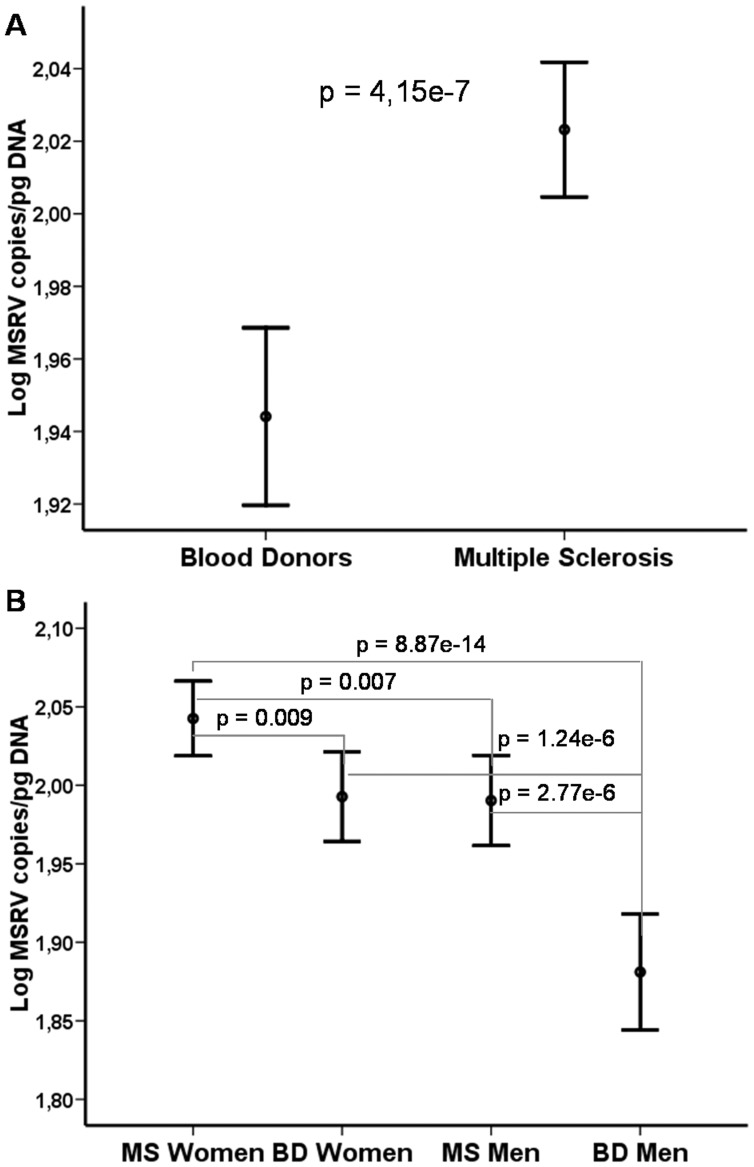
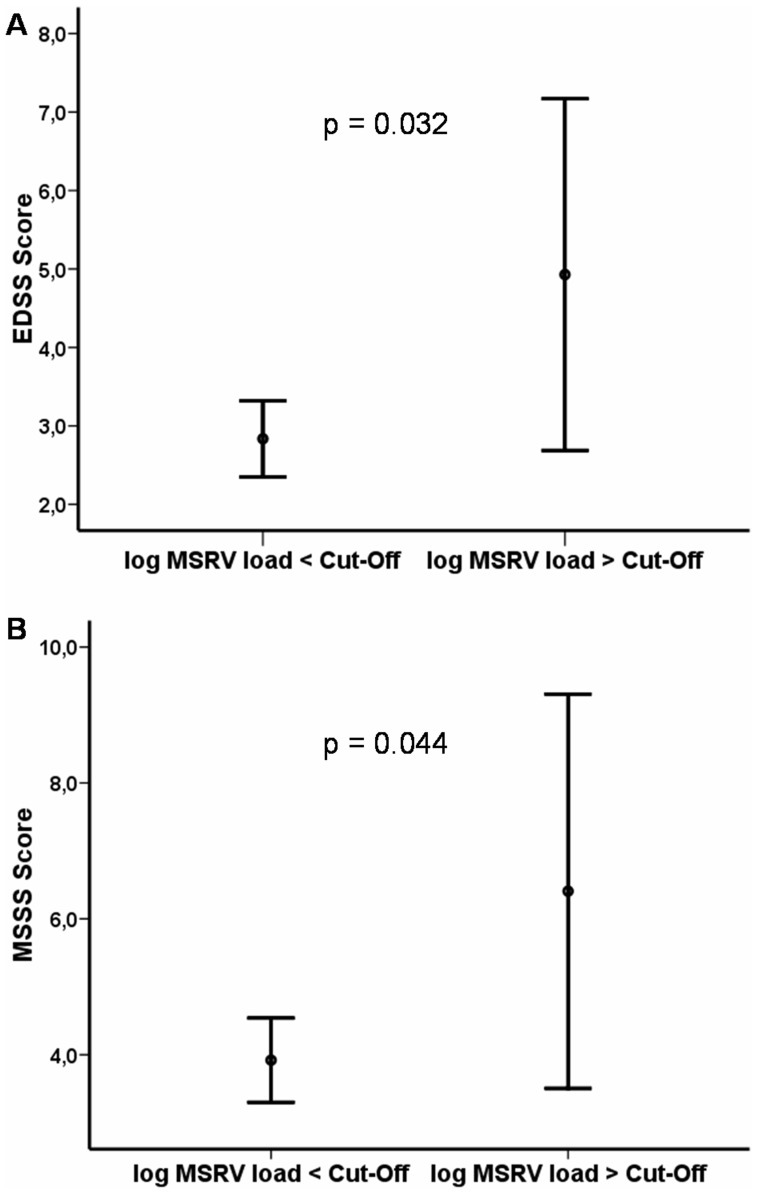
BACKGROUND: Multiple sclerosis is an autoimmune disease more prevalent in women than in men. Multiple Sclerosis Associated Retrovirus element (MSRV) is a member of type-W endogenous retrovirus family (HERV-W), known to be associated to MS. Most HERVs are unable to replicate but MSRV expression associated with reverse-transcriptase activity in MS would explain reported DNA copy number increase in MS patients. A potential link between HERV-W copies on chromosome X and gender differential prevalence has been suggested. The present study addresses MSRV-type DNA load in relation with the gender differences and clinical status in MS and healthy controls. RESULTS: 178 MS patients (62.9% women) and 124 controls (56.5% women) were included. MSRV env load (copies/pg of DNA) was analyzed by real time qPCR with specific primers and probe for its env gene, in DNA from peripheral blood mononuclear cells (PBMCs). MSRV load was more elevated in MS patients than in controls (p = 4.15e-7). MS women presented higher MSRV load than control women (p = 0.009) and MS men also had higher load than control men (p = 2.77e-6). Besides, women had higher levels than men, both among patients (p = 0.007) and controls (p = 1.24e-6). Concordantly, EDSS and MSSS scores were higher among female patients with an elevated MSRV load (p = 0.03 and p = 0.04, respectively). CONCLUSIONS: MSRV increases its copy number in PBMC of MS patients and particularly in women with high clinical scores. This may explain causes underlying the higher prevalence of MS in women. The association with the clinical severity calls for further investigations on MSRV load in PBMCs as a biomarker for MS.
Overview
The claims and statistics of this paper haven’t been checked yet.
Run the check — free, no account needed. It reads the open-access text and checks the sources it cites.
Integrity signals
Registry
Cites
Statistics
Figures
Verification
Claims the paper makes
The claims and statistics of this paper haven’t been checked yet.
Run the check — free, no account needed. It reads the open-access text and checks the sources it cites.
Claims other papers make about this one
Each is checked against this paper’s own text: does it say what the citing paper says it does?
The source backs part of the claim, not all of it — or backs it for a different population, condition or comparison.
In the citing paper
“Even a modest increase in copy number 94, should provide multiple new sequences when examined by next generation sequencing.”
From Are human endogenous retroviruses pathogenic? An approach to testing the hypothesis (2013) · cites this paper as [94]
Experimental — accuracy not yet measured
Self-check
Percentages, sums and reported differences re-computed from the paper’s own numbers.
The self-check needs the paper’s full text.
Citations
Cites
Hastings, P. J., Ira, G., & Lupski, J. R. (2009) · PLoS Genetics · doi:10.1371/journal.pgen.1000327 · Cited by 818
Antony, J. M., van Marle, G., Opii, W., Butterfield, D. A., Mallet, F., Yong, V. W., Wallace, J. L., Deacon, R. M., Warren, K., & Power, C. (2004) · Nature Neuroscience · doi:10.1038/nn1319 · Cited by 388
Research works printed but not linked: 53
- Perron H, Germi R, Bernard C, Garcia-Montojo M, Deluen C, <etal>et al</etal>.. (2012) Human endogenous retrovirus type W envelope expression in blood and brain cells provides new insights into multiple sclerosis disease. Mult Scler. · DOI
- H Perron, 1989, Leptomeningeal cell line from multiple sclerosis with reverse transcriptase activity and viral particles, Res Virol, 140, 551, 10.1016/S0923-2516(89)80141-4 · DOI
- H Perron, 1991, Isolation of retrovirus from patients with multiple sclerosis, Lancet, 337, 862, 10.1016/0140-6736(91)92579-Q · DOI
- A Dolei, 2002, Multiple sclerosis-associated retrovirus (MSRV) in Sardinian MS patients, Neurology, 58, 471, 10.1212/WNL.58.3.471 · DOI
- S Sotgiu, 2002, Multiple sclerosis-associated retrovirus and MS prognosis: an observational study, Neurology, 59, 1071, 10.1212/WNL.59.7.1071 · DOI
- S Sotgiu, 2006, Multiple sclerosis-associated retrovirus in early multiple sclerosis: a six-year follow-up of a Sardinian cohort, Mult Scler, 12, 698, 10.1177/1352458506070773 · DOI
- A Tai, 2008, Human endogenous retrovirus-K18 Env as a risk factor in multiple sclerosis, Mult Scler, 14, 1175, 10.1177/1352458508094641 · DOI
- T Christensen, 2000, Molecular characterization of HERV-H variants associated with multiple sclerosis, Acta Neurol Scand, 101, 229, 10.1034/j.1600-0404.2000.101004229.x · DOI
- MJ Laska, 2012, Expression of HERV-Fc1, a human endogenous retrovirus, is increased in patients with active multiple sclerosis, J Virol, 86, 3713, 10.1128/JVI.06723-11 · DOI
- R Firouzi, 2003, Multiple sclerosis-associated retrovirus particles cause T lymphocyte-dependent death with brain hemorrhage in humanized SCID mice model, J Neurovirol, 9, 79, 10.1080/13550280390173328 · DOI
- A Rolland, 2006, The envelope protein of a human endogenous retrovirus-W family activates innate immunity through CD14/TLR4 and promotes Th1-like responses, J Immunol, 176, 7636, 10.4049/jimmunol.176.12.7636 · DOI
- H Perron, 2001, Multiple sclerosis retrovirus particles and recombinant envelope trigger an abnormal immune response in vitro, by inducing polyclonal Vbeta16 T-lymphocyte activation, Virology, 287, 321, 10.1006/viro.2001.1045 · DOI
- N Sutkowski, 2001, Epstein-Barr virus transactivates the human endogenous retrovirus HERV-K18 that encodes a superantigen, Immunity, 15, 579, 10.1016/S1074-7613(01)00210-2 · DOI
- K Ruprecht, 2006, Regulation of human endogenous retrovirus W protein expression by herpes simplex virus type 1: implications for multiple sclerosis, J Neurovirol, 12, 65, 10.1080/13550280600614973 · DOI
- AK Tai, 2009, HHV-6A infection induces expression of HERV-K18-encoded superantigen, J Clin Virol, 46, 47, 10.1016/j.jcv.2009.05.019 · DOI
- G Mameli, 2007, Brains and peripheral blood mononuclear cells of multiple sclerosis (MS) patients hyperexpress MS-associated retrovirus/HERV-W endogenous retrovirus, but not Human herpesvirus 6, J Gen Virol, 88, 264, 10.1099/vir.0.81890-0 · DOI
- JM Antony, 2006, Quantitative analysis of human endogenous retrovirus-W env in neuroinflammatory diseases, AIDS Res Hum Retroviruses, 22, 1253, 10.1089/aid.2006.22.1253 · DOI
- SM Orton, 2006, Sex ratio of multiple sclerosis in Canada: a longitudinal study, Lancet Neurol, 5, 932, 10.1016/S1474-4422(06)70581-6 · DOI
- O Krokki, 2011, Increasing incidence of multiple sclerosis in women in Northern Finland, Mult Scler, 17, 133, 10.1177/1352458510384012 · DOI
- AD Sadovnick, 2009, European Charcot Foundation Lecture: the natural history of multiple sclerosis and gender, J Neurol Sci, 286, 1, 10.1016/j.jns.2009.09.005 · DOI
- M Cossburn, 2012, Age at onset as a determinant of presenting phenotype and initial relapse recovery in multiple sclerosis, Mult Scler, 18, 45, 10.1177/1352458511417479 · DOI
- SV Ramagopalan, 2009, Parent-of-origin effect in multiple sclerosis: observations from interracial matings, Neurology, 73, 602, 10.1212/WNL.0b013e3181af33cf · DOI
- BM Herrera, 2008, Parent-of-origin effects in MS: observations from avuncular pairs, Neurology, 71, 799, 10.1212/01.wnl.0000312377.50395.00 · DOI
- GC Ebers, 2004, Parent-of-origin effect in multiple sclerosis: observations in half-siblings, Lancet, 363, 1773, 10.1016/S0140-6736(04)16304-6 · DOI
- H Perron, 2009, Endogenous retroviral genes, Herpesviruses and gender in Multiple Sclerosis, J Neurol Sci, 286, 65, 10.1016/j.jns.2009.04.034 · DOI
- G Laufer, 2009, Analysis of transcribed human endogenous retrovirus W env loci clarifies the origin of multiple sclerosis-associated retrovirus env sequences, Retrovirology, 6, 37, 10.1186/1742-4690-6-37 · DOI
- C Roebke, 2010, An N-terminally truncated envelope protein encoded by a human endogenous retrovirus W locus on chromosome Xq22.3, Retrovirology, 7, 69, 10.1186/1742-4690-7-69 · DOI
- G Mameli, 2009, Novel reliable real-time PCR for differential detection of MSRVenv and syncytin-1 in RNA and DNA from patients with multiple sclerosis, J Virol Methods, 161, 98, 10.1016/j.jviromet.2009.05.024 · DOI
- F Komurian-Pradel, 1999, Molecular cloning and characterization of MSRV-related sequences associated with retrovirus-like particles, Virology, 260, 1, 10.1006/viro.1999.9792 · DOI
- WI McDonald, 2001, Recommended diagnostic criteria for multiple sclerosis: guidelines from the International Panel on the diagnosis of multiple sclerosis, Ann Neurol, 50, 121, 10.1002/ana.1032 · DOI · Paper page
- J Kurtzke, 1983, Rating neurologic impairment in multiple sclerosis: an expanded disability status scale (EDSS), Neurology, 1983, 33
- RH Roxburgh, 2005, Multiple Sclerosis Severity Score: using disability and disease duration to rate disease severity, Neurology, 64, 1144, 10.1212/01.WNL.0000156155.19270.F8 · DOI · Paper page
- JA Garson, 2009, Unreliable real-time PCR analysis of human endogenous retrovirus-W (HERV-W) RNA expression and DNA copy number in multiple sclerosis, AIDS Res Hum Retroviruses, 25, 377, 10.1089/aid.2008.0270 · DOI
- H Perron, 1991, Isolation of retrovirus from patients with multiple sclerosis, Lancet, 337, 862, 10.1016/0140-6736(91)92579-Q · DOI
- T Brudek, 2009, B cells and monocytes from patients with active multiple sclerosis exhibit increased surface expression of both HERV-H Env and HERV-W Env, accompanied by increased seroreactivity, Retrovirology, 6, 104, 10.1186/1742-4690-6-104 · DOI
- Perron H, Firouzi R, Tuke P, Garson JA, Michel M, <etal>et al</etal>.. (1997) Cell cultures and associated retroviruses in multiple sclerosis. Collaborative Research Group on MS. Acta Neurol Scand Suppl 169: 22–31. · DOI
- J Nowak, 2003, Multiple sclerosis-associated virus-related pol sequences found both in multiple sclerosis and healthy donors are more frequently expressed in multiple sclerosis patients, J Neurovirol, 9, 112, 10.1080/13550280390173355 · DOI
- JN de Villiers, 2006, Analysis of viral and genetic factors in South African patients with multiple sclerosis, Metab Brain Dis, 21, 163, 10.1007/s11011-006-9016-3 · DOI
- C Feschotte, 2012, Endogenous viruses: insights into viral evolution and impact on host biology, Nat Rev Genet, 13, 283, 10.1038/nrg3199 · DOI
- G Mameli, 2008, Inhibition of multiple-sclerosis-associated retrovirus as biomarker of interferon therapy, J Neurovirol, 14, 73, 10.1080/13550280701801107 · DOI
- T Petersen, 2009, Effects of interferon-beta therapy on innate and adaptive immune responses to the human endogenous retroviruses HERV-H and HERV-W, cytokine production, and the lectin complement activation pathway in multiple sclerosis, J Neuroimmunol, 215, 108, 10.1016/j.jneuroim.2009.08.015 · DOI
- G Turner, 2001, Insertional polymorphisms of full-length endogenous retroviruses in humans, Curr Biol, 11, 1531, 10.1016/S0960-9822(01)00455-9 · DOI · Paper page
- T Otowa, 2006, Insertional polymorphism of endogenous retrovirus HERV-K115 in schizophrenia, Neurosci Lett, 408, 226, 10.1016/j.neulet.2006.09.004 · DOI
- P Deb-Rinker, 1999, Molecular characterization of a MSRV-like sequence identified by RDA from monozygotic twin pairs discordant for schizophrenia, Genomics, 61, 133, 10.1006/geno.1999.5946 · DOI
- T Brudek, 2007, Activation of endogenous retrovirus reverse transcriptase in multiple sclerosis patient lymphocytes by inactivated HSV-1, HHV-6 and VZV, J Neuroimmunol, 187, 147, 10.1016/j.jneuroim.2007.04.003 · DOI
- C Esnault, 2000, Human LINE retrotransposons generate processed pseudogenes, Nat Genet, 24, 363, 10.1038/74184 · DOI
- A Pavlicek, 2002, Processed pseudogenes of human endogenous retroviruses generated by LINEs: their integration, stability, and distribution, Genome Res, 12, 391, 10.1101/gr.216902 · DOI
- H Perron, 2010, The human endogenous retrovirus link between genes and environment in multiple sclerosis and in multifactorial diseases associating neuroinflammation, Clin Rev Allergy Immunol, 39, 51, 10.1007/s12016-009-8170-x · DOI
- PJ Wang, 2004, X chromosomes, retrogenes and their role in male reproduction, Trends Endocrinol Metab, 15, 79, 10.1016/j.tem.2004.01.007 · DOI
- JJ Emerson, 2004, Extensive gene traffic on the mammalian X chromosome, Science, 303, 537, 10.1126/science.1090042 · DOI
- JM Greer, 2011, Role of gender in multiple sclerosis: clinical effects and potential molecular mechanisms, J Neuroimmunol, 234, 7, 10.1016/j.jneuroim.2011.03.003 · DOI
- LM Pennell, 2012, Sex affects immunity, J Autoimmun, 38, J282, 10.1016/j.jaut.2011.11.013 · DOI
- A Lleo, 2008, Is autoimmunity a matter of sex?, Autoimmun Rev, 7, 626, 10.1016/j.autrev.2008.06.009 · DOI
Cited by
Sorted by citations
Are human endogenous retroviruses pathogenic? An approach to testing the hypothesis
Young, G. R., Stoye, J. P., & Kassiotis, G. (2013) · BioEssays · doi:10.1002/bies.201300049 · Cited by 78
Metadata
- Authors
- Garcia-Montojo, M., Dominguez-Mozo, M., Arias-Leal, A., Garcia-Martinez, Á., De las Heras, V., Casanova, I., Faucard, R., Gehin, N., Madeira, A., Arroyo, R., Curtin, F., Alvarez-Lafuente, R., & Perron, H.
- Affiliations
- Hospital Clínico San Carlos (ES)
- Venue
- PLoS ONE
- Publisher
- Public Library of Science (PLoS)
- Published
- 2013-01-07
- Volume
- 8
- Issue
- 1
- Pages
- e53623
- ISSN
- 1932-6203 (ISSN-L)
- PMC
- PMC3538585
- OpenAlex
- W1977781262
- Cited by
- 90
- References
- 2
- Citations by year
- 2026: 3 · 2025: 2 · 2024: 4 · 2023: 4 · 2022: 6 · 2021: 10 · 2020: 10 · 2019: 4 · 2018: 9 · 2017: 9 · 2016: 9 · 2015: 6 · 2014: 5 · 2013: 9
- FWCI
- 7.25
- Type
- journal article
- Language
- en
- Open access
- gold
- doi.org
- Locations
- PLoS ONE (publishedVersion, cc-by)
- Europe PMC (PubMed Central) (publishedVersion, cc-by)
- PubMed Central (publishedVersion, cc-by)
- PubMed (publishedVersion)
- DOAJ (DOAJ: Directory of Open Access Journals) (submittedVersion, cc-by-sa)
- Figshare (submittedVersion, cc-by)
- Funders
- Instituto de Salud Carlos III
- European Regional Development Fund
- Topics
- Health Sciences › Medicine › Clinical Neurology › Multiple Sclerosis Research Studies
- Life Sciences › Biochemistry, Genetics and Molecular Biology › Genetics › Chromosomal and Genetic Variations
- Health Sciences › Medicine › Oncology › Polyomavirus and related diseases
- Keywords
- multiple sclerosis, MSRV, HERV-W, DNA copy number, sex differences, disease severity, peripheral blood mononuclear cells, biomarkers
- MeSH terms
- Adult, DNA, Viral, Female, Humans, Leukocytes, Mononuclear, Male, Middle Aged, Multiple Sclerosis, Severity of Illness Index, Sex Factors, Genes, env, Viral Load, Endogenous Retroviruses, Chromosomes, Human, X, DNA Copy Number Variations, Real-Time Polymerase Chain Reaction
About these checks
Registry, retraction, Cites and statistics results are computed, not judged, with one exception: a printed reference that no index lists is read once by a model before it counts as a citation error. Claims are extracted by a model and kept only when their quote appears verbatim in the text; each cited source is then checked, with a model’s help, for whether it says what the claim relies on. Those verdicts can be wrong — read the claim’s quote and the cited source before relying on one.
Statistics and arithmetic are recomputed, not judged.
Confidence bands are shown only for fields calibrated on our annotated test set. None is calibrated yet, so no band is shown.
What counts as a claim ›How we measure confidence ›How we check this ›
Are you an author, or do you see a problem with this page? Request a review
How to cite
Cite CoChat for the checks on this page, and the paper for its own findings.
- This page
- CoChat. (2026). Citation check: The DNA Copy Number of Human Endogenous Retrovirus-W (MSRV-Type) Is Increased in Multiple Sclerosis Patients and Is Influenced by Gender and Disease Severity. https://app.cochat.ai/papers/10.1371/journal.pone.0053623
- The paper
- Garcia-Montojo, M., Dominguez-Mozo, M., Arias-Leal, A., Garcia-Martinez, Á., De las Heras, V., Casanova, I., Faucard, R., Gehin, N., Madeira, A., Arroyo, R., Curtin, F., Alvarez-Lafuente, R., & Perron, H. (2013). The DNA Copy Number of Human Endogenous Retrovirus-W (MSRV-Type) Is Increased in Multiple Sclerosis Patients and Is Influenced by Gender and Disease Severity. PLoS ONE. https://doi.org/10.1371/journal.pone.0053623
