

Assessment of Tropism and Effectiveness of New Primate-Derived Hybrid Recombinant AAV Serotypes in the Mouse and Primate Retina
Open accessThe DOI matches its Crossref record; 29 of the 29 references it cites were found in a registry or an index.
Abstract
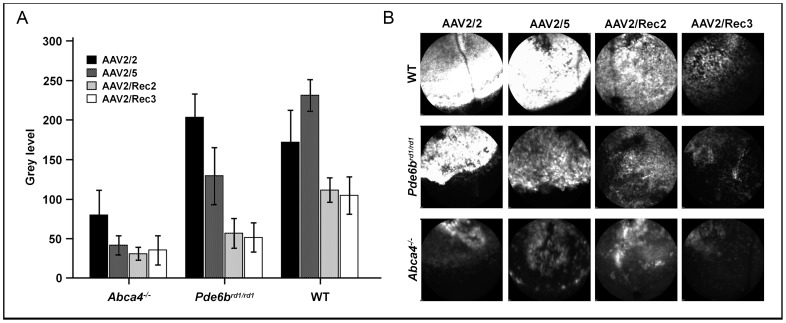
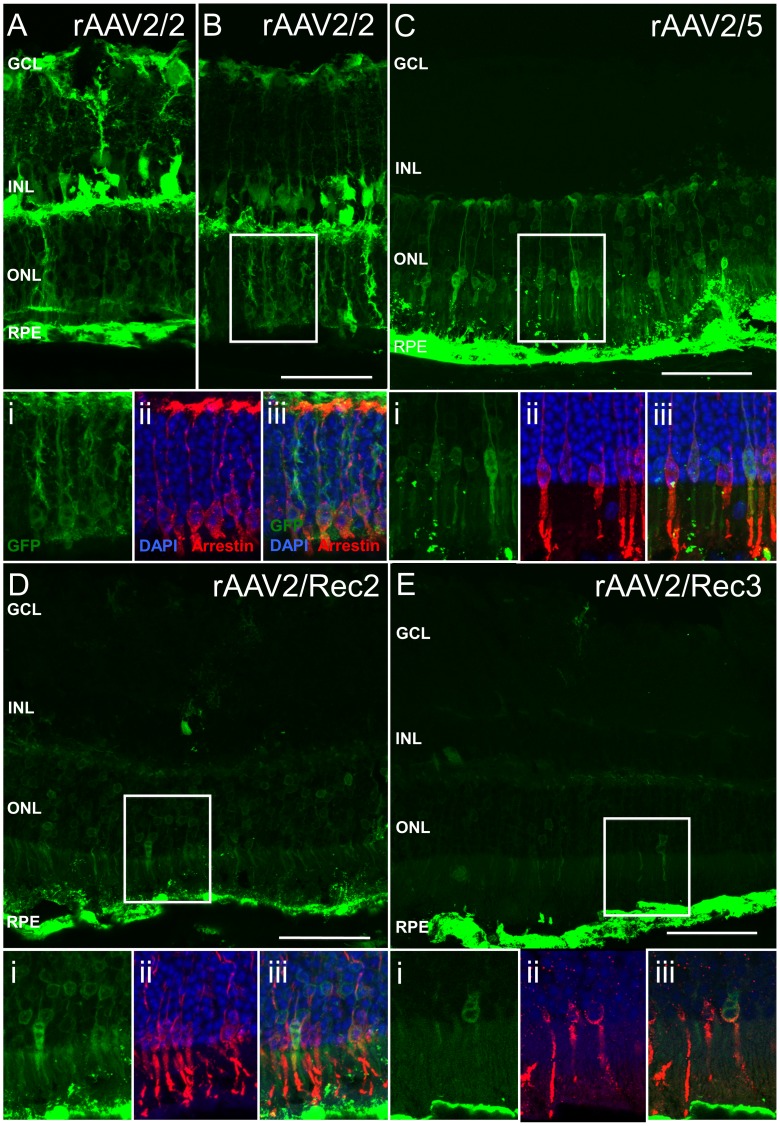
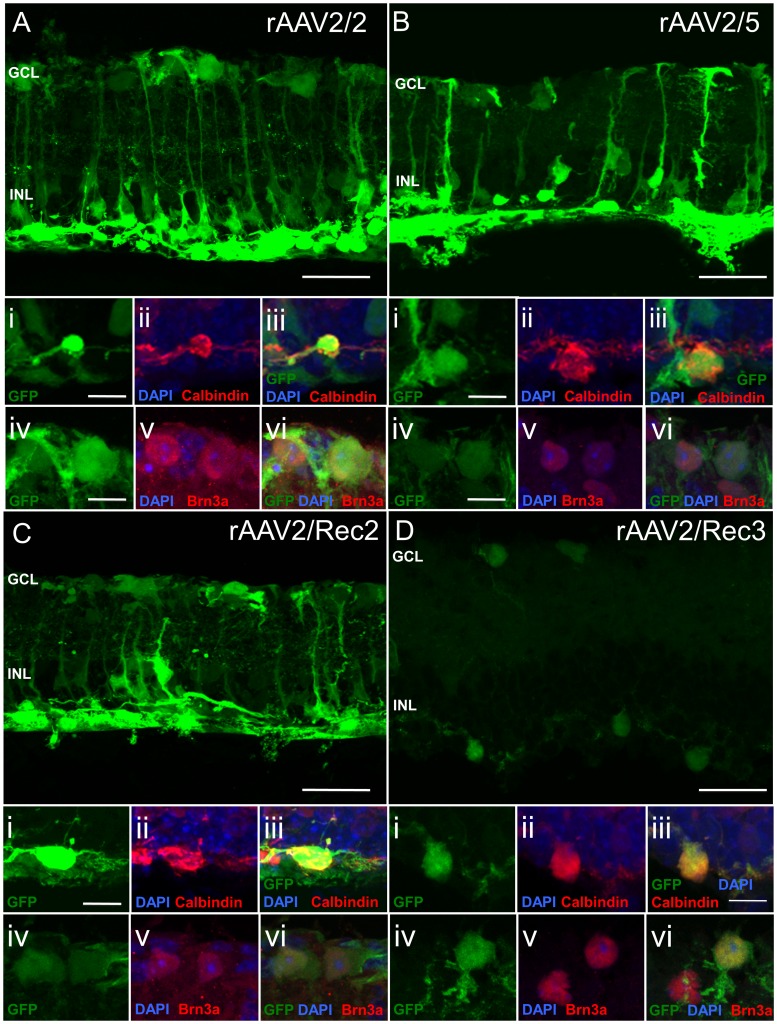
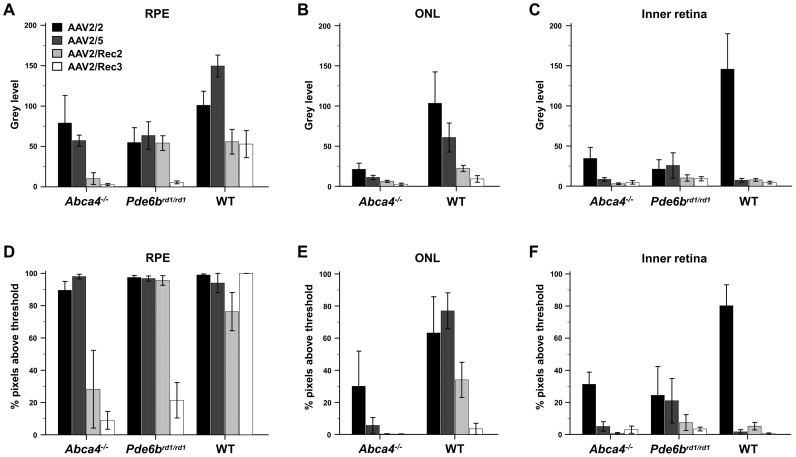
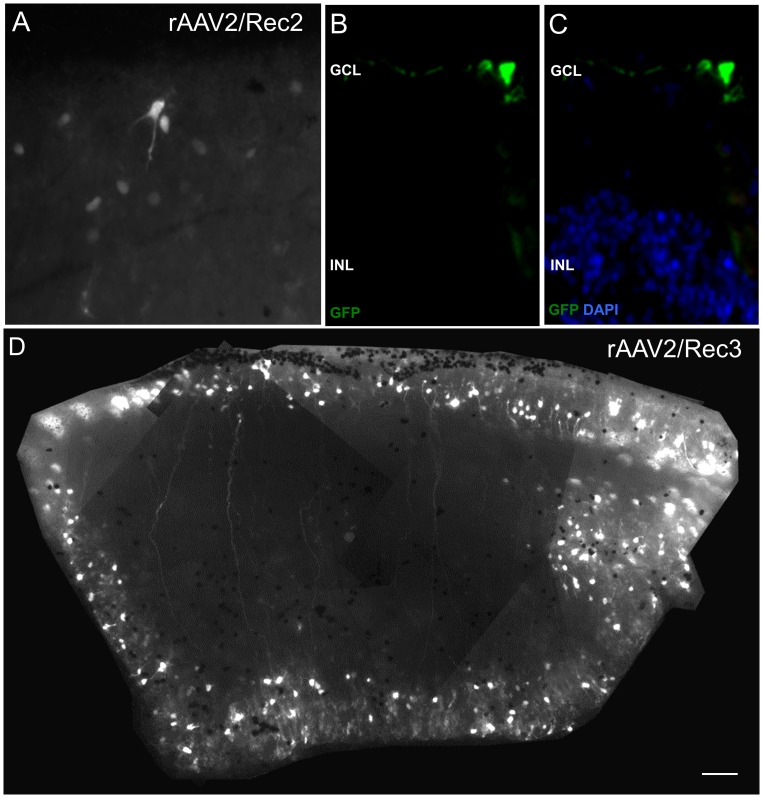
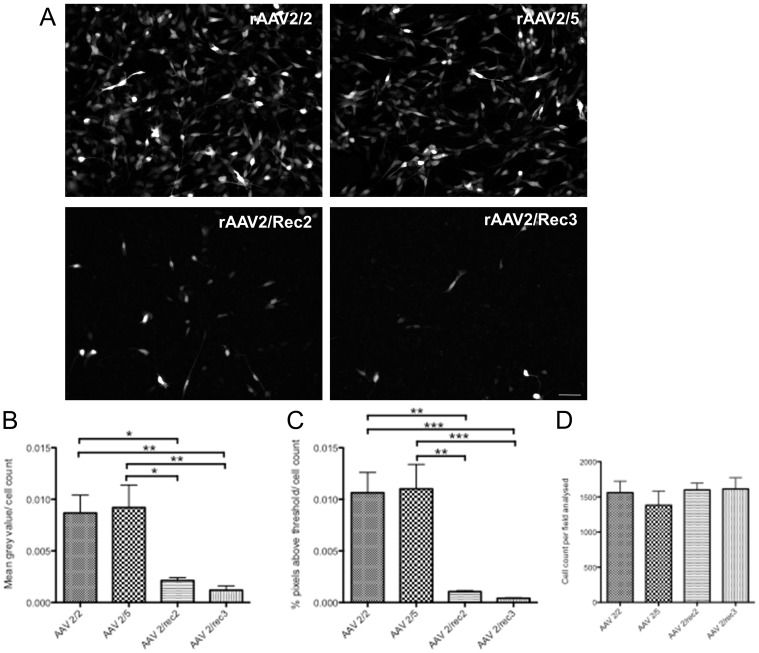
Adeno-associated viral vectors (AAV) have been shown to be safe in the treatment of retinal degenerations in clinical trials. Thus, improving the efficiency of viral gene delivery has become increasingly important to increase the success of clinical trials. In this study, structural domains of different rAAV serotypes isolated from primate brain were combined to create novel hybrid recombinant AAV serotypes, rAAV2/rec2 and rAAV2/rec3. The efficacy of these novel serotypes were assessed in wild type mice and in two models of retinal degeneration (the Abca4(-/-) mouse which is a model for Stargardt disease and in the Pde6b(rd1/rd1) mouse) in vivo, in primate tissue ex-vivo, and in the human-derived SH-SY5Y cell line, using an identical AAV2 expression cassette. We show that these novel hybrid serotypes can transduce retinal tissue in mice and primates efficiently, although no more than AAV2/2 and rAAV2/5 serotypes. Transduction efficiency appeared lower in the Abca4(-/-) mouse compared to wild type with all vectors tested, suggesting an effect of specific retinal diseases on the efficiency of gene delivery. Shuffling of AAV capsid domains may have clinical applications for patients who develop T-cell immune responses following AAV gene therapy, as specific peptide antigen sequences could be substituted using this technique prior to vector re-treatments.
Overview
The claims and statistics of this paper haven’t been checked yet.
Free: it reads the open-access text and checks the first 5 claims that cite a source we can check. Create a free account to check every claim.
Integrity signals
Registry
Cites
Statistics
Figures
Verification
Claims the paper makes
The claims and statistics of this paper haven’t been checked yet.
Free: it reads the open-access text and checks the first 5 claims that cite a source we can check. Create a free account to check every claim.
Claims other papers make about this one
Each is checked against this paper’s own text: does it say what the citing paper says it does?
The cited source says what the claim attributes to it.
In the citing paper
“The potency to infect the degenerate photoreceptors by subretinal injection of Abca4 KO mice compared to wild-type mice was lower for four different rAAVs (rAAV2, rAAV5, rAAV2rec2, rAAV2rec3) while the potency to infect INL cells was increased in Pde6b rd1/rd1 mice at least for rAAV5, rAAV2/Rec2 [309].”
From Recombinant Adeno-Associated Viral Vectors (rAAV)-Vector Elements in Ocular Gene Therapy Clinical Trials and Transgene Expression and Bioactivity Assays (2020) · cites this paper as [309]
Self-check
Percentages, sums and reported differences re-computed from the paper’s own numbers.
The self-check needs the paper’s full text.
Citations
Cites
Safety and Efficacy of Gene Transfer for Leber's Congenital Amaurosis
Maguire, A. M., Simonelli, F., Pierce, E. A., Pugh, E. N., Mingozzi, F., Bennicelli, J., Banfi, S., Marshall, K. A., Testa, F., Surace, E. M., et al. (2008) · New England Journal of Medicine · doi:10.1056/nejmoa0802315 · Cited by 2,145 · cited 1×
“Recent developments in retinal gene therapy have led to the successful treatment of patients with Leber’s congenital amaurosis (LCA) due to mutations in RPE65 [1,2,3,4,5,6,7].”
Effect of gene therapy on visual function in Leber’s congenital amaurosis
Bainbridge, J. W. B., Smith, A. J., Barker, S. S., Robbie, S., Henderson, R., Balaggan, K., Viswanathan, A., Holder, G. E., Stockman, A., Tyler, N., et al. (2008) · New England Journal of Medicine · doi:10.1056/nejmoa0802268 · Cited by 1,924 · cited 1×
“Recent developments in retinal gene therapy have led to the successful treatment of patients with Leber’s congenital amaurosis (LCA) due to mutations in RPE65 [1,2,3,4,5,6,7].”
Clades of Adeno-Associated Viruses Are Widely Disseminated in Human Tissues
Gao, G., Vandenberghe, L. H., Alvira, M. R., Lu, Y., Calcedo, R., Zhou, X., & Wilson, J. M. (2004) · Journal of Virology · doi:10.1128/jvi.78.12.6381-6388.2004 · Cited by 1,070 · cited 3×
“These are termed cy5 (cynomolgus macaque – variant 5), rh20 (rhesus macaque – variant 20) and rh39 and were originally supplied by Guang-Ping Gao and the Gene Therapy Program Vector Core, Department of Medicine, University of Pennsylvania, where further details of the identification of these sequences is available [10…”
InfluentialWeng, J., Mata, N. L., Azarian, S. M., Tzekov, R. T., Birch, D. G., & Travis, G. H. (1999) · Cell · doi:10.1016/s0092-8674(00)80602-9 · Cited by 881 · cited 2×
“Alternatively it is possible that loss of the transmembrane ABCA4 protein or the increased levels of phosphatidylethanolamine [26] reduce AAV entry into the photoreceptor cell.”
Cideciyan, A. V., Aleman, T. S., Boye, S. L., Schwartz, S. B., Kaushal, S., Roman, A. J., Pang, J.-J., Sumaroka, A., Windsor, E. A. M., Wilson, J. M., et al. (2008) · Proceedings of the National Academy of Sciences · doi:10.1073/pnas.0807027105 · Cited by 673 · cited 1×
“Recent developments in retinal gene therapy have led to the successful treatment of patients with Leber’s congenital amaurosis (LCA) due to mutations in RPE65 [1,2,3,4,5,6,7].”
Jacobson, S. G. (2012) · Archives of Ophthalmology · doi:10.1001/archophthalmol.2011.298 · Cited by 639 · cited 2×
“Although the studies were designed to investigate safety, lasting functional improvements in vision have been detected in some patients [1,6].”
Zhong, L., Li, B., Mah, C. S., Govindasamy, L., Agbandje-McKenna, M., Cooper, M., Herzog, R. W., Zolotukhin, I., Warrington, K. H., Weigel-Van Aken, K. A., et al. (2008) · Proceedings of the National Academy of Sciences · doi:10.1073/pnas.0802866105 · Cited by 558 · cited 1×
“Hence, it is unlikely that the reduced transduction is due to increased ubiquitin-tagged proteasome-mediated degradation [20], as one might observe if greater numbers of tyrosine residues were present on the hybrid”
Simonelli, F., Maguire, A. M., Testa, F., Pierce, E. A., Mingozzi, F., Bennicelli, J. L., Rossi, S., Marshall, K., Banfi, S., Surace, E. M., et al. (2010) · Molecular Therapy · doi:10.1038/mt.2009.277 · Cited by 553 · cited 2×
“Although the studies were designed to investigate safety, lasting functional improvements in vision have been detected in some patients [1,6].”
High-efficiency transduction of the mouse retina by tyrosine-mutant AAV serotype vectors
Petrs-Silva, H., Dinculescu, A., Li, Q., Min, S.-H., Chiodo, V., Pang, J.-J., Zhong, L., Zolotukhin, S., Srivastava, A., Lewin, A. S., et al. (2009) · Molecular Therapy · doi:10.1038/mt.2008.269 · Cited by 398
Inner limiting membrane barriers to aav-mediated retinal transduction from the vitreous
Dalkara, D., Kolstad, K. D., Caporale, N., Visel, M., Klimczak, R. R., Schaffer, D. V., & Flannery, J. G. (2009) · Molecular Therapy · doi:10.1038/mt.2009.181 · Cited by 357 · cited 1×
“[18] Indeed, the presence of an intact ILM may”
Cited by
AAV vectors: The Rubik’s cube of human gene therapy
Pupo, A., Fernández, A., Low, S. H., François, A., Suárez-Amarán, L., & Samulski, R. J. (2022) · Molecular Therapy · doi:10.1016/j.ymthe.2022.09.015 · Cited by 360
“113 These vectors were originally selected for retinal tissue transduction, where they are ef fi cient, but no more so than AAV2 and AAV5.”
BackgroundZhang, Z., Funcke, J.-B., Zi, Z., Zhao, S., Straub, L. G., Zhu, Y., Zhu, Q., Crewe, C., An, Y. A., Chen, S., et al. (2021) · Cell Metabolism · doi:10.1016/j.cmet.2021.06.001 · Cited by 109
Fischer, M. D., McClements, M. E., Martinez-Fernandez de la Camara, C., Bellingrath, J.-S., Dauletbekov, D., Ramsden, S. C., Hickey, D. G., Barnard, A. R., & MacLaren, R. E. (2017) · Molecular Therapy · doi:10.1016/j.ymthe.2017.05.005 · Cited by 112
“Viral capsids were subjected to DNase treatment and denatured at 95 C to release vg for PCR amplification using a CFX Connect RTPCR system (Bio-Rad) as described previously.(30) A standard curve was derived from a DNA plasmid of known concentration containing the same bGHpA sequence that was targeted by the primer pai…”
MethodSelf-citationBuck, T., & Wijnholds, J. (2020) · International Journal of Molecular Sciences · doi:10.3390/ijms21124197 · Cited by 92
“The potency to infect the degenerate photoreceptors by subretinal injection of Abca4KO mice compared to wild-type mice was lower for four different rAAVs (rAAV2, rAAV5, rAAV2rec2, rAAV2rec3) while the potency to infect INL cells was increased in Pde6brd1/rd1 mice at least for rAAV5, rAAV2/Rec2 [309].”
BackgroundGriffin, J. M., Fackelmeier, B., Fong, D. M., Mouravlev, A., Young, D., & O’Carroll, S. J. (2019) · Gene Therapy · doi:10.1038/s41434-019-0075-6 · Cited by 90
Self-citationThe non-human primate experimental glaucoma model
Burgoyne, C. F. (2015) · Experimental Eye Research · doi:10.1016/j.exer.2015.06.005 · Cited by 91
Yu, X., Chen, S., Funcke, J.-B., Straub, L. G., Pirro, V., Emont, M. P., Droz, B. A., Collins, K. A., Joung, C., Pearson, M. J., et al. (2025) · Cell Metabolism · doi:10.1016/j.cmet.2024.11.003 · Cited by 67
Optogenetic Gene Therapy for the Degenerate Retina: Recent Advances
McClements, M. E., Staurenghi, F., MacLaren, R. E., & Cehajic-Kapetanovic, J. (2020) · Frontiers in Neuroscience · doi:10.3389/fnins.2020.570909 · Cited by 69
“For example, studies with AAVbased reporter vectors indicate that cellular transduction profiles can vary depending on the mouse model used (Charbel Issa et al., 2013; van Wyk et al., 2017).”
BackgroundSelf-citationAssessment of Adeno-Associated Virus Serotype Tropism in Human Retinal Explants
Wiley, L. A., Burnight, E. R., Kaalberg, E. E., Jiao, C., Riker, M. J., Halder, J. A., Luse, M. A., Han, I. C., Russell, S. R., Sohn, E. H., et al. (2018) · Human Gene Therapy · doi:10.1089/hum.2017.179 · Cited by 68
Li, S., Datta, S., Brabbit, E., Love, Z., Woytowicz, V., Flattery, K., Capri, J., Yao, K., Wu, S., Imboden, M., et al. (2021) · Gene Therapy · doi:10.1038/s41434-020-0134-z · Cited by 68
“7m8 [71, 88].”
AAV Engineering for Improving Tropism to the Central Nervous System
Ghauri, M. S., & Ou, L. (2023) · Biology · doi:10.3390/biology12020186 · Cited by 74
“, AAV-B1) that effectively penetrate the blood-brain barrier (BBB) [54] and various compartments of the central nervous system, including multiple regions of the cerebral cortex [51], the hippocampus [54], astrocytes [53,55], microglial cells [56], glioma cells [57], and spinal cord cells [58].”
BackgroundEvaluation of an optimized injection system for retinal gene therapy in human patients
Fischer, M. D., Hickey, D. G., Singh, M. S., & MacLaren, R. E. (2016) · Human Gene Therapy Methods · doi:10.1089/hgtb.2016.086 · Cited by 61
Self-citationPatrício, M. I., Barnard, A. R., Orlans, H. O., McClements, M. E., & MacLaren, R. E. (2017) · Molecular Therapy - Nucleic Acids · doi:10.1016/j.omtn.2016.12.006 · Cited by 59
Self-citationDhande, O. S., Stafford, B. K., Franke, K., El-Danaf, R. N., Percival, K. A., Phan, A. H., Li, P., Hansen, B. J., Nguyen, P. L., Berens, P., et al. (2018) · Journal of Neuroscience · doi:10.1523/jneurosci.1784-18.2018 · Cited by 57
“…primate retina in which the tissue can be kept alive long enough to express transgenes delivered biolistically or from viral vectors that can be controlled by cell-type-specific enhancers (Fradot et al., 2011; Charbel Issa et al., 2013; Moritoh et al., 2013; Sinha et al., 2017; Ting et al., 2018).”
BackgroundHuang, W., Queen, N. J., McMurphy, T. B., Ali, S., & Cao, L. (2019) · Molecular Metabolism · doi:10.1016/j.molmet.2019.09.008 · Cited by 53
“The details of generation of Rec2 serotype are described before [28].”
BackgroundAdipose Tissue: An Emerging Target for Adeno-associated Viral Vectors
Bates, R., Huang, W., & Cao, L. (2020) · Molecular Therapy — Methods & Clinical Development · doi:10.1016/j.omtm.2020.09.009 · Cited by 54
“Mouse and primate studies indicated that the novel serotypes transduced retina tissue no better than AAV2 or AAV5.(93) The studies described below show that out of the engineered serotypes, Rec2 was found to effectively transduce adipose tissue and has since been used in several gene therapy studies in adipose tissue.”
BackgroundMethodInfluentialAdipose tissue insulin receptor knockdown via a new primate-derived hybrid recombinant AAV serotype
Liu, X., Magee, D., Wang, C., McMurphy, T. B., Slater, A., During, M. J., & Cao, L. (2014) · Molecular Therapy — Methods & Clinical Development · doi:10.1038/mtm.2013.8 · Cited by 51
Self-citationMüller, P. L., Gliem, M., Mangold, E., Bolz, H. J., Finger, R. P., McGuinness, M. B., Betz, C., Jiang, Z., Weber, B. H. F., MacLaren, R. E., et al. (2015) · Investigative Ophthalmology & Visual Science · doi:10.1167/iovs.15-17629 · Cited by 44
“Gene replacement therapy is currently pursued,(41) but challenges include the large size of the ABCA4 coding region, the relatively inefficient viral transduction of photoreceptors, and a possibly low diseasespecific efficiency of gene delivery.(42) However, the lack of haploinsufficiency in the pathogenesis of ABCA4-…”
BackgroundSelf-citationAdvances in ophthalmic optogenetics: approaches and applications
Prosseda, P. P., Tran, M., Kowal, T., Wang, B., & Sun, Y. (2022) · Biomolecules · doi:10.3390/biom12020269 · Cited by 41
Queen, N. J., Bates, R., Huang, W., Xiao, R., Appana, B., & Cao, L. (2020) · Molecular Therapy — Methods & Clinical Development · doi:10.1016/j.omtm.2020.12.011 · Cited by 40
“Rec2 serotype specificity, transduction efficacy in adipose tissue, and packaging were previously detailed elsewhere.(24,77,78) Rec2-Empty and Rec2-FGF21 rAAV vectors (2 10(10) vg) were administered to mice via i.”
MethodDe Silva, S. R., Charbel Issa, P., Singh, M. S., Lipinski, D. M., Barnea-Cramer, A. O., Walker, N. J., Barnard, A. R., Hankins, M. W., & MacLaren, R. E. (2016) · Gene Therapy · doi:10.1038/gt.2016.54 · Cited by 29
“the lipofuscin fluorophore A2E in the outer retina inhibits AAV transduction in some way (24).”
BackgroundMethodInfluentialSelf-citationMcClements, M. E., Staurenghi, F., Visel, M., Flannery, J. G., MacLaren, R. E., & Cehajic‐Kapetanovic, J. (2021) · BioMed Research International · doi:10.1155/2021/4014797 · Cited by 28
“Thus, primate-derived recombinant AAV [9], AAV capsid mutants such as AAV2/2 (4YF), which avoid proteosome degradation [10], or directly evolved (AAV2/2 (7m8) and AAV2/8 (BP2)) variants, which enhance retinal penetration, have enabled transduction of ON-bipolar cells in rd1 mice [11, 12].”
Self-citationThe Next Generation of Molecular and Cellular Therapeutics for Inherited Retinal Disease
Velazquez, L. A. M., & Ballios, B. G. (2021) · International Journal of Molecular Sciences · doi:10.3390/ijms222111542 · Cited by 28
“While AAV2 has provided excellent success in transducing the outer retina, its efficiency is lower in the inner retina [134].”
BackgroundSommer, N., Roumane, A., Han, W., Delibegović, M., Rochford, J. J., & Mcilroy, G. D. (2022) · Molecular Therapy — Methods & Clinical Development · doi:10.1016/j.omtm.2022.09.014 · Cited by 25
“Of particular interest would be the use of novel engineered hybrid capsid serotype recombinant AAV vectors such as Rec2.(30) Studies from Lei Cao’s laboratory have assessed the efficacy of Rec2 in adipose tissues, which revealed higher transduction efficiencies than AAV8 vectors and used systemic doses that were two o…”
X-Linked Retinitis Pigmentosa Gene Therapy: Preclinical Aspects
Mansouri, V. (2022) · Ophthalmology and Therapy · doi:10.1007/s40123-022-00602-y · Cited by 26
An, H., Cho, D.-W., Lee, S. E., Yang, Y.-S., Han, S.-C., & Lee, C. J. (2016) · Experimental Neurobiology · doi:10.5607/en.2016.25.1.48 · Cited by 22
“Moreover, improving the efficiency of viral gene delivery has become increasingly important to increase the success of clinical trials [8].”
BackgroundQuantitative single-cell transcriptome-based ranking of engineered AAVs in human retinal explants
Xi, Z., Öztürk, B. E., Johnson, M. E., Turunç, S., Stauffer, W. R., & Byrne, L. C. (2022) · Molecular Therapy — Methods & Clinical Development · doi:10.1016/j.omtm.2022.04.014 · Cited by 22
“However, anatomical structures including the vitreous and inner limiting membrane, barriers that restrict AAV diffusion in vivo, are not intact, especially on the edge of the explants.(27) In explants from all anatomical locations including macular, mid-peripheral, and peripheral retina, AAVs showed higher expression…”
BackgroundAntiangiogenic Eye Gene Therapy
Corydon, T. J. (2015) · Human Gene Therapy · doi:10.1089/hum.2015.064 · Cited by 21
“33 Recently, by using in vivo –directed evolution, a novel AAV vector (AAV-7m8-CAG-GFP) was shown to effectively deliver genetic material to the outer retina from the vitreous.”
Lee, S. H., Kim, Y.-S., Nah, S. K., Kim, H. J., Park, H. Y., Yang, J. Y., Park, K., & Park, T. K. (2018) · Molecular Therapy — Methods & Clinical Development · doi:10.1016/j.omtm.2018.01.008 · Cited by 19
Siu, J. J., Queen, N. J., Huang, W., Yin, F., Liu, X., Wang, C., McTigue, D. M., & Cao, L. (2017) · Gene Therapy · doi:10.1038/gt.2017.27 · Cited by 18
“Snyder et al.10 reports that intraparenchymal injection of AAV9 (6.25 × 10⁸ vg per injection) results in o5 mm longitudinal diffusion, which is better than that of AAV1, AAV6 and AAV8.”
InfluentialAdipose PTEN acts as a downstream mediator of a brain-fat axis in environmental enrichment
Huang, W., Queen, N. J., McMurphy, T. B., Ali, S., Wilkins, R. K., Appana, B., & Cao, L. (2020) · Comprehensive Psychoneuroendocrinology · doi:10.1016/j.cpnec.2020.100013 · Cited by 15
“Rec2 serotype specificity, transduction efficacy in adipose tissue, and packaging were previously detailed elsewhere [29,36].”
BackgroundBoon, N., Alves, C. H., Mulder, A. A., Andriessen, C. A., Buck, T. M., Quinn, P. M. J., Vos, R. M., Koster, A. J., Jost, C. R., & Wijnholds, J. (2021) · International Journal of Molecular Sciences · doi:10.3390/ijms22073563 · Cited by 14
“In addition, AAV5 tropism at P5 and P8 in control and Crb1 mutant rats is similar as described in 6- to 8-week-old C57/BL6 wild-type mice [30].”
BackgroundMethodPatrício, M. I., Barnard, A. R., Green, A. L., During, M. J., Sen, A., & MacLaren, R. E. (2017) · Seizure · doi:10.1016/j.seizure.2017.12.005 · Cited by 16
Self-citationLong-term effects of a fat-directed FGF21 gene therapy in aged female mice
Anderson, J. M., Arnold, W. D., Huang, W., Ray, A., Owendoff, G., & Cao, L. (2023) · Gene Therapy · doi:10.1038/s41434-023-00422-0 · Cited by 15
“All vectors were packaged into Rec2 capsid and puri fi ed by iodixanol gradient centrifugation as previously described [20, 24 – 26].”
Challenges in AAV-Based Retinal Gene Therapies and the Role of Magnetic Nanoparticle Platforms
Siontas, O., & Ahn, S. (2024) · Journal of Clinical Medicine · doi:10.3390/jcm13237385 · Cited by 13
Day, T. P., Byrne, L. C., Flannery, J. G., & Schaffer, D. V. (2017) · Methods in molecular biology · doi:10.1007/978-1-4939-7522-8_17 · Cited by 12
Development of an adipose-tropic AAV capsid ablating liver tropism
Huang, W., Bates, R., Appana, B., Mohammed, T., & Cao, L. (2024) · iScience · doi:10.1016/j.isci.2024.110930 · Cited by 8
Xiao, J., Wang, F., Yang, Q., Zhong, W., Zang, K., Tan, H., Lin, X., Rao, B., Gao, M., & Zhang, J. (2023) · The Journal of Comparative Neurology · doi:10.1002/cne.25487 · Cited by 6
Behrens, J. R., Braren, I., Jaeckstein, M. Y., Lilie, L., Heine, M., Sass, F., Sommer, J., Silbert-Wagner, D., Fuh, M. M., Worthmann, A., et al. (2024) · Molecular Metabolism · doi:10.1016/j.molmet.2024.101999 · Cited by 5
Abele, S., Alanis‐Lobato, G., Oti, M., Rust, W., Blazevic, D., Danner-Liskus, J., Mayer, C. A., Zimmermann, G., Zuckschwerdt, K., Schönberger, T., et al. (2025) · Molecular Therapy — Methods & Clinical Development · doi:10.1016/j.omtm.2025.101468 · Cited by 6
Zanker, J., Hüser, D., Savy, A., Lázaro-Petri, S., Hammer, E.-M., Schwarzer, C., & Heilbronn, R. (2023) · Frontiers in Molecular Neuroscience · doi:10.3389/fnmol.2023.1280556 · Cited by 3
Huang, W., Mohammed, T., Zou, X., Krishnan, A. A., Mo, X. M., Xiao, M., & Cao, L. (2025) · Molecular Therapy — Methods & Clinical Development · doi:10.1016/j.omtm.2025.101500 · Cited by 4
“6 Our previous research has demonstrated that an engineered hybrid AAV capsid Rec2, generated by capsid shuffling of AAV8 and rh20, 18 exhibits superior transduction efficiency to the adipose tissue than the natural serotypes (AAV1, 8, and 9) and engineered capsids (Rec1, Rec3, and Rec4) by direct…”
Optogenetics: A Novel Therapeutic Avenue for Age-Related Macular Degeneration
Grenga, P., Ciancimino, C., Meduri, A., & Fragiotta, S. (2025) · Biomolecules · doi:10.3390/biom15091286 · Cited by 3
Bellingrath, J.-S., McClements, M. E., Shanks, M. E., Clouston, P., Fischer, M. D., & MacLaren, R. E. (2022) · Ophthalmic Genetics · doi:10.1080/13816810.2022.2073599 · Cited by 3
“Traditionally, AAV-based vector delivery has been employed due to its proven safety profile, low immunogenicity, and the availability of many serotypes that provide cell-specific tropism (67,68).”
BackgroundSelf-citationBesci, Ö., Güler, M. Ç., Foss‐Freitas, M. C., & Oral, E. A. (2025) · Expert Review of Endocrinology & Metabolism · doi:10.1080/17446651.2025.2574318 · Cited by 3
Blahetek, G., Abele, S., Schmierer, E., Matera, D., Geisbauer, A., Lempp, C., Schönberger, T., Holdenried-Krafft, S., Gross, P., & Strobel, B. (2025) · Molecular Therapy Advances · doi:10.1016/j.omta.2025.201664 · Cited by 3
“AAV8 and AAV9 have most commonly been used for systemic delivery, while an engineered variant, AAV-Rec2 (chimera of NHP brain-isolated sero-types), 10,18 was reported to show stronger expression upon local injection into fad pads.”
Precision Is Not Enough: When Tools Outpace Translation in Ocular Gene Therapy
Elsayed, M. E. A. A., & MacLaren, R. E. (2026) · Genes · doi:10.3390/genes17030283 · Cited by 1
Self-citationAAV transduction of human glioblastoma cell lines induces perturbation in cell proliferation
Wu, A. J., Dumo, C. J., Cook, W. H., Richards, I., Foliaki, J. M., Cooper, E., Fong, D. M., Mouravlev, A., Park, T. I., Dragunow, M., et al. (2026) · Molecular Therapy Oncology · doi:10.1016/j.omton.2026.201216 · Cited by 1
Self-citationSubcutaneous administration of adipose-tropic gene therapy for congenital leptin deficiencyPreprint
Cao, L., Huang, W., Xiao, M., & Zou, X. (2025) · Research Square · doi:10.21203/rs.3.rs-7030870/v1 · Cited by 3
“We previously reported that an engineered hybrid capsid Rec2, generated by capsid shu�ing of natural serotypes AAV8 and rhesus 20 (rh20) (7), displays superior transduction e�ciency to white adipose tissue (WAT) and brown adipose tissue (BAT) than the natural (AAV1, 8, and 9) and engineered capsids…”
CRISPR/Cas9 Inducible Gene Knockout in Brown Adipose Tissue
Romanelli, S. M. (2021) · Deep Blue (University of Michigan) · doi:10.7302/2997
Augmenting Activity Dependent Plasticity for the Repair of Spinal Cord Injury
Batty, N. J. (2021) · ERA: Education and Research Archive (University of Alberta) · doi:10.7939/r3-qte1-4754
Gambaran Karakteristik Ibu Bersalin Prematur Di Rumah Sakit Umum Daerah Tugurejo Semarang Tahun 2011
Saptari, C., & Dhany (2012)
GENE THERAPY AT THE BLOOD-BRAIN BARRIER
Hede, E. (2024) · VBN Forskningsportal (Aalborg Universitet) · doi:10.54337/aau770636156
X-Linked Retinitis Pigmentosa Gene Therapy: Preclinical Aspects
Mansouri, V., & Bemanalizadeh, M. (2025) · IntechOpen eBooks · doi:10.5772/intechopen.1009101
Metadata
- Authors
- Charbel Issa, P., De Silva, S. R., Lipinski, D. M., Singh, M. S., Mouravlev, A., You, Q., Barnard, A. R., Hankins, M. W., During, M. J., & MacLaren, R. E.
- Affiliations
- University of Oxford (GB)
- University of Auckland (NZ)
- National Institute for Health and Care Research (GB)
- Corresponding author
- MacLaren, Robert E.
- ORCID
- Venue
- PLoS ONE
- Publisher
- Public Library of Science (PLoS)
- Published
- 2013-04-09
- Volume
- 8
- Issue
- 4
- Pages
- e60361
- ISSN
- 1932-6203 (ISSN-L)
- PMC
- PMC3621895
- OpenAlex
- W2052424035
- Cited by
- 53
- References
- 29
- Citations by year
- 2026: 2 · 2025: 7 · 2024: 4 · 2023: 4 · 2022: 6 · 2021: 6 · 2020: 6 · 2019: 2 · 2018: 2 · 2017: 6 · 2016: 3 · 2015: 3 · 2014: 1
- FWCI
- 1.55
- Type
- journal article
- Language
- en
- Open access
- gold
- doi.org
- Locations
- PLoS ONE (publishedVersion, cc-by)
- Europe PMC (PubMed Central) (publishedVersion, other-oa)
- PubMed Central (publishedVersion, cc-by)
- PubMed (publishedVersion)
- DOAJ (DOAJ: Directory of Open Access Journals) (submittedVersion, cc-by-sa)
- Figshare (submittedVersion, cc-by)
- ResearchSpace (University of Auckland) (submittedVersion, cc-by)
- Funders
- Wellcome Trust (086868, 094448/Z/10/Z, 094448, 086868/Z/08/Z)
- National Institute for Health and Care Research
- Royal College of Surgeons of Edinburgh
- European Commission (237238)
- National Institute of Neurological Disorders and Stroke (R01NS044576)
- Topics
- Life Sciences › Biochemistry, Genetics and Molecular Biology › Genetics › Virus-based gene therapy research
- Health Sciences › Medicine › Ophthalmology › Retinal Development and Disorders
- Life Sciences › Biochemistry, Genetics and Molecular Biology › Molecular Biology › RNA Interference and Gene Delivery
- Keywords
- adeno-associated virus vectors, AAV2, retinal gene therapy, retinal degeneration, Stargardt disease, transduction efficiency, primate retina, T cell response, SH-SY5Y cells
- MeSH terms
- Dependovirus, Animals, Cell Line, Genetic Vectors, Humans, Mice, Transgenic, Primates, Recombination, Genetic, Retina, Retinal Degeneration, Transduction, Genetic, Gene Expression, Gene Transfer Techniques, Green Fluorescent Proteins, Mice, Viral Tropism
About these checks
Registry, retraction, Cites and statistics results are computed, not judged, with one exception: a printed reference that no index lists is read once by a model before it counts as a citation error. Claims are extracted by a model and kept only when their quote appears verbatim in the text; each cited source is then checked, with a model’s help, for whether it says what the claim relies on. Those verdicts can be wrong — read the claim’s quote and the cited source before relying on one.
Statistics and arithmetic are recomputed, not judged.
Confidence bands are shown only for fields calibrated on our annotated test set. None is calibrated yet, so no band is shown.
What counts as a claim ›How we measure confidence ›How we check this ›
Are you an author, or do you see a problem with this page? Request a review
Data sources
Bibliographic data: Semantic Scholar, OpenAlex, Crossref.
Contains information from the Semantic Scholar Academic Graph Datasets, made available under the ODC Attribution License (ODC-BY 1.0).
Semantic Scholar’s data is described in: Kinney, R., et al. (2023). The Semantic Scholar Open Data Platform. arXiv:2301.10140.
