

Aft2, a Novel Transcription Regulator, Is Required for Iron Metabolism, Oxidative Stress, Surface Adhesion and Hyphal Development in Candida albicans
Open accessThe DOI matches its Crossref record; 57 of the 57 references it cites were found in a registry or an index.
Abstract
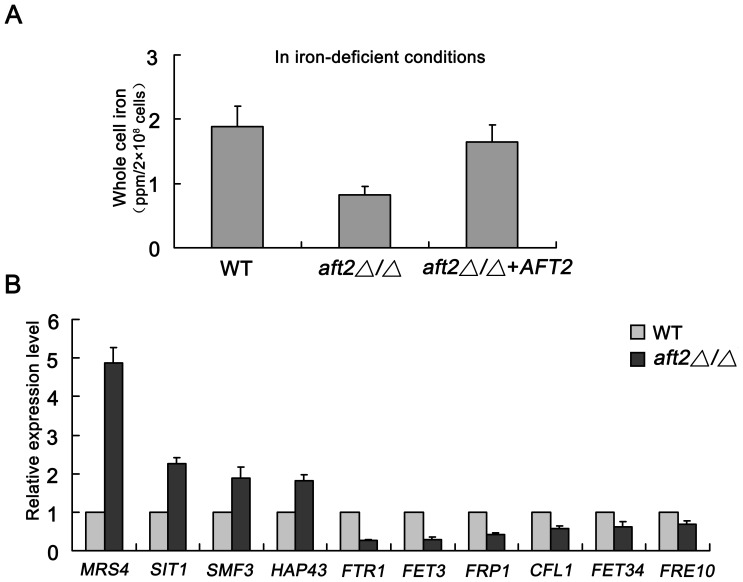
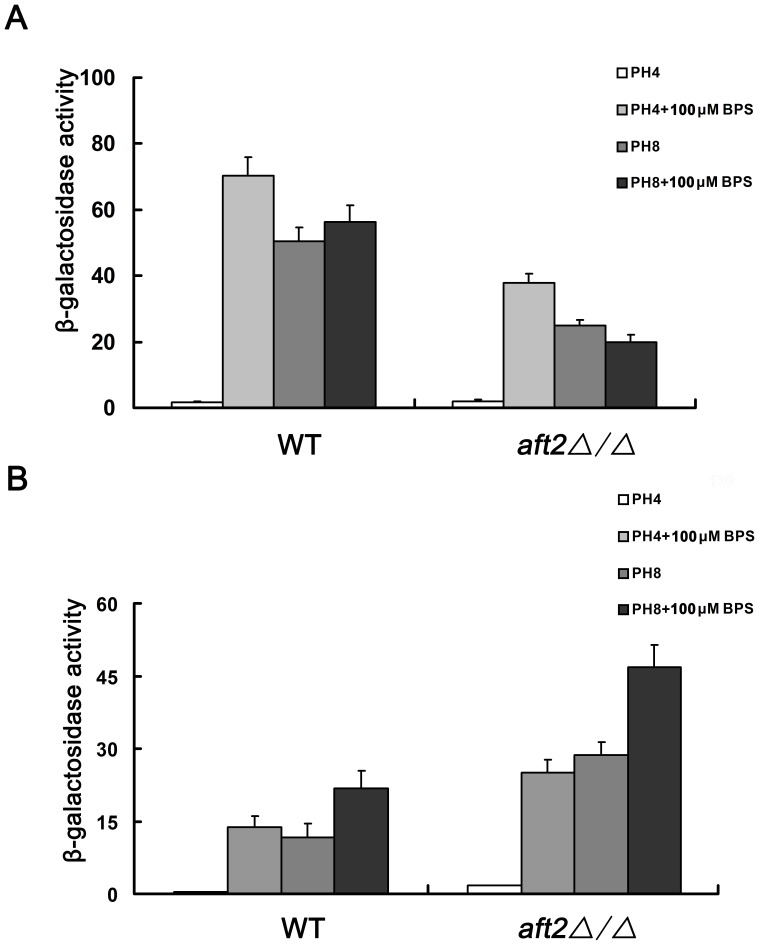
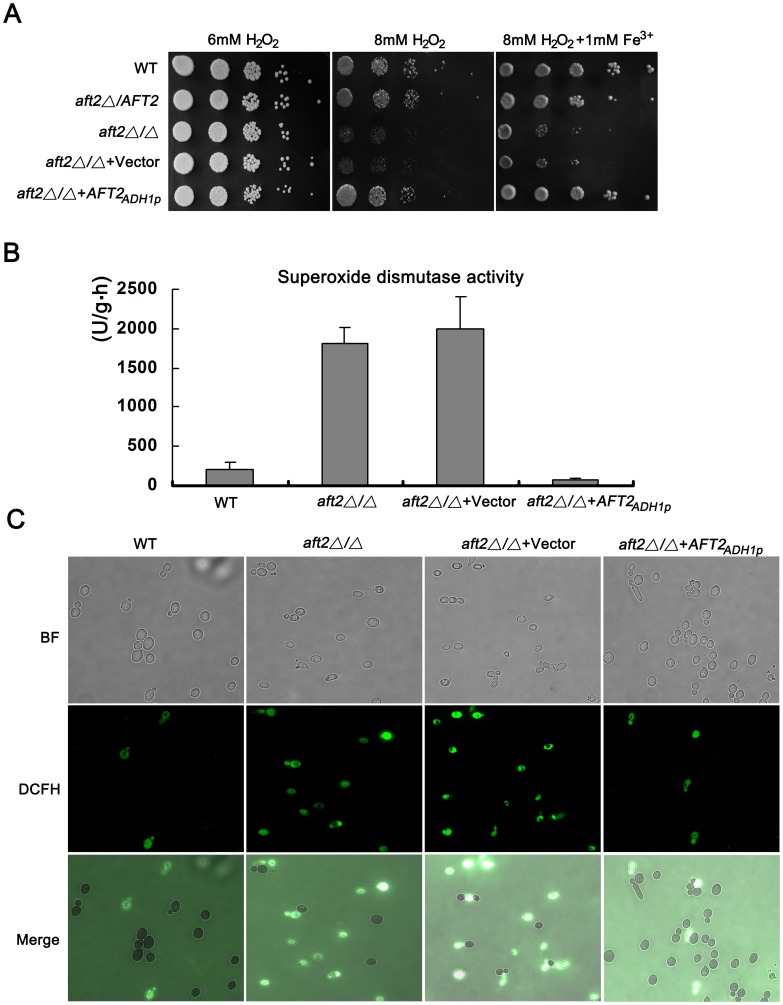
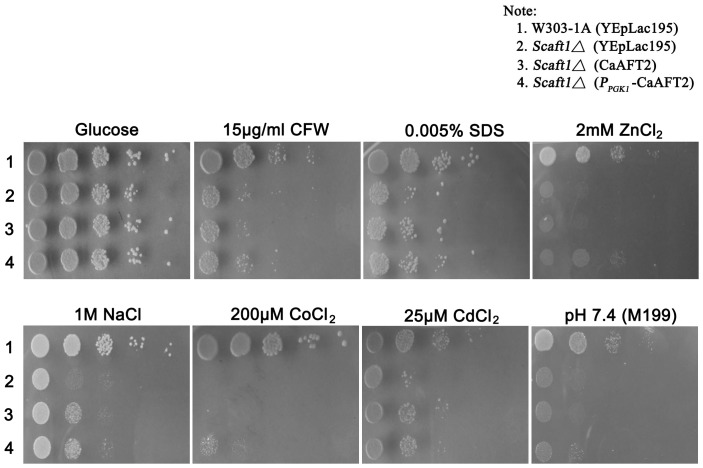
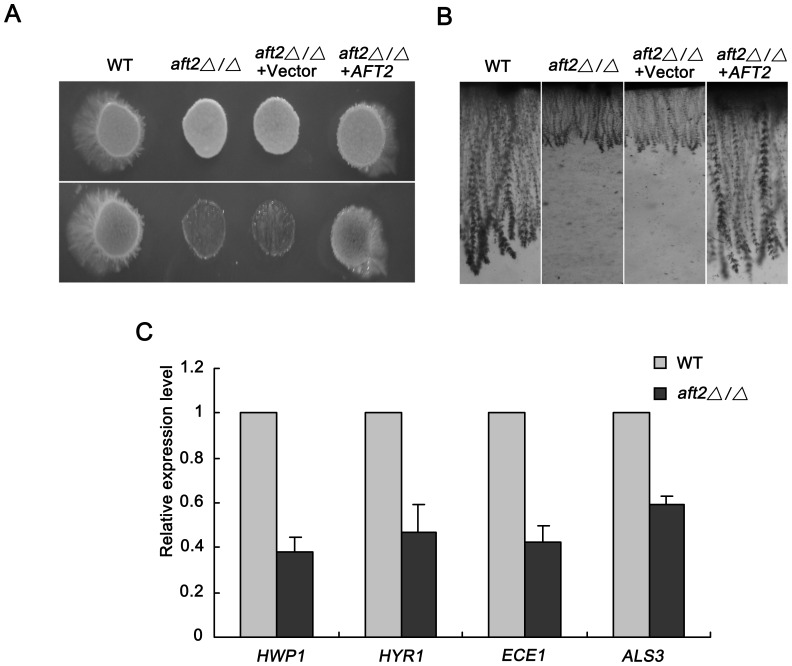
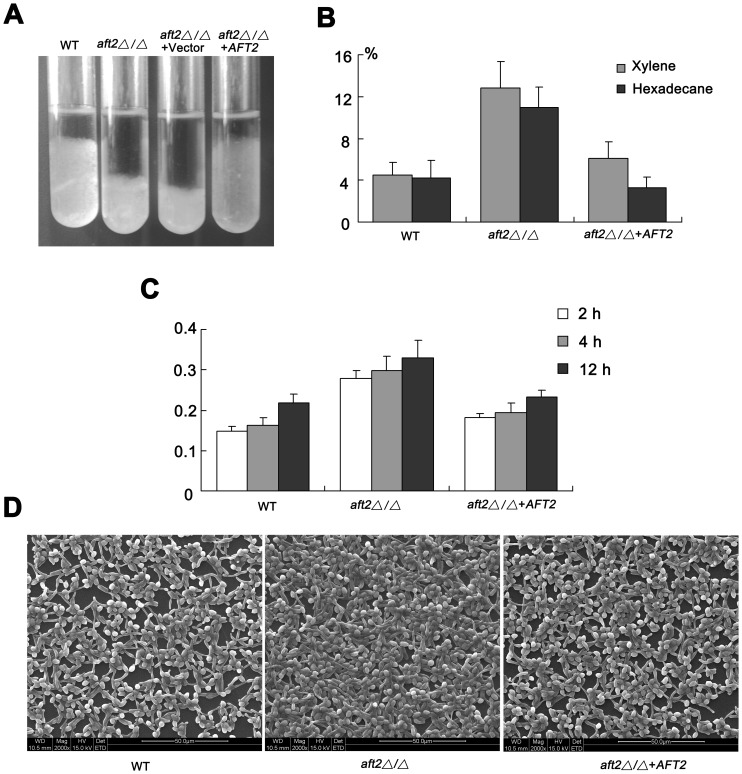
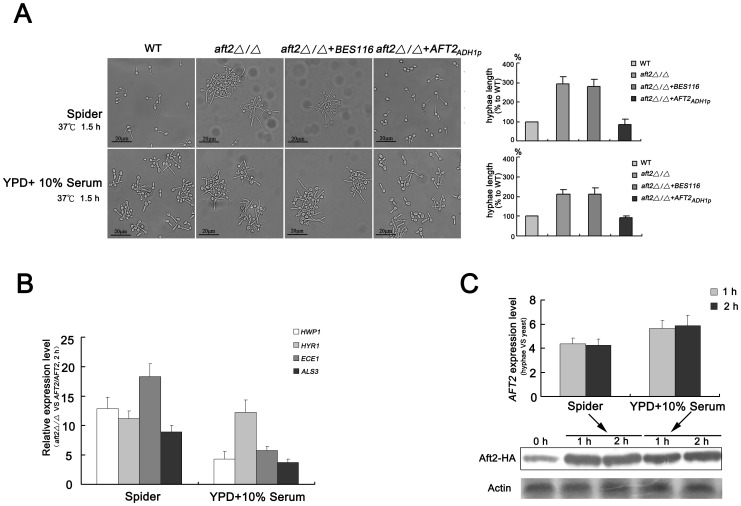
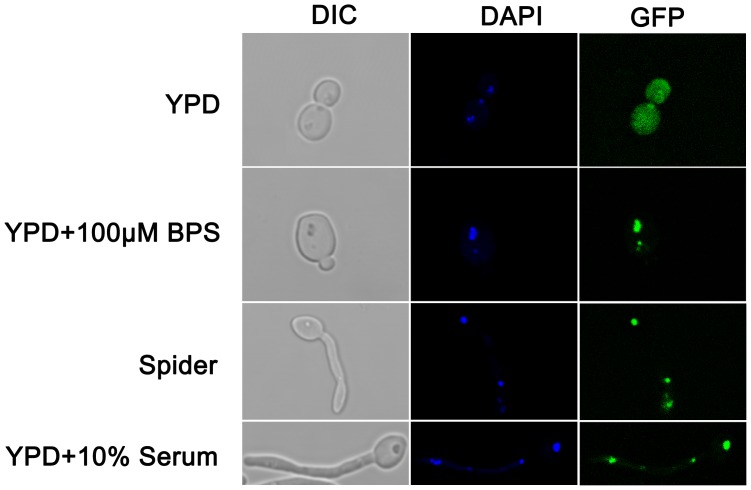
Morphological transition and iron metabolism are closely relevant to Candida albicans pathogenicity and virulence. In our previous study, we demonstrated that C. albicans Aft2 plays an important role in ferric reductase activity and virulence. Here, we further explored the roles of C. albicans Aft2 in numerous cellular processes. We found that C. albicans Aft2 exhibited an important role in iron metabolism through bi-directional regulation effects on iron-regulon expression. Deletion of AFT2 reduced cellular iron accumulation under iron-deficient conditions. Furthermore, both reactive oxygen species (ROS) generation and superoxide dismutase (SOD) activity were remarkably increased in the aft2Δ/Δ mutant, which were thought to be responsible for the defective responses to oxidative stress. However, we found that over-expression of C. albicans AFT2 under the regulation of the strong PGK1 promoter could not effectively rescue Saccharomyces cerevisiae aft1Δ mutant defects in some cellular processes, such as cell-wall assembly, ion homeostasis and alkaline resistance, suggesting a possibility that C. albicans Aft2 weakened its functional role of regulating some cellular metabolism during the evolutionary process. Interestingly, deletion of AFT2 in C. albicans increased cell surface hydrophobicity, cell flocculation and the ability of adhesion to polystyrene surfaces. In addition, our results also revealed that C. albicans Aft2 played a dual role in regulating hypha-specific genes under solid and liquid hyphal inducing conditions. Deletion of AFT2 caused an impaired invasive growth in solid medium, but an increased filamentous aggregation and growth in liquid conditions. Moreover, iron deficiency and environmental cues induced nuclear import of Aft2, providing additional evidence for the roles of Aft2 in transcriptional regulation.
Overview
The claims and statistics of this paper haven’t been checked yet.
Free: it reads the open-access text and checks the first 5 claims that cite a source we can check. Create a free account to check every claim.
Integrity signals
Registry
Cites
Statistics
Figures
Verification
Claims the paper makes
The claims and statistics of this paper haven’t been checked yet.
Free: it reads the open-access text and checks the first 5 claims that cite a source we can check. Create a free account to check every claim.
Claims other papers make about this one
Each is checked against this paper’s own text: does it say what the citing paper says it does?
The source backs part of the claim, not all of it — or backs it for a different population, condition or comparison.
In the citing paper
“The major pathogenic virulence of C. albicans is highly dependent on the transition from yeast to hyphal growth (Sturtevant et al. 2013).”
From Aloe emodin disrupts Candida albicans mitochondrial iron homeostasis against its hyphal development and oral candidiasis (2026) · cites this paper as Sturtevant et al. 2013
Experimental — accuracy not yet measured
Self-check
Percentages, sums and reported differences re-computed from the paper’s own numbers.
The self-check needs the paper’s full text.
Citations
Cites
Analysis of Relative Gene Expression Data Using Real-Time Quantitative PCR and the 2−ΔΔCT Method
Livak, K. J., & Schmittgen, T. D. (2001) · Methods · doi:10.1006/meth.2001.1262 · Cited by 180,860
LeBel, C. P., Ischiropoulos, H., & Bondy, S. C. (1992) · Chemical Research in Toxicology · doi:10.1021/tx00026a012 · Cited by 2,689 · cited 1×
“Determination and detection of ROS were performed as described previously [34,35].”
MethodToxicity of iron and hydrogen peroxide: the Fenton reaction
Winterbourn, C. C. (1995) · Toxicology Letters · doi:10.1016/0378-4274(95)03532-x · Cited by 1,415 · cited 1×
“because of the formation of highly toxic radicals by the Fenton reaction [3,6,7].”
BackgroundOxidative stress responses of the yeastSaccharomyces cerevisiae
Jamieson, D. J. (1998) · Yeast · doi:10.1002/(sici)1097-0061(199812)14:16<1511::aid-yea356>3.0.co;2-s · Cited by 805
Adhesive and Mammalian Transglutaminase Substrate Properties of Candida albicans Hwp1
Staab, J. F., Bradway, S. D., Fidel, P. L., & Sundstrom, P. (1999) · Science · doi:10.1126/science.283.5407.1535 · Cited by 607
Flocculation, adhesion and biofilm formation in yeasts
Verstrepen, K. J., & Klis, F. M. (2006) · Molecular Microbiology · doi:10.1111/j.1365-2958.2006.05072.x · Cited by 589 · cited 5×
“albicans, possess the ability to adhere to abiotic surfaces, other cells and host tissues [27,28,29].”
BackgroundInfluentialIron Homeostasis, Oxidative Stress, and DNA Damage
Meneghini, R. (1997) · Free Radical Biology and Medicine · doi:10.1016/s0891-5849(97)00016-6 · Cited by 578 · cited 1×
“because of the formation of highly toxic radicals by the Fenton reaction [3,6,7].”
BackgroundThe ALS gene family of Candida albicans.
Hoyer, L. L. (2001) · Trends in Microbiology · doi:10.1016/s0966-842x(01)01984-9 · Cited by 540 · cited 1×
“It is known as an essential adhesion and implicated in the adherence to host surfaces and biofilm development [44,45,46].”
BackgroundBiswas, S., Van Dijck, P., & Datta, A. (2007) · Microbiology and Molecular Biology Reviews · doi:10.1128/mmbr.00009-06 · Cited by 516 · cited 1×
“albicans [24], including Cph1-mediated MAPK pathway, Efg1-mediated cAMP pathway, Rim101-mediated pH response pathway and Czf1-mediated matrix embedding pathway.”
BackgroundA Phenotypic Profile of the Candida albicans Regulatory Network
Homann, O. R., Dea, J., Noble, S. M., & Johnson, A. D. (2009) · PLoS Genetics · doi:10.1371/journal.pgen.1000783 · Cited by 444 · cited 1×
“metallothioneins, glutaredoxin) defense systems to protect cells against oxidative stress [50,51].”
Background
Cited by
Gerwien, F., Skrahina, V., Kasper, L., Hube, B., & Brunke, S. (2018) · FEMS Microbiology Reviews · doi:10.1093/femsre/fux050 · Cited by 250
“Notably also, C. albicans Aft2 has only a very minor function in iron homeostasis regulation (Liang et al. 2010; Xu et al. 2013), since, like most other fungi, C. albicans relies on a different iron regulation strategy.”
BackgroundFungal iron homeostasis with a focus on Aspergillus fumigatus
Misslinger, M., Hortschansky, P., Brakhage, A. A., & Haas, H. (2020) · Biochimica et Biophysica Acta (BBA) - Molecular Cell Research · doi:10.1016/j.bbamcr.2020.118885 · Cited by 154
Investigating the antifungal activity and mechanism(s) of geraniol against Candida albicans strains
Leite, M. C. A., Bezerra, A. P. D. B., de Sousa, J. P., & Lima, E. D. O. (2014) · Medical Mycology · doi:10.1093/mmy/myu078 · Cited by 132
“albicans infections occur more frequently with high mortality rates and are recognized as a major cause of hospital-acquired infections [2].”
BackgroundWiemann, P., Perevitsky, A., Lim, F. Y., Shadkchan, Y., Knox, B. P., Landero Figueora, J. A., Choera, T., Niu, M., Steinberger, A. J., Wüthrich, M., et al. (2017) · Cell Reports · doi:10.1016/j.celrep.2017.04.019 · Cited by 104
Transcriptional control of hyphal morphogenesis in Candida albicans
Villa, S., Hamideh, M., Weinstock, A., Qasim, M. N., Hazbun, T. R., Sellam, A., Hernday, A. D., & Thangamani, S. (2020) · FEMS Yeast Research · doi:10.1093/femsyr/foaa005 · Cited by 117
“(Kaplan and Kaplan 2009; Liang et al. 2010; Castells-Roca et al. 2011; Xu et al. 2013) AHR1/ZCF37 Zinc cluster transcription factor, acts as a cofactor for Mcm1p regulon.”
Background
Metadata
- Authors
- Xu, N., Cheng, X., Yu, Q., Qian, K., Ding, X., Liu, R., Zhang, B., Xing, L., & Li, M.
- Affiliations
- Nankai University (CN)
- Tianjin University of Traditional Chinese Medicine (CN)
- Corresponding author
- Li, Mingchun
- Venue
- PLoS ONE
- Publisher
- Public Library of Science (PLoS)
- Published
- 2013-04-23
- Volume
- 8
- Issue
- 4
- Pages
- e62367
- ISSN
- 1932-6203 (ISSN-L)
- PMC
- PMC3633901
- OpenAlex
- W1975279271
- Cited by
- 24
- References
- 57
- Citations by year
- 2026: 1 · 2025: 1 · 2024: 1 · 2023: 1 · 2021: 2 · 2020: 4 · 2019: 1 · 2018: 2 · 2017: 4 · 2016: 3 · 2015: 2 · 2014: 2
- FWCI
- 1.04
- Type
- journal article
- Language
- en
- Open access
- gold
- doi.org
- Locations
- PLoS ONE (publishedVersion, cc-by)
- Europe PMC (PubMed Central) (publishedVersion, cc-by)
- PubMed Central (publishedVersion, cc-by)
- PubMed (publishedVersion)
- DOAJ (DOAJ: Directory of Open Access Journals) (submittedVersion, cc-by-sa)
- Figshare (submittedVersion, cc-by)
- Funders
- University of Minnesota
- National Natural Science Foundation of China (81171541, 31070126)
- Topics
- Life Sciences › Biochemistry, Genetics and Molecular Biology › Molecular Biology › Fungal and yeast genetics research
- Health Sciences › Medicine › Infectious Diseases › Antifungal resistance and susceptibility
- Health Sciences › Medicine › Infectious Diseases › Fungal Infections and Studies
- Keywords
- Candida albicans, transcription factors, iron metabolism, iron regulon, oxidative stress, reactive oxygen species, superoxide dismutase, cell adhesion, cell surface hydrophobicity, cell flocculation, hyphal development, invasive growth, nuclear import, iron deficiency, virulence, pathogenicity
- MeSH terms
- Iron Deficiencies, Candida albicans, Fungal Proteins, Hydrogen-Ion Concentration, Iron, Saccharomyces cerevisiae, Transcription Factors, Transcription, Genetic, Trans-Activators, Gene Expression Regulation, Fungal, Gene Deletion, Oxidative Stress, Active Transport, Cell Nucleus, Focal Adhesions, Hyphae, Saccharomyces cerevisiae Proteins
About these checks
Registry, retraction, Cites and statistics results are computed, not judged, with one exception: a printed reference that no index lists is read once by a model before it counts as a citation error. Claims are extracted by a model and kept only when their quote appears verbatim in the text; each cited source is then checked, with a model’s help, for whether it says what the claim relies on. Those verdicts can be wrong — read the claim’s quote and the cited source before relying on one.
Statistics and arithmetic are recomputed, not judged.
Confidence bands are shown only for fields calibrated on our annotated test set. None is calibrated yet, so no band is shown.
What counts as a claim ›How we measure confidence ›How we check this ›
Are you an author, or do you see a problem with this page? Request a review
Data sources
Bibliographic data: Semantic Scholar, OpenAlex, Crossref.
Contains information from the Semantic Scholar Academic Graph Datasets, made available under the ODC Attribution License (ODC-BY 1.0).
Semantic Scholar’s data is described in: Kinney, R., et al. (2023). The Semantic Scholar Open Data Platform. arXiv:2301.10140.
