

Type of Mask May Impact on Continuous Positive Airway Pressure Adherence in Apneic Patients
Open accessThe DOI matches its Crossref record; 45 of the 47 references it cites were found in a registry or an index.
Abstract
RATIONALE: In obstructive sleep apnea patients (OSA), continuous positive airway pressure (CPAP) adherence is crucial to improve symptoms and cardiometabolic outcomes. The choice of mask may influence CPAP adherence but this issue has never been addressed properly. OBJECTIVE: To evaluate the impact of nasal pillows, nasal and oronasal masks on CPAP adherence in a cohort of OSA. METHODS: Newly CPAP treated OSA participating in "Observatoire Sommeil de la Fédération de Pneumologie", a French national prospective cohort, were included between March 2009 and December 2011. Anthropometric data, medical history, OSA severity, sleepiness, depressive status, treatment modalities (auto-CPAP versus fixed pressure, pressure level, interface type, use of humidifiers) and CPAP-related side effects were included in multivariate analysis to determine independent variables associated with CPAP adherence. RESULTS: 2311 OSA (age = 57(12) years, apnea+hypopnea index = 41(21)/h, 29% female) were included. Nasal masks, oronasal masks and nasal pillows were used by 62.4, 26.2 and 11.4% of the patients, respectively. In univariate analysis, oronasal masks and nasal pillows were associated with higher risk of CPAP non-adherence. CPAP non-adherence was also associated with younger age, female gender, mild OSA, gastroesophageal reflux, depression status, low effective pressure and CPAP-related side effects. In multivariate analysis, CPAP non-adherence was associated with the use of oronasal masks (OR = 2.0; 95%CI = 1.6; 2.5), depression, low effective pressure, and side effects. CONCLUSION: As oronasal masks negatively impact on CPAP adherence, a nasal mask should be preferred as the first option. Patients on oronasal masks should be carefully followed.
Overview
The claims and statistics of this paper haven’t been checked yet.
Free: it reads the open-access text and checks the first 5 claims that cite a source we can check. Create a free account to check every claim.
Integrity signals
Registry
Cites
Statistics
Figures
Verification
Claims the paper makes
The claims and statistics of this paper haven’t been checked yet.
Free: it reads the open-access text and checks the first 5 claims that cite a source we can check. Create a free account to check every claim.
Claims other papers make about this one
Each is checked against this paper’s own text: does it say what the citing paper says it does?
The cited source doesn’t support the claim as written.
In the citing paper
“While data from a total of 4563 individuals with OSA was included, the majority of the data came from a single study.1061”
From International Consensus Statement on Obstructive Sleep Apnea (2023) · cites this paper as [1061]
Checked by a reasoning model — may be wrong.
Experimental — accuracy not yet measuredThe cited source doesn’t support the claim as written.
In the citing paper
“In these non-RCT cohorts, oronasal interfaces were least often chosen by participants for long-term treatment compared with nasal and intra-nasal interfaces.249,250”
From Treatment of Adult Obstructive Sleep Apnea With Positive Airway Pressure: An American Academy of Sleep Medicine Systematic Review, Meta-Analysis, and GRADE Assessment (2019) · cites this paper as [249]
Checked by a reasoning model — may be wrong.
Experimental — accuracy not yet measuredThe source backs part of the claim, not all of it — or backs it for a different population, condition or comparison.
In the citing paper
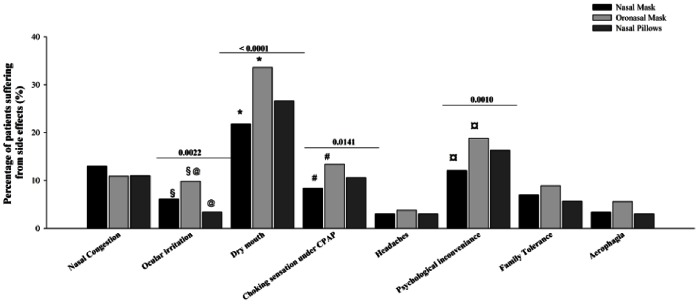
“Oronasal mask users were more likely than the other groups to report side effects and to find CPAP inconvenient.”
From International Consensus Statement on Obstructive Sleep Apnea (2023) · cites this paper as [1061]
Experimental — accuracy not yet measuredThe source backs part of the claim, not all of it — or backs it for a different population, condition or comparison.
In the citing paper
“This also demonstrated a clinically significant difference in adherence of 0.7 h/night (95% CI: 0.2 to 1.2 h/night) in favor of nasal interfaces (see supplemental material, Figure S97).”
From Treatment of Adult Obstructive Sleep Apnea With Positive Airway Pressure: An American Academy of Sleep Medicine Systematic Review, Meta-Analysis, and GRADE Assessment (2019) · cites this paper as [249]
Experimental — accuracy not yet measuredThe source backs part of the claim, not all of it — or backs it for a different population, condition or comparison.
In the citing paper
“In the non-RCTs, oral interfaces were associated with significantly more upper airway dryness and”
From Treatment of Adult Obstructive Sleep Apnea With Positive Airway Pressure: An American Academy of Sleep Medicine Systematic Review, Meta-Analysis, and GRADE Assessment (2019) · cites this paper as [249]
Experimental — accuracy not yet measured
3 more claims about this paper
Create a free account to see every claim other papers make about this one.
Self-check
Percentages, sums and reported differences re-computed from the paper’s own numbers.
The self-check needs the paper’s full text.
Citations
Cites
1 retracted
CPAP for the Metabolic Syndrome in Patients with Obstructive Sleep Apnea
Sharma, S. K., Agrawal, S., Damodaran, D., Sreenivas, V., Kadhiravan, T., Lakshmy, R., Jagia, P., & Kumar, A. (2011) · New England Journal of Medicine · doi:10.1056/nejmoa1103944 · Cited by 369 · cited 1×
“Both randomized controlled studies and observational cohort studies have demonstrated beneficial effects in terms of cardiovascular [2,3,4,5], metabolic [6], daytime vigilance and quality of life [7] outcomes.”
BackgroundRetractedA New Method for Measuring Daytime Sleepiness: The Epworth Sleepiness Scale
Johns, M. W. (1991) · Sleep · doi:10.1093/sleep/14.6.540 · Cited by 17,364
Marin, J. M., Carrizo, S. J., Vicente, E., & Agusti, A. G. (2005) · The Lancet · doi:10.1016/s0140-6736(05)71141-7 · Cited by 4,678 · cited 2×
“This is a common concern for many prospective observational cohorts [2,3].”
BackgroundSullivan, C., Berthon-Jones, M., Issa, F., & Eves, L. (1981) · The Lancet · doi:10.1016/s0140-6736(81)92140-1 · Cited by 2,731 · cited 5×
“Continuouspositiveairwaypressure (CPAP) is the first line therapy for moderate to severe obstructive sleep apnea syndrome (OSAS) [1].”
BackgroundInfluentialWeaver, T. E., Maislin, G., Dinges, D. F., Bloxham, T., George, C. F. P., Greenberg, H., Kader, G., Mahowald, M., Younger, J., & Pack, A. I. (2007) · Sleep · doi:10.1093/sleep/30.6.711 · Cited by 1,058 · cited 2×
“A threshold of four hours of CPAP usage per night was used to separate adherent and non-adherent patients [2,4,10,11,32].”
BackgroundMethodPepperell, J. C., Ramdassingh-Dow, S., Crosthwaite, N., Mullins, R., Jenkinson, C., Stradling, J. R., & Davies, R. J. (2002) · The Lancet · doi:10.1016/s0140-6736(02)07445-7 · Cited by 1,052 · cited 1×
“Both randomized controlled studies and observational cohort studies have demonstrated beneficial effects in terms of cardiovascular [2,3,4,5], metabolic [6], daytime vigilance and quality of life [7] outcomes.”
BackgroundContinuous positive airways pressure for obstructive sleep apnoea in adults
Giles, T., Lasserson, T., Smith, B., White, J., Wright, J., & Cates, C. (2006) · Cochrane Database of Systematic Reviews · doi:10.1002/14651858.cd001106.pub2 · Cited by 1,001 · cited 1×
“Both randomized controlled studies and observational cohort studies have demonstrated beneficial effects in terms of cardiovascular [2,3,4,5], metabolic [6], daytime vigilance and quality of life [7] outcomes.”
BackgroundKatan, M., & Van De Bovenkamp, P. (1987) · The Lancet · doi:10.1016/s0140-6736(87)91641-2 · Cited by 964
Barbé, F., Durán-Cantolla, J., Sánchez-de-la-Torre, M., Martínez-Alonso, M., Carmona, C., Barceló, A., Chiner, E., Masa, J. F., Gonzalez, M., Marín, J. M., et al. (2012) · JAMA · doi:10.1001/jama.2012.4366 · Cited by 792 · cited 1×
“A threshold of four hours of CPAP usage per night was used to separate adherent and non-adherent patients [2,4,10,11,32].”
MethodAssociation Between Treated and Untreated Obstructive Sleep Apnea and Risk of Hypertension
Marin, J. M., Agusti, A., Villar, I., Forner, M., Nieto, D., Carrizo, S. J., Barbé, F., Vicente, E., Wei, Y., Nieto, F. J., et al. (2012) · JAMA · doi:10.1001/jama.2012.3418 · Cited by 781 · cited 4×
“A threshold of four hours of CPAP usage per night was used to separate adherent and non-adherent patients [2,4,10,11,32].”
BackgroundMethodInfluential
Cited by
Items 101–187 of 187
Positive airway pressure adherence and mask interface in the setting of sinonasal symptoms
Schell, A. E., & Soose, R. J. (2017) · The Laryngoscope · doi:10.1002/lary.26486 · Cited by 6
“Poorer adherence has been previously associated with oronasal masks.(9,10) Despite this correlation, there is a notion that patients with nasal obstruction may be more likely to succeed using an interface that delivers positive pressure via both the nasal and oral airways.”
BackgroundLéotard, A., Lesgoirres, M., Daabek, N., Lebret, M., Bailly, S., Verain, A., Sériès, F., Pépin, J., & Borel, J. (2019) · Sleep And Breathing · doi:10.1007/s11325-018-01772-5 · Cited by 5
Self-citationA visit to Absurdistan: A nightmare of a sleep specialist
Rodenstein, D. O., & Durán‐Cantolla, J. (2013) · Sleep Medicine Reviews · doi:10.1016/j.smrv.2013.09.001 · Cited by 5
CPAP Use: Unmasking the Truth about Interface
Budhiraja, R., & Bakker, J. P. (2016) · Journal of Clinical Sleep Medicine · doi:10.5664/jcsm.6110 · Cited by 5
Schoebel, C., Woehrle, H., Ficker, J. H., Graml, A., Zeman, F., Fietze, I., Young, P., & Arzt, M. E. (2024) · Annals of the American Thoracic Society · doi:10.1513/annalsats.202310-913oc · Cited by 7
Premaraj, T. S., Stadiem, J., Premaraj, S. A., Davies, C. R., Dennis, M., & Harrington, J. J. (2021) · European Journal of Dentistry · doi:10.1055/s-0040-1719220 · Cited by 5
Tanaka, Y., Adame, J. M., Kaplan, A., & Almeida, F. R. (2022) · Journal of Dental Sleep Medicine · doi:10.15331/jdsm.7226 · Cited by 6
Narang, I., Kendzerska, T., Heffernan, A., Malik, U., Carvalho, C. G., & Ryan, C. M. (2022) · Nature and Science of Sleep · doi:10.2147/nss.s345143 · Cited by 4
“Furthermore, a higher PAP pressure may be required for oronasal masks(43) which may further impact PAP adherence.(44,45) Over the 12 months, two patients were switched from oronasal to nasal masks.”
BackgroundBlanco, M., Jaritos, V., Ernst, G., Salvado, A., Nogueira, F., & Borsini, E. E. (2018) · Sleep Science · doi:10.5935/1984-0063.20180040 · Cited by 7
The SomnuSeal Oral Mask Is Reasonably Tolerated by Otherwise CPAP Noncompliant Patients with OSA
Katz, N., Adir, Y., Etzioni, T., Kurtz, E., & Pillar, G. (2013) · Sleep Disorders · doi:10.1155/2013/840723 · Cited by 5
“There are many reported reasons for this noncompliance [15–21, 42].”
BackgroundObstructive sleep apnea: acute effects of CPAP on polyssonographic variables
Beck, M. C., Piccin, C. F., de Oliveira, L. C. A., Scapini, F., Neto, R. F. C., & da Silva, A. M. V. (2015) · Fisioterapia em Movimento · doi:10.1590/0103-5150.028.002.ao02 · Cited by 4
Nam, J. G., Kim, D. H., & Lee, T. (2022) · The Journal of Cosmetic Medicine · doi:10.25056/jcm.2022.6.1.27 · Cited by 3
Xavier, J. L. D. A., Fernandes, M. D., de Andrade, R. G. S., Genta, P. R., & Lorenzi‐Filho, G. (2024) · CHEST Journal · doi:10.1016/j.chest.2024.10.023 · Cited by 3
Tankéré, P., Georges, M., Abdulmalak, C., Schenesse, D., Beltramo, G., Berrier, A., Bonniaud, P., & Rabec, C. A. (2023) · Respiratory Medicine and Research · doi:10.1016/j.resmer.2023.101083 · Cited by 11
Kendzerska, T., Povitz, M., Bai, X., Pakhale, S. S., Wen, S. W., Gershon, A. S., & for the Canadian Respiratory Research Network (2020) · Canadian Journal of Respiratory Critical Care and Sleep Medicine · doi:10.1080/24745332.2020.1828005 · Cited by 5
“Additionally, in the absence of a more sensitive definition for OSA, and not being able to consider individuals on Bilevel therapy in our case definition, we may have underestimated the true prevalence of OSA.”
MethodInfluentialObstructive Sleep Apnea and Tooth Wear: Association and Confounding Factors
Anitua, E., Durán‐Cantolla, J., Saracho, J., & Alkhraisat, M. H. (2017) · Journal of Dental Sleep Medicine · doi:10.15331/jdsm.6528 · Cited by 4
Kang, Y. J., Cho, J., & Park, C. (2021) · Journal of Clinical Sleep Medicine · doi:10.5664/jcsm.9504 · Cited by 2
“Borel et al 15 used multivariate analysis to show that oronasal masks were associated with a higher risk of CPAP nonadherence compared with nasal or nasal pillow masks.”
BackgroundMethodRouchié, B., Fieux, M., Reisberg, S., Rétory, Y., Schmidt, A., Piro, B., Mattana, G., Filoche, M., Louis, B., Virbel-Fleischman, C., et al. (2025) · European Archives of Oto-Rhino-Laryngology · doi:10.1007/s00405-025-09539-x · Cited by 2
“Although patient adherence is linked to multiple factors, such as his/her environment, the disease, and the treatment [ 13– 16], one of the major factors is the adaptation of the ventilation interface ( i.e. the mask) to the patient's face morphology [ 15].”
Aghadavoudi, O., Beheshtiparvar, D., & Shafa, A. (2022) · Anesthesiology and Pain Medicine · doi:10.5812/aapm-123205 · Cited by 2
“This discrepancy can be explained by the difference in pressure and the positive pressure that the nasal mask creates, preventing the collapse and obstruction of the upper airway (15-17).”
BackgroundBazurto-Zapata, M. A., Valderrama, F. A. M., Fernandez, F., & González-García, M. (2021) · Revista de la Facultad de Medicina · doi:10.15446/revfacmed.v70n3.92729 · Cited by 2
“found that the type of interface was associated with a high risk of not adhering to CPAP treatment, with the oronasal mask having the lowest adherence (33).”
BackgroundMadeiro, F. (2019) · Digital Library of Theses and Dissertations (Universidade de São Paulo) · doi:10.11606/t.5.2019.tde-05062019-114124 · Cited by 2
de Sá, D. M. (2021) · Digital Library of Theses and Dissertations (Universidade de São Paulo) · doi:10.11606/t.17.2021.tde-07022022-151134 · Cited by 2
Matsumura, E. (2023) · Digital Library of Theses and Dissertations (Universidade de São Paulo) · doi:10.11606/t.5.2023.tde-02082023-152438 · Cited by 3
Ji, K. (2023) · Sleep Science · doi:10.1055/s-0043-1767758 · Cited by 1
Development of a test bench for ventilation masks through 2D and 3D printing processes
Rouchié, B., Mattana, G., Piro, B., Komain, N., Virbel-Fleischman, C., Rétory, Y., Schmidt, A., Louis, B., Béquignon, É., & Reisberg, S. (2024) · Sensors and Actuators A Physical · doi:10.1016/j.sna.2023.115001 · Cited by 1
Sina, E. M., Molin, N. L., Kaki, P. C., Ideker, H. C., White, S. F., Boon, M. S., & Huntley, C. T. (2025) · Laryngoscope Investigative Otolaryngology · doi:10.1002/lio2.70155 · Cited by 1
“Moreover, Mask type also impacts PAP outcomes, as prior studies suggest nasal masks optimize airway stability [4, 5].”
SCHWARTZ, D. B. (2017) · Journal of Dental Sleep Medicine · doi:10.15331/jdsm.6520 · Cited by 1
Weaning from the Ventilator and Long-Term Respiratory Support
Quijano-Roy, S., Mbieleu, B., Bergounioux, J., & Prigent, H. (2022) · Springer eBooks · doi:10.1007/978-3-030-91932-0_5 · Cited by 3
Tinoco, H. A., Perdomo-Hurtado, L., Cruz, J. A. H., Escobar-Serna, J. F., Jaramillo-Robledo, O., Aguirre-Ospina, O. D., Hurtado-Hernández, M., & López-Guzmán, J. (2023) · Medicina · doi:10.3390/medicina59081372 · Cited by 2
“Hence, this clinical trial aims to validate the use of CPAPAirFlifeTM in healthy patients through a non-inferiority test, following the approach of previous studies [43].”
MethodImportance of Interface in the Effectiveness of CPAP
Mestre, A. M., & Ramos, A. L. (2020) · Springer eBooks · doi:10.1007/978-3-030-42998-0_19 · Cited by 1
Costs of Treatment Non-adherence in Obstructive Sleep Apnoea
O'Reilly, J. F. (2022) · Springer eBooks · doi:10.1007/978-3-030-93146-9_12 · Cited by 5
Proceso de selección de máscaras para el tratamiento con CPAP
Blanco, M. (2019) · Fronteras en Medicina · doi:10.31954/rfem/201901/0029-0035 · Cited by 1
Lebret, M., Contal, O., & Borel, J. (2014) · Kinésithérapie la Revue · doi:10.1016/j.kine.2014.07.011
“Les caractéristiques techniques du traitement par PPC (machine, interface et réglage) en font partie [7].”
BackgroundMethodInfluentialSelf-citationGarcia, R., de Andrade, S., Piccin, V. S., Nascimento, J. A., Genta, P. R., & Lorenzi‐Filho, G. (2014)
Ebben, M. R. (2016) · Current Pulmonology Reports · doi:10.1007/s13665-016-0146-8
Brito, R. S., Landeiro, R., Salles, C., do Amaral, S. F., & Souza‐Machado, A. (2014)
Nasal Pillow for Sleep Apnea Syndrome: Key Technical Determinants and Clinical Evidence
Matsuoka, Y. (2015) · Springer eBooks · doi:10.1007/978-3-319-21653-9_4
Konsensuspapier zur Diagnostik und Therapie schlafbezogener Atmungsstörungen bei Erwachsenen
Bethanien, K., Hagen-Ambrock, H. K., & Wuppertal, H. K. (2014)
de Andrade, R. G. S. (2016) · Digital Library of Theses and Dissertations (Universidade de São Paulo) · doi:10.11606/t.5.2016.tde-08092016-144437 · Cited by 1
Carvalho, B. M. S., Durão, S., Elloy, C., & Gomes, P. S. (2016) · Sleep Medicine · doi:10.1016/j.sleep.2016.07.027
Peanchitlertkajorn, S. (2017) · Journal of Dental Sleep Medicine · doi:10.15331/jdsm.6530
The American Academy of Dental Sleep Medicine Begins Offering Qualified Dentist Designation
Smith, H. A. (2017) · Journal of Dental Sleep Medicine · doi:10.15331/jdsm.6518
Utilization of a Mandibular Advancement Device for Obstructive Sleep Apnea in the Veteran Population
Feinstein, A. J., Zaki, M., Zaghi, S., Tajima, T., & Wang, M. B. (2017) · Journal of Dental Sleep Medicine · doi:10.15331/jdsm.6524 · Cited by 1
Need for positive airway pressure re-titration with changes in mask style
Ebben, M. R. (2017) · Sleep Medicine · doi:10.1016/j.sleep.2017.09.004
BaHammam, A. S., Singh, T. D., & Esquinas, A. M. (2017) · Springer eBooks · doi:10.1007/978-3-319-49253-7_20
Nascimento, J. A. (2018) · Digital Library of Theses and Dissertations (Universidade de São Paulo) · doi:10.11606/t.5.2018.tde-30012018-112732
Nasal Congestion and Oronasal Masks
Berry, R. B., & Wagner, M. H. (2014) · Elsevier eBooks · doi:10.1016/b978-1-4557-7051-9.00153-4
Syndrome d'apnées du sommeil et kinésithérapie
Lebret, M., Léotard, A., & Borel, J. (2019) · Cited by 1
Self-citationYui, M. S. (2019) · Digital Library of Theses and Dissertations (Universidade de São Paulo) · doi:10.11606/t.17.2019.tde-20052019-142456
Prigent, A., Gentina, T., Launois, S. H., Meurice, J.-C., d’Ortho, M., Philippe, C., Tamisier, R., Gagnadoux, F., & Jaffuel, D. (2020) · Médecine du Sommeil · doi:10.1016/j.msom.2020.06.001
Self-citationSíndrome de apnea del sueño y kinesiterapia
Lebret, M., Léotard, A., & Borel, J. (2020) · EMC - Kinesiterapia - Medicina Física · doi:10.1016/s1293-2965(20)43663-1
Self-citationSindrome delle apnee del sonno e fisioterapia
Lebret, M., Léotard, A., & Borel, J. (2020) · EMC - Medicina Riabilitativa · doi:10.1016/s1283-078x(20)43866-0
Self-citationLépine, J., Berthier, F., Lorillou, M., Maincent, C., & Perrin, C. (2021) · Revue des Maladies Respiratoires · doi:10.1016/j.rmr.2021.10.001
Le suivi d’un patient sous PPC
Msaad, S., Kotti, A., Kallel, N., Abid, N., Abid, S., Hammami, B., Moussa, N., & Kammoun, S. (2022) · Médecine du Sommeil · doi:10.1016/j.msom.2021.12.001 · Cited by 1
Global Perspective of CPAP Adherence
Rosen, J., Najafi, A., Sadeghniiat‐Haghighi, K., Gupta, R. M., Janković, S. M., Shen, J., & Lee, Y. J. (2022) · Springer eBooks · doi:10.1007/978-3-030-93146-9_36
Mechanical Ventilation and Sleep
Estep, L. E., & Parthasarathy, S. (2022) · Springer eBooks · doi:10.1007/978-3-031-06447-0_10
Hassegawa, C. A. (2022) · Digital Library of Theses and Dissertations (Universidade de São Paulo) · doi:10.11606/d.61.2022.tde-18012023-130843
Mandelaris, G. A. (2023) · Springer eBooks · doi:10.1007/978-3-030-90099-1_22
Continuous Positive Airway Pressure, Bilevel, and Supplemental Oxygen: All in One Case!
Mendes, L. P. D. S., & Nerbass, F. B. (2023) · Springer eBooks · doi:10.1007/978-3-031-38340-3_21
Performance of the NOSE Questionnaire in Mask Selection for Home CPAP Titration
Blanco, M., Ernst, G., Rabino, A., Salvado, A., & Borsini, E. E. (2023) · Sleep Science · doi:10.1055/s-0043-1776769
“9 Specialists can assess nasal ventilatory failure through physical examination, validated questionnaires, objective studies like rhinodebitomanome-try and acoustic rhinometry.”
BackgroundSilva, F. S. L., Furlanetto, K. C., Neves, L. M. T., Cipriano, G. F. B., Accioly, M. F., Franco, A. M., Alves, T. B., Campelo, S. M., Silva, K. H., Silva, L. C. M., et al. (2024) · Fisioterapia e Pesquisa · doi:10.1590/1809-2950/e23014624en
Silva, F. S. L., Furlanetto, K. C., Neves, L. M. T., Cipriano, G. F. B., Accioly, M. F., Franco, A. M., Alves, T. B., Campelo, S. M., Silva, K. H., Silva, L. C. M., et al. (2024) · Fisioterapia e Pesquisa · doi:10.1590/1809-2950/e23014624pt · Cited by 1
Wenninger, S., Quijano-Roy, S., & Damian, M. S. (2025) · Cambridge University Press eBooks · doi:10.1017/9781009394628.019 · Cited by 1
The Nocebo Effect on CPAP Side Effects in Patients With OSA
Dalmases, M., Escuredo, L., Ruíz, C., Dupré, M. P., García, J., Embid, C., Español, I., Murru, A., Benitez, I. D., & Farré, R. (2025) · Archivos de Bronconeumología · doi:10.1016/j.arbres.2025.07.005
Rotty, M.-C., Suehs, C., Mallet, J., Martínez, C., Borel, J., Rabec, C. A., Bertelli, F., BOURDIN, A. A., Molinari, N., & Jaffuel, D. (2021) · Figshare · doi:10.6084/m9.figshare.13585433
Self-citationRotty, M.-C., Suehs, C., Mallet, J., Martínez, C., Borel, J., Rabec, C. A., Bertelli, F., BOURDIN, A. A., Molinari, N., & Jaffuel, D. (2021) · Figshare · doi:10.6084/m9.figshare.13585424
Self-citationRotty, M.-C., Suehs, C., Mallet, J., Martínez, C., Borel, J., Rabec, C. A., Bertelli, F., BOURDIN, A. A., Molinari, N., & Jaffuel, D. (2021) · Figshare · doi:10.6084/m9.figshare.13585421
Self-citationRotty, M.-C., Suehs, C., Mallet, J., Martínez, C., Borel, J., Rabec, C. A., Bertelli, F., BOURDIN, A. A., Molinari, N., & Jaffuel, D. (2021) · Figshare · doi:10.6084/m9.figshare.13585409
Self-citationRotty, M.-C., Suehs, C., Mallet, J., Martínez, C., Borel, J., Rabec, C. A., Bertelli, F., BOURDIN, A. A., Molinari, N., & Jaffuel, D. (2021) · Figshare · doi:10.6084/m9.figshare.13585415
Self-citationRotty, M.-C., Suehs, C., Mallet, J., Martínez, C., Borel, J., Rabec, C. A., Bertelli, F., BOURDIN, A. A., Molinari, N., & Jaffuel, D. (2021) · Figshare · doi:10.6084/m9.figshare.13585406
Self-citationRotty, M.-C., Suehs, C., Mallet, J., Martínez, C., Borel, J., Rabec, C. A., Bertelli, F., BOURDIN, A. A., Molinari, N., & Jaffuel, D. (2021) · Figshare · doi:10.6084/m9.figshare.13585436
Self-citationRotty, M.-C., Suehs, C., Mallet, J., Martínez, C., Borel, J., Rabec, C. A., Bertelli, F., BOURDIN, A. A., Molinari, N., & Jaffuel, D. (2021) · Figshare · doi:10.6084/m9.figshare.13585439
Self-citationRotty, M.-C., Suehs, C., Mallet, J., Martínez, C., Borel, J., Rabec, C. A., Bertelli, F., BOURDIN, A. A., Molinari, N., & Jaffuel, D. (2021) · Figshare · doi:10.6084/m9.figshare.13585427
Self-citationRotty, M.-C., Suehs, C., Mallet, J., Martínez, C., Borel, J., Rabec, C. A., Bertelli, F., BOURDIN, A. A., Molinari, N., & Jaffuel, D. (2021) · Figshare · doi:10.6084/m9.figshare.13585418
Self-citationRotty, M.-C., Suehs, C., Mallet, J., Martínez, C., Borel, J., Rabec, C. A., Bertelli, F., BOURDIN, A. A., Molinari, N., & Jaffuel, D. (2021) · Figshare · doi:10.6084/m9.figshare.13585442
Self-citationRotty, M.-C., Suehs, C., Mallet, J., Martínez, C., Borel, J., Rabec, C. A., Bertelli, F., BOURDIN, A. A., Molinari, N., & Jaffuel, D. (2021) · Figshare · doi:10.6084/m9.figshare.13585403
Self-citationRotty, M.-C., Suehs, C., Mallet, J., Martínez, C., Borel, J., Rabec, C. A., Bertelli, F., BOURDIN, A. A., Molinari, N., & Jaffuel, D. (2021) · Figshare · doi:10.6084/m9.figshare.13585445
Self-citationRotty, M.-C., Suehs, C., Mallet, J., Martínez, C., Borel, J., Rabec, C. A., Bertelli, F., BOURDIN, A. A., Molinari, N., & Jaffuel, D. (2021) · Figshare · doi:10.6084/m9.figshare.13585412
Self-citationRotty, M.-C., Suehs, C., Mallet, J., Martínez, C., Borel, J., Rabec, C. A., Bertelli, F., BOURDIN, A. A., Molinari, N., & Jaffuel, D. (2021) · Figshare · doi:10.6084/m9.figshare.13585430
Self-citationMyofunctional Therapy and CPAP
Bianchini, E. M. G., & Matsumura, E. (2026) · Springer eBooks · doi:10.1007/978-3-032-10057-3_17
Modélisations statistiques de données de cohortes de patients suivis à domicile
Rotty, M.-C. (2019) · theses.fr (ABES) · doi:10.70675/cf072935z8f3ez45f3z91abza6f2a21212d1
“…inclus à la fois les effets secondaires et le type masque dans une analyse multivariée et ont montré que le type de masque facial versus nasal était associé à l’observance à la PPC, alors que la bouche sèche et le nez bouché devenaient non-significatifs en analyse multivariée (BOREL ET AL., 2013).”
BackgroundInfluentialOptimizing Mask Selection for OSA Treatment With CPAP
Rosanelli, I., Hirata, R. P., Lorenzi‐Filho, G., & Genta, P. R. (2026) · CHEST Journal · doi:10.1016/j.chest.2026.07.5235 · Cited by 1
Syndrome d'apnée du sommeil en périopératoire
Marson, H. (2021) · Arnette eBooks · doi:10.3917/arne.lioti.2021.01.0183
Vidal, C., Mallet, J., Gilson, R., Gaubert, O., Borel, J., Gagnadoux, F., Prigent, A., BOURDIN, A. A., Molinari, N., & Jaffuel, D. (2026) · Archivos de Bronconeumología · doi:10.1016/j.arbres.2026.07.008
Self-citationOh, J., & Choi, J. H. (2026) · Life · doi:10.3390/life16091462
“…the titration AHI and degrades sleep quality and is therefore a potential confounder of several predictors at once [13,14,48]; mask type and fit [49]; patient-reported comfort [17]; psychological constructs [11,37,38,43,44]; comorbid insomnia [50,51]; and the pulmonary and positional data…”
Metadata
- Authors
- Borel, J. C., Tamisier, R., Dias-Domingos, S., Sapene, M., Martin, F., Stach, B., Grillet, Y., Muir, J. F., Levy, P., Series, F., Pepin, J.-L., & on behalf of the Scientific Council of The Sleep Registry of the French Federation of Pneumology (OSFP)
- Affiliations
- AGIR à dom (FR)
- Inserm (FR)
- Centre Hospitalier Compiègne-Noyon (FR)
- Centre Hospitalier de Valence (FR)
- Corresponding author
- Borel, Jean Christian
- Venue
- PLoS ONE
- Publisher
- Public Library of Science (PLoS)
- Published
- 2013-05-15
- Volume
- 8
- Issue
- 5
- Pages
- e64382
- ISSN
- 1932-6203 (ISSN-L)
- PMC
- PMC3654912
- OpenAlex
- W1966055642
- Semantic Scholar
- b2fb25b1e8c0d8ae8dc6ab635774963c90cd9f84
- Cited by
- 188
- References
- 47
- Citations by year
- 2026: 4 · 2025: 6 · 2024: 8 · 2023: 11 · 2022: 20 · 2021: 32 · 2020: 16 · 2019: 18 · 2018: 8 · 2017: 20 · 2016: 22 · 2015: 7 · 2014: 12 · 2013: 3
- FWCI
- 10.10
- Type
- journal article
- Language
- en
- Open access
- gold
- doi.org
- Locations
- PLoS ONE (publishedVersion, cc-by)
- Europe PMC (PubMed Central) (publishedVersion, cc-by)
- PubMed Central (publishedVersion, cc-by)
- PubMed (publishedVersion)
- RePEc: Research Papers in Economics (submittedVersion)
- DOAJ (DOAJ: Directory of Open Access Journals) (submittedVersion, cc-by-sa)
- Funders
- ResMed
- Région Normandie
- Topics
- Health Sciences › Medicine › Physiology (medical) › Obstructive Sleep Apnea Research
- Social Sciences › Psychology › Experimental and Cognitive Psychology › Sleep and related disorders
- Health Sciences › Medicine › Pulmonary and Respiratory Medicine › Respiratory Support and Mechanisms
- Keywords
- obstructive sleep apnea, CPAP adherence, CPAP masks, oronasal mask, nasal mask, CPAP side effects, depression, effective pressure, gastroesophageal reflux, auto-CPAP
- MeSH terms
- Aged, Female, Humans, Male, Masks, Middle Aged, Patient Compliance, Prospective Studies, Sleep Apnea, Obstructive, Continuous Positive Airway Pressure
About these checks
Registry, retraction, Cites and statistics results are computed, not judged, with one exception: a printed reference that no index lists is read once by a model before it counts as a citation error. Claims are extracted by a model and kept only when their quote appears verbatim in the text; each cited source is then checked, with a model’s help, for whether it says what the claim relies on. Those verdicts can be wrong — read the claim’s quote and the cited source before relying on one.
Statistics and arithmetic are recomputed, not judged.
Confidence bands are shown only for fields calibrated on our annotated test set. None is calibrated yet, so no band is shown.
What counts as a claim ›How we measure confidence ›How we check this ›
Are you an author, or do you see a problem with this page? Request a review
Data sources
Bibliographic data: Semantic Scholar, OpenAlex, Crossref.
Contains information from the Semantic Scholar Academic Graph Datasets, made available under the ODC Attribution License (ODC-BY 1.0).
Semantic Scholar’s data is described in: Kinney, R., et al. (2023). The Semantic Scholar Open Data Platform. arXiv:2301.10140.
