

Type of Mask May Impact on Continuous Positive Airway Pressure Adherence in Apneic Patients
Open accessThe DOI matches its Crossref record; 45 of the 47 references it cites were found in a registry or an index.
Abstract
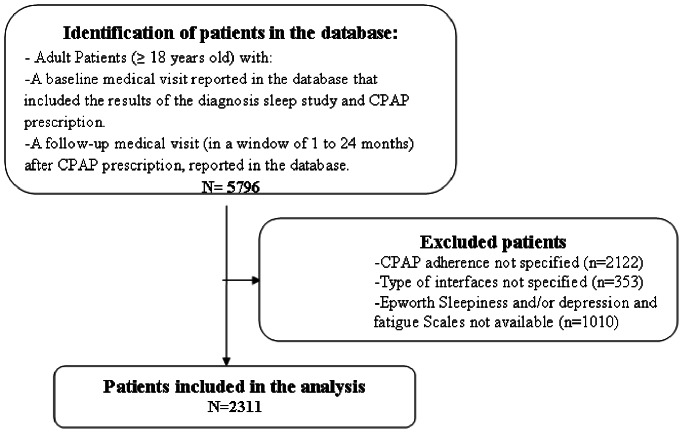
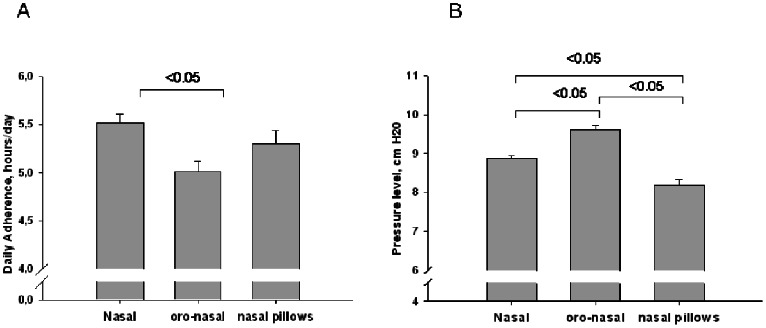
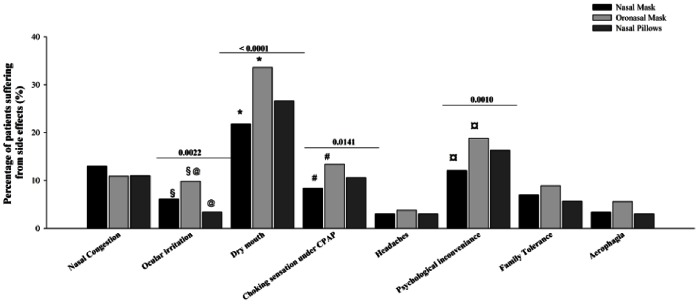
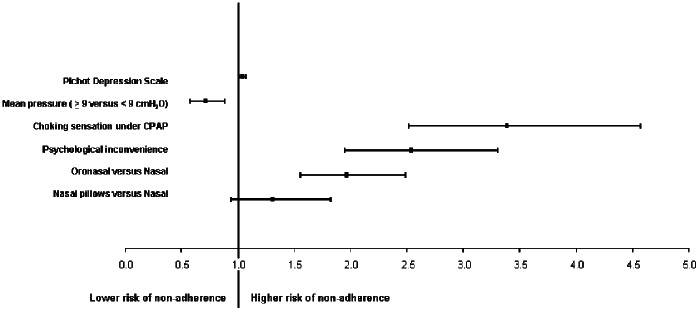
RATIONALE: In obstructive sleep apnea patients (OSA), continuous positive airway pressure (CPAP) adherence is crucial to improve symptoms and cardiometabolic outcomes. The choice of mask may influence CPAP adherence but this issue has never been addressed properly. OBJECTIVE: To evaluate the impact of nasal pillows, nasal and oronasal masks on CPAP adherence in a cohort of OSA. METHODS: Newly CPAP treated OSA participating in "Observatoire Sommeil de la Fédération de Pneumologie", a French national prospective cohort, were included between March 2009 and December 2011. Anthropometric data, medical history, OSA severity, sleepiness, depressive status, treatment modalities (auto-CPAP versus fixed pressure, pressure level, interface type, use of humidifiers) and CPAP-related side effects were included in multivariate analysis to determine independent variables associated with CPAP adherence. RESULTS: 2311 OSA (age = 57(12) years, apnea+hypopnea index = 41(21)/h, 29% female) were included. Nasal masks, oronasal masks and nasal pillows were used by 62.4, 26.2 and 11.4% of the patients, respectively. In univariate analysis, oronasal masks and nasal pillows were associated with higher risk of CPAP non-adherence. CPAP non-adherence was also associated with younger age, female gender, mild OSA, gastroesophageal reflux, depression status, low effective pressure and CPAP-related side effects. In multivariate analysis, CPAP non-adherence was associated with the use of oronasal masks (OR = 2.0; 95%CI = 1.6; 2.5), depression, low effective pressure, and side effects. CONCLUSION: As oronasal masks negatively impact on CPAP adherence, a nasal mask should be preferred as the first option. Patients on oronasal masks should be carefully followed.
Overview
The claims and statistics of this paper haven’t been checked yet.
Free: it reads the open-access text and checks the first 5 claims that cite a source we can check. Create a free account to check every claim.
Integrity signals
Registry
Cites
Statistics
Figures
Verification
Claims the paper makes
The claims and statistics of this paper haven’t been checked yet.
Free: it reads the open-access text and checks the first 5 claims that cite a source we can check. Create a free account to check every claim.
Claims other papers make about this one
Each is checked against this paper’s own text: does it say what the citing paper says it does?
The cited source doesn’t support the claim as written.
In the citing paper
“While data from a total of 4563 individuals with OSA was included, the majority of the data came from a single study.1061”
From International Consensus Statement on Obstructive Sleep Apnea (2023) · cites this paper as [1061]
Checked by a reasoning model — may be wrong.
Experimental — accuracy not yet measuredThe cited source doesn’t support the claim as written.
In the citing paper
“In these non-RCT cohorts, oronasal interfaces were least often chosen by participants for long-term treatment compared with nasal and intra-nasal interfaces.249,250”
From Treatment of Adult Obstructive Sleep Apnea With Positive Airway Pressure: An American Academy of Sleep Medicine Systematic Review, Meta-Analysis, and GRADE Assessment (2019) · cites this paper as [249]
Checked by a reasoning model — may be wrong.
Experimental — accuracy not yet measuredThe source backs part of the claim, not all of it — or backs it for a different population, condition or comparison.
In the citing paper
“Oronasal mask users were more likely than the other groups to report side effects and to find CPAP inconvenient.”
From International Consensus Statement on Obstructive Sleep Apnea (2023) · cites this paper as [1061]
Experimental — accuracy not yet measuredThe source backs part of the claim, not all of it — or backs it for a different population, condition or comparison.
In the citing paper
“This also demonstrated a clinically significant difference in adherence of 0.7 h/night (95% CI: 0.2 to 1.2 h/night) in favor of nasal interfaces (see supplemental material, Figure S97).”
From Treatment of Adult Obstructive Sleep Apnea With Positive Airway Pressure: An American Academy of Sleep Medicine Systematic Review, Meta-Analysis, and GRADE Assessment (2019) · cites this paper as [249]
Experimental — accuracy not yet measuredThe source backs part of the claim, not all of it — or backs it for a different population, condition or comparison.
In the citing paper
“In the non-RCTs, oral interfaces were associated with significantly more upper airway dryness and”
From Treatment of Adult Obstructive Sleep Apnea With Positive Airway Pressure: An American Academy of Sleep Medicine Systematic Review, Meta-Analysis, and GRADE Assessment (2019) · cites this paper as [249]
Experimental — accuracy not yet measured
3 more claims about this paper
Create a free account to see every claim other papers make about this one.
Self-check
Percentages, sums and reported differences re-computed from the paper’s own numbers.
The self-check needs the paper’s full text.
Citations
Cites
1 retracted
CPAP for the Metabolic Syndrome in Patients with Obstructive Sleep Apnea
Sharma, S. K., Agrawal, S., Damodaran, D., Sreenivas, V., Kadhiravan, T., Lakshmy, R., Jagia, P., & Kumar, A. (2011) · New England Journal of Medicine · doi:10.1056/nejmoa1103944 · Cited by 369 · cited 1×
“Both randomized controlled studies and observational cohort studies have demonstrated beneficial effects in terms of cardiovascular [2,3,4,5], metabolic [6], daytime vigilance and quality of life [7] outcomes.”
BackgroundRetractedA New Method for Measuring Daytime Sleepiness: The Epworth Sleepiness Scale
Johns, M. W. (1991) · Sleep · doi:10.1093/sleep/14.6.540 · Cited by 17,364
Marin, J. M., Carrizo, S. J., Vicente, E., & Agusti, A. G. (2005) · The Lancet · doi:10.1016/s0140-6736(05)71141-7 · Cited by 4,678 · cited 2×
“This is a common concern for many prospective observational cohorts [2,3].”
BackgroundSullivan, C., Berthon-Jones, M., Issa, F., & Eves, L. (1981) · The Lancet · doi:10.1016/s0140-6736(81)92140-1 · Cited by 2,731 · cited 5×
“Continuouspositiveairwaypressure (CPAP) is the first line therapy for moderate to severe obstructive sleep apnea syndrome (OSAS) [1].”
BackgroundInfluentialWeaver, T. E., Maislin, G., Dinges, D. F., Bloxham, T., George, C. F. P., Greenberg, H., Kader, G., Mahowald, M., Younger, J., & Pack, A. I. (2007) · Sleep · doi:10.1093/sleep/30.6.711 · Cited by 1,058 · cited 2×
“A threshold of four hours of CPAP usage per night was used to separate adherent and non-adherent patients [2,4,10,11,32].”
BackgroundMethodPepperell, J. C., Ramdassingh-Dow, S., Crosthwaite, N., Mullins, R., Jenkinson, C., Stradling, J. R., & Davies, R. J. (2002) · The Lancet · doi:10.1016/s0140-6736(02)07445-7 · Cited by 1,052 · cited 1×
“Both randomized controlled studies and observational cohort studies have demonstrated beneficial effects in terms of cardiovascular [2,3,4,5], metabolic [6], daytime vigilance and quality of life [7] outcomes.”
BackgroundContinuous positive airways pressure for obstructive sleep apnoea in adults
Giles, T., Lasserson, T., Smith, B., White, J., Wright, J., & Cates, C. (2006) · Cochrane Database of Systematic Reviews · doi:10.1002/14651858.cd001106.pub2 · Cited by 1,001 · cited 1×
“Both randomized controlled studies and observational cohort studies have demonstrated beneficial effects in terms of cardiovascular [2,3,4,5], metabolic [6], daytime vigilance and quality of life [7] outcomes.”
BackgroundKatan, M., & Van De Bovenkamp, P. (1987) · The Lancet · doi:10.1016/s0140-6736(87)91641-2 · Cited by 964
Barbé, F., Durán-Cantolla, J., Sánchez-de-la-Torre, M., Martínez-Alonso, M., Carmona, C., Barceló, A., Chiner, E., Masa, J. F., Gonzalez, M., Marín, J. M., et al. (2012) · JAMA · doi:10.1001/jama.2012.4366 · Cited by 792 · cited 1×
“A threshold of four hours of CPAP usage per night was used to separate adherent and non-adherent patients [2,4,10,11,32].”
MethodAssociation Between Treated and Untreated Obstructive Sleep Apnea and Risk of Hypertension
Marin, J. M., Agusti, A., Villar, I., Forner, M., Nieto, D., Carrizo, S. J., Barbé, F., Vicente, E., Wei, Y., Nieto, F. J., et al. (2012) · JAMA · doi:10.1001/jama.2012.3418 · Cited by 781 · cited 4×
“A threshold of four hours of CPAP usage per night was used to separate adherent and non-adherent patients [2,4,10,11,32].”
BackgroundMethodInfluential
Cited by
Patil, S. P., Ayappa, I. A., Caples, S. M., Kimoff, R. J., Patel, S. R., & Harrod, C. G. (2019) · Journal of Clinical Sleep Medicine · doi:10.5664/jcsm.7638 · Cited by 721
“249 In these non-RCT cohorts, oronasal interfaces were least often chosen by participants for long-term treatment compared with nasal and intra-nasal interfaces.”
InfluentialDefinition, discrimination, diagnosis and treatment of central breathing disturbances during sleep
Randerath, W., Verbraecken, J., Andreas, S., Arzt, M., Bloch, K. E., Brack, T., Buyse, B., De Backer, W., Eckert, D. J., Grote, L., et al. (2017) · European Respiratory Journal · doi:10.1183/13993003.00959-2016 · Cited by 354
Self-citationInternational Consensus Statement on Obstructive Sleep Apnea
Chang, J. L., Goldberg, A. N., Alt, J. A., Mohammed, A., Ashbrook, L., Auckley, D., Ayappa, I., Bakhtiar, H., Barrera, J. E., Bartley, B. L., et al. (2023) · International Forum of Allergy & Rhinology · doi:10.1002/alr.23079 · Cited by 350
Personalized Management Approach for OSA
Carberry, J. C., Amatoury, J., & Eckert, D. J. (2018) · Chest · doi:10.1016/j.chest.2017.06.011 · Cited by 250
Predictors of Continuous Positive Airway Pressure Adherence in Patients with Obstructive Sleep Apnea
Mehrtash, M., Bakker, J. P., & Ayas, N. (2019) · Lung · doi:10.1007/s00408-018-00193-1 · Cited by 231
Theorell-Haglöw, J., Miller, C. B., Bartlett, D. J., Yee, B. J., Openshaw, H. D., & Grunstein, R. R. (2018) · Sleep Medicine Reviews · doi:10.1016/j.smrv.2017.03.003 · Cited by 161
Nasal vs Oronasal CPAP for OSA Treatment
Andrade, R. G. S., Viana, F. M., Nascimento, J. A., Drager, L. F., Moffa, A., Brunoni, A. R., Genta, P. R., & Lorenzi-Filho, G. (2018) · Chest · doi:10.1016/j.chest.2017.10.044 · Cited by 122
Rowland, S., Aiyappan, V., Hennessy, C., Catcheside, P., Chai-Coezter, C. L., McEvoy, R. D., & Antic, N. A. (2018) · Journal of Clinical Sleep Medicine · doi:10.5664/jcsm.6892 · Cited by 105
“19,20 Furthermore, it may be they are less effective in controlling upper airway obstruction in some patients.”
InfluentialContinuous positive airway pressure and noninvasive ventilation adherence in children
Ramirez, A., Khirani, S., Aloui, S., Delord, V., Borel, J., Pépin, J., & Fauroux, B. (2013) · Sleep Medicine · doi:10.1016/j.sleep.2013.06.020 · Cited by 100
“Similar results were recently observed in a large study in adult patients with OSA [19].”
ResultInfluentialSelf-citationWhen continuous positive airway pressure (CPAP) fails
Virk, J. S., & Kotecha, B. T. (2016) · Journal of Thoracic Disease · doi:10.21037/jtd.2016.09.67 · Cited by 108
“However, this has not been substantiated in observational studies and prospective, randomized trials— pressure levels do not necessarily correlate with adherence (25,26).”
BackgroundGenta, P. R., Kamińska, M., Edwards, B. A., Ebben, M. R., Krieger, A. C., Tamisier, R., Ye, L., Weaver, T. E., Vanderveken, O. M., Lorenzi‐Filho, G., et al. (2020) · Annals of the American Thoracic Society · doi:10.1513/annalsats.202007-864st · Cited by 102
Self-citationde Andrade, R. G. S., Piccin, V. S., Nascimento, J. A., Viana, F. M. L., Genta, P. R., & Lorenzi‐Filho, G. (2014) · Jornal Brasileiro de Pneumologia · doi:10.1590/s1806-37132014000600010 · Cited by 90
Telemedicine in the diagnosis and treatment of sleep apnoea
Bruyneel, M. (2019) · European Respiratory Review · doi:10.1183/16000617.0093-2018 · Cited by 72
New developments in the use of positive airway pressure for obstructive sleep apnea.
Donovan, L. M., BOEDER, S. C., Malhotra, A., & Patel, S. R. (2015) · PubMed Central · doi:10.3978/j.issn.2072-1439.2015.07.30 · Cited by 95
“However, most observational data have not identified PAP level as a predictor of adherence (76,77).”
BackgroundRotty, M.-C., Suehs, C., Mallet, J., Martínez, C., Borel, J., Rabec, C. A., Bertelli, F., BOURDIN, A. A., Molinari, N., & Jaffuel, D. (2021) · Respiratory Research · doi:10.1186/s12931-021-01618-x · Cited by 76
“[13] and in a 4-week randomized cross-over study by Goh et al.”
BackgroundMethodResultInfluentialSelf-citationClinical presentation and comorbidities of obstructive sleep apnea-COPD overlap syndrome
Adler, D., Bailly, S., Benmerad, M., Joyeux‐Faure, M., Jullian‐Desayes, I., Soccal, P. M., Janssens, J.-P., Sapène, M., Grillet, Y., Stach, B., et al. (2020) · PLoS ONE · doi:10.1371/journal.pone.0235331 · Cited by 74
“methodology and participants of the registry have been described in detail elsewhere [9, 24, 25].”
MethodSelf-citationEbben, M. R., Narizhnaya, M., Segal, A. Z., Barone, D., & Krieger, A. C. (2014) · Sleep Medicine · doi:10.1016/j.sleep.2014.01.011 · Cited by 62
“This finding was confirmed by a large-scale correlational study that was recently published [27].”
ResultDeshpande, S., Joosten, S., Turton, A., Edwards, B. A., Landry, S., Mansfield, D. R., & Hamilton, G. S. (2016) · Journal of Clinical Sleep Medicine · doi:10.5664/jcsm.6128 · Cited by 61
“Although it is suggested that the use of an oronasal CPAP mask affects tolerance of and adherence to treatment, 19 somewhat surprisingly, there are no established guidelines to aid technicians, scientists, and clinicians when choosing an initial CPAP mask interface.”
BackgroundFactors predicting CPAP adherence in obstructive sleep apnea syndrome
Riachy, M. A., Najem, S., Iskandar, M., Choucair, J., Ibrahim, I., & Juvelikian, G. (2016) · Sleep And Breathing · doi:10.1007/s11325-016-1408-y · Cited by 66
Impact of Acute Changes in CPAP Flow Route in Sleep Apnea Treatment
de Andrade, R. G. S., Madeiro, F., Piccin, V. S., Moriya, H. T., Schorr, F., Sardinha, P. S., Gregório, M. G., Genta, P. R., & Lorenzi‐Filho, G. (2016) · CHEST Journal · doi:10.1016/j.chest.2016.04.017 · Cited by 62
Factors Contributing to Unintentional Leak During CPAP Treatment
Lebret, M., Martinot, J., Arnol, N., Zerillo, D., Tamisier, R., Pépin, J., & Borel, J. (2016) · CHEST Journal · doi:10.1016/j.chest.2016.11.049 · Cited by 69
Self-citationDeterminants of Unintentional Leaks During CPAP Treatment in OSA
Lebret, M., Arnol, N., Martinot, J., Lambert, L., Tamisier, R., Pépin, J., & Borel, J. (2017) · CHEST Journal · doi:10.1016/j.chest.2017.08.017 · Cited by 50
Self-citationGoh, K. J., Soh, R. Y., Leow, L. C., Toh, S. T., Song, P. R., Hao, Y., Lee, K. C. H., Tan, G. L., & Ong, T. H. (2019) · Respirology · doi:10.1111/resp.13396 · Cited by 45
Ebben, M. R., Milrad, S., Dyke, J. P., Phillips, C. D., & Krieger, A. C. (2016) · Sleep and Breathing · doi:10.1007/s11325-015-1187-x · Cited by 40
“This finding was confirmed by a large-scale correlational study [26].”
ResultLebret, M., Arnol, N., Contal, O., Martinot, J. B., Tamisier, R., Pepin, J., & Borel, J. (2015) · Respirology · doi:10.1111/resp.12584 · Cited by 38
Self-citationPengo, M. F., Ratneswaran, C., Berry, M. P., Kent, B. D., Kohler, M., Rossi, G. P., & Steier, J. S. (2016) · Journal of Clinical Hypertension · doi:10.1111/jch.12845 · Cited by 34
Ng, J. R., Aiyappan, V., Mercer, J., CATCHESIDE, P. G., Chai‐Coetzer, C. L., McEvoy, R. D., & Antic, N. A. (2016) · Journal of Clinical Sleep Medicine · doi:10.5664/jcsm.6118 · Cited by 37
Interfaces and ventilator settings for long-term noninvasive ventilation in COPD patients
Callegari, J., Magnet, F. S., Taubner, S., Berger, M. P., Schwarz, S. B., Windisch, W., & Storre, J. H. (2017) · International Journal of COPD · doi:10.2147/copd.s132170 · Cited by 33
“Previous studies on patients with obstructive SAS showed that NMs rather than FFMs were associated with improved sleep quality and compliance, as well as a lower apnea– hypopnea index.(19,20) Therefore, in this particular cohort, a preference for NMs might be reasonable.”
ResultPartial failure of CPAP treatment for sleep apnoea: Analysis of the French national sleep database
Bailly, S., Daabek, N., Jullian‐Desayes, I., Joyeux‐Faure, M., Sapène, M., Grillet, Y., Borel, J., Tamisier, R., & Pépin, J. (2019) · Respirology · doi:10.1111/resp.13650 · Cited by 38
Self-citationBettinzoli, M., Taranto-Montemurro, L., Messineo, L., Corda, L., Redolfi, S., Ferliga, M., & Tantucci, C. (2014) · Sleep and Breathing · doi:10.1007/s11325-014-0954-4 · Cited by 32
Lebret, M., Léotard, A., Pépin, J., Windisch, W., Ekkernkamp, E., Pallero, M., Sánchez-Quiroga, M.-Á., Hart, N., Kelly, J. L., Patout, M., et al. (2021) · Thorax · doi:10.1136/thoraxjnl-2020-215613 · Cited by 34
Self-citationFrange, C., Franco, A. M., Brasil, E. L., Hirata, R. P., Lino, J. A., Mortari, D. M., Ykeda, D. S., Leocádio-Miguel, M. A., D’Aurea, C. V. R., Silva, L. O. E., et al. (2022) · Sleep Science · doi:10.5935/1984-0063.20220083 · Cited by 41
BaHammam, A. S., Singh, T. D., George, S., Acosta, K. L., Barataman, K., & Gacuan, D. E. (2017) · Sleep And Breathing · doi:10.1007/s11325-017-1490-9 · Cited by 33
de Andrade, R. G. S., Madeiro, F., Genta, P. R., & Lorenzi‐Filho, G. (2016) · Current Opinion in Pulmonary Medicine · doi:10.1097/mcp.0000000000000318 · Cited by 33
“In the same study, oronasal masks were independently associated with subtherapeutic CPAP and low adherence to CPAP treatment in a multivariate analysis [23].”
BackgroundMethodObstructive sleep apnoea and non-restorative sleep induced by the interface
Westhoff, M., & Litterst, P. (2015) · Sleep And Breathing · doi:10.1007/s11325-015-1173-3 · Cited by 28
Aalaei, S., Rezaeitalab, F., Tabesh, H., Amini, M., Saleh, L. A., Mostafavi, S. M., Asadpour, H., & Eslami, S. (2020) · PubMed Central · doi:10.30476/ijms.2019.45785 · Cited by 38
Lanza, A., Mariani, S., Sommariva, M., Campana, C., Rubino, A., Nichelatti, M., Proserpio, P., & Nobili, L. (2017) · Sleep Medicine · doi:10.1016/j.sleep.2017.08.024 · Cited by 28
“In t he last few years, some studies have shown that the performance of a nasal pillow interface is simi lar to that of nasal masks, suggesting that nasal pillows could represent a first-choice interface fo r CPAP treatment [7,8,12,13,22,23].”
BackgroundChen, L., Chen, Y., Hu, S., Lin, M., Lee, P., Chiang, A. A.-P., & Tu, Y. (2022) · Journal of Sleep Research · doi:10.1111/jsr.13686 · Cited by 26
“…groups of participants each for one specific interface (Bachour et al., 2013; Beecroft et al., 2003; Bettinzoli et al., 2014; Blanco et al., 2019; Borel et al., 2013; Casanova et al., 2013; Deshpande et al., 2016; Duarte et al., 2020; Ebben et al., 2016; Lanza et al., 2018; Lebret et al., 2015;…”
BackgroundInfluentialFactors Associated With Residual Apnea-Hypopnea Index Variability During CPAP Treatment
Rossetto, A., Midelet, A., Baillieul, S., Tamisier, R., Borel, J., Prigent, A., Bailly, S., & Pépin, J. (2023) · CHEST Journal · doi:10.1016/j.chest.2022.12.048 · Cited by 24
Self-citationNeuzeret, P., & Morin, L. (2016) · The Clinical Respiratory Journal · doi:10.1111/crj.12452 · Cited by 25
Konsensuspapier zur Diagnostik und Therapie schlafbezogener Atmungsstörungen bei Erwachsenen
Randerath, W., Hein, H., Arzt, M. E., Galetke, W., Nilius, G., Penzel, T., Rasche, K., Rühle, K.-H., & Mayer, G. (2014) · Pneumologie · doi:10.1055/s-0033-1359221 · Cited by 23
Dusart, C., Andre, S., Mettay, T., & Bruyneel, M. (2022) · Sensors · doi:10.3390/s22072782 · Cited by 28
“However, several other predictive factors of poor compliance have been identified, such as low CPAP use and/or side effects at 1 month [35], oro-nasal masks, and depression [36].”
BackgroundPredictors of oronasal breathing among obstructive sleep apnea patients and controls
Nascimento, J. A., Genta, P. R., Fernandes, P. H. S., Barroso, L. P., Carvalho, T. D. S., Moriya, H. T., Madeiro, F., Lorenzi‐Filho, G., & Nakagawa, N. K. (2019) · Journal of Applied Physiology · doi:10.1152/japplphysiol.00964.2018 · Cited by 21
Body Position May Influence Oronasal CPAP Effectiveness to Treat OSA
Nascimento, J. A., Carvalho, T. D. S., Moriya, H. T., Fernandes, P. H. S., de Andrade, R. G. S., Genta, P. R., Lorenzi‐Filho, G., & Nakagawa, N. K. (2016) · Journal of Clinical Sleep Medicine · doi:10.5664/jcsm.5602 · Cited by 18
Mask interface for continuous positive airway pressure therapy: selection and design considerations
Zhi-chao, M., Drinnan, M. J., Hyde, P., & Munguía, J. (2018) · Expert Review of Medical Devices · doi:10.1080/17434440.2018.1525291 · Cited by 19
“These masks are normally prescribed for mouth-breathers and OSA patients who experience air leaks with nasal delivery masks [26,27].”
BackgroundInfluentialBoyer, L., Philippe, C., Covali‐Noroc, A., Dalloz, M., Rouvel-Tallec, A., Maillard, D., Stoica, M. A., & d’Ortho, M. (2019) · The Clinical Respiratory Journal · doi:10.1111/crj.13022 · Cited by 21
Treatment of Obstructive Sleep Apnea
Lettieri, C. J., Williams, S. G., Collen, J. F., & Wickwire, E. M. (2020) · Sleep Medicine Clinics · doi:10.1016/j.jsmc.2020.02.009 · Cited by 17
Shirlaw, T., Hanssen, K., Duce, B., & Hukins, C. (2017) · Journal of Clinical Sleep Medicine · doi:10.5664/jcsm.6658 · Cited by 16
“In retrospective and experimental studies, full face masks decrease the retroglossal or retropalatal area 20,21 leading to higher CPAP requirements 22,23 although this has not been demonstrated by prospective studies conducted with small sample sizes.”
Midelet, A., Bailly, S., Tamisier, R., Borel, J., Baillieul, S., Hy, R. L., Schaeffer, M.-C., & Pépin, J. (2021) · The EPMA Journal · doi:10.1007/s13167-021-00264-z · Cited by 21
Self-citationLebret, M., Arnol, N., Martinot, J., Tamisier, R., Deschaux, C., Pépin, J., & Borel, J. (2018) · Otolaryngology · doi:10.1177/0194599818773993 · Cited by 18
“T he choice of mask type is crucial to ensure compliance with continuous positive airway pressure (CPAP) in patients with obstructive sleep apnea (OSA).(1) Nasal masks are usually the first choice; however, nasal obstruction can limit comfort and efficiency.”
BackgroundSelf-citationTreatment of Obstructive Sleep Apnea
Lettieri, C. J., Williams, S. G., Collen, J. F., & Wickwire, E. M. (2017) · Sleep Medicine Clinics · doi:10.1016/j.jsmc.2017.07.005 · Cited by 18
Pediatric Noninvasive Ventilation
Haut, C. M. (2015) · Journal of Pediatric Intensive Care · doi:10.1055/s-0035-1556754 · Cited by 15
Krakow, B. J., Ulibarri, V. A., Foley-Shea, M. R., Tidler, A., & McIver, N. D. (2016) · Respiratory Care · doi:10.4187/respcare.04538 · Cited by 14
Prigent, A., Gentina, T., Launois, S. H., Meurice, J.-C., d’Ortho, M., Philippe, C., Tamisier, R., Gagnadoux, F., & Jaffuel, D. (2020) · Revue des Maladies Respiratoires · doi:10.1016/j.rmr.2020.04.005 · Cited by 16
Self-citationDuarte, R. L. M., Mendes, B. D. A., Sá, T., Magalhães-da-Silveira, F. J., & Gozal, D. (2020) · European Archives of Oto-Rhino-Laryngology · doi:10.1007/s00405-020-06242-x · Cited by 18
Fujino, Y., Oka, Y., & Wakamura, T. (2021) · Sleep Medicine · doi:10.1016/j.sleep.2021.01.024 · Cited by 14
“Similarly, side effects affecting CPAP adherence include upper airway issues (e.g., dry nose, mouth, and/ or throat; nasal obstruction; nasal discharge), mask leakage, cold air, and disturbing noises [23,24].”
BackgroundLebret, M., Rotty, M.-C., Argento, C., Pepin, J.-L., Tamisier, R., Arbib, F., Jaffuel, D., Molinari, N., & Borel, J.-C. (2019) · Canadian Respiratory Journal · doi:10.1155/2019/6310956 · Cited by 13
“&e most frequently reported side effect of CPAP is leaks [3, 4] that cause annoyances such as mouth dryness and nose congestion [5, 6].”
BackgroundSelf-citationEbben, M. R., Narizhnaya, M., & Krieger, A. C. (2017) · Sleep and Breathing · doi:10.1007/s11325-016-1436-7 · Cited by 13
Park, S. K., & Choi, J. H. (2025) · Journal of Clinical Medicine · doi:10.3390/jcm14217586 · Cited by 13
“Frequently cited obstacles include issues related to the mask—such as pressure marks, ery-thema, irritation, even ulceration; air leaks that diminish therapeutic effectiveness and cause ocular dryness; and feelings of claustrophobia or discomfort in certain individuals [37,38].”
Carlier, S., Bruyneel, A.-V., & Bruyneel, M. (2021) · Sleep And Breathing · doi:10.1007/s11325-021-02367-3 · Cited by 14
Prevalence of Malocclusion in Children With Sleep-Disordered Breathing
Pliska, B. T., Lee, J., & Chadha, N. K. (2017) · Journal of Dental Sleep Medicine · doi:10.15331/jdsm.6526 · Cited by 15
Shirlaw, T. M., Duce, B., Milosavljevic, J., Hanssen, K., & Hukins, C. (2018) · Journal of Sleep Research · doi:10.1111/jsr.12760 · Cited by 16
“Oronasal masks may also be associated with higher therapeutic pressure requirements, with a number of observational studies showing higher treatment pressures associated with oronasal masks compared with nasal masks (Borel et al., 2013; Deshpande et al., 2016).”
BackgroundInfluentialImpact of Mask Type on the Effectiveness of and Adherence to Unattended Home-Based CPAP Titration
Blanco, M., Ernst, G., Salvado, A., & Borsini, E. E. (2019) · Sleep Disorders · doi:10.1155/2019/4592462 · Cited by 14
“Therefore, nasal pillows could become first-line choice for CPAP therapy [8, 13, 15].”
BackgroundMethodInfluentialNasal vs. oronasal mask during PAP treatment: a comparative DISE study
Yui, M. S., Tominaga, Q., Lopes, B. C. P., Éckeli, Á. L., Rabelo, F. A. W., Küpper, D. S., & Valera, F. C. P. (2019) · Sleep And Breathing · doi:10.1007/s11325-019-01976-3 · Cited by 14
Determination of risks of lower adherence to CPAP treatment before their first use by patients
Bros, J., Poulet, C., Methni, J. E., Deschaux, C., Gandit, M., Pauwels, P. J., & Charavel, M. (2020) · Journal of Health Psychology · doi:10.1177/1359105320942862 · Cited by 14
“N Means n SD % Medians Min–Max Age, years 204 58.2 12.4 59.5 30–80 Gender (men) 204 140 68.6% Marital status (couples) 204 145 71.1% Bed sharing (yes) 204 102 50.0% Employment status: 204 Working 83 40.7% No-working (Unemployed, retired) 121 59.3% Apnea Hypopnea Index (events/hour) 203 42.2 19.1 39.3 8.5–110.0 Desatur…”
BackgroundInfluentialYui, M. S., Tominaga, Q., Lopes, B. C. P., Éckeli, Á. L., de Almeida, L. A., Rabelo, F. A. W., Küpper, D. S., & Valera, F. C. P. (2021) · Sleep And Breathing · doi:10.1007/s11325-021-02360-w · Cited by 14
“Among patients who withdraw from PAP treatment, a substantial percentage of patients report respiratory complaints as the main reason for discontinuing the therapy [4, 5].”
BackgroundAhonen, H., Broström, A., Fransson, E. I., Neher, M., & Lindmark, U. (2022) · Journal of Sleep Research · doi:10.1111/jsr.13670 · Cited by 11
“…treatment >6 months can increase the quality of life and reduce daytime sleepiness (Gottlieb & Punjabi, 2020), however, barriers for CPAP adherence (e.g. technical problems and oral dryness, referred to as xerostomia within dentistry) have been reported (Borel et al., 2013; Broström et al., 2010).”
BackgroundNasal pillow vs. standard nasal mask for treatment of OSA: a systematic review and meta-analysis
Deng, B., Lai, F., Zhang, M., Xiong, C., Chen, F., Zhang, H., Ma, Y., & Zhou, D. (2022) · Sleep And Breathing · doi:10.1007/s11325-022-02721-z · Cited by 14
Palot, A., Nguyên, X.-L., Launois, S. H., Prigent, A., Graml, A., Aversenq, E., Koltes, C., Recart, D., & Lavergne, F. (2023) · Journal of Thoracic Disease · doi:10.21037/jtd-22-825 · Cited by 13
“Choking is another side effect that has been reported to have a significant impact on patient compliance (29).”
BackgroundPractical Aspects of Interface Application in CPAP Treatment
Bachour, A., Avellan-Hietanen, H., Palotie, T., & Virkkula, P. (2019) · Canadian Respiratory Journal · doi:10.1155/2019/7215258 · Cited by 17
“Oronasal masks have a negative impact on CPAP adherence, therfore a nasal mask should be preferred as the first option [16].”
BackgroundZonato, A. I., Rosa, C. F. A., de Oliveira, L. S., & Bittencourt, L. (2021) · Sleep And Breathing · doi:10.1007/s11325-020-02251-6 · Cited by 11
Positive airway pressure delivery: overcoming old hurdles, exploring new frontiers
Messineo, L., White, D. P., & Noah, W. H. (2024) · Frontiers in Sleep · doi:10.3389/frsle.2024.1522635 · Cited by 12
Pneumoparotitis as a complication of long‐term oronasal positive airway pressure for sleep apnea
Goates, A. J., Lee, D. J., Maley, J. E., Lee, P. C., & Hoffman, H. T. (2017) · Head & Neck · doi:10.1002/hed.25003 · Cited by 10
Genzor, S., Praško, J. P., Vaněk, J., Asswad, A. G., Nadjarpour, S., & Sova, M. (2021) · Biomedical Papers · doi:10.5507/bp.2021.041 · Cited by 10
Evaluation of a New Pediatric Positive Airway Pressure Mask
Kushida, C. A., Halbower, A. C., Kryger, M. H., Pelayo, R., Assalone, V., Cardell, C.-Y., Huston, S., Willes, L., Wimms, A. J., & Mendoza, J. (2014) · Journal of Clinical Sleep Medicine · doi:10.5664/jcsm.4030 · Cited by 10
“18 In pediatric patients, a comfortable and well-fitting mask minimizes the devel - opment of complications such as pressure sores and mid-facial hypoplasia.”
New Approaches to Positive Airway Pressure Treatment in Obstructive Sleep Apnea
Kuźniar, T. J. (2016) · Sleep Medicine Clinics · doi:10.1016/j.jsmc.2016.03.002 · Cited by 9
Adherence to oral appliance treatment and its determinants in obstructive sleep apnoea patients
Pahkala, R. H., & Suominen, A. L. (2021) · European Journal of Orthodontics · doi:10.1093/ejo/cjaa084 · Cited by 12
Franke, C., Piezonna, F., Schäfer, R., Grimm, A., Loris, L.-M., & Schwaibold, M. (2023) · Sleep and Biological Rhythms · doi:10.1007/s41105-023-00479-9 · Cited by 9
“Therapy adherence is affected by patient demographics and physiology [9–12] as well as patients’ willingness or ability to change lifestyle and mindset, experience of side effects (e. g. mask discomfort, sleep disruption) or psychological factors [13–15].”
BackgroundFeasibility of Type 3 Polygraphy for Evaluating Leak Determinants in CPAP-Treated OSA Patients
Lebret, M., Jaffuel, D., Suehs, C., Mallet, J., Lambert, L., Rotty, M.-C., Pépin, J., Matzner-Løber, É., Molinari, N., & Borel, J. (2020) · CHEST Journal · doi:10.1016/j.chest.2020.05.593 · Cited by 8
Self-citationFactors affecting compliance with positive airway pressure therapy in obstructive sleep apnea
Erçelik, M., Balbay, E. G., Gülhan, P. Y., Cangür, Ş., Arbak, P., Aytekin, F., & Elverişli, M. F. (2021) · Sleep And Breathing · doi:10.1007/s11325-021-02447-4 · Cited by 10
Agosta, C., Borel, J., Reche, F., Arvieux, C. C., Wion, N., Jaber, S., Jaffuel, D., Pépin, J., & Borel, A. (2016) · Obesity Surgery · doi:10.1007/s11695-016-2048-9 · Cited by 10
“Various different factors are likely to influence positive airway pressure therapy adherence, including the patient’s perception of symptom relief (less daytime sleepiness and better every day functioning), and also psychological and sociodemographic features (marital and employment status), and technical aspects [24].”
BackgroundSelf-citationPositive Airway Pressure Treatment for Obstructive Sleep Apnea
Freedman, N. S. (2016) · Elsevier eBooks · doi:10.1016/b978-0-323-24288-2.00115-x · Cited by 11
The Swedish sleep apnea registry (SESAR) cohort – “Real world data” on a national level
Grote, L., Jonzon, Y. A., Barta, P., Murto, T., Nilsson, Z., Nygren, A., Theorell‐Haglöw, J., Sunnergren, O., Ulander, M., Ekström, M. P., et al. (2024) · Sleep Medicine · doi:10.1016/j.sleep.2024.09.039 · Cited by 8
The impact of PAP therapy first impression on short-term treatment adherence
Amendolara, M., Lecce, V. D., Santomasi, C., Quaranta, V. N., Portacci, A., Lazzaretti, I. D., Cuccaro, L. A. S., Casparrini, M., Spierto, S., Picerno, V., et al. (2025) · Sleep And Breathing · doi:10.1007/s11325-025-03320-4 · Cited by 9
“In a study conducted by Borel et al. on a population of 2311 patients with OSAS, risk factors for non-adherence were grouped into three domains: general patient characteristics, disease severity, and technical aspects of treatment [18].”
Konsensuspapier zur Diagnostik und Therapie schlafbezogener Atmungsstörungen bei Erwachsenen
Randerath, W. J., Hein, H., Arzt, M. E., Galetke, W., Nilius, G., Penzel, T., Rasche, K., Rühle, K.-H., & Mayer, G. (2014) · Somnologie - Schlafforschung und Schlafmedizin · doi:10.1007/s11818-013-0649-2 · Cited by 10
“F Wesentlicher Bestandteil der Therapie ist die Maske, deren optimaler Sitz entscheidend zur Vermeidung von Komplikationen und Nebenwirkungen und zur Langzeitanwendung beiträgt [92].”
BackgroundSnoring and Pathologic Upper Airway Resistance Syndromes
Stoohs, R. A., & Gold, A. R. (2016) · Elsevier eBooks · doi:10.1016/b978-0-323-24288-2.00112-4 · Cited by 7
APAP device technology and correlation with patient compliance
Netzel, T., Hein, H., & Hein, Y. (2014) · Somnologie - Schlafforschung und Schlafmedizin · doi:10.1007/s11818-014-0662-0 · Cited by 7
Venous catheter microbiological monitoring. Necessity or a habit?
Smuszkiewicz, P., Trojanowska, I., & Tomczak, H. (2009) · PubMed · Cited by 8
Genta, P. R., & Lorenzi‐Filho, G. (2018) · CHEST Journal · doi:10.1016/j.chest.2017.10.023 · Cited by 9
Vidal, C., Bertelli, F., Mallet, J., Gilson, R., Borel, J., Gagnadoux, F., BOURDIN, A. A., Molinari, N., & Jaffuel, D. (2024) · Respiratory Research · doi:10.1186/s12931-024-02965-1 · Cited by 7
“In accordance with the findings of previous studies [19, 20], our study observed that patient-reported leaks were the most prevalent MRSE, but no gender differences in prevalence were found.”
ResultSelf-citationChaidas, K., Lamprou, K., Munnings, A., Stradling, J. R., & Nickol, A. H. (2022) · Life · doi:10.3390/life12020305 · Cited by 12
“Several factors have been identified as affecting adherence to CPAP including claustrophobia or discomfort caused by the mask, excessive air leak, mouth dryness, and choking sensation [22,23].”
BackgroundGiordano, A., Castronovo, V., & Cicolin, A. (2022) · Annals of Psychiatry and Treatment · doi:10.17352/apt.000043 · Cited by 5
Epstein, M. D., Musa, T., Chiu, S. H., Costanzo, J., Dunne, C., Cerrone, F., & Capone, R. (2020) · Journal of Clinical Sleep Medicine · doi:10.5664/jcsm.8406 · Cited by 6
“39 Zhu et al 40 showed that a pressure relief feature on both fi xed and autoCPAP may reduce treatment ef fi cacy, with a bench model demonstrating increased residual AHI when this modality is in use.”
Karagiannis, A., Tzitiridou‐Chatzopoulou, M., Kafkia, T., & Κourakos, M. (2023) · Acta Informatica Medica · doi:10.5455/aim.2023.31.96-101 · Cited by 6
“While, upper respiratory problems linked to the use of a CPAP device such as like dry nose, mouth, throat, or nasal congestion and mask leaking could also affect compliance (19).”
BackgroundPrehn, R. S., & Swick, T. J. (2017) · Journal of Dental Sleep Medicine · doi:10.15331/jdsm.6522 · Cited by 6
Zonato, A. I., Rosa, C. F. A., de Oliveira, L. S., & Bittencourt, L. (2021) · Brazilian Journal of Otorhinolaryngology · doi:10.1016/j.bjorl.2021.10.007 · Cited by 9
Clinical Decision-making for Continuous Positive Airway Pressure Mask Selection
Xavier, J. L. D. A., Fernandes, M. D., Lorenzi‐Filho, G., & Genta, P. R. (2022) · Sleep Medicine Clinics · doi:10.1016/j.jsmc.2022.07.011 · Cited by 6
Föllner, S., Guth, P., Jorde, I., Lücke, E., Ganzert, C., Stegemann‐Koniszewski, S., & Schreiber, J. (2019) · Sleep Medicine · doi:10.1016/j.sleep.2019.06.023 · Cited by 5
Pelletier‐Fleury, N., Vaillant, M. L., Goupil, F., Paris, A., Pigeane, T., Gagnadoux, F., Meslier, N., IRSR Sleep Cohort Group, Gagnadoux, F., Meslier, N., et al. (2020) · SLEEP · doi:10.1093/sleep/zsaa156 · Cited by 5
Laaka, A., Hollmén, M., & Bachour, A. (2021) · BMJ Open Respiratory Research · doi:10.1136/bmjresp-2021-001104 · Cited by 5
Metadata
- Authors
- Borel, J. C., Tamisier, R., Dias-Domingos, S., Sapene, M., Martin, F., Stach, B., Grillet, Y., Muir, J. F., Levy, P., Series, F., Pepin, J.-L., & on behalf of the Scientific Council of The Sleep Registry of the French Federation of Pneumology (OSFP)
- Affiliations
- AGIR à dom (FR)
- Inserm (FR)
- Centre Hospitalier Compiègne-Noyon (FR)
- Centre Hospitalier de Valence (FR)
- Corresponding author
- Borel, Jean Christian
- Venue
- PLoS ONE
- Publisher
- Public Library of Science (PLoS)
- Published
- 2013-05-15
- Volume
- 8
- Issue
- 5
- Pages
- e64382
- ISSN
- 1932-6203 (ISSN-L)
- PMC
- PMC3654912
- OpenAlex
- W1966055642
- Semantic Scholar
- b2fb25b1e8c0d8ae8dc6ab635774963c90cd9f84
- Cited by
- 188
- References
- 47
- Citations by year
- 2026: 4 · 2025: 6 · 2024: 8 · 2023: 11 · 2022: 20 · 2021: 32 · 2020: 16 · 2019: 18 · 2018: 8 · 2017: 20 · 2016: 22 · 2015: 7 · 2014: 12 · 2013: 3
- FWCI
- 10.10
- Type
- journal article
- Language
- en
- Open access
- gold
- doi.org
- Locations
- PLoS ONE (publishedVersion, cc-by)
- Europe PMC (PubMed Central) (publishedVersion, cc-by)
- PubMed Central (publishedVersion, cc-by)
- PubMed (publishedVersion)
- RePEc: Research Papers in Economics (submittedVersion)
- DOAJ (DOAJ: Directory of Open Access Journals) (submittedVersion, cc-by-sa)
- Funders
- ResMed
- Région Normandie
- Topics
- Health Sciences › Medicine › Physiology (medical) › Obstructive Sleep Apnea Research
- Social Sciences › Psychology › Experimental and Cognitive Psychology › Sleep and related disorders
- Health Sciences › Medicine › Pulmonary and Respiratory Medicine › Respiratory Support and Mechanisms
- Keywords
- obstructive sleep apnea, CPAP adherence, CPAP masks, oronasal mask, nasal mask, CPAP side effects, depression, effective pressure, gastroesophageal reflux, auto-CPAP
- MeSH terms
- Aged, Female, Humans, Male, Masks, Middle Aged, Patient Compliance, Prospective Studies, Sleep Apnea, Obstructive, Continuous Positive Airway Pressure
About these checks
Registry, retraction, Cites and statistics results are computed, not judged, with one exception: a printed reference that no index lists is read once by a model before it counts as a citation error. Claims are extracted by a model and kept only when their quote appears verbatim in the text; each cited source is then checked, with a model’s help, for whether it says what the claim relies on. Those verdicts can be wrong — read the claim’s quote and the cited source before relying on one.
Statistics and arithmetic are recomputed, not judged.
Confidence bands are shown only for fields calibrated on our annotated test set. None is calibrated yet, so no band is shown.
What counts as a claim ›How we measure confidence ›How we check this ›
Are you an author, or do you see a problem with this page? Request a review
Data sources
Bibliographic data: Semantic Scholar, OpenAlex, Crossref.
Contains information from the Semantic Scholar Academic Graph Datasets, made available under the ODC Attribution License (ODC-BY 1.0).
Semantic Scholar’s data is described in: Kinney, R., et al. (2023). The Semantic Scholar Open Data Platform. arXiv:2301.10140.
