

The DOI matches its Crossref record; 82 of the 82 references it cites were found in a registry or an index.
Internet-Based Attention Bias Modification for Social Anxiety: A Randomised Controlled Comparison of Training towards Negative and Training Towards Positive Cues
Open accessAbstract
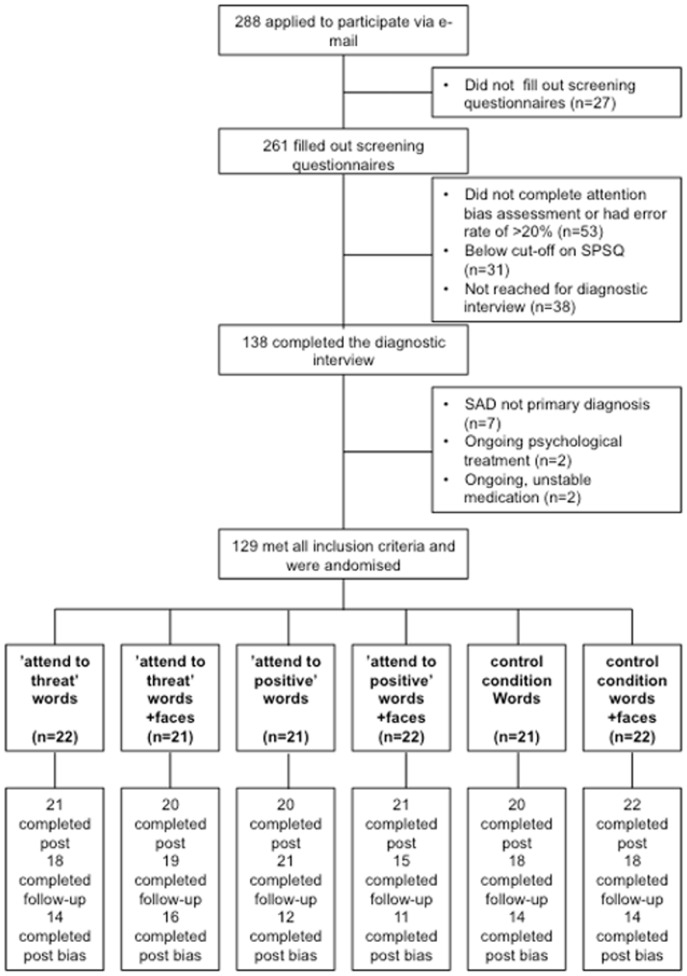
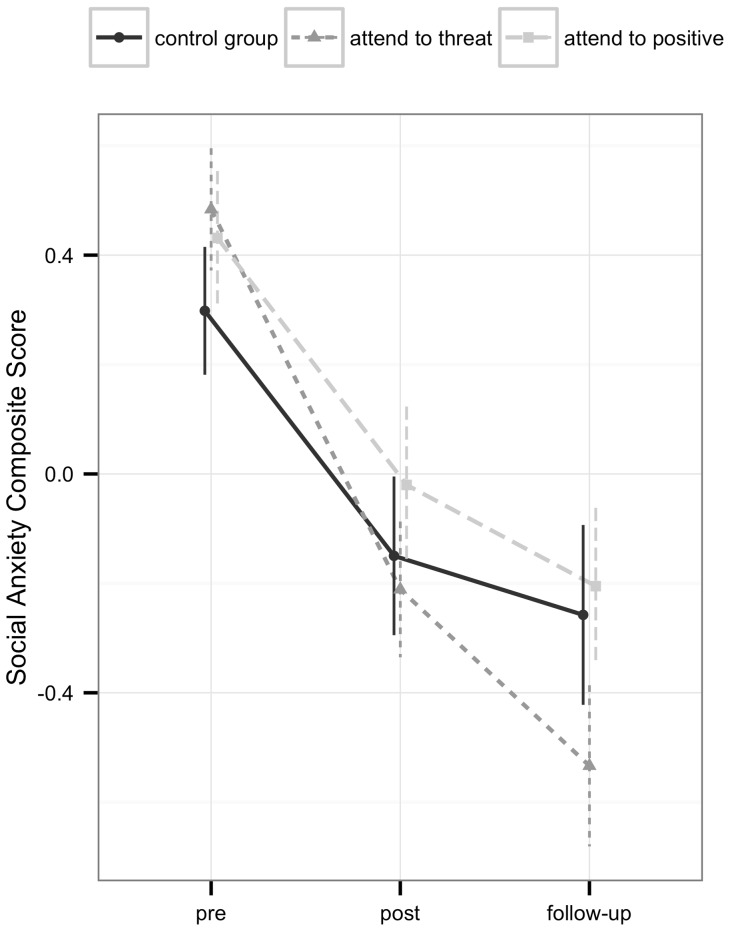
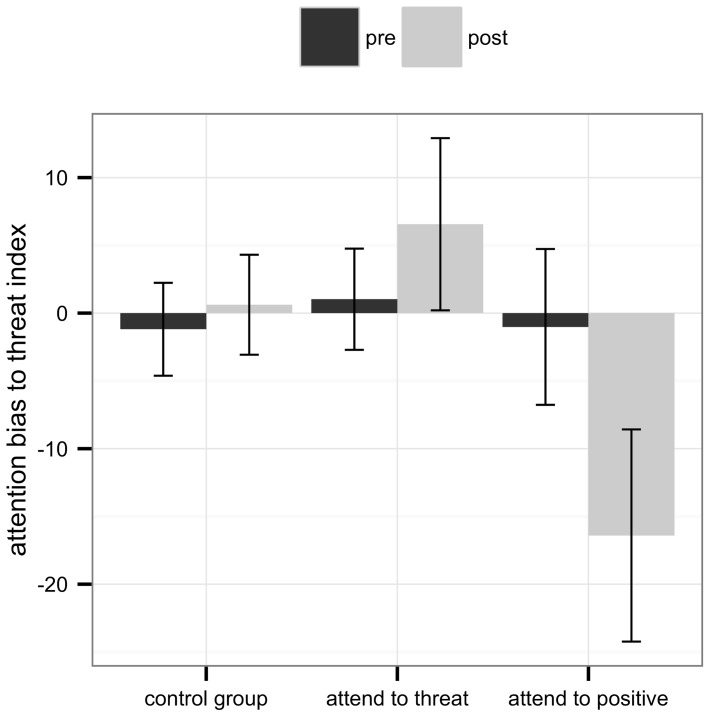
UNLABELLED: Biases in attention processes are thought to play a crucial role in the aetiology and maintenance of Social Anxiety Disorder (SAD). The goal of the present study was to examine the efficacy of a programme intended to train attention towards positive cues and a programme intended to train attention towards negative cues. In a randomised, controlled, double-blind design, the impact of these two training conditions on both selective attention and social anxiety were compared to that of a control training condition. A modified dot probe task was used, and delivered via the internet. A total of 129 individuals, diagnosed with SAD, were randomly assigned to one of these three conditions and took part in a 14-day programme with daily training/control sessions. Participants in all three groups did not on average display an attentional bias prior to the training. Critically, results on change in attention bias implied that significantly differential change in selective attention to threat was not detected in the three conditions. However, symptoms of social anxiety reduced significantly from pre- to follow-up-assessment in all three conditions (dwithin = 0.63-1.24), with the procedure intended to train attention towards threat cues producing, relative to the control condition, a significantly greater reduction of social fears. There were no significant differences in social anxiety outcome between the training condition intended to induce attentional bias towards positive cues and the control condition. To our knowledge, this is the first RCT where a condition intended to induce attention bias to negative cues yielded greater emotional benefits than a control condition. Intriguingly, changes in symptoms are unlikely to be by the mechanism of change in attention processes since there was no change detected in bias per se. Implications of this finding for future research on attention bias modification in social anxiety are discussed. TRIAL REGISTRATION: ClinicalTrials.gov NCT01463137.
Overview
The claims and statistics of this paper haven’t been checked yet.
Run the check — free, no account needed. It reads the open-access text and checks the sources it cites.
Integrity signals
Registry
Cites
Statistics
Figures
Verification
Claims the paper makes
The claims and statistics of this paper haven’t been checked yet.
Run the check — free, no account needed. It reads the open-access text and checks the sources it cites.
Claims other papers make about this one
Each is checked against this paper’s own text: does it say what the citing paper says it does?
In the citing paper
“The absence of (social) stress with online training at home compared to lab studies might explain recent null findings (Boettcher, Berger, & Renneberg, 2012;Boettcher et al., 2013;Kuckertz et al., 2014).”
From Online attentional bias modification training targeting anxiety and depression in unselected adolescents: short- and long-term effects of a randomized controlled trial (2016) · cites this paper as Boettcher et al., 2013
In the citing paper
“As previous research has shown that baseline attentional bias moderated training effects (e.g., Boettcher et al., 2013;Kuckertz et al., 2014)”
From Online attentional bias modification training targeting anxiety and depression in unselected adolescents: short- and long-term effects of a randomized controlled trial (2016) · cites this paper as Boettcher et al., 2013
In the citing paper
“In some ABM studies, ABM-threat-avoidance training and control conditions, which involved a similar level of exposure to threat cues, both reduced anxiety”
From Anxiety and attention to threat: cognitive mechanisms and treatment with attention bias modification (2016) · cites this paper as Boettcher et al., 2013
In the citing paper
“These showed reduction in anxiety symptoms from pre-to post-training, irrespective of the type of training task, and without reducing AB to threat on spatial-attention tasks.”
From Anxiety and attention to threat: cognitive mechanisms and treatment with attention bias modification (2016) · cites this paper as Boettcher et al., 2013
In the citing paper
“First, many ABM studies find no evidence of AB in orienting to threat in anxious individuals before ABM training (e.g., Boettcher et al., 2013;Britton et al., 2013;Carleton et al., 2015;Eldar et al., 2012;Heeren, Mogoas ¸e, McNally, et al., 2015;McNally et al., 2013;Waters et al., 2015).”
From Anxiety and attention to threat: cognitive mechanisms and treatment with attention bias modification (2016) · cites this paper as Boettcher et al., 2013
In the citing paper
“One study unexpectedly found that training attention towards threat reduced social anxiety more than a control training condition; which may have been due to the attend-threat training condition enhancing exposure to threat cues (Boettcher et al., 2013).”
From Anxiety and attention to threat: cognitive mechanisms and treatment with attention bias modification (2016) · cites this paper as Boettcher et al., 2013
In the citing paper
“Second, some findings indicate that attention-training methods, including ABM-threat-avoidance and ABM-positive-search training, can reduce anxiety without reducing AB in orienting to threat.”
From Anxiety and attention to threat: cognitive mechanisms and treatment with attention bias modification (2016) · cites this paper as Boettcher et al., 2013
In the citing paper
“as some findings suggest that ABM and control attention training may reduce anxiety, without reducing AB in orienting to threat, perhaps by improving cognitive control (e.g., Badura-Brack et al. 2015;Heeren, Mogoas ¸e, McNally et al., 2015;Boettcher et al., 2013;McNally et al., 2013).”
From Anxiety and attention to threat: cognitive mechanisms and treatment with attention bias modification (2016) · cites this paper as Boettcher et al., 2013
In the citing paper
“Also, evidence of relationships between pre-existing AB to threat, AB reduction, and anxiety reduction is mixed”
From Anxiety and attention to threat: cognitive mechanisms and treatment with attention bias modification (2016) · cites this paper as Boettcher et al., 2013
Self-check
Percentages, sums and reported differences re-computed from the paper’s own numbers.
The self-check needs the paper’s full text.
Citations
Cites
R: A Language and Environment for Statistical Computing
R Core Team (2000) · doi:10.32614/r.manuals · Cited by 355,893
Discovering Statistics Using SPSS
Field, A. P., & Miles, J. N. V. (2000) · Medical Entomology and Zoology · Cited by 28,269
An inventory for measuring clinical anxiety: Psychometric properties.
Beck, A. T., Epstein, N., Brown, G., & Steer, R. A. (1988) · Journal of Consulting and Clinical Psychology · doi:10.1037/0022-006x.56.6.893 · Cited by 14,407
nlme : Linear and nonlinear mixed effects models
DebRoy, S. (2006) · Medical Entomology and Zoology · Cited by 10,009
Posner, M. I. (1980) · Quarterly Journal of Experimental Psychology · doi:10.1080/00335558008248231 · Cited by 9,670 · cited 1×
“Attention bias to external threat cues has mainly been investigated using the emotional Stroop paradigm [3], the dot-probe paradigm [4] and the spatial cueing task [5].”
MethodJacobson, N. S., & Truax, P. (1991) · Journal of Consulting and Clinical Psychology · doi:10.1037/0022-006x.59.1.12 · Cited by 7,770
Mattick, R. P., & Clarke, J. C. (1998) · Behaviour Research and Therapy · doi:10.1016/s0005-7967(97)10031-6 · Cited by 3,367
Attentional bias in emotional disorders
MacLeod, C., Mathews, A., & Tata, P. (1986) · Journal of Abnormal Psychology · doi:10.1037/0021-843x.95.1.15 · Cited by 3,152
Self-citationA cognitive-behavioral model of anxiety in social phobia
Rapee, R. M., & Heimberg, R. G. (1997) · Behaviour Research and Therapy · doi:10.1016/s0005-7967(97)00022-3 · Cited by 2,987
A cognitive model of social phobia
Adrian Wells, A. (1995) · Research Explorer (The University of Manchester) · Cited by 2,701
Research works printed but not linked: 1
- RP Mattick, 1998, Development and validation of measures of social phobia scrutiny fear and social interaction anxiety, Behaviour Research and Therapy, 36, 455
Cited by
Sorted by citations
Efficacy of cognitive bias modification interventions in anxiety and depression: Meta-analysis
Cristea, I. A., Kok, R. N., & Cuijpers, P. (2015) · British Journal of Psychiatry · doi:10.1192/bjp.bp.114.146761 · Cited by 553
Brühl, A. B., Delsignore, A., Komossa, K., & Weidt, S. (2014) · Neuroscience & Biobehavioral Reviews · doi:10.1016/j.neubiorev.2014.08.003 · Cited by 439
Arnberg, F. K., Linton, S. J., Hultcrantz, M., Heintz, E., & Jonsson, U. (2014) · PLoS ONE · doi:10.1371/journal.pone.0098118 · Cited by 330
Internet interventions: Past, present and future
Andersson, G. (2018) · Internet Interventions · doi:10.1016/j.invent.2018.03.008 · Cited by 315
“Subsequent studies have yielded a bit more positive results (Boettcher et al., 2013), but overall this line of research has not been as efficient as the ICBT trials with minimal therapist support and mainly text-based interventions.”
ResultAnxiety and attention to threat: cognitive mechanisms and treatment with attention bias modification
Mogg, K., & Bradley, B. P. (2016) · Behaviour Research and Therapy · doi:10.1016/j.brat.2016.08.001 · Cited by 313
Metadata
- Authors
- Boettcher, J., Leek, L., Matson, L., Holmes, E. A., Browning, M., MacLeod, C., Andersson, G., & Carlbring, P.
- Affiliations
- Stockholm University (SE)
- Umeå University (SE)
- MRC Cognition and Brain Sciences Unit (GB)
- University of Oxford (GB)
- The University of Western Australia (AU)
- Linköping University (SE)
- Corresponding author
- Boettcher, Johanna
- ORCID
- Venue
- PLoS ONE
- Publisher
- Public Library of Science (PLoS)
- Published
- 2013-09-30
- Volume
- 8
- Issue
- 9
- Pages
- e71760
- ISSN
- 1932-6203 (ISSN-L)
- PMC
- PMC3787061
- OpenAlex
- W1977127560
- Cited by
- 109
- References
- 81
- Citations by year
- 2025: 5 · 2024: 4 · 2023: 6 · 2022: 5 · 2021: 6 · 2020: 5 · 2019: 15 · 2018: 9 · 2017: 12 · 2016: 15 · 2015: 14 · 2014: 10 · 2013: 2
- FWCI
- 18.51
- Type
- journal article
- Language
- en
- Open access
- gold
- doi.org
- Locations
- PLoS ONE (publishedVersion, cc-by)
- Europe PMC (PubMed Central) (publishedVersion, cc-by)
- PubMed Central (publishedVersion, cc-by)
- UWA Profiles and Research Repository (University of Western Australia) (publishedVersion, other-oa)
- PubMed (publishedVersion)
- ePrints Soton (University of Southampton) (acceptedVersion)
- UWA Profiles and Research Repository (UWA) (submittedVersion, other-oa)
- DiVA (Linkoping University) (submittedVersion, other-oa)
- DiVA (Stockholm University) (submittedVersion, other-oa)
- DiVA at Umeå University (Umeå University) (submittedVersion, other-oa)
- DOAJ (DOAJ: Directory of Open Access Journals) (submittedVersion, cc-by-sa)
- Figshare (submittedVersion, cc-by)
- Funders
- Forskningsrådet för Arbetsliv och Socialvetenskap
- Topics
- Social Sciences › Psychology › Experimental and Cognitive Psychology › Anxiety, Depression, Psychometrics, Treatment, Cognitive Processes
- Social Sciences › Psychology › Applied Psychology › Digital Mental Health Interventions
- Social Sciences › Psychology › Clinical Psychology › Psychological Treatments and Assessments
- Keywords
- attentional bias modification, social anxiety disorder, online intervention, attentional bias, selective attention, threat cues, dot-probe task, cognitive training, mechanisms of change
- MeSH terms
- Adult, Anxiety, Attention, Cues, Double-Blind Method, Female, Humans, Male, Middle Aged, Therapy, Computer-Assisted, Cognitive Behavioral Therapy, Treatment Outcome, Internet
About these checks
Registry, retraction, Cites and statistics results are computed, not judged, with one exception: a printed reference that no index lists is read once by a model before it counts as a citation error. Claims are extracted by a model and kept only when their quote appears verbatim in the text; each cited source is then checked, with a model’s help, for whether it says what the claim relies on. Those verdicts can be wrong — read the claim’s quote and the cited source before relying on one.
Statistics and arithmetic are recomputed, not judged.
Confidence bands are shown only for fields calibrated on our annotated test set. None is calibrated yet, so no band is shown.
What counts as a claim ›How we measure confidence ›How we check this ›
Are you an author, or do you see a problem with this page? Request a review
