

The DOI matches its Crossref record; 29 of the 29 references it cites were found in a registry or an index.
100% Classification Accuracy Considered Harmful: The Normalized Information Transfer Factor Explains the Accuracy Paradox
Open accessAbstract
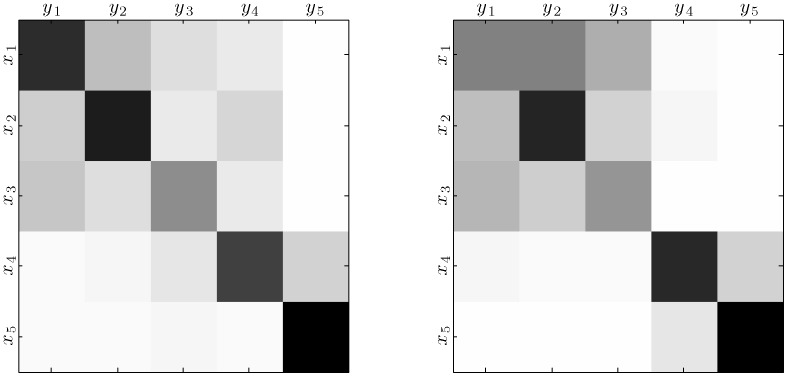
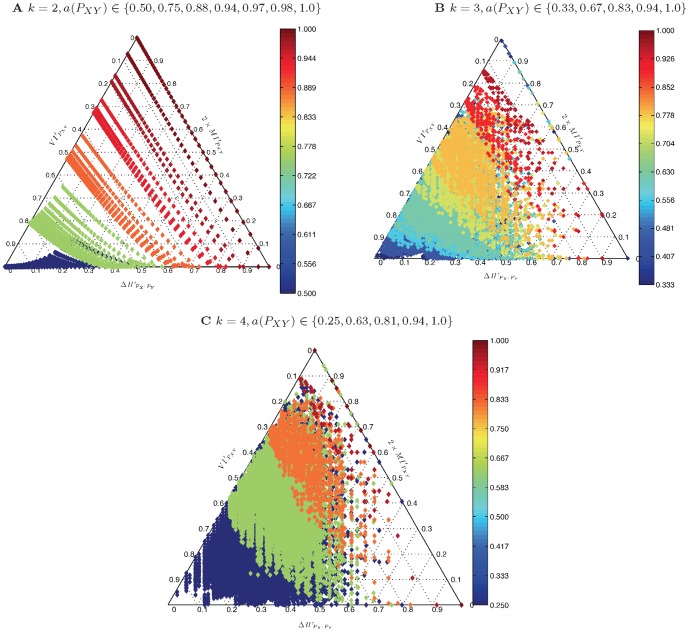
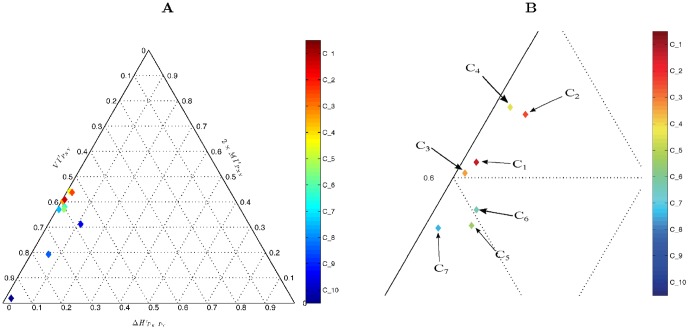
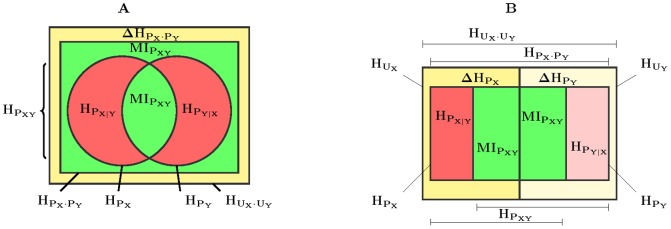
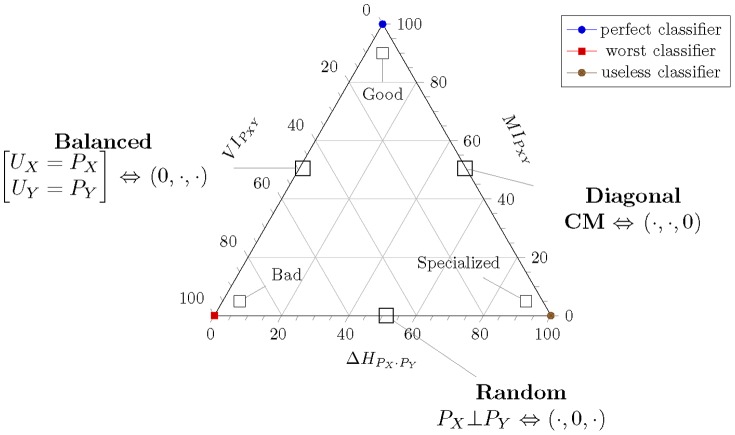
The most widely spread measure of performance, accuracy, suffers from a paradox: predictive models with a given level of accuracy may have greater predictive power than models with higher accuracy. Despite optimizing classification error rate, high accuracy models may fail to capture crucial information transfer in the classification task. We present evidence of this behavior by means of a combinatorial analysis where every possible contingency matrix of 2, 3 and 4 classes classifiers are depicted on the entropy triangle, a more reliable information-theoretic tool for classification assessment. Motivated by this, we develop from first principles a measure of classification performance that takes into consideration the information learned by classifiers. We are then able to obtain the entropy-modulated accuracy (EMA), a pessimistic estimate of the expected accuracy with the influence of the input distribution factored out, and the normalized information transfer factor (NIT), a measure of how efficient is the transmission of information from the input to the output set of classes. The EMA is a more natural measure of classification performance than accuracy when the heuristic to maximize is the transfer of information through the classifier instead of classification error count. The NIT factor measures the effectiveness of the learning process in classifiers and also makes it harder for them to "cheat" using techniques like specialization, while also promoting the interpretability of results. Their use is demonstrated in a mind reading task competition that aims at decoding the identity of a video stimulus based on magnetoencephalography recordings. We show how the EMA and the NIT factor reject rankings based in accuracy, choosing more meaningful and interpretable classifiers.
Overview
The claims and statistics of this paper haven’t been checked yet.
Run the check — free, no account needed. It reads the open-access text and checks the sources it cites.
Integrity signals
Registry
Cites
Statistics
Figures

Verification
Claims the paper makes
The claims and statistics of this paper haven’t been checked yet.
Run the check — free, no account needed. It reads the open-access text and checks the sources it cites.
Claims other papers make about this one
Each is checked against this paper’s own text: does it say what the citing paper says it does?
The source backs part of the claim, not all of it — or backs it for a different population, condition or comparison.
In the citing paper
“These traditional metrics, however, propagate the underlying biases, ignore the trustworthiness of negative instances and do not take into account the chance-level performance [79,81].”
From A Survey of Underwater Acoustic Data Classification Methods Using Deep Learning for Shoreline Surveillance (2022) · cites this paper as [81]
Experimental — accuracy not yet measured
Self-check
Percentages, sums and reported differences re-computed from the paper’s own numbers.
The self-check needs the paper’s full text.
Citations
Cites
An introduction to ROC analysis
Fawcett, T. (2006) · Pattern Recognition Letters · doi:10.1016/j.patrec.2005.10.010 · Cited by 21,879
Measuring the Accuracy of Diagnostic Systems
Swets, J. A. (1988) · Science · doi:10.1126/science.3287615 · Cited by 10,058
A systematic analysis of performance measures for classification tasks
Sokolova, M., & Lapalme, G. (2009) · Information Processing & Management · doi:10.1016/j.ipm.2009.03.002 · Cited by 7,515
The use of the area under the ROC curve in the evaluation of machine learning algorithms
Bradley, A. P. (1997) · Pattern Recognition · doi:10.1016/s0031-3203(96)00142-2 · Cited by 7,217
Evaluation: from precision, recall and F-measure to ROC, informedness, markedness and correlation
Powers, D. M. W. (2020) · arXiv · doi:10.48550/arxiv.2010.16061 · Cited by 5,440
Comparison of the predicted and observed secondary structure of T4 phage lysozyme
Matthews, B. W. (1975) · Biochimica et Biophysica Acta (BBA) - Protein Structure · doi:10.1016/0005-2795(75)90109-9 · Cited by 5,399 · cited 2×
“A comparison of the classical Matthew Correlation Coefficient (MCC) [28] and the Confusion Entropy (CEN) [27]—whose similarities are also explored in [10]–on three different classifications tasks: the MEG Mind Reading task already explored, the TASS sentiment analysis task [29]–both machine learning tasks—and the well…”
MethodSpeech and language processing
Politt, R., Pollock, J., & Waller, E. (2010) · Taylor & Francis eBooks · doi:10.4324/9780203461891_chapter_3 · Cited by 3,594
Assessing the Accuracy of Remotely Sensed Data
Congalton, R. G., & Green, K. (1998) · Mapping sciences series/Mapping science · doi:10.1201/9781420048568 · Cited by 3,434
Statistical methods for speech recognition
Jelinek, F. (1997) · Journal of the American Statistical Association · doi:10.2307/2670189 · Cited by 2,376
An Analysis of Perceptual Confusions Among Some English Consonants
Miller, G. A., & Nicely, P. E. (1955) · The Journal of the Acoustical Society of America · doi:10.1121/1.1907526 · Cited by 1,860
Cited by
Sorted by citations
PANNZER —A practical tool for protein function prediction
Törönen, P., & Holm, L. (2021) · Protein Science · doi:10.1002/pro.4193 · Cited by 195
Benchmarking datasets for Anomaly-based Network Intrusion Detection: KDD CUP 99 alternatives
Divekar, A., Parekh, M., Savla, V., Mishra, R., & Shirole, M. R. (2018) · International Conference on Computing, Communication and Security (ICCCS) · doi:10.1109/cccs.2018.8586840 · Cited by 195
Benedetto, U., Dimagli, A., Sinha, S., Cocomello, L., Gibbison, B., Caputo, M., Gaunt, T. R., Lyon, M., Holmes, C., & Angelini, G. D. (2020) · Journal of Thoracic and Cardiovascular Surgery · doi:10.1016/j.jtcvs.2020.07.105 · Cited by 142
Malek, N. H. A., Yaacob, W. F. W., Nasir, S. A. M., & Shaadan, N. (2022) · Water · doi:10.3390/w14071067 · Cited by 129
Canbek, G., Sağıroğlu, Ş., Temizel, T. T., & Baykal, N. (2017) · doi:10.1109/ubmk.2017.8093539 · Cited by 111
Zhang, Y., Zhang⋆, Y., Hou, X., Chen, H., & Wang, S. (2017) · Multimedia Tools and Applications · doi:10.1007/s11042-017-4554-8 · Cited by 109
Brewster, L. R., Dale, J. J., Guttridge, T. L., Gruber, S. H., Hansell, A. C., Elliott, M., Cowx, I. G., Whitney, N. M., & Gleiss, A. C. (2018) · Marine Biology · doi:10.1007/s00227-018-3318-y · Cited by 108
New fuzzy C-means clustering method based on feature-weight and cluster-weight learning
Hashemzadeh, M., Oskouei, A. G., & Farajzadeh, N. (2019) · Applied Soft Computing · doi:10.1016/j.asoc.2019.02.038 · Cited by 103
Domingos, L. C. F., Santos, P. E., Skelton, P. S. M., Brinkworth, R. S. A., & Sammut, K. (2022) · Sensors · doi:10.3390/s22062181 · Cited by 93
What’s Happening Around the World? A Survey and Framework on Event Detection Techniques on Twitter
Saeed, Z., Abbasi, R. A., Maqbool, O., Sadaf, A., Razzak, I., Daud, A. Y., Aljohani, N. R., & Xu, G. (2019) · Journal of Grid Computing · doi:10.1007/s10723-019-09482-2 · Cited by 86
Automatic segmentation of the pharyngeal airway space with convolutional neural network
Shujaat, S., Jazil, O., Willems, H., Gerven, A. V., Shaheen, E., Politis, C., & Jacobs, R. (2021) · Journal of Dentistry · doi:10.1016/j.jdent.2021.103705 · Cited by 83
Peeking into a black box, the fairness and generalizability of a MIMIC-III benchmarking model.
Röösli, E., Bozkurt, S., & Hernandez-Boussard, T. (2022) · Scientific Data · doi:10.1038/s41597-021-01110-7 · Cited by 73
Rahman, J. S., Gedeon, T., Caldwell, S., Jones, R., & Jin, Z. (2020) · Journal of Artificial Intelligence and Soft Computing Research · doi:10.2478/jaiscr-2021-0001 · Cited by 81
Dang, T. K., Tran, T. C., Tuan, L. M., & Tiep, M. V. (2021) · Applied Sciences · doi:10.3390/app112110004 · Cited by 69
Wang, X., & Kim, S. H. (2019) · Transportation Research Record Journal of the Transportation Research Board · doi:10.1177/0361198119844456 · Cited by 69
Canbek, G., Temizel, T. T., & Sağıroğlu, Ş. (2022) · SN Computer Science · doi:10.1007/s42979-022-01409-1 · Cited by 60
Modeling highly imbalanced crash severity data by ensemble methods and global sensitivity analysis
Jiang, L., Xie, Y., Wen, X. L., & Ren, T. (2020) · Journal of Transportation Safety & Security · doi:10.1080/19439962.2020.1796863 · Cited by 60
Rjoob, K. W. Y., Bond, R., Finlay, D., McGilligan, V., Leslie, S. J., Rababah, A., Iftikhar, A., Guldenring, D., Knoery, C., McShane, A., et al. (2022) · Artificial Intelligence in Medicine · doi:10.1016/j.artmed.2022.102381 · Cited by 51
BenchMetrics: a systematic benchmarking method for binary classification performance metrics
Canbek, G., Temizel, T. T., & Sağıroğlu, Ş. (2021) · Neural Computing and Applications · doi:10.1007/s00521-021-06103-6 · Cited by 51
Pusil, S. A., Dimitriadis, S. I., López, M. E., Pereda, E., & Maestú, F. (2019) · NeuroImage Clinical · doi:10.1016/j.nicl.2019.101972 · Cited by 49
Lu, S.-C., Xu, C., Nguyen, C., Geng, Y., Pfob, A., & Sidey-Gibbons, C. J. (2022) · JMIR Medical Informatics · doi:10.2196/33182 · Cited by 53
Machine Learning for Prediction of Imbalanced Data: Credit Fraud Detection
Tran, T. C., & Dang, T. K. (2021) · International Conference on Ubiquitous Information Management and Communication (IMCOM) · doi:10.1109/imcom51814.2021.9377352 · Cited by 42
The Detection of Depression Using Multimodal Models Based on Text and Voice Quality Features
Solieman, H., & Pustozerov, E. (2021) · IEEE Conference of Russian Young Researchers in Electrical and Electronic Engineering · doi:10.1109/elconrus51938.2021.9396540 · Cited by 42
Bindi: Affective Internet of Things to Combat Gender-Based Violence
Miranda, J., Rituerto-González, E., Luis-Mingueza, C., Canabal, M. F., Barcenas, A. R., Lanza-Gutiérrez, J. M., Peláez-Moreno, C., & López-Ongil, C. (2022) · IEEE Internet of Things Journal · doi:10.1109/jiot.2022.3177256 · Cited by 44
Self-citationEdo-Osagie, O., Smith, G., LAKE, I. R., Edeghere, O., & de la Iglesia, B. (2019) · PLoS ONE · doi:10.1371/journal.pone.0210689 · Cited by 37
Predicting Bitcoin Prices Using Machine Learning
Dimitriadou, A., & Andros Gregoriou, A. (2023) · Entropy · doi:10.3390/e25050777 · Cited by 37
Threat Image Projection (TIP) into X-ray images of cargo containers for training humans and machines
Rogers, T. W., Jaccard, N., Protonotarios, E. D., Ollier, J., Morton, E. J., & Griffin, L. D. (2016) · IEEE International Carnahan Conference on Security Technology (ICCST) · doi:10.1109/ccst.2016.7815717 · Cited by 37
Forecasting Hospital Readmissions with Machine Learning
Michailidis, P., Dimitriadou, A., Papadimitriou, T., & Gogas, P. (2022) · Healthcare · doi:10.3390/healthcare10060981 · Cited by 42
Kim, J. K., Han, Y. S., & Lee, J. S. (2017) · Concurrency and Computation Practice and Experience · doi:10.1002/cpe.4128 · Cited by 36
Swaity, A., Elgarba, B. M., Morgan, N., Ali, S., Shujaat, S., Borsci, E., Chilvarquer, I., & Jacobs, R. (2024) · Scientific Reports · doi:10.1038/s41598-023-49613-0 · Cited by 34
Comparative study of quality estimation of binary classification
Старовойтов, В. В., & Golub, Y. I. (2020) · Informatics · doi:10.37661/1816-0301-2020-17-1-87-101 · Cited by 33
Adamo, M., Tomaselli, V., Tarantino, C., Vicario, S., Veronico, G., Lucas, R., & Blonda, P. N. (2020) · Remote Sensing · doi:10.3390/rs12091447 · Cited by 35
Predicting gas migration through existing oil and gas wells
Montague, J. A., Pinder, G. F., & Watson, T. L. (2018) · Environmental Geosciences · doi:10.1306/eg.01241817008 · Cited by 34
Machine Learning Analysis Reveals Novel Neuroimaging and Clinical Signatures of Frailty in HIV
Paul, R. H., Cho, K. S., Luckett, P. H., Strain, J. F., Belden, A. C., Bolzenius, J. D., Navid, J., Garcia-Egan, P. M., Cooley, S., Wisch, J. K., et al. (2020) · JAIDS Journal of Acquired Immune Deficiency Syndromes · doi:10.1097/qai.0000000000002360 · Cited by 32
Machine learning-based prognostic model for 30-day mortality prediction in Sepsis-3
Rahman, M. S., Islam, K. R., Prithula, J., Kumar, J., Mahmud, M., Alam, M. F., Reaz, M. B. I., Alqahtani, A., & Chowdhury, M. E. H. (2024) · BMC Medical Informatics and Decision Making · doi:10.1186/s12911-024-02655-4 · Cited by 29
Wang, M., Zhang, J., Jiao, S., Zhang, X., Zhu, N., & Chen, G. (2020) · Scientometrics · doi:10.1007/s11192-020-03677-1 · Cited by 32
Exploring the performance of LBP-capsule networks with K-Means routing on complex images
Mensah, P. K., Weyori, B. A., & Ayidzoe, M. A. (2020) · Journal of King Saud University - Computer and Information Sciences · doi:10.1016/j.jksuci.2020.10.006 · Cited by 29
Text plagiarism classification using syntax based linguistic features
Kanjirangat, V., & Gupta, D. (2017) · Expert Systems with Applications · doi:10.1016/j.eswa.2017.07.006 · Cited by 29
Hong, Y., Welch, C. J., Piras, P., & Tang, H. (2024) · Analytical Chemistry · doi:10.1021/acs.analchem.3c04028 · Cited by 28
Zaka, A., Mutahar, D., Gorcilov, J., Gupta, A. K., Kovoor, J. G., Stretton, B., Mridha, N., Sivagangabalan, G., Thiagalingam, A., Chow, C. K., et al. (2024) · European Heart Journal - Digital Health · doi:10.1093/ehjdh/ztae074 · Cited by 28
Zhu, X., Koç, A., Morawski, R., & Le‐Ngoc, T. (2021) · IEEE Access · doi:10.1109/access.2021.3121750 · Cited by 28
Valverde-Albacete, F. J., Carrillo‐de‐Albornoz, J., & Peláez-Moreno, C. (2013) · Lecture notes in computer science · doi:10.1007/978-3-642-40802-1_5 · Cited by 27
Self-citationA voting-based ensemble feature network for semiconductor wafer defect classification
Misra, S., Kim, D., Kim, J., Shin, W., & Kim, C. (2022) · Scientific Reports · doi:10.1038/s41598-022-20630-9 · Cited by 26
Fear Recognition for Women Using a Reduced Set of Physiological Signals
Miranda, J., Canabal, M. F., Gutiérrez-Martín, L., Lanza-Gutiérrez, J. M., Portela-Garcia, M., & López-Ongil, C. (2021) · Sensors · doi:10.3390/s21051587 · Cited by 25
Methodological and conceptual challenges in rare and severe event forecast verification
Ebert, P. A., & Milne, P. (2022) · Natural hazards and earth system sciences · doi:10.5194/nhess-22-539-2022 · Cited by 25
Has machine learning over-promised in healthcare?
Ge, W., Lueck, C. J., Suominen, H., & Apthorp, D. (2023) · Artificial Intelligence in Medicine · doi:10.1016/j.artmed.2023.102524 · Cited by 26
Xu, C., Subbiah, I. M., Lu, S.-C., Pfob, A., & Sidey-Gibbons, C. J. (2022) · Quality of Life Research · doi:10.1007/s11136-022-03284-y · Cited by 21
A Study of Disease Diagnosis Using Machine Learning
Poudel, S. (2022) · doi:10.3390/iech2022-12311 · Cited by 21
Heart Failure Emergency Readmission Prediction Using Stacking Machine Learning Model
Rahman, M. S., Rahman, H., Prithula, J., Chowdhury, M. E. H., Ahmed, M. U., Kumar, J., Murugappan, M., & Khan, M. S. (2023) · Diagnostics · doi:10.3390/diagnostics13111948 · Cited by 21
Enhancing Confusion Entropy (CEN) for binary and multiclass classification
Delgado, R., & Núñez-González, J. D. (2019) · PLoS ONE · doi:10.1371/journal.pone.0210264 · Cited by 21
Chu, Y.-W., Chang, K.-P., Chen, C.-W., Liang, Y.-T., Soh, Z. T., & Hsieh, L. (2020) · Scientific Reports · doi:10.1038/s41598-020-58336-5 · Cited by 21
The open-set problem in acoustic scene classification
Battaglino, D., Lepauloux, L., & Evans, N. (2016) · International Workshop on Acoustic Signal Enhancement · doi:10.1109/iwaenc.2016.7602939 · Cited by 20
Kia, S. M., Vega-Pons, S., Weisz, N., & Passerini, A. (2017) · Frontiers in Neuroscience · doi:10.3389/fnins.2016.00619 · Cited by 20
Garefalakis, T., Michelaraki, E., Roussou, S., Katrakazas, C., Brijs, T., & Yannis, G. (2024) · European Transport Research Review · doi:10.1186/s12544-024-00691-9 · Cited by 18
Machine learning analysis to classify nanoparticles from noisy spICP-TOFMS data
Johnson, R. L. B., & Gundlach‐Graham, A. (2023) · Journal of Analytical Atomic Spectrometry · doi:10.1039/d3ja00081h · Cited by 18
Forget the Myth of the Air Gap: Machine Learning for Reliable Intrusion Detection in SCADA Systems
Perez, R. L., Adamsky, F., Soua, R., & Engel, T. (2019) · ICST Transactions on Security and Safety · doi:10.4108/eai.25-1-2019.159348 · Cited by 20
Training radiomics-based CNNs for clinical outcome prediction: Challenges, strategies and findings
Pang, S., Field, M., Dowling, J., Vinod, S. K., Holloway, L. C., & Sowmya, A. (2021) · Artificial Intelligence in Medicine · doi:10.1016/j.artmed.2021.102230 · Cited by 18
Brain Melody Informatics: Analysing Effects of Music on Brainwave Patterns
Rahman, J. S., Gedeon, T., Caldwell, S., & Jones, R. (2020) · International Joint Conference on Neural Networks (IJCNN) · doi:10.1109/ijcnn48605.2020.9207392 · Cited by 18
Hernández, A. D., Owen, R., Nielsen, D. S., & McConville, R. (2023) · Journal of Responsible Innovation · doi:10.1080/23299460.2023.2222514 · Cited by 16
Nyström landmark sampling and regularized Christoffel functions
Fanuel, M., Schreurs, J., & Suykens, J. A. K. (2022) · Machine Learning · doi:10.1007/s10994-022-06165-0 · Cited by 16
Plyusnin, I., Holm, L., & Törönen, P. (2019) · PLoS Computational Biology · doi:10.1371/journal.pcbi.1007419 · Cited by 16
Diversity Sampling is an Implicit Regularization for Kernel Methods
Fanuel, M., Schreurs, J., & Suykens, J. A. K. (2021) · SIAM Journal on Mathematics of Data Science · doi:10.1137/20m1320031 · Cited by 15
Modelling Bathing Water Quality Using Official Monitoring Data
Džal, D., Kosović, I. N., Mastelić, T., Ivanković, D., Puljak, T., & Jozić, S. (2021) · Water · doi:10.3390/w13213005 · Cited by 15
Decisions are not all equal—Introducing a utility metric based on case-wise raters’ perceptions
Campagner, A., Sternini, F., & Cabitza, F. (2022) · Computer Methods and Programs in Biomedicine · doi:10.1016/j.cmpb.2022.106930 · Cited by 15
Lapp, L., Bouamrane, M.-M., Kavanagh, K., Roper, M., Young, D., & Schraag, S. (2019) · Lecture notes in computer science · doi:10.1007/978-3-030-21642-9_48 · Cited by 15
Min-Max Backpropagation Neural Network to Forecast e-Journal Visitors
Wibawa, A. P., Izdihar, Z. N., Utama, A. B. P., Hernandez, L., & Haviluddin, H. (2021) · International Conference on Artificial Intelligence in Information and Communication (ICAIIC) · doi:10.1109/icaiic51459.2021.9415197 · Cited by 14
Preference-Driven Classification Measure
Kozák, J. T., Probierz, B., Kania, K., & Juszczuk, P. (2022) · Entropy · doi:10.3390/e24040531 · Cited by 20
Pitoglou, S., Koumpouros, Y., & Αναστασίου, Α. (2018) · International Conference on Machine Learning and Data Engineering (iCMLDE) · doi:10.1109/icmlde.2018.00021 · Cited by 14
Tu, Y.-K., Kuo, C., Fang, S.-L., Chen, H., Chi, M.-K., Yao, M.-H., & Kuo, B. (2022) · Agriculture · doi:10.3390/agriculture12020259 · Cited by 16
Shi, X., Qu, T., Pottelbergh, G. V., van den Akker, M., & Moor, B. D. (2022) · Frontiers in Medicine · doi:10.3389/fmed.2022.730748 · Cited by 14
Predicting Air Traffic Flow Management hotspots due to weather using Convolutional Neural Networks
Martínez, I. S., García‐Heras, J., Jardines, A., Cervantes, A., & Soler, M. (2024) · Engineering Applications of Artificial Intelligence · doi:10.1016/j.engappai.2024.108014 · Cited by 13
Using Gaussian Mixture Models in plant morphometrics
Tiburtini, M., Scrucca, L., & Peruzzi, L. (2025) · Perspectives in Plant Ecology Evolution and Systematics · doi:10.1016/j.ppees.2025.125902 · Cited by 13
Evans, L., Owda, M., Crockett, K. A., & Vilas, A. F. (2019) · Expert Systems with Applications · doi:10.1016/j.eswa.2019.03.019 · Cited by 13
Carvalho, B. G., Vargas, R. E. V., Salgado, R. M., Munaro, C. J., & Varejão, F. M. (2021) · IEEE International Symposium on Industrial Electronics (ISIE) · doi:10.1109/isie45552.2021.9576310 · Cited by 13
Performance of Human Annotators in Object Detection and Segmentation of Remotely Sensed Data
Blushtein-Livnon, R., Svoray, T., & Dorman, M. (2025) · IEEE Transactions on Geoscience and Remote Sensing · doi:10.1109/tgrs.2025.3555235 · Cited by 19
The evaluation of data sources using multivariate entropy tools
Valverde-Albacete, F. J., & Peláez-Moreno, C. (2017) · Expert Systems with Applications · doi:10.1016/j.eswa.2017.02.010 · Cited by 12
Self-citationResampling Techniques for Materials Informatics: Limitations in Crystal Point Groups Classification
Alsaui, A. A., Alghofaili, Y. A., Alghadeer, M., & Alharbi, F. H. (2022) · Journal of Chemical Information and Modeling · doi:10.1021/acs.jcim.2c00666 · Cited by 12
Hybrid Model for on-line Detection of Gas Turbine Lean Blowout Events
Iannitelli, M., Allegorico, C., Garau, F., & Capanni, M. (2018) · PHM Society European Conference · doi:10.36001/phme.2018.v4i1.405 · Cited by 12
A Data-Driven Approach for Determining Weights in Global Similarity Functions
Jaiswal, A. D., & Bach, K. (2019) · Lecture notes in computer science · doi:10.1007/978-3-030-29249-2_9 · Cited by 12
Majdik, Z. P., & Wynn, J. (2022) · Technical Communication Quarterly · doi:10.1080/10572252.2022.2077452 · Cited by 12
Mladenova, T., Valova, I., Evstatiev, B. I., Valov, N., Varlyakov, I. S., Марков, Ц., STOYCHEVA, S., Mondeshka, L., & Markov, N. (2024) · AgriEngineering · doi:10.3390/agriengineering6030128 · Cited by 11
Gupta, A. K., Mustafiz, C., Mutahar, D., Zaka, A., Parvez, R., Mridha, N., Stretton, B., Kovoor, J. G., Bacchi, S., Ramponi, F., et al. (2025) · Canadian Journal of Cardiology · doi:10.1016/j.cjca.2025.01.037 · Cited by 11
Benchmarking Analysis of the Accuracy of Classification Methods Related to Entropy
Orenes, Y., Rabasa, A., Rodriguez-Sala, J. J., & Sánchez-Soriano, J. (2021) · Entropy · doi:10.3390/e23070850 · Cited by 11
Fundamental Fresh State Properties of Self‐Consolidating Concrete: A Meta‐Analysis of Mix Designs
García-Taengua, E. (2018) · Advances in Civil Engineering · doi:10.1155/2018/5237230 · Cited by 11
Deep transfer learning for the classification of variable sources
Kim, D.-W., Yeo, D., Bailer‐Jones, C. A. L., & Lee, G. (2021) · Astronomy and Astrophysics · doi:10.1051/0004-6361/202140369 · Cited by 10
Davis, K. E., & Maiden, R. (2021) · Studies in Social Science Research · doi:10.22158/sssr.v2n2p1 · Cited by 11
Metamorphic Testing-based Adversarial Attack to Fool Deepfake Detectors
Lim, N. T., Kuan, M. Y., Pu, M., Lim, M. K., & Chong, C. Y. (2022) · Proceedings - International Conference on Pattern Recognition/Proceedings/International Conference on Pattern Recognition · doi:10.1109/icpr56361.2022.9956543 · Cited by 10
Distinctive Phonetic Features Modeling and Extraction Using Deep Neural Networks
Seddiq, Y., Alotaibi, Y. A., Selouani, S., & Meftah, A. H. (2019) · IEEE Access · doi:10.1109/access.2019.2924014 · Cited by 10
Penalized maximum likelihood estimation of logit-based early warning systems
Pigini, C. (2021) · International Journal of Forecasting · doi:10.1016/j.ijforecast.2021.01.004 · Cited by 9
HumDLoc: Human Protein Subcellular Localization Prediction Using Deep Neural Network
Semwal, R., & Varadwaj, P. K. (2020) · Current Genomics · doi:10.2174/1389202921999200528160534 · Cited by 9
Optimizing credit card fraud detection: a deep learning approach to imbalanced datasets
Ndama, O., Bensassi, I., & En-Naimi, E. M. (2024) · International Journal of Power Electronics and Drive Systems/International Journal of Electrical and Computer Engineering · doi:10.11591/ijece.v14i4.pp4802-4814 · Cited by 9
Exploiting cepstral coefficients and CNN for efficient musical instrument classification
Mahanta, S. K., Basisth, N. J., Halder, E., Khilji, A. F. U. R., & Pakray, P. (2023) · Evolving Systems · doi:10.1007/s12530-023-09540-x · Cited by 9
Sequence-to-Sequence Acoustic-to-Phonetic Conversion Using Spectrograms and Deep Learning
Qamhan, M. A., Alotaibi, Y. A., Seddiq, Y., Meftah, A. H., & Selouani, S. (2021) · IEEE Access · doi:10.1109/access.2021.3083972 · Cited by 9
Data-Driven Estimation of a Driving Safety Tolerance Zone Using Imbalanced Machine Learning
Garefalakis, T., Katrakazas, C., & Yannis, G. (2022) · Sensors · doi:10.3390/s22145309 · Cited by 8
Alqalyoobi, S., Little, B. B., Oldham, J. M., & Obi, O. N. (2023) · Respiratory Research · doi:10.1186/s12931-023-02407-4 · Cited by 8
Shin, J., Carley, L. R., Dobson, G. B., & Carley, K. M. (2023) · Winter Simulation Conference · doi:10.1109/wsc60868.2023.10408211 · Cited by 8
Valverde-Albacete, F. J., & Peláez-Moreno, C. (2018) · Entropy · doi:10.3390/e20070498 · Cited by 8
Self-citationA Framework for Supervised Classification Performance Analysis with Information-Theoretic Methods
Valverde-Albacete, F. J., & Peláez-Moreno, C. (2019) · IEEE Transactions on Knowledge and Data Engineering · doi:10.1109/tkde.2019.2915643 · Cited by 8
Self-citationOptimizing activity data collection with gamification points using uncertainty based active learning
Mairittha, N., Mairittha, T., & Inoue, S. (2019) · ACM International Joint Conference on Pervasive and Ubiquitous Computing (UbiComp) · doi:10.1145/3341162.3345585 · Cited by 8
Credit Scoring with Drift Adaptation Using Local Regions of Competence
Nikolaidis, D., & Doumpos, M. (2022) · Operations Research Forum · doi:10.1007/s43069-022-00177-1 · Cited by 7
Metadata
- Authors
- Valverde-Albacete, F. J., & Peláez-Moreno, C.
- Affiliations
- Universidad Nacional de Educación a Distancia (ES)
- Universidad Carlos III de Madrid (ES)
- Corresponding author
- Valverde-Albacete, Francisco J.
- Venue
- PLoS ONE
- Publisher
- Public Library of Science (PLoS)
- Published
- 2014-01-10
- Volume
- 9
- Issue
- 1
- Pages
- e84217
- ISSN
- 1932-6203 (ISSN-L)
- PMC
- PMC3888391
- OpenAlex
- W2015363484
- Cited by
- 212
- References
- 29
- Citations by year
- 2026: 13 · 2025: 12 · 2024: 27 · 2023: 14 · 2022: 35 · 2021: 38 · 2020: 20 · 2019: 21 · 2018: 12 · 2017: 8 · 2016: 8 · 2015: 1 · 2014: 2
- FWCI
- 6.31
- Type
- journal article
- Language
- en
- Open access
- gold
- doi.org
- Licence
- Locations
- PLoS ONE (publishedVersion, cc-by)
- Europe PMC (PubMed Central) (publishedVersion, cc-by)
- PubMed Central (publishedVersion, cc-by)
- PubMed (publishedVersion)
- LA Referencia (Red Federada de Repositorios Institucionales de Publicaciones Científicas) (acceptedVersion, cc-by)
- RePEc: Research Papers in Economics (submittedVersion)
- DOAJ (DOAJ: Directory of Open Access Journals) (submittedVersion, cc-by-sa)
- e-Archivo (Carlos III University of Madrid) (submittedVersion, cc-by)
- Figshare (submittedVersion, cc-by)
- Funders
- European Commission (288024)
- Topics
- Physical Sciences › Computer Science › Artificial Intelligence › Machine Learning and Data Classification
- Physical Sciences › Computer Science › Artificial Intelligence › Imbalanced Data Classification Techniques
- Physical Sciences › Computer Science › Information Systems › Data Mining and Machine Learning Applications
- Keywords
- classification performance measures, contingency tables, information transmission, classifier evaluation, interpretability, theory of mind, magnetoencephalography, classification error rate
- MeSH terms
- Algorithms, Humans, Models, Theoretical
About these checks
Registry, retraction, Cites and statistics results are computed, not judged, with one exception: a printed reference that no index lists is read once by a model before it counts as a citation error. Claims are extracted by a model and kept only when their quote appears verbatim in the text; each cited source is then checked, with a model’s help, for whether it says what the claim relies on. Those verdicts can be wrong — read the claim’s quote and the cited source before relying on one.
Statistics and arithmetic are recomputed, not judged.
Confidence bands are shown only for fields calibrated on our annotated test set. None is calibrated yet, so no band is shown.
What counts as a claim ›How we measure confidence ›How we check this ›
Are you an author, or do you see a problem with this page? Request a review
