

The DOI matches its Crossref record; 27 of the 28 references it cites were found in a registry or an index.
Is DNA Barcoding Actually Cheaper and Faster than Traditional Morphological Methods: Results from a Survey of Freshwater Bioassessment Efforts in the United States?
Open accessAbstract
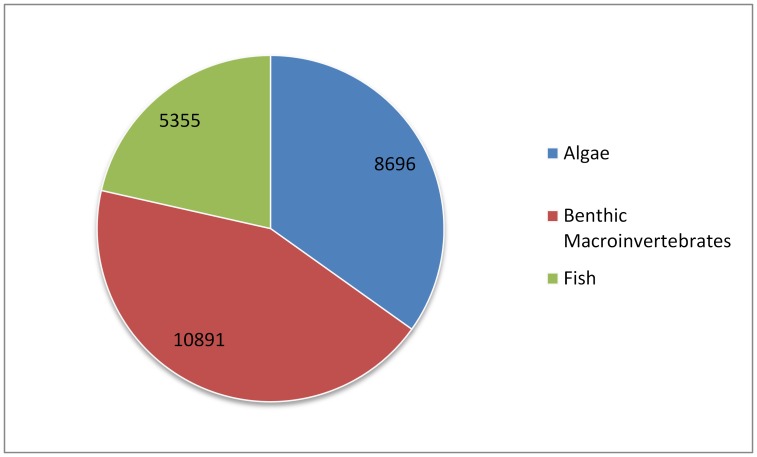
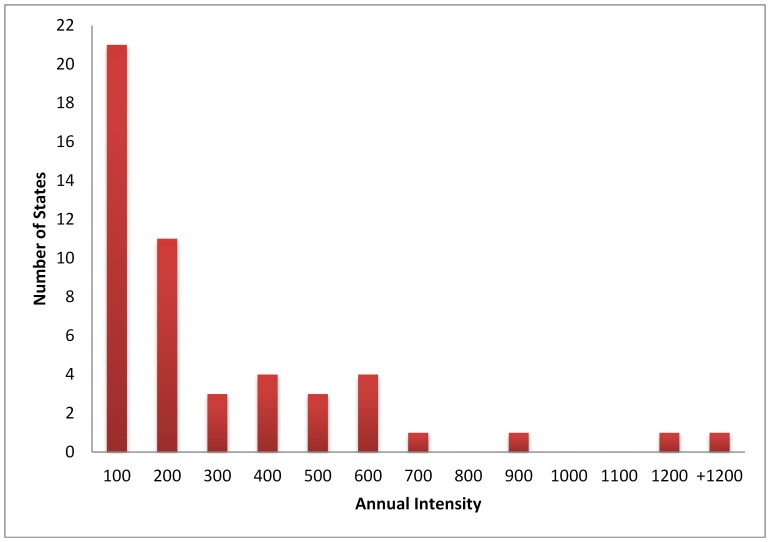
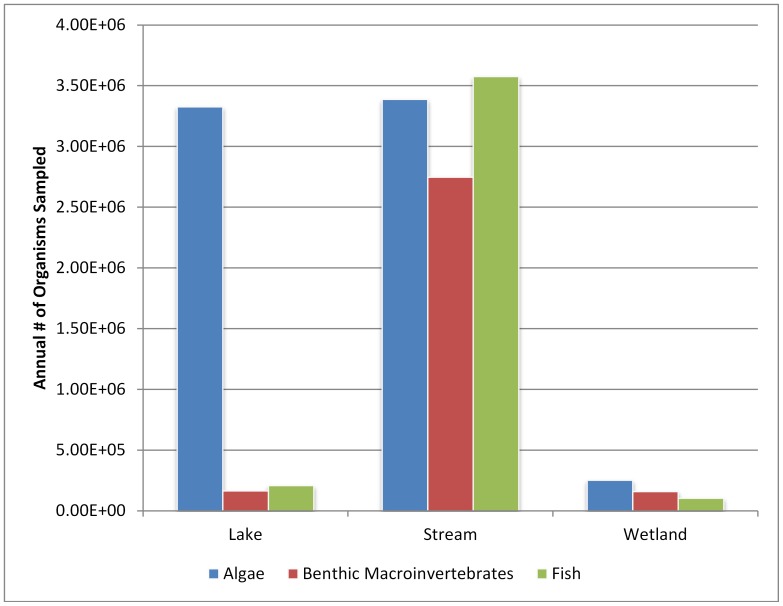
Taxonomic identification accounts for a substantial portion of cost associated with bioassessment programs across the United States. New analytical approaches, such as DNA barcoding have been promoted as a way to reduce monitoring costs and improve efficiency, yet this assumption has not been thoroughly evaluated. We address this question by comparing costs for traditional morphology-based bioassessment, the standard Sanger sequencing-based DNA barcoding approach, and emerging next-generation (NGS) molecular methods. Market demand for molecular approaches is also assessed through a survey of the level of freshwater bioassessment effort in the United States across multiple habitat types (lakes, streams, wetlands) and indicators (benthic invertebrates, fish, algae). All state and regional level programs administered by public agencies and reported via agency web sites were included in the survey. Costs were based on surveys of labs and programs willing to provide such information. More than 19,500 sites are sampled annually across the United States, with the majority of effort occurring in streams. Benthic invertebrates are the most commonly used indicator, but algae and fish comprise between 35% and 21% of total sampling effort, respectively. We estimate that between $104 and $193 million is spent annually on routine freshwater bioassessment in the United States. Approximately 30% of the bioassessment costs are comprised of the cost to conduct traditional morphology-based taxonomy. Current barcoding costs using Sanger sequencing are between 1.7 and 3.4 times as expensive as traditional taxonomic approaches, excluding the cost of field sampling (which is common to both approaches). However, the cost of NGS methods are comparable (or slightly less expensive) than traditional methods depending on the indicator. The promise of barcoding as a cheaper alternative to current practices is not yet realized, although molecular methods may provide other benefits, such as a faster sample processing and increased taxonomic resolution.
Overview
The claims and statistics of this paper haven’t been checked yet.
Run the check — free, no account needed. It reads the open-access text and checks the sources it cites.
Integrity signals
Registry
Cites
Statistics
Figures
Verification
Claims the paper makes
The claims and statistics of this paper haven’t been checked yet.
Run the check — free, no account needed. It reads the open-access text and checks the sources it cites.
Claims other papers make about this one
Each is checked against this paper’s own text: does it say what the citing paper says it does?
In the citing paper
“these limitations have direct consequences for the inferred ecosystem assessment metrics [10,14] and thus management decisions.”
In the citing paper
“Stein and co-authors showed that ten of 16 assessment metrics had higher statistical power using DNA barcoding than morphological assessment [14].”
In the citing paper
“we are confident that metabarcoding will widely replace present biomonitoring methods over time because 1) it has a higher taxonomic resolution [14], 2) it is cost efficient and fast and, most importantly, 3) it reduces human bias enabling comparisons among studies [57].”
In the citing paper
“Several studies show that DNA-based assessments are superior to morphological assessments in freshwater ecosystems (e.g., [14,25,33])”
Self-check
Percentages, sums and reported differences re-computed from the paper’s own numbers.
The self-check needs the paper’s full text.
Citations
Cites
Biological identifications through DNA barcodes
Hebert, P. D. N., Cywinska, A., Ball, S. L., & deWaard, J. R. (2003) · Proceedings of the Royal Society of London. Series B: Biological Sciences · doi:10.1098/rspb.2002.2218 · Cited by 13,376
Assessment of Biotic Integrity Using Fish Communities
Karr, J. R. (1981) · Fisheries · doi:10.1577/1548-8446(1981)006 · Cited by 2,702
BOLD : The Barcode of Life Data System (www.barcodinglife.org)
Ratnasingham, S., & Ebert, P. D. N. H. (2007) · Cited by 1,676
An inexpensive, automation‐friendly protocol for recovering high‐quality DNA
Ivanova, N., deWaard, J. R., & Hebert, P. D. N. (2006) · Molecular Ecology Notes · doi:10.1111/j.1471-8286.2006.01428.x · Cited by 1,504
Performance comparison of benchtop high-throughput sequencing platforms
Loman, N. J., Misra, R., Dallman, T. J., Constantinidou, C., Gharbia, S. E., Wain, J. R., & Pallen, M. J. (2012) · Nature Biotechnology · doi:10.1038/nbt.2198 · Cited by 1,383
The Promise of DNA Barcoding for Taxonomy
Hebert, P. D. N., & Gregory, T. R. (2005) · Systematic Biology · doi:10.1080/10635150500354886 · Cited by 1,333
Monitoring endangered freshwater biodiversity using environmental DNA
Thomsen, P. F., Kielgast, J., Iversen, L., Wiuf, C., Rasmussen, M., Gilbert, M. T. P., Orlando, L., & Willerslev, E. (2011) · Molecular Ecology · doi:10.1111/j.1365-294x.2011.05418.x · Cited by 1,240
Birk, S., Bonne, W., Borja, Á., Brucet, S., Courrat, A., Poikāne, S., Solimini, A. G., van de Bund, W., Zampoukas, N., & Hering, D. (2011) · Ecological Indicators · doi:10.1016/j.ecolind.2011.10.009 · Cited by 1,082
DEVELOPMENTS IN AQUATIC INSECT BIOMONITORING: A Comparative Analysis of Recent Approaches
Bonada, N., Prat, N., Resh, V. H., & Statzner, B. (2005) · Annual Review of Entomology · doi:10.1146/annurev.ento.51.110104.151124 · Cited by 1,071
Poff, N., Olden, J., Vieira, N. K. M., Finn, D., Simmons, M. P., & Kondratieff, B. (2006) · Journal of The North American Benthological Society · doi:10.1899/0887-3593(2006)025[0730:ftnona]2.0.co;2 · Cited by 854
Research works printed but not linked: 1
- Barbour MT, Gerritsen J, Snyder BD, Stribling JB (1999) Rapid Bioassessment Protocols for Use in Streams and Wadeable Rivers: Periphyton, Benthic Macroinvertebrates and Fish, Second Edition. EPA 841-B-99-002. U.S. Environmental Protection Agency; Office of Water; Washington, D.C.
Cited by
Sorted by citations
The ecology of environmental DNA and implications for conservation genetics
Barnes, M. A., & Turner, C. R. (2015) · Conservation Genetics · doi:10.1007/s10592-015-0775-4 · Cited by 1,234
Elbrecht, V., & Leese, F. (2015) · PLOS ONE · doi:10.1371/journal.pone.0130324 · Cited by 765
Environmental DNA reveals that rivers are conveyer belts of biodiversity information
Deiner, K., Fronhofer, E. A., Mächler, E., Walser, J., & Altermatt, F. (2016) · Nature Communications · doi:10.1038/ncomms12544 · Cited by 700
Elbrecht, V., & Leese, F. (2017) · Frontiers in Environmental Science · doi:10.3389/fenvs.2017.00011 · Cited by 495
Hering, D., Borja, Á., Jones, J. I., Pont, D., Boets, P., Bouchez, A., Bruce, K., Drakare, S., Hänfling, B., Kahlert, M., et al. (2018) · Water Research · doi:10.1016/j.watres.2018.03.003 · Cited by 475
Rourke, M. L., Fowler, A. M., Hughes, J. M., Broadhurst, M. K., DiBattista, J. D., Fielder, D. S., Walburn, J. W., & Furlan, E. M. (2021) · Environmental DNA · doi:10.1002/edn3.185 · Cited by 482
Elbrecht, V., Vamos, E. E., Meissner, K., Aroviita, J., & Leese, F. (2017) · Methods in Ecology and Evolution · doi:10.1111/2041-210x.12789 · Cited by 385
Leese, F., Altermatt, F., Bouchez, A., Ekrem, T., Hering, D., Meissner, K. K., Mergen, P., Pawlowski, J. W., Piggott, J. J., Rimet, F., et al. (2016) · Research Ideas and Outcomes · doi:10.3897/rio.2.e11321 · Cited by 182
Meier, R., Wong, W., Srivathsan, A., & Foo, M. (2015) · Cladistics · doi:10.1111/cla.12115 · Cited by 177
Aylagas, E., Borja, Á., Muxika, I., & Rodríguez‐Ezpeleta, N. (2018) · Ecological Indicators · doi:10.1016/j.ecolind.2018.07.044 · Cited by 162
Vasselon, V., Bouchez, A., Rimet, F., Jacquet, S., Trobajo, R., Corniquel, M., Tapolczai, K., & Domaizon, I. (2017) · Methods in Ecology and Evolution · doi:10.1111/2041-210x.12960 · Cited by 150
Freshwater biomonitoring in the Information Age
Keck, F., Vasselon, V., Tapolczai, K., Rimet, F., & Bouchez, A. (2017) · Frontiers in Ecology and the Environment · doi:10.1002/fee.1490 · Cited by 150
Trebitz, A. S., Hoffman, J. C., Darling, J. A., Pilgrim, E. M., Kelly, J. R., Brown, E. A., Chadderton, W. L., Egan, S. P., Grey, E. K., Hashsham, S. A., et al. (2017) · Journal of Environmental Management · doi:10.1016/j.jenvman.2017.07.045 · Cited by 131
Elbrecht, V., Beermann, A. J., Goessler, G., Neumann, J., Tollrian, R., Wagner, R., Wlecklik, A., Piggott, J. J., Matthaei, C. D., & Leese, F. (2016) · Freshwater Biology · doi:10.1111/fwb.12713 · Cited by 132
Metabarcoding From Microbes to Mammals: Comprehensive Bioassessment on a Global Scale
Compson, Z. G., McClenaghan, B., Singer, G. A. C., Fahner, N. A., & Hajibabaei, M. (2020) · Frontiers in Ecology and Evolution · doi:10.3389/fevo.2020.581835 · Cited by 128
Vasselon, V., Domaizon, I., Rimet, F., Kahlert, M., & Bouchez, A. (2017) · Freshwater Science · doi:10.1086/690649 · Cited by 117
Karanovic, T., Djurakić, M., & Eberhard, S. M. (2015) · Systematic Biology · doi:10.1093/sysbio/syv088 · Cited by 108
Wattier, R. A., Mamos, T., Copilaş‐Ciocianu, D., Jelić, M., Ollivier, A., Chaumot, A., Danger, M., Felten, V., Piscart, C., Žganec, K., et al. (2020) · Scientific Reports · doi:10.1038/s41598-020-73739-0 · Cited by 114
Gómez‐Rodríguez, C., Crampton‐Platt, A., Timmermans, M. J. T. N., Baselga, A., & Vogler, A. P. (2015) · Methods in Ecology and Evolution · doi:10.1111/2041-210x.12376 · Cited by 101
Vitecek, S., Kučinić, M., Previšić, A., Živić, I. M., Stojanović, K. Z., Keresztes, L., Bálint, M., Hoppeler, F., Waringer, J. A., Graf, W., et al. (2017) · BMC Evolutionary Biology · doi:10.1186/s12862-017-0972-5 · Cited by 97
Diet Assessment Based on Rumen Contents: A Comparison between DNA Metabarcoding and Macroscopy
Nichols, R. V., Åkesson, M., & Kjellander, P. (2016) · PLoS ONE · doi:10.1371/journal.pone.0157977 · Cited by 96
Can non-destructive DNA extraction of bulk invertebrate samples be used for metabarcoding?
Carew, M. E., Coleman, R. A., & Hoffmann, A. A. (2018) · PeerJ · doi:10.7717/peerj.4980 · Cited by 84
Hatzenbuhler, C. I., Kelly, J. R., Martinson, J. W., Okum, S. L., & Pilgrim, E. M. (2017) · Scientific Reports · doi:10.1038/srep46393 · Cited by 85
Dapporto, L., Cini, A., Vodă, R., Dincă, V., Wiemers, M., Menchetti, M., Magini, G., Talavera, G., Shreeve, T. G., Bonelli, S., et al. (2019) · Molecular Ecology Resources · doi:10.1111/1755-0998.13059 · Cited by 79
Food from faeces: Evaluating the efficacy of scat DNA metabarcoding in dietary analyses
Thuo, D., Furlan, E. M., Broekhuis, F., Kamau, J., Macdonald, K., & Gleeson, D. M. (2019) · PLoS ONE · doi:10.1371/journal.pone.0225805 · Cited by 77
Bailet, B., Bouchez, A., Franc, A., Frigerio, J.-M., Keck, F., Karjalainen, S. M., Rimet, F., Schneider, S. C., & Kahlert, M. (2019) · Metabarcoding and Metagenomics · doi:10.3897/mbmg.3.34002 · Cited by 80
Simaika, J. P., Stribling, J. B., Lento, J., Bruder, A., Poikāne, S., Moretti, M. S., Rivers-Moore, N., Meissner, K. K., & Macadam, C. R. (2024) · The Science of The Total Environment · doi:10.1016/j.scitotenv.2024.170360 · Cited by 72
Stream water quality assessment by metabarcoding of invertebrates
Kuntke, F., de Jonge, N., Hesselsøe, M., & Nielsen, J. L. (2019) · Ecological Indicators · doi:10.1016/j.ecolind.2019.105982 · Cited by 64
Increased performance of DNA metabarcoding of macroinvertebrates by taxonomic sorting
Beentjes, K. K., Speksnijder, A. G. C. L., Schilthuizen, M., Hoogeveen, M., Pastoor, R., & van der Hoorn, B. (2019) · PLoS ONE · doi:10.1371/journal.pone.0226527 · Cited by 60
Vasselon, V., Rimet, F., Domaizon, I., Monnier, O., Reyjol, Y., & Bouchez, A. (2019) · Metabarcoding and Metagenomics · doi:10.3897/mbmg.3.39646 · Cited by 56
Phillips, J. D., Gillis, D. J., & Hanner, R. (2022) · Frontiers in Ecology and Evolution · doi:10.3389/fevo.2022.859099 · Cited by 62
A taxonomy-free approach based on machine learning to assess the quality of rivers with diatoms
Feio, M. J., Serra, S. R. Q., Mortágua, A., Bouchez, A., Rimet, F., Vasselon, V., & Almeida, S. F. P. (2020) · The Science of The Total Environment · doi:10.1016/j.scitotenv.2020.137900 · Cited by 54
High-throughput environmental DNA analysis informs a biological assessment of an urban stream
Bagley, M. J., Pilgrim, E. M., Knapp, M., Yoder, C. O., Domingo, J. W. S., & Banerji, A. (2019) · Ecological Indicators · doi:10.1016/j.ecolind.2019.04.088 · Cited by 52
Fernández, S., Rodriguez-Martinez, S., Martínez, J. L., García‐Vázquez, E., & Ardura, A. (2019) · Environmental DNA · doi:10.1002/edn3.40 · Cited by 49
Lee, P.-S., Sing, K., & Wilson, J. (2015) · PLoS ONE · doi:10.1371/journal.pone.0123871 · Cited by 51
Aylagas, E., Borja, Á., Pochon, X., Zaiko, A., Keeley, N., Bruce, K., Hong, P., Ruiz, G. M., Stein, E. D., Theroux, S. M., et al. (2020) · The Science of The Total Environment · doi:10.1016/j.scitotenv.2020.140780 · Cited by 43
Self-citationChapuis, S., Herder, F., & Geiger, M. F. (2021) · PLoS ONE · doi:10.1371/journal.pone.0244598 · Cited by 45
Nucleic acids-based tools for ballast water surveillance, monitoring, and research
Darling, J. A., & Frederick, R. M. (2017) · Journal of Sea Research · doi:10.1016/j.seares.2017.02.005 · Cited by 43
Serrana, J. M., Yaegashi, S., Kondoh, S., Li, B., Robinson, C. T., & Watanabe, K. (2018) · Scientific Reports · doi:10.1038/s41598-018-28624-2 · Cited by 40
A DNA barcode database of Australia’s freshwater macroinvertebrate fauna
Carew, M. E., Nichols, S. J., Batovska, J., Clair, R. S., Murphy, N. P., Blacket, M. J., & Shackleton, M. E. (2017) · Marine and Freshwater Research · doi:10.1071/mf16304 · Cited by 41
Todisco, V., Vodă, R., Prosser, S. W. J., & Nazari, V. (2020) · Scientific Reports · doi:10.1038/s41598-020-70957-4 · Cited by 37
Williams, L.-G., Karl, S. A., Rice, S. A., & Simon, C. A. (2017) · African Zoology · doi:10.1080/15627020.2017.1313131 · Cited by 37
Kotov, A. A. (2015) · Zootaxa · doi:10.11646/zootaxa.3911.2.2 · Cited by 36
The imperative need for nationally coordinated bioassessment of rivers and streams
Nichols, S. J., Barmuta, L. A., Chessman, B. C., Davies, P. E., Dyer, F. J., Harrison, E. T., Hawkins, C. P., Jones, J. I., Kefford, B. J., Linke, S., et al. (2016) · Marine and Freshwater Research · doi:10.1071/mf15329 · Cited by 38
Gelis, M. M. N., Canino, A., Bouchez, A., Domaizon, I., Laplace-Treyture, C., Rimet, F., & Alric, B. (2024) · The Science of The Total Environment · doi:10.1016/j.scitotenv.2023.169774 · Cited by 34
Minerovic, A. D., Potapova, M., Sales, C. M., Price, J., & Enache, M. (2020) · Ecological Indicators · doi:10.1016/j.ecolind.2020.106225 · Cited by 37
Carew, M. E., Kellar, C. R., Pettigrove, V. J., & Hoffmann, A. A. (2017) · Ecological Indicators · doi:10.1016/j.ecolind.2017.11.002 · Cited by 38
Cardoni, S., Tenchini, R., Ficulle, I., Piredda, R., Simeone, M. C., & Belfiore, C. (2015) · Biochemical Systematics and Ecology · doi:10.1016/j.bse.2015.07.035 · Cited by 33
Blattner, L. A., Ebner, J. N., Zopfi, J., & von Fumetti, S. (2021) · Ecological Indicators · doi:10.1016/j.ecolind.2021.107916 · Cited by 31
Snoeijs, P. (2017) · Springer eBooks · doi:10.1007/978-94-007-0668-2_4 · Cited by 35
A review of over a decade of DNA barcoding in South Africa: a faunal perspective
da Silva, J. M., & Willows‐Munro, S. (2016) · African Zoology · doi:10.1080/15627020.2016.1151377 · Cited by 30
Karanovic, T., Lee, S., & Lee, W. (2018) · Invertebrate Systematics · doi:10.1071/is17002 · Cited by 26
Misidentification of bluefin tuna larvae: a call for caution and taxonomic reform
Puncher, G. N., Alemany, F., Arrizabalaga, H., Cariani, A., & Tinti, F. (2015) · Reviews in Fish Biology and Fisheries · doi:10.1007/s11160-015-9390-1 · Cited by 26
Phillips, J. D., French, S. H., Hanner, R., & Gillis, D. J. (2020) · PeerJ Computer Science · doi:10.7717/peerj-cs.243 · Cited by 27
Beentjes, K. K., Speksnijder, A. G. C. L., Schilthuizen, M., Schaub, B. E. M., & van der Hoorn, B. (2018) · Metabarcoding and Metagenomics · doi:10.3897/mbmg.2.26744 · Cited by 24
Gao, W., Chen, Z., Li, Y., Pan, Y., Zhu, J., Guo, S., Hu, L.-Q., & Huang, J. T. (2018) · Water · doi:10.3390/w10010082 · Cited by 24
Chapuis, S., Malewski, T., Suchecka, E., Geiger, M. F., Herder, F., & Bogdanowicz, W. (2018) · Fisheries Research · doi:10.1016/j.fishres.2018.02.007 · Cited by 23
Is qualitative and quantitative metabarcoding of dung fauna biodiversity feasible?
Blanckenhorn, W. U., Rohner, P. T., Bernasconi, M. V., Haugstetter, J., & Buser, A. (2015) · Environmental Toxicology and Chemistry · doi:10.1002/etc.3275 · Cited by 25
Sim, S. F., Chai, L. M. X., & Kimura, A. L. J. (2018) · Journal of Chemistry · doi:10.1155/2018/7182801 · Cited by 23
Pilgrim, E. M., Smucker, N. J., Wu, H., Martinson, J. W., Nietch, C. T., Molina, M., Darling, J. A., & Johnson, B. R. (2022) · Water · doi:10.3390/w14152361 · Cited by 22
Choosing an Effective PCR-Based Approach for Diet Analysis of Insect Herbivores: A Systematic Review
Avanesyan, A., Sutton, H., & Lamp, W. O. (2021) · Journal of Economic Entomology · doi:10.1093/jee/toab057 · Cited by 21
Paiva, D. N. A., Perdiz, R. D. O., & Almeida, T. E. (2021) · Journal of Plant Research · doi:10.1007/s10265-021-01265-9 · Cited by 21
Towards global insect biomonitoring with frugal methods
Brydegaard, M. S., Pedales, R., Feng, V., Yamoa, A. S.-D., Kouakou, B. K., Månefjord, H., Wührl, L., Pylatiuk, C., Amorim, D. D. S., & Meier, R. (2024) · Philosophical Transactions of the Royal Society B Biological Sciences · doi:10.1098/rstb.2023.0103 · Cited by 21
Wolf, D. I., & Vis, M. L. (2019) · Journal of Phycology · doi:10.1111/jpy.12935 · Cited by 20
Kolmann, M. A., Kalácska, M., Lucanus, O., de Sousa, L. M., Wainwright, D. K., Arroyo‐Mora, J. P., & Andrade, M. C. (2021) · Scientific Reports · doi:10.1038/s41598-021-95713-0 · Cited by 20
DNA barcoding for the assessment of marine and coastal fish diversity from the Coast of Mozambique
Muhala, V., Guimarães-Costa, A. J., Macate, I. E., Rabelo, L. P., Bessa‐Silva, A., Watanabe, L. A., dos Santos, G. D., Sambora, L. D. C. F., Vallinoto, M., & Sampaio, I. (2024) · PLoS ONE · doi:10.1371/journal.pone.0293345 · Cited by 22
Emmons, S. C., Compson, Z. G., Malish, M. C., Busch, M. H., Saenz, V., Higgins, K. T., & Allen, D. C. (2023) · Environmental DNA · doi:10.1002/edn3.453 · Cited by 19
Loaiza, J. R., Almanza, A., Echeverri, J. C. R., Mejía, L. C., Cervantes, N. D., Sánchez-Galán, J. E., Merchán, F., Grillet, A., Miller, M. J., León, L. F. D., et al. (2019) · Malaria Journal · doi:10.1186/s12936-019-2723-0 · Cited by 18
Thomas, V. G., Hanner, R., & Borisenko, A. (2016) · Genome · doi:10.1139/gen-2016-0022 · Cited by 18
Sampieri, B. R., Vieira, P. E., Teixeira, M. A. L., Seixas, V. C., Pagliosa, P. R., Amaral, A. C. Z., & Costa, F. O. (2021) · PeerJ · doi:10.7717/peerj.11364 · Cited by 17
DNA barcodes enable higher taxonomic assignments in the Acari
Young, M. R., deWaard, J. R., & Hebert, P. D. N. (2021) · Scientific Reports · doi:10.1038/s41598-021-95147-8 · Cited by 19
Kraus, R. (2023) · Journal of Marine Science and Engineering · doi:10.3390/jmse11112144 · Cited by 17
Zhang, X., Luo, D., Yu, R.-Q., & Wu, Y. (2022) · Integrative Zoology · doi:10.1111/1749-4877.12640 · Cited by 16
Goczał, J., Rossa, R., Sweeney, J., & Tofilski, A. (2016) · Journal of Applied Entomology · doi:10.1111/jen.12370 · Cited by 15
The 5 ‘D’s of Taxonomy: A User’s Guide
Favret, C. (2024) · The Quarterly Review of Biology · doi:10.1086/732044 · Cited by 15
Kamberović, J., Udovič, M. G., Kulaš, A., Tapolczai, K., Orlić, S., Jusufović, A., Gajic, A., Žutinić, P., Ahmić, A., & Stroil, B. K. (2024) · Microorganisms · doi:10.3390/microorganisms12081722 · Cited by 14
Liberty, J. T., Lin, H., Kucha, C. T., Sun, S., & Alsalman, F. B. (2024) · Ecological Genetics and Genomics · doi:10.1016/j.egg.2024.100317 · Cited by 14
Alberts, P. S. F., & Meyer, J. J. M. (2021) · South African Journal of Botany · doi:10.1016/j.sajb.2021.10.005 · Cited by 14
Lafferty, K. D. (2024) · PeerJ · doi:10.7717/peerj.16847 · Cited by 13
Moutinho, J., Costa, F. O., & Duarte, S. (2024) · Journal of Marine Science and Engineering · doi:10.3390/jmse12112093 · Cited by 13
Taxonomic diversity of Biomphalaria (Planorbidae) in São Paulo state, Brazil
Ohlweiler, F. P., Rossignoli, T. D. J., Palasio, R. G. S., & Tuan, R. (2020) · Biota Neotropica · doi:10.1590/1676-0611-bn-2020-0975 · Cited by 12
The state of the art in cost-benefit of HTS methods for stock assessment: An overview
Rodríguez, G. R., Ballesteros, H. M., Sánchez-Llamas, E., Bande, R., & Otero, R. M. F. (2022) · Frontiers in Marine Science · doi:10.3389/fmars.2022.1005534 · Cited by 11
Hinsley, A., King, E., & Sinovas, P. (2016) · Palgrave Macmillan UK eBooks · doi:10.1057/978-1-137-53843-7_5 · Cited by 11
ADEOBA, M. I., Kabongo, R. M., der Bank, H. F. V., & Yessoufou, K. (2018) · ZooKeys · doi:10.3897/zookeys.746.13502 · Cited by 11
Santos, S. R. B., & Vianna, M. (2017) · Reviews in Fisheries Science & Aquaculture · doi:10.1080/23308249.2017.1337078 · Cited by 10
Relationship of taxonomic error to frequency of observation
Stribling, J. B., & Leppo, E. W. (2020) · PLoS ONE · doi:10.1371/journal.pone.0241933 · Cited by 10
Li, Y., Khan, F. H., Wu, J., Zhang, Y., Jiang, Y., Chen, X., Yao, Y., Pan, Y., & Han, X. (2022) · Frontiers in Ecology and Evolution · doi:10.3389/fevo.2022.899993 · Cited by 10
Paula, D. P., & Andow, D. A. (2022) · Neotropical Entomology · doi:10.1007/s13744-022-01011-3 · Cited by 10
Maász, G., Takács, P., Boda, P., Várbíró, G., & Pirger, Z. (2017) · The Science of The Total Environment · doi:10.1016/j.scitotenv.2017.05.207 · Cited by 10
Serrana, J. M., & Watanabe, K. (2023) · PLoS ONE · doi:10.1371/journal.pone.0289056 · Cited by 9
Gonçalves, L. T., Françoso, E., & Deprá, M. (2022) · Apidologie · doi:10.1007/s13592-022-00958-x · Cited by 9
Molecular Dimensions of Insect Taxonomy in the Genomics Era
Roe, A. D., Dupuis, J. R., & Sperling, F. A. H. (2017) · Wiley eBooks · doi:10.1002/9781118945568.ch16 · Cited by 9
Gittens, R. A., Almanza, A., Álvarez, E., Bennett, K. L., Mejía, L. C., Sánchez-Galán, J. E., Merchán, F., Kern, J., Miller, M. J., Esser, H. J., et al. (2020) · PLoS neglected tropical diseases · doi:10.1371/journal.pntd.0008849 · Cited by 8
Carrion‐breeding flies of Australia and New Zealand: A review and key to adults
Johnston, N. P., Butterworth, N. J., Meiklejohn, K. A., Grzywacz, A., Pape, T., Szpila, K., & Wallman, J. F. (2025) · Austral Entomology · doi:10.1111/aen.12732 · Cited by 9
Hansen, S., Addison, P., Benoit, L., & Haran, J. (2021) · Biodiversity Data Journal · doi:10.3897/bdj.9.e66452 · Cited by 8
Loh, R. K., Kutty, S. N., Yeo, D. C. J., & Meier, R. (2022) · Environmental DNA · doi:10.1002/edn3.373 · Cited by 7
Zeta diversity patterns in metabarcoded lotic algal assemblages as a tool for bioassessment
Simons, A. L., Theroux, S. M., Osborne, M. G., Nuzhdin, S. V., Mazor, R. D., & Steele, J. A. (2023) · Ecological Applications · doi:10.1002/eap.2812 · Cited by 7
Prey choice in insectivorous steppe passerines: New insights from DNA metabarcoding
Zurdo, J., Reverter, M., Barrero, A., la Rosa, D. B., Gómez‐Catasús, J., Pérez‐Granados, C., Morales, M. B., & Traba, J. (2023) · Global Ecology and Conservation · doi:10.1016/j.gecco.2023.e02738 · Cited by 7
Sidhu, M. C., Kumari, A., Jain, B., Kaur, S., Kamra, A., & Rai, J. (2023) · Biology Bulletin · doi:10.1134/s1062359022602968 · Cited by 7
Quantifying stream periphyton assemblage responses to nutrient amendments with a molecular approach
Hagy, J. D., Houghton, K. A., Beddick, D. L., James, J. B., Friedman, S. D., & Devereux, R. (2020) · Freshwater Science · doi:10.1086/708935 · Cited by 7
Metadata
- Authors
- Stein, E. D., Martinez, M. C., Stiles, S., Miller, P. E., & Zakharov, E. V.
- Affiliations
- Southern California Coastal Water Research Project (US)
- University of Guelph (CA)
- Corresponding author
- Stein, Eric D.
- ORCID
- Stein, Eric D.
- Venue
- PLoS ONE
- Publisher
- Public Library of Science (PLoS)
- Published
- 2014-04-22
- Volume
- 9
- Issue
- 4
- Pages
- e95525
- ISSN
- 1932-6203 (ISSN-L)
- PMC
- PMC3995707
- OpenAlex
- W2098534604
- Cited by
- 152
- References
- 28
- Citations by year
- 2026: 12 · 2025: 4 · 2024: 13 · 2023: 14 · 2022: 10 · 2021: 15 · 2020: 15 · 2019: 13 · 2018: 18 · 2017: 17 · 2016: 10 · 2015: 10
- FWCI
- 10.69
- Type
- journal article
- Language
- en
- Open access
- gold
- doi.org
- Locations
- PLoS ONE (publishedVersion, cc-by)
- Europe PMC (PubMed Central) (publishedVersion, cc-by)
- PubMed Central (publishedVersion, cc-by)
- PubMed (publishedVersion)
- DOAJ (DOAJ: Directory of Open Access Journals) (submittedVersion, cc-by-sa)
- Topics
- Physical Sciences › Environmental Science › Ecology › Environmental DNA in Biodiversity Studies
- Life Sciences › Agricultural and Biological Sciences › Ecology, Evolution, Behavior and Systematics › Invertebrate Taxonomy and Ecology
- Physical Sciences › Environmental Science › Ecology › Freshwater macroinvertebrate diversity and ecology
- Keywords
- DNA barcoding, cost comparison, morphological taxonomy, Sanger sequencing, next-generation sequencing, benthic invertebrates, fish, algae, water quality monitoring, taxonomic identification, streams, lakes, wetlands, United States
- MeSH terms
- Animals, Cost-Benefit Analysis, Environmental Monitoring, Fresh Water, United States, Biodiversity, DNA Barcoding, Taxonomic
About these checks
Registry, retraction, Cites and statistics results are computed, not judged, with one exception: a printed reference that no index lists is read once by a model before it counts as a citation error. Claims are extracted by a model and kept only when their quote appears verbatim in the text; each cited source is then checked, with a model’s help, for whether it says what the claim relies on. Those verdicts can be wrong — read the claim’s quote and the cited source before relying on one.
Statistics and arithmetic are recomputed, not judged.
Confidence bands are shown only for fields calibrated on our annotated test set. None is calibrated yet, so no band is shown.
What counts as a claim ›How we measure confidence ›How we check this ›
Are you an author, or do you see a problem with this page? Request a review
