

The DOI matches its Crossref record; 27 of the 28 references it cites were found in a registry or an index.
Is DNA Barcoding Actually Cheaper and Faster than Traditional Morphological Methods: Results from a Survey of Freshwater Bioassessment Efforts in the United States?
Open accessAbstract
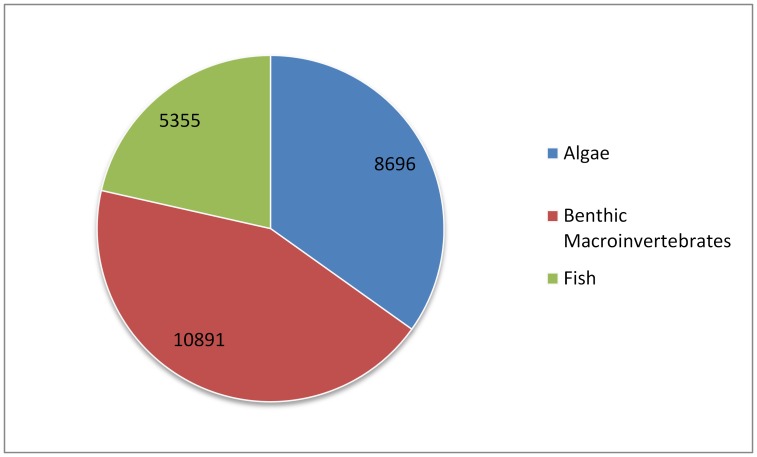
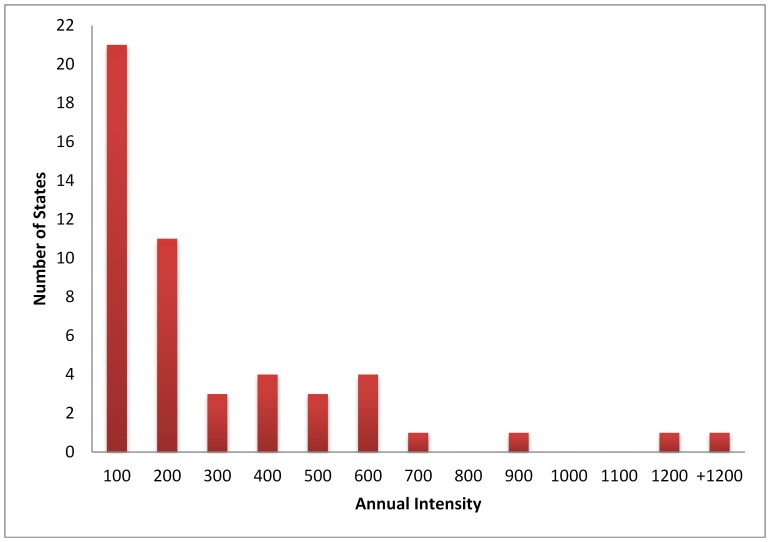
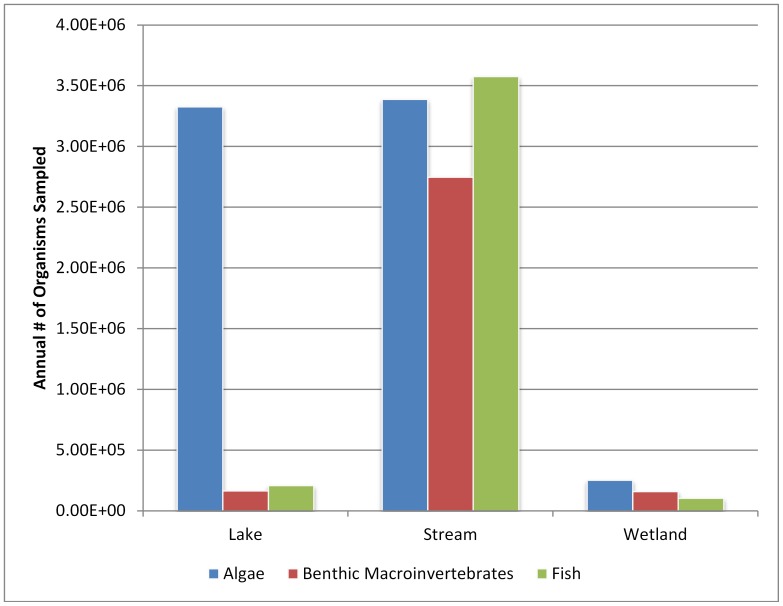
Taxonomic identification accounts for a substantial portion of cost associated with bioassessment programs across the United States. New analytical approaches, such as DNA barcoding have been promoted as a way to reduce monitoring costs and improve efficiency, yet this assumption has not been thoroughly evaluated. We address this question by comparing costs for traditional morphology-based bioassessment, the standard Sanger sequencing-based DNA barcoding approach, and emerging next-generation (NGS) molecular methods. Market demand for molecular approaches is also assessed through a survey of the level of freshwater bioassessment effort in the United States across multiple habitat types (lakes, streams, wetlands) and indicators (benthic invertebrates, fish, algae). All state and regional level programs administered by public agencies and reported via agency web sites were included in the survey. Costs were based on surveys of labs and programs willing to provide such information. More than 19,500 sites are sampled annually across the United States, with the majority of effort occurring in streams. Benthic invertebrates are the most commonly used indicator, but algae and fish comprise between 35% and 21% of total sampling effort, respectively. We estimate that between $104 and $193 million is spent annually on routine freshwater bioassessment in the United States. Approximately 30% of the bioassessment costs are comprised of the cost to conduct traditional morphology-based taxonomy. Current barcoding costs using Sanger sequencing are between 1.7 and 3.4 times as expensive as traditional taxonomic approaches, excluding the cost of field sampling (which is common to both approaches). However, the cost of NGS methods are comparable (or slightly less expensive) than traditional methods depending on the indicator. The promise of barcoding as a cheaper alternative to current practices is not yet realized, although molecular methods may provide other benefits, such as a faster sample processing and increased taxonomic resolution.
Overview
The claims and statistics of this paper haven’t been checked yet.
Run the check — free, no account needed. It reads the open-access text and checks the sources it cites.
Integrity signals
Registry
Cites
Statistics
Figures
Verification
Claims the paper makes
The claims and statistics of this paper haven’t been checked yet.
Run the check — free, no account needed. It reads the open-access text and checks the sources it cites.
Claims other papers make about this one
Each is checked against this paper’s own text: does it say what the citing paper says it does?
In the citing paper
“these limitations have direct consequences for the inferred ecosystem assessment metrics [10,14] and thus management decisions.”
In the citing paper
“Stein and co-authors showed that ten of 16 assessment metrics had higher statistical power using DNA barcoding than morphological assessment [14].”
In the citing paper
“we are confident that metabarcoding will widely replace present biomonitoring methods over time because 1) it has a higher taxonomic resolution [14], 2) it is cost efficient and fast and, most importantly, 3) it reduces human bias enabling comparisons among studies [57].”
In the citing paper
“Several studies show that DNA-based assessments are superior to morphological assessments in freshwater ecosystems (e.g., [14,25,33])”
Self-check
Percentages, sums and reported differences re-computed from the paper’s own numbers.
The self-check needs the paper’s full text.
Citations
Cites
Biological identifications through DNA barcodes
Hebert, P. D. N., Cywinska, A., Ball, S. L., & deWaard, J. R. (2003) · Proceedings of the Royal Society of London. Series B: Biological Sciences · doi:10.1098/rspb.2002.2218 · Cited by 13,376
Assessment of Biotic Integrity Using Fish Communities
Karr, J. R. (1981) · Fisheries · doi:10.1577/1548-8446(1981)006 · Cited by 2,702
BOLD : The Barcode of Life Data System (www.barcodinglife.org)
Ratnasingham, S., & Ebert, P. D. N. H. (2007) · Cited by 1,676
An inexpensive, automation‐friendly protocol for recovering high‐quality DNA
Ivanova, N., deWaard, J. R., & Hebert, P. D. N. (2006) · Molecular Ecology Notes · doi:10.1111/j.1471-8286.2006.01428.x · Cited by 1,504
Performance comparison of benchtop high-throughput sequencing platforms
Loman, N. J., Misra, R., Dallman, T. J., Constantinidou, C., Gharbia, S. E., Wain, J. R., & Pallen, M. J. (2012) · Nature Biotechnology · doi:10.1038/nbt.2198 · Cited by 1,383
The Promise of DNA Barcoding for Taxonomy
Hebert, P. D. N., & Gregory, T. R. (2005) · Systematic Biology · doi:10.1080/10635150500354886 · Cited by 1,333
Monitoring endangered freshwater biodiversity using environmental DNA
Thomsen, P. F., Kielgast, J., Iversen, L., Wiuf, C., Rasmussen, M., Gilbert, M. T. P., Orlando, L., & Willerslev, E. (2011) · Molecular Ecology · doi:10.1111/j.1365-294x.2011.05418.x · Cited by 1,240
Birk, S., Bonne, W., Borja, Á., Brucet, S., Courrat, A., Poikāne, S., Solimini, A. G., van de Bund, W., Zampoukas, N., & Hering, D. (2011) · Ecological Indicators · doi:10.1016/j.ecolind.2011.10.009 · Cited by 1,082
DEVELOPMENTS IN AQUATIC INSECT BIOMONITORING: A Comparative Analysis of Recent Approaches
Bonada, N., Prat, N., Resh, V. H., & Statzner, B. (2005) · Annual Review of Entomology · doi:10.1146/annurev.ento.51.110104.151124 · Cited by 1,071
Poff, N., Olden, J., Vieira, N. K. M., Finn, D., Simmons, M. P., & Kondratieff, B. (2006) · Journal of The North American Benthological Society · doi:10.1899/0887-3593(2006)025[0730:ftnona]2.0.co;2 · Cited by 854
Hajibabaei, M., Shokralla, S., Zhou, X., Singer, G. A. C., & Baird, D. J. (2011) · PLoS ONE · doi:10.1371/journal.pone.0017497 · Cited by 584
Integration of DNA barcoding into an ongoing inventory of complex tropical biodiversity
Janzen, D. H., Hallwachs, W., Blandin, P., Burns, J. M., Cadiou, J.-M., CHACÓN, I., Dapkey, T., DEANS, A. R., Epstein, M. E., Espinoza, B. A., et al. (2009) · Molecular Ecology Resources · doi:10.1111/j.1755-0998.2009.02628.x · Cited by 360
Zhou, X. Y., Li, Y., Liu, S., Yang, Q. Y., Su, X., Zhou, L., Tang, M., Fu, R., Li, J., & Huang, Q. (2013) · GigaScience · doi:10.1186/2047-217x-2-4 · Cited by 299
Carter, J. L., & Resh, V. H. (2001) · Journal of the North American Benthological Society · doi:10.2307/1468095 · Cited by 220
N, N. A. T. H. A. L. I. E. L. E. T. E. R. M. E. J. E. A. N. C. H. R. I. S. T. O. P. H. E. S. I. M. O., Spies, I. B., Lowe, S., Hong, Y., & Canino, M. F. (2010) · Molecular Ecology Notes · doi:10.1111/(issn)1471-8286 · Cited by 192
Sweeney, B. W., Battle, J. M., Jackson, J. K., & Dapkey, T. (2011) · Journal of the North American Benthological Society · doi:10.1899/10-016.1 · Cited by 180
Ruaro, R., & Gubiani, É. A. (2013) · Ecological Indicators · doi:10.1016/j.ecolind.2012.12.016 · Cited by 175
Zhou, X., Jacobus, L. M., DeWalt, R. E., Adamowicz, S. J., & Hebert, P. D. N. (2010) · Journal of the North American Benthological Society · doi:10.1899/09-121.1 · Cited by 126
Bioassessment of streams with macroinvertebrates: effect of sampled habitat and taxonomic resolution
Chessman, B. C., Williams, S., & Besley, C. (2007) · Journal of the North American Benthological Society · doi:10.1899/06-074.1 · Cited by 123
Stockle, M. Y., & Hebert, P. D. N. (2008) · Scientific American · doi:10.1038/scientificamerican1008-82 · Cited by 94
Who Will Actually Use DNA Barcoding and What Will It Cost?
Cameron, S. L., Rubinoff, D., & Will, K. (2006) · Systematic Biology · doi:10.1080/10635150600960079 · Cited by 87
The front‐end logistics of DNA barcoding: challenges and prospects
Borisenko, A., Sones, J. E., & Hebert, P. D. N. (2009) · Molecular Ecology Resources · doi:10.1111/j.1755-0998.2009.02629.x · Cited by 67
Does DNA barcoding improve performance of traditional stream bioassessment metrics?
Stein, E. D., White, B. P., Mazor, R. D., Jackson, J. K., Battle, J. M., Miller, P. E., Pilgrim, E. M., & Sweeney, B. W. (2014) · Freshwater Science · doi:10.1086/674782 · Cited by 64
Self-citationIncorporation of DNA barcoding into a large-scale biomonitoring program: opportunities and pitfalls
Pilgrim, E. M., Jackson, S. A., Swenson, S. J., Turcsanyi, I., Friedman, E., Weigt, L. A., & Bagley, M. J. (2011) · Journal of the North American Benthological Society · doi:10.1899/10-012.1 · Cited by 57
A multi-marker DNA barcoding approach to save time and resources in vegetation surveys
Mattia, F. D., Gentili, R., Bruni, I., Galimberti, A., Sgorbati, S., Casiraghi, M., & Labra, M. (2012) · Botanical Journal of the Linnean Society · doi:10.1111/j.1095-8339.2012.01251.x · Cited by 45
An algorithmic and information-theoretic approach to multimetric index construction
Schoolmaster, D. R., Grace, J. B., Schweiger, E. W., Guntenspergen, G. R., MITCHELL, B. R., Miller, K. M., & Little, A. (2012) · Ecological Indicators · doi:10.1016/j.ecolind.2012.10.016 · Cited by 30
Carter, J. L., & Resh, V. H. (2013) · Antarctica A Keystone in a Changing World · doi:10.3133/ofr20131129 · Cited by 28
Research works printed but not linked: 1
- Barbour MT, Gerritsen J, Snyder BD, Stribling JB (1999) Rapid Bioassessment Protocols for Use in Streams and Wadeable Rivers: Periphyton, Benthic Macroinvertebrates and Fish, Second Edition. EPA 841-B-99-002. U.S. Environmental Protection Agency; Office of Water; Washington, D.C.
Cited by
Sorted by citations
The ecology of environmental DNA and implications for conservation genetics
Barnes, M. A., & Turner, C. R. (2015) · Conservation Genetics · doi:10.1007/s10592-015-0775-4 · Cited by 1,234
Elbrecht, V., & Leese, F. (2015) · PLOS ONE · doi:10.1371/journal.pone.0130324 · Cited by 765
Environmental DNA reveals that rivers are conveyer belts of biodiversity information
Deiner, K., Fronhofer, E. A., Mächler, E., Walser, J., & Altermatt, F. (2016) · Nature Communications · doi:10.1038/ncomms12544 · Cited by 700
Elbrecht, V., & Leese, F. (2017) · Frontiers in Environmental Science · doi:10.3389/fenvs.2017.00011 · Cited by 495
Hering, D., Borja, Á., Jones, J. I., Pont, D., Boets, P., Bouchez, A., Bruce, K., Drakare, S., Hänfling, B., Kahlert, M., et al. (2018) · Water Research · doi:10.1016/j.watres.2018.03.003 · Cited by 475
Metadata
- Authors
- Stein, E. D., Martinez, M. C., Stiles, S., Miller, P. E., & Zakharov, E. V.
- Affiliations
- Southern California Coastal Water Research Project (US)
- University of Guelph (CA)
- Corresponding author
- Stein, Eric D.
- ORCID
- Stein, Eric D.
- Venue
- PLoS ONE
- Publisher
- Public Library of Science (PLoS)
- Published
- 2014-04-22
- Volume
- 9
- Issue
- 4
- Pages
- e95525
- ISSN
- 1932-6203 (ISSN-L)
- PMC
- PMC3995707
- OpenAlex
- W2098534604
- Cited by
- 152
- References
- 28
- Citations by year
- 2026: 12 · 2025: 4 · 2024: 13 · 2023: 14 · 2022: 10 · 2021: 15 · 2020: 15 · 2019: 13 · 2018: 18 · 2017: 17 · 2016: 10 · 2015: 10
- FWCI
- 10.69
- Type
- journal article
- Language
- en
- Open access
- gold
- doi.org
- Locations
- PLoS ONE (publishedVersion, cc-by)
- Europe PMC (PubMed Central) (publishedVersion, cc-by)
- PubMed Central (publishedVersion, cc-by)
- PubMed (publishedVersion)
- DOAJ (DOAJ: Directory of Open Access Journals) (submittedVersion, cc-by-sa)
- Topics
- Physical Sciences › Environmental Science › Ecology › Environmental DNA in Biodiversity Studies
- Life Sciences › Agricultural and Biological Sciences › Ecology, Evolution, Behavior and Systematics › Invertebrate Taxonomy and Ecology
- Physical Sciences › Environmental Science › Ecology › Freshwater macroinvertebrate diversity and ecology
- Keywords
- DNA barcoding, cost comparison, morphological taxonomy, Sanger sequencing, next-generation sequencing, benthic invertebrates, fish, algae, water quality monitoring, taxonomic identification, streams, lakes, wetlands, United States
- MeSH terms
- Animals, Cost-Benefit Analysis, Environmental Monitoring, Fresh Water, United States, Biodiversity, DNA Barcoding, Taxonomic
About these checks
Registry, retraction, Cites and statistics results are computed, not judged, with one exception: a printed reference that no index lists is read once by a model before it counts as a citation error. Claims are extracted by a model and kept only when their quote appears verbatim in the text; each cited source is then checked, with a model’s help, for whether it says what the claim relies on. Those verdicts can be wrong — read the claim’s quote and the cited source before relying on one.
Statistics and arithmetic are recomputed, not judged.
Confidence bands are shown only for fields calibrated on our annotated test set. None is calibrated yet, so no band is shown.
What counts as a claim ›How we measure confidence ›How we check this ›
Are you an author, or do you see a problem with this page? Request a review
