

No Sustained Attention Differences in a Longitudinal Randomized Trial Comparing Mindfulness Based Stress Reduction versus Active Control
Open accessPublished version of a preprint
The DOI matches its Crossref record; 30 of the 30 references it cites were found in a registry or an index.
Abstract
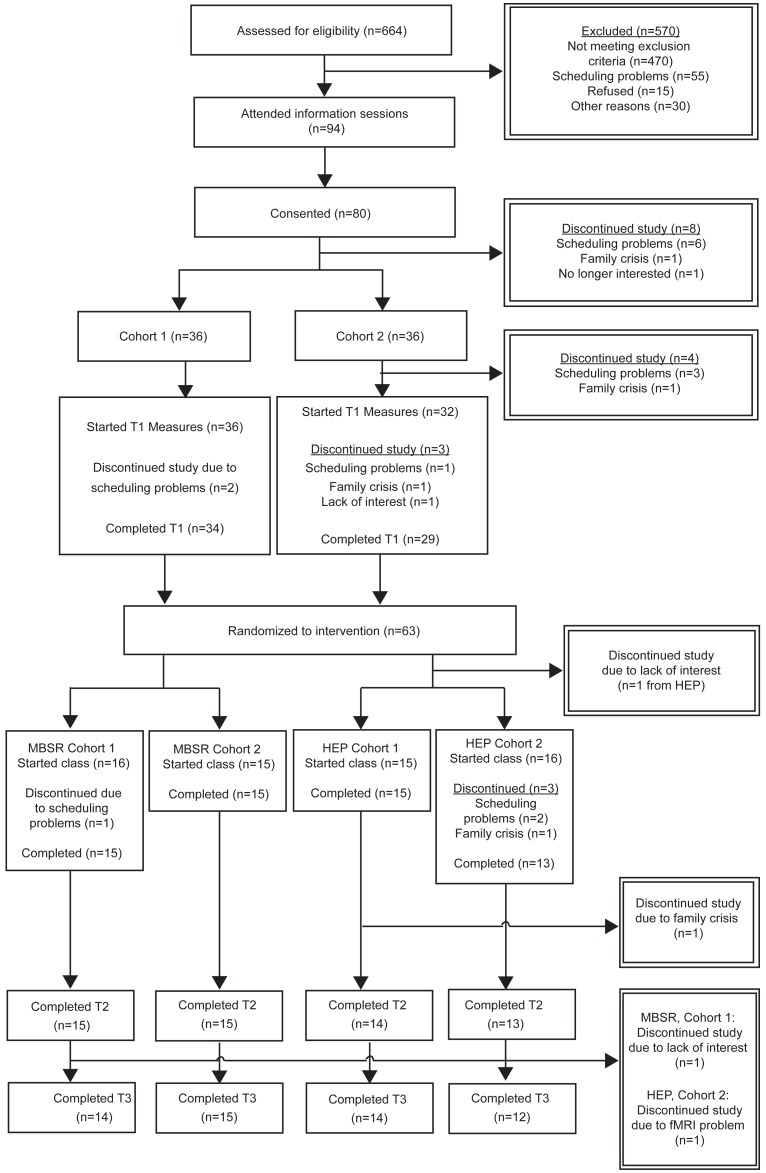
BACKGROUND: Mindfulness Based Stress Reduction (MBSR) is a secular form of meditation training. The vast majority of the extant literature investigating the health effects of mindfulness interventions relies on wait-list control comparisons. Previous studies have found that meditation training over several months is associated with improvements in cognitive control and attention. METHODOLOGY/PRINCIPAL FINDINGS: We used a visual continuous performance task (CPT) to test the effects of eight weeks of mindfulness training on sustained attention by comparing MBSR to the Health Enhancement Program (HEP), a structurally equivalent, active control condition in a randomized, longitudinal design (ClinicalTrials.gov, NCT01301105) focusing on a non-clinical population typical of MBSR participants. Researchers were blind to group assignment. 63 community participants were randomized to either MBSR (n = 31) or HEP (n = 32). CPT analyses were conducted on 29 MBSR participants and 25 HEP participants. We predicted that MBSR would improve visual discrimination ability and sustained attention over time on the CPT compared to HEP, with more home practice associated with greater improvements. Our hypotheses were not confirmed but we did find some evidence for improved visual discrimination similar to effects in partial replication of other research. Our study had sufficient power to demonstrate that intervention groups do not differ in their improvement over time in sustained attention performance. One of our primary predictions concerning the effects of intervention on attentional fatigue was significant but not interpretable. CONCLUSIONS: Attentional sensitivity is not affected by mindfulness practice as taught in MBSR, but it is unclear whether mindfulness might positively affect another aspect of attention, vigilance. These results also highlight the relevant procedural modifications required by future research to correctly investigate the role of sustained attention in similar samples. TRIAL REGISTRATION: ClinicalTrials.gov, NCT01301105.
Overview
The claims and statistics of this paper haven’t been checked yet.
Free: it reads the open-access text and checks the first 5 claims that cite a source we can check. Create a free account to check every claim.
Integrity signals
Registry
Cites
Statistics
Figures
Verification
Claims the paper makes
The claims and statistics of this paper haven’t been checked yet.
Free: it reads the open-access text and checks the first 5 claims that cite a source we can check. Create a free account to check every claim.
Claims other papers make about this one
Each is checked against this paper’s own text: does it say what the citing paper says it does?
The source backs part of the claim, not all of it — or backs it for a different population, condition or comparison.
In the citing paper
“Although the HEP and mindfulness conditions were effective at improving mood, stress, and cognition, they did not significantly differ.”
From The neural mechanisms of mindfulness-based pain relief: a functional magnetic resonance imaging-based review and primer (2019) · cites this paper as [75]
Experimental — accuracy not yet measuredIn the citing paper
“Although the HEP and MBSR program were effective at reducing self-reports of anxiety, distress, hostility,139 and attentional stability,140 there were no significant differences between groups.”
From Mindfulness meditation-based pain relief: a mechanistic account (2016) · cites this paper as [140]
Self-check
Percentages, sums and reported differences re-computed from the paper’s own numbers.
The self-check needs the paper’s full text.
Citations
Cites
(2008) · Medical Entomology and Zoology · Cited by 7,477
HASKELL, W. L., LEE, I.-M., PATE, R. R., POWELL, K. E., BLAIR, S. N., FRANKLIN, B. A., MACERA, C. A., HEATH, G. W., THOMPSON, P. D., & BAUMAN, A. (2007) · Medicine & Science in Sports & Exercise · doi:10.1249/mss.0b013e3180616b27 · Cited by 4,616
Kabat-Zinn, J. (1982) · General Hospital Psychiatry · doi:10.1016/0163-8343(82)90026-3 · Cited by 4,255
Shapiro, S. L., Carlson, L. E., Astin, J. A., & Freedman, B. (2006) · Journal of Clinical Psychology · doi:10.1002/jclp.20237 · Cited by 4,002 · cited 1×
“Reflecting a trend toward more detailed and mechanistic accounts of MBSR – and meditation training more generally – some authors have more rigorously explicated each of these latter three components [6].”
Background(2005) · Medical Entomology and Zoology · Cited by 3,197
Wherever you go, there you are: Mindfulness meditation in everyday life
Kwee, M. (1995) · Behaviour Research and Therapy · doi:10.1016/0005-7967(95)90133-7 · Cited by 2,896
Calculation of signal detection theory measures
Stanislaw, H., & Todorov, N. (1999) · Behavior Research Methods, Instruments, & Computers · doi:10.3758/bf03207704 · Cited by 2,673 · cited 2×
“A9 is a nonparametric version of D9, an index of perceptual sensitivity [18] in which a score of 1 represents perfect discrimination between targets and distractors, .”
BackgroundMethodAttention regulation and monitoring in meditation
Lutz, A., Slagter, H. A., Dunne, J. D., & Davidson, R. J. (2008) · Trends in Cognitive Sciences · doi:10.1016/j.tics.2008.01.005 · Cited by 2,659
Self-citationLr, D., & Derogatis, L. R. (1983) · Medical Entomology and Zoology · Cited by 2,027
Mindfulness training modifies subsystems of attention
JHA, A. P., KROMPINGER, J., & BAIME, M. J. (2007) · Cognitive, Affective, & Behavioral Neuroscience · doi:10.3758/cabn.7.2.109 · Cited by 1,580 · cited 2×
“Whereas [27] reported an effect of MBSR on vigilance, the two studies quoted above, found rather an effect of MBSR on selective attention [23,25].”
BackgroundResult
Research works printed but not linked: 1
- Kabat-Zinn J (1982) An outpatient program in behavioral medicine for chronic pain patients based on the practice of mindfulness meditation: Theoretical considerations and preliminary results. Gen Hosp Psychiatry 4: 33– 47 Available: http://ezproxy.library.wisc.edu/login?url=http://search.ebscohost.com/login.aspx?direct=true&db=psyh&AN=1985-01954-001&site=ehost-live. 7042457 · DOI · Paper page
Cited by
The Neuroscience of Mindfulness Meditation
Tang, Y.-Y., Hölzel, B. K., & Posner, M. I. (2015) · Nature reviews. Neuroscience · doi:10.1038/nrn3916 · Cited by 2,889
Diamond, A., & Ling, D. S. (2019) · Cognitive and Working Memory Training · doi:10.1093/oso/9780199974467.003.0008 · Cited by 247
Galante, J., Friedrich, C., Dawson, A. F., Modrego-Alarcón, M., Gebbing, P., Delgado-Suárez, I., Gupta, R., Dean, L., Dalgleish, T., White, I. R., et al. (2021) · PLOS Medicine · doi:10.1371/journal.pmed.1003481 · Cited by 319
Recent theoretical, neural, and clinical advances in sustained attention research
Fortenbaugh, F. C., DeGutis, J., & Esterman, M. (2017) · Annals of the New York Academy of Sciences · doi:10.1111/nyas.13318 · Cited by 271
Mindfulness meditation-based pain relief: a mechanistic account
Zeidan, F., & Vago, D. R. (2016) · Annals of the New York Academy of Sciences · doi:10.1111/nyas.13153 · Cited by 300
The plasticity of well-being: A training-based framework for the cultivation of human flourishing
Dahl, C. J., Wilson-Mendenhall, C. D., & Davidson, R. J. (2020) · Proceedings of the National Academy of Sciences · doi:10.1073/pnas.2014859117 · Cited by 253
Self-citationWhitfield, T., Barnhofer, T., Acabchuk, R., Cohen, A., Lee, M., Schlosser, M., Arenaza-Urquijo, E. M., Böttcher, A., Britton, W., Coll-Padros, N., et al. (2022) · Neuropsychology Review · doi:10.1007/s11065-021-09519-y · Cited by 195
deVibe, M., Bjørndal, A., Fattah, S., Dyrdal, G. M., Halland, E., & Tanner-Smith, E. E. (2017) · Campbell Systematic Reviews: Better Evidence for a Better World · doi:10.4073/csr.2017.11 · Cited by 198
Eisendrath, S. J., Gillung, E., Delucchi, K. L., Segal, Z. V., Nelson, J. C., McInnes, L. A., Mathalon, D. H., & Feldman, M. D. (2016) · Psychotherapy and Psychosomatics · doi:10.1159/000442260 · Cited by 187
From many to (n)one: Meditation and the plasticity of the predictive mind
Laukkonen, R. E., & Slagter, H. A. (2021) · Neuroscience & Biobehavioral Reviews · doi:10.1016/j.neubiorev.2021.06.021 · Cited by 187
Cognitive effects of MBSR/MBCT: A systematic review of neuropsychological outcomes
Lao, S.-A., Kissane, D., & Meadows, G. (2016) · Consciousness and Cognition · doi:10.1016/j.concog.2016.08.017 · Cited by 160
Mindfulness Meditation for Primary Headache Pain: A Meta-Analysis
Gu, Q., Hou, J.-C., & Fang, X.-M. (2018) · Chinese Medical Journal · doi:10.4103/0366-6999.228242 · Cited by 162
Brown, K. W., Coogle, C. L., & Wegelin, J. (2016) · Aging & Mental Health · doi:10.1080/13607863.2015.1065790 · Cited by 126
Mason, A. E., Epel, E. S., Aschbacher, K., Lustig, R. H., Acree, M., Kristeller, J., Cohn, M., Dallman, M., Moran, P. J., Bacchetti, P., et al. (2016) · Appetite · doi:10.1016/j.appet.2016.02.009 · Cited by 125
Is mindfulness research methodology improving over time? A systematic review
Goldberg, S. B., Tucker, R. P., Greene, P. A., Simpson, T. L., Kearney, D. J., & Davidson, R. J. (2017) · PLOS ONE · doi:10.1371/journal.pone.0187298 · Cited by 125
Self-citationZeidan, F., Baumgartner, J. N., & Coghill, R. C. (2019) · PAIN Reports · doi:10.1097/pr9.0000000000000759 · Cited by 115
“enhancement program (HEP) to disentangle the mechanisms supporting mindfulness.(74,75,95) The HEP controlled for facilitator allegiance, social support, and other components related to participating in a mindfulness program.”
BackgroundEnhancing attention through training
Posner, M. I., Rothbart, M. K., & Tang, Y. (2015) · Current Opinion in Behavioral Sciences · doi:10.1016/j.cobeha.2014.12.008 · Cited by 138
“However, one well documented form of training, mindfulness based stress reduction [40] has not been found to improve attention [41].”
BackgroundMindfulness induction and cognition: A systematic review and meta-analysis
Gill, L.-N., Renault, R., Campbell, E., Rainville, P., & Khoury, B. (2020) · Consciousness and Cognition · doi:10.1016/j.concog.2020.102991 · Cited by 98
The default mode network as a biomarker for monitoring the therapeutic effects of meditation
Simon, R., & Engström, M. (2015) · Frontiers in Psychology · doi:10.3389/fpsyg.2015.00776 · Cited by 95
“Recent studies using active controls for MBSR programs (MacCoon et al., 2012, 2014; Rosenkranz et al., 2013) have improved upon previous investigations which only used wait list control groups.”
BackgroundTang, R., & Braver, T. S. (2020) · Frontiers in Psychology · doi:10.3389/fpsyg.2020.00818 · Cited by 91
Rosenkranz, M. A., Dunne, J. D., & Davidson, R. J. (2019) · Current Opinion in Psychology · doi:10.1016/j.copsyc.2018.12.022 · Cited by 81
“It is not uncommon, for example, for outcomes that should be specific to one intervention, such as ability to sustain attention (mindfulness) or lactic acid threshold (aerobic exercise) to show little change or change that is highly variable in the early stages of training [21,22].”
Self-citationMindfulness and Attention: Current State-of-Affairs and Future Considerations
Prakash, R. S., Fountain‐Zaragoza, S., Kramer, A. F., Samimy, S., & Wegman, J. (2020) · Journal of Cognitive Enhancement · doi:10.1007/s41465-019-00144-5 · Cited by 73
“These results critically underscore the importance of collecting follow-up data, particularly since only a handful of studies have assessed the effects of training after an extended follow-up period (Johns et al., 2016; MacCoon et al., 2014; Moynihan et al., 2013).”
BackgroundCarroll, A., O’Connor, E. S., Forrest, K., Fynes‐Clinton, S., York, A., Ziaei, M., Flynn, L. M., Bower, J., & Reutens, D. C. (2021) · Mindfulness · doi:10.1007/s12671-021-01777-4 · Cited by 71
“…is designed to be structurally equivalent to the MBSR and contains many of the beneficial components of the MBSR, the finding that both groups improved with higher mindfulness scores and greater emotion regulation outcomes for the HEP relative to the MBSR is unsurprising (MacCoon et al., 2014).”
ResultCognitive Aging and Long-Term Maintenance of Attentional Improvements Following Meditation Training
Zanesco, A. P., King, B. G., MacLean, K. A., & Saron, C. D. (2018) · Journal of Cognitive Enhancement · doi:10.1007/s41465-018-0068-1 · Cited by 52
Self-citationMarshall, R. S., Laures‐Gore, J., & Love, K. (2018) · International Journal of Language & Communication Disorders · doi:10.1111/1460-6984.12325 · Cited by 57
The Effect of Mindfulness Training on Proactive and Reactive Cognitive Control
Li, Y., Liu, F., Zhang, Q., Liu, X., & Wei, P. (2018) · Frontiers in Psychology · doi:10.3389/fpsyg.2018.01002 · Cited by 48
“Interest in the group training itself, rather than the training method and content, led training group participants to recruit more attention than the waitlist control participants on the cognitive control task on the post-test (MacLean et al., 2010; MacCoon et al., 2014).”
BackgroundBrief Mindfulness Meditation Induces Gray Matter Changes in a Brain Hub.
Tang, R., Friston, K. J., & Tang, Y.-Y. (2020) · Neural Plasticity · doi:10.1155/2020/8830005 · Cited by 54
Vago, D. R., Gupta, R. S., & Lazar, S. W. (2019) · Current Opinion in Psychology · doi:10.1016/j.copsyc.2018.12.015 · Cited by 48
The Effects of Mindfulness Practice on Attentional Functions Among Primary School Children
Tarrasch, R. (2018) · Journal of Child and Family Studies · doi:10.1007/s10826-018-1073-9 · Cited by 58
“Other studies, however, have found no differences between controls and participants in mindfulness workshops in sustained attention (MacCoon et al. 2014), attention regulation (Jha et al. 2007; Semple 2010), orienting of attention (Tang et al. 2007) or alerting of attention (Jha et al. 2007; Tang…”
MethodResultTarrasch, R., Berman, Z., & Friedmann, N. (2016) · Frontiers in Psychology · doi:10.3389/fpsyg.2016.00578 · Cited by 54
Wong, K. F., Teng, J., Chee, M. W. L., Doshi, K., & Lim, J. (2018) · Frontiers in Human Neuroscience · doi:10.3389/fnhum.2018.00080 · Cited by 43
“…successful performance of this test does not heavily require other facets of attention (e.g., orienting and/or executive attention) as compared with paradigms such as the continuous performance task (CPT; MacCoon et al., 2014) or the Sustained Attention to Response Task (SART; Jha et al., 2015).”
MethodResultNyhus, E., Engel, W. A., Pitfield, T. D., & Vakkur, I. M. W. (2019) · Frontiers in Human Neuroscience · doi:10.3389/fnhum.2019.00311 · Cited by 50
King, B. G., Conklin, Q. A., Zanesco, A. P., & Saron, C. D. (2019) · Current Opinion in Psychology · doi:10.1016/j.copsyc.2018.12.021 · Cited by 46
Self-citationMindfulness Training and Attentional Control in Older Adults: a Randomized Controlled Trial
Whitmoyer, P., Fountain-Zaragoza, S., Andridge, R., Bredemeier, K., Londeree, A., Kaye, L., & Prakash, R. S. (2020) · Mindfulness · doi:10.1007/s12671-019-01218-3 · Cited by 40
Impact of short-term meditation and expectation on executive brain functions
Prätzlich, M., Kossowsky, J., Gaab, J., & Krummenacher, P. (2016) · Behavioural Brain Research · doi:10.1016/j.bbr.2015.10.012 · Cited by 34
The Effects of 8-Week Mindfulness-Based Stress Reduction Program on Cognitive Control: an EEG Study
Incagli, F., Tarantino, V., Crescentini, C., & Vallesi, A. (2019) · Mindfulness · doi:10.1007/s12671-019-01288-3 · Cited by 41
Andreu, C. I., Palacios-García, I., Moënne‐Loccoz, C., López, V., Franken, I. H. A., Cosmelli, D. J., & Slagter, H. A. (2019) · Scientific Reports · doi:10.1038/s41598-019-49714-9 · Cited by 45
More meditation, less habituation? The effect of mindfulness practice on the acoustic startle reflex
Antonova, E., Chadwick, P., & Kumari, V. (2015) · PLoS ONE · doi:10.1371/journal.pone.0123512 · Cited by 38
“However, MacCoon et al [27] did not observe differences in sustained attention using the same version of the CPT paradigm as MacLean after MBSR as compared with active control.”
MethodDevaney, K. J., Levin, E. J., Tripathi, V., Higgins, J. P., Lazar, S. W., & Somers, D. C. (2021) · Brain Sciences · doi:10.3390/brainsci11050566 · Cited by 35
Effects of meditation practice on spontaneous eyeblink rate
Kruis, A., Slagter, H. A., Bachhuber, D. R. W., Davidson, R. J., & Lutz, A. (2016) · Psychophysiology · doi:10.1111/psyp.12619 · Cited by 39
“This is consistent with the findings that a 3-month intensive meditation training (MacLean et al., 2010) but not an 8-week MBSR intervention (MacCoon et al., 2014) improves performance on the same sustained attention task.”
ResultSelf-citationNewberg, A. B., Wintering, N., Yaden, D. B., Zhong, L., Bowen, B., Averick, N., & Monti, D. (2017) · Religion Brain & Behavior · doi:10.1080/2153599x.2016.1267035 · Cited by 34
“In fact, research by several other groups, along with ours, has shown longitudinal changes in brain function associated with prolonged exposure to meditation retreats and practices (MacCoon et al., 2014; Newberg et al., 2010b; Saggar et al., 2015).”
Fan, Y., Cui, Y., Tang, R., Sarkar, A., Mehta, P., & Tang, Y.-Y. (2024) · Stress · doi:10.1080/10253890.2024.2316041 · Cited by 25
“…use a waitlist control (non-intervention control). the waitlist control has been intensively investigated in the meditation field (Davidson, 2010; Maccoon, Maclean, Davidson, saron, & lutz, 2014; Maccoon et al., 2012; Rosenkranz et al., 2013; terburg et al., 2009). early meditation research…”
InfluentialMillett, G., D'Amico, D., Amestoy, M. E., Gryspeerdt, C., & Fiocco, A. J. (2021) · Consciousness and Cognition · doi:10.1016/j.concog.2021.103195 · Cited by 25
Milligan, K., Sibalis, A., McKeough, T., Lackner, C. L., Schmidt, L. A., Pun, C., & Segalowitz, S. J. (2019) · Mindfulness · doi:10.1007/s12671-019-01161-3 · Cited by 25
Tarrasch, R. (2017) · Journal of Cognitive Enhancement · doi:10.1007/s41465-017-0024-5 · Cited by 26
“…with these promising results, some studies have found no effects of mindfulness training on attentional functions including sustained attention (MacCoon et al. 2014), attention regulation (Jha et al. 2007; Semple 2010), orienting of attention (Tang et al. 2007), and alerting of attention (Jha…”
ResultCombining Behavior and EEG to Study the Effects of Mindfulness Meditation on Episodic Memory
Nyhus, E., Engel, W. A., Pitfield, T. D., & Vakkur, I. M. W. (2020) · Journal of Visualized Experiments · doi:10.3791/61247 · Cited by 21
Meditation induces physical relaxation and enhances cognition: A perplexing paradox
Deepak, K. K. (2019) · Progress in brain research · doi:10.1016/bs.pbr.2018.10.030 · Cited by 25
Patsenko, E. G., Adluru, N., Birn, R. M., Stodola, D. E., Kral, T. R. A., Farajian, R., Flook, L., Burghy, C. A., Steinkuehler, C. A., & Davidson, R. J. (2019) · Scientific Reports · doi:10.1038/s41598-019-53393-x · Cited by 22
Self-citationDispositional mindfulness: Dissociable affective and cognitive processes
Tsai, N., Treves, I. N., Bauer, C. C. C., Scherer, E., Caballero, C., West, M. R., & Gabrieli, J. D. E. (2024) · Psychonomic Bulletin & Review · doi:10.3758/s13423-024-02462-y · Cited by 19
“Meta-analyses indicate that greater mindfulness is associated with better attention and EF in youth and adults (Cásedas et al., 2020; Chiesa et al., 2011; Dunning et al., 2022; Lao et al., 2016; Leyland et al., 2019; MacCoon et al., 2014; Yakobi et al., 2021).”
BackgroundPetranker, R., & Eastwood, J. D. (2021) · Consciousness and Cognition · doi:10.1016/j.concog.2021.103101 · Cited by 20
Heredia, L., Gasol, L., Ventura, D., Vicens, P., & Torrente, M. (2017) · Mindfulness & Compassion · doi:10.1016/j.mincom.2017.07.001 · Cited by 22
Mindfulness and Compassion as Foundations for Well-Being
Huppert, F. A. (2017) · Springer eBooks · doi:10.1007/978-3-319-56889-8_39 · Cited by 20
A Mini-Review of Work Stress and Mindfulness: A Neuropsychological Point of View
González-Palau, F., & Medrano, L. A. (2022) · Frontiers in Psychology · doi:10.3389/fpsyg.2022.854204 · Cited by 16
Effect of a One-Week Spiritual Retreat on Brain Functional Connectivity: A Preliminary Study
Wintering, N., Yaden, D. B., Conklin, C. J., Alizadeh, M., Mohamed, F. B., Li, Z., Bowens, B. K., Monti, D., & Newberg, A. B. (2020) · Religions · doi:10.3390/rel12010023 · Cited by 18
“Both structural and functional changes have been reported that are associated with the long-term practice of meditation (Newberg et al. 2010; MacCoon et al. 2014; Saggar et al. 2015).”
BackgroundBuchwitz, T. M., Maier, F., Greuel, A., Thieken, F., Steidel, K., Jakobs, V., & Eggers, C. (2021) · Frontiers in Psychology · doi:10.3389/fpsyg.2021.763350 · Cited by 15
Consumer-Grade Neurofeedback With Mindfulness Meditation: Meta-Analysis
Treves, I. N., Bajwa, Z., Greene, K. D., Bloom, P. A., Kim, N., Wool, E., Goldberg, S. B., Whitfield, S., & Auerbach, R. P. (2025) · Journal of Medical Internet Research · doi:10.2196/68204 · Cited by 19
“Along with sustained attention [24,25], MBIs may benefit working memory and other executive functions [26-30].”
Polich, G. R., Gray, S., Tran, D., Morales-Quezada, L., & Glenn, M. B. (2020) · Brain Injury · doi:10.1080/02699052.2020.1802781 · Cited by 17
Mindfulness-Based Interventions: Clinical Psychology, Buddhadharma, or Both? A Wisdom Perspective
Lewis, D. J., & Rozelle, D. (2016) · Mindfulness in behavioral health · doi:10.1007/978-3-319-44019-4_17 · Cited by 17
Savostyanov, A. N., Tamozhnikov, S. S., Bocharov, A. V., Сапрыгин, А. Е., Matushkin, Y., Lashin, S. A., Kolpakova, G., Sudobin, K., & Knyazev, G. G. (2020) · Frontiers in Human Neuroscience · doi:10.3389/fnhum.2019.00437 · Cited by 13
“In a controlled randomized longitudinal study, high activation of the ventral and/or rostral anterior cingulate cortex have also been identified during the rest period following 5 days of integrative mental-body training (MacCoon et al., 2014).”
BackgroundInfluentialMindfulness, Sustained Attention and Post-traumatic Stress in Tsunami Survivors
Hagen, C., Lien, L., Hauff, E., & Heir, T. (2016) · Psychology and Cognitive Sciences - Open Journal · doi:10.17140/pcsoj-2-115 · Cited by 13
Mindfulness and Mind-Wandering in Older Adults: Implications for Behavioral Performance
Londerée, A. M., & Fountain‐Zaragoza, S. (2015) · The Knowledge Bank (The Ohio State University) · Cited by 26
Scientific Literacy as a Foundational Competency for Teachers of Mindfulness-based Interventions
Britton, W. B. (2016) · Springer eBooks · doi:10.1007/978-3-319-30100-6_5 · Cited by 11
Guzmán-Cortés, J., Calvillo, H. C., Bernal, J., & Villalva-Sánchez, J. A. Á. F. (2019) · DIVULGARE Boletín Científico de la Escuela Superior de Actopan · doi:10.29057/esa.v6i11.3758 · Cited by 8
Mindfulness-Based Cognitive Therapy for Treatment-Resistant Depression
Deen, S. R., Sipe, W. E. B., & Eisendrath, S. J. (2016) · Springer eBooks · doi:10.1007/978-3-319-29866-5_12 · Cited by 12
The impact of meditation on sustained attention in nonclinical population: An extensive review
Roy, A., & Subramanya, P. (2025) · Journal of Ayurveda and Integrative Medicine · doi:10.1016/j.jaim.2024.101057 · Cited by 8
“Out of twelve studies, five of the studies employed focussed attention [25,28,30,31,33], while the other seven used open monitoring meditation [23,24,26,27,31,32,34].”
Heredia, L., Ventura, D., Torrente, M., & Vicens, P. (2024) · Mind Brain and Education · doi:10.1111/mbe.12419 · Cited by 9
Sud, A., Nelson, M. L. A., Cheng, D. K.-Y., Armas, A., Foat, K., Greiver, M., Hosseiny, F., Katz, J. D., Moineddin, R., Mulsant, B. H., et al. (2020) · Trials · doi:10.1186/s13063-020-04243-z · Cited by 7
Is mindfulness research methodology improving over time? A systematic reviewPreprint
Goldberg, S. B., Tucker, R. P., Greene, P. A., Simpson, T. L., Kearney, D., & Davidson, R. J. (2018) · MindRxiv (OSF Preprints) · doi:10.31231/osf.io/nm7a8 · Cited by 7
Self-citationKing, B. G., Conklin, Q. A., Zanesco, A. P., & Saron, C. D. (2018) · MindRxiv (OSF Preprints) · doi:10.31231/osf.io/xsd92 · Cited by 7
Self-citationLimited Validity of Breath‐Counting as a Measure of Mindfulness in Ruminative Adolescents
Treves, I. N., Tierney, A. O., Goldberg, S. B., Rouleau, N., Carson, N. J., Schuman‐Olivier, Z., & Webb, C. A. (2025) · Psychophysiology · doi:10.1111/psyp.70071 · Cited by 6
Age differences in motivation drive performance during the sustained attention to response task
Hanzal, S., Learmonth, G., Thut, G., & Harvey, M. (2025) · PLoS ONE · doi:10.1371/journal.pone.0324694 · Cited by 5
“While some work has highlighted an effect of fatigue on behaviour, we failed to detect a reliable relationship with SART performance in our recent work [11], amongst other investigators who also failed to find a reliable link [51,52].”
Gülden, Ç., & Yalçın, İ. (2024) · Journal of Adolescent Research · doi:10.1177/07435584241297141 · Cited by 5
“Studies have revealed that meditation training or MBIs among adults can enhance sustained attention (Josefsson & Broberg, 2011; MacCoon et al., 2014), selective attention (Becerra et al., 2017; Jensen et al., 2012; Moore & Malinowski, 2009), and executive attention (Ainsworth et al., 2013; Moore et…”
Åsli, O., Johansen, M. F., & Solhaug, I. (2021) · Frontiers in Psychology · doi:10.3389/fpsyg.2021.582057 · Cited by 5
Tam, B., Lo, D., Seah, D., Lee, J., Foo, Z., Poh, Z., Thong, F., Sim, S., & Chee, C. (2016) · Singapore Medical Journal · doi:10.11622/smedj.2016172 · Cited by 7
Baginski, A. (2015) · The Keep (Eastern Illinois University) · Cited by 8
Shahhosseini, M., Sabahi, P., Hosseini, S. M., & Golmohammadi, B. (2020) · Shenakht Journal of Psychology and Psychiatry · doi:10.52547/shenakht.7.2.37 · Cited by 4
Salamin, V., Rigucci, S., Rougemont-Bücking, A., Horat, S. K., Gothuey, I., Merlo, M. C. G., & Missonnier, P. (2023) · International Journal of Cognitive Therapy · doi:10.1007/s41811-023-00191-z · Cited by 3
“Studies that were not included in this review revealed equivocal results (Anderson et al., 2007; Bueno et al., 2015; Chesin et al., 2016; Jensen et al., 2012; Jha et al., 2007; MacCoon et al., 2014; Schoenberg et al., 2014; Rodriguez Vega et al. 2014; Wong et al., 2018; Zylowska et al., 2008).”
Trender i idrettspsykologisk forskning i Skandinavia
Abrahamsen, F. E., Becker-Larsen, A., Erikstad, M. K., Gaard, H. S., Giske, R., Gjerde, J., Haugen, T., Henriksen, K., Holmemo, J., Høigaard, R., et al. (2018) · doi:10.23865/noasp.39 · Cited by 4
A Systematic Review of Cognitive Enhancement Interventions for Use in Military Operations
Kelley, A. M., Feltman, K. A., Nwala, E., Bernhardt, K. A., Hayes, A., Basso, J., & Mathews, C. (2019) · Cited by 7
Kang, M., Nan, J. K.-M., & Yuan, Y. (2022) · Current Psychology · doi:10.1007/s12144-022-03902-5 · Cited by 4
“…differences, MBIs may not achieve the desired effects, and individual differences may make the results of empirical studies irreproduc-ible (MacCoon et al., 2014; Rosenkranz et al., 2013) because samples have characteristics that may make them more responsive to treatment (Tang & Braver,…”
BackgroundMindfulness — New Research and Treatment Directions in Post-traumatic Stress Disorder
Podea, D. M., & Wild, K. J. (2015) · InTech eBooks · doi:10.5772/60635 · Cited by 3
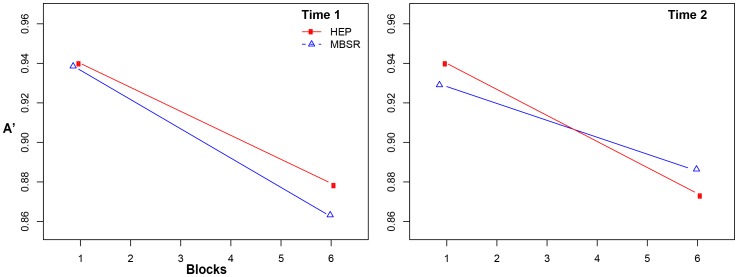
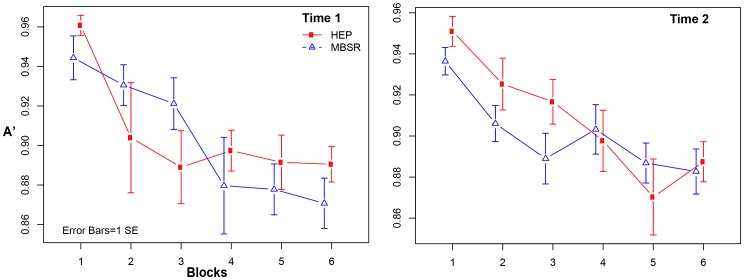
“Attentional sensitivity is not affected by mindfulness practice as taught in MBSR, but it is unclear whether mindfulness might positively affect another aspect of attention, vigilance [33].”
BackgroundKang, M., & Nan, J. K.-M. (2022) · European Journal of Integrative Medicine · doi:10.1016/j.eujim.2022.102139 · Cited by 2
Mindfulness Introduction: From Mind Full to Mindful
Tang, Y. (2017) · Springer eBooks · doi:10.1007/978-3-319-46322-3_1 · Cited by 2
Meta-Awareness and Control of Internal Attention: a Simulated Thoughts Paradigm Investigation
Ruimi, L., Amir, I., Hadash, Y., Goldstein, P., Dar, O., & Bernstein, A. (2022) · Mindfulness · doi:10.1007/s12671-022-02027-x · Cited by 2
“Yet, nearly as many null effects as significant effects have been reported, and many of these effects are of limited magnitude (Becerra et al., 2017; Chiesa & Malinowski, 2011; Jensen et al., 2012; Lao et al., 2016; MacCoon et al., 2014; Vago et al., 2019; Zylowska et al., 2008).”
BackgroundCheng, D. K.-Y., Simpson, R., Moineddin, R., Katz, J., Mulsant, B. H., Vasudev, A., Greiver, M., Hosseiny, F., Inzitari, M., Newman, R. I., et al. (2025) · Journal of Pain Research · doi:10.2147/jpr.s515229 · Cited by 1
“Participants were asked to provide demographic information at baseline, which included age, gender, ethnic background, employment status, housing type, highest level of education achieved, smoking status, caffeine intake, drug and alcohol use, duration of pain, and pain diagnosis.”
Russo, C., Romano, L., Clemente, D., Congiu, A., Rodelli, R., Navarini, C., & Panno, A. (2025) · Frontiers in Psychology · doi:10.3389/fpsyg.2025.1593273 · Cited by 1
Cruz, M. V., Kumar, D. N. P., Talukdar, A., & Usha, G. (2025) · International Conference on Artificial Intelligence, Robotics and Control (AIRC) · doi:10.1109/airc64931.2025.11077496 · Cited by 1
Wolfe, D. E. M. (2016) · Scholarly Commons (University of Pennsylvania) · Cited by 1
A Review of Research on Mindfulness Meditation for Improving Depression
周, 诗. (2024) · Advances in Psychology · doi:10.12677/ap.2024.142113 · Cited by 1
Theoretical frameworks of individual differences in interventions
Tang, Y., & Tang, R. (2020) · Elsevier eBooks · doi:10.1016/b978-0-12-818266-6.00002-2 · Cited by 2
Noetel, M., Ciarrochi, J., Conigrave, J. H., & Lonsdale, C. (2020) · PsyArXiv (OSF Preprints) · doi:10.31234/osf.io/8bk7m · Cited by 1
Fucci, E. (2018) · theses.fr (ABES) · doi:10.70675/d818215bz5bbdz4de6z8195z8f6d57e209db · Cited by 2
Sitting with It: Examining the Relationship Between Mindfulness, Sustained Attention, and Boredom
Petranker, R. (2018) · YorkSpace (York University) · Cited by 4
Molina, E., Fernández‐Prieto, I., Andrés, P., & Parmentier, F. B. R. (2020) · PsyArXiv (OSF Preprints) · doi:10.31234/osf.io/8ynca · Cited by 1
Tang, R. (2017) · Open Scholarship Institutional Repository (Washington University in St. Louis) · doi:10.7936/k7rf5tf6
A mixed method investigation of the Rubber Hand Illusion
Lewis, E. (2016) · Research Explorer (The University of Manchester) · Cited by 1
Ruiz, A. O. (2018) · UVaDOC UVaDOC University of Valladolid Documentary Repository (University of Valladolid)
Third wave Cognitive Behavioral Therapy for adults with tinnitus: A literature review
Trones, T. T. (2019) · NVA (Nasjonalt vitenarkiv)
Montserrat, D. V. (2020) · Rovira & Virgili repository
Holmemo, J., & Abrahamsen, F. E. (2018) · doi:10.23865/noasp.39.ch4 · Cited by 3
Metadata
- Authors
- MacCoon, D. G., MacLean, K. A., Davidson, R. J., Saron, C. D., & Lutz, A.
- Affiliations
- University of Wisconsin–Madison (US)
- Johns Hopkins University (US)
- University of California, Davis (US)
- Corresponding author
- MacCoon, Donal G.
- Venue
- PLoS ONE
- Publisher
- Public Library of Science (PLoS)
- Published
- 2014-06-23
- Volume
- 9
- Issue
- 6
- Pages
- e97551
- ISSN
- 1932-6203 (ISSN-L)
- PMC
- PMC4067292
- OpenAlex
- W2089855130
- Cited by
- 100
- References
- 30
- Citations by year
- 2026: 1 · 2025: 8 · 2024: 5 · 2023: 3 · 2022: 4 · 2021: 9 · 2020: 17 · 2019: 13 · 2018: 11 · 2017: 10 · 2016: 11 · 2015: 8
- FWCI
- 11.35
- Type
- journal article
- Language
- en
- Open access
- gold
- doi.org
- Locations
- PLoS ONE (publishedVersion, cc-by)
- PubMed Central (publishedVersion, cc-by)
- PubMed (publishedVersion)
- DOAJ (DOAJ: Directory of Open Access Journals) (submittedVersion, cc-by-sa)
- MindRxiv (OSF Preprints) (submittedVersion)
- MindRxiv (OSF Preprints) (submittedVersion, cc-by)
- Funders
- Fetzer Institute
- Curtin University of Technology
- National Institutes of Health (5u01at002114-03)
- National Institute of Mental Health (P50-MH069315-03, P50MH069315, MH069315)
- National Center for Complementary and Alternative Medicine (U01AT002114-01A1)
- National Center for Complementary and Integrative Health (U01-AT002114, P01AT004952, U01AT002114-01A1)
- Eunice Kennedy Shriver National Institute of Child Health and Human Development (P30HD003352)
- FP7 People: Marie-Curie Actions
- Topics
- Social Sciences › Psychology › Clinical Psychology › Mindfulness and Compassion Interventions
- Life Sciences › Neuroscience › Cognitive Neuroscience › Mind wandering and attention
- Social Sciences › Psychology › Experimental and Cognitive Psychology › Cognitive Functions and Memory
- Keywords
- mindfulness-based stress reduction, sustained attention, mindfulness meditation, continuous performance test, visual discrimination, attentional fatigue, active control, home practice, cognitive control, non-clinical population
- MeSH terms
- Adult, Arousal, Attention, Discrimination, Psychological, Female, Health Promotion, Humans, Longitudinal Studies, Male, Middle Aged, Models, Biological, Stress, Psychological, Time Factors, Young Adult, Mindfulness
About these checks
Registry, retraction, Cites and statistics results are computed, not judged, with one exception: a printed reference that no index lists is read once by a model before it counts as a citation error. Claims are extracted by a model and kept only when their quote appears verbatim in the text; each cited source is then checked, with a model’s help, for whether it says what the claim relies on. Those verdicts can be wrong — read the claim’s quote and the cited source before relying on one.
Statistics and arithmetic are recomputed, not judged.
Confidence bands are shown only for fields calibrated on our annotated test set. None is calibrated yet, so no band is shown.
What counts as a claim ›How we measure confidence ›How we check this ›
Are you an author, or do you see a problem with this page? Request a review
Data sources
Bibliographic data: Semantic Scholar, OpenAlex, Crossref.
Contains information from the Semantic Scholar Academic Graph Datasets, made available under the ODC Attribution License (ODC-BY 1.0).
Semantic Scholar’s data is described in: Kinney, R., et al. (2023). The Semantic Scholar Open Data Platform. arXiv:2301.10140.
