

The DOI matches its Crossref record; 68 of the 69 references it cites were found in a registry or an index.
The Need for Randomization in Animal Trials: An Overview of Systematic Reviews
Open accessAbstract
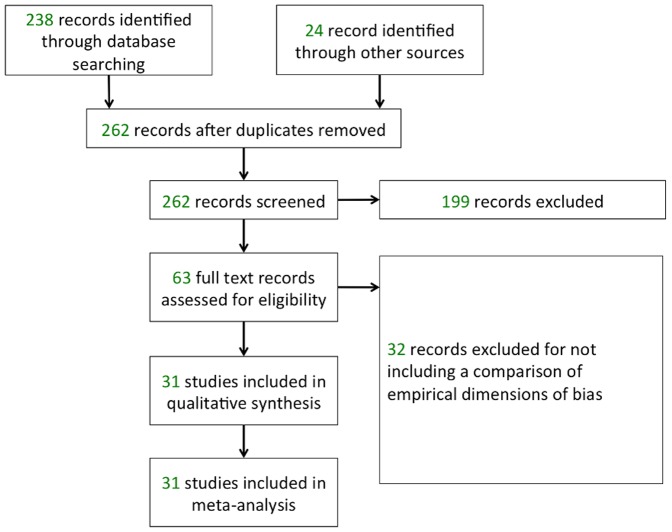
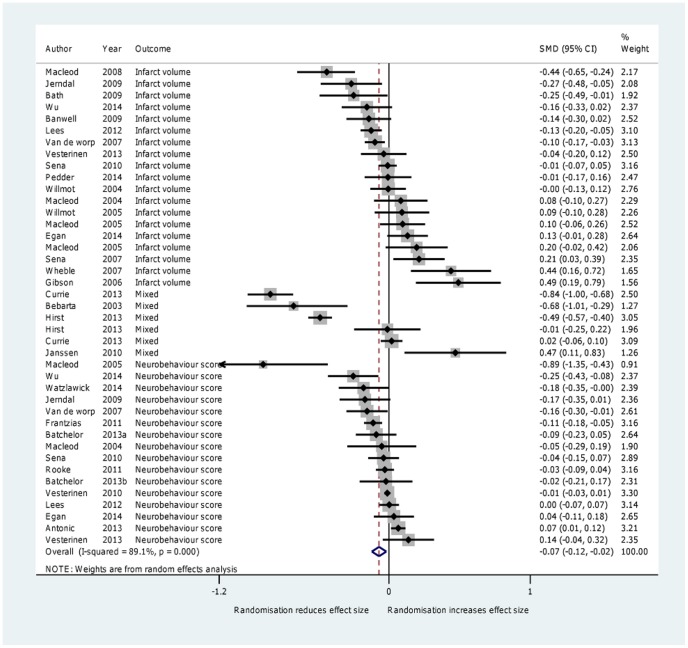
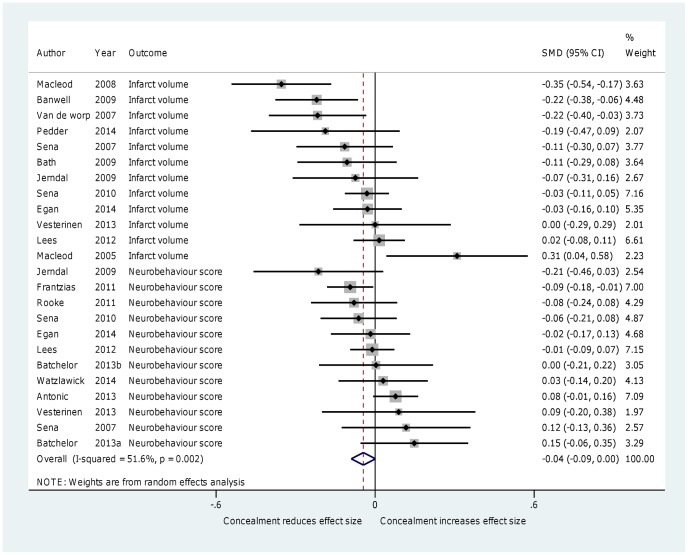
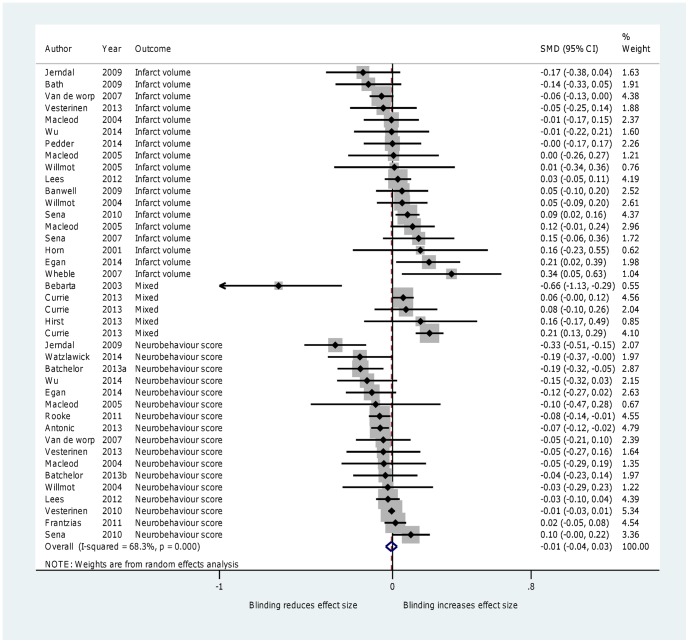
BACKGROUND AND OBJECTIVES: Randomization, allocation concealment, and blind outcome assessment have been shown to reduce bias in human studies. Authors from the Collaborative Approach to Meta Analysis and Review of Animal Data from Experimental Studies (CAMARADES) collaboration recently found that these features protect against bias in animal stroke studies. We extended the scope the work from CAMARADES to include investigations of treatments for any condition. METHODS: We conducted an overview of systematic reviews. We searched Medline and Embase for systematic reviews of animal studies testing any intervention (against any control) and we included any disease area and outcome. We included reviews comparing randomized versus not randomized (but otherwise controlled), concealed versus unconcealed treatment allocation, or blinded versus unblinded outcome assessment. RESULTS: Thirty-one systematic reviews met our inclusion criteria: 20 investigated treatments for experimental stroke, 4 reviews investigated treatments for spinal cord diseases, while 1 review each investigated treatments for bone cancer, intracerebral hemorrhage, glioma, multiple sclerosis, Parkinson's disease, and treatments used in emergency medicine. In our sample 29% of studies reported randomization, 15% of studies reported allocation concealment, and 35% of studies reported blinded outcome assessment. We pooled the results in a meta-analysis, and in our primary analysis found that failure to randomize significantly increased effect sizes, whereas allocation concealment and blinding did not. In our secondary analyses we found that randomization, allocation concealment, and blinding reduced effect sizes, especially where outcomes were subjective. CONCLUSIONS: Our study demonstrates the need for randomization, allocation concealment, and blind outcome assessment in animal research across a wide range of outcomes and disease areas. Since human studies are often justified based on results from animal studies, our results suggest that unduly biased animal studies should not be allowed to constitute part of the rationale for human trials.
Overview
The claims and statistics of this paper haven’t been checked yet.
Run the check — free, no account needed. It reads the open-access text and checks the sources it cites.
Integrity signals
Registry
Cites
Statistics
Figures
Verification
Claims the paper makes
The claims and statistics of this paper haven’t been checked yet.
Run the check — free, no account needed. It reads the open-access text and checks the sources it cites.
Claims other papers make about this one
Each is checked against this paper’s own text: does it say what the citing paper says it does?
The source backs part of the claim, not all of it — or backs it for a different population, condition or comparison.
In the citing paper
“There are, however, compelling data from systematic reviews showing that nonblinded outcome assessment leads to the treatment effects being overestimated, and the lack of bias-reducing measures such as randomisation and blinding can contribute to as much as 30%–45% inflation of effect sizes [67,68,85].”
From Reporting animal research: Explanation and elaboration for the ARRIVE guidelines 2.0 (2020) · cites this paper as [67]
Experimental — accuracy not yet measuredThe source backs part of the claim, not all of it — or backs it for a different population, condition or comparison.
In the citing paper
“Systematic reviews have shown that animal experiments that do not report randomisation or other bias-reducing measures such as blinding are more likely to report exaggerated effects that meet conventional measures of statistical significance [67–69].”
From Reporting animal research: Explanation and elaboration for the ARRIVE guidelines 2.0 (2020) · cites this paper as [67]
Experimental — accuracy not yet measured
Self-check
Percentages, sums and reported differences re-computed from the paper’s own numbers.
The self-check needs the paper’s full text.
Citations
Cites
Meta-analysis in clinical trials
DerSimonian, R., & Laird, N. (1986) · Controlled Clinical Trials · doi:10.1016/0197-2456(86)90046-2 · Cited by 39,552
Cochrane Handbook for Systematic Reviews of Interventions: Cochrane Book Series
(2008) · doi:10.1002/9780470712184 · Cited by 25,048
Improving bioscience research reporting: The ARRIVE guidelines for reporting animal research
Kilkenny, C., Browne, W. J., Cuthill, I. C., Emerson, M., & Altman, D. G. (2010) · Journal of Pharmacology and Pharmacotherapeutics · doi:10.4103/0976-500x.72351 · Cited by 6,277
Schulz (1995) · doi:10.1001/jama.1995.03520290060030 · Cited by 5,634
Assessing the quality of controlled clinical trials
Jüni, P., Altman, D. G., & Egger, M. (2001) · BMJ · doi:10.1136/bmj.323.7303.42 · Cited by 3,309 · cited 1×
“[6] This is because concealed random allocation reduces selection bias and blinding outcome assessors reduces detection bias.”
BackgroundVitamin E Supplementation and Cardiovascular Events in High-Risk Patients
(2000) · New England Journal of Medicine · doi:10.1056/nejm200001203420302 · Cited by 1,957
Sex bias in neuroscience and biomedical research
Beery, A. K., & Zucker, I. (2011) · Neuroscience & Biobehavioral Reviews · doi:10.1016/j.neubiorev.2010.07.002 · Cited by 1,763
Decousus, H., Leizorovicz, A., Parent, F., Page, Y., Tardy, B., Girard, P., Laporte, S., Faivre, R., Charbonnier, B., Barral, F.-G., et al. (1998) · New England Journal of Medicine · doi:10.1056/nejm199802123380701 · Cited by 1,702
Rules of Evidence and Clinical Recommendations on the Use of Antithrombotic Agents
Sackett, D. L. (1989) · CHEST Journal · doi:10.1378/chest.95.2_supplement.2s · Cited by 1,369
A call for transparent reporting to optimize the predictive value of preclinical research
Landis, S. C., Amara, S. G., Asadullah, K., Austin, C. P., Blumenstein, R., Bradley, E. W., Crystal, R. G., Darnell, R. B., Ferrante, R. J., Fillit, H., et al. (2012) · Nature · doi:10.1038/nature11556 · Cited by 1,196
Cited by
Sorted by citations
Reporting animal research: Explanation and elaboration for the ARRIVE guidelines 2.0
Percie du Sert, N., Ahluwalia, A., Alam, S., Avey, M. T., Baker, M., Browne, W. J., Clark, A., Cuthill, I. C., Dirnagl, U., Emerson, M., et al. (2020) · PLOS Biology · doi:10.1371/journal.pbio.3000411 · Cited by 2,677
“There are, however, compelling data from systematic reviews showing that nonblinded outcome assessment leads to the treatment effects being overestimated, and the lack of bias-reducing measures such as randomisation and blinding can contribute to as much as 30%–45% inflation of effect sizes [67,68,85].”
BackgroundThe Mass Production of Redundant, Misleading, and Conflicted Systematic Reviews and Meta‐analyses
IOANNIDIS, J. P. A. (2016) · The Milbank Quarterly · doi:10.1111/1468-0009.12210 · Cited by 1,483
Methods Used to Evaluate Pain Behaviors in Rodents
Deuis, J. R., Dvorakova, L. S., & Vetter, I. (2017) · Frontiers in Molecular Neuroscience · doi:10.3389/fnmol.2017.00284 · Cited by 1,269
Reporting animal research: Explanation and Elaboration for the ARRIVE guidelines 2019Preprint
du Sert, N. P., Ahluwalia, A., Alam, S., Avey, M. T., Baker, M., Browne, W. J., Clark, A., Cuthill, I. C., Dirnagl, U., Emerson, M., et al. (2019) · bioRxiv (Cold Spring Harbor Laboratory) · doi:10.1101/703355 · Cited by 557
Increasing value and reducing waste in biomedical research: who's listening?
Moher, D., Glasziou, P., Chalmers, I., Nasser, M., Bossuyt, P. M. M., Korevaar, D. A., Graham, I. D., Ravaud, P., & Boutron, I. (2016) · The Lancet · doi:10.1016/s0140-6736(15)00307-4 · Cited by 462
Pound, P., & Ritskes-Hoitinga, M. (2018) · Journal of Translational Medicine · doi:10.1186/s12967-018-1678-1 · Cited by 419
Risk of bias in reports of in vivo research: a focus for improvement
Macleod, M. R., Lawson McLean, A., Kyriakopoulou, A., Serghiou, S., de Wilde, A., Sherratt, N., Hirst, T., Hemblade, R., Bahor, Z., Nunes-Fonseca, C., et al. (2015) · PLOS Biology · doi:10.1371/journal.pbio.1002273 · Cited by 358
Evidence of experimental bias in the life sciences: why we need blind data recording
Holman, L., Head, M. L., Lanfear, R., & Jennions, M. D. (2015) · PLOS Biology · doi:10.1371/journal.pbio.1002190 · Cited by 263
Cannabinoids, the endocannabinoid system, and pain: a review of preclinical studies
Finn, D. P., Haroutounian, S., Hohmann, A. G., Krane, E. J., Soliman, N., & Rice, A. S. C. (2021) · Pain · doi:10.1097/j.pain.0000000000002268 · Cited by 280
Kentner, A. C., Bilbo, S. D., Brown, A. S., Hsiao, E. Y., McAllister, A. K., Meyer, U., Pearce, B. D., Pletnikov, M. V., Yolken, R. H., & Bauman, M. D. (2018) · Neuropsychopharmacology · doi:10.1038/s41386-018-0185-7 · Cited by 259
Teles, R. B. D. A., Diniz, T. C., Pinto, T. C. C., Júnior, R. G. D. O., Silva, M. G. E., de Lavor, É. M., Fernandes, A. W. C., de Oliveira, A. P., Ribeiro, F. P. R. D. A., da Silva, A. A. M., et al. (2018) · Oxidative Medicine and Cellular Longevity · doi:10.1155/2018/7043213 · Cited by 200
Henshaw, F. R., Dewsbury, L. S., Lim, C. K., & Steiner, G. Z. (2021) · Cannabis and Cannabinoid Research · doi:10.1089/can.2020.0105 · Cited by 184
on behalf of the IICARus Collaboration, Hair, K., Macleod, M. R., & Sena, E. S. (2019) · Research Integrity and Peer Review · doi:10.1186/s41073-019-0069-3 · Cited by 174
Cardiac Stem Cell Treatment in Myocardial Infarction
Zwetsloot, P.-P. M., Végh, A. M. D., Lorkeers, S. J. J. O., van Hout, G. P. J., Currie, G. L., Sena, E. S., Gremmels, H., Buikema, J. W., Goumans, M., Macleod, M. R., et al. (2016) · Circulation Research · doi:10.1161/circresaha.115.307676 · Cited by 155
Ramirez, F. D., Motazedian, P., Jung, R. G., Di Santo, P., MacDonald, Z. D., Moreland, R., Simard, T., Clancy, A. A., Russo, J. J., Welch, V. A., et al. (2017) · Circulation Research · doi:10.1161/circresaha.117.310628 · Cited by 138
The devil is in the details: incomplete reporting in preclinical animal research
Avey, M. T., Moher, D., Sullivan, K. J., Fergusson, D., Griffin, G., Grimshaw, J. M., Hutton, B., Lalu, M. M., Macleod, M., Marshall, J., et al. (2016) · PLOS ONE · doi:10.1371/journal.pone.0166733 · Cited by 130
Reis, D. J., Ilardi, S. S., & Punt, S. E. W. (2018) · PLOS ONE · doi:10.1371/journal.pone.0199041 · Cited by 123
The High Cost of Stroke and Stroke Cytoprotection Research
Lapchak, P. A., & Zhang, J. H. (2016) · Translational Stroke Research · doi:10.1007/s12975-016-0518-y · Cited by 122
Onakpoya, I., Heneghan, C. J., & Aronson, J. K. (2016) · Critical Reviews in Toxicology · doi:10.3109/10408444.2016.1149452 · Cited by 121
Self-citationEagles, D. A., Chow, C. Y., & King, G. F. (2020) · British Journal of Pharmacology · doi:10.1111/bph.15327 · Cited by 117
Lalu, M. M., Sullivan, K., Mei, S. H. J., Moher, D., Straus, A., Fergusson, D. A., Stewart, D. J., Jazi, M., Macleod, M. R., Winston, B. W., et al. (2016) · eLife · doi:10.7554/elife.17850 · Cited by 119
Hayashida, K., Takegawa, R., Shoaib, M., Aoki, T., Choudhary, R. C., Kuschner, C. E., Nishikimi, M., Miyara, S. J., Rolston, D. M., Guevara, S., et al. (2021) · Journal of Translational Medicine · doi:10.1186/s12967-021-02878-3 · Cited by 111
Attari, V. E., Mahdavi, A. M., Javadivala, Z., Mahluji, S., Vahed, S. Z., & Ostadrahimi, A. (2017) · Phytotherapy Research · doi:10.1002/ptr.5986 · Cited by 114
Chumakov, I. M., Milet, A., Cholet, N., Primas, G., Boucard, A., Pereira, Y., Graudens, E., Mandel, J., Laffaire, J., Foucquier, J., et al. (2014) · Orphanet Journal of Rare Diseases · doi:10.1186/s13023-014-0201-x · Cited by 104
Mesenchymal Stem Cell-Based Therapy for Stroke: Current Understanding and Challenges
Li, W., Shi, L., Hu, B., Hong, Y., Zhang, H., Li, X., & Zhang, Y. (2021) · Frontiers in Cellular Neuroscience · doi:10.3389/fncel.2021.628940 · Cited by 107
Bromage, D. I., Pickard, J. M. J., Rosselló, X., Ziff, O. J., Burke, N., Yellon, D. M., & Davidson, S. M. (2016) · Cardiovascular Research · doi:10.1093/cvr/cvw219 · Cited by 99
Júnior, R. G. D. O., Adrielly, A. F. C., Almeida, J. R. G. D. S., Grougnet, R., Thiéry, V., & Picot, L. (2018) · Fitoterapia · doi:10.1016/j.fitote.2018.02.025 · Cited by 96
de Lavor, É. M., Fernandes, A. W. C., Teles, R. B. D. A., Leal, A. E. B. P., Júnior, R. G. D. O., Silva, M. G. E., de Oliveira, A. P., Silva, J. C., Araújo, M. T. D. M. F., Coutinho, H. D. M., et al. (2018) · Oxidative Medicine and Cellular Longevity · doi:10.1155/2018/6468593 · Cited by 103
Rooney, A. A., Cooper, G. S., Jahnke, G. D., Lam, J., Morgan, R. L., Boyles, A. L., Ratcliffe, J. M., Kraft, A. D., Schünemann, H. J., Schwingl, P. J., et al. (2016) · Environment International · doi:10.1016/j.envint.2016.01.005 · Cited by 95
Zingarelli, B., Coopersmith, C. M., Drechsler, S., Efron, P. A., Marshall, J. C., Moldawer, L. L., Wiersinga, W. J., Xiao, X., Osuchowski, M. F., & Thiemermann, C. (2018) · Shock · doi:10.1097/shk.0000000000001243 · Cited by 91
RandoMice, a novel, user-friendly randomization tool in animal research
van Eenige, R., Verhave, P. S., Koemans, P. J., Tiebosch, I. A., Rensen, P. C. N., & Kooijman, S. (2020) · PLoS ONE · doi:10.1371/journal.pone.0237096 · Cited by 80
Samuel, G. O., Hoffmann, S., Wright, R. A., Lalu, M. M., Patlewicz, G., Becker, R. A., DeGeorge, G. L., Fergusson, D., Hartung, T., Lewis, R. J., et al. (2016) · Environment International · doi:10.1016/j.envint.2016.03.010 · Cited by 82
Preclinical animal studies in ischemic stroke: Challenges and some solutions
Narayan, S. K., Cherian, S. G., Babu, P. P., Chidambaram, S. B., Vasanthi, H. R., & Arumugam, M. (2021) · Animal Models and Experimental Medicine · doi:10.1002/ame2.12166 · Cited by 74
The researchers’ view of scientific rigor—survey on the conduct and reporting of in vivo research
Reichlin, T. S., Vogt, L., & Würbel, H. (2016) · PLOS ONE · doi:10.1371/journal.pone.0165999 · Cited by 72
Ibogaine and addiction in the animal model, a systematic review and meta-analysis
Belgers, M., Leenaars, M., Homberg, J. R., Ritskes-Hoitinga, M. J., Schellekens, A., & Hooijmans, C. R. (2016) · Translational Psychiatry · doi:10.1038/tp.2016.71 · Cited by 66
Retrospective harm benefit analysis of pre-clinical animal research for six treatment interventions
Pound, P., & Nicol, C. J. (2018) · PLoS ONE · doi:10.1371/journal.pone.0193758 · Cited by 70
Pradeu, T., Lemoine, M., Khelfaoui, M., & Gingras, Y. (2021) · The British Journal for the Philosophy of Science · doi:10.1086/715518 · Cited by 81
Lalu, M. M., Montroy, J. R., Dowlatshahi, D. D., Hutton, B., Juneau, P., Wesch, N. L., Zhang, S. Y., McGinn, R. N., Corbett, D., Stewart, D. J., et al. (2019) · Translational Stroke Research · doi:10.1007/s12975-019-00736-5 · Cited by 64
Shin, H. S., Shin, H., & Shudo, Y. (2021) · Frontiers in Bioengineering and Biotechnology · doi:10.3389/fbioe.2021.673683 · Cited by 63
Quantity and Reporting Quality of Kidney Research
Chatzimanouil, M. K. T., Wilkens, L., & Anders, H. (2018) · Journal of the American Society of Nephrology · doi:10.1681/asn.2018050515 · Cited by 61
Vollert, J., Schenker, E., Macleod, M. R., Bespalov, A., Würbel, H., Michel, M. C., Dirnagl, U., Potschka, H., Waldron, A., Wever, K. E., et al. (2020) · BMJ Open Science · doi:10.1136/bmjos-2019-100046 · Cited by 63
Koopman, J. E., Duraku, L. S., de Jong, T., de Vries, R. B. M., Zuidam, J. M., & Hundepool, C. A. (2022) · Journal of Plastic Reconstructive & Aesthetic Surgery · doi:10.1016/j.bjps.2022.01.007 · Cited by 58
Londzin, P., Siudak, S., Cegieła, U., Pytlik, M., Janas, A., Waligóra, A., & Folwarczna, J. (2018) · Nutrients · doi:10.3390/nu10111701 · Cited by 57
Translational Hurdles in Stroke Recovery Studies
Jolkkonen, J., & Kwakkel, G. (2016) · Translational Stroke Research · doi:10.1007/s12975-016-0461-y · Cited by 57
Veening-Griffioen, D. H., Ferreira, G. S., van Meer, P. J. K., Boon, W., Wied, C. C. G., Moors, E. H. M., & Schellekens, H. (2019) · European Journal of Pharmacology · doi:10.1016/j.ejphar.2019.172524 · Cited by 59
Can prospective systematic reviews of animal studies improve clinical translation?
Pound, P., & Ritskes-Hoitinga, M. J. (2020) · Journal of Translational Medicine · doi:10.1186/s12967-019-02205-x · Cited by 58
Benavides-Castellanos, M. P., Orjuela, N. G., & Linero, I. (2020) · Cell Regeneration · doi:10.1186/s13619-020-00047-3 · Cited by 59
Cage-lid hanging behavior as a translationally relevant measure of pain in mice
Zhang, H., Lecker, I., Collymore, C., Dokova, A., Pham, M. C., Rosen, S. F., Crawhall-Duk, H., Zain, M., Valencia, M., Filippini, H. F., et al. (2020) · Pain · doi:10.1097/j.pain.0000000000002127 · Cited by 54
The Weak Spots in Contemporary Science (and How to Fix Them)
Wicherts, J. M. (2017) · Animals · doi:10.3390/ani7120090 · Cited by 56
Accelerating Biomedical Discoveries through Rigor and Transparency
Hewitt, J., Brown, L. L., Murphy, S. J., Grieder, F. B., & Silberberg, S. D. (2017) · ILAR Journal · doi:10.1093/ilar/ilx011 · Cited by 55
Pre-clinical investigations of β-carboline alkaloids as antidepressant agents: A systematic review
Ferraz, C. A. A., Júnior, R. G. D. O., Picot, L., Almeida, J. R. G. D. S., & Nunes, X. P. (2019) · Fitoterapia · doi:10.1016/j.fitote.2019.104196 · Cited by 56
Pot, M. W., Gonzales, V. K., Buma, P., IntHout, J., Kuppevelt, T. H. V., de Vries, R. B. M., & Daamen, W. F. (2016) · PeerJ · doi:10.7717/peerj.2243 · Cited by 51
Hurdles to the introduction of new therapies for immune-mediated kidney diseases
Anders, H., Jayne, D. R. W., & Rovin, B. H. (2016) · Nature Reviews Nephrology · doi:10.1038/nrneph.2015.206 · Cited by 49
Placebo and nocebo responses in drug trials of epilepsy
Zaccara, G., Giovannelli, F., & Schmidt, D. (2015) · Epilepsy & Behavior · doi:10.1016/j.yebeh.2014.12.004 · Cited by 47
Bahadoran, Z., Mirmiran, P., Kashfi, K., & Ghasemi, A. (2020) · Journal of the American Association for Laboratory Animal Science · doi:10.30802/aalas-jaalas-19-000139 · Cited by 52
Vollert, J., Macleod, M. R., Dirnagl, U., Kas, M. J., Michel, M. C., Potschka, H., Riedel, G., Wever, K. E., Würbel, H., Steckler, T., et al. (2022) · Nature Methods · doi:10.1038/s41592-022-01615-y · Cited by 47
Wever, K. E., Hooijmans, C. R., Riksen, N. P., Sterenborg, T. B., Sena, E. S., Ritskes-Hoitinga, M. J., & Warlé, M. C. (2015) · PLoS ONE · doi:10.1371/journal.pone.0142021 · Cited by 54
Hooijmans, C. R., Geessink, F. J., Ritskes-Hoitinga, M. J., & Scheffer, G. (2015) · Pain · doi:10.1097/j.pain.0000000000000296 · Cited by 46
Freyne, B., Marchant, A., & Curtis, N. C. (2015) · Transactions of the Royal Society of Tropical Medicine and Hygiene · doi:10.1093/trstmh/tru197 · Cited by 44
Wever, K. E., Bruintjes, M. H. D., Warlé, M. C., & Hooijmans, C. R. (2016) · PLoS ONE · doi:10.1371/journal.pone.0163419 · Cited by 43
Mesenchymal Stromal Cell Therapy for Pancreatitis: A Systematic Review
Ahmed, S. M., Morsi, M., Ghoneim, N. I., Abdel‐Daim, M. M., & El‐Badri, N. (2018) · Oxidative Medicine and Cellular Longevity · doi:10.1155/2018/3250864 · Cited by 42
Koçpınar, E. F., Baltacı, N. G., Ceylan, H., Kalın, Ş. N., Erdoğan, O., & Budak, H. (2019) · Biological Trace Element Research · doi:10.1007/s12011-019-01817-0 · Cited by 41
A practical guide to preclinical systematic review and meta-analysis
Soliman, N., Rice, A. S. C., & Vollert, J. (2020) · Pain · doi:10.1097/j.pain.0000000000001974 · Cited by 41
Montroy, J. R., Berjawi, R., Lalu, M. M., Podolsky, E., Peixoto, C., Sahin, L., Stintzi, A., Mack, D. R., & Fergusson, D. A. (2020) · BMC Gastroenterology · doi:10.1186/s12876-020-01516-4 · Cited by 41
Xu, S., Li, X., Li, Y., Li, X., Lv, E., Zhang, X., Shi, Y., & Wang, Y. (2023) · Frontiers in Aging Neuroscience · doi:10.3389/fnagi.2023.1028178 · Cited by 39
Cao, S., Wei, Y., Xu, H., Weng, J., Qi, T., Yu, F., Liu, S., Xiong, A., Liu, P., & Zeng, H. (2023) · Frontiers in Immunology · doi:10.3389/fimmu.2023.1202436 · Cited by 42
Animal models of cardiac arrest: A systematic review of bias and reporting
Fabian-Jessing, B. K., Vallentin, M. F., Secher, N., Hansen, F. B., Dezfulian, C., Granfeldt, A., & Andersen, L. W. (2018) · Resuscitation · doi:10.1016/j.resuscitation.2018.01.047 · Cited by 39
Vorland, C. J., Brown, A. W., Dawson, J., Dickinson, S., Golzarri‐Arroyo, L., Hannon, B. A., Heo, M., Heymsfield, S. B., Jayawardene, W. P., Kahathuduwa, C. N., et al. (2021) · International Journal of Obesity · doi:10.1038/s41366-021-00909-z · Cited by 40
Designing, conducting, and reporting reproducible animal experiments
Wilson, E., Ramage, F. J., Wever, K. E., Sena, E. S., Macleod, M. R., & Currie, G. L. (2023) · Journal of Endocrinology · doi:10.1530/joe-22-0330 · Cited by 43
What is the optimum design for my animal experiment?
Karp, N. A., & Fry, D. (2021) · BMJ Open Science · doi:10.1136/bmjos-2020-100126 · Cited by 41
Bruin, W. C. C. D., van de Ven, E. M. E., & Hooijmans, C. R. (2016) · PLoS ONE · doi:10.1371/journal.pone.0158410 · Cited by 36
Ramsteijn, A. S., de Wijer, L. V., Rando, J., van Luijk, J. A. K. R., Homberg, J. R., & Olivier, J. D. A. (2020) · Neuroscience & Biobehavioral Reviews · doi:10.1016/j.neubiorev.2020.04.010 · Cited by 42
Association between Maturation and Aging and Pulmonary Responses in Animal Models of Lung Injury
Schouten, L. R. A., Schultz, M. J., van Kaam, A. H., Juffermans, N. P., Bos, A. P., & Asperen, R. M. W. (2015) · Anesthesiology · doi:10.1097/aln.0000000000000687 · Cited by 35
Alharazi, W. Z., McGowen, A., Rose, P., & Jethwa, P. H. (2021) · British Journal Of Nutrition · doi:10.1017/s0007114521003706 · Cited by 33
Nguyen, T., Purcell, E., Smith, M. J., Penny, T. R., Paton, M. C. B., Zhou, L., Jenkin, G., Miller, S., McDonald, C. A., & Malhotra, A. (2023) · International Journal of Molecular Sciences · doi:10.3390/ijms24054351 · Cited by 32
Raavé, R., de Vries, R. B. M., Massuger, L. F. A. G., Kuppevelt, T. H. V., & Daamen, W. F. (2015) · PeerJ · doi:10.7717/peerj.1489 · Cited by 31
A Systematic Review of the Potential Effects of Nigella sativa on Rheumatoid Arthritis
Khabbazi, A., Javadivala, Z., Seyedsadjadi, N., & Mahdavi, A. M. (2020) · Planta Medica · doi:10.1055/a-1143-8521 · Cited by 31
Lalu, M. M., Montroy, J. R., Begley, C. G., Bubela, T. M., Hunniford, V. T., Ripsman, D., Wesch, N. L., Kimmelman, J., Macleod, M. R., Moher, D., et al. (2020) · F1000Research · doi:10.12688/f1000research.23663.2 · Cited by 32
Smith, M. J., Paton, M. C. B., Fahey, M. C., Jenkin, G., Miller, S., Finch‐Edmondson, M., & McDonald, C. (2021) · Stem Cells Translational Medicine · doi:10.1002/sctm.21-0243 · Cited by 29
Nanobody therapy rescues behavioural deficits of NMDA receptor hypofunction
Oosterlaken, M., Rogliardo, A., Lipina, T. V., Lafon, P., Tsitokana, M. E., Keck, M., Cahuzac, H., Prieu-Sérandon, P., Diem, S., Derieux, C., et al. (2025) · Nature · doi:10.1038/s41586-025-09265-8 · Cited by 31
Benchikh, I., Ziani, K., González, A., & Khaled, M. B. (2024) · Critical Reviews in Toxicology · doi:10.1080/10408444.2024.2310593 · Cited by 28
Transparency and Public Involvement in Animal Research
Pound, P., & Blaug, R. (2016) · Alternatives to Laboratory Animals · doi:10.1177/026119291604400210 · Cited by 33
Cramond, F., Irvine, C., Liao, J., Howells, D. W., Sena, E. S., Currie, G. L., & Macleod, M. R. (2016) · Scientometrics · doi:10.1007/s11192-016-1964-8 · Cited by 30
Statistical review of animal trials—A guideline
Piper, S. K., Zocholl, D., Toelch, U., Roehle, R., Stroux, A., Hößler, J. C., Zinke, A., & Konietschke, F. (2022) · Biometrical Journal · doi:10.1002/bimj.202200061 · Cited by 29
Systematic review and meta-analysis of preclinical studies
Ineichen, B. V., Held, U., Salanti, G., Macleod, M. R., & Wever, K. E. (2024) · Nature Reviews Methods Primers · doi:10.1038/s43586-024-00347-x · Cited by 28
Critically Evaluating Animal Research
Knight, A. (2019) · BRILL eBooks · doi:10.1163/9789004391192_015 · Cited by 27
Lelytė, I., Ahmed, Z., Kaja, S., & Kalesnykas, G. (2022) · Journal of Ocular Pharmacology and Therapeutics · doi:10.1089/jop.2021.0128 · Cited by 27
Kousholt, B. S., Præstegaard, K. F., Stone, J., Thomsen, A. F., Johansen, T. T., Ritskes-Hoitinga, M. J., & Wegener, G. (2022) · PLoS ONE · doi:10.1371/journal.pone.0275962 · Cited by 26
Yarborough, M. A., Bredenoord, A. L., D’Abramo, F., Joyce, N. C., Kimmelman, J., Ogbogu, U., Sena, E. S., Strech, D., & Dirnagl, U. (2018) · PLoS Biology · doi:10.1371/journal.pbio.2006343 · Cited by 28
Romero-Carmona, C. E., Chávez-Corona, J. I., Lima, E. J., Cortés, H., Quintanar‐Guerrero, D., Bernad‐Bernad, M. J., Ramos-Martínez, I. E., Peña‐Corona, S. I., Sharifi‐Rad, J., & Leyva‐Gómez, G. (2024) · Journal of Nanobiotechnology · doi:10.1186/s12951-024-03045-8 · Cited by 29
Girolamo, N. D., & Reynders, R. M. (2016) · Draw Science · doi:10.7717/peerj.1649 · Cited by 26
Silverblatt, J. A., Ziff, O. J., Dancy, L., Daniel, A., Carter, B., Scott, P. A., Sado, D. M., Shah, A. M., & Bromage, D. I. (2019) · Basic Research in Cardiology · doi:10.1007/s00395-019-0754-x · Cited by 25
Pan, Q., Liu, Y., Ma, W., Kan, R., Zhu, H., & Li, D. (2022) · Frontiers in Cardiovascular Medicine · doi:10.3389/fcvm.2022.685998 · Cited by 26
Parish, A. J., & Swindell, W. R. (2022) · Aging Cell · doi:10.1111/acel.13733 · Cited by 26
VGF: a biomarker and potential target for the treatment of neuropathic pain?
Soliman, N., Okuse, K., & Rice, A. S. C. (2019) · PAIN Reports · doi:10.1097/pr9.0000000000000786 · Cited by 22
Potential effects of pomegranate ( Punica granatum ) on rheumatoid arthritis: A systematic review
Mahdavi, A. M., Seyedsadjadi, N., & Javadivala, Z. (2021) · International Journal of Clinical Practice · doi:10.1111/ijcp.13999 · Cited by 24
Hirst, T. C., Klasen, M. G., Rhodes, J. K. J., Macleod, M. R., & Andrews, P. (2020) · Journal of Neurotrauma · doi:10.1089/neu.2019.6923 · Cited by 24
Assessing risk of bias in toxicological studies in the era of artificial intelligence
Härtung, T., Hoffmann, S., & Whaley, P. (2025) · Archives of Toxicology · doi:10.1007/s00204-025-03978-5 · Cited by 28
Duque-Quintero, M., Hooijmans, C. R., Hurowitz, A., Ahmed, A., Barris, B., Homberg, J. R., Hen, R., Harris, A. Z., Balsam, P. D., & Atsak, P. (2022) · Neuroscience & Biobehavioral Reviews · doi:10.1016/j.neubiorev.2022.104849 · Cited by 26
Plumb, A. N., Lesnak, J. B., Berardi, G., Hayashi, K., Janowski, A. J., Smith, A. F., Bailey, D., Kerkman, C., Kienenberger, Z. E., Martin, B., et al. (2023) · Pain · doi:10.1097/j.pain.0000000000002874 · Cited by 26
Metadata
- Authors
- Hirst, J. A., Howick, J., Aronson, J. K., Roberts, N., Perera, R., Koshiaris, C., & Heneghan, C.
- Affiliations
- University of Oxford (GB)
- Corresponding author
- Hirst, Jennifer A.
- Howick, Jeremy
- ORCID
- Venue
- PLoS ONE
- Publisher
- Public Library of Science (PLoS)
- Published
- 2014-06-06
- Volume
- 9
- Issue
- 6
- Pages
- e98856
- ISSN
- 1932-6203 (ISSN-L)
- PMC
- PMC4048216
- OpenAlex
- W2037669635
- Cited by
- 294
- References
- 69
- Citations by year
- 2026: 18 · 2025: 25 · 2024: 20 · 2023: 25 · 2022: 28 · 2021: 38 · 2020: 30 · 2019: 21 · 2018: 20 · 2017: 19 · 2016: 32 · 2015: 16 · 2014: 1
- FWCI
- 6.20
- Type
- journal article
- Language
- en
- Open access
- gold
- doi.org
- Locations
- PLoS ONE (publishedVersion, cc-by)
- PubMed Central (publishedVersion, cc-by)
- PubMed (publishedVersion)
- RePEc: Research Papers in Economics (submittedVersion)
- DOAJ (DOAJ: Directory of Open Access Journals) (submittedVersion, cc-by-sa)
- Figshare (submittedVersion, cc-by)
- Funders
- National Institute for Health and Care Research
- Topics
- Social Sciences › Decision Sciences › Statistics, Probability and Uncertainty › Meta-analysis and systematic reviews
- Health Sciences › Veterinary › Small Animals › Animal testing and alternatives
- Physical Sciences › Mathematics › Statistics and Probability › Statistical Methods in Clinical Trials
- Keywords
- randomization, allocation concealment, blinding, animal models, effect size
- MeSH terms
- Animals, Research Design, Review Literature as Topic, Bias, Animal Experimentation
About these checks
Registry, retraction, Cites and statistics results are computed, not judged, with one exception: a printed reference that no index lists is read once by a model before it counts as a citation error. Claims are extracted by a model and kept only when their quote appears verbatim in the text; each cited source is then checked, with a model’s help, for whether it says what the claim relies on. Those verdicts can be wrong — read the claim’s quote and the cited source before relying on one.
Statistics and arithmetic are recomputed, not judged.
Confidence bands are shown only for fields calibrated on our annotated test set. None is calibrated yet, so no band is shown.
What counts as a claim ›How we measure confidence ›How we check this ›
Are you an author, or do you see a problem with this page? Request a review
