

The DOI matches its Crossref record; 48 of the 48 references it cites were found in a registry or an index.
Reducing Specific Phobia/Fear in Young People with Autism Spectrum Disorders (ASDs) through a Virtual Reality Environment Intervention
Open accessAbstract
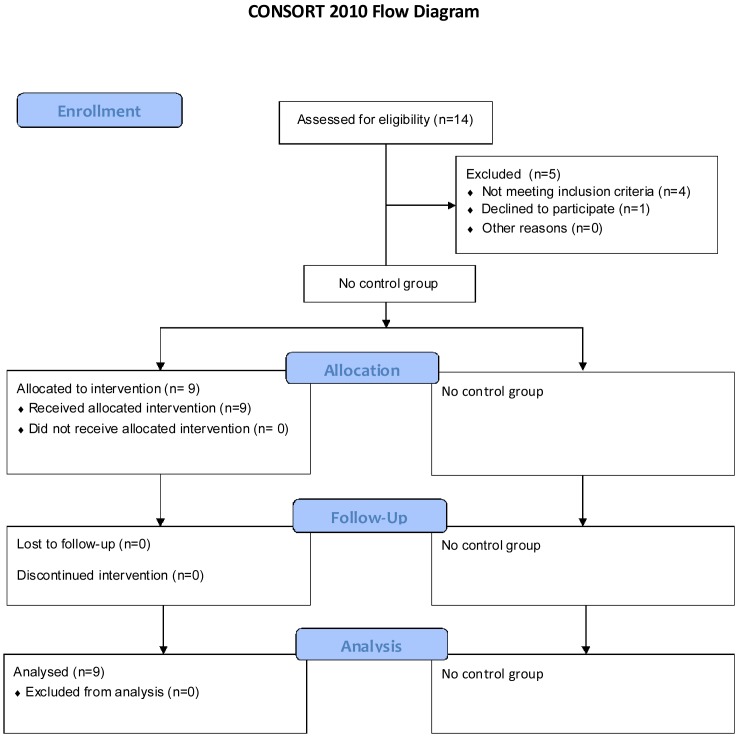
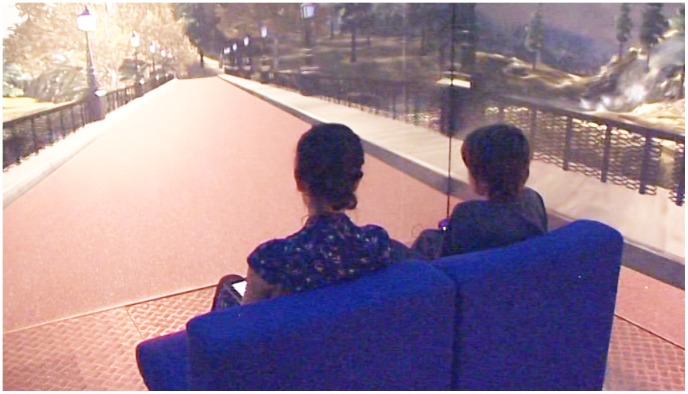
UNLABELLED: Anxiety is common in children with autism spectrum disorders (ASD), with specific fears and phobias one of the most frequent subtypes. Specific fears and phobias can have a serious impact on young people with ASD and their families. In this study we developed and evaluated a unique treatment combining cognitive behaviour therapy (CBT) with graduated exposure in a virtual reality environment (VRE). Nine verbally fluent boys with an ASD diagnosis and no reported learning disability, aged 7 to 13 years old, were recruited. Each had anxiety around a specific situation (e.g. crowded buses) or stimulus (e.g. pigeons). An individualised scene was recreated in our 'wrap-around' VRE. In the VRE participants were coached by a psychologist in cognitive and behavioural techniques (e.g. relaxation and breathing exercises) while the exposure to the phobia/fear stimulus was gradually increased as the child felt ready. Each child received four 20-30 minute sessions. After participating in the study, eight of the nine children were able to tackle their phobia situation. Four of the participants completely overcame their phobia. Treatment effects were maintained at 12 months. These results provide evidence that CBT with VRE can be a highly effective treatment for specific phobia/fear for some young people with ASD. TRIAL REGISTRATION: Controlled-Trials.com ISRCTN58483069.
Overview
The claims and statistics of this paper haven’t been checked yet.
Run the check — free, no account needed. It reads the open-access text and checks the sources it cites.
Integrity signals
Registry
Cites
Statistics
Figures
Verification
Claims the paper makes
The claims and statistics of this paper haven’t been checked yet.
Run the check — free, no account needed. It reads the open-access text and checks the sources it cites.
Claims other papers make about this one
Each is checked against this paper’s own text: does it say what the citing paper says it does?
The source backs part of the claim, not all of it — or backs it for a different population, condition or comparison.
In the citing paper
“Using a well-recognised procedure with high levels of agreement between expert raters (Arnold et al., 2003; Maskey et al., 2014; Maskey et al., 2019a, 2019b, 2019c, 2019d)”
From A Pilot Randomised Control Trial Exploring the Feasibility and Acceptability of Delivering a Personalised Modular Psychological Intervention for Anxiety Experienced by Autistic Adults: Personalised Anxiety Treatment-Autism (PAT-A) (2024) · cites this paper as Maskey et al., 2014
Experimental — accuracy not yet measured
Self-check
Percentages, sums and reported differences re-computed from the paper’s own numbers.
The self-check needs the paper’s full text.
Citations
Cites
Jacobson, N. S., & Truax, P. (1991) · Journal of Consulting and Clinical Psychology · doi:10.1037/0022-006x.59.1.12 · Cited by 7,770
Simonoff, E., Pickles, A., Charman, T., Chandler, S., Loucas, T., & Baird, G. (2008) · Journal of the American Academy of Child & Adolescent Psychiatry · doi:10.1097/chi.0b013e318179964f · Cited by 3,399
A measure of anxiety symptoms among children
Spence, S. H. (1998) · Behaviour Research and Therapy · doi:10.1016/s0005-7967(98)00034-5 · Cited by 1,928
Pine, D. S., Cohen, P., Gurley, D., Brook, J., & Ma, Y. (1998) · Archives of General Psychiatry · doi:10.1001/archpsyc.55.1.56 · Cited by 1,753
Comorbid psychiatric disorders in children with autism: interview development and rates of disorders
Leyfer, O. T., Folstein, S. E., Bacalman, S., Davis, N. O., Dinh, E., Morgan, J., Tager-Flusberg, H., & Lainhart, J. E. (2006) · Journal of Autism and Developmental Disorders · doi:10.1007/s10803-006-0123-0 · Cited by 1,637
Autism screening questionnaire: diagnostic validity
Berument, S. K., Rutter, M., Lord, C., Pickles, A., & Bailey, A. (1999) · British Journal of Psychiatry · doi:10.1192/bjp.175.5.444 · Cited by 1,464
Journal of Autism and Developmental Disorders
(2013) · Journal of Autism and Developmental Disorders · doi:10.1007/10803.1573-3432 · Cited by 1,358
Nauta, M. H., Scholing, A., Rapee, R. M., Abbott, M., Spence, S. H., & Waters, A. (2004) · Behaviour Research and Therapy · doi:10.1016/s0005-7967(03)00200-6 · Cited by 763
Superior visual search in autism.
O'riordan, M., Plaisted, K., Driver, J., & Baron-Cohen, S. (2001) · Journal of Experimental Psychology: Human Perception and Performance · doi:10.1037/0096-1523.27.3.719 · Cited by 624
Hill, E., Berthoz, S., & Frith, U. (2004) · Journal of Autism and Developmental Disorders · doi:10.1023/b:jadd.0000022613.41399.14 · Cited by 619
Research works printed but not linked: 1
- Silverman WK, Albano AM (1996) Anxiety Disorders Interview Schedule for DSM-IV.: Parent interview schedule: Oxford University Press.
Cited by
Sorted by citations
Items 201–224 of 224
Glumbić, N., Đorđević, M., & Brojčin, B. (2025) · Springer eBooks · doi:10.1007/978-3-031-77414-0_9
A SWOT Analysis of Virtual Reality for Children with Autism Spectrum Disorder in K-12 Education
Adjorlu, A. (2025) · IEEE Conference on Virtual Reality and 3D User Interfaces Abstracts and Workshops (VRW) · doi:10.1109/vrw66409.2025.00056
Exploring Virtual Reality-Induced Anxiety in Iatrophobia: A Pilot Study for Future Exposure Therapy
Fabian, R.-A., Miró-Amarante, L., & Gómez-Rodríguez, F. (2025) · IEEE Access · doi:10.1109/access.2025.3591396
Pinton, C. (2025) · Journal of medical imaging and radiation sciences · doi:10.1016/j.jmir.2025.102114
Darst-Campbell, M., Sossin, K. M., & Giambrone, J. (2025) · Preprints.org · doi:10.20944/preprints202510.1000.v1
Autismiopetuksessa hyödynnettävät teknologiat
Pekkanen, P. (2021) · Jyväskylä University Digital Archive (University of Jyväskylä)
Vliv tréninku ve virtuální realitě na přesnost pohybu rukou
Martirosov, S. (2021) · Digital Library (University of West Bohemia)
Glaser, N. J. (2020) · OhioLink ETD Center (Ohio Library and Information Network)
Jawharieh, H. (2025) · Kent Academic Repository (University of Kent) · doi:10.22024/unikent/01.02.111643
刘, 彩. (2025) · International Journal of Psychiatry and Neurology · doi:10.12677/ijpn.2025.144011
Ali, H. H., Nazir, M., & Munir, B. (2025) · Research Journal for Social Affairs · doi:10.71317/rjsa.003.01.0039
Drawing the inner world: exploring autistic perception through virtual reality art-making
Savickaite, S., Airlie, R., McDonnell, N., & Simmons, D. S. (2026) · Frontiers in Psychology · doi:10.3389/fpsyg.2026.1739991
Hoffman, L. J., Garcia, A., Bond, A. E., & Albano, A. M. (2026) · Elsevier eBooks · doi:10.1016/b978-0-443-29009-1.00019-6
Designing Extended Reality (XR) Tools for Autistic Children: A Literature Review
Yao, Y., Garetto, A. P., Heath, M., & Aitamurto, T. (2026) · ACM International Conference on Interaction Design and Children (IDC) · doi:10.1145/3773077.3806140
Beyond the Lab: Virtual reality as a Bridge Between Control and Experience
Savickaite, S. (2026) · Springer eBooks · doi:10.1007/978-3-032-19636-1_3
Beyond Words: Creativity, Communication, and Empowerment in VR
Savickaite, S. (2026) · Springer eBooks · doi:10.1007/978-3-032-19636-1_5
Lines of Perception: VR Drawing as Method and Expression
Savickaite, S. (2026) · Springer eBooks · doi:10.1007/978-3-032-19636-1_4
Karadağ, E., Çiftçi, Ş. K., Aydogmus, M., Bostancı, C., Şimşek, İ., Zerra, E., Kubiak, M., Saiz, J., & Gobbi, A. (2026) · Frontiers in Virtual Reality · doi:10.3389/frvir.2026.1891564
tepe, A., & Öztürk, G. (2026) · DergiPark (Istanbul University)
Extended reality (XR) interventions in supporting children with autism: A systematic review
Hao, D., Mansi, H., & Elkefi, S. (2026) · International Journal of Medical Informatics · doi:10.1016/j.ijmedinf.2026.106719
Zhang, Y., Chen, C., Zheng, W., & Luo, S. (2026) · Frontiers in Psychology · doi:10.3389/fpsyg.2026.1924814
Aceptación de tecnología inclusiva en la neurodiversidad: factores clave en entornos de convivencia
Cañas, R. V., & Torres, M. R. (2026) · Social Sciences in Brief · doi:10.47909/ssb.57
A virtual reality approach to improving public speaking skills
Arushi (2026) · ResearchOnline at James Cook University (James Cook University) · doi:10.25903/fc1w-d353
Metadata
- Authors
- Maskey, M., Lowry, J., Rodgers, J., McConachie, H., & Parr, J. R.
- Affiliations
- Newcastle University (GB)
- Corresponding author
- Maskey, Morag
- Parr, Jeremy R.
- Venue
- PLoS ONE
- Publisher
- Public Library of Science (PLoS)
- Published
- 2014-07-02
- Volume
- 9
- Issue
- 7
- Pages
- e100374
- ISSN
- 1932-6203 (ISSN-L)
- PMC
- PMC4079659
- OpenAlex
- W2048921281
- Cited by
- 215
- References
- 48
- Citations by year
- 2026: 13 · 2025: 21 · 2024: 23 · 2023: 16 · 2022: 31 · 2021: 21 · 2020: 19 · 2019: 27 · 2018: 12 · 2017: 15 · 2016: 14 · 2015: 3
- FWCI
- 5.95
- Type
- journal article
- Language
- en
- Open access
- gold
- doi.org
- Locations
- PLoS ONE (publishedVersion, cc-by)
- Europe PMC (PubMed Central) (publishedVersion, cc-by)
- PubMed Central (publishedVersion, cc-by)
- PubMed (publishedVersion)
- DOAJ (DOAJ: Directory of Open Access Journals) (submittedVersion, cc-by-sa)
- Figshare (submittedVersion, cc-by)
- Newcastle University ePrints (Newcastle Univesity) (cc-by)
- Funders
- Newcastle University
- Topics
- Life Sciences › Neuroscience › Cognitive Neuroscience › Autism Spectrum Disorder Research
- Social Sciences › Psychology › Experimental and Cognitive Psychology › Anxiety, Depression, Psychometrics, Treatment, Cognitive Processes
- Physical Sciences › Computer Science › Human-Computer Interaction › Virtual Reality Applications and Impacts
- Keywords
- autism spectrum disorder, specific phobia, fear, virtual reality exposure therapy, cognitive behavioral therapy, graduated exposure, childhood anxiety, maintenance therapy, children and adolescents
- MeSH terms
- Adolescent, Adult, Breathing Exercises, Child, Child Development Disorders, Pervasive, Fear, Female, Humans, Male, Middle Aged, Virtual Reality Exposure Therapy
About these checks
Registry, retraction, Cites and statistics results are computed, not judged, with one exception: a printed reference that no index lists is read once by a model before it counts as a citation error. Claims are extracted by a model and kept only when their quote appears verbatim in the text; each cited source is then checked, with a model’s help, for whether it says what the claim relies on. Those verdicts can be wrong — read the claim’s quote and the cited source before relying on one.
Statistics and arithmetic are recomputed, not judged.
Confidence bands are shown only for fields calibrated on our annotated test set. None is calibrated yet, so no band is shown.
What counts as a claim ›How we measure confidence ›How we check this ›
Are you an author, or do you see a problem with this page? Request a review
