

The DOI matches its Crossref record; 32 of the 32 references it cites were found in a registry or an index.
Crowdsourcing for Cognitive Science – The Utility of Smartphones
Open accessAbstract
By 2015, there will be an estimated two billion smartphone users worldwide. This technology presents exciting opportunities for cognitive science as a medium for rapid, large-scale experimentation and data collection. At present, cost and logistics limit most study populations to small samples, restricting the experimental questions that can be addressed. In this study we investigated whether the mass collection of experimental data using smartphone technology is valid, given the variability of data collection outside of a laboratory setting. We presented four classic experimental paradigms as short games, available as a free app and over the first month 20,800 users submitted data. We found that the large sample size vastly outweighed the noise inherent in collecting data outside a controlled laboratory setting, and show that for all four games canonical results were reproduced. For the first time, we provide experimental validation for the use of smartphones for data collection in cognitive science, which can lead to the collection of richer data sets and a significant cost reduction as well as provide an opportunity for efficient phenotypic screening of large populations.
Overview
The claims and statistics of this paper haven’t been checked yet.
Run the check — free, no account needed. It reads the open-access text and checks the sources it cites.
Integrity signals
Registry
Cites
Statistics
Figures
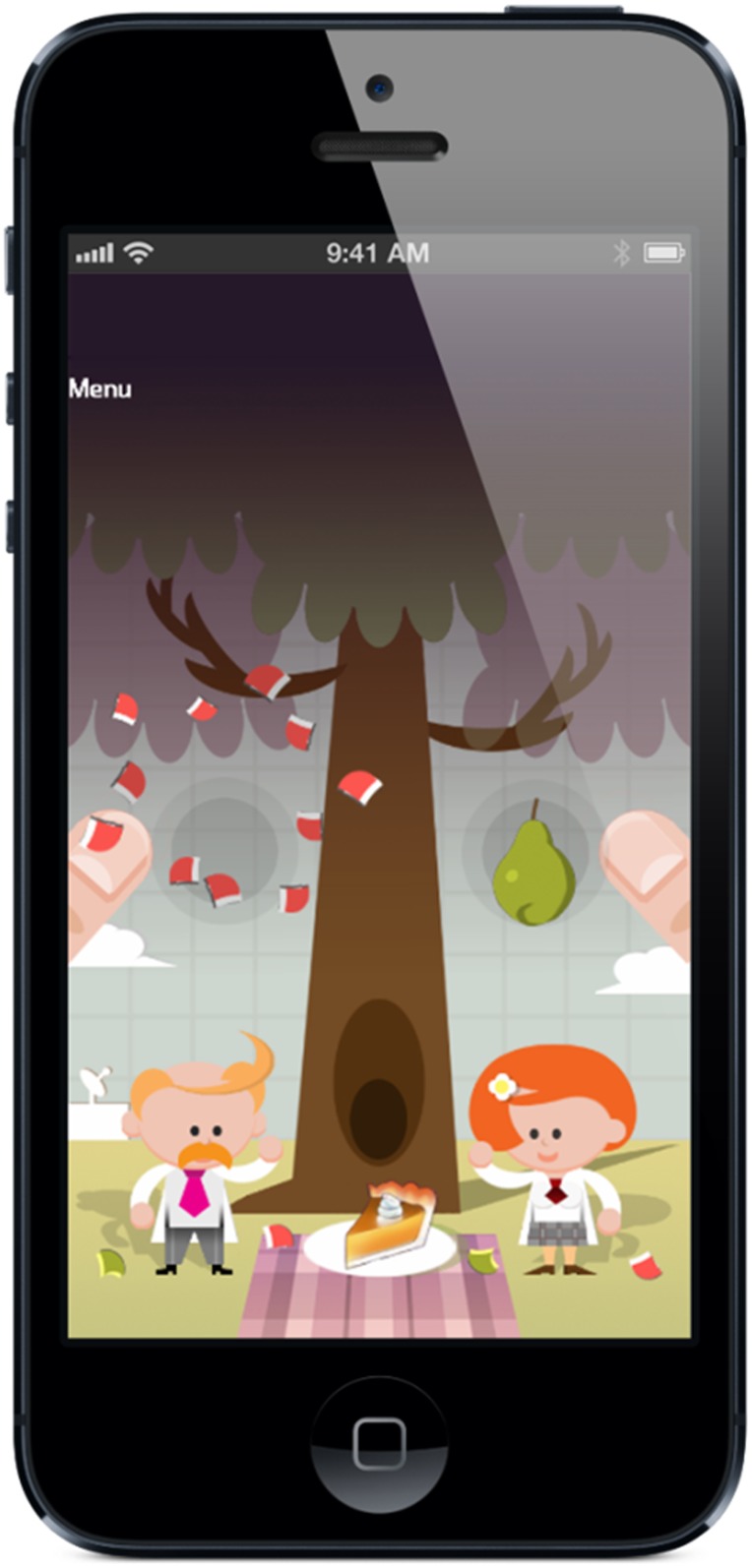
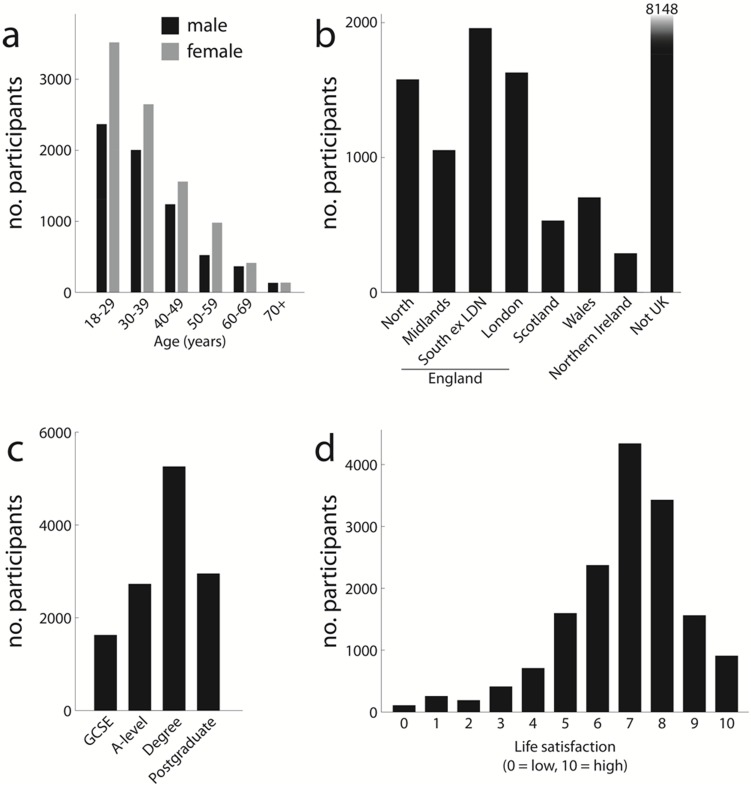
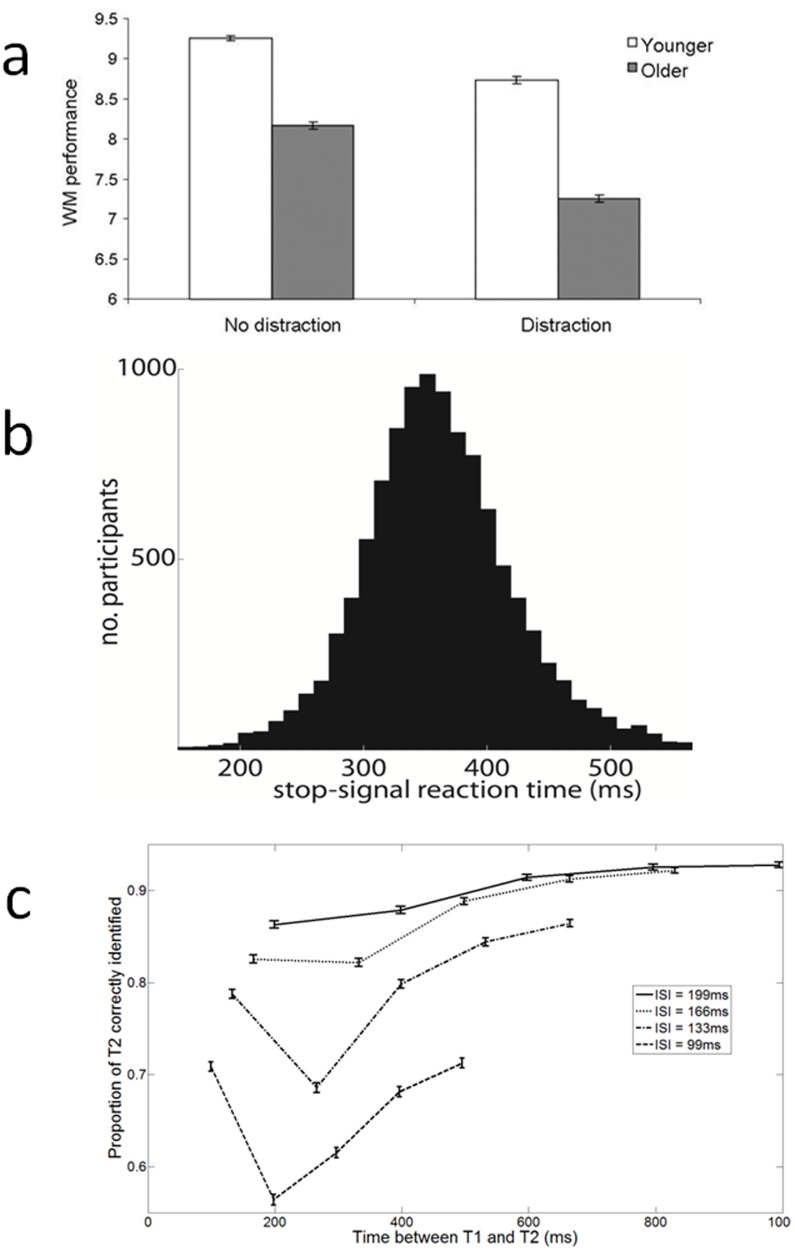
Verification
Claims the paper makes
The claims and statistics of this paper haven’t been checked yet.
Run the check — free, no account needed. It reads the open-access text and checks the sources it cites.
Claims other papers make about this one
Each is checked against this paper’s own text: does it say what the citing paper says it does?
In the citing paper
“A common feature was that task sessions were kept as short as possible to make them more convenient and to increase likelihood of completion [28,32].”
From Gamification of Cognitive Assessment and Cognitive Training: A Systematic Review of Applications and Efficacy (2016) · cites this paper as [32]
In the citing paper
“Wii Tests [21], Shapebuilder [37], The Great Brain Experiment [32,39], BAM-COG [28], and Tap the Hedgehog [27] were all found to produce output measures/scores that correlated fairly well with their non–gamelike counterparts”
From Gamification of Cognitive Assessment and Cognitive Training: A Systematic Review of Applications and Efficacy (2016) · cites this paper as [32]
Self-check
Percentages, sums and reported differences re-computed from the paper’s own numbers.
The self-check needs the paper’s full text.
Citations
Cites
Temporary suppression of visual processing in an RSVP task: An attentional blink?
Raymond, J. E., Shapiro, K. L., & Arnell, K. M. (1992) · Journal of Experimental Psychology Human Perception & Performance · doi:10.1037//0096-1523.18.3.849 · Cited by 2,286
Temporary suppression of visual processing in an RSVP task: an attentional blink?
Raymond, J. E., Shapiro, K. L., & Arnell, K. M. (1992) · Journal of Experimental Psychology: Human Perception and Performance · doi:10.1037/0096-1523.18.3.849 · Cited by 1,649
Evaluating amazon’s mechanical turk as a tool for experimental behavioral research
Crump, M. J. C., McDonnell, J. V., & Gureckis, T. M. (2013) · PLoS ONE · doi:10.1371/journal.pone.0057410 · Cited by 1,617
On the ability to inhibit simple and choice reaction time responses: A model and a method.
Logan, G. D., Cowan, W. B., & Davis, K. A. (1984) · Journal of Experimental Psychology: Human Perception and Performance · doi:10.1037/0096-1523.10.2.276 · Cited by 1,542
A two-stage model for multiple target detection in rapid serial visual presentation.
Chun, M. M., & Potter, M. C. (1995) · Journal of Experimental Psychology Human Perception & Performance · doi:10.1037//0096-1523.21.1.109 · Cited by 1,465
Response inhibition in the stop-signal paradigm
Verbruggen, F., & Logan, G. D. (2008) · Trends in Cognitive Sciences · doi:10.1016/j.tics.2008.07.005 · Cited by 1,373
reCAPTCHA: Human-Based Character Recognition via Web Security Measures
von Ahn, L., Maurer, B., McMillen, C. P., Abraham, D., & Blum, M. (2008) · Science · doi:10.1126/science.1160379 · Cited by 1,116
Chandler, J., Mueller, P., & Paolacci, G. (2014) · Behavior Research Methods · doi:10.3758/s13428-013-0365-7 · Cited by 950
Top-down suppression deficit underlies working memory impairment in normal aging
Gazzaley, A., Cooney, J. W., Rissman, J., & D'Esposito, M. (2005) · Nature Neuroscience · doi:10.1038/nn1543 · Cited by 934
Human Research and Data Collection via the Internet
Birnbaum, M. H. (2004) · Annual Review of Psychology · doi:10.1146/annurev.psych.55.090902.141601 · Cited by 927
Cited by
Sorted by citations
Lumsden, J., Edwards, E. A., Lawrence, N. S., Coyle, D., & Munafò, M. R. (2016) · JMIR Serious Games · doi:10.2196/games.5888 · Cited by 555
Oteros‐Rozas, E., Martín‐López, B., Fagerholm, N., Bieling, C., & Plieninger, T. (2017) · Ecological Indicators · doi:10.1016/j.ecolind.2017.02.009 · Cited by 402
Conducting perception research over the internet: A tutorial review
Woods, A. T., Velasco, C., Levitan, C. A., Wan, X., & Spence, C. (2015) · PeerJ · doi:10.7717/peerj.1058 · Cited by 301
Association of neural and emotional impacts of reward prediction errors with major depression
Rutledge, R. B., Moutoussis, M., Smittenaar, P., Zeidman, P., Taylor, T., Hrynkiewicz, L., Lam, J., Skandali, N., Siegel, J. Z., Ousdal, O. T., et al. (2017) · JAMA Psychiatry · doi:10.1001/jamapsychiatry.2017.1713 · Cited by 209
Self-citationMachine learning and big data in psychiatry: toward clinical applications
Rutledge, R. B., Chekroud, A. M., & Huys, Q. J. M. (2019) · Current Opinion in Neurobiology · doi:10.1016/j.conb.2019.02.006 · Cited by 206
Self-citationHeinz, A., Kiefer, F., Smolka, M. N., Endraß, T., Beste, C., Beck, A., Liu, S., Genauck, A., Romund, L., Banaschewski, T., et al. (2019) · Addiction Biology · doi:10.1111/adb.12866 · Cited by 177
Self-citationThe Psychological and Neural Basis of Loss Aversion
Sokol‐Hessner, P., & Rutledge, R. B. (2018) · Current Directions in Psychological Science · doi:10.1177/0963721418806510 · Cited by 167
Self-citationGuerrero, P., Møller, M. S., Olafsson, A. S., & Snizek, B. (2016) · Urban Planning · doi:10.17645/up.v1i2.609 · Cited by 149
Risk Taking for Potential Reward Decreases across the Lifespan
Rutledge, R. B., Smittenaar, P., Zeidman, P., Brown, H. R., Adams, R. A., Lindenberger, U., Dayan, P., & Dolan, R. J. (2016) · Current Biology · doi:10.1016/j.cub.2016.05.017 · Cited by 148
Self-citationAge-related changes in working memory and the ability to ignore distraction
McNab, F., Zeidman, P., Rutledge, R. B., Smittenaar, P., Brown, H. R., Adams, R. A., & Dolan, R. J. (2015) · Proceedings of the National Academy of Sciences · doi:10.1073/pnas.1504162112 · Cited by 145
Self-citationUsers of the main smartphone operating systems (iOS, Android) differ only little in personality
Götz, F. M., Stieger, S., & Reips, U.-D. (2017) · PLOS ONE · doi:10.1371/journal.pone.0176921 · Cited by 127
Crowdsourcing in biomedicine: challenges and opportunities
Khare, R., Good, B. M., Leaman, R., Su, A. I., & Lu, Z. (2015) · Briefings in Bioinformatics · doi:10.1093/bib/bbv021 · Cited by 118
Using games to understand the mind
Allen, K. R., Brändle, F., Botvinick, M., Fan, J. E., Gershman, S. J., Alison Gopnik, C., Griffiths, T. L., Hartshorne, J. K., Hauser, T. U., Ho, M. K., et al. (2024) · Nature Human Behaviour · doi:10.1038/s41562-024-01878-9 · Cited by 130
Self-citationA Gamification Framework for Cognitive Assessment and Cognitive Training: Qualitative Study
Khaleghi, A., Aghaei, Z., & Mahdavi, M. A. (2021) · JMIR Serious Games · doi:10.2196/21900 · Cited by 110
Smartphones and the Neuroscience of Mental Health
Gillan, C. M., & Rutledge, R. B. (2021) · Annual Review of Neuroscience · doi:10.1146/annurev-neuro-101220-014053 · Cited by 95
Self-citationInformation use by humans during dynamic route choice in virtual crowd evacuations
Bode, N. W. F., Wagoum, A. U. K., & Codling, E. A. (2015) · Royal Society Open Science · doi:10.1098/rsos.140410 · Cited by 80
Proactive and Reactive Response Inhibition across the Lifespan
Smittenaar, P., Rutledge, R. B., Zeidman, P., Adams, R. A., Brown, H. R., Lewis, G., & Dolan, R. J. (2015) · PLoS ONE · doi:10.1371/journal.pone.0140383 · Cited by 81
Self-citationScholl, J., & Klein-Flügge, M. C. (2017) · Behavioural Brain Research · doi:10.1016/j.bbr.2017.09.050 · Cited by 69
Crowdsourcing Language Change with Smartphone Applications
Leemann, A., Kolly, M.-J., Purves, R. S., Britain, D., & Glaser, E. (2016) · PLoS ONE · doi:10.1371/journal.pone.0143060 · Cited by 62
Approach-Induced Biases in Human Information Sampling
Hunt, L. T., Rutledge, R. B., Malalasekera, W. M. N., Kennerley, S. W., & Dolan, R. J. (2016) · PLOS Biology · doi:10.1371/journal.pbio.2000638 · Cited by 60
Self-citationEndogenous fluctuations in the dopaminergic midbrain drive behavioral choice variability
Chew, B., Hauser, T. U., Papoutsi, M., Magerkurth, J., Dolan, R. J., & Rutledge, R. B. (2019) · Proceedings of the National Academy of Sciences · doi:10.1073/pnas.1900872116 · Cited by 49
Self-citationThe social contingency of momentary subjective well-being
Rutledge, R. B., de Berker, A. O., Espenhahn, S., Dayan, P., & Dolan, R. J. (2016) · Nature Communications · doi:10.1038/ncomms11825 · Cited by 57
Self-citationMobiles and Cognition: The Associations Between Mobile Technology and Cognitive Flexibility
Alexopoulou, A., Batsou, A., & Drigas, A. S. (2020) · International Journal of Interactive Mobile Technologies (iJIM) · doi:10.3991/ijim.v14i03.11233 · Cited by 53
Crowdsourcing visual perception experiments: a case of contrast threshold
Sasaki, K., & Yamada, Y. (2019) · PeerJ · doi:10.7717/peerj.8339 · Cited by 54
Playing a video game is more than mere procrastination
Nordby, K., Løkken, R. A., & Pfuhl, G. (2019) · BMC Psychology · doi:10.1186/s40359-019-0309-9 · Cited by 57
Klindt, D. A., Devaine, M., & Jean Daunizeau, A. (2016) · Cortex · doi:10.1016/j.cortex.2016.09.009 · Cited by 43
Exploring Determinants of Pre-movement Delays in a Virtual Crowd Evacuation Experiment
Bode, N. W. F., & Codling, E. A. (2018) · Fire Technology · doi:10.1007/s10694-018-0744-9 · Cited by 36
Training Cognitive Functions Using Mobile Apps in Breast Cancer Patients: Systematic Review
Vergani, L., Marton, G., Pizzoli, S. F. M., Monzani, D., Mazzocco, K., & Pravettoni, G. (2018) · JMIR mhealth and uhealth · doi:10.2196/10855 · Cited by 34
Spanakis, P., Jones, A., Field, M., & Christiansen, P. (2018) · Substance Use & Misuse · doi:10.1080/10826084.2018.1536716 · Cited by 33
Revisiting the role of computational neuroimaging in the era of integrative neuroscience
Loosen, A. M., Kato, A., & Gu, X. (2024) · Neuropsychopharmacology · doi:10.1038/s41386-024-01946-8 · Cited by 38
The Making and Evaluation of Digital Games Used for the Assessment of Attention: Systematic Review
Wiley, K., Robinson, R., & Mandryk, R. L. (2021) · JMIR Serious Games · doi:10.2196/26449 · Cited by 40
Axelsen, J. L., Meline, J. S. J., Staiano, W., & Kirk, U. (2022) · BMC Psychology · doi:10.1186/s40359-022-00810-y · Cited by 31
Risk taking for potential losses but not gains increases with time of day
Bedder, R. L., Vaghi, M. M. S., Dolan, R. J., & Rutledge, R. B. (2023) · Scientific Reports · doi:10.1038/s41598-023-31738-x · Cited by 28
Self-citationReliable, rapid, and remote measurement of metacognitive bias
Fox, C. A., McDonogh, A., Donegan, K. R., Teckentrup, V., Crossen, R. J., Hanlon, A. K., Gallagher, E., Rouault, M., & Gillan, C. M. (2024) · Scientific Reports · doi:10.1038/s41598-024-64900-0 · Cited by 30
Virtual laboratories: transforming research with AI
Arto Klami, A., Damoulas, T., Engkvist, O., Rinke, P., & Samuel Kaski, A. (2024) · Data-Centric Engineering · doi:10.1017/dce.2024.15 · Cited by 30
Human-Machine Collaboration for Smart Decision Making: Current Trends and Future Opportunities
Geng, B., & Varshney, P. K. (2022) · IEEE International Conference on Collaboration and Internet Computing (CIC) · doi:10.1109/cic56439.2022.00019 · Cited by 25
The Virtuous Cycle of a Data Ecosystem
Voytek, B. (2016) · PLoS Computational Biology · doi:10.1371/journal.pcbi.1005037 · Cited by 28
Large-Scale Analysis of Auditory Segregation Behavior Crowdsourced via a Smartphone App
Teki, S., Kumar, S., & Griffiths, T. D. (2016) · PLoS ONE · doi:10.1371/journal.pone.0153916 · Cited by 24
Building a New Field of Computational Psychiatry
Moutoussis, M., Eldar, E., & Dolan, R. J. (2016) · Biological Psychiatry · doi:10.1016/j.biopsych.2016.10.007 · Cited by 23
Self-citationHansen, A. S. (2016) · Journal of Outdoor Recreation and Tourism · doi:10.1016/j.jort.2016.05.001 · Cited by 23
Zech, H., Waltmann, M., Lee, Y., Reichert, M., Bedder, R. L., Rutledge, R. B., Deeken, F., Wenzel, J. G., Wedemeyer, F., Aguilera, A., et al. (2022) · Behavior Research Methods · doi:10.3758/s13428-022-02019-8 · Cited by 24
Self-citationExamining the Use of Game-Based Assessments for Hiring Autistic Job Seekers
Willis, C. M. G., Powell-Rudy, T., Colley, K. L., & Prasad, J. J. (2021) · Journal of Intelligence · doi:10.3390/jintelligence9040053 · Cited by 21
Pedersen, M. K., Díaz, C. M. C., Wang, Q. J., Alba‐Marrugo, M. A., Amidi, A., Basaiawmoit, R. V., Bergenholtz, C., Christiansen, M. H., Gajdacz, M., Hertwig, R., et al. (2023) · Cognitive Science · doi:10.1111/cogs.13308 · Cited by 26
Arithmetic on Your Phone: A Large Scale Investigation of Simple Additions and Multiplications
Zimmerman, F., Shalóm, D. E., Gonzalez, P. A., Garrido, J. M., Heduan, F. Á., Dehaene, S., Sigman, M., & Rieznik, A. (2016) · PLoS ONE · doi:10.1371/journal.pone.0168431 · Cited by 19
Do-It-Yourself Gamified Cognitive Training: Viewpoint
van de Weijer, S. C. F., Kuijf, M. L., de Vries, N. M., Bloem, B. R., & Duits, A. (2019) · JMIR Serious Games · doi:10.2196/12130 · Cited by 19
Explaining distortions in metacognition with an attractor network model of decision uncertainty
Atiya, N. A. A., Huys, Q. J. M., Dolan, R. J., & Fleming, S. M. (2021) · PLoS Computational Biology · doi:10.1371/journal.pcbi.1009201 · Cited by 17
Self-citationSmartphones within Psychological Science
Ellis, D. A. (2020) · Cambridge University Press eBooks · doi:10.1017/9781108671408 · Cited by 14
Measures of Implicit Cognition for Marketing Research
Teichert, T., Graf, A., Rezaei, S., Wörfel, P., & Duh, H. I. (2019) · Marketing ZFP · doi:10.15358/0344-1369-2019-3-48 · Cited by 16
Maekawa, T., Anderson, S. J., de Brecht, M., & Yamagishi, N. (2018) · PLoS ONE · doi:10.1371/journal.pone.0195865 · Cited by 14
CrowdXR - Pitfalls and Potentials of Experiments with Remote Participants
Zhao, J., Simpson, M., Sajjadi, P., Wallgrün, J. O., Li, P., Bagher, M. M., Oprean, D., Padilla, L., & Klippel, A. (2021) · Proceedings - International Symposium on Mixed and Augmented Reality, ISMAR · doi:10.1109/ismar52148.2021.00062 · Cited by 14
Age-dependent Pavlovian biases influence motor decision-making
Chen, X., Rutledge, R. B., Brown, H. R., Dolan, R. J., Bestmann, S., & Galea, J. M. (2018) · PLoS Computational Biology · doi:10.1371/journal.pcbi.1006304 · Cited by 14
Self-citationWhat smartphone apps may contribute to language evolution research
Morin, O., Winters, J., Müller, T. F., Morisseau, T., Etter, C., & Greenhill, S. J. (2018) · Journal of Language Evolution · doi:10.1093/jole/lzy005 · Cited by 12
Approach-induced biases in human information samplingPreprint
Hunt, L. T., Rutledge, R. B., Malalasekera, W. M. N., Kennerley, S. W., & Dolan, R. J. (2016) · bioRxiv (Cold Spring Harbor Laboratory) · doi:10.1101/047787 · Cited by 12
Self-citationGundry, D., & Deterding, S. (2018) · International Conference on the Foundations of Digital Games (FDG) · doi:10.1145/3235765.3235803 · Cited by 11
Tünnermann, J., Kristjansson, A. K., Petersen, A., Schubö, A., & Scharlau, I. (2022) · Open Psychology · doi:10.1515/psych-2022-0002 · Cited by 10
Stenner, M., Rutledge, R. B., Zaehle, T., Schmitt, F. C., Kopitzki, K., Kowski, A. B., Voges, J., Heinze, H., & Dolan, R. J. (2015) · Journal of Neurophysiology · doi:10.1152/jn.00260.2015 · Cited by 9
Self-citationMood and implicit confidence independently fluctuate at different time scales
da Fonseca, M., Maffei, G., Moreno‐Bote, R., & Hyafil, A. (2022) · Cognitive Affective & Behavioral Neuroscience · doi:10.3758/s13415-022-01038-4 · Cited by 11
Lee, R. S. C., Albertella, L., Christensen, E., Suo, C., Segrave, R. A., Brydevall, M., Kirkham, R., Liu, C., Fontenelle, L. F., Chamberlain, S. R., et al. (2023) · Journal of Medical Internet Research · doi:10.2196/44414 · Cited by 8
Resources, challenges and way forward in rare mitochondrial diseases research
Rajput, N. K., Singh, V. K., & Bhardwaj, A. (2015) · F1000Research · doi:10.12688/f1000research.6208.1 · Cited by 8
Thirkettle, M., Lewis, J., Langdridge, D., & Pike, G. E. (2018) · JMIR Serious Games · doi:10.2196/10519 · Cited by 7
Lyons, E., & Zhang, L. (2019) · PLoS ONE · doi:10.1371/journal.pone.0224946 · Cited by 7
On the Impact of COVID-19 on Subjective Digital Media Quality Assessment
Zepernick, H., Pieper, K., Spang, R. P., Engelke, U., Hirth, M., & Naderi, B. (2021) · IEEE International Workshop on Multimedia Signal Processing (MMSP) · doi:10.1109/mmsp53017.2021.9733583 · Cited by 7
Voudouris, K., Slater, B., Cheke, L. G., Schellaert, W., Hernández‐Orallo, J., Halina, M., Patel, M., Alhas, I., Mecattaf, M. G., Burden, J., et al. (2025) · Behavior Research Methods · doi:10.3758/s13428-025-02616-3 · Cited by 16
Trading Accuracy for Enjoyment? Data Quality and Player Experience in Data Collection Games
Gundry, D., & Deterding, S. (2022) · CHI Conference on Human Factors in Computing Systems · doi:10.1145/3491102.3502025 · Cited by 6
Exploring the Potentials of Crowdsourcing for Gesture Data Collection
Jung, I.-T., Ahn, S., Seo, J., & Hong, J.-H. (2023) · International Journal of Human-Computer Interaction · doi:10.1080/10447318.2023.2180235 · Cited by 6
Validation of motion perception of briefly displayed images using a tablet
Linares, D., Marin-Campos, R., Dalmau, J. O., & Compte, A. (2018) · Scientific Reports · doi:10.1038/s41598-018-34466-9 · Cited by 6
The perils of acting rashly: Risk-taking propensity impeding emotion-based learning in entrepreneurs
Seloni, G., Kusrohmaniah, S., & Lufityanto, G. (2023) · Journal of International Entrepreneurship · doi:10.1007/s10843-022-00325-y · Cited by 8
Malamud, J., Gülöksüz, S., van Winkel, R., Delespaul, P., Binder, M. D., Derom, C. A., Thiery, E. W., Jacobs, N., Rutten, B. P. F., & Huys, Q. J. M. (2024) · PLoS Computational Biology · doi:10.1371/journal.pcbi.1012457 · Cited by 8
Obstacles to Transparency in Privacy Engineering
Brennan-Marquez, K., & Susser, D. (2016) · IEEE Security and Privacy Workshops (SPW) · doi:10.1109/spw.2016.18 · Cited by 7
The neural dynamics of loss aversion
Nie, S., Wang, M., Li, J., Luo, H., & Zhang, H. (2023) · Imaging Neuroscience · doi:10.1162/imag_a_00047 · Cited by 5
Surprising sounds influence risky decision making
Feng, G. W., & Rutledge, R. B. (2024) · Nature Communications · doi:10.1038/s41467-024-51729-4 · Cited by 4
Self-citationInfluencing and Measuring Behaviour in Crowdsourced Activities
Gould, S. J. J., Cox, A. L., & Brumby, D. P. (2018) · Human-computer interaction series · doi:10.1007/978-3-319-73374-6_7 · Cited by 4
Crowdsourcing Management Education Assessment
Hall, O. P., & Griffy‐Brown, C. (2016) · Journal of international technology and information management · doi:10.58729/1941-6679.1270 · Cited by 4
Santángelo, A. P., & Solovey, G. (2021) · Journal of Cognition · doi:10.5334/joc.200 · Cited by 3
Risk, reward and loss in addictive behavior: a six-year cross-lagged panel study
Kräplin, A., Joshanloo, M., Fröhner, J. H., Baeuchl, C., Bühringer, G., Goschke, T., & Smolka, M. N. (2025) · Scientific Reports · doi:10.1038/s41598-025-17826-0 · Cited by 3
What makes rhythms hard to perform? An investigation using Steve Reich’s Clapping Music
Duffy, S., & Pearce, M. T. (2018) · PLoS ONE · doi:10.1371/journal.pone.0205847 · Cited by 9
Recurrent Auto-Encoding Drift Diffusion ModelPreprint
Vincent, M., & Zénon, A. (2017) · bioRxiv (Cold Spring Harbor Laboratory) · doi:10.1101/220517 · Cited by 4
Zech, H., Waltmann, M., Lee, Y., Reichert, M., Bedder, R. L., Rutledge, R. B., Deeken, F., Wenzel, J. G., Wedemeyer, F., Aguilera, A., et al. (2022) · doi:10.31234/osf.io/6mhsw · Cited by 3
Self-citationThe DECIDE Framework: Describing Ethical Choices in Digital-Behavioral-Data ExplorationsPreprint
Shaw, H., Brown, O., Hinds, J. M., Nightingale, S. J., Towse, J. N., & Ellis, D. A. (2023) · doi:10.31234/osf.io/c8ert · Cited by 3
Memory sensitivity improves with larger image size during naturalistic encoding
Kreichman, O., Masarwa, S., Brook, L., & Gilaie‐Dotan, S. (2025) · Visual Cognition · doi:10.1080/13506285.2025.2610180 · Cited by 2
He, J. A., Sense, F., & Antshel, K. (2015) · The ADHD Report · doi:10.1521/adhd.2015.23.1.1 · Cited by 3
Prisoner of Words: Lessons Learnt from Mobile Gamification of Lab Memory Experiments
Elagroudy, P., Khoshdani, P., Dingler, T., Ward, G. D., Woźniak, P. W., & Schmidt, A. (2021) · Annual Symposium on Computer-Human Interaction in Play · doi:10.1145/3450337.3483502 · Cited by 2
Personality and Individual Differences
Ellis, D. A. (2020) · Cambridge University Press eBooks · doi:10.1017/9781108671408.006 · Cited by 2
Ellis, D. A. (2020) · Cambridge University Press eBooks · doi:10.1017/9781108671408.003 · Cited by 2
Model-Agnostic Fits for Understanding Information Seeking Patterns in Humans
Chatterjee, S., & Shenoy, P. (2021) · AAAI Publications (The Association for the Advancement of Artificial Intelligence (AAAI)) · doi:10.1609/aaai.v35i1.16160 · Cited by 1
Social Interaction and Interpersonal Relationships
Ellis, D. A. (2020) · Cambridge University Press eBooks · doi:10.1017/9781108671408.005 · Cited by 1
Tünnermann, J., Kristjansson, A. K., Petersen, A., Schubö, A., & Scharlau, I. (2021) · doi:10.31234/osf.io/jybfh · Cited by 1
2016年度日本基礎心理学会第1回フォーラム 基礎心理学の新しい方法を拓く―ビッグデータ・生体センサー・タブレットの活用―
三浦, 佳. (2017) · 基礎心理学研究 · doi:10.14947/psychono.35.22
Productivity and wellbeing in the 21st century workplace : implications of choice
Hanc, M.-L. (2019) · UCL Discovery (University College London)
The role of self-control in pro-environmental behaviour
Oniga, A. (2019) · St Andrews Research Repository (St Andrews Research Repository) · doi:10.17630/10023-19249 · Cited by 1
Hooyman, A., Huentelman, M. J., & Schaefer, S. Y. (2020) · bioRxiv (Cold Spring Harbor Laboratory) · doi:10.1101/2020.04.14.041384
Santángelo, A. P., & Solovey, G. (2020) · doi:10.31234/osf.io/nuxdg
Digital technology-enabled home health care
van de Weijer, S. C. F. (2021) · doi:10.26481/dis.20210901sw
Axelsen, J. L., Meline, J. S. J., Staiano, W., & Kirk, U. (2021) · Research Square · doi:10.21203/rs.3.rs-881039/v1
Ellis, D. A. (2020) · Cambridge University Press eBooks · doi:10.1017/9781108671408.008
Metadata
- Authors
- Brown, H. R., Zeidman, P., Smittenaar, P., Adams, R. A., McNab, F., Rutledge, R. B., & Dolan, R. J.
- Affiliations
- University of Oxford (GB)
- Corresponding author
- Brown, Harriet R.
- Venue
- PLoS ONE
- Publisher
- Public Library of Science (PLoS)
- Published
- 2014-07-15
- Volume
- 9
- Issue
- 7
- Pages
- e100662
- ISSN
- 1932-6203 (ISSN-L)
- PMC
- PMC4099129
- OpenAlex
- W2044432453
- Cited by
- 129
- References
- 31
- Citations by year
- 2026: 5 · 2025: 4 · 2024: 7 · 2023: 10 · 2022: 8 · 2021: 16 · 2020: 14 · 2019: 19 · 2018: 13 · 2017: 6 · 2016: 15 · 2015: 11 · 2014: 1
- FWCI
- 16.39
- Type
- journal article
- Language
- en
- Update notices
- correction (2014-10-14)
- Open access
- gold
- doi.org
- Locations
- PLoS ONE (publishedVersion, cc-by)
- Europe PMC (PubMed Central) (publishedVersion, cc-by)
- PubMed Central (publishedVersion, cc-by)
- PubMed (publishedVersion)
- DOAJ (DOAJ: Directory of Open Access Journals) (submittedVersion, cc-by-sa)
- UCL Discovery (University College London) (submittedVersion)
- University of Birmingham Research Portal (University of Birmingham) (submittedVersion, cc-by)
- University of Birmingham Research Portal (University of Birmingham) (submittedVersion, other-oa)
- MPG.PuRe (Max Planck Society) (submittedVersion, cc-by)
- Funders
- Wellcome Trust (091593, 091593/Z/10/, 098362, 098362/Z/12/Z, 091593/Z/10/Z, 101252/Z/13/Z)
- Topics
- Physical Sciences › Computer Science › Computer Science Applications › Mobile Crowdsensing and Crowdsourcing
- Physical Sciences › Computer Science › Computer Science Applications › Open Source Software Innovations
- Social Sciences › Psychology › Applied Psychology › Digital Mental Health Interventions
- Keywords
- crowdsourcing, smartphones, mobile data collection, cognitive science, large-scale experimentation, data validity, reproducibility, experimental paradigms, mobile application, sample size, phenotypic screening, cost reduction
- MeSH terms
- Adolescent, Adult, Age Factors, Aged, Decision Making, Female, Humans, Male, Memory, Short-Term, Middle Aged, Cognitive Science, Cell Phone, Attentional Blink, Young Adult, Wireless Technology, Crowdsourcing
About these checks
Registry, retraction, Cites and statistics results are computed, not judged, with one exception: a printed reference that no index lists is read once by a model before it counts as a citation error. Claims are extracted by a model and kept only when their quote appears verbatim in the text; each cited source is then checked, with a model’s help, for whether it says what the claim relies on. Those verdicts can be wrong — read the claim’s quote and the cited source before relying on one.
Statistics and arithmetic are recomputed, not judged.
Confidence bands are shown only for fields calibrated on our annotated test set. None is calibrated yet, so no band is shown.
What counts as a claim ›How we measure confidence ›How we check this ›
Are you an author, or do you see a problem with this page? Request a review
