

Enteric Bacterial Pathogens in Children with Diarrhea in Niger: Diversity and Antimicrobial Resistance
Open accessThe DOI matches its Crossref record; 68 of the 68 references it cites were found in a registry or an index.
Abstract
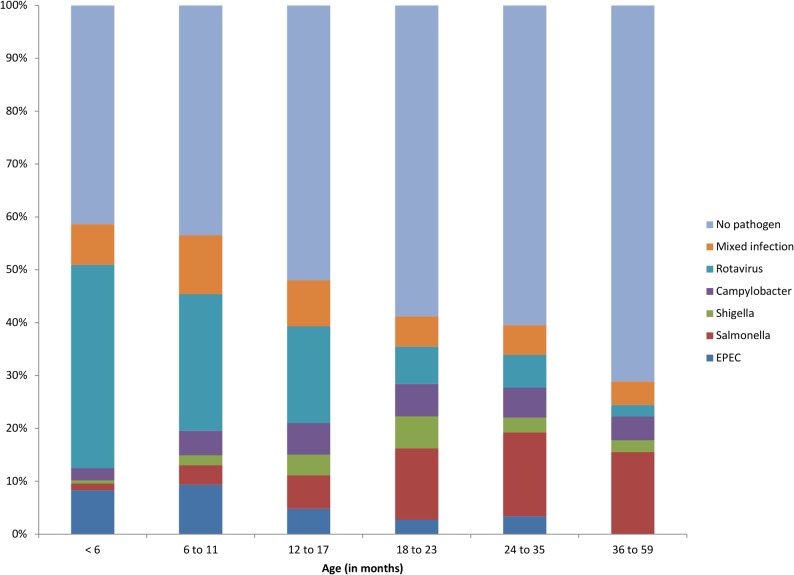
BACKGROUND: Although rotavirus is the leading cause of severe diarrhea among children in sub-Saharan Africa, better knowledge of circulating enteric pathogenic bacteria and their antimicrobial resistance is crucial for prevention and treatment strategies. METHODOLOGY/PRINCIPAL FINDINGS: As a part of rotavirus gastroenteritis surveillance in Maradi, Niger, we performed stool culture on a sub-population of children under 5 with moderate-to-severe diarrhea between April 2010 and March 2012. Campylobacter, Shigella and Salmonella were sought with conventional culture and biochemical methods. Shigella and Salmonella were serotyped by slide agglutination. Enteropathogenic Escherichia coli (EPEC) were screened by slide agglutination with EPEC O-typing antisera and confirmed by detection of virulence genes. Antimicrobial susceptibility was determined by disk diffusion. We enrolled 4020 children, including 230 with bloody diarrhea. At least one pathogenic bacterium was found in 28.0% of children with watery diarrhea and 42.2% with bloody diarrhea. Mixed infections were found in 10.3% of children. EPEC, Salmonella and Campylobacter spp. were similarly frequent in children with watery diarrhea (11.1%, 9.2% and 11.4% respectively) and Shigella spp. were the most frequent among children with bloody diarrhea (22.1%). The most frequent Shigella serogroup was S. flexneri (69/122, 56.5%). The most frequent Salmonella serotypes were Typhimurimum (71/355, 20.0%), Enteritidis (56/355, 15.8%) and Corvallis (46/355, 13.0%). The majority of putative EPEC isolates was confirmed to be EPEC (90/111, 81.1%). More than half of all Enterobacteriaceae were resistant to amoxicillin and co-trimoxazole. Around 13% (46/360) Salmonella exhibited an extended-spectrum beta-lactamase phenotype. CONCLUSIONS: This study provides updated information on enteric bacteria diversity and antibiotic resistance in the Sahel region, where such data are scarce. Whether they are or not the causative agent of diarrhea, bacterial infections and their antibiotic resistance profiles should be closely monitored in countries like Niger where childhood malnutrition pre-disposes to severe and invasive infections.
Overview
The claims and statistics of this paper haven’t been checked yet.
Free: it reads the open-access text and checks the first 5 claims that cite a source we can check. Create a free account to check every claim.
Integrity signals
Registry
Cites
Statistics
Figures
Verification
Claims the paper makes
The claims and statistics of this paper haven’t been checked yet.
Free: it reads the open-access text and checks the first 5 claims that cite a source we can check. Create a free account to check every claim.
Self-check
Percentages, sums and reported differences re-computed from the paper’s own numbers.
The self-check needs the paper’s full text.
Citations
Cites
Manual of Clinical Microbiology.
(1980) · Annals of Internal Medicine · doi:10.7326/0003-4819-93-6-939_2 · Cited by 14,411
Antibiotic resistance-the need for global solutions
Laxminarayan, R., Duse, A., Wattal, C., Zaidi, A. K. M., Wertheim, H. F. L., Sumpradit, N., Vlieghe, E., Hara, G. L., Gould, I. M., Goossens, H., et al. (2013) · The Lancet Infectious Diseases · doi:10.1016/s1473-3099(13)70318-9 · Cited by 4,439
Liu, L., Johnson, H. L., Cousens, S., Perin, J., Scott, S., Lawn, J. E., Rudan, I., Campbell, H., Cibulskis, R., Li, M., et al. (2012) · The Lancet · doi:10.1016/s0140-6736(12)60560-1 · Cited by 3,934
Kotloff, K. L., Nataro, J. P., Blackwelder, W. C., Nasrin, D., Farag, T. H., Panchalingam, S., Wu, Y., Sow, S. O., Sur, D., Breiman, R. F., et al. (2013) · The Lancet · doi:10.1016/s0140-6736(13)60844-2 · Cited by 3,560 · cited 4×
“Among bacterial etiologies, typical enteropathogenic Escherichia coli (EPEC) are associated with a higher risk of mortality in infants 0–11 months of age with moderate-to-severe diarrhea and Shigella is the first or second cause of moderate-to-severe diarrhea among children 1 to 5 years old [7,13].”
BackgroundInfluentialManual of clinical microbiology
Drasar, B. (2003) · Transactions of the Royal Society of Tropical Medicine and Hygiene · doi:10.1016/s0035-9203(03)90074-5 · Cited by 2,594
Global burden of childhood pneumonia and diarrhoea
Walker, C. L. F., Rudan, I., Liu, L., Nair, H., Theodoratou, E., Bhutta, Z. A., O'Brien, K. L., Campbell, H., & Black, R. E. (2013) · The Lancet · doi:10.1016/s0140-6736(13)60222-6 · Cited by 2,356 · cited 14×
“Most Shigella spp. isolates were resistant to amoxicillin, although S. sonnei was mostly sensitive, similar to what was described in Senegal and Central African Republic [23,52].”
BackgroundInfluentialKotloff, K. L., Winickoff, J. P., Ivanoff, B., Clemens, J. D., Swerdlow, D. L., Sansonetti, P. J., Adak, G. K., & Levine, M. M. (1999) · Europe PMC (PubMed Central) · Cited by 1,242
Paton, A. W., & Paton, J. C. (1998) · Journal of Clinical Microbiology · doi:10.1128/jcm.36.2.598-602.1998 · Cited by 1,212
Invasive non-typhoidal salmonella disease: an emerging and neglected tropical disease in Africa
Feasey, N. A., Dougan, G., Kingsley, R. A., Heyderman, R. S., & Gordon, M. A. (2012) · The Lancet · doi:10.1016/s0140-6736(11)61752-2 · Cited by 1,014
Antimicrobial resistance in developing countries. Part I: recent trends and current status
Okeke, I. N., Laxminarayan, R., Bhutta, Z. A., Duse, A. G., Jenkins, P., O'Brien, T. F., Pablos-Mendez, A., & Klugman, K. P. (2005) · The Lancet Infectious Diseases · doi:10.1016/s1473-3099(05)70189-4 · Cited by 851 · cited 1×
“Several studies in the Sahelian region showed that multi-drug resistant organisms have been emerging over the last decades, with the general spread of resistance to amoxicillin, co-trimoxazole and chloramphenicol [19–25].”
Background
Cited by
Diarrheagenic Escherichia coli
Gomes, T. A. T., Elias, W. P., Scaletsky, I. C. A., Guth, B. E. C., Rodrigues, J. F., Piazza, R. M. F., Ferreira, L. C. S., & Martinez, M. B. (2016) · Brazilian Journal of Microbiology · doi:10.1016/j.bjm.2016.10.015 · Cited by 1,158
Antimicrobial resistance in Africa: a systematic review
Tadesse, B. T., Ashley, E. A., Ongarello, S., Havumaki, J., Wijegoonewardena, M., González, I. J., & Dittrich, S. (2017) · BMC Infectious Diseases · doi:10.1186/s12879-017-2713-1 · Cited by 554
“9) [16–23, 25, 26, 28, 30–32, 36, 38–40, 42, 43, 45, 46, 48–50, 53, 55–58, 60, 63, 67–71, 73–75, 77, 79, 82–85, 87, 89, 90, 92, 93, 95–100, 103–105, 108, 112–116, 119, 123–133, 137, 139–142, 144, 146, 151, 153, 154, 156, 157, 160, 176] [59, 106, 150] [44, 52, 56, 74, 76, 79, 80, 116, 126, 135, 153, 164] [24, 27, 49, 5…”
Current pathogenic Escherichia coli foodborne outbreak cases and therapy development
Yang, S.-C., Lin, C.-H., Aljuffali, I. A., & Fang, J.-Y. (2017) · Archives of Microbiology · doi:10.1007/s00203-017-1393-y · Cited by 366
“However, resistance to various agents has been reported (Langendorf et al. 2015; Malvi et al. 2015).”
Oral amoxicillin and amoxicillin–clavulanic acid: properties, indications and usage
Huttner, A., Bielicki, J., Clements, M. N., Frimodt-Møller, N., Muller, A. E., Paccaud, J.-P., & Mouton, J. W. (2020) · Clinical Microbiology and Infection · doi:10.1016/j.cmi.2019.11.028 · Cited by 270
Chiyangi, H., Muma, J. B., Malama, S., Manyahi, J., Abade, A., Kwenda, G., & Matee, M. I. (2017) · BMC Infectious Diseases · doi:10.1186/s12879-017-2232-0 · Cited by 94
“cholerae O1 Ogawa isolates were resistant to cotrimoxazole (100%), ampicillin (100%), nalidixic acid [9], chloramphenicol (97%), nitrofurantoin (95%), tetracycline (82%), azithromycin (56%) but sensitive to ciprofloxacin (100%) (101).”
BackgroundShrivastava, A. K., Kumar, S., Mohakud, N. K., Suar, M., & Sahu, P. S. (2017) · Gut Pathogens · doi:10.1186/s13099-017-0166-0 · Cited by 89
“coli (EPEC) strain accounts for 5–10% of pediatric diarrhea in resource-poor countries [11].”
BackgroundRapid emergence of extensively drug-resistant Shigella sonnei in France
Lefèvre, S., Njamkepo, E., Feldman, S. F., Ruckly, C., Carle, I., Lejay-Collin, M., Fabre, L., Yassine, I., Frézal, L., de la Gándara, M. P., et al. (2023) · Nature Communications · doi:10.1038/s41467-023-36222-8 · Cited by 84
Self-citationGlobal phylogeography and evolutionary history of Shigella dysenteriae type 1
Njamkepo, E., Fawal, N., Tran-Dien, A., Hawkey, J., Strockbine, N., Jenkins, C., Talukder, K. A., Bercion, R., Kuleshov, K. V., Kolínská, R., et al. (2016) · Nature Microbiology · doi:10.1038/nmicrobiol.2016.27 · Cited by 82
Self-citationGahamanyi, N., Mboera, L. E. G., Matee, M. I., Mutangana, D., & Komba, E. V. G. (2020) · International Journal of Microbiology · doi:10.1155/2020/2092478 · Cited by 100
“jejuni: 100%) Culture, biochemical, Gram staining [49]”
Mathew, S., Smatti, M. K., Alansari, K., Nasrallah, G. K., Thani, A. A. A., & Yassine, H. M. (2019) · Scientific Reports · doi:10.1038/s41598-018-37162-w · Cited by 83
Enteropathogenic Escherichia coli—A Summary of the Literature
Mare, A. D., Ciurea, C. N., Man, A., Tudor, B., Moldovan, V. G., Decean, L., & Toma, F. (2021) · Gastroenterology Insights · doi:10.3390/gastroent12010004 · Cited by 83
Mitgang, E. A., Hartley, D. M., Malchione, M. D., Koch, M., & Goodman, J. L. (2018) · International Journal of Antimicrobial Agents · doi:10.1016/j.ijantimicag.2018.05.019 · Cited by 65
Qu, M., Lv, B., Zhang, X., Yan, H., Huang, Y., Qian, H.-K., Pang, B., Jia, L., Kan, B., & Wang, Q. (2016) · Gut Pathogens · doi:10.1186/s13099-016-0116-2 · Cited by 66
“1 % in other works [12, 27], taking into account the variation pertaining to geographical area, the types of enteric pathogens, diagnostic methods and social and educational conditions.”
BackgroundJain, P., Chowdhury, G., Samajpati, S., Basak, S., Ganai, A., Samanta, S., Okamoto, K., Mukhopadhyay, A. K., & Dutta, S. (2020) · Brazilian Journal of Microbiology · doi:10.1007/s42770-019-00213-z · Cited by 60
Hlashwayo, D. F., Sigaúque, B., Noormahomed, E. V., Afonso, S. M. S., Mandomando, I., & Bila, C. G. (2021) · PLoS ONE · doi:10.1371/journal.pone.0245951 · Cited by 64
“Multidrug resistance, referred as resistance to more than two drugs, was reported in a total of seven studies [36, 37, 57, 59, 70, 80, 84].”
BackgroundNikiema, M. E. M., Kakou-ngazoa, S., Ky/Ba, A., Sylla, A., Bako, E., Addablah, A. Y. A., Ouoba, J. B., Sampo, E., Gnada, K., Zongo, O., et al. (2021) · BMC Microbiology · doi:10.1186/s12866-021-02398-6 · Cited by 47
“In resource-limited countries, particularly in Sub-saharan Africa, NTS is endemic, with high rates in children under 3 years of age and immunocompromised individuals [8, 9].”
BackgroundTian, L., Zhu, X., Chen, Z., Liu, W., Li, S., Yu, W., Zhang, W., Xu, X., & Sun, Z. (2016) · BMC Infectious Diseases · doi:10.1186/s12879-016-1603-2 · Cited by 52
“Typhimurium was the most common serotype identified among Salmonella isolates, which was in agreement with previously reported studies from Niger and Guangdong Province in China [25, 26].”
ResultZhang, S.-X., Zhou, Y., Tian, L.-G., Chen, J., Torres, R. T., Serrano, E., Li, S., Chen, S., Ai, L., Chen, J., et al. (2018) · Infectious Diseases of Poverty · doi:10.1186/s40249-018-0427-2 · Cited by 48
Collard, J., Andrianonimiadana, L., Habib, A., Rakotondrainipiana, M., Andriantsalama, P., Randriamparany, R., Rabenandrasana, M. A. N., Weill, F., Sauvonnet, N., Randremanana, R. V., et al. (2022) · PLoS neglected tropical diseases · doi:10.1371/journal.pntd.0009849 · Cited by 46
“The current research aimed to assess SIBO and gut infections in a population of children (N = 464) recruited in Antananarivo, Madagascar, using a quantitative culture-based technique on duodenal aspirates from stunted children and a more sensitive and accurate molecular-based approach (qPCR) than the classical metatax…”
Self-citationAnastasopoulou, A., Kolios, A., Somorin, T. O., Sowale, A., Jiang, Y., Fidalgo, B., Parker, A., Williams, L., Collins, M., McAdam, E. J., et al. (2018) · The Science of The Total Environment · doi:10.1016/j.scitotenv.2018.05.062 · Cited by 46
Viral and Bacterial Etiology of Acute Diarrhea among Children under 5 Years of Age in Wuhan, China
Zhu, X.-H., Tian, L., Cheng, Z.-J., Liu, W., Li, S., Yu, W., Zhang, W., Xu, X., & Sun, Z. (2016) · Chinese Medical Journal · doi:10.4103/0366-6999.187852 · Cited by 39
“EPEC was the most frequent isolated pathogen, which was consistent with other reports.[29,30] EPEC is usually prevalent in low‐income countries where the poor hygiene condition contributes to its circulation.”
BackgroundResultBrander, R. L., Walson, J. L., John-Stewart, G. C., Naulikha, J. M., Ndonye, J., Kipkemoi, N., Rwigi, D., Singa, B. O., & Pavlinac, P. B. (2017) · PLOS Neglected Tropical Diseases · doi:10.1371/journal.pntd.0005974 · Cited by 39
Duong, V. T., Tuyen, H. T., Minh, P. V., Campbell, J. I., Phuc, H. L., Nhu, T. D. H., Tu, L. T. P., Chau, T. T. H., Nhi, L. T. Q., Hùng, N. T., et al. (2017) · Clinical Infectious Diseases · doi:10.1093/cid/cix844 · Cited by 40
“In comparison to estimates from other industrializing countries, we observed a similar or elevated prevalence of NTS exhibiting nonsusceptibility to third-generation cephalosporins and increased nonsusceptibility to both ciprofloxacin and azithromycin [26, 27].”
ResultKowalski, M., Obama, B. M., Catho, G., Dewez, J. E., Merglen, A., Ruef, M., Andrey, D. O., Hassoun‐Kheir, N., de Kraker, M. E. A., Combescure, C., et al. (2024) · EClinicalMedicine · doi:10.1016/j.eclinm.2024.102512 · Cited by 46
Medgyesi, D., Sewell, D., Senesac, R., Cumming, O., Mumma, J., & Baker, K. K. (2019) · PLOS Neglected Tropical Diseases · doi:10.1371/journal.pntd.0007292 · Cited by 37
“Furthermore, recent studies 52 have highlighted wide diversity in the microbial etiology of early childhood (<5 years of age) enteric 53 infection in such settings, suggesting that they are exposed to a variety of pathogenic organisms in the 54 first years of life.(2-9) Little is known about the rate with which childr…”
BackgroundBeyene, A. M., Gezachew, M., Mengesha, D., Yousef, A. E., & Gelaw, B. (2022) · PLoS ONE · doi:10.1371/journal.pone.0265271 · Cited by 42
Yassine, I., Lefèvre, S., Hansen, E. E., Ruckly, C., Carle, I., Lejay-Collin, M., Fabre, L., Rafei, R., Clermont, D., de la Gándara, M. P., et al. (2022) · Nature Communications · doi:10.1038/s41467-022-28121-1 · Cited by 34
Self-citationKassaye, D., Oljira, L., Ayana, D. A., Tessema, T. S., & Regassa, L. D. (2021) · PLoS ONE · doi:10.1371/journal.pone.0246024 · Cited by 33
“Previous study reported was more likely to be isolated from visibly bloody stool than without visible blood and was the pathogen most commonly isolated from visibly bloody stool that yielded a bacterial enteric pathogen [33, 40, 41].”
BackgroundBreurec, S., Reynaud, Y., Frank, T., Farra, A., Costilhes, G., Weill, F.-X., & Le Hello, S. (2019) · PLOS Neglected Tropical Diseases · doi:10.1371/journal.pntd.0007917 · Cited by 31
Self-citationPaintsil, E. K., Ofori, L. A., Adobea, S., Akenten, C. W., Phillips, R. O., Maïga‐Ascofaré, O., Lamshöft, M., May, J., Danso, K. O., Krumkamp, R., et al. (2022) · Pathogens · doi:10.3390/pathogens11020140 · Cited by 36
“A combination of culture and biochemistry diagnostic methods was used by 46% (n/N = 6/13) of the studies to isolate and identify the bacteria [38,42,45,46,48,50].”
MethodRonat, J., Natale, A., Kesteman, T., Andremont, A., Elamin, W. F., Hardy, L., Kanapathipillai, R., Michel, J., Langendorf, C., Vandenberg, O., et al. (2021) · Clinical Microbiology and Infection · doi:10.1016/j.cmi.2021.04.015 · Cited by 32
Self-citationVenne, D. M., Hartley, D., Malchione, M. D., Koch, M., Britto, A. Y., & Goodman, J. L. (2023) · Antimicrobial Resistance and Infection Control · doi:10.1186/s13756-023-01220-4 · Cited by 30
Neupane, R., Bhathena, M., Das, G., Long, E., Beard, J., Solomon, H., Simon, J. L., Nisar, Y. B., MacLeod, W., & Hamer, D. H. (2023) · Journal of Global Health · doi:10.7189/jogh.13.04060 · Cited by 36
“Nine studies assessed antibiotic resistance of Shigella isolates in children aged 0-5 years [31,32,34,44,49,51,53-55], and eight provided data for children aged 0-10 years [42,43,52,56-60] Resistance rates for ampicillin, co-trimoxazole, and chloramphenicol for Shigella in the AFR started at an…”
BackgroundMandal, A., Sengupta, A., Kumar, A., Singh, U. K., Jaiswal, A. K., Das, P. K., & Das, S. (2017) · Infectious Diseases Research and Treatment · doi:10.1177/1178633617739018 · Cited by 34
Hugho, E. A., Kumburu, H. H., Amani, N. B., Mseche, B., Maro, A., Ngowi, L. E., Kyara, Y., Kinabo, G. D., Thomas, K. M., Houpt, E. R., et al. (2023) · Pathogens · doi:10.3390/pathogens12040618 · Cited by 29
“Although some studies reported the presence of the Shigella species to be more common in bloody diarrhea [38,39], our study did not find any bloody diarrhea cases.”
ResultSharif, N., Ahmed, S. N., Khandaker, S., Monifa, N. H., Abusharha, A., Vargas, D. L. R., Díez, I. D. L. T., Castilla, A. G. K., Talukder, A. A., Parvez, M. A. K., et al. (2023) · Scientific Reports · doi:10.1038/s41598-023-41174-6 · Cited by 31
“The prevalence of resistance E coli, V cholerae , Salmonella spp. and Shigella spp. were higher in this study than previous studies in Bangladesh, India, Nigeria, Pakistan and Iran 13,16,18,23–25 .”
ResultSalamandane, A., Alves, S., Chambel, L., Malfeito‐Ferreira, M., & Brito, L. (2022) · Applied Microbiology · doi:10.3390/applmicrobiol2010008 · Cited by 28
“These diarrheal diseases can be caused by bacteria, parasites, and viruses [3,4].”
BackgroundPham, N. T. K., Thongprachum, A., Tran, D. N., Nishimura, S., Shimizu-Onda, Y., Trinh, Q. D., Khamrin, P., D, N. U. M., Kongsricharoern, T., Komine‐Aizawa, S., et al. (2015) · Japanese Journal of Infectious Diseases · doi:10.7883/yoken.jjid.2014.582 · Cited by 23
Fashae, K., Leekitcharoenphon, P., & Hendriksen, R. S. (2017) · Zoonoses and Public Health · doi:10.1111/zph.12427 · Cited by 21
“…rare serovars corroborates reports from some African countries (Harrois et al., 2014; Osman et al., 2013), while it contrasts with others (Bonkoungou et al., 2013; Langendorf et al., 2015; Moyo et al., 2011), suggesting complex epidemiology of Salmonella in Africa which may complicate the control.”
BackgroundResultBreurec, S., Rafaï, C. D., Onambélé, M., Frank, T., Farra, A., Legrand, A., & Weill, F. (2018) · American Journal of Tropical Medicine and Hygiene · doi:10.4269/ajtmh.17-0917 · Cited by 17
Self-citationMc, U., Edeani, G. I., Ejikeugwu, C. P., Okezie, U. M., & Ejiofor, S. O. (2017) · Clinical Microbiology Open Access · doi:10.4172/2327-5073.1000277 · Cited by 16
“, [26] reported that most of the diarrheic E.”
BackgroundMethodGhapoutsa, R. N., Boda, M., Gautam, R., Ndze, V. N., Mugyia, A. E., Etoa, F., Bowen, M. D., & Esona, M. D. (2021) · BMC Infectious Diseases · doi:10.1186/s12879-021-06318-x · Cited by 15
“3%) that observed in Niger by Langendorf and collaborators in 2015 [35].”
BackgroundBalew, M., & Kibret, M. (2023) · BMC Nutrition · doi:10.1186/s40795-023-00678-0 · Cited by 15
“The major causes of diarrheal diseases in under-five children are infectious pathogens including viruses, bacteria, and parasites [4].”
BackgroundDuong, V. T., Tu, L. T. P., Tuyen, H. T., Nhi, L. T. Q., Campbell, J. I., Minh, P. V., Phuc, H. L., Chau, T. T. H., Ngọc, N. M., Vi, L. L., et al. (2020) · BMC Microbiology · doi:10.1186/s12866-020-01878-5 · Cited by 20
Manyahi, J., Tellevik, M. G., Ndugulile, F., Moyo, S. J., Langeland, N., & Blomberg, B. (2016) · Microbial Drug Resistance · doi:10.1089/mdr.2016.0074 · Cited by 19
Okumu, N. O., Muloi, D. M., Moodley, A., Ochieng, L., Watson, J., Kiarie, A., Ngeranwa, J., Cumming, O., & Cook, E. A. J. (2024) · International Journal of Antimicrobial Agents · doi:10.1016/j.ijantimicag.2024.107419 · Cited by 18
The genomic epidemiology of shigellosis in South Africa
Stenhouse, G. E., Keddy, K. H., Bengtsson, R. J., Hall, N., Smith, A. M., Thomas, J., Iturriza‐Gómara, M., & Baker, K. S. (2023) · Nature Communications · doi:10.1038/s41467-023-43345-5 · Cited by 16
Chukwu, M. O., Abia, A. L. K., Ubomba‐Jaswa, E., Obi, L. C., & Dewar, J. B. (2019) · Journal of Pure and Applied Microbiology · doi:10.22207/jpam.13.1.58 · Cited by 13
Hugho, E. A., Kumburu, H. H., Thomas, K. M., Lukambagire, A. S., Wadugu, B. D., Amani, N. B., Kinabo, G. D., Hald, T., & Mmbaga, B. T. (2024) · Frontiers in Microbiology · doi:10.3389/fmicb.2023.1277019 · Cited by 15
Atypical Enteropathogenic Escherichia coli
Gomes, T. A. T., Yamamoto, D., Vieira, M. A. M., & Hernandes, R. T. (2016) · Springer eBooks · doi:10.1007/978-3-319-45092-6_4 · Cited by 14
Teferi, S. C. (2020) · International Journal of Microbiology · doi:10.1155/2020/8834107 · Cited by 14
“(is was consistent with [2] who reported a highest incidence among children of 6–11 months of age.”
BackgroundShigella infection in children under 5 years old in western French Guiana
Parisot, M., Parez, N., Boukhari, R., Breurec, S., & Jolivet, A. (2018) · Epidemiology and Infection · doi:10.1017/s0950268818000912 · Cited by 10
“Shigella was identified by conventional methods and serotyping was performed by slide agglutination assays with a complete set of antisera recognizing all the described shigella serotypes [9].”
MethodAngamuthu, S., Ramaswamy, C. R., Selvankumar, T., Sadhasivam, D. R., Nallaswamy, V. D., Subramanian, R., Ganesan, R., & Raju, A. (2021) · Process Biochemistry · doi:10.1016/j.procbio.2021.05.024 · Cited by 10
ShigaPass: an in silico tool predicting Shigella serotypes from whole-genome sequencing assemblies
Yassine, I., Hansen, E. E., Lefèvre, S., Ruckly, C., Carle, I., Lejay-Collin, M., Fabre, L., Rafei, R., de la Gándara, M. P., Dabboussi, F., et al. (2023) · Microbial Genomics · doi:10.1099/mgen.0.000961 · Cited by 8
“All the reference strains and clinical isolates originating from the FNRCESS were characterized by seroagglutination and a panel of biochemical tests, according to the standard protocols previously described [38].”
MethodSelf-citationZadeh, S. H. E., Fahimi, H., Fardsanei, F., & Dallal, M. M. S. (2019) · Infectious Disorders - Drug Targets · doi:10.2174/1871526519666190130171020 · Cited by 8
Clinical and Laboratory Characteristics of Pediatric Campylobacter spp. Acute Gastroenteritis
Mazaheri, M., Rezaei, M. H., Aalinezhad, M., Sharif, M. R., & Akhavan, T. (2016) · Archives of Pediatric Infectious Diseases · doi:10.5812/pedinfect.35730 · Cited by 8
“The most common bacteria responsible for AGE in children are Escherichia coli, Shigella, Salmonella, and Campylobacter, and they can cause serious gastrointestinal and non-gastrointestinal complications despite their lower incidence than viral factors (6, 7).”
BackgroundEnteric pathogen among children under five years old with diarrheal diseases in Indonesia
Puspandari, N., Amalia, N., Hartoyo, Y., Nursofiah, S., Sunarno, S., Sariadji, K., Soekarso, T., Febrianti, T., Khariri, K., Muna, F., et al. (2021) · IOP Conference Series Earth and Environmental Science · doi:10.1088/1755-1315/913/1/012098 · Cited by 10
“Majority of the pathogen caused diarrhea among children under five years old was virus, especially Rotavirus, this results was similar with the several studies [7][8].”
ResultKasumba, I. N., Powell, H., Omore, R., Hossain, M. J., Sow, S. O., Ochieng, J. B., Badji, H., Verani, J. R., Widdowson, M., Sen, S. K., et al. (2023) · Clinical Infectious Diseases · doi:10.1093/cid/ciac985 · Cited by 9
Omotade, T. I., Babalola, T. E., Anyabolu, C. H., & Japhet, M. O. (2023) · PLoS ONE · doi:10.1371/journal.pone.0291123 · Cited by 7
Prévalence Et Diversité De Salmonella En Afrique : Analyse Qualitative Et Quantitative
Abdel-Kader, A. S., Oumarou, S. S., Inoussa, M. M., Diallo, B. A., & Yacoubou, B. (2017) · European Scientific Journal ESJ · doi:10.19044/esj.2017.v13n30p250 · Cited by 12
Pankok, F., Fuchs, F., Loderstädt, U., Kaase, M., Balczun, C., Scheithauer, S., Frickmann, H., & Hagen, R. M. (2022) · Microorganisms · doi:10.3390/microorganisms10122448 · Cited by 9
“Anonymized Strain Identity Year of Isolation Deployment Site Sequence Type (ST) According to the Warwick University Scheme BetaLactamase Genes (ESBLAssociated Underlined) Genes Mediating Aminoglycoside Resistance Genes Mediating Chloramphenicol Resistance Genes Mediating Resistance against Trimethoprim or Sulfonamides…”
InfluentialRaletsena, M. V., Pooe, O. J., & Mongalo, N. I. (2023) · Life · doi:10.3390/life13112159 · Cited by 5
Assefa, M., & Girmay, G. (2024) · Frontiers in Medicine · doi:10.3389/fmed.2024.1418954 · Cited by 5
Qin, C., Liu, Q., Wang, Y., Deng, J., Du, M., Liu, M., & Liu, J. (2024) · Health Data Science · doi:10.34133/hds.0186 · Cited by 6
“Prolonged diarrhea, dehydration, and malnutrition resulting from enteric infections may lead to long-term developmental problems, increasing the burden of morbidity and mortality among children in resource-constrained areas [ 11 , 31 – 34 , 37 ].”
BackgroundWu, X., Chen, L., Dong, F., Wei, Y., Shen, Y., & Ji, L. (2024) · PLoS ONE · doi:10.1371/journal.pone.0311769 · Cited by 5
Etiology of bacterial diarrhea in children under five years in Kerbala Province, Iraq
Al-Abbas, A. K. A. (2018) · Iraqi Journal of Public Health · Cited by 8
Salmonella - Perspectives for Low-Cost Prevention, Control and Treatment
Huang, H., & Naushad, S. (2022) · IntechOpen eBooks · doi:10.5772/intechopen.102150 · Cited by 9
Hugho, E. A., Mmbaga, B. T., Lukambagire, A. S., Kinabo, G. D., Thomas, K. M., Kumburu, H. H., & Hald, T. (2024) · Pathogens · doi:10.3390/pathogens13090798 · Cited by 7
“In Niger, Salmonella was responsible for 9.2% of diarrhea cases, with serotypes Typhimurium, Enteritidis, and Corvalis being the most common serotypes [19].”
BackgroundResultInfluentialTapha, O., Yacouba, A., Dégbey, C., Koukou, N. M. I., Albana, I. A., Saley, S. M., Hanki, Y., Boutchi, M., Doutchi, M., Brah, S., et al. (2025) · BMJ Open · doi:10.1136/bmjopen-2024-092753 · Cited by 2
Cardoso, M. D., Gonçalves, V. D., Grael, A. S., Pedroso, V. M., Pires, J. R., Travassos, C. E. P. F., Domit, C., Vieira-da-Motta, O., Rodrigues, D. D. P., & Siciliano, S. J. (2023) · Preventive Veterinary Medicine · doi:10.1016/j.prevetmed.2023.105978 · Cited by 2
Djeintote, M., Lango-Yaya, E., Vogbia, Z.-D., Rafaï, C. D., Balekouzou, A., Djemer, H. S.-C., Nambei, W. S., Koffi, B., & Grésenguet, G. (2024) · Health · doi:10.4236/health.2024.162014 · Cited by 2
Mabika, R. M., Oyegue-Liabagui, S. L., Mounioko, F., Souza, A., & Yala, J. F. (2022) · PubMed Central · doi:10.11604/pamj.2022.43.63.25276 · Cited by 2
“Furthermore, in the Sahel region, the emergence of strains resistant to amoxicillin, chloramphenicol, cotrimoxazole but also to cephalosporins and fluoroquinolones has been reported in the literature [12].”
BackgroundResult(2023) · Muthanna Medical Journal · doi:10.52113/1/1/2023-1-13 · Cited by 2
Masood, F. (2019) · Pure and Applied Biology · doi:10.19045/bspab.2019.80153 · Cited by 2
Molina, N. B. (2019) · El Servicio de Difusión de la Creación Intelectual (National University of La Plata) · doi:10.35537/10915/77943 · Cited by 6
Dutta, P., Halder, G., Denny, P., Ganai, A., & Dutta, S. (2026) · Brazilian Journal of Microbiology · doi:10.1007/s42770-026-01950-8 · Cited by 1
MSF Paediatric Days: a step forward in operationalising ‘Humanitarian Paediatrics’
Janet, S., Russell, N., Morton, N., García, D. M., Tamannai, M., Lafferty, N., Roggeveen, H., Ogundipe, O. F., Carreras, I., Gao, A., et al. (2021) · BMJ Paediatrics Open · doi:10.1136/bmjpo-2021-001156 · Cited by 1
Salmonella enterica Transmission and Antimicrobial Resistance Dynamics across One-Health Sector
Uzairue, L. I., & Shittu, O. B. (2024) · IntechOpen eBooks · doi:10.5772/intechopen.109229 · Cited by 2
Javier, R. M., Safitri, L. S., Baiti, L. Y. N., Hudiyanto, P. S., Suswati, I., Nurdiana, H., & Djunaedi, D. (2023) · Jurnal Multidisiplin Madani · doi:10.55927/mudima.v3i1.2500 · Cited by 1
Yassine, I., Lefèvre, S., Hansen, E. E., Ruckly, C., Carle, I., Lejay-Collin, M., Fabre, L., Rafei, R., Clermont, D., de la Gándara, M. P., et al. (2021) · bioRxiv (Cold Spring Harbor Laboratory) · doi:10.1101/2021.06.08.447214
Self-citationBacterial Diarrhea and Sepsis in Developing Countries
(2021) · Journal of Chemical Biological and Physical Sciences · doi:10.24214/jcbps.b.11.2.42127
Ali, M. A., & Flaaeih, H. R. (2022) · International Journal of Health Sciences · doi:10.53730/ijhs.v6ns2.8694 · Cited by 1
“1%) was recorded in the age group (1-10) years old, while for E.”
BackgroundInfluentialAmin, K. F. (2023) · Jurnal Multidisiplin Madani · doi:10.55927/mudima.v3i2.2391
A proof of concept for the detection of enteric bacteria using a multiplex lateral flow immunoassay
Mieta, S. I. K., & Barnard, T. G. (2024) · Journal of Medical Laboratory Science & Technology of South Africa · doi:10.36303/jmlstsa.176
Ali, M. A., Ahmed, I., YUSHA’U, M., Shehu, A. A., Zage, A. U., & Idris, I. (2025) · World Scientific Research · doi:10.20448/wsr.v12i1.6367
“More than half of all Enterobacteriaceae were resistant to ampicillin [35].”
Nandi, S., & Bhattacharya, M. (2025) · Asian Journal of Tropical Biotechnology · doi:10.13057/biotek/c220101
Circulating of Salmonella Strains in West Africa: Lacks of Surveillance and Research
Solange, K.-N., Malatala, N. M. E., Bernadette, G. G., Monique, A.-S. A., Romuald, K. C., Ouattara, Z., Emmanuella, A., Barro, N., & Germain, K. T. (2025) · IntechOpen eBooks · doi:10.5772/intechopen.1012676
Duong, V. T., Tu, L. T. P., Tuyen, H. T., Nhi, L. T. Q., Campbell, J. I., Van Minh, P., Phuc, H. L., Chau, T. T. H., Ngoc, N. M., Vi, L. L., et al. (2020) · Figshare · doi:10.6084/m9.figshare.12610183
Bailey, J. L. B., Menyere, A., Dawood, H., Mapila, O., Ngunguni, S., Pinchbeck, G. L., Williams, N. J., Cunliffe, N. A., & Cornick, J. (2026) · medRxiv · doi:10.64898/2026.02.09.26345948
Metadata
- Authors
- Langendorf, C., Le Hello, S., Moumouni, A., Gouali, M., Mamaty, A.-A., Grais, R. F., Weill, F.-X., & Page, A.-L.
- Affiliations
- Epicentre (FR)
- Institut Pasteur (FR)
- Corresponding author
- Langendorf, Céline
- Weill, François-Xavier
- Venue
- PLOS ONE
- Publisher
- Public Library of Science (PLoS)
- Published
- 2015-03-23
- Volume
- 10
- Issue
- 3
- Pages
- e0120275
- ISSN
- 1932-6203 (ISSN-L)
- PMC
- PMC4370739
- OpenAlex
- W1979594041
- Cited by
- 88
- References
- 68
- Citations by year
- 2026: 1 · 2025: 3 · 2024: 9 · 2023: 16 · 2022: 9 · 2021: 11 · 2020: 5 · 2019: 8 · 2018: 6 · 2017: 10 · 2016: 9 · 2015: 1
- FWCI
- 11.57
- Type
- journal article
- Language
- en
- Open access
- gold
- doi.org
- Licence
- Locations
- PLoS ONE (publishedVersion, cc-by)
- Europe PMC (PubMed Central) (publishedVersion, cc-by)
- PubMed Central (publishedVersion, cc-by)
- PubMed (publishedVersion)
- HAL (submittedVersion, cc-by)
- DOAJ (DOAJ: Directory of Open Access Journals) (submittedVersion, cc-by-sa)
- Medecins Sans Frontieres Field Research (Medecins Sans Frontieres) (submittedVersion, other-oa)
- Figshare (submittedVersion, cc-by)
- Funders
- Agence Nationale de la Recherche (ANR-10-LABX-0062)
- Institut de Veille Sanitaire
- Topics
- Life Sciences › Agricultural and Biological Sciences › Food Science › Salmonella and Campylobacter epidemiology
- Life Sciences › Immunology and Microbiology › Microbiology › Escherichia coli research studies
- Health Sciences › Medicine › Microbiology (medical) › Antibiotic Resistance in Bacteria
- Keywords
- enteric bacterial pathogens, childhood diarrhea, bloody diarrhea, antimicrobial resistance, Campylobacter, Shigella, Salmonella, enteropathogenic Escherichia coli, Shigella flexneri, Salmonella serotypes, extended-spectrum beta-lactamase, trimethoprim-sulfamethoxazole resistance, amoxicillin resistance, co-infection, Sahel, Niger, stool culture
- MeSH terms
- Child, Preschool, Diarrhea, Drug Resistance, Microbial, Enterobacteriaceae, Female, Humans, Infant, Infant, Newborn, Male, Niger, Schools, Seasons, Biodiversity, Epidemiological Monitoring
About these checks
Registry, retraction, Cites and statistics results are computed, not judged, with one exception: a printed reference that no index lists is read once by a model before it counts as a citation error. Claims are extracted by a model and kept only when their quote appears verbatim in the text; each cited source is then checked, with a model’s help, for whether it says what the claim relies on. Those verdicts can be wrong — read the claim’s quote and the cited source before relying on one.
Statistics and arithmetic are recomputed, not judged.
Confidence bands are shown only for fields calibrated on our annotated test set. None is calibrated yet, so no band is shown.
What counts as a claim ›How we measure confidence ›How we check this ›
Are you an author, or do you see a problem with this page? Request a review
Data sources
Bibliographic data: Semantic Scholar, OpenAlex, Crossref.
Contains information from the Semantic Scholar Academic Graph Datasets, made available under the ODC Attribution License (ODC-BY 1.0).
Semantic Scholar’s data is described in: Kinney, R., et al. (2023). The Semantic Scholar Open Data Platform. arXiv:2301.10140.
