

The DOI matches its Crossref record; 92 of the 93 references it cites were found in a registry or an index.
Identification of Real MicroRNA Precursors with a Pseudo Structure Status Composition Approach
Open accessAbstract
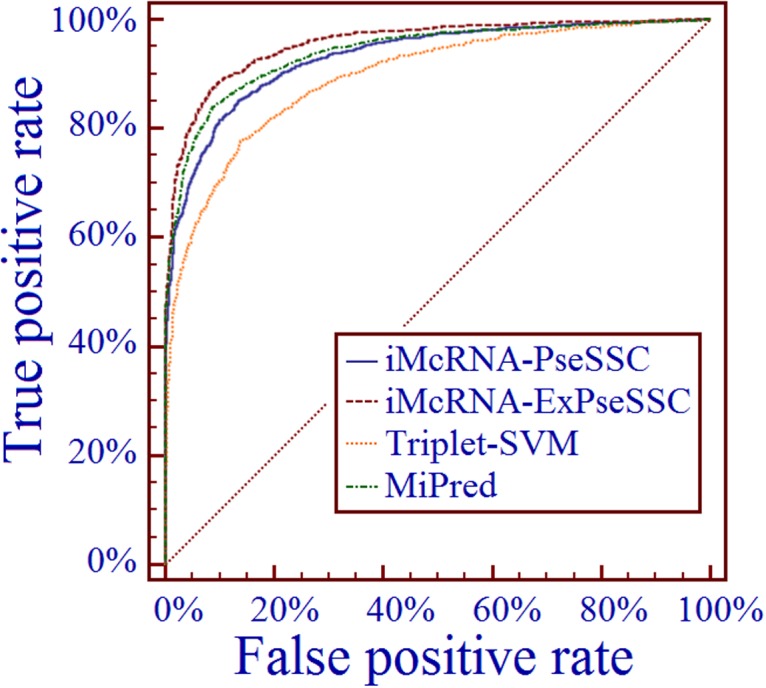
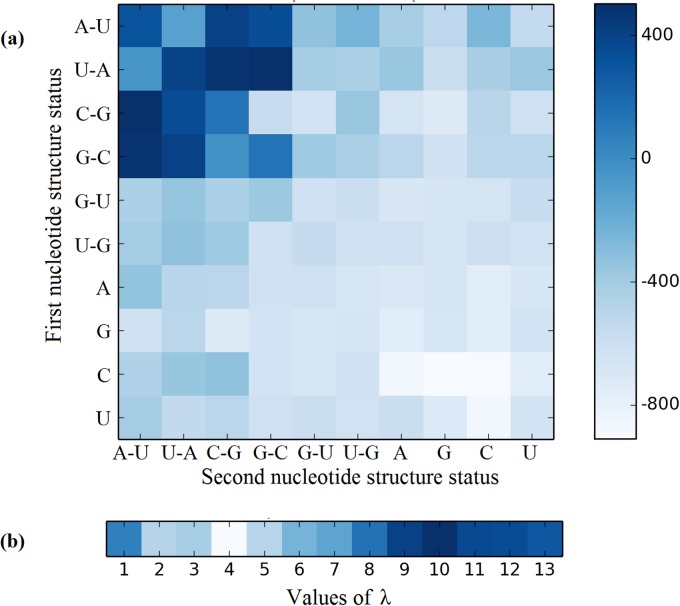
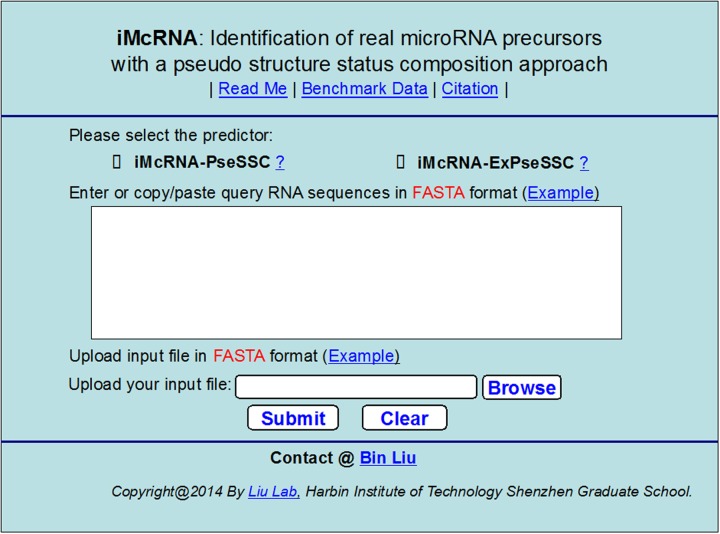
Containing about 22 nucleotides, a micro RNA (abbreviated miRNA) is a small non-coding RNA molecule, functioning in transcriptional and post-transcriptional regulation of gene expression. The human genome may encode over 1000 miRNAs. Albeit poorly characterized, miRNAs are widely deemed as important regulators of biological processes. Aberrant expression of miRNAs has been observed in many cancers and other disease states, indicating they are deeply implicated with these diseases, particularly in carcinogenesis. Therefore, it is important for both basic research and miRNA-based therapy to discriminate the real pre-miRNAs from the false ones (such as hairpin sequences with similar stem-loops). Particularly, with the avalanche of RNA sequences generated in the postgenomic age, it is highly desired to develop computational sequence-based methods in this regard. Here two new predictors, called "iMcRNA-PseSSC" and "iMcRNA-ExPseSSC", were proposed for identifying the human pre-microRNAs by incorporating the global or long-range structure-order information using a way quite similar to the pseudo amino acid composition approach. Rigorous cross-validations on a much larger and more stringent newly constructed benchmark dataset showed that the two new predictors (accessible at http://bioinformatics.hitsz.edu.cn/iMcRNA/) outperformed or were highly comparable with the best existing predictors in this area.
Overview
The claims and statistics of this paper haven’t been checked yet.
Run the check — free, no account needed. It reads the open-access text and checks the sources it cites.
Integrity signals
Registry
Cites
Statistics
Figures
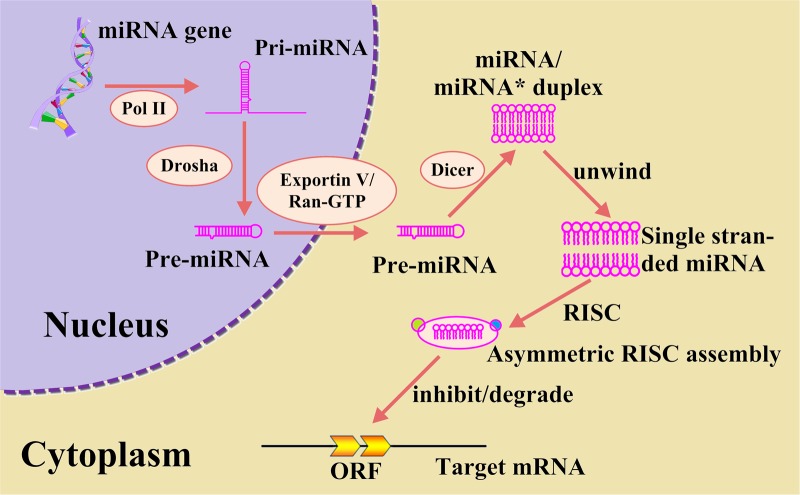
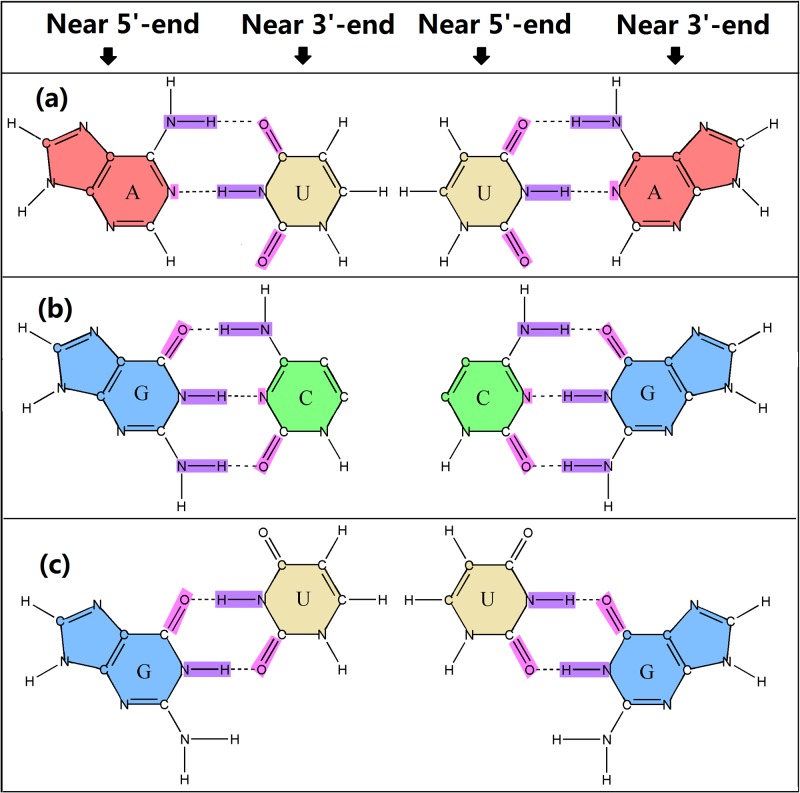
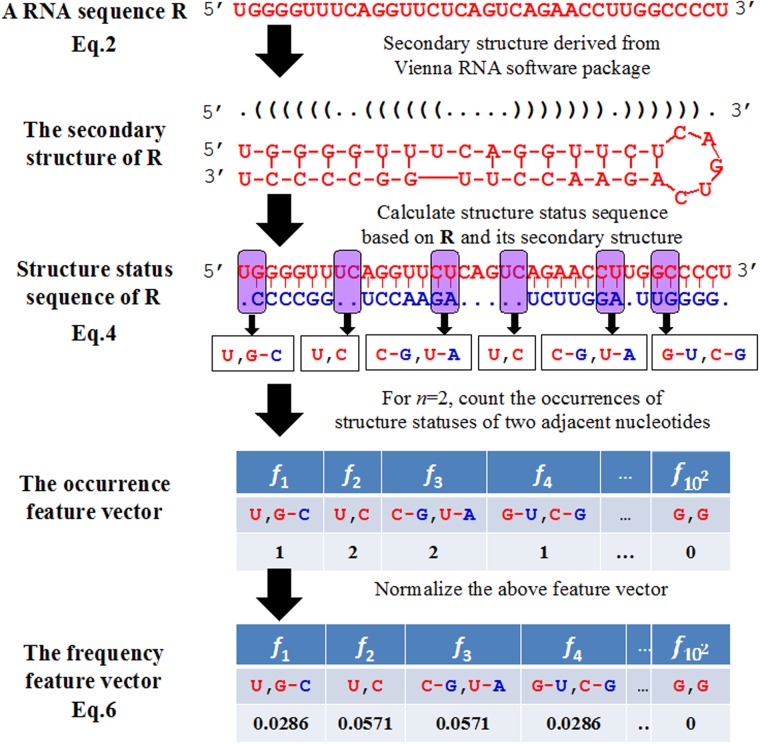
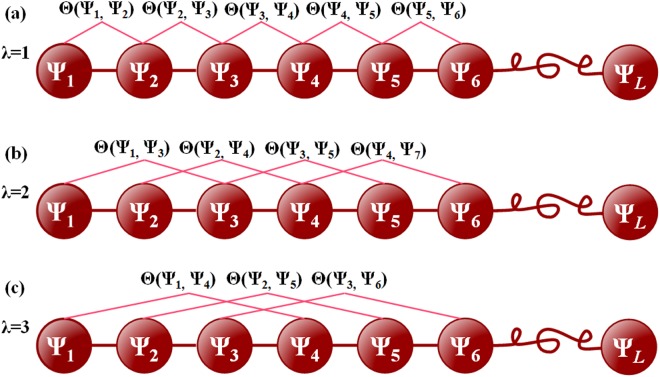
Verification
Claims the paper makes
The claims and statistics of this paper haven’t been checked yet.
Run the check — free, no account needed. It reads the open-access text and checks the sources it cites.
Claims other papers make about this one
Each is checked against this paper’s own text: does it say what the citing paper says it does?
In the citing paper
“Most works in bioinformatics [41,46,47,48,49,50,51,52,53,54,55,56,57,58,59] also use SVM for classification.”
From An Efficient Classifier for Alzheimer’s Disease Genes Identification (2018) · cites this paper as [46]
Self-check
Percentages, sums and reported differences re-computed from the paper’s own numbers.
The self-check needs the paper’s full text.
Citations
Cites
LIBSVM: A library for support vector machines
Chang, C.-C., & Lin, C.-J. (2011) · ACM Transactions on Intelligent Systems and Technology · doi:10.1145/1961189.1961199 · Cited by 40,918
Wu, Y., & Vapnik, V. N. (1999) · Technometrics · doi:10.2307/1271368 · Cited by 27,236
An Introduction to Support Vector Machines and Other Kernel-based Learning Methods
Cristianini, N., & Shawe-Taylor, J. (2000) · doi:10.1017/cbo9780511801389 · Cited by 13,855
Cd-hit: a fast program for clustering and comparing large sets of protein or nucleotide sequences
Li, W.-Z., & Godzik, A. (2006) · Bioinform. · doi:10.1093/bioinformatics/btl158 · Cited by 10,996
The nuclear RNase III Drosha initiates microRNA processing
Lee, Y., Ahn, C., Han, J., Choi, H., Kim, J., Yim, J., Lee, J., Provost, P., Rådmark, O., Kim, S., et al. (2003) · Nature · doi:10.1038/nature01957 · Cited by 5,299
Role for a bidentate ribonuclease in the initiation step of RNA interference
Bernstein, E., Caudy, A. A., Hammond, S. M., & Hannon, G. J. (2001) · Nature · doi:10.1038/35053110 · Cited by 5,018
MicroRNA genes are transcribed by RNA polymerase II
Lee, Y., Kim, M., Han, J., Yeom, K.-H., Lee, S., Baek, S. H., & Kim, V. N. (2004) · The EMBO Journal · doi:10.1038/sj.emboj.7600385 · Cited by 4,556
miRBase: integrating microRNA annotation and deep-sequencing data
Kozomara, A., & Griffiths-Jones, S. (2011) · Nucleic Acids Research · doi:10.1093/nar/gkq1027 · Cited by 3,634
Exportin-5 mediates the nuclear export of pre-microRNAs and short hairpin RNAsPreprint
Yi, R., Qin, Y., Macara, I. G., & Cullen, B. R. (2003) · Genes & Development · doi:10.1101/gad.1158803 · Cited by 3,158
Nuclear Export of MicroRNA Precursors
Lund, E., Güttinger, S., Calado, Â., Dahlberg, J. E., & Kutay, U. (2003) · Science · doi:10.1126/science.1090599 · Cited by 2,829
Research works printed but not linked: 1
- SX Lin, 2013, Theoretical and experimental biology in one, J Biomedical Science and Engineering, 6, 435
Cited by
Sorted by citations
Liu, B., Liu, F., Wang, X., Chen, J., Fang, L., & Chou, K. (2015) · Nucleic Acids Research · doi:10.1093/nar/gkv458 · Cited by 723
Self-citationiACP: a sequence-based tool for identifying anticancer peptides
Chen, W., Ding, H., Feng, P., Lin, H., & Chou, K. (2016) · Oncotarget · doi:10.18632/oncotarget.7815 · Cited by 436
Self-citationChen, Z., Zhao, P., Li, F., Marquez‐Lago, T. T., Leier, A., Revote, J., Zhu, Y. L., Powell, D., Akutsu, T., Webb, G. I., et al. (2019) · Briefings in Bioinformatics · doi:10.1093/bib/bbz041 · Cited by 415
Self-citationiRNA-Methyl: Identifying N6-methyladenosine sites using pseudo nucleotide composition
Chen, W., Feng, P., Ding, H., Lin, H., & Chou, K. (2015) · Analytical Biochemistry · doi:10.1016/j.ab.2015.08.021 · Cited by 350
Self-citationLiu, B., Yang, F., Huang, D.-S., & Chou, K. (2017) · Bioinformatics · doi:10.1093/bioinformatics/btx579 · Cited by 333
Self-citation
Metadata
- Authors
- Liu, B., Fang, L., Liu, F., Wang, X., Chen, J., & Chou, K.-C.
- Affiliations
- Harbin Institute of Technology (CN)
- King Abdulaziz University (SA)
- Corresponding author
- Liu, Bin
- Venue
- PLOS ONE
- Publisher
- Public Library of Science (PLoS)
- Published
- 2015-03-30
- Volume
- 10
- Issue
- 3
- Pages
- e0121501
- ISSN
- 1932-6203 (ISSN-L)
- PMC
- PMC4378912
- OpenAlex
- W2001168095
- Cited by
- 238
- References
- 93
- Citations by year
- 2026: 1 · 2025: 4 · 2024: 1 · 2023: 3 · 2022: 6 · 2021: 9 · 2020: 19 · 2019: 29 · 2018: 46 · 2017: 26 · 2016: 48 · 2015: 46
- FWCI
- 24.01
- Type
- journal article
- Language
- en
- Open access
- gold
- doi.org
- Licence
- Locations
- PLoS ONE (publishedVersion, cc-by)
- PubMed Central (publishedVersion, cc-by)
- PubMed (publishedVersion)
- RePEc: Research Papers in Economics (submittedVersion)
- DOAJ (DOAJ: Directory of Open Access Journals) (submittedVersion, cc-by-sa)
- Funders
- National Natural Science Foundation of China (HIT.NSRIF.2013103, 61272383, 61300112)
- Harbin Institute of Technology
- Topics
- Life Sciences › Biochemistry, Genetics and Molecular Biology › Molecular Biology › Machine Learning in Bioinformatics
- Life Sciences › Biochemistry, Genetics and Molecular Biology › Molecular Biology › RNA and protein synthesis mechanisms
- Life Sciences › Biochemistry, Genetics and Molecular Biology › Molecular Biology › Fractal and DNA sequence analysis
- Keywords
- pseudo amino acid composition, RNA secondary structure, human miRNAs, sequence-based prediction, benchmark dataset
- MeSH terms
- Amino Acids, Base Sequence, Humans, Nucleic Acid Conformation, Nucleotides, RNA Precursors, Genome, Human, Computational Biology, MicroRNAs, RNA, Small Untranslated
About these checks
Registry, retraction, Cites and statistics results are computed, not judged, with one exception: a printed reference that no index lists is read once by a model before it counts as a citation error. Claims are extracted by a model and kept only when their quote appears verbatim in the text; each cited source is then checked, with a model’s help, for whether it says what the claim relies on. Those verdicts can be wrong — read the claim’s quote and the cited source before relying on one.
Statistics and arithmetic are recomputed, not judged.
Confidence bands are shown only for fields calibrated on our annotated test set. None is calibrated yet, so no band is shown.
What counts as a claim ›How we measure confidence ›How we check this ›
Are you an author, or do you see a problem with this page? Request a review
