

The DOI matches its Crossref record; 92 of the 93 references it cites were found in a registry or an index.
Identification of Real MicroRNA Precursors with a Pseudo Structure Status Composition Approach
Open accessAbstract
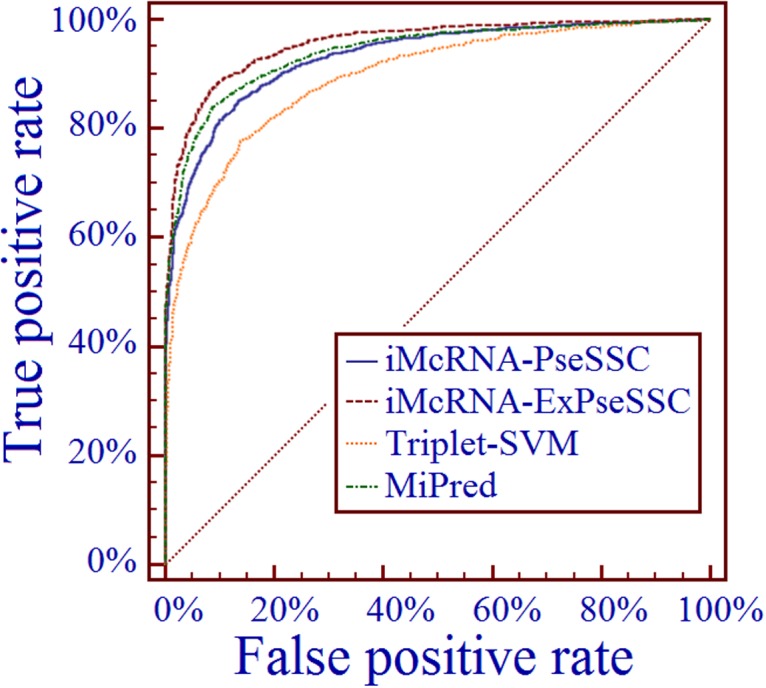
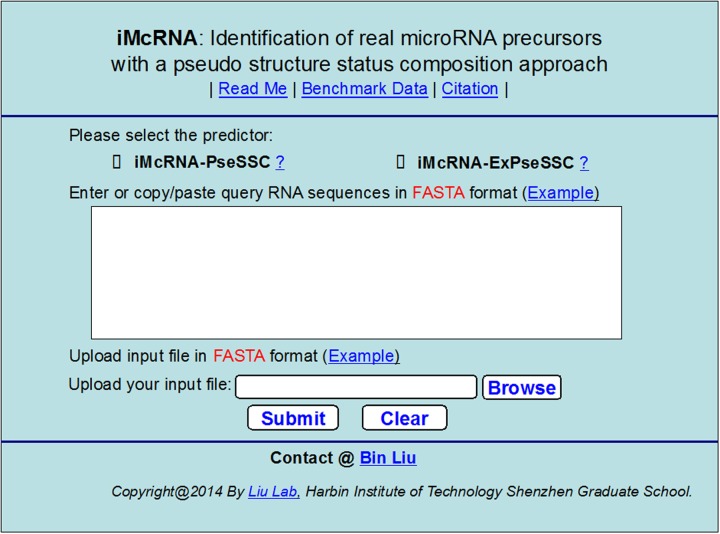
Containing about 22 nucleotides, a micro RNA (abbreviated miRNA) is a small non-coding RNA molecule, functioning in transcriptional and post-transcriptional regulation of gene expression. The human genome may encode over 1000 miRNAs. Albeit poorly characterized, miRNAs are widely deemed as important regulators of biological processes. Aberrant expression of miRNAs has been observed in many cancers and other disease states, indicating they are deeply implicated with these diseases, particularly in carcinogenesis. Therefore, it is important for both basic research and miRNA-based therapy to discriminate the real pre-miRNAs from the false ones (such as hairpin sequences with similar stem-loops). Particularly, with the avalanche of RNA sequences generated in the postgenomic age, it is highly desired to develop computational sequence-based methods in this regard. Here two new predictors, called "iMcRNA-PseSSC" and "iMcRNA-ExPseSSC", were proposed for identifying the human pre-microRNAs by incorporating the global or long-range structure-order information using a way quite similar to the pseudo amino acid composition approach. Rigorous cross-validations on a much larger and more stringent newly constructed benchmark dataset showed that the two new predictors (accessible at http://bioinformatics.hitsz.edu.cn/iMcRNA/) outperformed or were highly comparable with the best existing predictors in this area.
Overview
The claims and statistics of this paper haven’t been checked yet.
Run the check — free, no account needed. It reads the open-access text and checks the sources it cites.
Integrity signals
Registry
Cites
Statistics
Figures
Verification
Claims the paper makes
The claims and statistics of this paper haven’t been checked yet.
Run the check — free, no account needed. It reads the open-access text and checks the sources it cites.
Claims other papers make about this one
Each is checked against this paper’s own text: does it say what the citing paper says it does?
In the citing paper
“Most works in bioinformatics [41,46,47,48,49,50,51,52,53,54,55,56,57,58,59] also use SVM for classification.”
From An Efficient Classifier for Alzheimer’s Disease Genes Identification (2018) · cites this paper as [46]
Self-check
Percentages, sums and reported differences re-computed from the paper’s own numbers.
The self-check needs the paper’s full text.
Citations
Cites
LIBSVM: A library for support vector machines
Chang, C.-C., & Lin, C.-J. (2011) · ACM Transactions on Intelligent Systems and Technology · doi:10.1145/1961189.1961199 · Cited by 40,918
Wu, Y., & Vapnik, V. N. (1999) · Technometrics · doi:10.2307/1271368 · Cited by 27,236
An Introduction to Support Vector Machines and Other Kernel-based Learning Methods
Cristianini, N., & Shawe-Taylor, J. (2000) · doi:10.1017/cbo9780511801389 · Cited by 13,855
Cd-hit: a fast program for clustering and comparing large sets of protein or nucleotide sequences
Li, W.-Z., & Godzik, A. (2006) · Bioinform. · doi:10.1093/bioinformatics/btl158 · Cited by 10,996
The nuclear RNase III Drosha initiates microRNA processing
Lee, Y., Ahn, C., Han, J., Choi, H., Kim, J., Yim, J., Lee, J., Provost, P., Rådmark, O., Kim, S., et al. (2003) · Nature · doi:10.1038/nature01957 · Cited by 5,299
Role for a bidentate ribonuclease in the initiation step of RNA interference
Bernstein, E., Caudy, A. A., Hammond, S. M., & Hannon, G. J. (2001) · Nature · doi:10.1038/35053110 · Cited by 5,018
MicroRNA genes are transcribed by RNA polymerase II
Lee, Y., Kim, M., Han, J., Yeom, K.-H., Lee, S., Baek, S. H., & Kim, V. N. (2004) · The EMBO Journal · doi:10.1038/sj.emboj.7600385 · Cited by 4,556
miRBase: integrating microRNA annotation and deep-sequencing data
Kozomara, A., & Griffiths-Jones, S. (2011) · Nucleic Acids Research · doi:10.1093/nar/gkq1027 · Cited by 3,634
Exportin-5 mediates the nuclear export of pre-microRNAs and short hairpin RNAsPreprint
Yi, R., Qin, Y., Macara, I. G., & Cullen, B. R. (2003) · Genes & Development · doi:10.1101/gad.1158803 · Cited by 3,158
Nuclear Export of MicroRNA Precursors
Lund, E., Güttinger, S., Calado, Â., Dahlberg, J. E., & Kutay, U. (2003) · Science · doi:10.1126/science.1090599 · Cited by 2,829
Hutvágner, G., McLachlan, J., Pasquinelli, A. E., Bálint, E., Tuschl, T., & Zamore, P. D. (2001) · Science · doi:10.1126/science.1062961 · Cited by 2,781
Vienna RNA secondary structure server
Hofacker, I. L. (2003) · Nucleic Acids Research · doi:10.1093/nar/gkg599 · Cited by 2,362
Prediction of protein cellular attributes using pseudo‐amino acid composition
Chou, K. (2001) · Proteins Structure Function and Bioinformatics · doi:10.1002/prot.1035 · Cited by 1,954
Self-citationGrishok, A., Pasquinelli, A. E., Conte, D., Li, N., Parrish, S., Ha, I., Baillie, D. L., Fire, A., Ruvkun, G., & Mello, C. C. (2001) · Cell · doi:10.1016/s0092-8674(01)00431-7 · Cited by 1,908
Cai, X., Hagedorn, C. H., & Cullen, B. R. (2004) · RNA · doi:10.1261/rna.7135204 · Cited by 1,874
A uniform system for microRNA annotation
AMBROS, V., BARTEL, B., BARTEL, D. P., BURGE, C. B., CARRINGTON, J. C., CHEN, X., DREYFUSS, G., EDDY, S. R., GRIFFITHS-JONES, S., MARSHALL, M., et al. (2003) · RNA · doi:10.1261/rna.2183803 · Cited by 1,553
Cellular automata as models of complexity
Wolfram, S. (1984) · Nature · doi:10.1038/311419a0 · Cited by 1,507
Exportin 5 is a RanGTP-dependent dsRNA-binding protein that mediates nuclear export of pre-miRNAs
Bohnsack, M. T., Czaplinski, K., & Görlich, D. (2004) · RNA · doi:10.1261/rna.5167604 · Cited by 1,436
Some remarks on protein attribute prediction and pseudo amino acid composition
Chou, K.-C. (2011) · Journal of Theoretical Biology · doi:10.1016/j.jtbi.2010.12.024 · Cited by 1,225
Self-citationUsing amphiphilic pseudo amino acid composition to predict enzyme subfamily classes
Chou, K. (2004) · Bioinformatics · doi:10.1093/bioinformatics/bth466 · Cited by 994
Self-citationThe History of the Cluster Heat Map
Wilkinson, L., & Friendly, M. L. (2009) · The American Statistician · doi:10.1198/tas.2009.0033 · Cited by 979
Knight, S. W., & Bass, B. (2001) · Science · doi:10.1126/science.1062039 · Cited by 875
Recent progress in protein subcellular location prediction
Chou, K., & Shen, H. (2007) · Analytical Biochemistry · doi:10.1016/j.ab.2007.07.006 · Cited by 769
Self-citationiRSpot-PseDNC: identify recombination spots with pseudo dinucleotide composition
Chen, W., Feng, P., Lin, H., & Chou, K. (2013) · Nucleic Acids Research · doi:10.1093/nar/gks1450 · Cited by 611
Self-citationBonnet, É., Wuyts, J., Rouzé, P., & de Peer, Y. V. (2004) · Bioinformatics · doi:10.1093/bioinformatics/bth374 · Cited by 554
Impacts of Bioinformatics to Medicinal Chemistry
Chou, K. (2015) · Medicinal Chemistry · doi:10.2174/1573406411666141229162834 · Cited by 518
Self-citationLin, H., Deng, E.-Z., Ding, H., Chen, W., & Chou, K.-C. (2014) · Nucleic Acids Research · doi:10.1093/nar/gku1019 · Cited by 508
Self-citationJiang, P., Wu, H., Wang, W., Ma, W., Sun, X. S., & Lu, Z. (2007) · Nucleic Acids Research · doi:10.1093/nar/gkm368 · Cited by 494
Chou, K.-C., & Cai, Y.-D. (2002) · Journal of Biological Chemistry · doi:10.1074/jbc.m204161200 · Cited by 483
Self-citationXue, C., Li, F., He, T., Liu, G.-P., Li, Y., & Zhang, X. (2005) · BMC Bioinformatics · doi:10.1186/1471-2105-6-310 · Cited by 472
PseKNC: A flexible web server for generating pseudo K-tuple nucleotide composition
Chen, W., Lei, T., Jin, D., Lin, H., & Chou, K. (2014) · Analytical Biochemistry · doi:10.1016/j.ab.2014.04.001 · Cited by 429
Self-citationSome remarks on predicting multi-label attributes in molecular biosystems
Chou, K. (2013) · Molecular BioSystems · doi:10.1039/c3mb25555g · Cited by 413
Self-citationXu, Y., Ding, J., Wu, L., & Chou, K. (2013) · PLoS ONE · doi:10.1371/journal.pone.0055844 · Cited by 389
Self-citationGuo, S.-H., Deng, E.-Z., Xu, L.-Q., Ding, H., Lin, H., Chen, W., & Chou, K.-C. (2014) · Bioinformatics · doi:10.1093/bioinformatics/btu083 · Cited by 375
Self-citationSubcellular location prediction of apoptosis proteins
Zhou, G., & Doctor, K. S. (2002) · Proteins Structure Function and Bioinformatics · doi:10.1002/prot.10251 · Cited by 353
Liu, B., Xu, J., Lan, X., Xu, R., Zhou, J., Wang, X., & Chou, K. (2014) · PLoS ONE · doi:10.1371/journal.pone.0106691 · Cited by 306
Self-citationHajisharifi, Z., Piryaiee, M., Beigi, M. M., Behbahani, M., & Mohabatkar, H. (2013) · Journal of Theoretical Biology · doi:10.1016/j.jtbi.2013.08.037 · Cited by 294
iDNA-Prot: Identification of DNA Binding Proteins Using Random Forest with Grey Model
Lin, W., Fang, J., Xiao, X., & Chou, K. (2011) · PLoS ONE · doi:10.1371/journal.pone.0024756 · Cited by 284
Self-citationDu, P.-F., Gu, S., & Jiao, Y.-S. (2014) · International Journal of Molecular Sciences · doi:10.3390/ijms15033495 · Cited by 282
Liu, B., Liu, F., Fang, L., Wang, X., & Chou, K. (2014) · Bioinformatics · doi:10.1093/bioinformatics/btu820 · Cited by 274
Self-citationEsmaeili, M., Mohabatkar, H., & Mohsenzadeh, S. (2009) · Journal of Theoretical Biology · doi:10.1016/j.jtbi.2009.11.016 · Cited by 271
Liu, B., Zhang, D., Xu, R., Xu, J., Wang, X., Chen, Q., Dong, Q., & Chou, K. (2013) · Bioinformatics · doi:10.1093/bioinformatics/btt709 · Cited by 270
Self-citationUsing subsite coupling to predict signal peptides
Chou, K.-C. (2001) · Protein Engineering, Design and Selection · doi:10.1093/protein/14.2.75 · Cited by 255
Self-citationiDNA-Methyl: Identifying DNA methylation sites via pseudo trinucleotide composition
Liu, Z., Xiao, X., Qiu, W., & Chou, K. (2015) · Analytical Biochemistry · doi:10.1016/j.ab.2014.12.009 · Cited by 252
Self-citationIdentification of clustered microRNAs using an ab initio prediction method
Sewer, A., Paul, N., Landgraf, P., Aravin, A. A., Pfeffer, S., Brownstein, M., Tuschl, T., van Nimwegen, E., & Zavolan, M. (2005) · BMC Bioinformatics · doi:10.1186/1471-2105-6-267 · Cited by 248
Dehzangi, A., Heffernan, R., Sharma, A. K., Lyons, J., Paliwal, K. K., & Sattar, A. (2014) · Journal of Theoretical Biology · doi:10.1016/j.jtbi.2014.09.029 · Cited by 240
Qiu, W., Xiao, X., & Chou, K. (2014) · International Journal of Molecular Sciences · doi:10.3390/ijms15021746 · Cited by 236
Self-citationKandaswamy, K. K., Chou, K., Martinetz, T., Möller, S., Suganthan, P. N., Sridharan, S., & Pugalenthi, G. (2010) · Journal of Theoretical Biology · doi:10.1016/j.jtbi.2010.10.037 · Cited by 236
Self-citationPrediction of Cyclin Proteins Using Chous Pseudo Amino Acid Composition
Mohabatkar, H. (2010) · Protein and Peptide Letters · doi:10.2174/092986610792231564 · Cited by 229
Chen, W., Zhang, X., Brooker, J., Lin, H., Zhang, L., & Chou, K. (2014) · Bioinformatics · doi:10.1093/bioinformatics/btu602 · Cited by 227
Self-citationHuman microRNA prediction through a probabilistic co-learning model of sequence and structure
Nam, J. (2005) · Nucleic Acids Research · doi:10.1093/nar/gki668 · Cited by 218
Sahu, S. S., & Panda, G. (2010) · Computational Biology and Chemistry · doi:10.1016/j.compbiolchem.2010.09.002 · Cited by 207
iNuc-PhysChem: A Sequence-Based Predictor for Identifying Nucleosomes via Physicochemical Properties
Chen, W., Lin, H., Feng, P., Ding, C., Zuo, Y., & Chou, K. (2012) · PLoS ONE · doi:10.1371/journal.pone.0047843 · Cited by 201
Self-citationXu, Y., Wen, X. L., Shao, X., Deng, N.-Y., & Chou, K. (2014) · International Journal of Molecular Sciences · doi:10.3390/ijms15057594 · Cited by 199
Self-citationWu, Y., Wei, B., Liu, H., Li, T., & Rayner, S. (2011) · BMC Bioinformatics · doi:10.1186/1471-2105-12-107 · Cited by 186
Georgiou, D. N., Karakasidis, T. E., Nieto, J. J., & Torres, Á. (2008) · Journal of Theoretical Biology · doi:10.1016/j.jtbi.2008.11.003 · Cited by 186
Zhou, G., & Deng, M. H. (1984) · Biochemical Journal · doi:10.1042/bj2220169 · Cited by 185
Liu, B., Xu, J., Fan, S., Xu, R., Zhou, J., & Wang, X. (2014) · Molecular Informatics · doi:10.1002/minf.201400025 · Cited by 184
Self-citationA Key Driving Force in Determination of Protein Structural Classes
Chou, K. (1999) · Biochemical and Biophysical Research Communications · doi:10.1006/bbrc.1999.1325 · Cited by 182
Self-citationCombining multi-species genomic data for microRNA identification using a Naïve Bayes classifier
Yousef, M., Nebozhyn, M., Shatkay, H., Kanterakis, S., Showe, L. C., & Showe, M. K. (2006) · Bioinformatics · doi:10.1093/bioinformatics/btl094 · Cited by 180
Mohabatkar, H., Beigi, M. M., Abdolahi, K., & Mohsenzadeh, S. (2012) · Medicinal Chemistry · doi:10.2174/157340613804488341 · Cited by 177
Nanni, L., Lumini, A., Gupta, D. K., & Garg, A. (2011) · IEEE Transactions on Computational Biology and Bioinformatics · doi:10.1109/tcbb.2011.117 · Cited by 175
Graphical rules for enzyme-catalysed rate laws
Chou, K.-C., & Forsén, S. (1980) · Biochemical Journal · doi:10.1042/bj1870829 · Cited by 173
Self-citationComputational approaches for microRNA studies: a review
Li, L., Xu, J., Yang, D., Tan, X., & Wang, H. (2009) · Mammalian Genome · doi:10.1007/s00335-009-9241-2 · Cited by 171
Graphic Rule for Drug Metabolism Systems
Chou, K. (2010) · Current Drug Metabolism · doi:10.2174/138920010791514261 · Cited by 164
Self-citationSteady-state kinetic studies with the non-nucleoside HIV-1 reverse transcriptase inhibitor U-87201E.
Althaus, I. W., Chou, J. J., Gonzales, A. J., Deibel, M. R., Chou, K., Kézdy, F. J., Romero, D. L., Aristoff, P. A., Tarpley, W. G., & Reusser, F. (1993) · Journal of Biological Chemistry · doi:10.1016/s0021-9258(18)53227-0 · Cited by 163
Self-citationZhou, G. (2011) · Journal of Theoretical Biology · doi:10.1016/j.jtbi.2011.06.006 · Cited by 161
Hayat, M., & Khan, A. (2010) · Journal of Theoretical Biology · doi:10.1016/j.jtbi.2010.11.017 · Cited by 157
Lin, S., & Lapointe, J. (2013) · Journal of Biomedical Science and Engineering · doi:10.4236/jbise.2013.64054 · Cited by 148
Chen, Y.-K., & Li, K.-B. (2012) · Journal of Theoretical Biology · doi:10.1016/j.jtbi.2012.10.033 · Cited by 147
Huang, T., Fan, B., Rothschild, M. F., Hu, Z., Li, K., & Zhao, S. (2007) · BMC Bioinformatics · doi:10.1186/1471-2105-8-341 · Cited by 147
Anton, M. A., Gorostiaga, D., Guruceaga, E., Segura, V., Carmona-Saez, P., Pascual-Montano, A., Pio, R., Montuenga, L. M., & Rubio, A. (2014) · Apple Academic Press eBooks · doi:10.1201/b16589 · Cited by 123
Wenxiang: a web-server for drawing wenxiang diagrams
Chou, K., Lin, W., & Xiao, X. (2011) · Natural Science · doi:10.4236/ns.2011.310111 · Cited by 118
Self-citationBeigi, M. M., Behjati, M., & Mohabatkar, H. (2011) · Journal of Structural and Functional Genomics · doi:10.1007/s10969-011-9120-4 · Cited by 113
Predicting Membrane Protein Types by the LLDA Algorithm
Wang, T., Yang, J., Shen, H., & Chou, K. (2008) · Protein and Peptide Letters · doi:10.2174/092986608785849308 · Cited by 108
Self-citationA probability cellular automaton model for hepatitis B viral infections
Xiao, X., Shao, S., & Chou, K. (2006) · Biochemical and Biophysical Research Communications · doi:10.1016/j.bbrc.2006.01.166 · Cited by 97
Self-citationXiao, X., Shao, S., Ding, Y., Huang, Z.-D., Chen, X., & Chou, K. (2005) · Journal of Theoretical Biology · doi:10.1016/j.jtbi.2005.02.008 · Cited by 96
Self-citationReliable prediction of Drosha processing sites improves microRNA gene prediction
Helvik, S. A., Snøve, O., & Sætrom, P. (2006) · Bioinformatics · doi:10.1093/bioinformatics/btl570 · Cited by 96
Xu, R., Zhou, J., Liu, B., He, Y., Zou, Q., Wang, X., & Chou, K. (2014) · Journal of Biomolecular Structure and Dynamics · doi:10.1080/07391102.2014.968624 · Cited by 95
Self-citationKong, L., Zhang, L., & Lv, J. (2013) · Journal of Theoretical Biology · doi:10.1016/j.jtbi.2013.11.021 · Cited by 92
Molecular Science for Drug Development and Biomedicine
Zhong, W.-Z., & Zhou, S. (2014) · International Journal of Molecular Sciences · doi:10.3390/ijms151120072 · Cited by 88
iNR-Drug: Predicting the Interaction of Drugs with Nuclear Receptors in Cellular Networking
Fan, Y.-N., Xiao, X., Min, J., & Chou, K. (2014) · International Journal of Molecular Sciences · doi:10.3390/ijms15034915 · Cited by 75
Self-citationGupta, M. K., Niyogi, R., & Misra, M. (2013) · SAR and QSAR in environmental research · doi:10.1080/1062936x.2013.773378 · Cited by 67
Prediction of novel precursor miRNAs using a context-sensitive hidden Markov model (CSHMM)
Agarwal, S., Vaz, C., Bhattacharya, A., & Srinivasan, A. (2010) · BMC Bioinformatics · doi:10.1186/1471-2105-11-s1-s29 · Cited by 66
Predicting human microRNA precursors based on an optimized feature subset generated by GA–SVM
Wang, Y., Chen, X., Jiang, W., Li, L., Li, W., Yang, L., Liao, M., Lian, B., Lv, Y., Wang, S., et al. (2011) · Genomics · doi:10.1016/j.ygeno.2011.04.011 · Cited by 63
Ab initio identification of human microRNAs based on structure motifs
Brameier, M., & Wiuf, C. (2007) · BMC Bioinformatics · doi:10.1186/1471-2105-8-478 · Cited by 61
The pH-Triggered Conversion of the PrPc to PrPsc
Zhou, G., & Huang, R. (2013) · Current Topics in Medicinal Chemistry · doi:10.2174/15680266113139990003 · Cited by 57
Zakeri, P., Moshiri, B., & Sadeghi, M. (2010) · Journal of Theoretical Biology · doi:10.1016/j.jtbi.2010.10.026 · Cited by 53
Curious structure in “canonical” alanine‐based peptides
Shirley, W., & Brooks, C. L. (1997) · Proteins: Structure, Function, and Bioinformatics · doi:10.1002/(sici)1097-0134(199705)28:1 · Cited by 49
Self-citationPredict potential drug targets from the ion channel proteins based on SVM
Huang, C. L., Zhang, R., Chen, Z., Jiang, Y., Shang, Z., Sun, P. G., Zhang, X., & Li, X. (2009) · Journal of Theoretical Biology · doi:10.1016/j.jtbi.2009.11.002 · Cited by 43
Lee, J.-J., Kim, H.-J., Kim, Y., Lee, S., Hwang, J.-Y., Yl, K., & Kim, D.-W. (2004) · Leukemia · doi:10.1038/sj.leu.2403454 · Cited by 22
(1998)
Research works printed but not linked: 1
- SX Lin, 2013, Theoretical and experimental biology in one, J Biomedical Science and Engineering, 6, 435
Cited by
Sorted by citations
Liu, B., Liu, F., Wang, X., Chen, J., Fang, L., & Chou, K. (2015) · Nucleic Acids Research · doi:10.1093/nar/gkv458 · Cited by 723
Self-citationiACP: a sequence-based tool for identifying anticancer peptides
Chen, W., Ding, H., Feng, P., Lin, H., & Chou, K. (2016) · Oncotarget · doi:10.18632/oncotarget.7815 · Cited by 436
Self-citationChen, Z., Zhao, P., Li, F., Marquez‐Lago, T. T., Leier, A., Revote, J., Zhu, Y. L., Powell, D., Akutsu, T., Webb, G. I., et al. (2019) · Briefings in Bioinformatics · doi:10.1093/bib/bbz041 · Cited by 415
Self-citationiRNA-Methyl: Identifying N6-methyladenosine sites using pseudo nucleotide composition
Chen, W., Feng, P., Ding, H., Lin, H., & Chou, K. (2015) · Analytical Biochemistry · doi:10.1016/j.ab.2015.08.021 · Cited by 350
Self-citationLiu, B., Yang, F., Huang, D.-S., & Chou, K. (2017) · Bioinformatics · doi:10.1093/bioinformatics/btx579 · Cited by 333
Self-citation
Metadata
- Authors
- Liu, B., Fang, L., Liu, F., Wang, X., Chen, J., & Chou, K.-C.
- Affiliations
- Harbin Institute of Technology (CN)
- King Abdulaziz University (SA)
- Corresponding author
- Liu, Bin
- Venue
- PLOS ONE
- Publisher
- Public Library of Science (PLoS)
- Published
- 2015-03-30
- Volume
- 10
- Issue
- 3
- Pages
- e0121501
- ISSN
- 1932-6203 (ISSN-L)
- PMC
- PMC4378912
- OpenAlex
- W2001168095
- Cited by
- 238
- References
- 93
- Citations by year
- 2026: 1 · 2025: 4 · 2024: 1 · 2023: 3 · 2022: 6 · 2021: 9 · 2020: 19 · 2019: 29 · 2018: 46 · 2017: 26 · 2016: 48 · 2015: 46
- FWCI
- 24.01
- Type
- journal article
- Language
- en
- Open access
- gold
- doi.org
- Licence
- Locations
- PLoS ONE (publishedVersion, cc-by)
- PubMed Central (publishedVersion, cc-by)
- PubMed (publishedVersion)
- RePEc: Research Papers in Economics (submittedVersion)
- DOAJ (DOAJ: Directory of Open Access Journals) (submittedVersion, cc-by-sa)
- Funders
- National Natural Science Foundation of China (HIT.NSRIF.2013103, 61272383, 61300112)
- Harbin Institute of Technology
- Topics
- Life Sciences › Biochemistry, Genetics and Molecular Biology › Molecular Biology › Machine Learning in Bioinformatics
- Life Sciences › Biochemistry, Genetics and Molecular Biology › Molecular Biology › RNA and protein synthesis mechanisms
- Life Sciences › Biochemistry, Genetics and Molecular Biology › Molecular Biology › Fractal and DNA sequence analysis
- Keywords
- pseudo amino acid composition, RNA secondary structure, human miRNAs, sequence-based prediction, benchmark dataset
- MeSH terms
- Amino Acids, Base Sequence, Humans, Nucleic Acid Conformation, Nucleotides, RNA Precursors, Genome, Human, Computational Biology, MicroRNAs, RNA, Small Untranslated
About these checks
Registry, retraction, Cites and statistics results are computed, not judged, with one exception: a printed reference that no index lists is read once by a model before it counts as a citation error. Claims are extracted by a model and kept only when their quote appears verbatim in the text; each cited source is then checked, with a model’s help, for whether it says what the claim relies on. Those verdicts can be wrong — read the claim’s quote and the cited source before relying on one.
Statistics and arithmetic are recomputed, not judged.
Confidence bands are shown only for fields calibrated on our annotated test set. None is calibrated yet, so no band is shown.
What counts as a claim ›How we measure confidence ›How we check this ›
Are you an author, or do you see a problem with this page? Request a review
