

Inhibition of Aspergillus fumigatus and Its Biofilm by Pseudomonas aeruginosa Is Dependent on the Source, Phenotype and Growth Conditions of the Bacterium
Open accessThe DOI matches its Crossref record; 73 of the 73 references it cites were found in a registry or an index.
Abstract
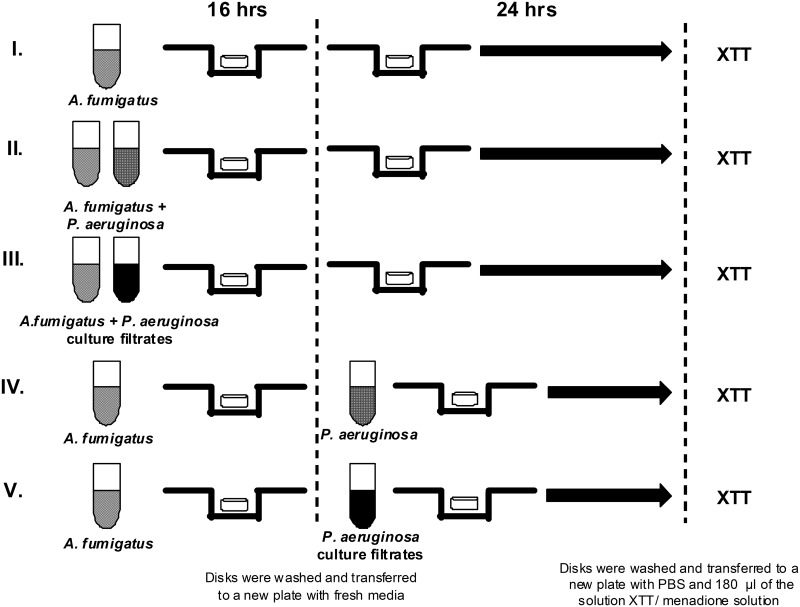
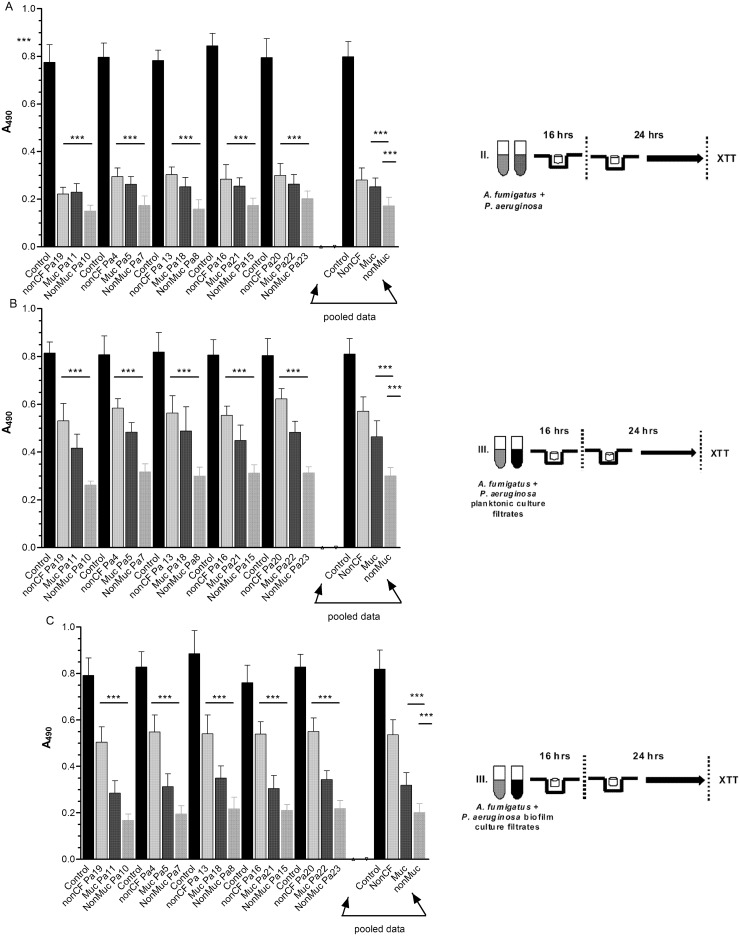
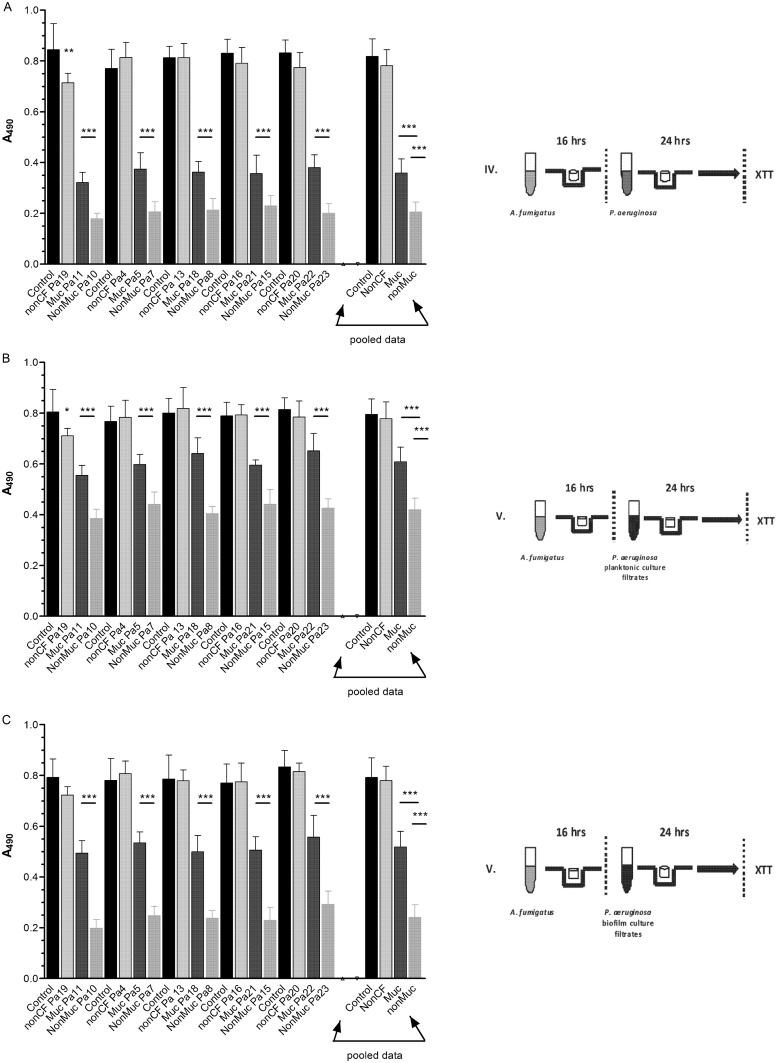
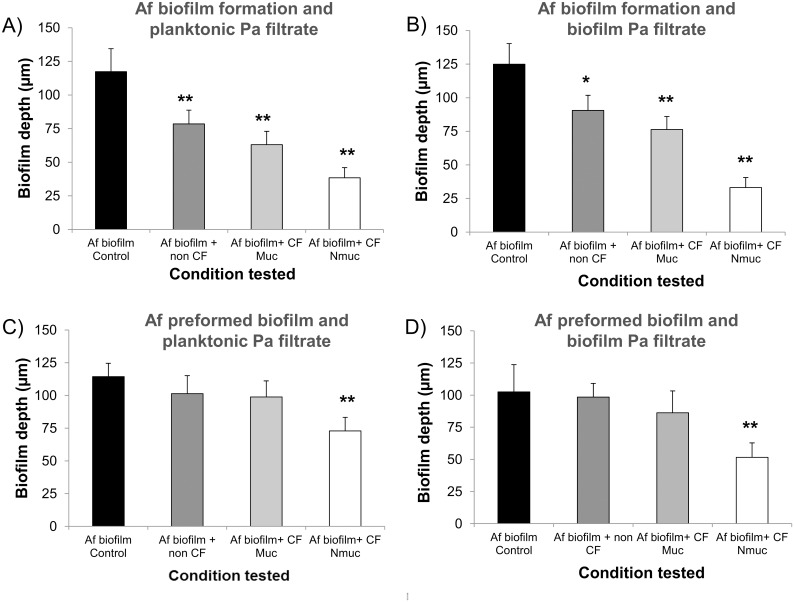
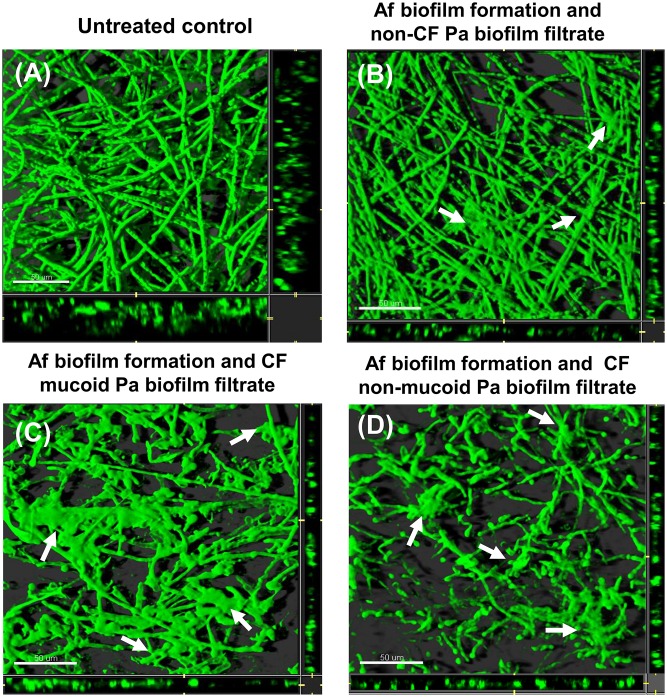
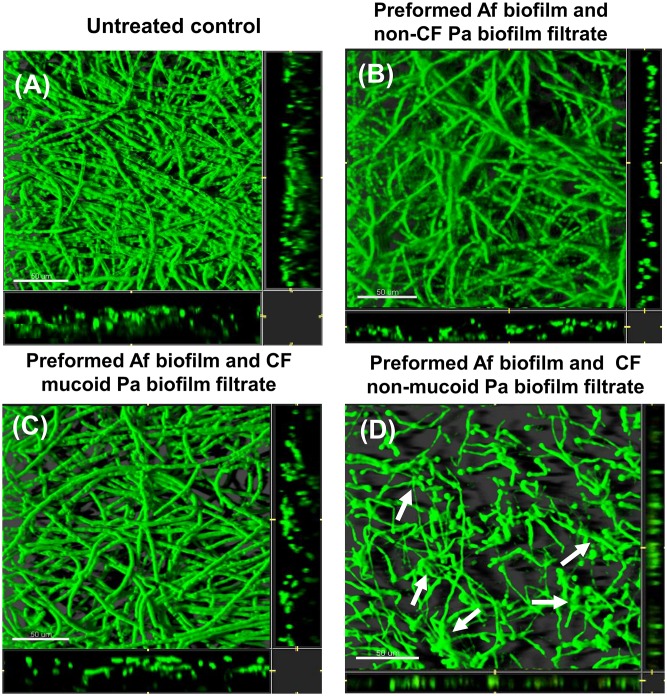
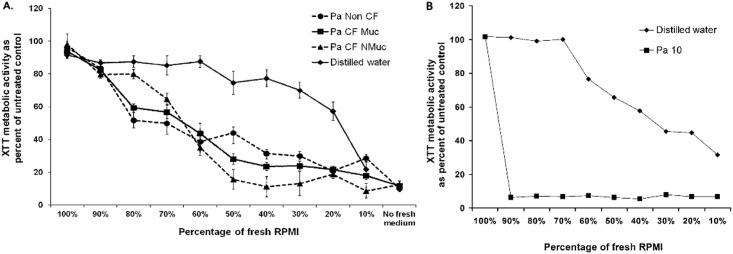
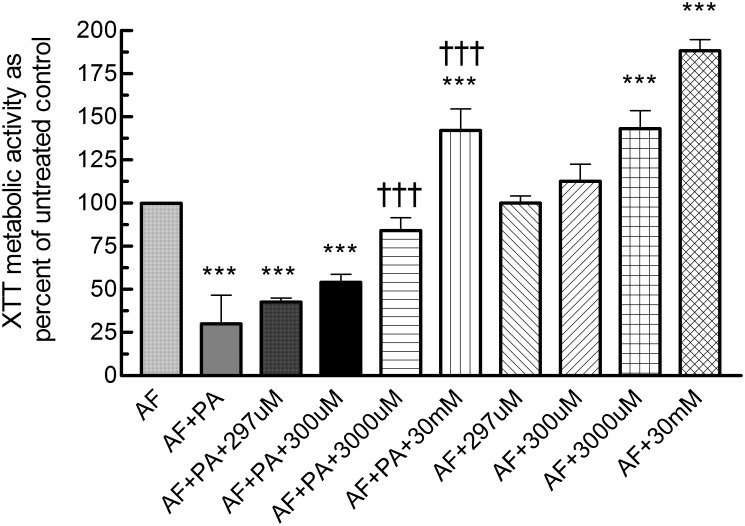
Aspergillus fumigatus (Af) and Pseudomonas aeruginosa (Pa) are leading fungal and bacterial pathogens, respectively, in many clinical situations. Relevant to this, their interface and co-existence has been studied. In some experiments in vitro, Pa products have been defined that are inhibitory to Af. In some clinical situations, both can be biofilm producers, and biofilm could alter their physiology and affect their interaction. That may be most relevant to airways in cystic fibrosis (CF), where both are often prominent residents. We have studied clinical Pa isolates from several sources for their effects on Af, including testing involving their biofilms. We show that the described inhibition of Af is related to the source and phenotype of the Pa isolate. Pa cells inhibited the growth and formation of Af biofilm from conidia, with CF isolates more inhibitory than non-CF isolates, and non-mucoid CF isolates most inhibitory. Inhibition did not require live Pa contact, as culture filtrates were also inhibitory, and again non-mucoid>mucoid CF>non-CF. Preformed Af biofilm was more resistant to Pa, and inhibition that occurred could be reproduced with filtrates. Inhibition of Af biofilm appears also dependent on bacterial growth conditions; filtrates from Pa grown as biofilm were more inhibitory than from Pa grown planktonically. The differences in Pa shown from these different sources are consistent with the extensive evolutionary Pa changes that have been described in association with chronic residence in CF airways, and may reflect adaptive changes to life in a polymicrobial environment.
Overview
The claims and statistics of this paper haven’t been checked yet.
Free: it reads the open-access text and checks the first 5 claims that cite a source we can check. Create a free account to check every claim.
Integrity signals
Registry
Cites
Statistics
Figures
Verification
Claims the paper makes
The claims and statistics of this paper haven’t been checked yet.
Free: it reads the open-access text and checks the first 5 claims that cite a source we can check. Create a free account to check every claim.
Claims other papers make about this one
Each is checked against this paper’s own text: does it say what the citing paper says it does?
In the citing paper
“Most studies have found that these bacterial molecules inhibit the fungal biofilm (573–576).”
From Aspergillus fumigatus and Aspergillosis in 2019 (2019) · cites this paper as [574]
Self-check
Percentages, sums and reported differences re-computed from the paper’s own numbers.
The self-check needs the paper’s full text.
Citations
Cites
Evolving concepts in biofilm infections
Hall-Stoodley, L., & Stoodley, P. (2009) · Cellular Microbiology · doi:10.1111/j.1462-5822.2009.01323.x · Cited by 1,136 · cited 1×
“Microbes in biofilms have altered metabolism compared to the same organisms growing planktonically, and biofilms provide microbes with protection from host defenses as well as tolerance to some antimicrobial drugs [21].”
BackgroundPierce, C. G., Uppuluri, P., Tristan, A. R., Wormley, F. L., Mowat, E., Ramage, G., & Lopez-Ribot, J. L. (2008) · Nature Protocols · doi:10.1038/nprot.2008.141 · Cited by 1,041
Pseudomonas aeruginosa biofilms in the respiratory tract of cystic fibrosis patients
Bjarnsholt, T., Jensen, P. Ø., Fiandaca, M. J., Pedersen, J., Hansen, C. R., Andersen, C. B., Pressler, T., Givskov, M., & Høiby, N. (2009) · Pediatric Pulmonology · doi:10.1002/ppul.21011 · Cited by 795
Stevens, D. A., Moss, R. B., Kurup, V. P., Knutsen, A. P., Greenberger, P., Judson, M. A., Denning, D. W., Crameri, R., Brody, A. S., Light, M., et al. (2003) · Clinical Infectious Diseases · doi:10.1086/376525 · Cited by 790 · cited 1×
“In addition to infection, Af can cause allergic bronchopulmonary aspergillosis in up to 15% of CF patients, a complication that causes repeated acute exacerbations, institution of immunosuppressive therapy, and accelerated decline in lung function [23].”
BackgroundSelf-citationAdaptation of Pseudomonas aeruginosa to the cystic fibrosis airway: an evolutionary perspective
Folkesson, A., Jelsbak, L., Yang, L., Johansen, H. K., Ciofu, O., Høiby, N., & Molin, S. (2012) · Nature Reviews Microbiology · doi:10.1038/nrmicro2907 · Cited by 715 · cited 4×
“Among the CF isolates, five were mucoid colony phenotype variants [2,8,9] and five were non-mucoid colony phenotype variants.”
BackgroundInfluentialAmin, R., Dupuis, A., Aaron, S. D., & Ratjen, F. (2010) · Chest · doi:10.1378/chest.09-1103 · Cited by 376 · cited 1×
“Infection with Pa or Af has been associated with a more rapid decline in CF pulmonary function [17,25–33], with the co-infected patients having the worst prognosis [32,34].”
BackgroundPseudomonas aeruginosa pyocyanin and 1-hydroxyphenazine inhibit fungal growth.
Kerr, J. R., Taylor, G. W., Rutman, A., Høiby, N., Cole, P. J., & Wilson, R. (1999) · Journal of Clinical Pathology · doi:10.1136/jcp.52.5.385 · Cited by 304
Pihet, M., Carrere, J., Cimon, B., Chabasse, D., Delhaes, L., Symoens, F., Bouchara, J.-P., Pihet, M., Carrere, J., Cimon, B., et al. (2009) · Medical Mycology · doi:10.1080/13693780802609604 · Cited by 303
Dekimpe, V., & Déziel, E. (2009) · Microbiology · doi:10.1099/mic.0.022764-0 · Cited by 294
Research works printed but not linked: 2
- Penner JC, Ferreira JAG, Secor PR, Sweere J, Clemons KV, Stevens DA, et al. Pseudomonas aeruginosa Pf4 phage is an inhibitor of Aspergillus fumigatus biofilm formation and development. Abstr. 54th Intersci. Conf. Antimicrob. Agents Chemother. Washington, DC, 2014, Abstract no. M-435.
- Clinical Laboratory Standards Institute. Reference method for broth dilution antifungal susceptibility testing of filamentous fungi; approved standard- second edition Document M38-A2. 2008 CLSI, Wayne, PA
Cited by
Aspergillus fumigatus and Aspergillosis in 2019
Latgé, J.-P., & Chamilos, G. (2019) · Clinical Microbiology Reviews · doi:10.1128/cmr.00140-18 · Cited by 1,400
Bacterial–fungal interactions: ecology, mechanisms and challenges
Deveau, A., Bonito, G., Uehling, J., Paoletti, M., Becker, M., Bindschedler, S., Hacquard, S., Hervé, V., Labbé, J., Lastovetsky, O. A., et al. (2018) · FEMS Microbiology Reviews · doi:10.1093/femsre/fuy008 · Cited by 794
Paulussen, C., Hallsworth, J. E., Álvarez‐Pérez, S., Nierman, W. C., Hamill, P. G., Blain, D., Rediers, H., & Lievens, B. (2017) · Microbial Biotechnology · doi:10.1111/1751-7915.12367 · Cited by 334
Fungal-Bacterial Interactions in Health and Disease
Krüger, W., Vielreicher, S., Kapitan, M., Jacobsen, I., & Niemiec, M. (2019) · Pathogens · doi:10.3390/pathogens8020070 · Cited by 227
“Of note, these e ff ects were depending on the isolation source and growth phenotype of the bacteria [271].”
Interdependence between iron acquisition and biofilm formation in Pseudomonas aeruginosa
Kang, D., & Kirienko, N. V. (2018) · Journal of Microbiology · doi:10.1007/s12275-018-8114-3 · Cited by 135
“aeruginosa inhibits Aspergillus fumigatus biofilm formation via Pf4-mediated iron sequestration (Ferreira et al., 2015; Penner et al., 2016).”
Metadata
- Authors
- Ferreira, J. A. G., Penner, J. C., Moss, R. B., Haagensen, J. A. J., Clemons, K. V., Spormann, A. M., Nazik, H., Cohen, K., Banaei, N., Carolino, E., & Stevens, D. A.
- Affiliations
- California Institute for Medical Research (US)
- Stanford Medicine (US)
- Stanford University (US)
- University of Lisbon (PT)
- Corresponding author
- Stevens, David A.
- ORCID
- Venue
- PLOS ONE
- Publisher
- Public Library of Science (PLoS)
- Published
- 2015-08-07
- Volume
- 10
- Issue
- 8
- Pages
- e0134692
- ISSN
- 1932-6203 (ISSN-L)
- PMC
- PMC4529298
- OpenAlex
- W1911767807
- Cited by
- 92
- References
- 73
- Citations by year
- 2026: 3 · 2025: 4 · 2024: 9 · 2023: 7 · 2022: 7 · 2021: 10 · 2020: 11 · 2019: 10 · 2018: 12 · 2017: 8 · 2016: 9 · 2015: 2
- FWCI
- 4.49
- Type
- journal article
- Language
- en
- Open access
- gold
- doi.org
- Licence
- Locations
- PLoS ONE (publishedVersion, cc-by)
- Europe PMC (PubMed Central) (publishedVersion, cc-by)
- PubMed Central (publishedVersion, cc-by)
- PubMed (publishedVersion)
- DOAJ (DOAJ: Directory of Open Access Journals) (submittedVersion, cc-by-sa)
- Portuguese National Funding Agency for Science, Research and Technology (RCAAP Project by FCT) (submittedVersion, other-oa)
- Funders
- Conselho Nacional de Desenvolvimento Científico e Tecnológico
- Türkiye Bilimsel ve Teknolojik Araştırma Kurumu
- Topics
- Life Sciences › Biochemistry, Genetics and Molecular Biology › Molecular Biology › Bacterial biofilms and quorum sensing
- Health Sciences › Medicine › Infectious Diseases › Antifungal resistance and susceptibility
- Health Sciences › Medicine › Pulmonary and Respiratory Medicine › Cystic Fibrosis Research Advances
- Keywords
- Aspergillus fumigatus, Pseudomonas aeruginosa, antibacterial activity, biofilm, cystic fibrosis, mucoid phenotype, culture filtrate, polymicrobial interactions, bacterial growth conditions, clinical isolates, fungal-bacterial co-infection
- MeSH terms
- Aspergillus fumigatus, Chlorides, Deoxyribonuclease I, Ferric Compounds, Humans, Iron, Molecular Weight, Phenotype, Plankton, Pseudomonas aeruginosa, Spores, Fungal, Temperature, Biofilms, Microscopy, Confocal, Endopeptidase K, Microbial Viability
About these checks
Registry, retraction, Cites and statistics results are computed, not judged, with one exception: a printed reference that no index lists is read once by a model before it counts as a citation error. Claims are extracted by a model and kept only when their quote appears verbatim in the text; each cited source is then checked, with a model’s help, for whether it says what the claim relies on. Those verdicts can be wrong — read the claim’s quote and the cited source before relying on one.
Statistics and arithmetic are recomputed, not judged.
Confidence bands are shown only for fields calibrated on our annotated test set. None is calibrated yet, so no band is shown.
What counts as a claim ›How we measure confidence ›How we check this ›
Are you an author, or do you see a problem with this page? Request a review
Data sources
Bibliographic data: Semantic Scholar, OpenAlex, Crossref.
Contains information from the Semantic Scholar Academic Graph Datasets, made available under the ODC Attribution License (ODC-BY 1.0).
Semantic Scholar’s data is described in: Kinney, R., et al. (2023). The Semantic Scholar Open Data Platform. arXiv:2301.10140.
