

Repetition-Related Reductions in Neural Activity during Emotional Simulations of Future Events
Open accessThe DOI matches its Crossref record; 51 of the 52 references it cites were found in a registry or an index.
Abstract
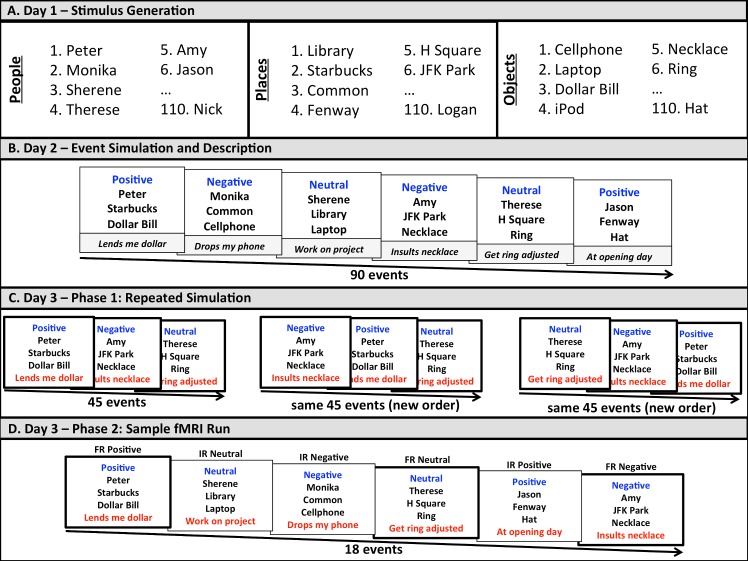
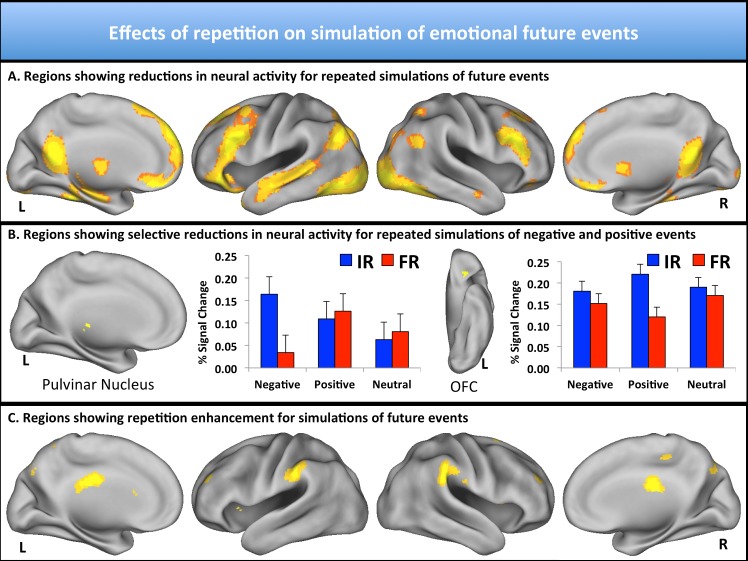
Simulations of future experiences are often emotionally arousing, and the tendency to repeatedly simulate negative future outcomes has been identified as a predictor of the onset of symptoms of anxiety. Nonetheless, next to nothing is known about how the healthy human brain processes repeated simulations of emotional future events. In this study, we present a paradigm that can be used to study repeated simulations of the emotional future in a manner that overcomes phenomenological confounds between positive and negative events. The results show that pulvinar nucleus and orbitofrontal cortex respectively demonstrate selective reductions in neural activity in response to frequently as compared to infrequently repeated simulations of negative and positive future events. Implications for research on repeated simulations of the emotional future in both non-clinical and clinical populations are discussed.
Overview
The claims and statistics of this paper haven’t been checked yet.
Free: it reads the open-access text and checks the first 5 claims that cite a source we can check. Create a free account to check every claim.
Integrity signals
Registry
Cites
Statistics
Figures
Verification
Claims the paper makes
The claims and statistics of this paper haven’t been checked yet.
Free: it reads the open-access text and checks the first 5 claims that cite a source we can check. Create a free account to check every claim.
Claims other papers make about this one
Each is checked against this paper’s own text: does it say what the citing paper says it does?
The cited source says what the claim attributes to it.
In the citing paper
“initial results linking the pulvinar nucleus of the thalamus to simulations of negative future events and the orbitofrontal cortex to positive events (55).”
From Episodic Future Thinking: Mechanisms and Functions (2017) · cites this paper as [55]
Self-check
Percentages, sums and reported differences re-computed from the paper’s own numbers.
The self-check needs the paper’s full text.
Citations
Cites
The organization of the human cerebral cortex estimated by intrinsic functional connectivity
Thomas Yeo, B. T., Krienen, F. M., Sepulcre, J., Sabuncu, M. R., Lashkari, D., Hollinshead, M., Roffman, J. L., Smoller, J. W., Zöllei, L., Polimeni, J. R., et al. (2011) · Journal of Neurophysiology · doi:10.1152/jn.00338.2011 · Cited by 9,182
The organization of the human cerebellum estimated by intrinsic functional connectivity
Buckner, R. L., Krienen, F. M., Castellanos, A., Diaz, J. C., & Yeo, B. T. T. (2011) · Journal of Neurophysiology · doi:10.1152/jn.00339.2011 · Cited by 7,304
Calamita, E., Schmid, M., Kunz, M., Ndebele-Murisa, M. R., Magadza, C. H. D., Nyambe, I., & Wehrli, B. (2019) · Figshare · doi:10.26181/6153922fe919c · Cited by 4,222
Constructive and unconstructive repetitive thought
Watkins, E. R. (2008) · Psychological Bulletin · doi:10.1037/0033-2909.134.2.163 · Cited by 2,421 · cited 2×
“Indeed, individual variation in the amount of repetitive negative thought about the future represents a known predictor for the development of diagnosable symptoms of anxiety [7,8].”
BackgroundThe role of the amygdala in fear and anxiety
Davis, M. (1992) · Annual Review of Neuroscience · doi:10.1146/annurev.ne.15.030192.002033 · Cited by 2,357 · cited 1×
“Although little is known about what regions of the brain are sensitive to repeated simulations of negative events, subcortical structures such as pulvinar nucleus and amygdala represent feasible candidates given their involvement in processing aversive stimuli in the context of threat and fear apprehension [21,22,23].”
BackgroundGreicius, M. D., Flores, B. H., Menon, V., Glover, G. H., Solvason, H. B., Kenna, H., Reiss, A. L., & Schatzberg, A. F. (2007) · Biological Psychiatry · doi:10.1016/j.biopsych.2006.09.020 · Cited by 2,214 · cited 1×
“Both of these regions have further been associated with abnormally high levels of metabolic activity [36] and exaggerated resting state connectivity [37,38] in individuals diagnosed with major depression, who also demonstrated high symptoms of anxiety (for relevant discussion, see [39]).”
BackgroundA framework for studying the neurobiology of value-based decision making
Rangel, A., Camerer, C., & Montague, P. R. (2008) · Nature Reviews Neuroscience · doi:10.1038/nrn2357 · Cited by 2,184 · cited 1×
“Although considerable prior work has demonstrated a role for orbitofrontal cortex in processing reward-related stimuli [26,40,41,42], our findings nonetheless add credence to more recent findings indicating that this region is involved in processing both real and imagined rewards [11,43].”
ResultKRINGELBACH, M. (2004) · Progress in Neurobiology · doi:10.1016/j.pneurobio.2004.03.006 · Cited by 1,977 · cited 1×
“Although considerable prior work has demonstrated a role for orbitofrontal cortex in processing reward-related stimuli [26,40,41,42], our findings nonetheless add credence to more recent findings indicating that this region is involved in processing both real and imagined rewards [11,43].”
ResultAddis, D. R., Wong, A. T., & Schacter, D. L. (2007) · Neuropsychologia · doi:10.1016/j.neuropsychologia.2006.10.016 · Cited by 1,949 · cited 1×
“Using a novel repeated simulation paradigm, we found that infrequently relative to frequently repeated simulations of future events engaged a distributed set of frontal-parietal-temporal regions that have previously been demonstrated to support the ability to simulate future events [2,3,20,28,29,30].”
BackgroundSelf-citationPessoa, L., & Adolphs, R. (2010) · Nature Reviews Neuroscience · doi:10.1038/nrn2920 · Cited by 1,794 · cited 1×
“Although little is known about what regions of the brain are sensitive to repeated simulations of negative events, subcortical structures such as pulvinar nucleus and amygdala represent feasible candidates given their involvement in processing aversive stimuli in the context of threat and fear apprehension [21,22,23].”
Background
Cited by
Episodic Future Thinking: Mechanisms and Functions
Schacter, D. L., Benoit, R. G., & Szpunar, K. K. (2017) · Current Opinion in Behavioral Sciences · doi:10.1016/j.cobeha.2017.06.002 · Cited by 771
“The repetition suppression technique has also been used to identify brain regions that contribute to emotional future simulations, with initial results linking the pulvinar nucleus of the thalamus to simulations of negative future events and the orbitofrontal cortex to positive events [55].”
MethodSelf-citationThe influence of subcortical shortcuts on disordered sensory and cognitive processing.
McFadyen, J., Dolan, R. J., & Garrido, M. I. (2020) · Nature Reviews Neuroscience · doi:10.1038/s41583-020-0287-1 · Cited by 91
Remembering and imagining alternative versions of the personal past
Jacques, P. L. S., Carpenter, A. C., Szpunar, K. K., & Schacter, D. L. (2017) · Neuropsychologia · doi:10.1016/j.neuropsychologia.2017.06.015 · Cited by 75
“In previous research we have observed similar repetition suppression effects irrespective of whether trials are repeated within the same fMRI run or not (Szpunar et al., 2015), and we expected to find the same robust effects here.”
BackgroundSelf-citationEvidence supporting a time-limited hippocampal role in retrieving autobiographical memories
Gilmore, A. W., Quach, A., Kalinowski, S. E., González-Araya, E. I., Gotts, S. J., Schacter, D. L., & Martin, A. (2021) · Proceedings of the National Academy of Sciences · doi:10.1073/pnas.2023069118 · Cited by 66
Self-citationThakral, P. P., Benoit, R. G., & Schacter, D. L. (2017) · Cortex · doi:10.1016/j.cortex.2017.02.005 · Cited by 39
“The use of 3, 4, and 5 details was motivated by our previous experiments that have used a minimum of 3 cued details (i.e., place, person, and object cues; see, Addis et al., 2009; Gaesser et al., 2013; Martin et al., 2011; Szpunar et al., 2015).”
MethodSelf-citationThe Neuroscience of Spontaneous Thought: An Evolving, Interdisciplinary FieldPreprint
Andrews‐Hanna, J. R., Irving, Z. C., Fox, K. C. R., Spreng, R. N., & Kalina Christoff, A. (2017) · arXiv (Cornell University) · doi:10.48550/arxiv.1704.02533 · Cited by 39
“…specific components of the default network directly contribute to the generation of spontaneous thoughts in a more domain-general manner, yet interact with other default regions, such as the lateral temporal cortex, to elaborate thoughts with specific conceptual content (e.g. Szpunar et al., 2015).”
BackgroundNarrative imagery: Emotional modulation in the default mode network
Sambuco, N., Bradley, M. M., & Lang, P. J. (2021) · Neuropsychologia · doi:10.1016/j.neuropsychologia.2021.108087 · Cited by 42
Murphy, S. E., O'Donoghue, M. C., Blackwell, S. E., Nobre, A. C., Browning, M. D., & Holmes, E. A. (2017) · Social Cognitive and Affective Neuroscience · doi:10.1093/scan/nsx120 · Cited by 26
“However, to differentiate between these possibilities more precisely in future research other paradigms designed to increase the likelihood that novel events are simulated (e.g. Szpunar et al., 2015) could be used.”
BackgroundNeural activity associated with repetitive simulation of episodic counterfactual thoughts
Brigard, F. D., Parikh, N., Stewart, G. W., Szpunar, K. K., & Schacter, D. L. (2017) · Neuropsychologia · doi:10.1016/j.neuropsychologia.2017.09.022 · Cited by 17
“More recently, Szpunar et al. (2015) also examined brain activity associated with repetition of emotional episodic future thoughts, and identified a set of regions closely resembling those revealed by our study, including IPL, right MFG, aCC and insula.”
Self-citationAge-related changes in repetition suppression of neural activity during emotional future simulation
Devitt, A. L., Thakral, P. P., Szpunar, K. K., Addis, D. R., & Schacter, D. L. (2020) · Neurobiology of Aging · doi:10.1016/j.neurobiolaging.2020.06.016 · Cited by 14
“One possible function of specific core network regions may be to process the emotional quality of future events (D’Argembeau et al., 2011; Szpunar et al., 2015).”
BackgroundSelf-citationNeural correlates of repeated retrieval of emotional autobiographical events
Bradley, M. M., Sambuco, N., & Lang, P. J. (2022) · Neuropsychologia · doi:10.1016/j.neuropsychologia.2022.108203 · Cited by 12
Episodic recombination and the role of time in mental travel
Mahr, J. B., & Schacter, D. L. (2024) · Philosophical Transactions of the Royal Society B Biological Sciences · doi:10.1098/rstb.2023.0409 · Cited by 9
“…et al. [98] showed that repeated simulation of a future event diminished the contribution of the hippocampus and other regions thought to be involved in the constructive process of episodic recombination (for related findings concerning simulation of individual event features, see [99,100]).”
Self-citationDecoding the emotional valence of future thoughts
Devitt, A. L., Thakral, P. P., & Schacter, D. L. (2021) · Cognitive Neuroscience · doi:10.1080/17588928.2021.1906638 · Cited by 6
“…examining future thinking have used a similar repeated simulation design with emotional future events (e.g., D’Argembeau et al., 2008; Devitt et al., 2020; Szpunar et al., 2015, 2014), and obtained broadly similar results as studies in which events are simulated in the scanner for the first time.”
ResultSelf-citationConstructive Episodic Simulation: Cognitive and Neural Processes
van Genugten, R. D. I., & Schacter, D. L. (2021) · Springer eBooks · doi:10.1007/978-3-030-51890-5_22 · Cited by 7
“…wandering, self-referential processing, and counterfactual thinking), and it is not clear that all of them involve the same neural computations (Beaty, Benedek, Silvia, & Schacter, 2016; Buckner et al., 2008; Mason et al., 2007; Ochsner et al., 2004; Schacter, Benoit, De Brigard, & Szpunar, 2015).”
BackgroundSelf-citationGurguryan, L., Fenerci, C., Ngo, N., & Sheldon, S. (2024) · Journal of Cognitive Neuroscience · doi:10.1162/jocn_a_02170 · Cited by 9
Emotional future simulations: neural and cognitive perspectives
Schacter, D. L., Kalinowski, S. E., & Wilson, J. M. (2024) · Cerebral Cortex · doi:10.1093/cercor/bhae388 · Cited by 6
Self-citationCognitive and neural bases of autobiographical reasoning for past and future events
Ernst, A., Stawarczyk, D., & D’Argembeau, A. (2026) · Neuropsychologia · doi:10.1016/j.neuropsychologia.2026.109441 · Cited by 2
Addis, D. R. (2024) · Elsevier eBooks · doi:10.1016/b978-0-12-820480-1.00135-2
The relationship between episodic memory and future thinking
Addis, D. R., & Devitt, A. L. (2024) · Elsevier eBooks · doi:10.1016/b978-0-443-15754-7.00015-8
Emotional past and future events after pulvinar damage: A neuropsychological case series
Cole, S. N., Szpunar, K. K., Benoit, R. G., Bastin, C., Schacter, D. L., Rafal, R. D., & Turnbull, O. H. (2025) · Cortex · doi:10.1016/j.cortex.2024.12.021
Self-citation
Metadata
- Authors
- Szpunar, K. K., Jing, H. G., Benoit, R. G., & Schacter, D. L.
- Affiliations
- University of Illinois Chicago (US)
- Harvard University (US)
- Corresponding author
- Szpunar, Karl K.
- Venue
- PLOS ONE
- Publisher
- Public Library of Science (PLoS)
- Published
- 2015-09-21
- Volume
- 10
- Issue
- 9
- Pages
- e0138354
- ISSN
- 1932-6203 (ISSN-L)
- PMC
- PMC4577104
- OpenAlex
- W2098006905
- Cited by
- 20
- References
- 52
- Citations by year
- 2026: 1 · 2025: 1 · 2024: 5 · 2022: 1 · 2021: 4 · 2020: 2 · 2017: 6
- FWCI
- 1.20
- Type
- journal article
- Language
- en
- Open access
- gold
- doi.org
- Licence
- Locations
- PLoS ONE (publishedVersion, cc-by)
- Europe PMC (PubMed Central) (publishedVersion, cc-by)
- PubMed Central (publishedVersion, cc-by)
- PubMed (publishedVersion)
- MPG.PuRe (Max Planck Society) (submittedVersion, other-oa)
- Digital Access to Scholarship at Harvard (DASH) (Harvard University) (submittedVersion, cc-by)
- DOAJ (DOAJ: Directory of Open Access Journals) (submittedVersion, cc-by-sa)
- Max Planck Digital Library (submittedVersion, other-oa)
- Figshare (submittedVersion, cc-by)
- Funders
- National Institute of Mental Health (5R01MH60941-13, R01MH060941)
- Topics
- Life Sciences › Neuroscience › Cognitive Neuroscience › Neural and Behavioral Psychology Studies
- Social Sciences › Psychology › Experimental and Cognitive Psychology › Anxiety, Depression, Psychometrics, Treatment, Cognitive Processes
- Life Sciences › Neuroscience › Cognitive Neuroscience › Memory Processes and Influences
- Keywords
- emotional anticipation, repetition, pulvinar, orbitofrontal cortex, neuronal activity, anxiety
- MeSH terms
- Adult, Anxiety, Emotions, Female, Humans, Life Change Events, Magnetic Resonance Imaging, Male, Prefrontal Cortex, Pulvinar, Young Adult
About these checks
Registry, retraction, Cites and statistics results are computed, not judged, with one exception: a printed reference that no index lists is read once by a model before it counts as a citation error. Claims are extracted by a model and kept only when their quote appears verbatim in the text; each cited source is then checked, with a model’s help, for whether it says what the claim relies on. Those verdicts can be wrong — read the claim’s quote and the cited source before relying on one.
Statistics and arithmetic are recomputed, not judged.
Confidence bands are shown only for fields calibrated on our annotated test set. None is calibrated yet, so no band is shown.
What counts as a claim ›How we measure confidence ›How we check this ›
Are you an author, or do you see a problem with this page? Request a review
Data sources
Bibliographic data: Semantic Scholar, OpenAlex, Crossref.
Contains information from the Semantic Scholar Academic Graph Datasets, made available under the ODC Attribution License (ODC-BY 1.0).
Semantic Scholar’s data is described in: Kinney, R., et al. (2023). The Semantic Scholar Open Data Platform. arXiv:2301.10140.
