

The DOI matches its Crossref record; 89 of the 91 references it cites were found in a registry or an index.
Pain and Laboratory Animals: Publication Practices for Better Data Reproducibility and Better Animal Welfare
Open accessAbstract
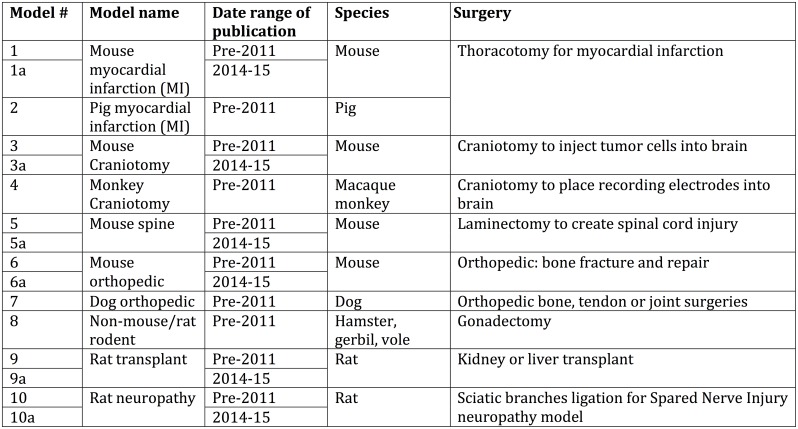
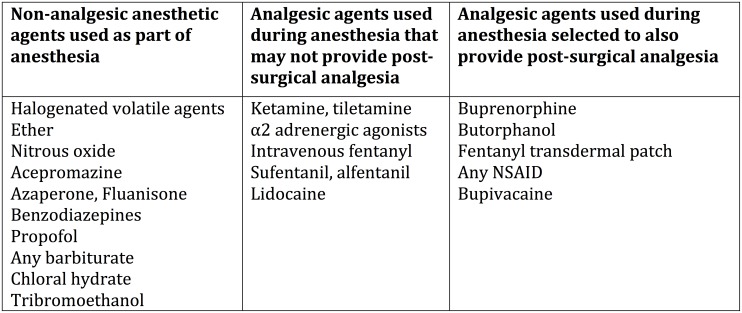
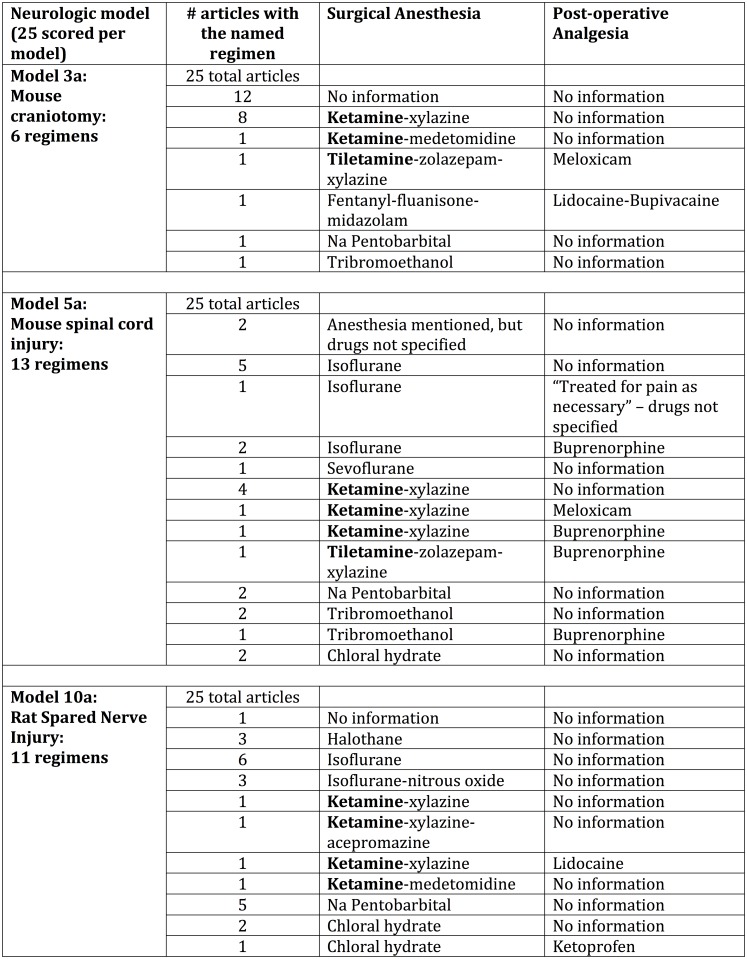
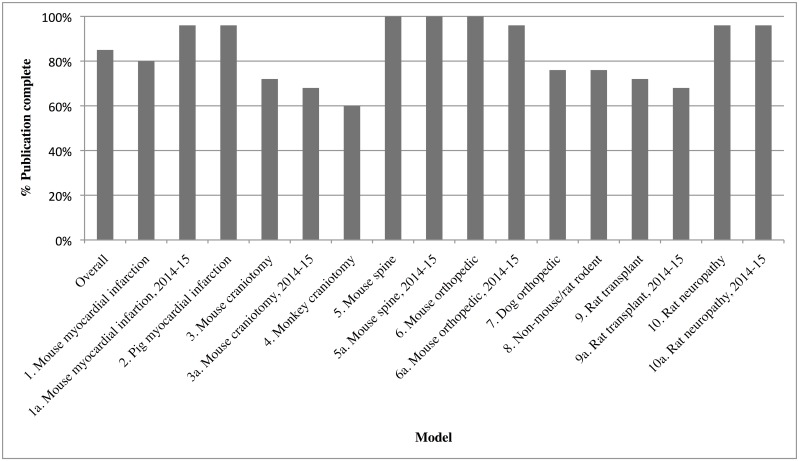
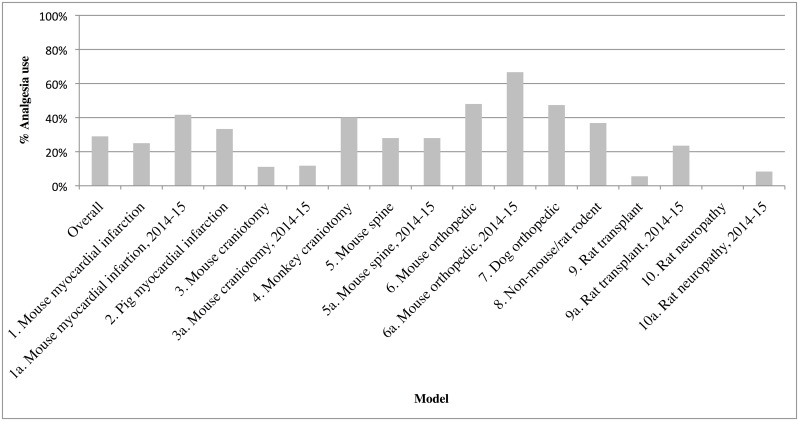
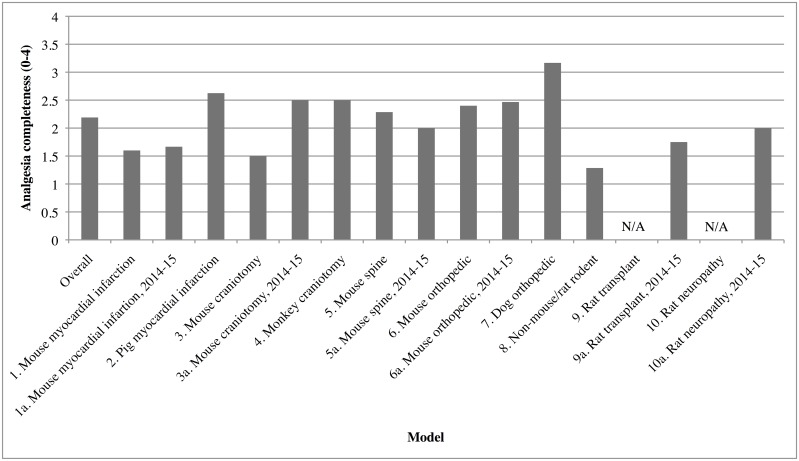
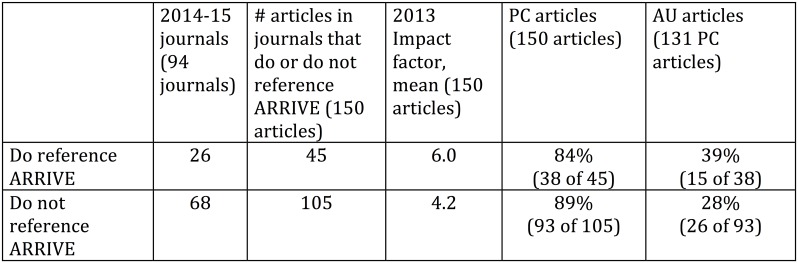
Scientists who perform major survival surgery on laboratory animals face a dual welfare and methodological challenge: how to choose surgical anesthetics and post-operative analgesics that will best control animal suffering, knowing that both pain and the drugs that manage pain can all affect research outcomes. Scientists who publish full descriptions of animal procedures allow critical and systematic reviews of data, demonstrate their adherence to animal welfare norms, and guide other scientists on how to conduct their own studies in the field. We investigated what information on animal pain management a reasonably diligent scientist might find in planning for a successful experiment. To explore how scientists in a range of fields describe their management of this ethical and methodological concern, we scored 400 scientific articles that included major animal survival surgeries as part of their experimental methods, for the completeness of information on anesthesia and analgesia. The 400 articles (250 accepted for publication pre-2011, and 150 in 2014-15, along with 174 articles they reference) included thoracotomies, craniotomies, gonadectomies, organ transplants, peripheral nerve injuries, spinal laminectomies and orthopedic procedures in dogs, primates, swine, mice, rats and other rodents. We scored articles for Publication Completeness (PC), which was any mention of use of anesthetics or analgesics; Analgesia Use (AU) which was any use of post-surgical analgesics, and Analgesia Completeness (a composite score comprising intra-operative analgesia, extended post-surgical analgesia, and use of multimodal analgesia). 338 of 400 articles were PC. 98 of these 338 were AU, with some mention of analgesia, while 240 of 338 mentioned anesthesia only but not post-surgical analgesia. Journals' caliber, as measured by their 2013 Impact Factor, had no effect on PC or AU. We found no effect of whether a journal instructs authors to consult the ARRIVE publishing guidelines published in 2010 on PC or AC for the 150 mouse and rat articles in our 2014-15 dataset. None of the 302 articles that were silent about analgesic use included an explicit statement that analgesics were withheld, or a discussion of how pain management or untreated pain might affect results. We conclude that current scientific literature cannot be trusted to present full detail on use of animal anesthetics and analgesics. We report that publication guidelines focus more on other potential sources of bias in experimental results, under-appreciate the potential for pain and pain drugs to skew data, and thus mostly treat pain management as solely an animal welfare concern, in the jurisdiction of animal care and use committees. At the same time, animal welfare regulations do not include guidance on publishing animal data, even though publication is an integral part of the cycle of research and can affect the welfare of animals in studies building on published work, leaving it to journals and authors to voluntarily decide what details of animal use to publish. We suggest that journals, scientists and animal welfare regulators should revise current guidelines and regulations, on treatment of pain and on transparent reporting of treatment of pain, to improve this dual welfare and data-quality deficiency.
Overview
The claims and statistics of this paper haven’t been checked yet.
Run the check — free, no account needed. It reads the open-access text and checks the sources it cites.
Integrity signals
Registry
Cites
Statistics
Figures

Verification
Claims the paper makes
The claims and statistics of this paper haven’t been checked yet.
Run the check — free, no account needed. It reads the open-access text and checks the sources it cites.
Claims other papers make about this one
Each is checked against this paper’s own text: does it say what the citing paper says it does?
The source backs part of the claim, not all of it — or backs it for a different population, condition or comparison.
In the citing paper
“Underreporting of welfare management procedures contributes to the perpetuation of noncompliant methodologies and insufficient or inappropriate use of analgesia [213] or other welfare measures.”
From Reporting animal research: Explanation and elaboration for the ARRIVE guidelines 2.0 (2020) · cites this paper as [213]
Experimental — accuracy not yet measuredThe cited source says what the claim attributes to it.
In the citing paper
“Untreated pain can affect the animals’ biology and add variability to the experiment; however, specific pain management procedures can also introduce variability, affecting experimental data [212,213].”
From Reporting animal research: Explanation and elaboration for the ARRIVE guidelines 2.0 (2020) · cites this paper as [213]
The cited source says what the claim attributes to it.
In the citing paper
“Untreated pain can affect the animals’ biology and add variability to the experiment; however, specific pain management procedures can also introduce variability, affecting experimental data [212,213].”
From Reporting animal research: Explanation and elaboration for the ARRIVE guidelines 2.0 (2020) · cites this paper as [213]
Self-check
Percentages, sums and reported differences re-computed from the paper’s own numbers.
The self-check needs the paper’s full text.
Citations
Cites
Guide for the Care and Use of Laboratory Animals: Eighth Edition
(2011) · doi:10.17226/12910 · Cited by 16,199
Improving Bioscience Research Reporting: The ARRIVE Guidelines for Reporting Animal Research
Kilkenny, C., Browne, W. J., Cuthill, I. C., Emerson, M., & Altman, D. G. (2010) · PLoS Biology · doi:10.1371/journal.pbio.1000412 · Cited by 7,300
Improving bioscience research reporting: The ARRIVE guidelines for reporting animal research
Kilkenny, C., Browne, W. J., Cuthill, I. C., Emerson, M., & Altman, D. G. (2010) · Journal of Pharmacology and Pharmacotherapeutics · doi:10.4103/0976-500x.72351 · Cited by 6,277
The Principles of Humane Experimental Technique
(1960) · The Medical Journal of Australia · doi:10.5694/j.1326-5377.1960.tb73127.x · Cited by 5,045
Spared nerve injury: an animal model of persistent peripheral neuropathic pain
Décosterd, I., & Woolf, C. J. (2000) · Pain · doi:10.1016/s0304-3959(00)00276-1 · Cited by 2,317
Can Animal Models of Disease Reliably Inform Human Studies?
van der Worp, H. B., Howells, D. W., Sena, E. S., Porritt, M. J., Rewell, S., O'Collins, V., & Macleod, M. R. (2010) · PLoS Medicine · doi:10.1371/journal.pmed.1000245 · Cited by 1,354
A call for transparent reporting to optimize the predictive value of preclinical research
Landis, S. C., Amara, S. G., Asadullah, K., Austin, C. P., Blumenstein, R., Bradley, E. W., Crystal, R. G., Darnell, R. B., Ferrante, R. J., Fillit, H., et al. (2012) · Nature · doi:10.1038/nature11556 · Cited by 1,196
Pooling of Animal Experimental Data Reveals Influence of Study Design and Publication Bias
Macleod, M. R., O’Collins, T., Howells, D. W., & Donnan, G. A. (2004) · Stroke · doi:10.1161/01.str.0000125719.25853.20 · Cited by 734
Kamada, N., & Calne, R. (1979) · PubMed · Cited by 617
Publication bias in reports of animal stroke studies leads to major overstatement of efficacy
Sena, E. S., van der Worp, H. B., Bath, P. M. W., Howells, D. W., & Macleod, M. R. (2010) · PLoS Biology · doi:10.1371/journal.pbio.1000344 · Cited by 600 · cited 1×
“The ARRIVE and NAS guidelines, and many other systematic reviews of the quality of data of animal studies, emphasize the need for full and transparent reporting that allow for critical evaluation and reproduction of published data.[6, 15, 17, 64, 78, 79] Pain management has mostly stayed off their lists of criteria, o…”
Background
Research works printed but not linked: 1
- Nature Publishing Group. Reporting Checklist For Life Sciences Articles 2015 [cited 2015 July 21]. Checklist for authors submitting article to Nature's family of journals]. Available from: http://www.nature.com/authors/policies/checklist.pdf.
Cited by
Sorted by citations
Reporting animal research: Explanation and elaboration for the ARRIVE guidelines 2.0
Percie du Sert, N., Ahluwalia, A., Alam, S., Avey, M. T., Baker, M., Browne, W. J., Clark, A., Cuthill, I. C., Dirnagl, U., Emerson, M., et al. (2020) · PLOS Biology · doi:10.1371/journal.pbio.3000411 · Cited by 2,677
Reporting animal research: Explanation and Elaboration for the ARRIVE guidelines 2019Preprint
du Sert, N. P., Ahluwalia, A., Alam, S., Avey, M. T., Baker, M., Browne, W. J., Clark, A., Cuthill, I. C., Dirnagl, U., Emerson, M., et al. (2019) · bioRxiv (Cold Spring Harbor Laboratory) · doi:10.1101/703355 · Cited by 557
Nair, A. B., Morsy, M. A., & Jacob, S. (2018) · Drug Development Research · doi:10.1002/ddr.21461 · Cited by 478
The current state of animal models in research: A review
Robinson, N. B., Krieger, K., Khan, F., Huffman, W., Chang, M., Naik, A., Ruan, Y., Hameed, I., Krieger, K. H., Girardi, L. N., et al. (2019) · International Journal of Surgery · doi:10.1016/j.ijsu.2019.10.015 · Cited by 432
Guidelines for measuring cardiac physiology in mice
Lindsey, M. L., Kassiri, Z., Virag, J. A. I., Brás, L. E. D. C., & Scherrer‐Crosbie, M. (2018) · American Journal of Physiology-Heart and Circulatory Physiology · doi:10.1152/ajpheart.00339.2017 · Cited by 353
Metadata
- Authors
- Carbone, L., & Austin, J.
- Affiliations
- University of California, San Francisco (US)
- Corresponding author
- Carbone, Larry
- Austin, Jamie
- ORCID
- Carbone, Larry
- Venue
- PLOS ONE
- Publisher
- Public Library of Science (PLoS)
- Published
- 2016-05-12
- Volume
- 11
- Issue
- 5
- Pages
- e0155001
- ISSN
- 1932-6203 (ISSN-L)
- PMC
- PMC4865140
- OpenAlex
- W2388286703
- Cited by
- 191
- References
- 91
- Citations by year
- 2026: 11 · 2025: 23 · 2024: 24 · 2023: 30 · 2022: 20 · 2021: 17 · 2020: 12 · 2019: 21 · 2018: 17 · 2017: 13 · 2016: 3
- FWCI
- 27.68
- Type
- journal article
- Language
- en
- Open access
- gold
- doi.org
- Licence
- Locations
- PLoS ONE (publishedVersion, cc-by)
- Europe PMC (PubMed Central) (publishedVersion, cc-by)
- PubMed Central (publishedVersion, cc-by)
- PubMed (publishedVersion)
- WBI Studies Repository (submittedVersion)
- DOAJ (DOAJ: Directory of Open Access Journals) (submittedVersion, cc-by-sa)
- Figshare (submittedVersion, cc-by)
- Funders
- National Science Fundation (1455838)
- Topics
- Health Sciences › Veterinary › Small Animals › Animal testing and alternatives
- Health Sciences › Veterinary › Small Animals › Veterinary Pharmacology and Anesthesia
- Life Sciences › Agricultural and Biological Sciences › Animal Science and Zoology › Animal Behavior and Welfare Studies
- Keywords
- animal pain management, anesthesia, postoperative analgesia, ARRIVE guidelines, animal welfare, data reproducibility, multimodal analgesia, journal impact factor, reporting quality, rats and mice, thoracotomy, craniotomy, organ transplantation, peripheral nerve injury
- MeSH terms
- Analgesics, Anesthesia, Animals, Animal Welfare, Animals, Laboratory, Models, Theoretical, Pain, Publications, Reproducibility of Results, Guidelines as Topic, Journal Impact Factor
About these checks
Registry, retraction, Cites and statistics results are computed, not judged, with one exception: a printed reference that no index lists is read once by a model before it counts as a citation error. Claims are extracted by a model and kept only when their quote appears verbatim in the text; each cited source is then checked, with a model’s help, for whether it says what the claim relies on. Those verdicts can be wrong — read the claim’s quote and the cited source before relying on one.
Statistics and arithmetic are recomputed, not judged.
Confidence bands are shown only for fields calibrated on our annotated test set. None is calibrated yet, so no band is shown.
What counts as a claim ›How we measure confidence ›How we check this ›
Are you an author, or do you see a problem with this page? Request a review
