

Digital Social Norm Enforcement: Online Firestorms in Social Media
Open accessThe DOI matches its Crossref record; 103 of the 104 references it cites were found in a registry or an index.
Abstract
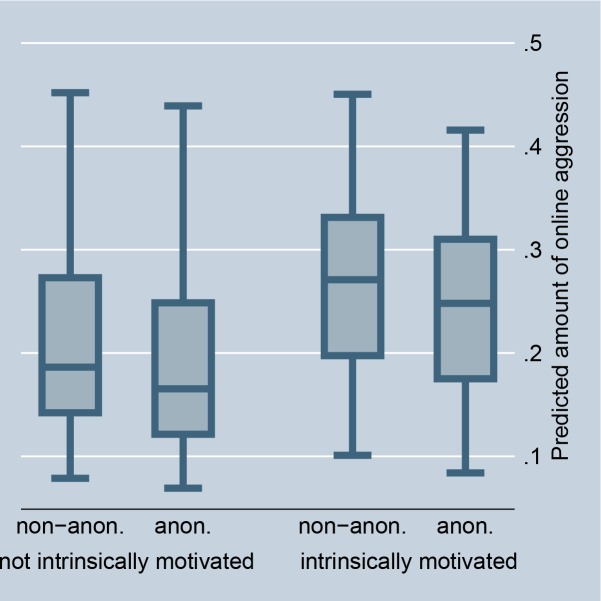
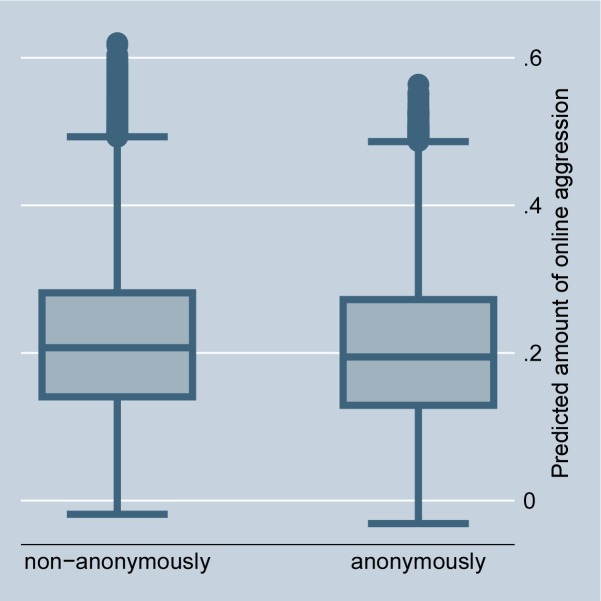
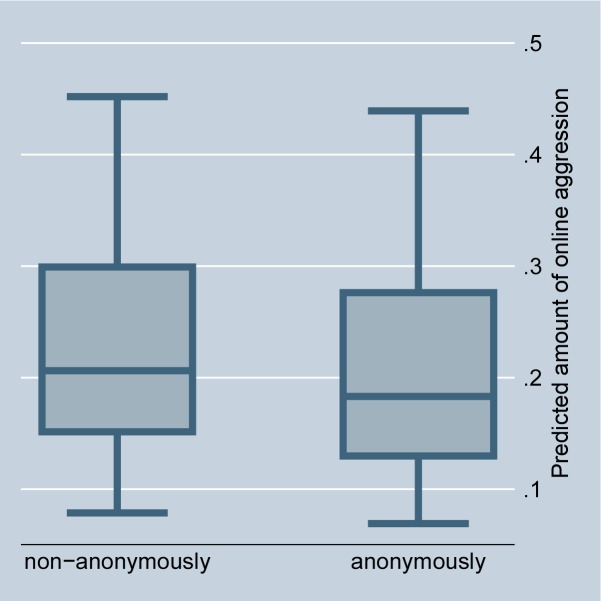
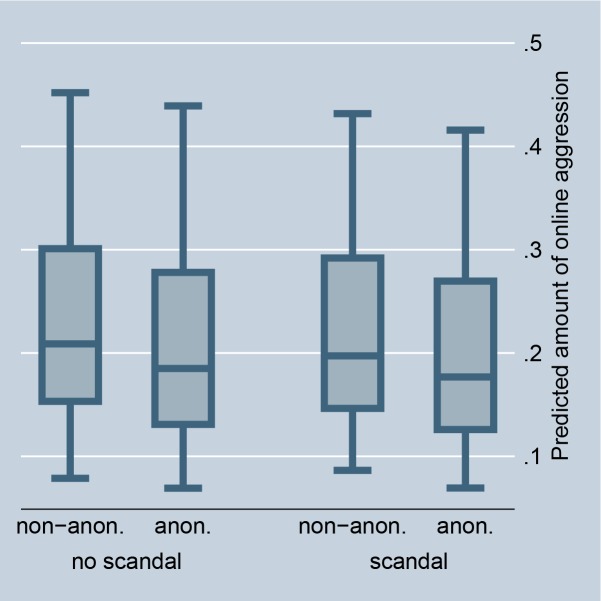
Actors of public interest today have to fear the adverse impact that stems from social media platforms. Any controversial behavior may promptly trigger temporal, but potentially devastating storms of emotional and aggressive outrage, so called online firestorms. Popular targets of online firestorms are companies, politicians, celebrities, media, academics and many more. This article introduces social norm theory to understand online aggression in a social-political online setting, challenging the popular assumption that online anonymity is one of the principle factors that promotes aggression. We underpin this social norm view by analyzing a major social media platform concerned with public affairs over a period of three years entailing 532,197 comments on 1,612 online petitions. Results show that in the context of online firestorms, non-anonymous individuals are more aggressive compared to anonymous individuals. This effect is reinforced if selective incentives are present and if aggressors are intrinsically motivated.
Overview
The claims and statistics of this paper haven’t been checked yet.
Free: it reads the open-access text and checks the first 5 claims that cite a source we can check. Create a free account to check every claim.
Integrity signals
Registry
Cites
Statistics
Figures
Verification
Claims the paper makes
The claims and statistics of this paper haven’t been checked yet.
Free: it reads the open-access text and checks the first 5 claims that cite a source we can check. Create a free account to check every claim.
Claims other papers make about this one
Each is checked against this paper’s own text: does it say what the citing paper says it does?
The cited source says what the claim attributes to it.
In the citing paper
“On the other hand, individuals may also decide to use social media for the purpose of altruistic punishment, which is bringing attention to a person or organization whose behavior is socially unacceptable (Rost et al., 2016).”
From Setting the future of digital and social media marketing research: Perspectives and research propositions (2021) · cites this paper as Rost et al., 2016
Self-check
Percentages, sums and reported differences re-computed from the paper’s own numbers.
The self-check needs the paper’s full text.
Citations
Cites
Granovetter, M. S. (1973) · American Journal of Sociology · doi:10.1086/225469 · Cited by 40,491 · cited 1×
“For example, diffuse networks of weak bridging ties encourage mobilization through communicative advantage [38].”
BackgroundBowling Alone: America's Declining Social Capital
Putnam, R. D. (1995) · Journal of Democracy · doi:10.1353/jod.1995.0002 · Cited by 14,037
An Integrative Theory of Intergroup Conflict
Tajfel, H., & Turner, J. (2000) · Organizational Identity · doi:10.1093/oso/9780199269464.003.0005 · Cited by 12,487
The Social psychology of intergroup relations
Austin, W. G., & Worchel, S. (1979) · Medical Entomology and Zoology · Cited by 11,622
The Logic of Collective Action.
Golembiewski, R. T., & Olson, M. (1966) · American Sociological Review · doi:10.2307/2091298 · Cited by 11,364
A Theory of Fairness, Competition, and Cooperation
Fehr, E., & Schmidt, K. M. (1999) · The Quarterly Journal of Economics · doi:10.1162/003355399556151 · Cited by 11,264
(1951) · Cited by 8,693
Social psychology of intergroup relations
Tajfel, H. (1982) · Annual Review of Psychology · doi:10.1146/annurev.ps.33.020182.000245 · Cited by 7,949
Altruistic punishment in humans
Fehr, E., & Gächter, S. (2002) · Nature · doi:10.1038/415137a · Cited by 5,616 · cited 1×
“Altruistic punishment is driven by strong negative emotions towards the norm defector [40, 41, 56] and by people’s perception of a state of affairs as illegitimate [57–61].”
BackgroundThe online disinhibition effect
Suler, J. (2004) · CyberPsychology & Behavior · doi:10.1089/1094931041291295 · Cited by 4,375 · cited 5×
“Nonverbal cues such as facial expression and physical size are lacking, thus reducing the empathy of the aggressor and the impact of authority of the victims typically expressed by dress, body langugage, and social setting [2, 3, 45].”
BackgroundInfluential
Research works printed but not linked: 3
- Opp KD. When do norms emerge by human design and when by the unintended consequences of human action? The example of the no-smoking norm. Ration Soc. 2002; 14(2): 131– 58.. · DOI
- Tichy W. Shitstorm—Eine (zivil) rechtliche Einführung. e colex—Zeitschrift für Wirtschaftsrecht [Internet]. 5 5 2013 [cited 2016 May 12]; 5:[396–9 pp.]. Available from: https://rdb.manz.at/document/rdb.tso.LIecolex20130502.
- Hale S, Margetts H, Yasseri T. Understanding the dynamics of internet-based collective action using Big Data: analysing the growth rates of internet-based petitions. Annual Conference of the UK Political Studies Association; 25–27 March 2013; Cardiff, Wales
Cited by
Two new Later Stone Age sites from the Final Pleistocene in the Falémé Valley, eastern Senegal
Ndiaye, M., Lespez, L., Tribolo, C., Rassé, M., Hadjas, I., Davidoux, S., Huysecom, É., & Douze, K. (2024) · Monash University Research Portal (Monash University) · doi:10.3929/ethz-b-000667478 · Cited by 23,868
Dwivedi, Y. K., Ismagilova, E., Hughes, D. L., Carlson, J., Filieri, R., Jacobson, J., Jain, V., Karjaluoto, H., Kefi, H., Krishen, A. S., et al. (2021) · International Journal of Information Management · doi:10.1016/j.ijinfomgt.2020.102168 · Cited by 4,608
“On the other hand, individuals may also decide to use social media for the purpose of altruistic punishment, which is bringing attention to a person or organization whose behavior is socially unacceptable (Rost et al., 2016).”
BackgroundTalwar, S., Dhir, A., Kaur, P., Zafar, N., & Alrasheedy, M. (2019) · Journal of Retailing and Consumer Services · doi:10.1016/j.jretconser.2019.05.026 · Cited by 550
Brady, W. J., Crockett, M. J., & Van Bavel, J. J. (2020) · Perspectives on Psychological Science · doi:10.1177/1745691620917336 · Cited by 417
“For example, in online settings people are more likely to express outrage toward policies they oppose when their identity is not anonymous, suggesting that the opportunity to signal to others should be associated with a greater likelihood of expressing outrage online (Rost et al., 2016).”
BackgroundThe Normalization of the Radical Right: A Norms Theory of Political Supply and Demand
Valentim, V. (2024) · doi:10.1093/9780198926740.001.0001 · Cited by 178
Metadata
- Authors
- Rost, K., Stahel, L., & Frey, B. S.
- Affiliations
- University of Zurich (CH)
- Corresponding author
- Stahel, Lea
- Venue
- PLOS ONE
- Publisher
- Public Library of Science (PLoS)
- Published
- 2016-06-17
- Volume
- 11
- Issue
- 6
- Pages
- e0155923
- ISSN
- 1932-6203 (ISSN-L)
- PMC
- PMC4912099
- OpenAlex
- W2432966378
- Cited by
- 190
- References
- 104
- Citations by year
- 2026: 7 · 2025: 12 · 2024: 40 · 2023: 19 · 2022: 21 · 2021: 22 · 2020: 23 · 2019: 22 · 2018: 14 · 2017: 7 · 2016: 3
- FWCI
- 43.17
- Type
- journal article
- Language
- en
- Open access
- gold
- doi.org
- Licence
- Locations
- PLoS ONE (publishedVersion, cc-by)
- Europe PMC (PubMed Central) (publishedVersion, cc-by)
- PubMed Central (publishedVersion, cc-by)
- PubMed (publishedVersion)
- Zurich Open Repository and Archive (University of Zurich) (acceptedVersion, cc-by)
- DOAJ (DOAJ: Directory of Open Access Journals) (submittedVersion, cc-by-sa)
- Zurich Open Repository and Archive (University of Zurich) (submittedVersion, cc-by)
- Zurich Open Repository and Archive (University of Zurich)
- Topics
- Social Sciences › Communication › Social Media and Politics
- Physical Sciences › Computer Science › Artificial Intelligence › Hate Speech and Cyberbullying Detection
- Social Sciences › Communication › Public Relations and Crisis Communication
- Keywords
- online firestorms, online aggression, online anonymity, social norms theory, online petitions, public affairs, selective incentives, intrinsic motivation, online comments, social media
- MeSH terms
- Aggression, Crime, Humans, Motivation, Politics, Internet, Social Media, Social Norms, Social Theory
About these checks
Registry, retraction, Cites and statistics results are computed, not judged, with one exception: a printed reference that no index lists is read once by a model before it counts as a citation error. Claims are extracted by a model and kept only when their quote appears verbatim in the text; each cited source is then checked, with a model’s help, for whether it says what the claim relies on. Those verdicts can be wrong — read the claim’s quote and the cited source before relying on one.
Statistics and arithmetic are recomputed, not judged.
Confidence bands are shown only for fields calibrated on our annotated test set. None is calibrated yet, so no band is shown.
What counts as a claim ›How we measure confidence ›How we check this ›
Are you an author, or do you see a problem with this page? Request a review
Data sources
Bibliographic data: Semantic Scholar, OpenAlex, Crossref.
Contains information from the Semantic Scholar Academic Graph Datasets, made available under the ODC Attribution License (ODC-BY 1.0).
Semantic Scholar’s data is described in: Kinney, R., et al. (2023). The Semantic Scholar Open Data Platform. arXiv:2301.10140.
