

Towards Development of Small Molecule Lipid II Inhibitors as Novel Antibiotics
Open accessThe DOI matches its Crossref record; 42 of the 42 references it cites were found in a registry or an index.
Abstract
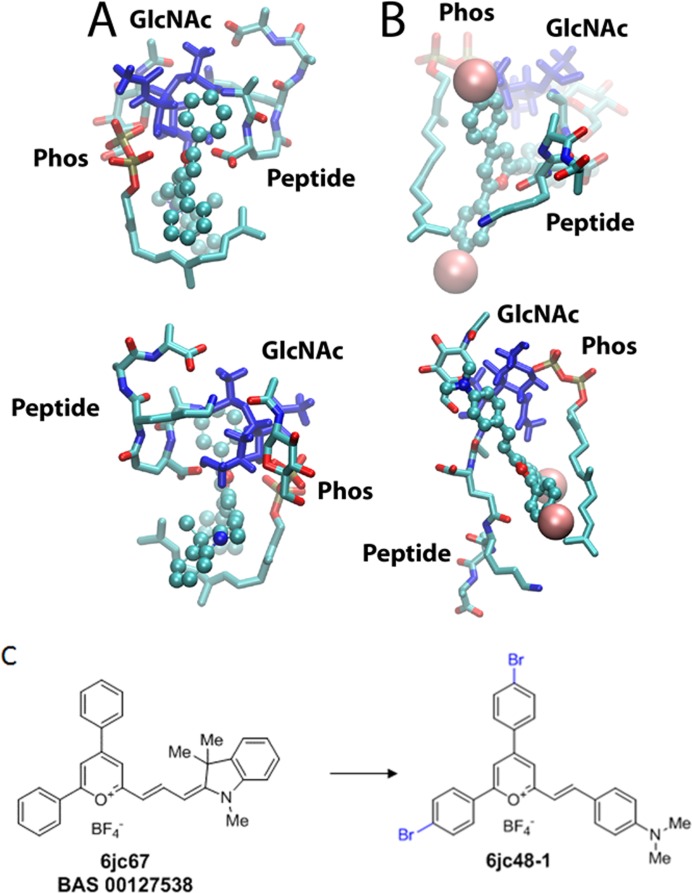
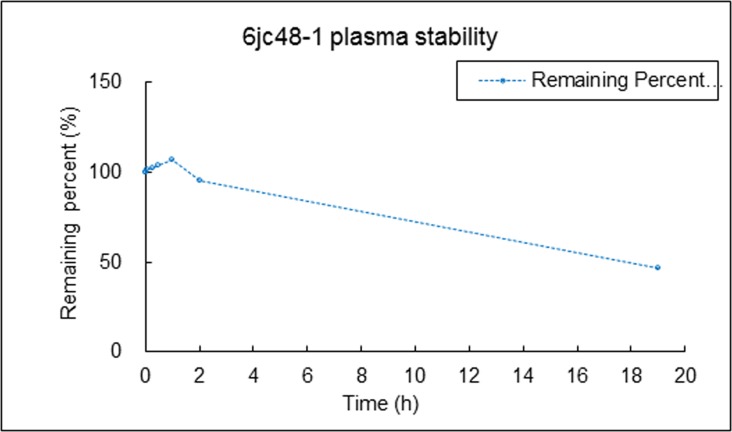
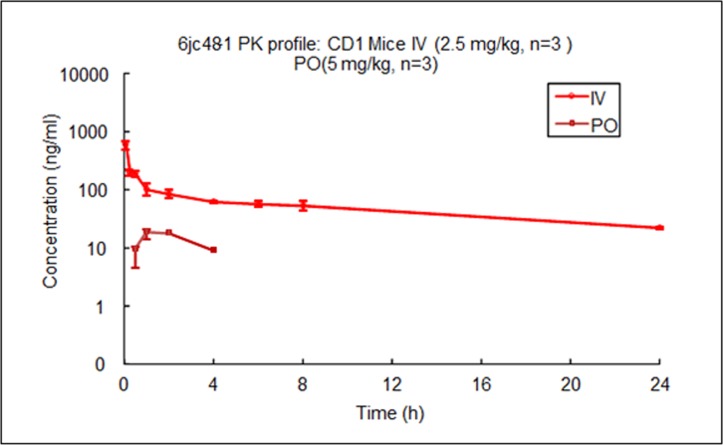
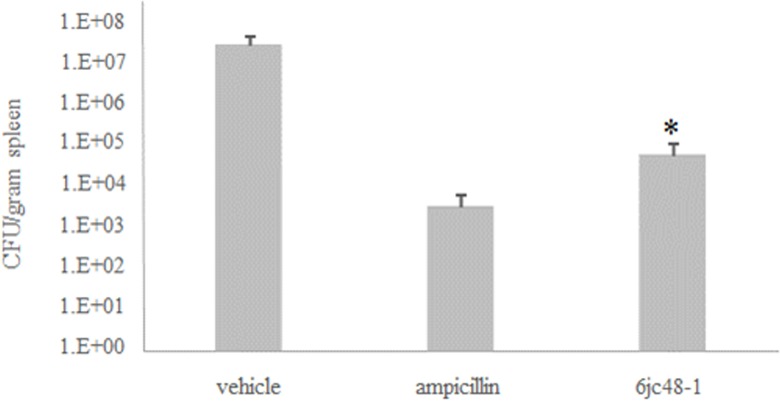
Recently we described a novel di-benzene-pyrylium-indolene (BAS00127538) inhibitor of Lipid II. BAS00127538 (1-Methyl-2,4-diphenyl-6-((1E,3E)-3-(1,3,3-trimethylindolin-2-ylidene)prop-1-en-1-yl)pyryl-1-ium) tetrafluoroborate is the first small molecule Lipid II inhibitor and is structurally distinct from natural agents that bind Lipid II, such as vancomycin. Here, we describe the synthesis and biological evaluation of 50 new analogs of BAS00127538 designed to explore the structure-activity relationships of the scaffold. The results of this study indicate an activity map of the scaffold, identifying regions that are critical to cytotoxicity, Lipid II binding and range of anti-bacterial action. One compound, 6jc48-1, showed significantly enhanced drug-like properties compared to BAS00127538. 6jc48-1 has reduced cytotoxicity, while retaining specific Lipid II binding and activity against Enterococcus spp. in vitro and in vivo. Further, this compound showed a markedly improved pharmacokinetic profile with a half-life of over 13 hours upon intravenous and oral administration and was stable in plasma. These results suggest that scaffolds like that of 6jc48-1 can be developed into small molecule antibiotic drugs that target Lipid II.
Overview
The claims and statistics of this paper haven’t been checked yet.
Free: it reads the open-access text and checks the first 5 claims that cite a source we can check. Create a free account to check every claim.
Integrity signals
Registry
Cites
Statistics
Figures
Verification
Claims the paper makes
The claims and statistics of this paper haven’t been checked yet.
Free: it reads the open-access text and checks the first 5 claims that cite a source we can check. Create a free account to check every claim.
Self-check
Percentages, sums and reported differences re-computed from the paper’s own numbers.
The self-check needs the paper’s full text.
Citations
Cites
Methods for dilution antimicrobial susceptibility tests for bacteria that grow aerobically
Ferraro, M. J. (2000) · Medical Entomology and Zoology · Cited by 17,254
All-Atom Empirical Potential for Molecular Modeling and Dynamics Studies of Proteins
MacKerell, A. D., Bashford, D., Bellott, M., Dunbrack, R. L., Evanseck, J. D., Field, M. J., Fischer, S., Gao, J., Guo, H., Ha, S., et al. (1998) · The Journal of Physical Chemistry B · doi:10.1021/jp973084f · Cited by 14,311
Self-citationCHARMM: The biomolecular simulation program
Brooks, B. R., Brooks, C. L., Mackerell, A. D., Nilsson, L., Petrella, R. J., Roux, B., Won, Y., Archontis, G., Bartels, C., Boresch, S., et al. (2009) · Journal of Computational Chemistry · doi:10.1002/jcc.21287 · Cited by 8,939
Self-citationVanommeslaeghe, K., Hatcher, E., Acharya, C., Kundu, S., Zhong, S., Shim, J., Darian, E., Guvench, O., Lopes, P., Vorobyov, I., et al. (2010) · Journal of Computational Chemistry · doi:10.1002/jcc.21367 · Cited by 7,509
Self-citationBest, R. B., Zhu, X., Shim, J., Lopes, P. E. M., Mittal, J., Feig, M., & MacKerell, A. D. (2012) · Journal of Chemical Theory and Computation · doi:10.1021/ct300400x · Cited by 4,532
Self-citationUpdate of the CHARMM All-Atom Additive Force Field for Lipids: Validation on Six Lipid Types
Klauda, J. B., Venable, R. M., Freites, J. A., O’Connor, J. W., Tobias, D. J., Mondragon-Ramirez, C., Vorobyov, I., MacKerell, A. D., & Pastor, R. W. (2010) · The Journal of Physical Chemistry B · doi:10.1021/jp101759q · Cited by 4,501
Self-citationDefensins: antimicrobial peptides of innate immunity
Ganz, T. (2003) · Nature Reviews Immunology · doi:10.1038/nri1180 · Cited by 3,066
Automation of the CHARMM General Force Field (CGenFF) I: Bond Perception and Atom Typing
Vanommeslaeghe, K., & MacKerell, A. D. (2012) · Journal of Chemical Information and Modeling · doi:10.1021/ci300363c · Cited by 2,169
Self-citationThe rise of the Enterococcus: beyond vancomycin resistance
Arias, C. A., & Murray, B. E. (2012) · Nature Reviews Microbiology · doi:10.1038/nrmicro2761 · Cited by 1,776
Vanommeslaeghe, K., Raman, E. P., & MacKerell, A. D. (2012) · Journal of Chemical Information and Modeling · doi:10.1021/ci3003649 · Cited by 1,750
Self-citation
Cited by
Therapeutic compounds targeting Lipid II for antibacterial purposes
Malin, J. J., & de Leeuw, E. (2019) · Infection and Drug Resistance · doi:10.2147/idr.s215070 · Cited by 50
“Using functional and structural approaches, these small molecules bind to three distinct sites of the Lipid II molecule and are excellent lead candidates for the development of next-generation drugs for this target.(13,42,43,123,124)”
BackgroundBennion, B. J., Malfatti, M. A., Be, N. A., Enright, H. A., Hok, S., Cadieux, C. L., Carpenter, T. S., Lao, V., Kuhn, E. A., McNerney, M. W., et al. (2021) · Scientific Reports · doi:10.1038/s41598-021-94963-2 · Cited by 23
Lv, Q., Yan, L., Wang, J., Feng, J., Gao, L., Qiu, L., Chao, W., Qin, Y.-L., & Jiang, Y. (2023) · Microbiology Spectrum · doi:10.1128/spectrum.03209-22 · Cited by 12
Escobar‐Salom, M., Torrens, G., Jordana‐Lluch, E., Oliver, A., & Juan, C. (2022) · Biological reviews/Biological reviews of the Cambridge Philosophical Society · doi:10.1111/brv.12830 · Cited by 15
“, 2009); some simplified hBD-3 or HNP-1 scaffolds show increased antiESKAPE activity (Hoover et al., 2003; Varney et al., 2013; Chauhan et al., 2016; Nigro et al., 2017); some synthetic peptides corresponding to the carboxy-terminal segment of bovine β-defensin-2 retained interesting antibacterial activity (Krishnakum…”
BackgroundOptimization of a small-molecule Lipid II binder
Chauhan, J., Kwasny, S. M., Fletcher, S., Opperman, T. J., & de Leeuw, E. P. H. (2019) · Bioorganic & Medicinal Chemistry Letters · doi:10.1016/j.bmcl.2019.04.046 · Cited by 5
Self-citation
Metadata
- Authors
- Chauhan, J., Cardinale, S., Fang, L., Huang, J., Kwasny, S. M., Pennington, M. R., Basi, K., diTargiani, R., Capacio, B. R., MacKerell, A. D., Opperman, T. J., Fletcher, S., & de Leeuw, E. P. H.
- Affiliations
- University of Maryland, Baltimore (US)
- Microbiotix (United States) (US)
- United States Army (US)
- ORCID
- Venue
- PLOS ONE
- Publisher
- Public Library of Science (PLoS)
- Published
- 2016-10-24
- Volume
- 11
- Issue
- 10
- Pages
- e0164515
- ISSN
- 1932-6203 (ISSN-L)
- PMC
- PMC5077133
- OpenAlex
- W2539099060
- Cited by
- 24
- References
- 42
- Citations by year
- 2025: 1 · 2023: 1 · 2022: 1 · 2021: 1 · 2020: 16 · 2019: 2 · 2018: 1 · 2017: 1
- FWCI
- 0.61
- Type
- journal article
- Language
- en
- Open access
- gold
- doi.org
- Licence
- public-domain
- creativecommons.org/publicdomain/zero/1.0/ (vor)
- Locations
- PLoS ONE (publishedVersion, public-domain)
- PubMed Central (publishedVersion, public-domain)
- PubMed (publishedVersion)
- DOAJ (DOAJ: Directory of Open Access Journals) (submittedVersion, cc-by-sa)
- Figshare (submittedVersion, cc-by)
- Funders
- National Institutes of Health (AI092033)
- Center for Biomolecular Therapeutics (PR155EDL1)
- UM Ventures
- Maryland Innovation Initiative
- Topics
- Life Sciences › Immunology and Microbiology › Applied Microbiology and Biotechnology › Antimicrobial agents and applications
- Life Sciences › Immunology and Microbiology › Microbiology › Antimicrobial Peptides and Activities
- Physical Sciences › Chemistry › Organic Chemistry › Synthesis and Biological Evaluation
- Keywords
- small-molecule antibiotics, structure-activity relationship, analog synthesis, cytotoxicity, Enterococcus, pharmacokinetics, drug-likeness, vancomycin alternative
- MeSH terms
- Animals, Anti-Bacterial Agents, Blood Proteins, Humans, Lipids, Microbial Sensitivity Tests, Microsomes, Liver, Surface Plasmon Resonance, Mice, Molecular Dynamics Simulation
About these checks
Registry, retraction, Cites and statistics results are computed, not judged, with one exception: a printed reference that no index lists is read once by a model before it counts as a citation error. Claims are extracted by a model and kept only when their quote appears verbatim in the text; each cited source is then checked, with a model’s help, for whether it says what the claim relies on. Those verdicts can be wrong — read the claim’s quote and the cited source before relying on one.
Statistics and arithmetic are recomputed, not judged.
Confidence bands are shown only for fields calibrated on our annotated test set. None is calibrated yet, so no band is shown.
What counts as a claim ›How we measure confidence ›How we check this ›
Are you an author, or do you see a problem with this page? Request a review
How to cite
Cite CoChat for the checks on this page, and the paper for its own findings.
- This page
- CoChat. (2026). Citation check: Towards Development of Small Molecule Lipid II Inhibitors as Novel Antibiotics. https://app.cochat.ai/papers/10.1371/journal.pone.0164515
- The paper
- Chauhan, J., Cardinale, S., Fang, L., Huang, J., Kwasny, S. M., Pennington, M. R., Basi, K., diTargiani, R., Capacio, B. R., MacKerell, A. D., Opperman, T. J., Fletcher, S., & de Leeuw, E. P. H. (2016). Towards Development of Small Molecule Lipid II Inhibitors as Novel Antibiotics. PLOS ONE. https://doi.org/10.1371/journal.pone.0164515
Data sources
Bibliographic data: Semantic Scholar, OpenAlex, Crossref.
Contains information from the Semantic Scholar Academic Graph Datasets, made available under the ODC Attribution License (ODC-BY 1.0).
Semantic Scholar’s data is described in: Kinney, R., et al. (2023). The Semantic Scholar Open Data Platform. arXiv:2301.10140.
