

Prevalence and Determinants of Unintended Pregnancy in Mchinji District, Malawi; Using a Conceptual Hierarchy to Inform Analysis
Open accessThe DOI matches its Crossref record; 35 of the 38 references it cites were found in a registry or an index; none of the 49 sources its claims cite is checked for support yet.
Abstract
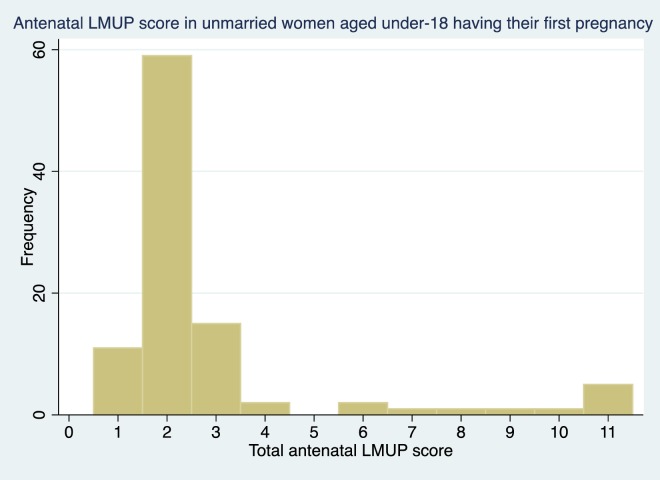
BACKGROUND: In 2012 there were around 85 million unintended pregnancies globally. Unintended pregnancies unnecessarily expose women to the risks associated with pregnancy, unsafe abortion and childbirth, thereby contributing to maternal mortality and morbidity. Studies have identified a range of potential determinants of unplanned pregnancy but have used varying methodologies, measures of pregnancy intention and analysis techniques. Consequently there are many contradictions in their findings. Identifying women at risk of unplanned pregnancy is important as this information can be used to help with designing and targeting interventions and developing preventative policies. METHODS: 4,244 pregnant women from Mchinji District, Malawi were interviewed at home between March and December 2013. They were asked about their pregnancy intention using the validated Chichewa version of the London Measure of Unplanned Pregnancy, as well as their socio-demographics and obstetric and psychiatric history. A conceptual hierarchical model of the determinants of pregnancy intention was developed and used to inform the analysis. Multiple random effects linear regression was used to explore the ways in which factors determine pregnancy intention leading to the identification of women at risk of unplanned pregnancies. RESULTS: 44.4% of pregnancies were planned. On univariate analyses pregnancy intention was associated with mother and father's age and education, marital status, number of live children, birth interval, socio-economic status, intimate partner violence and previous depression all at p<0.001. Multiple linear regression analysis found that increasing socio-economic status is associated with increasing pregnancy intention but its effect is mediated through other factors in the model. Socio-demographic factors of importance were marital status, which was the factor in the model that had the largest effect on pregnancy intention, partner's age and mother's education level. The effect of mother's education level was mediated by maternal reproductive characteristics. Previous depression, abuse in the last year or sexual abuse, younger age, increasing number of children and short birth intervals were all associated with lower pregnancy intention having controlled for all other factors in the model. This suggests that women in Mchinji District who are either young, unmarried women having their first pregnancy, or older, married women who have completed their desired family size or recently given birth, or women who have experienced depression, abuse in the last year or sexual abuse are at higher risk of unintended pregnancies. CONCLUSION: A simple measure of pregnancy intention with well-established psychometric properties was used to show the distribution of pregnancy planning among women from a poor rural population and to identify those women at higher risk of unintended pregnancy. An analysis informed by a conceptual hierarchical model shed light on the pathways that lead from socio-demographic determinants to pregnancy intention. This information can be used to target family planning services to those most at risk of unplanned pregnancies, particularly women with a history of depression or who are experiencing intimate partner violence.
Overview
CoChat Summary
TL;DR
In Mchinji District, Malawi, 44.4% of 4,244 pregnancies were planned, 32.6% were unplanned, and 23.1% were ambivalent on the London Measure of Unplanned Pregnancy. A conceptual hierarchical regression showed marital status had the largest association with pregnancy intention, while socio-economic status and maternal education effects were mediated through other factors.
Key findings
- Among 4,244 pregnant women interviewed, 44.4% of pregnancies were planned, 32.6% were unplanned (LMUP 0–3), and 23.1% were ambivalent (LMUP 4–9); over 99% of eligible women participated.
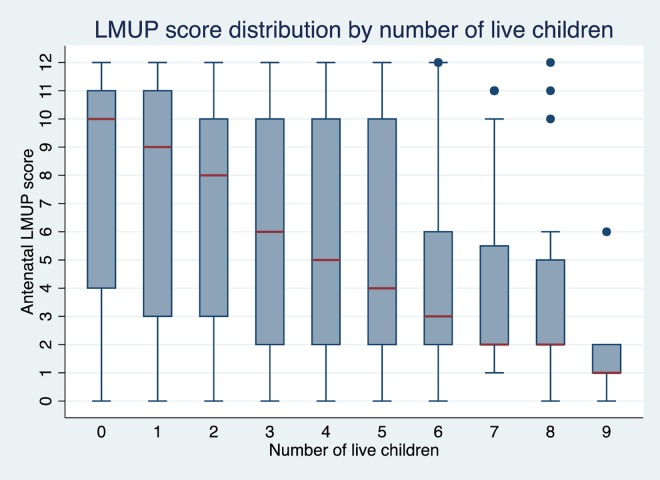
- In the final multiple linear regression model, unmarried women had an LMUP score 3.62 points lower than married women; other key associations included birth interval <2 years (−1.85), previous depression with both symptoms for ≥2 weeks (−1.50), father aged 15–19 (−1.40), IPV in the last year (−0.83), and each additional live child (−0.74), all p<0.001.
- Higher socio-economic status was associated with more planned pregnancy in univariate and Model One analyses, but its effect was mediated through socio-demographic, depression/IPV, and maternal reproductive factors; maternal education’s effect was mediated by maternal reproductive characteristics.
- 38.6% of women fell into one or more high-risk groups; among women with unplanned pregnancies (LMUP ≤3, n=1,319), 51.1% were in a high-risk group, compared with 27.6% of women with planned pregnancies (LMUP ≥10, n=1,796).
Methods
- Community-based interviews were conducted with 4,244 pregnant women aged 15 and over in 25 randomly selected areas of Mchinji District, Malawi, between March and December 2013; the questionnaire included the validated Chichewa LMUP, socio-demographics, obstetric and psychiatric history, the Abuse Assessment Screen, PCA-derived SES, and GPS distance to health facility.
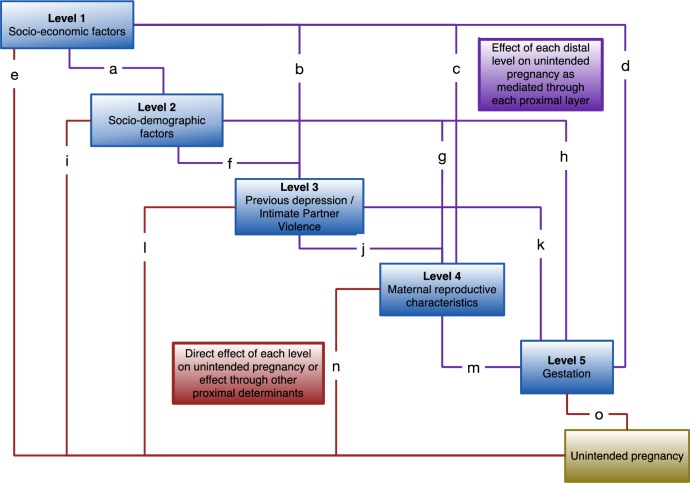
- Analysis used univariate linear regression followed by multiple random-effects linear regression with robust standard errors, informed by a five-level conceptual hierarchical model (SES; socio-demographic; previous depression/IPV; maternal reproductive factors; gestation); variables with p<0.10 in univariate analysis were considered, with manual backwards stepwise exclusion within levels, using Stata version 13.
Limitations
- Stated in the paper: early miscarriages and women who had abortions were not included, which may underestimate unintended pregnancy prevalence; pregnancy intention was assessed retrospectively during pregnancy rather than before conception; the conceptual hierarchical model is subjective, although sensitivity analyses produced the same final model; father data had varying missingness.
- Evident from the text: the cross-sectional design cannot establish temporal or causal direction, and findings are from one rural Malawian district, so generalizability beyond this setting is uncertain.
Model-written summary. Check it against the paper before relying on it.
Integrity signals
Registry
Cites
Statistics
Figures
Verification
Claims the paper makes
0 Valid · 2 Not valid · 20 Not checked · 78 Own results and interpretations
A result the paper reports from its own data — it cites no other source for it, so there is none to check. The quote shows it is in the paper.
In the paper
“The effect of mother’s education level was mediated by maternal reproductive characteristics.”
§ Prevalence and Determinants of Unintended Pregnancy in Mchinji District, Malawi; Using a Conceptual Hierarchy to Inform Analysis > Abstract > Results
plainstates a cause- Asserted: passes — The authors put it forward as true.
- Checkable: passes — It can be checked against evidence.
- Load-bearing: passes — The paper’s conclusions depend on it.
- Based: passes — The paper gives a reason why it holds.
A result the paper reports from its own data — it cites no other source for it, so there is none to check. The quote shows it is in the paper.
In the paper
“Socio-demographic factors of importance were marital status, which was the factor in the model that had the largest effect on pregnancy intention, partner’s age and mother’s education level.”
§ Prevalence and Determinants of Unintended Pregnancy in Mchinji District, Malawi; Using a Conceptual Hierarchy to Inform Analysis > Abstract > Results
plainstates an association- Asserted: passes — The authors put it forward as true.
- Checkable: passes — It can be checked against evidence.
- Load-bearing: passes — The paper’s conclusions depend on it.
- Based: passes — The paper gives a reason why it holds.
A result the paper reports from its own data — it cites no other source for it, so there is none to check. The quote shows it is in the paper.
In the paper
“44.4% of pregnancies were planned.”
§ Prevalence and Determinants of Unintended Pregnancy in Mchinji District, Malawi; Using a Conceptual Hierarchy to Inform Analysis > Abstract > Results
plain- Asserted: passes — The authors put it forward as true.
- Checkable: passes — It can be checked against evidence.
- Load-bearing: passes — The paper’s conclusions depend on it.
- Based: passes — The paper gives a reason why it holds.
A result the paper reports from its own data — it cites no other source for it, so there is none to check. The quote shows it is in the paper.
In the paper
“Socio-demographic factors of importance were marital status, which was the factor in the model that had the largest effect on pregnancy intention, partner’s age and mother’s education level.”
§ Prevalence and Determinants of Unintended Pregnancy in Mchinji District, Malawi; Using a Conceptual Hierarchy to Inform Analysis > Abstract > Results
plainstates an association- Asserted: passes — The authors put it forward as true.
- Checkable: passes — It can be checked against evidence.
- Load-bearing: passes — The paper’s conclusions depend on it.
- Based: passes — The paper gives a reason why it holds.
36 more claims
Create a free account to see all 100 claims and to verify the 48 references still open.
- It may state two separate claims as one. 41
- Probably not a substantial claim. 31
Claims other papers make about this one
Each is checked against this paper’s own text: does it say what the citing paper says it does?
In the citing paper
“In a similar study, Hall, Barrett, Phiri, Copas, and Stephenson (2016) found only 44.4% of planned pregnancies, with the remaining 55.6% either mistimed or unwanted.”
From Effect of sexual violence on planned, mistimed and unwanted pregnancies among women of reproductive age in sub-Saharan Africa: A multi-country analysis of Demographic and Health Surveys (2020) · cites this paper as Hall, Barrett, Phiri, Copas, and Stephenson, 2016
Self-check
Percentages, sums and reported differences re-computed from the paper’s own numbers.
Each contradiction between two passages listed here was confirmed by an independent check.
Rated major: it would touch a result — a value a result rests on, reported and recomputed p-values on opposite sides of the significance level, two passages that conflict with no sign which is right, or a cited work retracted before this paper was published.
In the paper
§ Prevalence and Determinants of Unintended Pregnancy in Mchinji District, Malawi; Using a Conceptual Hierarchy to Inform Analysis > Abstract > Results
“Previous depression, abuse in the last year or sexual abuse, younger age, increasing number of children and short birth intervals were all associated with lower pregnancy intention having controlled for all other factors in the model.”
§ Prevalence and Determinants of Unintended Pregnancy in Mchinji District, Malawi; Using a Conceptual Hierarchy to Inform Analysis > Results > Multivariable analysis
“| 3 | IPV—sexual abuse | | | | | | | | | -0.86 | -1.53 | -0.18 | 0.01 | -0.51 | -1.18 | 0.15 | 0.13 |”
Citations
Cites
The role of conceptual frameworks in epidemiological analysis: a hierarchical approach.
Victora, C. G., Huttly, S. R., Fuchs, S. C., & Olinto, M. T. (1997) · International Journal of Epidemiology · doi:10.1093/ije/26.1.224 · Cited by 2,402
Intended and Unintended Pregnancies Worldwide in 2012 and Recent Trends
Sedgh, G., Singh, S., & Hussain, R. (2014) · Studies in Family Planning · doi:10.1111/j.1728-4465.2014.00393.x · Cited by 1,040
Gipson, J. D., Koenig, M. A., & Hindin, M. J. (2008) · Studies in Family Planning · doi:10.1111/j.1728-4465.2008.00148.x · Cited by 994
Wellings, K., Jones, K. G., Mercer, C. H., Tanton, C., Clifton, S., Datta, J., Copas, A. J., Erens, B., Gibson, L. J., Macdowall, W., et al. (2013) · The Lancet · doi:10.1016/s0140-6736(13)62071-1 · Cited by 477
Self-citationIntimate Partner Violence Screening Tools
Rabin, R. F., Jennings, J. M., Campbell, J. C., & Bair-Merritt, M. H. (2009) · American Journal of Preventive Medicine · doi:10.1016/j.amepre.2009.01.024 · Cited by 469
Family Planning and the Burden of Unintended Pregnancies
Tsui, A. O., McDonald-Mosley, R., & Burke, A. E. (2010) · Epidemiologic Reviews · doi:10.1093/epirev/mxq012 · Cited by 434
Conceptualisation, development, and evaluation of a measure of unplanned pregnancy
Barrett, G., Smith, S. C., & Wellings, K. (2004) · Journal of Epidemiology and Community Health · doi:10.1136/jech.2003.014787 · Cited by 373
Self-citationIntention to Become Pregnant and Low Birth Weight and Preterm Birth: A Systematic Review
Shah, P. S., Balkhair, T., Ohlsson, A., Beyene, J., Scott, F., & Frick, C. (2011) · Maternal and Child Health Journal · doi:10.1007/s10995-009-0546-2 · Cited by 342
The Predictive Validity of Reproductive Intentions
Westoff, C. F., & Ryder, N. B. (1977) · Demography · doi:10.2307/2060589 · Cited by 314
What is a ‘planned’ pregnancy? empirical data from a British study
Barrett, G., & Wellings, K. (2002) · Social Science & Medicine · doi:10.1016/s0277-9536(01)00187-3 · Cited by 265
Self-citation
Research works printed but not linked: 2
- Iranfar S, Iranfar K, Ranjbar M. Is there any relationship between neonatal babies weight and unintended pregnancy? Pakistan Journal of Medical Sciences. 2009; 25(5): 841– 4..
- Mazharul Islam M, Rashid M. Determinants of unintended pregnancy among ever-married women in Bangladesh. The Journal of Family Welfare. 2004; 50(2): 40– 7.
Cited by
Stephenson, J., Heslehurst, N., Hall, J., Schoenaker, D. A. J. M., Hutchinson, J., Cade, J. E., Poston, L., Barrett, G., Crozier, S. R., Barker, M., et al. (2018) · The Lancet · doi:10.1016/s0140-6736(18)30311-8 · Cited by 1,222
Self-citationLondon Measure of Unplanned Pregnancy: guidance for its use as an outcome measure
Hall, J., Barrett, G., Copas, A. J., & Stephenson, J. (2017) · Patient Related Outcome Measures · doi:10.2147/prom.s122420 · Cited by 121
Self-citationAhinkorah, B. O. (2020) · PLoS ONE · doi:10.1371/journal.pone.0241050 · Cited by 100
“Other similar findings have been obtained in previous studies [21, 28, 63].”
ResultUnintended Pregnancy among Pregnant Women in Ghana: Prevalence and Predictors
Nyarko, S. H. (2019) · Journal of Pregnancy · doi:10.1155/2019/2920491 · Cited by 100
Prevalence and Determinants of Unintended Pregnancy in Sub -Saharan Africa: A Systematic Review.
Bain, L. E., Zweekhorst, M. B. M., & Buning, T. D. C. (2020) · African Journal of Reproductive Health · doi:10.29063/ajrh2020/v24i2.18 · Cited by 85
Alene, M., Yismaw, L., Berelie, Y., Kassie, B., Yeshambel, R., & Assemie, M. A. (2020) · PLoS ONE · doi:10.1371/journal.pone.0231012 · Cited by 78
Prevalence, determinants, and outcomes of unintended pregnancy in Sohag district, Egypt
Mohamed, E., Hamed, A. F., Yousef, F. M. A., & Ahmed, E. A. (2019) · Journal of the Egyptian Public Health Association · doi:10.1186/s42506-019-0014-9 · Cited by 57
Hall, J., Barrett, G., Copas, A. J., Phiri, T., Malata, A. M., & Stephenson, J. (2018) · PLoS ONE · doi:10.1371/journal.pone.0205487 · Cited by 57
Self-citationKhan, M. N., Harris, M. L., & Loxton, D. J. (2020) · PLoS ONE · doi:10.1371/journal.pone.0242729 · Cited by 56
“Moreover, the occurrence of unintended conceptions are usually found to be higher among disadvantaged women in terms of individual- and household-level factors and women residing in disadvantaged communities (including those with lower education and higher poverty) [46,47].”
BackgroundAhinkorah, B. O., Seidu, A.-A., Appiah, F., Oduro, J. K., Sambah, F., Baatiema, L., Budu, E., & Ameyaw, E. K. (2020) · SSM - Population Health · doi:10.1016/j.ssmph.2020.100601 · Cited by 47
Khan, M. N., & Islam, M. M. (2022) · Reproductive Health · doi:10.1186/s12978-022-01492-w · Cited by 42
“Also, findings regarding the association between high parity, which is an important determinant of unintended pregnancy, and no change/switch to a less effective contraceptive method may indicate these women are indifferent about their fertility and number of births [43, 44].”
BackgroundHall, J., Stephenson, J., & Barrett, G. (2019) · Maternal and Child Health Journal · doi:10.1007/s10995-019-02748-x · Cited by 35
“This study uses data from a cohort of 4244 pregnant women in Mchinji District, Malawi who were followed up for up to 1 year after the end of their pregnancy (Hall et al. 2016).”
BackgroundMethodResultInfluentialSelf-citationKhan, M. N., Harris, M. L., Oldmeadow, C. J., & Loxton, D. J. (2020) · Archives of Public Health · doi:10.1186/s13690-020-00468-1 · Cited by 31
“These limitations are further amplified for women residing in rural areas and communities with higher illiteracy and poverty, where previous studies have found a higher occurrence of unintended pregnancy [49, 50].”
BackgroundAhinkorah, B. O., Seidu, A., Appiah, F., Baatiema, L., Sambah, F., Budu, E., & Ameyaw, E. K. (2019) · PLoS ONE · doi:10.1371/journal.pone.0223389 · Cited by 27
Khan, M. N., Harris, M. L., & Loxton, D. J. (2020) · Journal of Biosocial Science · doi:10.1017/s0021932020000528 · Cited by 27
Hall, J., Barrett, G., & Rocca, C. H. (2022) · BMJ Open · doi:10.1136/bmjopen-2021-060287 · Cited by 26
Self-citationHuynh, S. T., Yokomichi, H., Akiyama, Y., Kojima, R., Horiuchi, S., Ooka, T., Shinohara, R., & Yamagata, Z. (2020) · BMC Pregnancy and Childbirth · doi:10.1186/s12884-020-03088-3 · Cited by 23
“[23], low educational attainment [20–23, 25, 26], low socioeconomic status [22, 23, 25], pregnancy history [21– 26], employment status [22, 25], smoking status [20, 21, 26, 28, 29], alcohol consumption [21, 26], drug use [20, 21, 26], healthy behaviours [28] and depression [20, 23].”
BackgroundFactors that affect the utilisation of maternal healthcare in the Mchinji District of Malawi
Stewart, C. L., & Hall, J. (2022) · PLoS ONE · doi:10.1371/journal.pone.0279613 · Cited by 23
“Due to the relatively small loss to follow up and the lack of statistically significant differences, it is reasonable to assume that the postnatal sample is still representative of the overall population of pregnant women within the Mchinji District of Malawi [35].”
BackgroundMethodInfluentialSelf-citationSteel, A., Strömmer, S., Adams, J., & Schoenaker, D. A. J. M. (2025) · BMC Pregnancy and Childbirth · doi:10.1186/s12884-025-07176-0 · Cited by 23
Trends in prevalence and factors associated with unintended pregnancies in Zambia (2001–2018)
Sikaluzwe, M., Phiri, M., Lemba, M., Shasha, L., & Muhanga, M. I. (2024) · BMC Pregnancy and Childbirth · doi:10.1186/s12884-024-06311-7 · Cited by 22
“The existing evidence in the literature makes clear how education level affects the experience of unintended pregnancies [42–44].”
BackgroundKazemi, A., Dadkhah, A., & Torabi, F. (2022) · Archives of Public Health · doi:10.1186/s13690-022-00802-9 · Cited by 22
“This finding corroborates the results of other studies indicating that women’s education is a determining factor in family planning [16, 17].”
ResultLife After Loss: A Prospective Analysis of Mortality Exposure and Unintended Fertility
Smith‐Greenaway, E., Yeatman, S. E., & Chilungo, A. (2022) · Demography · doi:10.1215/00703370-9807961 · Cited by 21
“Poor mental health is a well-studied risk factor for unintended pregnancy (Farr et al. 2010; Hall et al. 2016; Hall et al. 2014; Hall et al. 2013; Hall et al. 2015).”
BackgroundWomen’s health decline following (some) unintended births: A prospective study
Yeatman, S. E., & Smith‐Greenaway, E. (2021) · Demographic Research · doi:10.4054/demres.2021.45.17 · Cited by 21
“Additionally, poor health itself has been shown to predict unintended pregnancy (Hall et al. 2016; Hall, Richards, and Harris 2017).”
BackgroundContraception use and unplanned pregnancies in a peri-urban area of eSwatini (Swaziland)
Hultstrand, J. N., Tydén, T., Jonsson, M., & Målqvist, M. (2019) · Sexual & Reproductive Healthcare · doi:10.1016/j.srhc.2019.01.004 · Cited by 21
Vieira, C. S., Braga, G. C., Lugarinho, P. T. C., Stifani, B. M., Bettiol, H., Barbieri, M. A., Cardoso, V. C., & Cavalli, R. D. C. (2020) · International Journal of Gynecology & Obstetrics · doi:10.1002/ijgo.13305 · Cited by 20
Khan, M. N., Harris, M. L., & Loxton, D. J. (2020) · Health & Social Care in the Community · doi:10.1111/hsc.13237 · Cited by 18
Bukenya, J. N., Nalwadda, C. K., Neema, S., Kyambadde, P., Wanyenze, R. K., & Barrett, G. (2019) · PubMed · doi:10.29063/ajrh2019/v23i3.8 · Cited by 17
“Median (IQR) 29 (18-43) 29 (19-43) 28 (19-37)”
Self-citationBirth Planning and Women's and Men's Health in Malawi
Yeatman, S. E., & Smith‐Greenaway, E. (2018) · Studies in Family Planning · doi:10.1111/sifp.12060 · Cited by 17
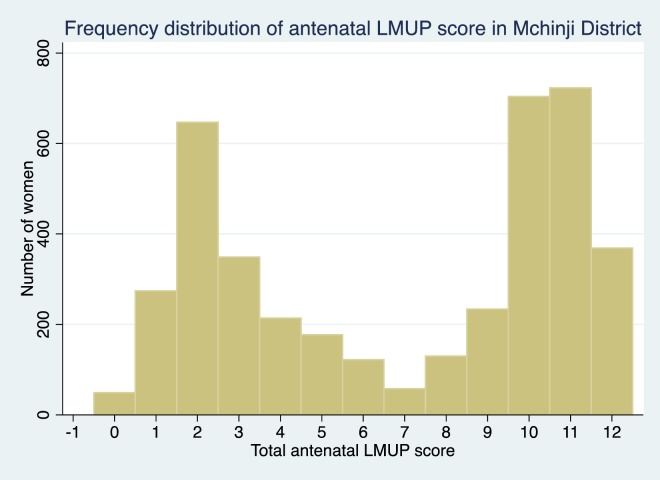
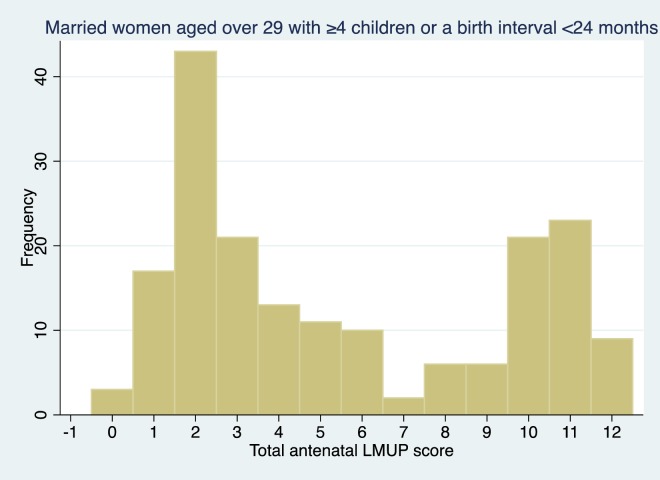
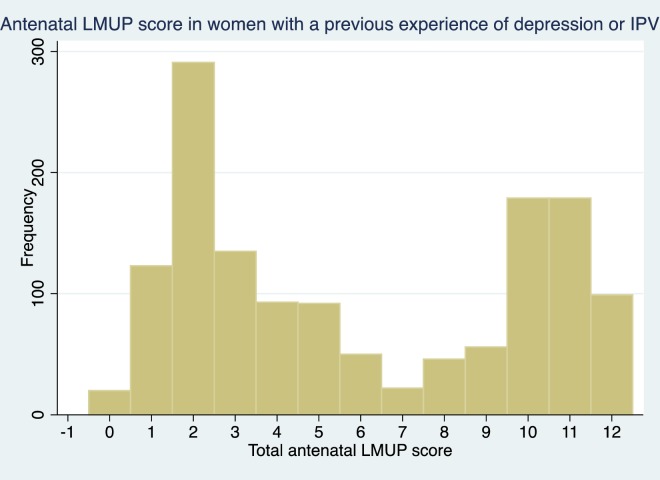
“The shape of the women’s and men’s LMUP follow pronounced bimodal distributions (see Figure 2), which corresponds with past research on Malawian women (Hall et al., 2016) and the original UK sample (Barrett et al.”
BackgroundResultInfluentialKhan, M. N., Harris, M. L., Huda, M. N., & Loxton, D. J. (2022) · Scientific Reports · doi:10.1038/s41598-022-19559-w · Cited by 17
Low Level of Knowledge of Contraceptive Methods among Pregnant Teens in Brazil
Brito, M. B., Alves, F. S. S., Souza, M. Q., & Requião, S. R. (2018) · Journal of Pediatric and Adolescent Gynecology · doi:10.1016/j.jpag.2017.12.008 · Cited by 15
Contexts of reproduction: Gender dynamics and unintended birth in sub‐Saharan Africa
Bras, H. A. J., & Smits, J. P. J. M. (2021) · Journal of Marriage and the Family · doi:10.1111/jomf.12807 · Cited by 15
Seifu, C. N., Fahey, P. P., Hailemariam, T. G., & Atlantis, E. E. (2020) · PLoS ONE · doi:10.1371/journal.pone.0235675 · Cited by 15
Garg, P., Verma, M., Sharma, P., Coll, C. V. N., & Das, M. (2022) · BMC Pregnancy and Childbirth · doi:10.1186/s12884-022-04673-4 · Cited by 15
The perpetuating cycle of unplanned pregnancy: underlying causes and implications in Eswatini
Hultstrand, J. N., Abuelgasim, K., Tydén, T., Jonsson, M., Maseko, N., & Målqvist, M. (2020) · Culture Health & Sexuality · doi:10.1080/13691058.2020.1791359 · Cited by 14
“In low-income settings, unplanned pregnancies are generally associated with low socioeconomic status, younger age, being unmarried, higher parity, shorter birth-intervals and intimate partner violence (Hall et al. 2016; Iyun et al. 2018; Grace and Anderson 2018).”
BackgroundHow do women prepare for pregnancy in a low-income setting? Prevalence and associated factors
Mwase-Musicha, L., Chipeta, M. G., Stephenson, J., & Hall, J. (2022) · PLoS ONE · doi:10.1371/journal.pone.0263877 · Cited by 14
“Lack of pregnancy preparation was prevalent even when the pregnancy was intentional, with 50% of women who had planned to get pregnant reporting to have made no preparations for the pregnancy [16].”
BackgroundInfluentialSelf-citationMamo, D. N., Gebremariam, Y. H., Adem, J. B., Kebede, S. D., & Walle, A. D. (2024) · BMC Women s Health · doi:10.1186/s12905-024-02893-8 · Cited by 13
“This finding is supported by research conducted in Russia [42], Bangladesh [43], Uganda [44], Malawi [45], and Southern Ethiopia [46], which reported that husbands and mothers who had educational status were more likely associated with unintended pregnancy.”
ResultCatalão, R., Chapota, H., Chorwe‐Sungani, G., & Hall, J. (2023) · Reproductive Health · doi:10.1186/s12978-023-01576-1 · Cited by 11
“Loss of follow up The recruitment process for this cohort and baseline characteristics have been described elsewhere [13, 14], but in brief, of the 5887 pregnant women identified, 4244 completed the antenatal interview.”
BackgroundMethodInfluentialSelf-citationLoi, U. R., Klingberg‐Allvin, M., Gemzell‐Danielsson, K., Faxelid, E., Oguttu, M., & Makenzius, M. (2020) · Sexual & Reproductive Healthcare · doi:10.1016/j.srhc.2020.100486 · Cited by 8
Hall, J., Stephenson, J., & Barrett, G. (2021) · BMC Research Notes · doi:10.1186/s13104-021-05645-1 · Cited by 8
“Given the importance of improving pregnancy intention measurement in low-and-middle-income countries, and in particular the call to provide evidence on the performance of the LMUP in such [18], we sought to re-examine the performance of the Chichewa LMUP using data from a large, representative community-based cohort s…”
BackgroundMethodSelf-citationReis-Muleva, B., Borges, A. L. V., Hall, J., & Barrett, G. (2022) · African Journal of Reproductive Health · doi:10.29063/ajrh2022/v26i2.5 · Cited by 8
Self-citationAssenga, B. T., Msengwa, A. S., & Mbago, M. C. Y. (2022) · Tanzania journal of health research/Tanzania Journal of Health Research · doi:10.4314/thrb.v23i1.4 · Cited by 7
Erega, B. B., Ferede, W. Y., Sisay, F. A., Dagnaw, E. H., Ayalew, A. B., Kettema, W. G., & Lake, E. S. (2023) · Risk Management and Healthcare Policy · doi:10.2147/rmhp.s419346 · Cited by 7
“This finding was the reverse of other studies done in Mchinji district of Malawi and Mizzan-tepi of Ethiopia.(18,19) Our study finding also opposes the logical notion that urban populations are more aware of family planning methods and can access it easier than the rural community.”
BackgroundResultInfluentialUnintended Pregnancy in Iran: Prevalence and Risk Factors
Almasi‐Hashiani, A., Samani, R. O., Sepidarkish, M., Khodamoradi, F., & Ranjbaran, M. (2018) · International Journal of Women s Health and Reproduction Sciences · doi:10.15296/ijwhr.2019.53 · Cited by 7
“Moreover, in the study of Hall et al in Malawi, the prevalence of unintended pregnancy was low among women of higher SES (28).”
BackgroundInfluentialCorrelates of mistimed and unwanted pregnancy among women in the Democratic Republic of Congo
Adhikari, T. B., Acharya, P., Rijal, A., Mapatano, M. A., & Aro, A. R. (2019) · Journal of Biosocial Science · doi:10.1017/s0021932019000518 · Cited by 6
“This interplay of multilevel and multiple factors has previously been used to study the correlates of mistimed and unwanted pregnancies (Koren & Mawn, 2010; Calvert et al., 2013; Hall et al., 2016); a similar concept was adopted for the present study (Dahab et al.”
MethodAşcı, Ö., & Gökdemir, F. (2019) · Journal of International Health Sciences and Management · Cited by 6
Determinants of unintended pregnancies among nursing mothers in southwest Nigeria
Afolabi, A. O., Olaogun, A. A., Afolabi, K. A., & Afolabi, E. K. (2020) · African Journal of Midwifery and Women s Health · doi:10.12968/ajmw.2019.0010 · Cited by 5
Spatial patterns and predictors of unintended pregnancy among reproductive age women in Ethiopia
Zeru, M. A., Fenta, H. M., & Mitku, A. A. (2023) · PLoS ONE · doi:10.1371/journal.pone.0282225 · Cited by 5
“This result is consistent with the findings by Indian and Malawi [37, 42].”
ResultÇetinkaya, M. (2018) · Kırklareli University - AVESIS · Cited by 5
Oni, T. O., Ilesanmi, B. B., Yinusa, R. A., Oyeleye, O. J., Oluwatope, O. B., & Solanke, B. L. (2021) · Women & Health · doi:10.1080/03630242.2021.1957746 · Cited by 4
“These variables were selected from the pool of variables already associated with unintended pregnancies in existing studies (Beyene 2019; Calvert et al. 2013; Dhakal et al. 2016; Eliason et al. 2014; Habib et al. 2017; Haffejee et al. 2018; Hall et al. 2016).”
MethodFactors associated with unplanned pregnancy among pregnant women in Uganda
Makumbi, F. E., Ssebadduka, P., Musaba, M. W., Wandabwa, J., & Kiondo, P. (2025) · Scientific Reports · doi:10.1038/s41598-025-99802-2 · Cited by 4
“This is consistent with a study done in Malawi 19 but differed from a study done in Nigeria 20 .”
Hall, J., Stephenson, J., & Barrett, G. (2018) · BMC Research Notes · doi:10.1186/s13104-018-3577-1 · Cited by 4
Self-citationUnplanned pregnancy among married women: an exploratory study in a rural area of Bengal
Pal, M., Bandyopadhyay, L., & Dasgupta, A. (2017) · International Journal of Community Medicine and Public Health · doi:10.18203/2394-6040.ijcmph20174484 · Cited by 4
Graybill, L. A., Westreich, D. J., Maseko, B., Phanga, T., Nthani, T., Vansia, D., Chi, B. H., Daniels, J. L., Tang, J. H., Bekker, L., et al. (2024) · American Journal of Epidemiology · doi:10.1093/aje/kwae193 · Cited by 3
Beumer, W. Y., Roseboom, T. J., & van Ditzhuijzen, J. (2025) · medRxiv · doi:10.1101/2025.06.18.25329857 · Cited by 3
Measuring Pregnancy Planning and the Effect of Childhood Abuse on Reproductive Health
Drevin, J. (2019) · Uppsala University Publications (Uppsala University) · Cited by 3
Decision making regarding unintended pregnancies among adolescents in Jamestown, Accra, Ghana.
Bain, L. E. (2020) · theses.fr (ABES) · doi:10.70675/70642099z8175z48bfzb205zfc8583d73f57 · Cited by 2
Massawa, O., & Kazaura, M. R. (2020) · International Journal of Adolescent Medicine and Health · doi:10.1515/ijamh-2019-0211 · Cited by 2
Guo, C., Ding, R., Wen, X., & Zheng, X. (2019) · American Journal of Men s Health · doi:10.1177/1557988319831900 · Cited by 2
“After univariate analysis, multivariate analysis was conducted by including basic demographic variables, variables that were significant in univariate analysis, and variables that were reported significant in previous studies (Calvert et al., 2013; Coelho et al., 2012; Hall et al., 2016).”
BackgroundMethodPregnancy intentions and its associated factors among married women in resunga, Gulmi, Nepal
Karki, R. D., Maharjan, S., Khatiwada, G., & Shrestha, J. (2023) · Indian Journal of Public Health · doi:10.4103/ijph.ijph_1119_22 · Cited by 2
The Prevalence of Unplanned Pregnancy at Antenatal Care Clinic
Wattanakamolchai, P., Sophonsritsuk, A., Werawatakul, Y., & Thinkhamrop, J. (2018) · Srinagarind Medical Journal-ศรีนครินทร์เวชสาร · Cited by 2
Nishimwe, A., Uwimana, P., Rumagihwa, L., Rutagengwa, A., Nyirazinyoye, L., Jansen, S., Ice, G. H., Lesli, J., & Haile, Z. T. (2021) · Research Square · doi:10.21203/rs.3.rs-779814/v1 · Cited by 1
Understanding intimate partner violence as a social determinant of child morbidity in rural Malawi
Chilanga, E. (2020) · eScholarship@McGill (McGill) · doi:10.82308/28279 · Cited by 1
Ezekiel, M. J., Akwary, E. R., Mbotwa, C. H., & Mosha, I. H. (2022) · Tanzania journal of health research/Tanzania Journal of Health Research · doi:10.4314/thrb.v23i1.10 · Cited by 1
Gwesere, D. D., Namutebi, M., & Osinganda, C. (2022) · Journal of Biosciences and Medicines · doi:10.4236/jbm.2022.105002 · Cited by 1
Violence and adversity among pregnant women and new mothers in central Vietnam
Do, H. P. (2021) · Queensland University of Technology · doi:10.5204/thesis.eprints.226819
Steel, A., Hall, J., Lang, A. Y., McIntyre, E., Adams, J., Burton, W., & Schoenaker, D. A. J. M. (2026) · medRxiv · doi:10.64898/2026.07.10.26357787
Self-citationSeifu, C. N., Fahey, P. P., Hailemariam, T. G., & Atlantis, E. E. (2019) · Research Square · doi:10.21203/rs.2.13487/v1
Sikaluzwe, M., Phiri, M., Lemba, M., Shasha, L., & Muhanga, M. (2024) · Figshare · doi:10.6084/m9.figshare.26683600
Subasinghe, A. K., Lim, S. S., Dominic, N. A., Arasoo, V. J. T., Jayaraj, S., & Boyle, J. A. (2025) · BMC Public Health · doi:10.1186/s12889-025-25770-x
“Most published data on factors related to unintended pregnancy come from national health surveys which involve asking women to recall up to 5 years to their last pregnancy and report whether they felt they wanted that pregnancy or whether it was planned [18].”
Além das horas: estudo misto sobre as demoras obstétricas relacionadas à morbidade materna grave
Mendes, L. M. C. (2024) · Digital Library of Theses and Dissertations (Universidade de São Paulo) · doi:10.11606/t.22.2024.tde-22112024-164550
Catalão, R., Chapota, H., Chorwe‐Sungani, G., & Hall, J. (2023) · Figshare · doi:10.6084/m9.figshare.22611874
Self-citationShongwe, S. G., Kooko, R., Aimakhu, C. O., Chandipwisa, C., Shimilimo, A., & Phiri, U. (2026) · International Journal of Community Medicine and Public Health · doi:10.18203/2394-6040.ijcmph20260664
Hultstrand, J. N. (2021) · Uppsala University Publications (Uppsala University)
Sociodemographic Factors Associated With Abortion Rates Among Black Women in the United States
Washington, L. D. (2020) · ScholarWorks (Walden University)
Masamba, L., Zileni, B. D., & Kadango, A. (2022) · Africa Journal of Nursing and Midwifery · doi:10.25159/2520-5293/9394
Unintended pregnancy in a low fertility context: Insights from the national survey of Thailand
Ngamsomsak, R., & Pothisiri, W. (2024) · Kasetsart Journal of Social Sciences · doi:10.34044/j.kjss.2024.45.3.28
Função, J. M. (2023) · Digital Library of Theses and Dissertations (Universidade de São Paulo) · doi:10.11606/d.7.2023.tde-14022025-155952
Mollan, K. R. (2025) · Carolina Digital Repository (University of North Carolina at Chapel Hill) · doi:10.17615/je5b-1480
Metadata
- Authors
- Hall, J. A., Barrett, G., Phiri, T., Copas, A., Malata, A., & Stephenson, J.
- Affiliations
- University College London (GB)
- University of Malawi (MW)
- Corresponding author
- Hall, Jennifer Anne
- Venue
- PLOS ONE
- Publisher
- Public Library of Science (PLoS)
- Published
- 2016-10-31
- Volume
- 11
- Issue
- 10
- Pages
- e0165621
- ISSN
- 1932-6203 (ISSN-L)
- PMC
- PMC5087885
- OpenAlex
- W2542601180
- Cited by
- 79
- References
- 38
- Citations by year
- 2026: 2 · 2025: 5 · 2024: 6 · 2023: 6 · 2022: 13 · 2021: 7 · 2020: 19 · 2019: 11 · 2018: 7 · 2017: 3
- FWCI
- 4.76
- Type
- journal article
- Language
- en
- Open access
- gold
- doi.org
- Licence
- Locations
- PLoS ONE (publishedVersion, cc-by)
- PubMed Central (publishedVersion, cc-by)
- PubMed (publishedVersion)
- RePEc: Research Papers in Economics (submittedVersion)
- DOAJ (DOAJ: Directory of Open Access Journals) (submittedVersion)
- UCL Discovery (University College London) (submittedVersion)
- Greater South Information System
- Funders
- Wellcome Trust (097268/Z/11/Z)
- Topics
- Health Sciences › Medicine › Public Health, Environmental and Occupational Health › Reproductive Health and Contraception
- Health Sciences › Medicine › Pediatrics, Perinatology and Child Health › Global Maternal and Child Health
- Health Sciences › Medicine › Public Health, Environmental and Occupational Health › Adolescent Sexual and Reproductive Health
- Keywords
- unintended pregnancy, pregnancy intention, London Measure of Unplanned Pregnancy, maternal education, marital status, birth interval, intimate partner violence, sexual abuse, maternal depression, socioeconomic status, family planning, rural women
- MeSH terms
- Adolescent, Adult, Female, Humans, Malawi, Middle Aged, Pregnancy, Pregnancy, Unwanted, Surveys and Questionnaires, Risk Factors, Socioeconomic Factors, Models, Statistical, Prevalence, Pregnancy, Unplanned, Young Adult, Public Health Surveillance
About these checks
Registry, retraction, Cites and statistics results are computed, not judged, with one exception: a printed reference that no index lists is read once by a model before it counts as a citation error. Claims are extracted by a model and kept only when their quote appears verbatim in the text; each cited source is then checked, with a model’s help, for whether it says what the claim relies on. Those verdicts can be wrong — read the claim’s quote and the cited source before relying on one.
A language model drew the claims from the paper on 2026-11-29, under version 3 of the claim definition (model deepseek-v4.1-flash, prompt extract-v3).
A second model labelled each claim on 2026-11-29 (model jev-1.13-20260917, definition revision gold-guideline-v0.2).
Statistics and arithmetic are recomputed, not judged.
Confidence bands are shown only for fields calibrated on our annotated test set. None is calibrated yet, so no band is shown.
What counts as a claim ›How we measure confidence ›How we check this ›
Are you an author, or do you see a problem with this page? Request a review
Data sources
Bibliographic data: Semantic Scholar, OpenAlex, Crossref.
Contains information from the Semantic Scholar Academic Graph Datasets, made available under the ODC Attribution License (ODC-BY 1.0).
Semantic Scholar’s data is described in: Kinney, R., et al. (2023). The Semantic Scholar Open Data Platform. arXiv:2301.10140.
