

The DOI matches its Crossref record; 75 of the 75 references it cites were found in a registry or an index.
Mild Traumatic Brain Injury (mTBI) and chronic cognitive impairment: A scoping review
Open accessAbstract
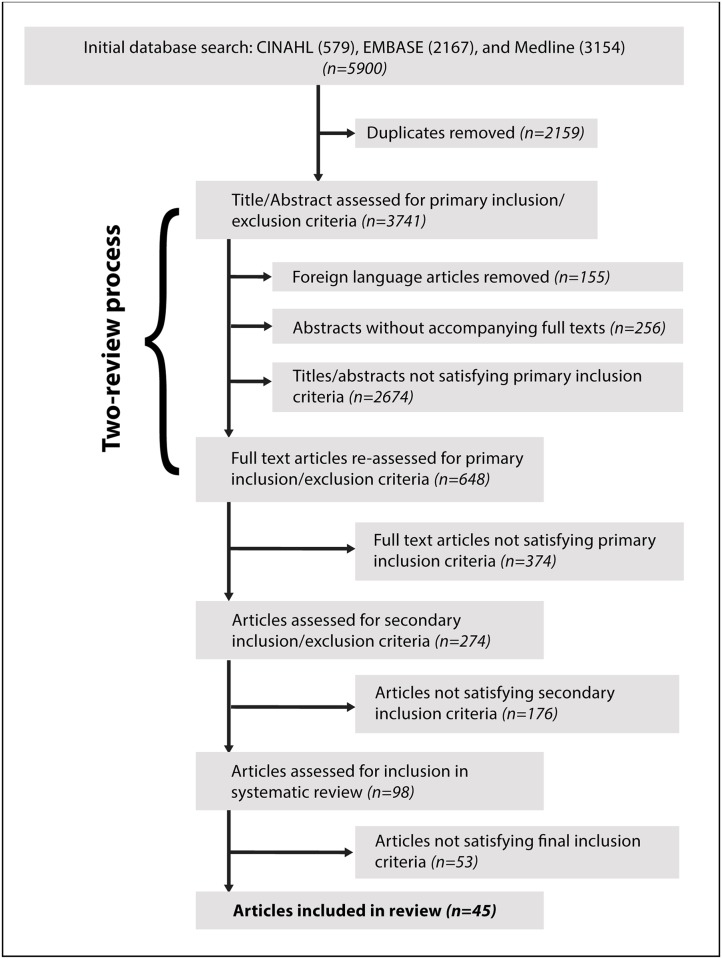
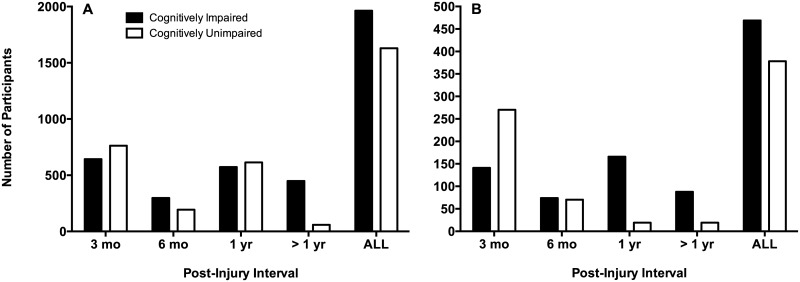
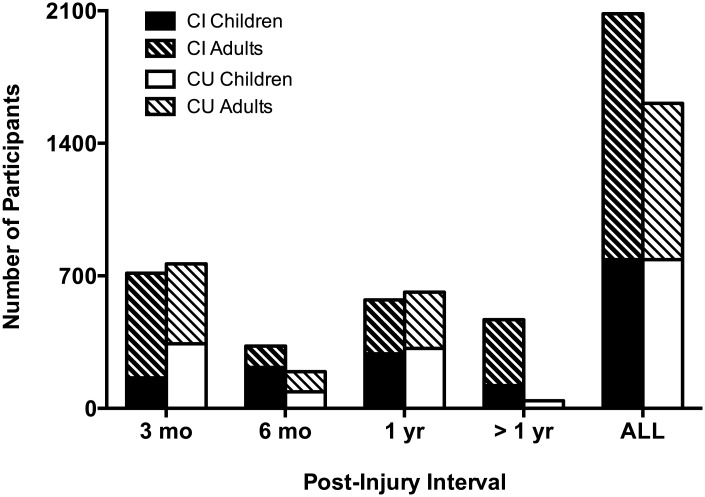
Mild traumatic brain injury (mTBI), or concussion, is the most common type of traumatic brain injury. With mTBI comes symptoms that include headaches, fatigue, depression, anxiety and irritability, as well as impaired cognitive function. Symptom resolution is thought to occur within 3 months post-injury, with the exception of a small percentage of individuals who are said to experience persistent post-concussion syndrome. The number of individuals who experience persistent symptoms appears to be low despite clear evidence of longer-term pathophysiological changes resulting from mTBI. In light of the incongruency between these longer-term changes in brain pathology and the number of individuals with longer-term mTBI-related symptoms, particularly impaired cognitive function, we performed a scoping review of the literature that behaviourally assessed short- and long-term cognitive function in individuals with a single mTBI, with the goal of identifying the impact of a single concussion on cognitive function in the chronic stage post-injury. CINAHL, Embase, and Medline/Ovid were searched July 2015 for studies related to concussion and cognitive impairment. Data relating to the presence/absence of cognitive impairment were extracted from 45 studies meeting our inclusion criteria. Results indicate that, in contrast to the prevailing view that most symptoms of concussion are resolved within 3 months post-injury, approximately half of individuals with a single mTBI demonstrate long-term cognitive impairment. Study limitations notwithstanding, these findings highlight the need to carefully examine the long-term implications of a single mTBI.
Overview
The claims and statistics of this paper haven’t been checked yet.
Run the check — free, no account needed. It reads the open-access text and checks the sources it cites.
Integrity signals
Registry
Cites
Statistics
Figures
Verification
Claims the paper makes
The claims and statistics of this paper haven’t been checked yet.
Run the check — free, no account needed. It reads the open-access text and checks the sources it cites.
Claims other papers make about this one
Each is checked against this paper’s own text: does it say what the citing paper says it does?
The source backs part of the claim, not all of it — or backs it for a different population, condition or comparison.
In the citing paper
“Posttraumatic stress disorder (PtsD), depressive disorder, and persistent post-concussive symptoms frequently co-occur after mild traumatic brain injury (tBi)”
From Feasibility, tolerability, and preliminary effectiveness of an accelerated bilateral intermittent theta-burst stimulation protocol in adults with posttraumatic stress disorder and comorbid depressive disorder following mild traumatic brain injury (2026) · cites this paper as Mcinnes et al. 2017
Experimental — accuracy not yet measuredThe check wasn’t confident either way, so it gives no verdict — never disputed.
In the citing paper
“with each condition amplifying the functional impact of the others”
From Feasibility, tolerability, and preliminary effectiveness of an accelerated bilateral intermittent theta-burst stimulation protocol in adults with posttraumatic stress disorder and comorbid depressive disorder following mild traumatic brain injury (2026) · cites this paper as Mcinnes et al. 2017
Experimental — accuracy not yet measuredIn the citing paper
“Mild traumatic brain injury (mTBI) is common and can cause a broad range of debilitating symptoms, including headaches, fatigue, irritability, sleep disturbances, depression and anxiety, and attention deficits [61, 94, 101].”
From Early onset senescence and cognitive impairment in a murine model of repeated mTBI (2021) · cites this paper as [94]
Self-check
Percentages, sums and reported differences re-computed from the paper’s own numbers.
The self-check needs the paper’s full text.
Citations
Cites
Scoping studies: towards a methodological framework
Arksey, H., & O'Malley, L. (2005) · International Journal of Social Research Methodology · doi:10.1080/1364557032000119616 · Cited by 36,742
Scoping studies: advancing the methodology
Levac, D., Colquhoun, H., & O'Brien, K. K. (2010) · Implementation Science · doi:10.1186/1748-5908-5-69 · Cited by 15,268
A typology of reviews: an analysis of 14 review types and associated methodologies
Grant, M. J., & Booth, A. (2009) · Health Information & Libraries Journal · doi:10.1111/j.1471-1842.2009.00848.x · Cited by 10,817
Scoping reviews: Time for clarity in definition, methods, and reporting
Colquhoun, H. L., Levac, D., O'Brien, K. K., Straus, S., Tricco, A. C., Perrier, L., Kastner, M., & Moher, D. (2014) · Journal of Clinical Epidemiology · doi:10.1016/j.jclinepi.2014.03.013 · Cited by 2,783
Definition of mild traumatic brain injury
&NA;, &. (1993) · Journal of Head Trauma Rehabilitation · doi:10.1097/00001199-199309000-00010 · Cited by 1,910
Cassidy, J. D., Carroll, L., Peloso, P. M. J., Borg, J., von Holst, H., Holm, L. W., Kraus, J. F., & Coronado, V. G. (2004) · Journal of Rehabilitation Medicine · doi:10.1080/16501960410023732 · Cited by 1,612
Acute Effects and Recovery Time Following Concussion in Collegiate Football Players
McCrea, M., Guskiewicz, K. M., Marshall, S. W., Barr, W., RANDOLPH, C. C., Cantu, R. C., Oñate, J. A., Yang, J. G., & Kelly, J. P. (2003) · JAMA · doi:10.1001/jama.290.19.2556 · Cited by 1,492
The New Neurometabolic Cascade of Concussion
Giza, C. C., & Hovda, D. A. (2014) · Neurosurgery · doi:10.1227/neu.0000000000000505 · Cited by 1,353
TOXIC-SHOCK SYNDROME NOT ASSOCIATED WITH MENSTRUATION
Reingold, A. L., Shands, K. N., Dan, B. B., & Broome, C. V. (1982) · The Lancet · doi:10.1016/s0140-6736(82)92552-1 · Cited by 1,164
Cognitive Sequelae of Traumatic Brain Injury
Rabinowitz, A. R., & Levin, H. S. (2014) · Psychiatric Clinics of North America · doi:10.1016/j.psc.2013.11.004 · Cited by 793
Research works printed but not linked: 1
- M Alexander, 1996, Mild traumatic brain injury (C) 1996, 5, 1489
Cited by
Sorted by citations
Epidemiology of Chronic Effects of Traumatic Brain Injury
Haarbauer-Krupa, J. K., Pugh, M. J., Prager, E. M., Harmon, N., Wolfe, J., & Yaffe, K. S. (2021) · Journal of Neurotrauma · doi:10.1089/neu.2021.0062 · Cited by 380
Traumatic brain injury: classification, models, and markers
Najem, D., Rennie, K., Ribecco‐Lutkiewicz, M., Ly, D., Haukenfrers, J., Liu, Q., Nzau, M., Fraser, D. D., & Bani‐Yaghoub, M. (2018) · Biochemistry and Cell Biology · doi:10.1139/bcb-2016-0160 · Cited by 222
HOOK, V. Y. H., Yoon, M. C., Mosier, C., Ito, G., Podvin, S., Head, B. P., Rissman, R. A., O’Donoghue, A. J., & Hook, G. (2020) · Biochimica et Biophysica Acta (BBA) - Proteins and Proteomics · doi:10.1016/j.bbapap.2020.140428 · Cited by 177
Applications of the Morris water maze in translational traumatic brain injury research
Tucker, L. B., Velosky, A. G., & McCabe, J. T. (2018) · Neuroscience & Biobehavioral Reviews · doi:10.1016/j.neubiorev.2018.03.010 · Cited by 163
Blood-based biomarkers of inflammation in mild traumatic brain injury: A systematic review
Visser, K., Koggel, M., Blaauw, J., van der Horn, H. J., Jacobs, B., & van der Naalt, J. (2021) · Neuroscience & Biobehavioral Reviews · doi:10.1016/j.neubiorev.2021.11.036 · Cited by 175
Metadata
- Authors
- McInnes, K., Friesen, C. L., MacKenzie, D. E., Westwood, D. A., & Boe, S. G.
- Affiliations
- Dalhousie University (CA)
- Corresponding author
- Boe, Shaun G.
- Venue
- PLOS ONE
- Publisher
- Public Library of Science (PLoS)
- Published
- 2017-04-11
- Volume
- 12
- Issue
- 4
- Pages
- e0174847
- ISSN
- 1932-6203 (ISSN-L)
- PMC
- PMC5388340
- OpenAlex
- W2606627358
- Cited by
- 531
- References
- 75
- Citations by year
- 2026: 60 · 2025: 71 · 2024: 64 · 2023: 59 · 2022: 47 · 2021: 65 · 2020: 66 · 2019: 57 · 2018: 33 · 2017: 8
- FWCI
- 5.95
- Type
- journal article
- Language
- en
- Update notices
- correction (2019-06-11)
- Open access
- gold
- doi.org
- Licence
- Locations
- PLoS ONE (publishedVersion, cc-by)
- PubMed Central (publishedVersion, cc-by)
- PubMed (publishedVersion)
- DOAJ (DOAJ: Directory of Open Access Journals) (submittedVersion, cc-by-sa)
- Funders
- Canadian Institutes of Health Research
- Topics
- Health Sciences › Medicine › Clinical Neurology › Traumatic Brain Injury Research
- Health Sciences › Medicine › Clinical Neurology › Traumatic Brain Injury and Neurovascular Disturbances
- Health Sciences › Medicine › Clinical Neurology › Long-Term Effects of COVID-19
- Keywords
- mild traumatic brain injury, concussion, post-concussion syndrome, long-term cognitive function, persistent post-concussion symptoms, symptom resolution, neuropathology
- MeSH terms
- Brain Concussion, Chronic Disease, Humans, Cognitive Dysfunction
About these checks
Registry, retraction, Cites and statistics results are computed, not judged, with one exception: a printed reference that no index lists is read once by a model before it counts as a citation error. Claims are extracted by a model and kept only when their quote appears verbatim in the text; each cited source is then checked, with a model’s help, for whether it says what the claim relies on. Those verdicts can be wrong — read the claim’s quote and the cited source before relying on one.
Statistics and arithmetic are recomputed, not judged.
Confidence bands are shown only for fields calibrated on our annotated test set. None is calibrated yet, so no band is shown.
What counts as a claim ›How we measure confidence ›How we check this ›
Are you an author, or do you see a problem with this page? Request a review
