

Predictive modeling of treatment resistant depression using data from STAR*D and an independent clinical study
Open accessThe DOI matches its Crossref record; 44 of the 44 references it cites were found in a registry or an index.
Abstract
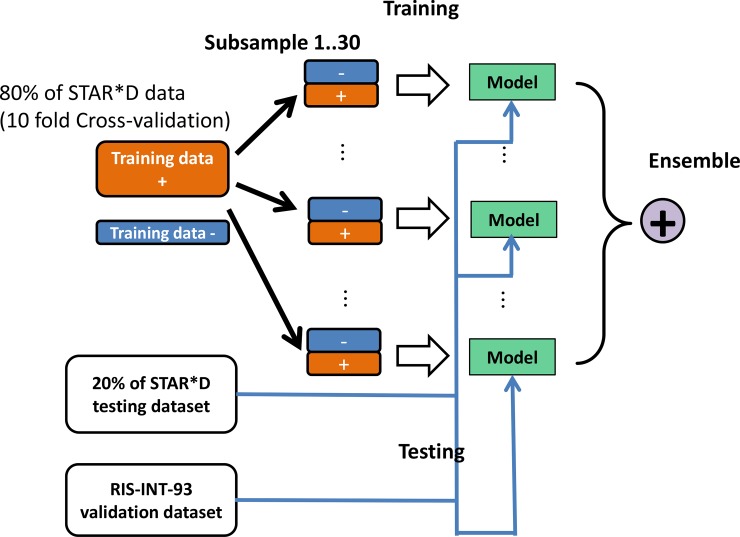
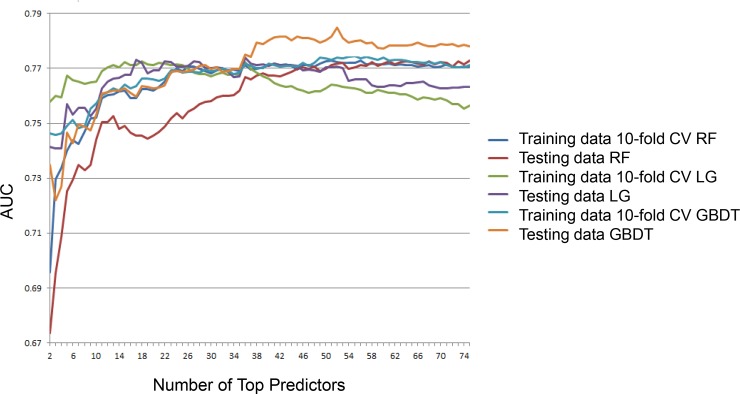
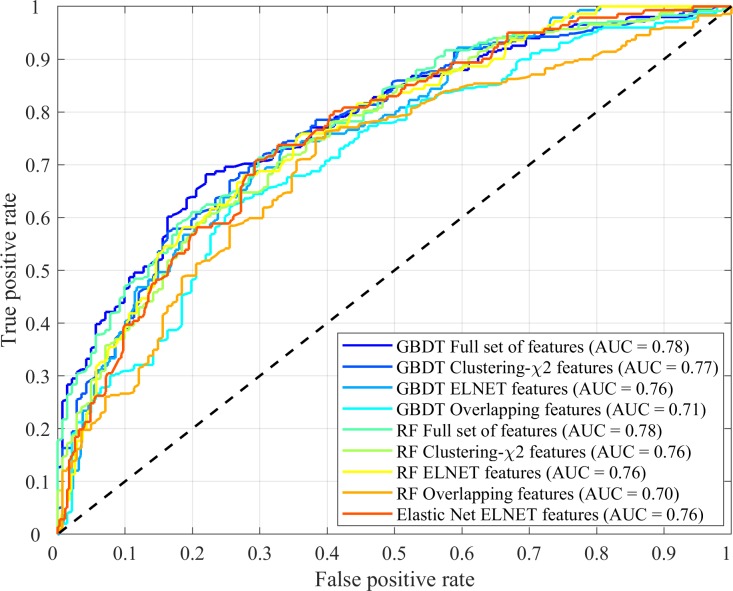
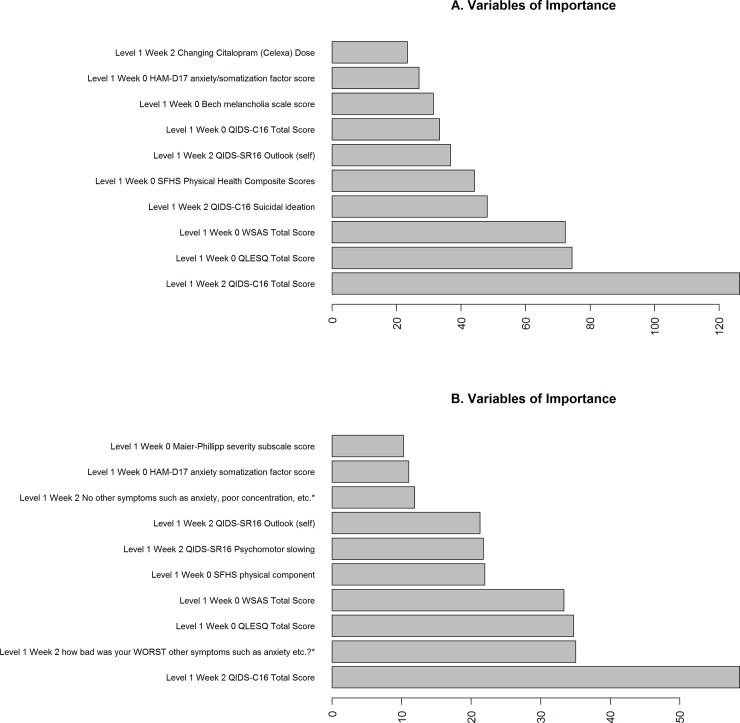
Identification of risk factors of treatment resistance may be useful to guide treatment selection, avoid inefficient trial-and-error, and improve major depressive disorder (MDD) care. We extended the work in predictive modeling of treatment resistant depression (TRD) via partition of the data from the Sequenced Treatment Alternatives to Relieve Depression (STAR*D) cohort into a training and a testing dataset. We also included data from a small yet completely independent cohort RIS-INT-93 as an external test dataset. We used features from enrollment and level 1 treatment (up to week 2 response only) of STAR*D to explore the feature space comprehensively and applied machine learning methods to model TRD outcome at level 2. For TRD defined using QIDS-C16 remission criteria, multiple machine learning models were internally cross-validated in the STAR*D training dataset and externally validated in both the STAR*D testing dataset and RIS-INT-93 independent dataset with an area under the receiver operating characteristic curve (AUC) of 0.70-0.78 and 0.72-0.77, respectively. The upper bound for the AUC achievable with the full set of features could be as high as 0.78 in the STAR*D testing dataset. Model developed using top 30 features identified using feature selection technique (k-means clustering followed by χ2 test) achieved an AUC of 0.77 in the STAR*D testing dataset. In addition, the model developed using overlapping features between STAR*D and RIS-INT-93, achieved an AUC of > 0.70 in both the STAR*D testing and RIS-INT-93 datasets. Among all the features explored in STAR*D and RIS-INT-93 datasets, the most important feature was early or initial treatment response or symptom severity at week 2. These results indicate that prediction of TRD prior to undergoing a second round of antidepressant treatment could be feasible even in the absence of biomarker data.
Overview
The claims and statistics of this paper haven’t been checked yet.
Free: it reads the open-access text and checks the first 5 claims that cite a source we can check. Create a free account to check every claim.
Integrity signals
Registry
Cites
Statistics
Figures
Verification
Claims the paper makes
The claims and statistics of this paper haven’t been checked yet.
Free: it reads the open-access text and checks the first 5 claims that cite a source we can check. Create a free account to check every claim.
Claims other papers make about this one
Each is checked against this paper’s own text: does it say what the citing paper says it does?
The source backs part of the claim, not all of it — or backs it for a different population, condition or comparison.
In the citing paper
“A recent study used clustering methods to determine phenotypes of depression treatment resistance based on the most salient self-reported clinical features (e.g. socio-demographic characteristics, symptom severity), with models showing acceptable ranges of predictive accuracy over treatment outcomes14.”
From Cluster-based psychological phenotyping and differences in anxiety treatment outcomes (2023) · cites this paper as [14]
Experimental — accuracy not yet measuredThe source backs part of the claim, not all of it — or backs it for a different population, condition or comparison.
In the citing paper
“These results suggest that “psychological phenotyping” may be a useful step forward in the implementation of precision medicine, and have the advantages of low-cost/high accessibility to researchers and clinicians as compared to genetic or neuroimaging biomarkers.”
From Cluster-based psychological phenotyping and differences in anxiety treatment outcomes (2023) · cites this paper as [14]
Experimental — accuracy not yet measuredThe source backs part of the claim, not all of it — or backs it for a different population, condition or comparison.
In the citing paper
“However, studies including machine learning approaches to identifying markers that relate to psychological clinical treatment responses are scarce but proof-of-concept reports are emerging14.”
From Cluster-based psychological phenotyping and differences in anxiety treatment outcomes (2023) · cites this paper as [14]
Experimental — accuracy not yet measuredThe cited source says what the claim attributes to it.
In the citing paper
“Nonetheless, reports on psychological phenotyping involving the use of machine learning and psychometric data show promise14,36,37.”
From Cluster-based psychological phenotyping and differences in anxiety treatment outcomes (2023) · cites this paper as [14]
Self-check
Percentages, sums and reported differences re-computed from the paper’s own numbers.
The self-check needs the paper’s full text.
Citations
Cites
Breiman, L. (2001) · Machine Learning · doi:10.1023/a:1010933404324 · Cited by 133,538
Scikit-learn: Machine Learning in Python
Pedregosa, F., Varoquaux, G., Gramfort, A., Michel, V., Thirion, B., Grisel, O., Blondel, M., Müller, A., Nothman, J., Louppe, G., et al. (2012) · arXiv · doi:10.48550/arxiv.1201.0490 · Cited by 71,016
Hamilton, M. (1960) · Journal of Neurology, Neurosurgery & Psychiatry · doi:10.1136/jnnp.23.1.56 · Cited by 32,817
Regularization and Variable Selection Via the Elastic Net
Zou, H., & Hastie, T. (2005) · Journal of the Royal Statistical Society Series B: Statistical Methodology · doi:10.1111/j.1467-9868.2005.00503.x · Cited by 20,957
Regularization Paths for Generalized Linear Models via Coordinate Descent
Friedman, J., Hastie, T., & Tibshirani, R. (2010) · Journal of Statistical Software · doi:10.18637/jss.v033.i01 · Cited by 19,927
Development of a Rating Scale for Primary Depressive Illness
HAMILTON, M. (1967) · British Journal of Social and Clinical Psychology · doi:10.1111/j.2044-8260.1967.tb00530.x · Cited by 8,410
Rush, A. J., Trivedi, M. H., Wisniewski, S. R., Nierenberg, A. A., Stewart, J. W., Warden, D., Niederehe, G., Thase, M. E., Lavori, P. W., Lebowitz, B. D., et al. (2006) · American Journal of Psychiatry · doi:10.1176/ajp.2006.163.11.1905 · Cited by 5,643
Sequenced treatment alternatives to relieve depression (STAR*D): Rationale and design
Rush, A. J., Fava, M., Wisniewski, S. R., Lavori, P. W., Trivedi, M. H., Sackeim, H. A., Thase, M. E., Nierenberg, A. A., Quitkin, F. M., Kashner, T. M., et al. (2004) · Controlled Clinical Trials · doi:10.1016/s0197-2456(03)00112-0 · Cited by 1,076
Chi2: feature selection and discretization of numeric attributes
Liu, H., & Setiono, R. (2002) · Proceedings of 7th IEEE International Conference on Tools with Artificial Intelligence · doi:10.1109/tai.1995.479783 · Cited by 933
Cross-trial prediction of treatment outcome in depression: a machine learning approach
Chekroud, A. M., Zotti, R. J., Shehzad, Z., Gueorguieva, R., Johnson, M. K., Trivedi, M. H., Cannon, T. D., Krystal, J. H., & Corlett, P. R. (2016) · The Lancet Psychiatry · doi:10.1016/s2215-0366(15)00471-x · Cited by 676
Research works printed but not linked: 2
- Schimek MG, editor Penalized logistic regression in gene expression analysis. Proceedings to 2003 Semiparametric Conference; 2003; Berlin, Germany.
- Westfall PH, Young SS. Resampling-based multiple testing: examples and methods for P-value adjustment New York: Wiley; 1993 xvii, 340 p. p.
Cited by
The promise of machine learning in predicting treatment outcomes in psychiatry
Chekroud, A. M., Bondar, J., Delgadillo, J., Doherty, G., Wasil, A., Fokkema, M., Cohen, Z., Belgrave, D., DeRubeis, R., Iniesta, R., et al. (2021) · World Psychiatry · doi:10.1002/wps.20882 · Cited by 531
“Several gold standard prediction studies have shown that we can predict whether a depressed patient will respond to specific antidepressants 40,41 , to specific psychothera peutic techniques 177 , and whether patients with first episode psychosis will have good prognosis after one year with…”
BackgroundMethodCruz-Gonzalez, P., He, A. W.-J., Lam, E. P., Ng, I. M. C., Li, M. W., Hou, R., Chan, J. N.-M., Sahni, Y., Vinas Guasch, N., Miller, T., et al. (2025) · Psychological Medicine · doi:10.1017/s0033291724003295 · Cited by 201
Sajjadian, M., Lam, R. W. M., Milev, R. V., Rotzinger, S., Frey, B. N., Soares, C. N., Parikh, S. V., Foster, J. A., Turecki, G., Müller, D. J., et al. (2021) · Psychological Medicine · doi:10.1017/s0033291721003871 · Cited by 184
“All studies with data on 1000 or more individuals were limited to clinical and demographic variables (Cepeda et al., 2018; Chekroud et al., 2016; Delgadillo & Salas Duhne, 2020; Nie, Vairavan, Narayan, Ye, & Li, 2018; Perlis, 2013).”
BackgroundTornero-Costa, R., Martinez-Millana, A., Azzopardi-Muscat, N., Lazeri, L., Traver, V., & Novillo-Ortiz, D. (2023) · JMIR Mental Health · doi:10.2196/42045 · Cited by 103
“Details on the final analysis for each study can be found in Multimedia Appendix 2 (see also [14-142]).”
BackgroundInfluentialChallenges and Future Prospects of Precision Medicine in Psychiatry
Manchia, M., Pisanu, C., Squassina, A., & Carpiniello, B. (2020) · Pharmacogenomics and Personalized Medicine · doi:10.2147/pgpm.s198225 · Cited by 135
Fontana, A., Manchia, M., Panebianco, C., Paribello, P., Arzedi, C., Cossu, E., Garzilli, M., Montis, M. A., Mura, A., Pisanu, C., et al. (2020) · Biomedicines · doi:10.3390/biomedicines8090311 · Cited by 84
“Similar predictive performances using different machine-learning approaches applied on STAR*D data were identified by Nie and coauthors [11].”
MethodSun, Y., Drevets, W. C., Turecki, G., & Li, Q. S. (2020) · Brain Behavior and Immunity · doi:10.1016/j.bbi.2020.01.011 · Cited by 75
“Researchers have found that multiple factors affect the response to antidepressant treatments, including baseline disease severity, socio-demographic status (Nie et al., 2018; Perlis, 2013), and biomarker evidence of inflammation (Cattaneo et al.”
BackgroundSelf-citationPaul, R., Andlauer, T. F. M., Czamara, D., Hoehn, D., Lucae, S., Pütz, B., Lewis, C. M., Uher, R., Müller‐Myhsok, B., Ising, M., et al. (2019) · Translational Psychiatry · doi:10.1038/s41398-019-0524-4 · Cited by 77
Na, K., Cho, S., Geem, Z. W., & Kim, Y. (2020) · Neuroscience Letters · doi:10.1016/j.neulet.2020.134804 · Cited by 68
Wang, H., Tian, X., Wang, X., & Wang, Y. (2021) · Frontiers in Psychiatry · doi:10.3389/fpsyt.2021.705749 · Cited by 68
Can Machine Learning help us in dealing with treatment resistant depression? A review
Pigoni, A., Delvecchio, G., Madonna, D., Bressi, C., Soares, J., & Brambilla, P. (2019) · Journal of Affective Disorders · doi:10.1016/j.jad.2019.08.009 · Cited by 52
van Eeden, W. A., Luo, C. W., van Hemert, A. M., Carlier, I. V. E., Penninx, B. W. J. H., Wardenaar, K. J., Hoos, H. H., & Giltay, E. J. (2021) · Psychiatry Research · doi:10.1016/j.psychres.2021.113823 · Cited by 70
Mehltretter, J., Rollins, C. P. E., Benrimoh, D. A., Fratila, R., Perlman, K., Israel, S. A., Miresco, M., Wakid, M., & Turecki, G. (2020) · Frontiers in Artificial Intelligence · doi:10.3389/frai.2019.00031 · Cited by 45
“…(ECT) using baseline hippocampal subfield volumes (Cao et al., 2018), predicting treatment resistance before initiation of a second antidepressant (Nie et al., 2018), using deep learning to predict response to SSRIs (Lin et al., 2018), and using Random Forests to predict outcome in…”
MethodEffectiveness of common antidepressants: a post market release study
Alemi, F., Min, H., Yousefi, M., Becker, L. K., Hane, C. A., Nori, V. S., & Wojtusiak, J. (2021) · EClinicalMedicine · doi:10.1016/j.eclinm.2021.101171 · Cited by 51
“In addition, previous studies [23-27] have relied on selective set of symptoms or measures, calculated typically at baseline of other research studies.”
BackgroundErmers, N. J., Hagoort, K., & Scheepers, F. E. (2020) · Frontiers in Psychiatry · doi:10.3389/fpsyt.2020.00472 · Cited by 44
“However, only two out of the ten studies ful fi lled the “ best practice ” requirement of validating their model in an external dataset (30, 35).”
BackgroundA primer on the use of machine learning to distil knowledge from data in biological psychiatry
Quinn, T. P., Hess, J., Marshe, V. S., Barnett, M. M., Hauschild, A.-C., Maciukiewicz, M., Elsheikh, S. S. M., Men, X., Schwarz, E., Trakadis, Y. J., et al. (2024) · Molecular Psychiatry · doi:10.1038/s41380-023-02334-2 · Cited by 43
Irremediability in psychiatric euthanasia: examining the objective standard
Nicolini, M. E., Jardas, E., Zarate, C. A., Gastmans, C., & Kim, S. Y. H. (2023) · Psychological Medicine · doi:10.1017/s0033291722002951 · Cited by 31
“…(2013) Of 4ML approaches using 10-fold cross-validation, logistic regression classifier performed the best External validation No 0.719 0.259 0.911 Nie et al. (2018) Of 5 ML approaches using 10-fold cross-validation, random forest classifier performed the best External validation No 0.86 0.92…”
MethodInfluentialPrediction of depression treatment outcome from multimodal data: a CAN-BIND-1 report
Sajjadian, M., Uher, R., Ho, K. T., Hassel, S., Milev, R. V., Frey, B. N., Farzan, F., Blier, P., Foster, J. A., Parikh, S. V., et al. (2022) · Psychological Medicine · doi:10.1017/s0033291722002124 · Cited by 38
“Machine learning studies that included week 2 data (Chekroud et al., 2016; Nie et al., 2018) reported more accurate predictions than those that used baseline predictors only (Chekroud et al., 2016).”
Lin, S., Wu, Y., & Fang, Y. (2022) · Frontiers in Psychiatry · doi:10.3389/fpsyt.2021.764806 · Cited by 32
“So far most studies which the proposed ML methods have been mainly employed to screen the depressive risk of the community dwellers in cross-sectional design (16), or predicting treatment response in the clinical patients (17).”
BackgroundArtificial intelligence, medications, pharmacogenomics, and ethics
Haga, S. B. (2024) · Pharmacogenomics · doi:10.1080/14622416.2024.2428587 · Cited by 33
Lage, I., McCoy, T. H., Perlis, R. H., & Doshi‐Velez, F. (2022) · Journal of Affective Disorders · doi:10.1016/j.jad.2022.02.046 · Cited by 29
Benster, L. L., Weissman, C. R., Suprani, F., Toney, K., Afshar, H. T., Stapper, N., Tello, V., Stolz, L. A., Poorganji, M., Daskalakis, Z. J., et al. (2025) · Translational Psychiatry · doi:10.1038/s41398-025-03380-w · Cited by 28
“These models help identify relevant predictors and inform future strategies for re fi ning and validating predictive approaches [44, 45].”
InfluentialCurtiss, J. E., & DiPietro, C. P. (2025) · Clinical Psychology Review · doi:10.1016/j.cpr.2025.102593 · Cited by 30
Nuñez, J.-J., Nguyen, T. T., Zhou, Y., Cao, B., Ng, R. T., Chen, J., Frey, B. N., Milev, R. V., Müller, D. J., Rotzinger, S., et al. (2021) · PLoS ONE · doi:10.1371/journal.pone.0253023 · Cited by 27
“We made additional features as described by Nie et al [15] to represent various depression score subscales and changes in depression scores.”
BackgroundMethodInfluentialVetter, J., Schultebraucks, K., Galatzer‐Levy, I. R., Boeker, H., Brühl, A. B., Seifritz, E., & Kleim, B. (2022) · Scientific Reports · doi:10.1038/s41598-022-09226-5 · Cited by 23
Scodari, B. T., Chacko, S. M., Matsumura, R., & Jacobson, N. C. (2023) · Journal of Affective Disorders · doi:10.1016/j.jad.2023.08.004 · Cited by 23
Predictors of pharmacotherapy outcomes for body dysmorphic disorder: a machine learning approach
Curtiss, J. E., Bernstein, E. E., Wilhelm, S., & Phillips, K. A. (2022) · Psychological Medicine · doi:10.1017/s0033291721005390 · Cited by 18
“…performance in the current study is similar to or better than that of other machine learning studies predicting outcomes for other disorders such as depression (Chekroud et al., 2016; Nie, Vairavan, Narayan, Ye, & Li, 2018) and social anxiety (Hoogendoorn, Berger, Schulz, Stolz, & Szolovits, 2016).”
Clinical predictors of treatment resistant depression
Serretti, A., Kasper, S. F., Bartova, L., Zohar, J., Souery, D., Montgomery, S., Ferentinos, P. P., Rujescu, D., Kautzky, A., Attanasio, F., et al. (2025) · European Neuropsychopharmacology · doi:10.1016/j.euroneuro.2025.06.011 · Cited by 23
“…some studies supported a preeminent role of socioeconomic status (Jain et al., 2013), early symptom improvement (Jakubovski and Bloch, 2014; Nie et al., 2018; Nunez et al., 2021), severe medical comorbidity (Falola et al., 2017), activity impairment (Jha et al., 2019), sociodemographic…”
Kaltenmeier, C., Jorgensen, D. R., Dharmayan, S., Ayloo, S. M., Rachakonda, V. P., Geller, D. A., Tohme, S. T., & Molinari, M. (2020) · HPB · doi:10.1016/j.hpb.2020.10.002 · Cited by 18
Fuh, S.-C., Fiori, L. M., Turecki, G., Nagy, C., & Li, Y. (2023) · PLoS ONE · doi:10.1371/journal.pone.0285123 · Cited by 23
“A variety of clinical and sociodemographic variables have been investigated as predictors of response, such as diagnostic symptomology, age, socioeconomic variables, and BMI [4, 5].”
BackgroundOptimizing precision medicine for second-step depression treatment: a machine learning approach
Curtiss, J. E., Smoller, J. W., & Pedrelli, P. (2024) · Psychological Medicine · doi:10.1017/s0033291724000497 · Cited by 14
“…overall context of machine learning in psychiatry, model performance in terms of AUC for several of the treatments in the current study was similar to that of other machine learning studies predicting treatment outcomes for depression (Chekroud et al., 2016; Nie, Vairavan, Narayan, Ye, & Li, 2018).”
Rost, N., Dwyer, D., Gaffron, S., Rechberger, S., Maier, D., Binder, E. B., & Brückl, T. M. (2023) · Journal of Affective Disorders · doi:10.1016/j.jad.2023.02.007 · Cited by 16
Salem, H., Huynh, T., Topolski, N., Mwangi, B., Trivedi, M. H., Soares, J. C., Rush, A. J., & Selvaraj, S. (2022) · Journal of Affective Disorders · doi:10.1016/j.jad.2022.12.076 · Cited by 12
Prediction of individual patient outcomes to psychotherapy vs medication for major depression
LoParo, D., Dunlop, B. W., Nemeroff, C. B., Mayberg, H. S., & Craighead, W. E. (2025) · npj Mental Health Research · doi:10.1038/s44184-025-00119-9 · Cited by 14
“This model was validated in independent samples with two similar medication treatments, and an updated version of the model targeting treatment-resistant depression has demonstrated external validation in two other independent samples 17,18 ,thoughithasnotbecomeavailableforclinicaluse 14 .”
Predicting Incident Treatment-Resistant Depression: A Model Designed for Health Systems of Care
Liberman, J. N., Davis, T., Pesa, J., Chow, W., Verbanac, J., Heverly-Fitt, S., & Ruetsch, C. R. (2020) · Journal of Managed Care & Specialty Pharmacy · doi:10.18553/jmcp.2020.26.8.987 · Cited by 12
“, anxiety, insomnia, suicidal risk, and select medical comorbidities); pain, diabetes, and thyroid disorder; depressive episode severity; treatment response; antidepressants used; and inpatient status.(12-19) Data for many of these characteristics are available to health care organizations and are potentially useful t…”
BackgroundCluster-based psychological phenotyping and differences in anxiety treatment outcomes
Taylor, V. A., Roy, A., & Brewer, J. A. (2023) · Scientific Reports · doi:10.1038/s41598-023-28660-7 · Cited by 11
Li, Q. S., Tian, C., McIntyre, M. H., Sun, Y., Hinds, D. A., & Narayan, V. A. (2019) · Psychiatry Research · doi:10.1016/j.psychres.2019.06.011 · Cited by 14
“78, at the expense of model complexity (Nie et al., 2018).”
Self-citationShumake, J., Mallard, T., McGeary, J., & Beevers, C. (2021) · Scientific Reports · doi:10.1038/s41598-021-83338-2 · Cited by 9
Lorge, I., Joyce, D. W., Taylor, N., Nevado‐Holgado, A. J., Cipriani, A., & Kormilitzin, A. (2025) · Computers in Biology and Medicine · doi:10.1016/j.compbiomed.2025.110246 · Cited by 12
Hain, D. T., Tredici, A. L. D., Griggs, R. B., Law, R. A., Mabey, B., Johnson, H. L., Taber, K. J., Lynch, K. G., Gutin, A., & Oslin, D. W. (2025) · Frontiers in Pharmacology · doi:10.3389/fphar.2025.1658616 · Cited by 10
“Additional clinical bene fi ts of faster remission and response may include reduced risk of treatment-resistant depression (Nie et al., 2018; Arnaud et al., 2023).”
Preoperative Stratification of Liver Transplant Recipients: Validation of the LTRS
Molinari, M., Jorgensen, D. R., Ayloo, S. M., Dharmayan, S., Kaltenmeier, C., Mehta, R. B., & Jonassaint, N. L. (2020) · Transplantation · doi:10.1097/tp.0000000000003353 · Cited by 9
“The development of models to predict the outcomes of LT recipients has been an elusive goal for a long time.(16) Doyle et al(17,18) made the first attempts in the early 1990s.”
MethodNtam, V. A., Huebner, T., Steffens, M., & Scholl, C. (2025) · Frontiers in Psychiatry · doi:10.3389/fpsyt.2025.1588963 · Cited by 10
Shah, D., Zheng, W., Allen, L., Wei, W., LeMasters, T., Madhavan, S., & Sambamoorthi, U. (2021) · Current Medical Research and Opinion · doi:10.1080/03007995.2021.1900088 · Cited by 9
Burghoorn, D. G., Booij, S. H., Schoevers, R. A., & Riese, H. (2024) · BJPsych Open · doi:10.1192/bjo.2024.789 · Cited by 10
“In total, 28 studies Themeta-analysiswasconductedonthe21studies 27,29,31 – 37,39,40,43 – 45 that either included the needed parameters or those in which these parameters could be calculated to conform with the description in the analysis section.”
Yadav, N., Gulati, A., Gulati, V., & Yadav, P. K. (2025) · Discover Public Health · doi:10.1186/s12982-025-00816-y · Cited by 7
“The lack of standardized feature selection methods, inconsistent validation protocols, and lack of external validation further undermines the robustness of reported predictive performances [23, 36].”
Machine learning prediction will be part of future treatment of depression
Lennon, M. J., & Harmer, C. J. (2023) · Australian & New Zealand Journal of Psychiatry · doi:10.1177/00048674231158267 · Cited by 9
Learning Outcomes That Maximally Differentiate Psychiatric Treatments
Strobl, E. V., & Kim, S. (2026) · International Journal of Methods in Psychiatric Research · doi:10.1002/mpr.70074 · Cited by 6
“Many existing methods now utilize a multitude of baseline clinical and/or biological variables to predict treatment response (e.g., Chekroud et al. 2016; Nie et al. 2018; Iniesta et al. 2016, 2018; Koutsouleris et al. 2016; Leighton et al. 2019; Jaworska et al. 2019).”
Li, H., Song, S., Wang, D., Zhang, D., Tan, Z., Lian, Z., Wang, Y., Zhou, X. H., Pan, C., & Wu, Y. (2022) · Frontiers in Computational Neuroscience · doi:10.3389/fncom.2022.837093 · Cited by 4
A genetic risk score to predict treatment nonresponse in psychotic depression
ter Hark, S. E., Coenen, M. J. H., Vos, C. F., Aarnoutse, R. E., Nolen, W. A., Birkenhäger, T. K., van den Broek, W. W., Schellekens, A., Verkes, R., & Janzing, J. (2024) · Translational Psychiatry · doi:10.1038/s41398-024-02842-x · Cited by 4
“Despite several studies on treatment-resistant depression predictors [12], strati fi cation tools [9, 13, 14] and staging models [21, 22], the risk of treatment-resistant depression or treatment nonresponse is not commonly assessed in clinical practice.”
BackgroundMethodMao, N., Wang, Y., Zhou, A., Dai, X., Han, Z. R., He, L., & Zhang, Z. (2025) · The Journals of Gerontology Series B · doi:10.1093/geronb/gbaf158 · Cited by 4
Zhang, J., Yang, H., Chen, X., Xu, L., Zhang, X., & Tang, X. (2026) · Journal of Affective Disorders · doi:10.1016/j.jad.2026.121688 · Cited by 2
Candanedo, D., Agyemang, E. F., Chaudhry, F. S., Franks, T., Taylor, B., Siliezar, K., & Kakraba, S. (2026) · Acta Psychologica · doi:10.1016/j.actpsy.2026.107081 · Cited by 3
Lorge, I., Joyce, D. W., Taylor, N., Nevado‐Holgado, A. J., Cipriani, A., & Kormilitzin, A. (2024) · SSRN Electronic Journal · doi:10.2139/ssrn.4777347 · Cited by 3
Mishra, S. B., & Mishra, P. (2024) · Asian Journal of Research in Pharmaceutical Sciences · doi:10.52711/2231-5659.2024.00004 · Cited by 1
Prediction of treatment-resistant depression using the 23andMe survey data
Vairavan, S., Tian, C., Hinds, D. A., Narayan, V. A., & Li, Q. S. (2025) · Scientific Reports · doi:10.1038/s41598-025-08460-x · Cited by 1
“For instance, early or initial treatment response or symptom severity at week 2 were identified as important self-reported and/or clinical features for prediction of TRD using data from STAR*D and a Janssen clinical study (NCT00044681) by applying machine learning methods 19 .”
InfluentialSelf-citationBurkhardt, G., Goerigk, S. A., Bulubas, L., Dechantsreiter, E., Keeser, D., Vogelmann, U., von Wartensleben, K., Wolf, J., Plewnia, C., Fallgatter, A. J., et al. (2025) · Progress in Neuro-Psychopharmacology and Biological Psychiatry · doi:10.1016/j.pnpbp.2025.111600 · Cited by 5
Precision Medicine in Psychiatric Disorders
Gonda, X., Gecse, K., Gál, Z., & Juhász, G. (2022) · Springer eBooks · doi:10.1007/978-981-19-5082-7_6 · Cited by 1
The Search for Rapid Acting Antidepressants: Research Synthesis and Perspectives
Sanacora, G., Kitay, B. M., & Wilkinson, S. T. (2019) · Elsevier eBooks · doi:10.1016/b978-0-12-813333-0.00035-4
Shah, D. (2019) · The Research Repository @ WVU (West Virginia University) · doi:10.33915/etd.3855
Gorgulho, A. A. (2022) · Digital Library of Theses and Dissertations (Universidade de São Paulo) · doi:10.11606/t.5.2022.tde-08042022-123137
Zhu, Y., Wang, F., Wang, F., Liu, H., Guo, X., Wang, Z., He, R., Wu, X., Cao, L., Wu, Z., et al. (2023) · Heliyon · doi:10.1016/j.heliyon.2023.e20951
“Therefore, the identification of risk factors for TRD may be useful to guide an initial trial, avoid inefficient trial-and-error, and improve proper care for MDD [2,8].”
BackgroundMüller, S., Keller, A., Wagner, T., & Hoffmann, L. (2021) · Specialty journal of Pharmacognosy Phytochemistry and Biotechnology · doi:10.51847/zgnkximaii
Metadata
- Authors
- Nie, Z., Vairavan, S., Narayan, V. A., Ye, J., & Li, Q. S.
- Affiliations
- University of Michigan (US)
- Janssen (United States) (US)
- Corresponding author
- Li, Qingqin S.
- Venue
- PLOS ONE
- Publisher
- Public Library of Science (PLoS)
- Published
- 2018-06-07
- Volume
- 13
- Issue
- 6
- Pages
- e0197268
- ISSN
- 1932-6203 (ISSN-L)
- PMC
- PMC5991746
- OpenAlex
- W2807037447
- Cited by
- 62
- References
- 44
- Citations by year
- 2026: 3 · 2025: 12 · 2024: 7 · 2023: 7 · 2022: 10 · 2021: 9 · 2020: 9 · 2019: 5
- FWCI
- 3.71
- Type
- journal article
- Language
- en
- Open access
- gold
- doi.org
- Licence
- Locations
- PLoS ONE (publishedVersion, cc-by)
- Europe PMC (PubMed Central) (publishedVersion, cc-by)
- PubMed Central (publishedVersion, cc-by)
- PubMed (publishedVersion)
- RePEc: Research Papers in Economics (submittedVersion)
- DOAJ (DOAJ: Directory of Open Access Journals) (submittedVersion, cc-by-sa)
- Figshare (submittedVersion, cc-by)
- Funders
- University of Texas Southwestern Medical Center (NCT00021528)
- National Institutes of Health (NCT00021528, n01mh90003-26-0-0, N01MH90003)
- Samsung
- National Institute of Mental Health (N01‐MH‐90003, N01 MH090003, NCT00021528)
- Topics
- Health Sciences › Medicine › Pharmacology (medical) › Treatment of Major Depression
- Health Sciences › Health Professions › Health Information Management › Artificial Intelligence in Healthcare
- Social Sciences › Psychology › Experimental and Cognitive Psychology › Anxiety, Depression, Psychometrics, Treatment, Cognitive Processes
- Keywords
- treatment-resistant depression, major depressive disorder, STAR*D, predictive modeling, risk factors, antidepressant response, early treatment response, symptom severity, external validation, feature selection, K-means clustering
- MeSH terms
- Machine Learning, Adult, Antidepressive Agents, Depressive Disorder, Major, Major Depressive Disorder, Drug Resistance, Female, Humans, Male, Models, Biological, Predictive Value of Tests, Risk Factors, Databases, Factual
About these checks
Registry, retraction, Cites and statistics results are computed, not judged, with one exception: a printed reference that no index lists is read once by a model before it counts as a citation error. Claims are extracted by a model and kept only when their quote appears verbatim in the text; each cited source is then checked, with a model’s help, for whether it says what the claim relies on. Those verdicts can be wrong — read the claim’s quote and the cited source before relying on one.
Statistics and arithmetic are recomputed, not judged.
Confidence bands are shown only for fields calibrated on our annotated test set. None is calibrated yet, so no band is shown.
What counts as a claim ›How we measure confidence ›How we check this ›
Are you an author, or do you see a problem with this page? Request a review
Data sources
Bibliographic data: Semantic Scholar, OpenAlex, Crossref.
Contains information from the Semantic Scholar Academic Graph Datasets, made available under the ODC Attribution License (ODC-BY 1.0).
Semantic Scholar’s data is described in: Kinney, R., et al. (2023). The Semantic Scholar Open Data Platform. arXiv:2301.10140.
