

Discovery and characterization of novel Aspergillus fumigatus mycoviruses
Open accessThe DOI matches its Crossref record; 27 of the 27 references it cites were found in a registry or an index.
Abstract
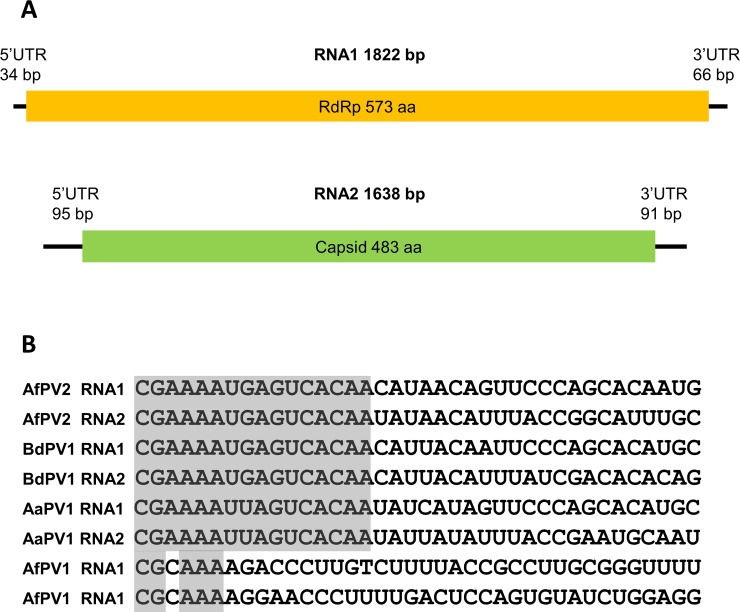
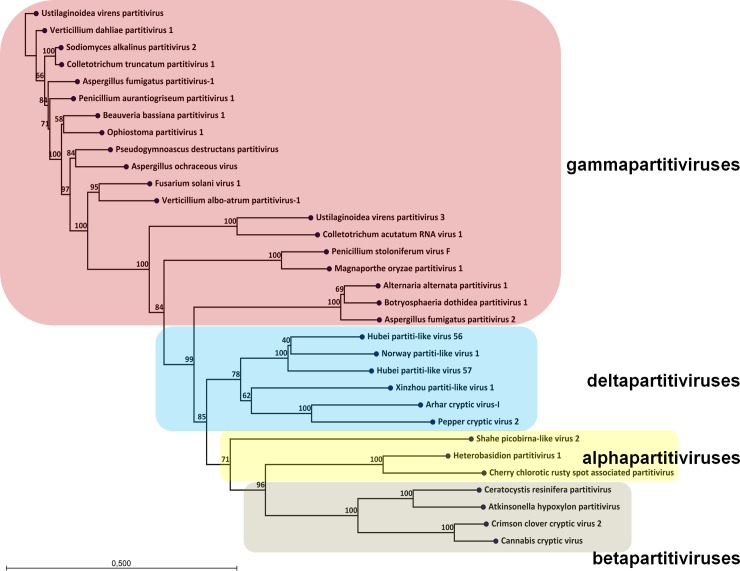
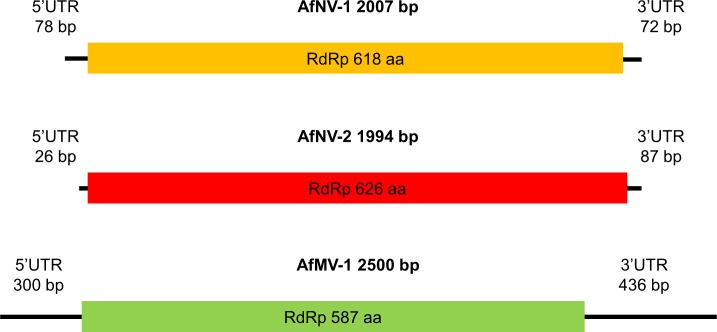
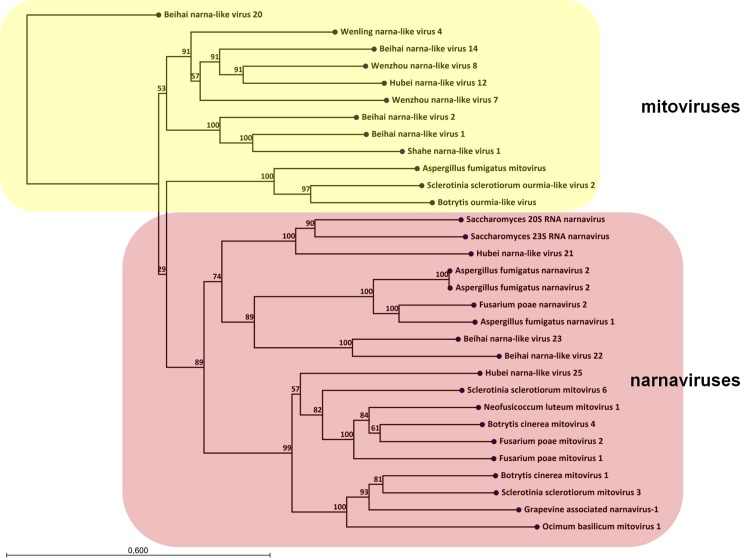
In the last few years, increasing numbers of viruses infecting fungi have been identified. In this study, we used an in silico approach for the analysis of deep RNA sequencing data in order to discover and characterize putative genomic ssRNA or dsRNA mycovirus sequences in Aspergillus fumigatus. RNA sequencing reads of A. fumigatus strains were mapped against the A. fumigatus Af293 reference genome. Unmapped reads were collected for de novo assembly. Contigs were analyzed by Blastx comparison with a mycovirus protein database. Assembled viral genomes were used as template for remapping of RNA sequencing reads. In total, deep RNA sequencing results from 11 A. fumigatus strains were analyzed for the presence of mycoviral genomic RNAs. In 9 out of 11 strains, putative mycoviral RNA genomes were identified. Three strains were infected with two different mycovirus species. Two strains were infected with Aspergillus fumigatus polymycovirus type-1 (AfuPmV-1). Four strains contained fully recovered genomic RNA of unknown narna-like viruses designated as Aspergillus fumigatus narnavirus-1 and Aspergillus fumigatus narnavirus-2 (AfuNV-1 and AfuNV-2). Both viruses showed 38% amino acid sequence identity to Beihai narna-like virus-21. Three strains contained partially recovered genomic RNA of an unknown narna-like virus. Two strains contained fully recovered genomic RNAs of an unknown partitivirus designated as Aspergillus fumigatus partitivirus-2 (AfuPV-2) which showed 50% amino acid sequence identity to Alternaria alternata partitivirus-1. Finally, one strain contained fully recovered genomic RNA of an unknown mitovirus designated as Aspergillus fumigatus mitovirus-1 (AfuMV-1) which showed 34% amino acid sequence identity to Sclerotina sclerotiorum mitovirus. In silico analysis of deep RNA sequencing results showed that a majority of the A. fumigatus strains used here were infected with mycoviruses. Four novel A. fumigatus RNA mycoviruses could be identified: two different Aspergillus fumigatus narna-like viruses, one Aspergillus fumigatus partitivirus, and one Aspergillus fumigatus mitovirus.
Overview
The claims and statistics of this paper haven’t been checked yet.
Free: it reads the open-access text and checks the first 5 claims that cite a source we can check. Create a free account to check every claim.
Integrity signals
Registry
Cites
Statistics
Figures
Verification
Claims the paper makes
The claims and statistics of this paper haven’t been checked yet.
Free: it reads the open-access text and checks the first 5 claims that cite a source we can check. Create a free account to check every claim.
Claims other papers make about this one
Each is checked against this paper’s own text: does it say what the citing paper says it does?
The cited source says what the claim attributes to it.
In the citing paper
“A. fumigatus is regularly reported to be infected by viruses (592, 593).”
From Aspergillus fumigatus and Aspergillosis in 2019 (2019) · cites this paper as [592]
Self-check
Percentages, sums and reported differences re-computed from the paper’s own numbers.
The self-check needs the paper’s full text.
Citations
Cites
50-plus years of fungal viruses
Ghabrial, S. A., Castón, J. R., Jiang, D., Nibert, M. L., & Suzuki, N. (2015) · Virology · doi:10.1016/j.virol.2015.02.034 · Cited by 753
Emergence of Azole Resistance in Aspergillus fumigatus and Spread of a Single Resistance Mechanism
Snelders, E., van der Lee, H. A. L., Kuijpers, J., Rijs, A. J. M. M., Varga, J., Samson, R. A., Mellado, E., Donders, A. R. T., Melchers, W. J. G., & Verweij, P. E. (2008) · PLoS Medicine · doi:10.1371/journal.pmed.0050219 · Cited by 727
Self-citationA geminivirus-related DNA mycovirus that confers hypovirulence to a plant pathogenic fungus
Yu, X., Li, B., Fu, Y., Jiang, D., Ghabrial, S. A., Li, G., Peng, Y., Xie, J., Cheng, J., Huang, J., et al. (2010) · Proceedings of the National Academy of Sciences · doi:10.1073/pnas.0913535107 · Cited by 562
Verweij, P. E., Chowdhary, A., Melchers, W. J. G., & Meis, J. F. (2016) · Clinical Infectious Diseases · doi:10.1093/cid/civ885 · Cited by 561 · cited 1×
“Pan-azole resistance has major consequences for the treatment of patients with invasive aspergillosis and causes a subsequent increase in mortality rate up to 90% [21, 22].”
BackgroundSelf-citationClinical Implications of Azole Resistance in Aspergillus fumigatus, the Netherlands, 2007–2009
van der Linden, J. W. M., Snelders, E., Kampinga, G. A., Rijnders, B. J. A., Mattsson, E., Debets-Ossenkopp, Y. J., Kuijper, E. J., Van Tiel, F. H., Melchers, W. J. G., & Verweij, P. E. (2011) · Emerging Infectious Diseases · doi:10.3201/eid1710.110226 · Cited by 446
Self-citationNew Insights into Mycoviruses and Exploration for the Biological Control of Crop Fungal Diseases
Xie, J., & Jiang, D. (2014) · Annual Review of Phytopathology · doi:10.1146/annurev-phyto-102313-050222 · Cited by 440
Extracellular transmission of a DNA mycovirus and its use as a natural fungicide
Yu, X., Li, B., Fu, Y., Xie, J., Cheng, J., Ghabrial, S. A., Li, G., Yi, X., & Jiang, D. (2013) · Proceedings of the National Academy of Sciences · doi:10.1073/pnas.1213755110 · Cited by 314
Marzano, S.-Y. L., Nelson, B. D., Ajayi-Oyetunde, O., Bradley, C. A., Hughes, T. J., Hartman, G. L., Eastburn, D. M., & Domier, L. L. (2016) · Journal of Virology · doi:10.1128/jvi.00357-16 · Cited by 261
Kotta-Loizou, I., & Coutts, R. H. A. (2017) · PLOS Pathogens · doi:10.1371/journal.ppat.1006183 · Cited by 169
Wingfield, L. K., Kotta‐Loizou, I., Özkan-Kotiloğlu, S., Gunning, A. P., & Coutts, R. H. A. (2015) · Proceedings of the National Academy of Sciences · doi:10.1073/pnas.1419225112 · Cited by 158
Cited by
Aspergillus fumigatus and Aspergillosis in 2019
Latgé, J.-P., & Chamilos, G. (2019) · Clinical Microbiology Reviews · doi:10.1128/cmr.00140-18 · Cited by 1,400
Analysis of the virome associated to grapevine downy mildew lesions reveals new mycovirus lineages
Chiapello, M., Rodríguez-Romero, J., Ayllón, M. A., & Turina, M. (2020) · Virus Evolution · doi:10.1093/ve/veaa058 · Cited by 164
Sutela, S., Forgia, M., Vainio, E. J., Chiapello, M., Daghino, S., Vallino, M., Martino, E. M. D., Girlanda, M., Perotto, S., & Turina, M. (2020) · Virus Evolution · doi:10.1093/ve/veaa076 · Cited by 137
Novel Mycoviruses Discovered in the Mycovirome of a Necrotrophic Fungus
Ruiz-Padilla, A., Rodríguez‐Romero, J., Gómez-Cid, I., Pacifico, D., & Ayllón, M. A. (2021) · mBio · doi:10.1128/mbio.03705-20 · Cited by 141
Fungal Viruses Unveiled: A Comprehensive Review of Mycoviruses
Hough, B., Steenkamp, E. T., Wingfield, B. D., & Read, D. A. (2023) · Viruses · doi:10.3390/v15051202 · Cited by 145
Viruses Infecting the Plant Pathogenic Fungus Rhizoctonia solani
Abdoulaye, A. H., Foda, M. F., & Kotta‐Loizou, I. (2019) · Viruses · doi:10.3390/v11121113 · Cited by 83
Sato, Y., Shamsi, W., Jamal, A., Bhatti, M. F., Kondō, H., & Suzuki, N. (2020) · mBio · doi:10.1128/mbio.00450-20 · Cited by 71
Discovery of divided RdRp sequences and a hitherto unknown genomic complexity in fungal viruses
Chiba, Y., Oiki, S., Yaguchi, T., Urayama, S., & Hagiwara, D. (2020) · Virus Evolution · doi:10.1093/ve/veaa101 · Cited by 67
“AfuNV2, a previously reported virus (Zoll et al. 2018), was identi-”
BackgroundNarnaviruses: novel players in fungal–bacterial symbioses
Espino‐Vázquez, A. N., Bermúdez‐Barrientos, J. R., Cabrera-Rangel, J. F., Córdova-López, G., Cardoso‐Martínez, F., Martínez-Vázquez, A., Camarena-Pozos, D. A., Mondo, S. J., Pawlowska, T. E., Abreu‐Goodger, C., et al. (2020) · The ISME Journal · doi:10.1038/s41396-020-0638-y · Cited by 51
A novel narnavirus from the plant-pathogenic fungus Magnaporthe oryzae
Lin, Y., Zhou, J. N., Zhou, X., Shuai, S., Zhou, R., An, H., Fang, S., Zhang, S., & Deng, Q. (2020) · Archives of Virology · doi:10.1007/s00705-020-04586-7 · Cited by 40
Takahashi‐Nakaguchi, A., Shishido, E., Yahara, M., Urayama, S., Ninomiya, A., Chiba, Y., Sakai, K., Hagiwara, D., Chibana, H., Moriyama, H., et al. (2020) · Frontiers in Microbiology · doi:10.3389/fmicb.2020.607795 · Cited by 42
Understanding Mucormycoses in the Age of “omics”
Soare, A. Y., Watkins, T. N., & Bruno, V. M. (2020) · Frontiers in Genetics · doi:10.3389/fgene.2020.00699 · Cited by 39
Fonseca, P. L. C., Ferreira, F. V., da Silva, F. R., Oliveira, L. S., Marques, J. T., Goés‐Neto, A., Aguiar, E. R. G. R., & Gruber, A. (2020) · Viruses · doi:10.3390/v13010009 · Cited by 36
“Similarly, the Aspergillus fumigatus mitovirus 1 (AXE72932), originally classified as a mitovirus [77], is clearly misclassified, and also belongs to the Ourmiavirus/ourmia-like clade.”
BackgroundA Victorivirus and Two Novel Mitoviruses Co-Infected the Plant Pathogen Nigrospora oryzae
Liu, H., Liu, R., Li, C. X., Wang, H., Zhu, H. J., Gao, B. D., Zhou, Q., & Zhong, J. (2019) · Viruses · doi:10.3390/v11010083 · Cited by 31
“In general, mitoviruses are located in mitochondria and infect filamentous fungi, but they have also recently been found in the human pathogen Aspergillus fumigatus [17].”
BackgroundRecent developments in Aspergillus fumigatus research: diversity, drugs, and disease
Kordana, N. E., Johnson, A., Quinn, K., Obar, J. J., & Cramer, R. A. (2025) · Microbiology and Molecular Biology Reviews · doi:10.1128/mmbr.00011-23 · Cited by 29
Khan, H. A., Telengech, P., Kondō, H., Bhatti, M. F., & Suzuki, N. (2022) · Frontiers in Cellular and Infection Microbiology · doi:10.3389/fcimb.2022.913619 · Cited by 28
Liu, H., Liu, M., Zhu, H., Zhong, J., Liao, X., & Zhou, Q. (2020) · Archives of Virology · doi:10.1007/s00705-020-04886-y · Cited by 23
Genomic and biological characterization of a novel partitivirus infecting Fusarium equiseti
Mahillon, M., Decroës, A., Caulier, S., Tiendrebeogo, A., Legrève, A., & Bragard, C. (2021) · Virus Research · doi:10.1016/j.virusres.2021.198386 · Cited by 21
Polymycovirus Infection Sensitizes Aspergillus fumigatus for Antifungal Effects of Nikkomycin Z
Sass, G., Kotta‐Loizou, I., Martinez, M., Larwood, D. J., & Stevens, D. A. (2023) · Viruses · doi:10.3390/v15010197 · Cited by 20
“The infection rate by mycoviruses among Aspergillus species has been described to be between 10 and 80% [20,21], while between 7 and 19% of clinical A.”
BackgroundUmer, M., Mubeen, M., Shakeel, Q., Ali, S., Iftikhar, Y., Bajwa, R. T., Anwar, N., Rao, M. J., & He, Y. (2023) · Microorganisms · doi:10.3390/microorganisms11102515 · Cited by 16
“Single-stranded (ss) RNA viruses are also common in R. solani , in addition to dsRNA viruses [66].”
BackgroundCharacterization of the Mycovirome of the Phytopathogenic Fungus, Neofusicoccum parvum
Marais, A., Faure, C., Comont, G., Candresse, T., Stempien, E., & Corio‐Costet, M. (2021) · Viruses · doi:10.3390/v13030375 · Cited by 16
Li, Y., Yang, N., Mu, T., Wu, X., & Zhao, C. (2023) · Journal of Fungi · doi:10.3390/jof9020214 · Cited by 15
“In addition, three partitiviruses, Aspergillus fumigatus partitivirus 2 [67], Alternaria alternata partitivirus 1 [68], and Delitschia confertaspora partitivirus 1 [69], were still unclassified.”
Inland Water Fungi in the Anthropocene: Current and Future Perspectives
Grossart, H., Hassan, E. A., Masigol, H., Arias-Andrés, M., & Rojas-Jiménez, K. (2021) · Elsevier eBooks · doi:10.1016/b978-0-12-819166-8.00025-6 · Cited by 19
Characterization of the Mycovirome from the Plant-Pathogenic Fungus Cercospora beticola
Li, Y., Zhou, M., Yang, Y., Liu, Q., Zhang, Z., Han, C., & Wang, Y. (2021) · Viruses · doi:10.3390/v13101915 · Cited by 13
AfuPmV-1-Infected Aspergillus fumigatus Is More Susceptible to Stress Than Virus-Free Fungus
Sass, G., Martinez, M., Kotta‐Loizou, I., & Stevens, D. A. (2023) · Journal of Fungi · doi:10.3390/jof9070750 · Cited by 12
The Expanding Mycovirome of Aspergilli
Battersby, J. L., Stevens, D. A., Coutts, R. H. A., Havlíček, V., Hsu, J. L., Sass, G., & Kotta‐Loizou, I. (2024) · Journal of Fungi · doi:10.3390/jof10080585 · Cited by 13
“Aspergillus fumigatus mitovirus 1 (AfuMV1) is a novel mycovirus isolated from A. fumigatus via RNA-seq [62]; the virus was originally classified as a member of the Narnaviridae but now falls within the Mitoviridae .”
BackgroundMethodResultInfluentialGenetic Analyses of Amphotericin B Susceptibility in Aspergillus fumigatus
Fan, Y., Korfanty, G. A., & Xu, J. (2021) · Journal of Fungi · doi:10.3390/jof7100860 · Cited by 15
Mizutani, Y., Uesaka, K., Ota, A., Calassanzio, M., Ratti, C., Suzuki, T., Fujimori, F., & Chiba, S. (2021) · Frontiers in Microbiology · doi:10.3389/fmicb.2021.641484 · Cited by 12
A novel narnavirus is widespread in Saccharomyces cerevisiae and impacts multiple host phenotypes
Vijayraghavan, S., Kozmin, S. G., Wen, X., & McCusker, J. H. (2022) · G3 Genes Genomes Genetics · doi:10.1093/g3journal/jkac337 · Cited by 10
“…as Magnaporthe oryzae (Lin et al. 2020), Alternaria tenuissima (Nerva et al. 2019), Fusarium sp. (Osaki et al. 2016), and Aspergillus fumigatus (Zoll et al. 2018), water molds (Hacker et al. 2005) as well as in invertebrates, algae, and protozoans (Grybchuk et al. 2018; Waldron et al. 2018;…”
BackgroundDiscovery of divided RdRp sequences and a hitherto unknown genomic complexity in fungal virusesPreprint
Chiba, Y., Yaguchi, T., Urayama, S., & Hagiwara, D. (2020) · bioRxiv (Cold Spring Harbor Laboratory) · doi:10.1101/2020.09.08.288829 · Cited by 9
Biocontrol via mycoviruses: a neglected option for bioprotection?
van Diepeningen, A. D. (2021) · Burleigh Dodds series in agricultural science · doi:10.19103/as.2021.0093.20 · Cited by 7
“, 2013) or intrinsic (Kanhayuwa et al., 2015; Takahasi-Nagaguchi et al., 2020; Zoll et al., 2018) mycoviruses has been explored.”
BackgroundPlant virome: current understanding, mechanisms, and role in phytobiome
Sharma, S., Kashyap, P. L., & Sharma, A. (2020) · Elsevier eBooks · doi:10.1016/b978-0-12-819715-8.00003-3 · Cited by 11
Webb, R. J., Roberts, A. A., Wylie, S. J., Kosch, T. A., Toledo, L. F., dos Santos, M. M. A. B., Skerratt, L. F., & Berger, L. (2021) · Fungal Biology · doi:10.1016/j.funbio.2021.10.004 · Cited by 7
Jiang, Y., Yang, B., Liu, J., Wang, Q., Zhang, Q., Yu, W., & Hsiang, T. (2021) · Archives of Virology · doi:10.1007/s00705-020-04930-x · Cited by 6
Ghelfenstein-Ferreira, T., Serris, A., Salmona, M., Lanternier, F., & Alanio, A. (2024) · Medical Mycology · doi:10.1093/mmy/myae021 · Cited by 5
Etebari, K., Tugaga, A., Divekar, G., Uelese, O. A., Tusa, S. S. A., Vaega, E., Sasulu, H., Uini, L., Ren, Y., & Furlong, M. J. (2025) · Pathogens · doi:10.3390/pathogens14080801 · Cited by 4
Aspergillus: A Multifaceted Genus
Scazzocchio, C. (2019) · Elsevier eBooks · doi:10.1016/b978-0-12-809633-8.20803-0 · Cited by 5
Li, T., Chen, S., Hu, Z., Chen, J., Liu, H., & Zhang, T. (2022) · Frontiers in Microbiology · doi:10.3389/fmicb.2022.1008409 · Cited by 3
Molecular Characterization of Novel Mycoviruses in Seven Umbelopsis Strains
Kartali, T., Zsindely, N., Nyilasi, I., Németh, O., Sávai, G. N., Kocsubé́, S., Lipinszki, Z., Patai, R., Spisák, K., Nagy, G., et al. (2022) · Viruses · doi:10.3390/v14112343 · Cited by 3
“The presence of multiple viruses in the same strain have been reported from several fungi, such as from Aspergillus fumigatus [37], or from the plant pathogenic fungus Exobasidium sp.”
BackgroundThe Evolution of Microbial Defence Systems Against Antimicrobial Agents
Madhav, A., Will, R. C., & Mutreja, A. (2020) · Springer eBooks · doi:10.1007/978-981-15-3658-8_1 · Cited by 4
Diversity of Mycoviruses in Aspergilli
Kotta‐Loizou, I. (2020) · Elsevier eBooks · doi:10.1016/b978-0-12-809633-8.21321-6 · Cited by 3
Hough, B., Wingfield, B. D., & Read, D. A. (2024) · Virus Genes · doi:10.1007/s11262-024-02112-4 · Cited by 2
“These techniques were less sensitive to the detection of ssRNA viruses, as the recovery of intermediate dsRNA (the replicative intermediate of ssRNA viruses) was less efficient than that of genomic dsRNA, leading to an under representation of many ssRNA mycoviruses [60, 61].”
Kondō, H., Nanaji, M., Sugahara, H., Fujita, M., Andika, I. B., Suzuki, N., & Fumihiro, F. (2026) · Virus Research · doi:10.1016/j.virusres.2026.199724 · Cited by 2
“…and Alternaviridae , as well as positive-sense, single-stranded RNA ( + ssRNA) viruses, including members of Botourmiaviridae, Narna-viridae, Mitoviridae and Yadokariviridae families (Battersby et al., 2024; Degola et al., 2021; Fadli et al., 2025; Kotta-Loizou and Coutts, 2017; Zoll et al., 2018).”
Research and development status of mycovirus
Jiao, J. (2020) · IOP Conference Series Earth and Environmental Science · doi:10.1088/1755-1315/594/1/012025 · Cited by 2
Four distinct isolates of a novel polymycovirus identified in Setosphaeria turcica
Zheng, Y., Chen, M., Li, X., Dai, F., Gao, Z., Deng, Q., Fang, S., Zhang, S., & Pan, S. (2023) · Archives of Virology · doi:10.1007/s00705-023-05819-1 · Cited by 2
Genotype–Phenotype Relationships in Azole-Resistant Aspergillus: Two Sides of the Same Coin
van Haren, M. H. I., Melchers, W. J. G., Zhang, J., Dellière, S., Bii, C. C., Stanford, F. A., Voetz, M., White, P. L., Dyer, P. S., Pas, S. D., et al. (2026) · Journal of Fungi · doi:10.3390/jof12040290 · Cited by 1
“Mycoviruses are present in a subset of A. fumigatus isolates and can alter fungal physiology and stress responses [125,126].”
Self-citationPadilla, A. R. (2023) · UPM Digital Archive (Technical University of Madrid) · doi:10.20868/upm.thesis.77161
Wang, P., Lu, H., Sun, J., Yang, G., & Huang, B. (2024) · Archives of Microbiology · doi:10.1007/s00203-024-03848-1
“Mycoviruses such as chrysovirus (Takahashi-Nak-aguchi et al. 2020), partitivirus (Jiang et al. 2021), totivi-rus (Jiang et al. 2022), polymycovirus (Zoll et al. 2018), and viruses in proposed families Alternaviridae (Lutz et al. 2022) and Yadokariviridae (Kotta-Loizou and Coutts 2017) have been…”
Étude génomique du genre Malassezia et des mycovirus associés
Boulanouar, F. (2023) · theses.fr (ABES) · doi:10.70675/9252eec7z856fz4364z9eb6z9459f3716a0e
Metadata
- Authors
- Zoll, J., Verweij, P. E., & Melchers, W. J. G.
- Affiliations
- Radboud University Medical Center (NL)
- Corresponding author
- Zoll, Jan
- Venue
- PLOS ONE
- Publisher
- Public Library of Science (PLoS)
- Published
- 2018-07-25
- Volume
- 13
- Issue
- 7
- Pages
- e0200511
- ISSN
- 1932-6203 (ISSN-L)
- PMC
- PMC6059430
- OpenAlex
- W2883827605
- Cited by
- 49
- References
- 27
- Citations by year
- 2026: 2 · 2025: 2 · 2024: 4 · 2023: 8 · 2022: 4 · 2021: 10 · 2020: 15 · 2019: 4
- FWCI
- 5.15
- Type
- journal article
- Language
- en
- Open access
- gold
- doi.org
- Licence
- Locations
- PLoS ONE (publishedVersion, cc-by)
- Europe PMC (PubMed Central) (publishedVersion, cc-by)
- PubMed Central (publishedVersion, cc-by)
- PubMed (publishedVersion)
- Radboud Repository (Radboud University) (submittedVersion)
- DOAJ (DOAJ: Directory of Open Access Journals) (submittedVersion, cc-by-sa)
- Radboud Repository (Radboud University) (submittedVersion, other-oa)
- Topics
- Life Sciences › Immunology and Microbiology › Virology › Plant and Fungal Interactions Research
- Life Sciences › Immunology and Microbiology › Virology › Bacteriophages and microbial interactions
- Life Sciences › Agricultural and Biological Sciences › Plant Science › Plant Pathogens and Fungal Diseases
- Keywords
- Aspergillus fumigatus, mycoviruses, partitivirus, mitovirus, virus discovery, viral genome recovery, de novo assembly
- MeSH terms
- Fungal Viruses, Aspergillus fumigatus, Phylogeny, RNA Viruses, RNA, Viral, Genome, Viral, Sequence Analysis, RNA, Computational Biology, Genomics, High-Throughput Nucleotide Sequencing
About these checks
Registry, retraction, Cites and statistics results are computed, not judged, with one exception: a printed reference that no index lists is read once by a model before it counts as a citation error. Claims are extracted by a model and kept only when their quote appears verbatim in the text; each cited source is then checked, with a model’s help, for whether it says what the claim relies on. Those verdicts can be wrong — read the claim’s quote and the cited source before relying on one.
Statistics and arithmetic are recomputed, not judged.
Confidence bands are shown only for fields calibrated on our annotated test set. None is calibrated yet, so no band is shown.
What counts as a claim ›How we measure confidence ›How we check this ›
Are you an author, or do you see a problem with this page? Request a review
Data sources
Bibliographic data: Semantic Scholar, OpenAlex, Crossref.
Contains information from the Semantic Scholar Academic Graph Datasets, made available under the ODC Attribution License (ODC-BY 1.0).
Semantic Scholar’s data is described in: Kinney, R., et al. (2023). The Semantic Scholar Open Data Platform. arXiv:2301.10140.
