

The DOI matches its Crossref record; 2 of the 2 references it cites were found in a registry or an index.
Radiocarbon dating and cultural dynamics across Mongolia’s early pastoral transition
Overview
The claims and statistics of this paper haven’t been checked yet.
Run the check — free, no account needed. It reads the open-access text and checks the sources it cites.
Integrity signals
Registry
Cites
Statistics
Figures
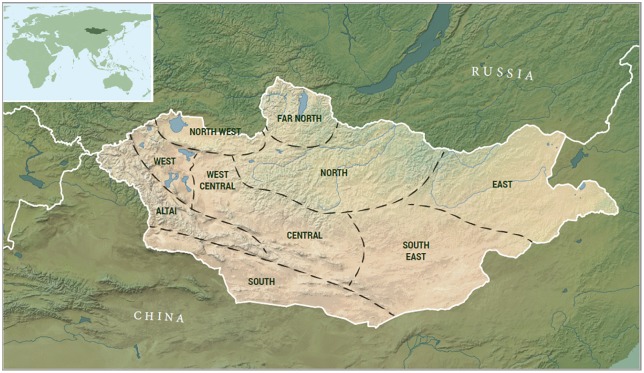
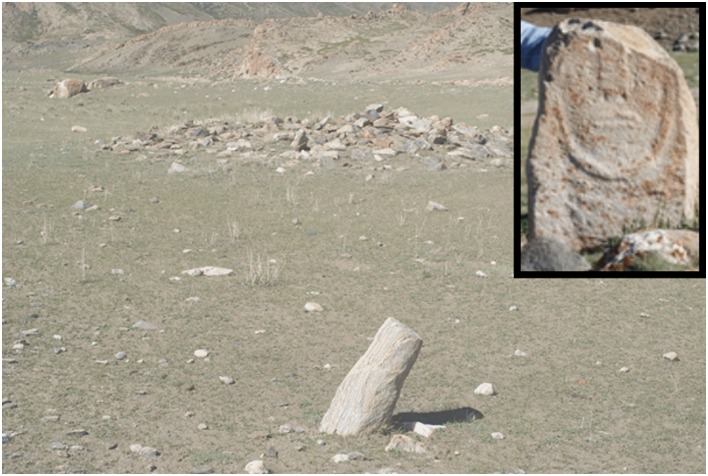
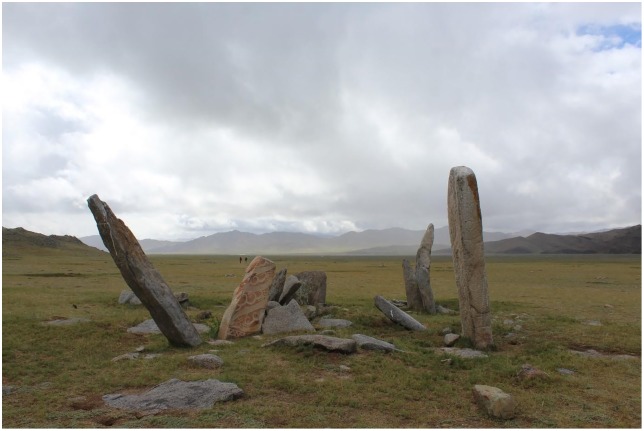
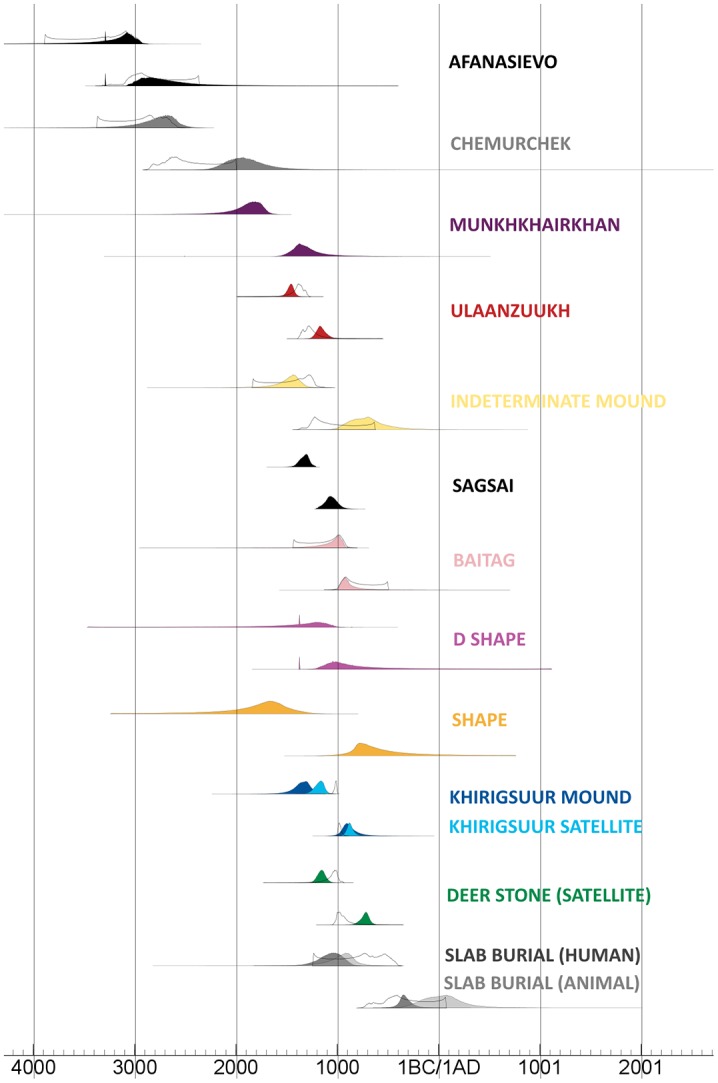
Verification
Claims the paper makes
The claims and statistics of this paper haven’t been checked yet.
Run the check — free, no account needed. It reads the open-access text and checks the sources it cites.
Claims other papers make about this one
Each is checked against this paper’s own text: does it say what the citing paper says it does?
In the citing paper
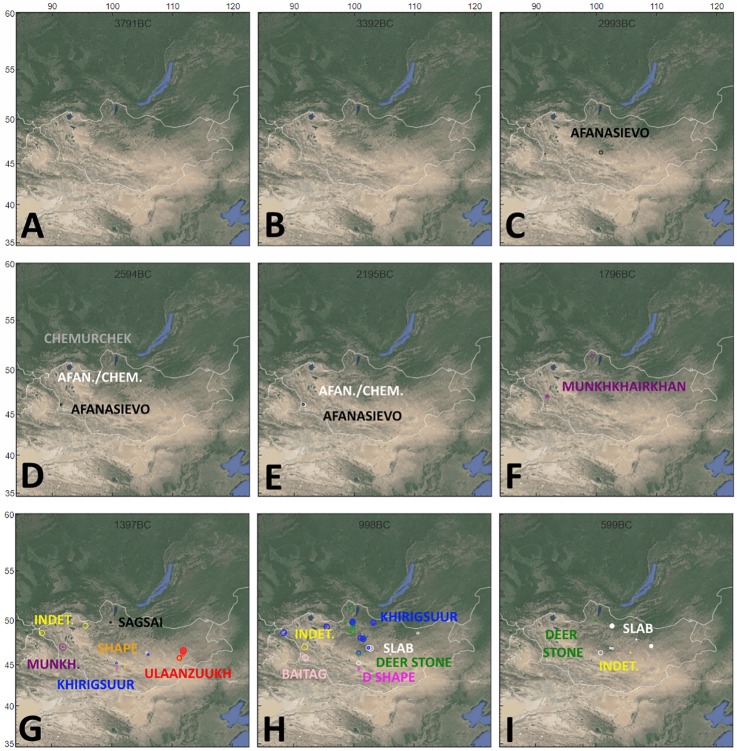
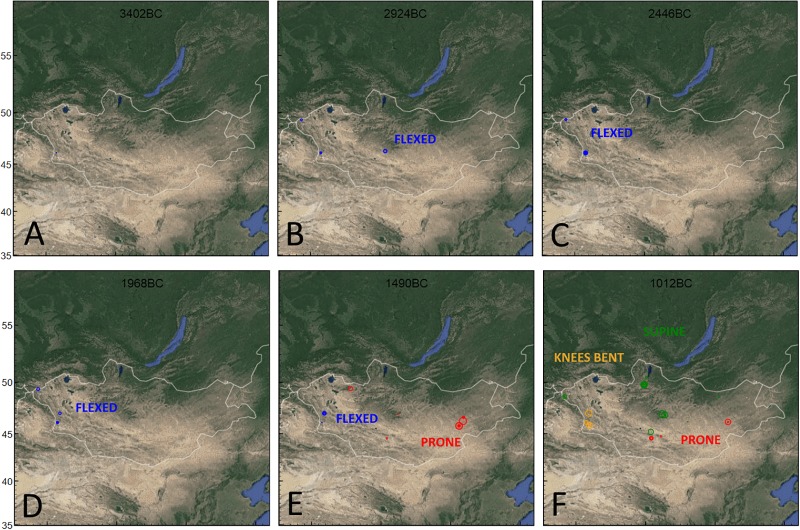
“We tested Afanasievo as a potential ancestral source given the geographic overlap and similar burial posture between the Afanasievo and Chemurchek cultures (Taylor et al., 2019), however the 2-way model with Afanasievo as one of the two sources fails (Table S5B).”
From A Dynamic 6,000-Year Genetic History of Eurasia’s Eastern Steppe (2020) · cites this paper as Taylor et al., 2019
In the citing paper
“while shape burials could both predate and postdate this mark – although very few have been reliably dated (Taylor et al., 2019).”
From A Dynamic 6,000-Year Genetic History of Eurasia’s Eastern Steppe (2020) · cites this paper as Taylor et al., 2019
In the citing paper
“The Chemurchek archaeological culture (also called Hemtseg, Qiemu’erqieke, Shamirshak), spans the period between 2750 BCE-1900 BCE (Taylor et al., 2019).”
From A Dynamic 6,000-Year Genetic History of Eurasia’s Eastern Steppe (2020) · cites this paper as Taylor et al., 2019
In the citing paper
“Radiocarbon modeling dates central Mongolian khirigsuurs to between ca. 1350-900 cal BCE, deer stones to ca. 1150-750 cal. BCE, and places the emergence of DSKC horse ritual at ca. 1200 cal BCE (Taylor et al., 2019, 2017).”
From A Dynamic 6,000-Year Genetic History of Eurasia’s Eastern Steppe (2020) · cites this paper as Taylor et al., 2019
In the citing paper
“Beginning ca. 3150 BCE and persisting until ca. 2750 BCE (Taylor et al., 2019), although perhaps as late as 2600 BCE, stone burials belonging to the Afanasievo culture type have been recovered from the Khangai Mountains in central Mongolia and the Altai Mountains of western Mongolia.”
From A Dynamic 6,000-Year Genetic History of Eurasia’s Eastern Steppe (2020) · cites this paper as Taylor et al., 2019
3 more claims about this paper
Create a free account to see every claim other papers make about this one.
Self-check
Percentages, sums and reported differences re-computed from the paper’s own numbers.
The self-check needs the paper’s full text.
Citations
Cites
Population genomics of Bronze Age Eurasia
Allentoft, M. E., Sikora, M., Sjögren, K.-G., Rasmussen, S., Rasmussen, M., Stenderup, J., Damgaard, P. B., Schroeder, H., Ahlström, T., Vinner, L., et al. (2015) · Nature · doi:10.1038/nature14507 · Cited by 1,550
Dealing with outliers and offsets in radiocarbon dating
Bronk Ramsey, C. (2009) · Radiocarbon · doi:10.1017/s0033822200034093 · Cited by 1,204
Research works printed but not linked: 45
- PB de Damgaard, 2018, 137 ancient human genomes from across the Eurasian steppes, Nature, 557, 369, 10.1038/s41586-018-0094-2 · DOI · Paper page
- C Gaunitz, 2018, Ancient genomes revisit the ancestry of domestic and Przewalski’s horses, Science
- C Jeong, 2018, Bronze Age population dynamics and the rise of dairy pastoralism on the eastern Eurasian steppe, Proc Natl Acad Sci U S A, 115, E11248, 10.1073/pnas.1813608115 · DOI · Paper page
- Wilkin, S, Ventresca MillerA. Taylor WTT, Hagan RH, Bleasdale M, Horton M, et al. Dairy pastoralism drove ancient Eastern Eurasian Steppe expansions. In Review at Nature Ecology and Evolution.
- CA Makarewicz, Isotopic evidence for ceremonial provisioning of Late Bronze age khirigsuurs with horses from diverse geographic locales, Quat Int. Elsevier Ltd
- J-L Houle, 2010, Emergent complexity on the Mongolian steppe: Mobility, territoriality, and the development of early nomadic polities
- WTT Taylor, 2015, Equine cranial morphology and the identification of riding and chariotry in late Bronze Age Mongolia, Antiquity. Cambridge University Press, 89, 854
- WTT Taylor, 2017, A Bayesian chronology for early domestic horse use in the Eastern Steppe, J Archaeol Sci, 81, 49, 10.1016/j.jas.2017.03.006 · DOI · Paper page
- SH Lees, 1974, The Origins of Specialized Nomadic Pastoralism: A Systemic Model, American Antiquity, 187, 10.2307/279581 · DOI
- AM Khazanov, 1994, Nomads and the outside world
- O Lattimore, 1962, Inner Asian Frontiers of China
- J Wright, 2006, The Adoption of Pastoralism in Northeast Asia: Monumental Transformation in the Egiin Gol Valley, Mongolia
- JK Clark, 2014, Modeling late prehistoric and early historic pastoral adaptations in northern Mongolia’s Darkhad Depression
- L Janz, 2016, Curr Anthropol
- S.V. Svyatko, 2009, New Radiocarbon Dates and a Review of the Chronology of Prehistoric Populations from the Minusinsk Basin, Southern Siberia, Russia, Radiocarbon, 51, 243, 10.1017/S0033822200033798 · DOI
- W. Honeychurch, 2016, The Archaeology of pastoral nomadism, Annual Review of Anthropology, 45, 341, 10.1146/annurev-anthro-102215-095827 · DOI
- AA Kovalev, 2009, Discovery of new cultures of the Bronze Age in Mongolia according to the data obtained by the International Central Asian Archaeological Expedition, Current archaeological research in Mongolia, 149
- A Kovalev, 2014, Earliest European in the heart of Asia: the Chemurchek cultural phenomen
- LL Rogers, 2016, Understanding ancient human population genetics of the eastern Eurasian steppe through mitochondrial DNA analysis: Central Mongolian samples from the Neolithic, Bronze Age, Iron Age and Mongol Empire periods
- L Janz, 2017, Transitions in Palaeoecology and Technology: Hunter-Gatherers and Early Herders in the Gobi Desert, Journal of World Prehistory, 30, 1, 10.1007/s10963-016-9100-5 · DOI · Paper page
- PWM Jia, 2010, A re-analysis of the Qiemu’erqieke (Shamirshak) cemeteries, Xinjiang, China, Journal of Indo-European Studies. Institute for the Study of Man, 38, 275
- WTT Taylor, 2016, Reconstructing Equine Bridles in the Mongolian Bronze Age, J Ethnobiol. Society of Ethnobiology, 36, 554, 10.2993/0278-0771-36.3.554 · DOI
- WTT Taylor, 2017, Horse demography and use in Bronze Age Mongolia, Quat Int, 436, 270, 10.1016/j.quaint.2015.09.085 · DOI
- WTT Taylor, 2018, Origins of equine dentistry, Proc Natl Acad Sci U S A
- Taylo WTT, Clark J, Tuvshinargal T, Thompson Jobe J, Spengler III R, Shnaider S et al. et al. In review. Early Pastoral Economies and Herding Transitions in the Bronze Age Eurasian Steppes. Paper submitted to Nature:Scientific Reports, January 2019. · DOI
- Bemmann, J., Brosseder, U., Gantulga, J.-O., Grupe, G., McGlynn, G., Reichert, S., Yeruul-Erdene, Ch., 2015. Bioarchaeological Research on the Bronze and Iron Age Cemetery of Maikhan Tolgoi, Upper Orkhon Valley, Central Mongolia, in: Basarov, B.V. (Ed.), Актуальные Вопросы Археологии и Этнологии Центральной Азии: Изд-во «Оттиск», Иркутск, pp. 188–199.
- J Bourgeois, 2017, Geometric stone settings in the Yustyd Valley and its surroundings (Altai Mountains, Russia): Bronze Age “virtual dwellings” and associated structures, Archaeological Research in Asia. Elsevier, 10, 17, 10.1016/j.ara.2017.02.003 · DOI
- WW Fitzhugh, 2009, Stone Shamans and Flying Deer of Northern Mongolia: Deer Goddess of Siberia or Chimera of the Steppe?, Arctic Anthropol, 46, 72, 10.1353/arc.0.0025 · DOI · Paper page
- T Turbat, 2011, Deer stones of the Jargalantyn Am, Mongolian Tangible Heritage Association NGO, Ulaanbaatar, 192
- N Zwyns, 2014, The open-air site of Tolbor 16 (Northern Mongolia): Preliminary results and perspectives, Quat Int, 347, 53, 10.1016/j.quaint.2014.05.043 · DOI
- J Wright, 2016, Households without Houses: Mobility and Moorings on the Eurasian Steppe, J Anthropol Res, 72, 133, 10.1086/686297 · DOI
- G Eregzen, 2016, Ancient Funeral Monuments of Mongolia
- B Philippsen, 2013, The freshwater reservoir effect in radiocarbon dating, Heritage Science. Nature Publishing Group, 1, 24, 10.1186/2050-7445-1-24 · DOI
- MB Schiffer, 1986, Radiocarbon dating and the “old wood” problem: The case of the Hohokam chronology, J Archaeol Sci, 13, 13, 10.1016/0305-4403(86)90024-5 · DOI · Paper page
- Bronk Ramsey C, Schulting R, Goriunova OI, Bazaliiskii VI, Weber AW. Analyzing Radiocarbon Reservoir Offsets Through Stable Nitrogen Isotopes and Bayesian Modeling: A Case Study Using Paired Human and Faunal Remains from the Cis-Baikal Region, Siberia [Internet]. Radiocarbon. 2014. pp. 789–799. · DOI
- A Zazzo, 2019, High-precision dating of ceremonial activity around a large ritual complex in Late Bronze Age Mongolia, Antiquity. Cambridge University Press, 93, 80
- F. Brock, 2010, Current Pretreatment Methods for AMS Radiocarbon Dating at the Oxford Radiocarbon Accelerator Unit (ORAU), Radiocarbon, 52, 103, 10.1017/S0033822200045069 · DOI
- C Bronk Ramsey, 2009, Bayesian Analysis of Radiocarbon Dates, Radiocarbon. Cambridge University Press, 51, 337
- JW Eerkens, 2013, The Evolution of a Cemetery: Rapid Change in Burial Practices in a Middle Holocene Site in Central Alta California, California Archaeology. Routledge, 5, 3, 10.1179/1947461X13Z.0000000005 · DOI
- C. Renfrew, 1976, Acculturation and Continuity in Atlantic Europe, 198
- I. Hughes, 1988, Megaliths: Space, time and the landscape—a view from Cylde, Scottish Archaeological Review, 5, 41
- J. Wright, 2017, The honest labour of stone mounds: monuments of Bronze and Iron Age Mongolia as costly signals, World Archaeology, 49, 547, 10.1080/00438243.2017.1360791 · DOI
- IV Chechushkov, 2018, Eurasian Steppe Chariots and Social Complexity During the Bronze Age, Journal of World Prehistory, 31, 435, 10.1007/s10963-018-9124-0 · DOI
- M Klinge, 2019, Spatial pattern of Late Glacial and Holocene climatic and environmental development in Western Mongolia—A critical review and synthesis, Quat Sci Rev, 210, 26, 10.1016/j.quascirev.2019.02.020 · DOI
- H Parzinger, 2010, Der skythenzeitliche Fürstenkurgan Arzan 2 in Tuva—Ergebnisse und weiterführende Betrachtungen, Der skythenzeitliche Fürstenkurgan Arzan, 2, 303
Cited by
A Dynamic 6,000-Year Genetic History of Eurasia’s Eastern Steppe
Jeong, C., Wang, K., Wilkin, S., Taylor, W. T. T., Miller, B. K., Bemmann, J. H., Stahl, R., Chiovelli, C., Knolle, F., Ulziibayar, S., et al. (2020) · Cell · doi:10.1016/j.cell.2020.10.015 · Cited by 328
Self-citation
Metadata
- Authors
- Taylor, W., Wilkin, S., Wright, J., Dee, M., Erdene, M., Clark, J., Tuvshinjargal, T., Bayarsaikhan, J., Fitzhugh, W., & Boivin, N.
- Venue
- PLOS ONE
- Publisher
- Public Library of Science (PLoS)
- Published
- 2019-11-06
- Volume
- 14
- Issue
- 11
- Pages
- e0224241
- ISSN
- 1932-6203
- PMC
- PMC6834239
- Cited by
- 30
- References
- 2
- Language
- en
About these checks
Registry, retraction, Cites and statistics results are computed, not judged, with one exception: a printed reference that no index lists is read once by a model before it counts as a citation error. Claims are extracted by a model and kept only when their quote appears verbatim in the text; each cited source is then checked, with a model’s help, for whether it says what the claim relies on. Those verdicts can be wrong — read the claim’s quote and the cited source before relying on one.
Statistics and arithmetic are recomputed, not judged.
Confidence bands are shown only for fields calibrated on our annotated test set. None is calibrated yet, so no band is shown.
What counts as a claim ›How we measure confidence ›How we check this ›
Are you an author, or do you see a problem with this page? Request a review
