

Postoperative analgesia using dezocine alleviates depressive symptoms after colorectal cancer surgery: A randomized, controlled, double-blind trial
Open accessThe DOI matches its Crossref record; 46 of the 47 references it cites were found in a registry or an index.
Abstract
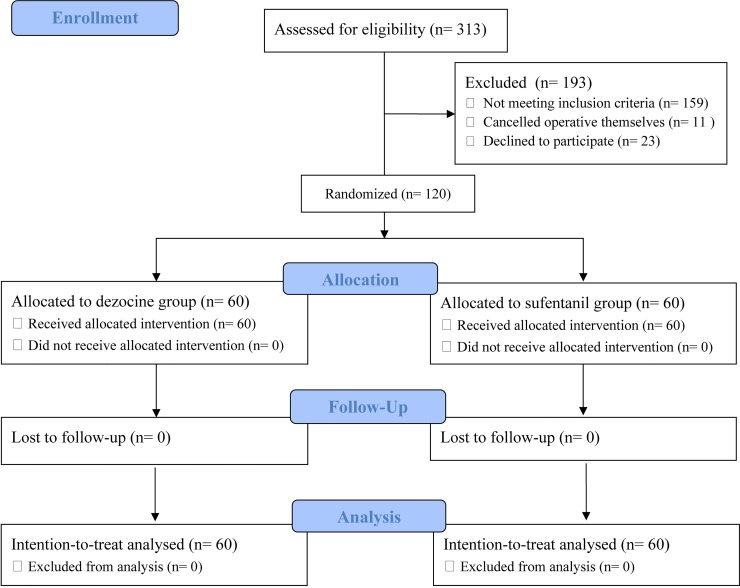
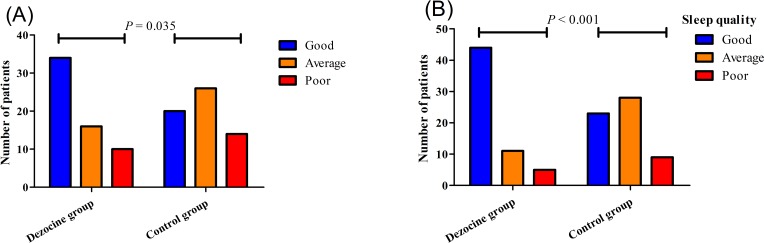
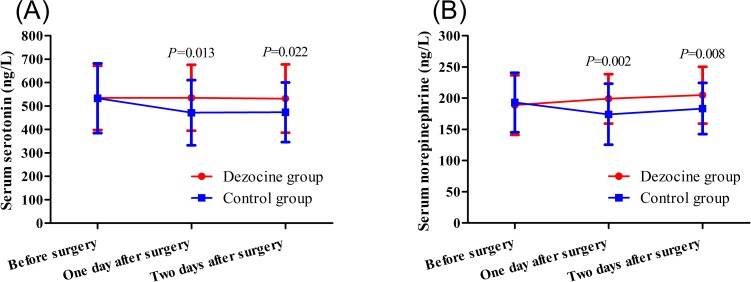
BACKGROUND: Postoperative depression is one of the most common mental disorders in patients undergoing cancer surgery and it often delays postoperative recovery. We investigated whether dezocine, an analgesic with inhibitory effect on the serotonin and norepinephrine reuptake, could relieve postoperative depressive symptoms in patients undergoing colorectal cancer surgery. METHODS: This randomized, controlled, single-center, double-blind trial was performed in the Second Affiliated Hospital of the Army Medical University. A total of 120 patients were randomly assigned to receive either sufentanil (1.3 μg/kg) with dezocine (1 mg/kg) (dezocine group; n = 60) or only sufentanil (2.3 μg/kg) (control group; n = 60) for patient-controlled intravenous analgesia after colorectal cancer surgery. The primary outcome was the Beck Depression Inventory score at 2 days after surgery. The secondary outcomes included the Beck Anxiety Inventory, sleep quality, and quality of recovery scores. RESULTS: Compared with those in the control group, patients in the dezocine group had lower depression scores (7.3±3.4 vs. 9.9±3.5, mean difference 2.6, 95% CI: 1.4-3.9; P<0.001) at 2 days after surgery and better night sleep quality at the day of surgery (P = 0.010) and at 1 day after the surgery (P<0.001). No significant difference was found in other outcomes between the two groups. CONCLUSIONS: Intravenous analgesia using dezocine can relieve postoperative depression symptoms and improve sleep quality in patients undergoing colorectal cancer surgery.
Overview
The claims and statistics of this paper haven’t been checked yet.
Free: it reads the open-access text and checks the first 5 claims that cite a source we can check. Create a free account to check every claim.
Integrity signals
Registry
Cites
Statistics
Figures
Verification
Claims the paper makes
The claims and statistics of this paper haven’t been checked yet.
Free: it reads the open-access text and checks the first 5 claims that cite a source we can check. Create a free account to check every claim.
Self-check
Percentages, sums and reported differences re-computed from the paper’s own numbers.
The self-check needs the paper’s full text.
Citations
Cites
Cancer statistics in China, 2015
Chen, W., Zheng, R., Baade, P. D., Zhang, S., Zeng, H., Bray, F., Jemal, A., Yu, X. Q., & He, J. (2016) · CA: A Cancer Journal for Clinicians · doi:10.3322/caac.21338 · Cited by 17,038
Siegel, R. L., Miller, K. D., & Jemal, A. (2018) · CA: A Cancer Journal for Clinicians · doi:10.3322/caac.21442 · Cited by 16,579
An inventory for measuring clinical anxiety: Psychometric properties.
Beck, A. T., Epstein, N., Brown, G., & Steer, R. A. (1988) · Journal of Consulting and Clinical Psychology · doi:10.1037/0022-006x.56.6.893 · Cited by 14,407 · cited 2×
“Beck’s Depression Inventory (BDI) and Beck’s Anxiety Inventory (BAI) were applied to measure the patients’ preoperative depression and anxiety scores [23,24].”
BackgroundMethodNorman, G. R., Sloan, J. A., & Wyrwich, K. W. (2003) · Medical Care · doi:10.1097/01.mlr.0000062554.74615.4c · Cited by 4,700
Assessment of Depression: The Depression Inventory
Beck, A. T., & Beamesderfer, A. (2015) · Modern Trends in Pharmacopsychiatry · doi:10.1159/000395074 · Cited by 1,832 · cited 2×
“Beck’s Depression Inventory (BDI) and Beck’s Anxiety Inventory (BAI) were applied to measure the patients’ preoperative depression and anxiety scores [23,24].”
MethodWigmore, T. J., Mohammed, K., & Jhanji, S. (2016) · Anesthesiology · doi:10.1097/aln.0000000000000936 · Cited by 510
Depression and postoperative complications: an overview
Ghoneim, M. M., & O’Hara, M. W. (2016) · BMC Surgery · doi:10.1186/s12893-016-0120-y · Cited by 488 · cited 1×
“Studies have reported that a pre-existing depressive disorder often delays the patients’ postoperative recovery[6,7].”
BackgroundDepression among Chinese university students: prevalence and socio-demographic correlates
Chen, L., Wang, L., Qiu, X. H., Yang, X. X., Qiao, Z. X., Yang, Y. J., & Liang, Y. (2013) · PLoS ONE · doi:10.1371/journal.pone.0058379 · Cited by 322 · cited 1×
“The BDI is a 21-item self-report inventory that measures characteristic attitudes and symptoms of depression with items being rated on a 4-point Likert scale (range 0–3)[23,30,31].”
[Reliability and validity of depression scales of Chinese version: a systematic review].
Sun, X., Li, Y. X., Yu, C., & Li, L. (2017) · PubMed · doi:10.3760/cma.j.issn.0254-6450.2017.01.021 · Cited by 182
Bu, X., Zhang, J., & Zuo, Y. (2015) · Patient · doi:10.1007/s40271-015-0148-6 · Cited by 172 · cited 1×
“Each item is rated on an 11-point (0−10) NRS (for positive items, 0 = “none of the time” and 10 = “all the time”; for negative items, the scoring was reversed; maximum score 150), with higher scores representing better functioning[34].”
Background
Research works printed but not linked: 3
- 25. Huang YT, Luo H, Shen N, Gao WL. Effects of Dezocine Combined with Sufentanil on Analgesia and Mood State in Patients with PCIA Pain Treatment after Hip Arthroplasty. Modern Hospital. 2017; 17: 1210– 2. 10.3760/cma.j.issn · doi:10.3760/cma.j.issn
- 44. Yuchen H, Bo Z, Wei Q. Value of serum monoamine neurotransmitters and their metabolites in diagnosis of comorbid anxiety and depression and major depressive disorder. Journal of third military medical university. 2014; 8: 806– 10.
- 46. Liu XQ, Ling C, Mai QL, Hu XD, Zhang WL. Effect of single injection of morphine into epidural space combined with dezocine intravenous analgesia on postpartum depression and serum 5- hydroxytryptamine level in parturients undergoing cesarean section. Hainan Med J. 2018; 29: 1224– 7.
Cited by
Management of Anxiety and Depression in Adult Survivors of Cancer: ASCO Guideline Update
Andersen, B. L., Lacchetti, C., Ashing, K., Berek, J. S., Berman, B. S., Bolte, S., Dizon, D. S., Given, B., Nekhlyudov, L., Pirl, W., et al. (2023) · Journal of Clinical Oncology · doi:10.1200/jco.23.00293 · Cited by 318
Cancer and stress: NextGen strategies
Cui, B., Peng, F., Lu, J., He, B., Su, Q., Luo, H., Deng, Z., Jiang, T., Su, K., Huang, Y., et al. (2021) · Brain, Behavior, and Immunity · doi:10.1016/j.bbi.2020.11.005 · Cited by 152
“Similarly, the SNRI dezocine reduces depressive symptoms as evaluated by the Beck Depression Inventory of 120 colorectal cancer patients undergoing surgery (Zhao et al., 2020).”
MethodDezocine as a potent analgesic: overview of its pharmacological characterization
Ye, R.-R., Jiang, S., Xu, X., Lu, Y., Wang, Y., & Liu, J. (2021) · Acta Pharmacologica Sinica · doi:10.1038/s41401-021-00790-6 · Cited by 49
“The depression index of the patients in the dezocine and sufentanil group was lower than that in the sufentanil group [59].”
ResultGan, S.-L., Long, Y.-Q., Wang, Q., Feng, C.-D., Lai, C.-X., Liu, C., Ding, Y.-Y., Liu, H., Peng, K., & Ji, F. (2023) · Frontiers in Psychiatry · doi:10.3389/fpsyt.2023.1128406 · Cited by 37
Defensive and Emotional Behavior Modulation by Serotonin in the Periaqueductal Gray
Vázquez-León, P., Miranda-Páez, A., Valencia-Flores, K., & Sánchez-Castillo, H. (2022) · Cellular and Molecular Neurobiology · doi:10.1007/s10571-022-01262-z · Cited by 37
Jiang, M., Li, Q., Mao, M., Xu, C., Zhou, R., Wen, Y., Yuan, H., & Feng, S. (2023) · Journal of Affective Disorders · doi:10.1016/j.jad.2023.02.127 · Cited by 29
Methods and timing in the assessment of postoperative recovery: a scoping review
Jaensson, M., Nilsson, U. G., & Dahlberg, K. (2022) · British Journal of Anaesthesia · doi:10.1016/j.bja.2022.04.015 · Cited by 31
Antidepressant-like effects of dezocine in mice: involvement of 5-HT1A and κ opioid receptors
Shang, L. H., Duan, C., Chang, S., Chang, N., & Jia, S. (2021) · Behavioural Pharmacology · doi:10.1097/fbp.0000000000000641 · Cited by 11
“This result is consistent with a recent clinical study showing that dezocine significantly reduced postoperative depression in patients after colorectal cancer surgery (Zhao et al., 2020).”
BackgroundResultWu, L., Dong, Y., Zhu, Q., Zhang, B., Ai, B., Yan, T., Zhang, G., & Sun, L. J. (2021) · BMC Cancer · doi:10.1186/s12885-021-08850-0 · Cited by 11
“Dezocine is a representative opioid receptor agonist/ antagonist that is widely used in clinical practice in China for treating postoperative and even cancer pain [11].”
BackgroundAbraham, J., Holzer, K. J., Pedamallu, L., Kozower, B. D., Avidan, M. S., & Lenze, E. J. (2025) · Anaesthesia · doi:10.1111/anae.16471 · Cited by 13
“%) weresingle site[13 – 18, 20, 23 – 29] and 14 were conducted in an academic setting [13, 14, 17 – 20 , 22 – 29].”
InfluentialWang, H., Chiang, C., Xue, C., Zhou, L., Li, S., Zhou, Y., Zhang, Z., Xie, M., Xiao, T., Hu, H., et al. (2022) · Toxicology Research · doi:10.1093/toxres/tfac026 · Cited by 7
Dezocine Has the Potential to Regulate the Clinical and Biological Features of Tumors
Hu, X., Luo, B., Qiu, L., Chen, S., Wu, Q., Chen, Q., Liu, X., Chen, L., Deng, S., Yuan, M., et al. (2022) · Drug Design Development and Therapy · doi:10.2147/dddt.s356863 · Cited by 7
“Zhao et al also confirmed this finding in patients after colon cancer surgery.(75) These results suggest that dezocine has an antidepressant effect both in cancer patients undergoing surgery and in pregnant women undergoing cesarean section.”
ResultDezocine is a Biased Ligand without Significant Beta-Arrestin Activation of the mu Opioid Receptor
John, G., Wenzhen, L., Jin, X., Zanni, G., Barr, G. A., & Liu, R. (2022) · Translational Perioperative and Pain Medicine · doi:10.31480/2330-4871/152 · Cited by 6
Revisiting dezocine for opioid use disorder: A narrative review of its potential abuse liability
Barr, G. A., Schmidt, H. D., Thakrar, A. P., Kranzler, H. R., & Liu, R. (2024) · CNS Neuroscience & Therapeutics · doi:10.1111/cns.70034 · Cited by 8
“32 In mouse models of “depressive-like” behaviors—the forced swim task and tail suspension task—immobility is used as a proxy for the clinical state.”
BackgroundMethodWei, Z.-J., Liang, P.-P., & Xu, A.-M. (2025) · World Journal of Gastroenterology · doi:10.3748/wjg.v31.i47.111599 · Cited by 5
“…measure cortisol, NETs (Neutrophil Extracellular Traps), or interleukin (IL)-6 levels, previous studies suggest that intraoperative hypotension [mean arterial pressure (MAP) 65 mmHg] may lead to a 2.3-fold increase in glucocorticoid receptor α phosphorylation via HPA axis activation[11,12].”
InfluentialMolecular relation between biological stress and carcinogenesis
Rakoczy, K., Szlasa, W., Sauer, N. J., Saczko, J., & Kulbacka, J. (2022) · Molecular Biology Reports · doi:10.1007/s11033-022-07543-6 · Cited by 5
Ying, Y., Fei, S., Zeng, Z., Qu, X., & Cao, Z. (2022) · Frontiers in Surgery · doi:10.3389/fsurg.2022.881006 · Cited by 3
Huang, L., Yan, X., & Yi, M. (2023) · SAGE Open Medical Case Reports · doi:10.1177/2050313x231160980 · Cited by 3
Dezocine and Addiction: Friend or Foe?
Childers, W. E., Elokely, K. M., & Abou-Gharbia, M. A. (2025) · Pharmaceuticals · doi:10.3390/ph18030386 · Cited by 2
“As an NRI and a Pharmaceuticals 2025 , 18 , 386 9 of 16 weak KOR partial agonist, dezocine would be expected to demonstrate antidepressant activity, and indeed, a few reports support that assertion [52,70,71].”
Tan, X., & Huang, X. (2025) · World Journal of Gastrointestinal Surgery · doi:10.4240/wjgs.v17.i3.100302 · Cited by 2
“Scientific and reasonable nursing interventions can markedly improve patients’ psychological states and enhance postoperative rehabilitation outcomes[16].”
Dezocine: A Totally Different Opioid
John, G. (2022) · Translational Perioperative and Pain Medicine · doi:10.31480/2330-4871/153 · Cited by 2
Teles, A. A. D. S. (2021) · Digital Library of Theses and Dissertations (Universidade de São Paulo) · doi:10.11606/t.22.2021.tde-14122021-171458 · Cited by 4
Comparison of dezocine and hydromorphone in post-cesarean epidural analgesia: a retrospective study
Yang, C., Mao, L.-S., Wang, D., Liu, W., Wang, Y., Liu, K., Peng, X.-Y., He, J., Li, R.-Y., Shen, T., et al. (2025) · BMC Anesthesiology · doi:10.1186/s12871-025-03472-6 · Cited by 1
“Several clinical studies have associated dezocine with reductions in postoperative anxiety, depression, and inflammatory response, further supporting its role in enhanced recovery after cesarean Sects [31, 32].”
Wei, Q., Zhong, K., Zhang, X.-K., Zhou, L., Zhu, Q., & Li, J. (2025) · Pharmacology Biochemistry and Behavior · doi:10.1016/j.pbb.2025.174136 · Cited by 1
Case report: Dezocine’s rapid and sustained antidepressant effects
Wang, H., Lyu, N., & Zhao, Q. (2024) · Frontiers in Pharmacology · doi:10.3389/fphar.2024.1411119 · Cited by 1
Teles, A. A. D. S., Júnior, A. J. S. C., Aguiar, J. C., Neves, W. F. D. S., Paraizo-Horvath, C. M. S., Russo, T. M. D. S., Dessotte, C. A. M., & Sonobe, H. M. (2022) · Research Society and Development · doi:10.33448/rsd-v11i8.30475 · Cited by 3
Huang, L., Yan, X., & Yi, M. (2022) · Research Square · doi:10.21203/rs.3.rs-1434995/v1
Li, H., Gong, H., Fang, Y., & Gong, H. (2023) · Signa Vitae · doi:10.22514/sv.2023.018
Self-citationKristensen, P. K., Dreyer, P., Laugesen, B., Schrøder, C. K., Østergård, L. R., Fly, L. N., Johnsen, S. P., & Feo, R. (2026) · International Journal of Nursing Studies · doi:10.1016/j.ijnurstu.2026.105560 · Cited by 1
Gui, Y.-K., Liu, L.-F., Shan, M.-L., Wang, J.-W., Yang, X., Da, X., & Xu, G. (2026) · Drug and Alcohol Dependence · doi:10.1016/j.drugalcdep.2026.113230
Li, C., Ni, J., Lei, Q., Chen, S.-B., Huang, H., Wang, G.-Y., Zhang, Y., Si, Y.-Y., Tan, W., Liu, H.-M., et al. (2026) · International Journal of Surgery · doi:10.1097/js9.0000000000005514
Self-citation
Metadata
- Authors
- Zhao, P., Wu, Z., Li, C., Yang, G., Ding, J., Wang, K., Wang, M., Feng, L., Duan, G., & Li, H.
- Affiliations
- Army Medical University (CN)
- Corresponding author
- Duan, Guangyou
- Li, Hong
- Venue
- PLOS ONE
- Publisher
- Public Library of Science (PLoS)
- Published
- 2020-05-26
- Volume
- 15
- Issue
- 5
- Pages
- e0233412
- ISSN
- 1932-6203 (ISSN-L)
- PMC
- PMC7250456
- OpenAlex
- W3030163968
- Cited by
- 31
- References
- 47
- Citations by year
- 2026: 3 · 2025: 6 · 2024: 2 · 2023: 5 · 2022: 10 · 2021: 4 · 2020: 1
- FWCI
- 4.57
- Type
- journal article
- Language
- en
- Open access
- gold
- doi.org
- Licence
- Locations
- PLoS ONE (publishedVersion, cc-by)
- PubMed Central (publishedVersion, cc-by)
- PubMed (publishedVersion)
- DOAJ (DOAJ: Directory of Open Access Journals) (submittedVersion, cc-by-sa)
- Funders
- Clinical Research Projects of Second Affiliated Hospital of Army Medical University (2016YLC10, 2015YLC09)
- Topics
- Health Sciences › Medicine › Anesthesiology and Pain Medicine › Anesthesia and Pain Management
- Health Sciences › Medicine › Anesthesiology and Pain Medicine › Pain Management and Opioid Use
- Life Sciences › Biochemistry, Genetics and Molecular Biology › Cancer Research › Cancer, Stress, Anesthesia, and Immune Response
- Keywords
- dezocine, postoperative depression, colorectal cancer surgery, sufentanil, patient-controlled intravenous analgesia, sleep quality, anxiety, quality of recovery
- MeSH terms
- Aged, Analgesics, Opioid, China, Depression, Double-Blind Method, Female, Humans, Male, Middle Aged, Pain, Postoperative, Postoperative Pain, Postoperative Complications, Digestive System Surgical Procedures, Tetrahydronaphthalenes, Colorectal Neoplasms, Analgesia, Patient-Controlled, Treatment Outcome, Sufentanil, Bridged Bicyclo Compounds, Heterocyclic, Administration, Intravenous
About these checks
Registry, retraction, Cites and statistics results are computed, not judged, with one exception: a printed reference that no index lists is read once by a model before it counts as a citation error. Claims are extracted by a model and kept only when their quote appears verbatim in the text; each cited source is then checked, with a model’s help, for whether it says what the claim relies on. Those verdicts can be wrong — read the claim’s quote and the cited source before relying on one.
Statistics and arithmetic are recomputed, not judged.
Confidence bands are shown only for fields calibrated on our annotated test set. None is calibrated yet, so no band is shown.
What counts as a claim ›How we measure confidence ›How we check this ›
Are you an author, or do you see a problem with this page? Request a review
Data sources
Bibliographic data: Semantic Scholar, OpenAlex, Crossref.
Contains information from the Semantic Scholar Academic Graph Datasets, made available under the ODC Attribution License (ODC-BY 1.0).
Semantic Scholar’s data is described in: Kinney, R., et al. (2023). The Semantic Scholar Open Data Platform. arXiv:2301.10140.
