

Does time management work? A meta-analysis
Open accessThe DOI matches its Crossref record; 120 of the 124 references it cites were found in a registry or an index; 3 of the 34 sources its claims cite were checked for support.
Abstract
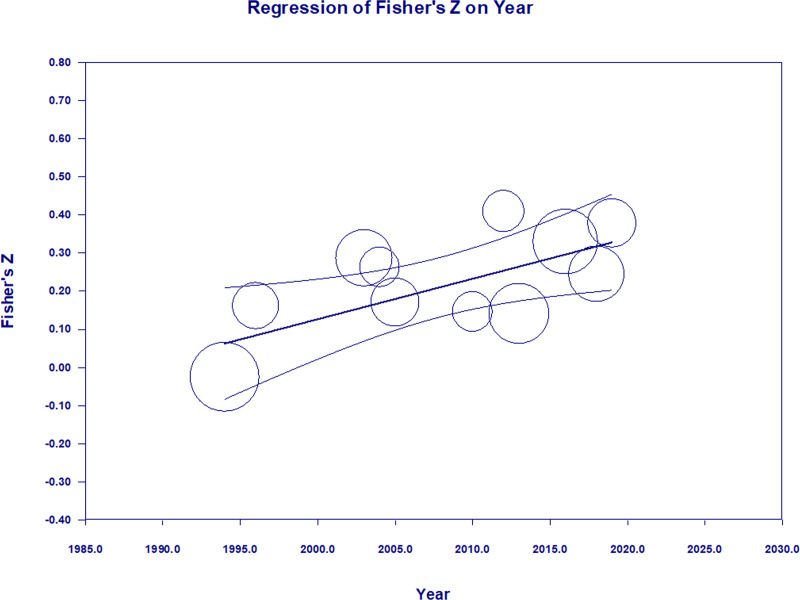
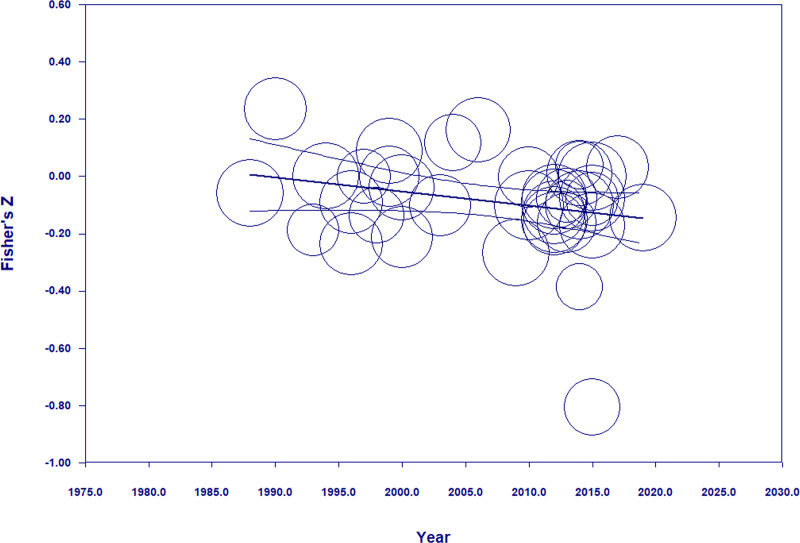
Does time management work? We conducted a meta-analysis to assess the impact of time management on performance and well-being. Results show that time management is moderately related to job performance, academic achievement, and wellbeing. Time management also shows a moderate, negative relationship with distress. Interestingly, individual differences and contextual factors have a much weaker association with time management, with the notable exception of conscientiousness. The extremely weak correlation with gender was unexpected: women seem to manage time better than men, but the difference is very slight. Further, we found that the link between time management and job performance seems to increase over the years: time management is more likely to get people a positive performance review at work today than in the early 1990s. The link between time management and gender, too, seems to intensify: women’s time management scores have been on the rise for the past few decades. We also note that time management seems to enhance wellbeing—in particular, life satisfaction—to a greater extent than it does performance. This challenges the common perception that time management first and foremost enhances work performance, and that wellbeing is simply a byproduct.
Overview
CoChat Summary
TL;DR
This meta-analysis of 158 studies finds that time management has moderate positive associations with job performance, academic achievement, and wellbeing, and a moderate negative association with distress. It challenges the common view that time management mainly boosts performance, finding stronger links with wellbeing, especially life satisfaction.
Key findings
- Across 158 studies and 490 effect sizes (53,957 participants), time management correlated with job performance *r* = .259, academic achievement *r* = .262, wellbeing *r* = .313, and distress *r* = -.222 (all *p* < .001).
- Conscientiousness was the strongest individual-difference correlate (*r* = .451), while gender was very weak (*r* = -.087, women higher) and age, education, number of children, marital status, and job autonomy were mostly nonsignificant.
- Time management was more strongly related to wellbeing than performance: life satisfaction *r* = .426 versus job satisfaction *r* = .248, described as 72% stronger. The link with job performance increased over the years (*B* = .0106, *p* < .01).
- In academic settings, behavior-based performance *r* = .430 exceeded results-based performance *r* = .196; standardized tests were nonsignificant (*r* = .011).
Methods
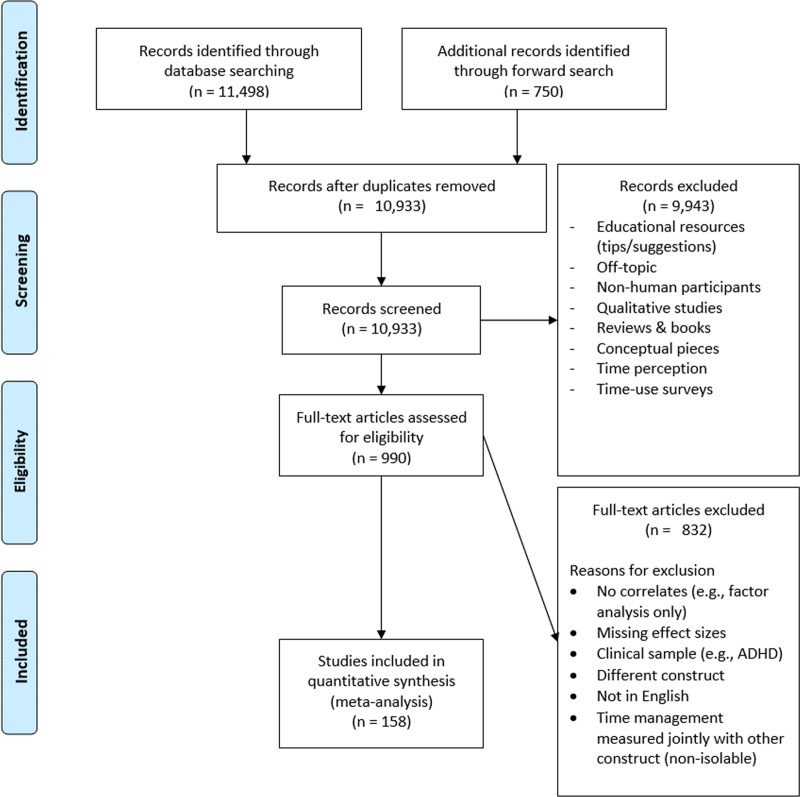
- Meta-analysis of quantitative empirical studies; searched EBSCO databases and forward-searched the three main time management measures, with no country/year restrictions and peer-reviewed articles up to 2019. The initial search yielded 10,933 hits, narrowing to 158 eligible studies and 490 effect sizes.
- Correlates were coded into professional/academic performance, positive wellbeing, distress, individual differences, and contextual factors. Analyses used random-effects models in Comprehensive Meta-Analysis v.3, transformed correlations to Fisher’s *z*, and averaged subscales or multiple outcomes when needed.
Limitations
- Stated in the paper: most time management studies are cross-sectional, so causal direction is often unclear; time management training interventions are often opaque, making comparisons difficult; high heterogeneity suggests moderators need more attention; publication bias was moderate for job performance and distress; time management ability may depend on income, education, and privilege.
- Evident from the text: the meta-analysis is correlational and cannot establish causation across all included studies; some categories had very few studies (e.g., contextual factors had 3–7 studies, and some variables had only 1–2 effect sizes), limiting precision; heterogeneity was often very high (e.g., *I²* = 96.18 for conscientiousness), complicating interpretation.
Model-written summary. Check it against the paper before relying on it.
Integrity signals
Registry
Cites
Statistics
Figures
Verification
Claims the paper makes
2 Valid · 0 Not valid · 21 Not checked · 65 Own results and interpretations
A result the paper reports from its own data — it cites no other source for it, so there is none to check. The quote shows it is in the paper.
In the paper
“Results show that time management is moderately related to job performance, academic achievement, and wellbeing.”
- Also stated in: § Time management and performance in academic settings · hedged
“Overall, the effect of time management on performance seems to be slightly higher in academic settings compared to work settings, although the magnitude of the effect remains moderate (see Table 5).”
§ Does time management work? A meta-analysis > Abstract
plainstates an association- Asserted: passes — The authors put it forward as true.
- Checkable: passes — It can be checked against evidence.
- Load-bearing: passes — The paper’s conclusions depend on it.
- Based: passes — The paper gives a reason why it holds.
- Also stated in: § Time management and performance in academic settings · hedged
A result the paper reports from its own data — it cites no other source for it, so there is none to check. The quote shows it is in the paper.
In the paper
“Corroborating this, note how, in Table 6 below, the link between time management and job satisfaction (I2 = 58.70) is much less heterogeneous than the one between time management and life satisfaction (I2 = 95.45).”
§ Does time management work? A meta-analysis > Results > Time management and performance in professional settings
plainstates an association- Asserted: passes — The authors put it forward as true.
- Checkable: passes — It can be checked against evidence.
- Load-bearing: unclear — It is unclear whether the paper’s conclusions depend on it.
- Based: passes — The paper gives a reason why it holds.
A result the paper reports from its own data — it cites no other source for it, so there is none to check. The quote shows it is in the paper.
In the paper
“Studies that measured contextual factors were fewer still—between 3 and 7 (depending on the contextual factor).”
§ Does time management work? A meta-analysis > Results > Overall description of the literature
plain- Asserted: passes — The authors put it forward as true.
- Checkable: passes — It can be checked against evidence.
- Load-bearing: unclear — It is unclear whether the paper’s conclusions depend on it.
- Based: passes — The paper gives a reason why it holds.
A result the paper reports from its own data — it cites no other source for it, so there is none to check. The quote shows it is in the paper.
In the paper
“The alleviating effect on psychological distress is particularly strong (r = -0.358; see Table 7).”
§ Does time management work? A meta-analysis > Results > Time management and distress
boostedstates a cause- Asserted: passes — The authors put it forward as true.
- Checkable: passes — It can be checked against evidence.
- Load-bearing: passes — The paper’s conclusions depend on it.
- Based: passes — The paper gives a reason why it holds.
A result the paper reports from its own data — it cites no other source for it, so there is none to check. The quote shows it is in the paper.
In the paper
“As further evidence, notice how in Table 6 the effect of time management on life satisfaction is 72% stronger than that on job satisfaction.”
§ Does time management work? A meta-analysis > Results > Time management and wellbeing
plainstates a cause- Asserted: passes — The authors put it forward as true.
- Checkable: passes — It can be checked against evidence.
- Load-bearing: unclear — It is unclear whether the paper’s conclusions depend on it.
- Based: passes — The paper gives a reason why it holds.
47 more claims
Create a free account to see all 88 claims and every source verdict.
- It may state two separate claims as one. 23
- Probably not a substantial claim. 12
- The quote only partly states this claim. 4
Citations
Cites
Preferred Reporting Items for Systematic Reviews and Meta-Analyses: the PRISMA statement
Moher, D., Liberati, A., Tetzlaff, J., Altman, D. G., & for the PRISMA Group (2009) · BMJ · doi:10.1136/bmj.b2535 · Cited by 83,823
Preferred reporting items for systematic reviews and meta-analyses: The PRISMA statement
Moher, D., Liberati, A., Tetzlaff, J., Altman, D. G., & the PRISMA Group* (2009) · Annals of Internal Medicine · doi:10.7326/0003-4819-151-4-200908180-00135 · Cited by 37,554
Borenstein, M., Hedges, L. V., Higgins, J. P. T., & Rothstein, H. R. (2009) · doi:10.1002/9780470743386 · Cited by 14,225
Borenstein, M., Hedges, L. V., Higgins, J. P. T., & Rothstein, H. R. (2021) · doi:10.1002/9781119558378 · Cited by 9,799
The Principles of Scientific Management.
Woolf, L. S., Taylor, F. W., Scott, W. D., & Goldmark, J. (1912) · The Economic Journal · doi:10.2307/2221959 · Cited by 5,256
Principles of Scientific Management, The
(2015) · The SAGE Encyclopedia of Economics and Society · doi:10.4135/9781452206905.n541 · Cited by 5,038
TIME, WORK-DISCIPLINE, AND INDUSTRIAL CAPITALISM
Thompson, E. P. (1967) · Past and Present · doi:10.1093/past/38.1.56 · Cited by 3,810 · cited 1×
“It is only with relatively recent events, such as the Industrial Revolution and waves of corporate downsizing, that time management has become synonymous with productivity [43, 65].”
BackgroundYeager, D. S., & Dweck, C. S. (2012) · Educational Psychologist · doi:10.1080/00461520.2012.722805 · Cited by 2,334
Cognitive control in media multitaskers
Ophir, E., Nass, C., & Wagner, A. D. (2009) · Proceedings of the National Academy of Sciences · doi:10.1073/pnas.0903620106 · Cited by 1,810 · cited 1×
“It has almost become commonsense that multitasking does not lead to performance [97].”
BackgroundCollege students' time management: Correlations with academic performance and stress.
Macan, T. H., Shahani, C., Dipboye, R. L., & Phillips, A. P. (1990) · Journal of Educational Psychology · doi:10.1037/0022-0663.82.4.760 · Cited by 933 · cited 3×
“These books inspired early modern time management research [21, 58, 88].”
BackgroundMethod
Research works printed but not linked: 5
- Mele C. Too many shows? Just speed them up. The New York Times. 2016; B7.
- Clinton B. My life. New York, NY: Knopf; 2004 10.1080/15216540400003425 · DOI
- Google Ngram Viewer. The rise of time management. Google Books 2016.
- Aurelius M. Meditations In: Eliot CW, editor. Harvard Classics vol 2 New York, NY: P.F. Collier & Son; 1909 p. 193– 306.
- Borenstein M, Hedges L, Higgins J, Rothstein H. Comprehensive Meta-Analysis Version 3. Englewood, NJ: Biostat; 2013.
Cited by
Xu, J. (2022) · Contemporary Educational Psychology · doi:10.1016/j.cedpsych.2022.102087 · Cited by 55
Trentepohl, S., Waldeyer, J., Fleischer, J., Roelle, J., Leutner, D., & Wirth, J. (2022) · Sustainability · doi:10.3390/su14095097 · Cited by 98
“Time management is considered an integral component of self-regulated learning [4,14] and is correlated with higher academic performance [15,16].”
BackgroundThe aging mind: A complex challenge for research and practice
Zihl, J., & Reppermund, S. (2022) · Aging Brain · doi:10.1016/j.nbas.2022.100060 · Cited by 44
“However, the adaptation of the individual time schedule allows a personalized prospective time-pressure management [147] and can also enhance wellbeing [2].”
BackgroundHow Personality Matters for Education Research
Jach, H. K., Bardach, L., & Murayama, K. (2023) · Educational Psychology Review · doi:10.1007/s10648-023-09807-4 · Cited by 50
“…and low effort (Conard, 2006; Cuadrado et al., 2021; Rijavec & Miljkovic, 2015), and tend to display better time management/less procrastination (Aeon et al., 2021; Steel, 2007; Theobald et al., 2018), complete their homework on time, and have higher engagement and more positive attitudes…”
BackgroundPetcu, M. A., Sobolevschi-David, M. I., Creţu, R. F., Curea, Ș. C., Hristea, A. M., Negescu, M. D. O., & Țuțui, D. (2023) · International Journal of Environmental Research and Public Health · doi:10.3390/ijerph20031811 · Cited by 42
“This raises the perception of many researchers [34] that time management primarily improves performance in the workplace and that wellbeing at work is simply a by-product.”
BackgroundAddis, B. A., Gelaw, Y. M., Eyowas, F. A., Bogale, T. W., Aynalem, Z. B., & Guadie, H. A. (2023) · Frontiers in Public Health · doi:10.3389/fpubh.2023.1159275 · Cited by 38
“It boosts productivity, reduces burnout, encourages development, and improves personal and professional satisfaction (9, 12, 13).”
BackgroundResultKorzyński, P., & Protsiuk, O. (2022) · Behaviour and Information Technology · doi:10.1080/0144929x.2022.2159525 · Cited by 46
“Aeon, Faber, and Panaccio 2021).”
Young, A. N., Bourke, A., Foley, S., & Di Blasi, Z. (2024) · PLOS ONE · doi:10.1371/journal.pone.0288887 · Cited by 21
“And, finally, there is a lack of clarity, consistency, and generalizability across what is being conducted as a time management intervention [16].”
InfluentialPantaruk, S., Khuadthong, B., Imjai, N., & Aujirapongpan, S. (2025) · Social Sciences & Humanities Open · doi:10.1016/j.ssaho.2025.101371 · Cited by 46
Patzak, A., Zhang, X., & Vytasek, J. (2025) · Frontiers in Education · doi:10.3389/feduc.2025.1623228 · Cited by 74
Aruğaslan, E. (2024) · Heliyon · doi:10.1016/j.heliyon.2024.e38827 · Cited by 41
“It is also important to consider that effective time management skills enhance workplace performance and academic success [87].”
BackgroundBedi, A., & Sass, M. (2022) · The Journal of Social Psychology · doi:10.1080/00224545.2022.2159302 · Cited by 25
Glasauer, C. (2022) · Journal of Systems and Software · doi:10.1016/j.jss.2022.111548 · Cited by 20
Systemic risk analysis of complex socio-technical systems from the safety-II perspective
Mohsendokht, M., Li, H., Kontovas, C. A., Chang, C.-H., Qu, Z., & Yang, Z. (2026) · Reliability Engineering & System Safety · doi:10.1016/j.ress.2026.112200 · Cited by 21
Bachrach, D. G., Rapp, T. L., Ogilvie, J. L., & Rapp, A. A. (2023) · Journal of Business Research · doi:10.1016/j.jbusres.2023.114295 · Cited by 21
Amin, S. M., El‐Sayed, A. A. I., Othman, A. A., et al. (2025) · BMC Nursing · doi:10.1186/s12912-025-03420-2 · Cited by 12
Online homework time, time management, and procrastination: A person-centered approach
Xu, J. (2025) · Computers & Education · doi:10.1016/j.compedu.2025.105341 · Cited by 16
Developing a housing stock model for evaluating energy Performance: The case of Jordan
Alasmar, R., Schwartz, Y., & Burman, E. (2024) · Energy and Buildings · doi:10.1016/j.enbuild.2024.114010 · Cited by 12
“One factor at a time (OFAT) analysis is a method of designing experiments that involves testing the effect of one input variable on the output variable, while keeping all other input variables constant [46].”
MethodCao, Y., & Jiang, Y. (2025) · Frontiers in Psychology · doi:10.3389/fpsyg.2025.1599833 · Cited by 15
“A recent study provides a meta-analysis on the effectiveness of time management, highlighting its importance in various contexts (Aeon et al., 2021).”
Harada, K., Masumoto, K., & Okada, S. (2023) · Archives of Gerontology and Geriatrics · doi:10.1016/j.archger.2023.105263 · Cited by 13
Self-Leadership and Leisure Management of Sports Science Students in the Online Education Process
Karagöz, Ş., Dinç, H., & Kaya, D. G. (2022) · International Journal of Technology in Education · doi:10.46328/ijte.282 · Cited by 11
“Leisure management is defined as “a decision-making style that individuals use to structure, protect and adapt their leisure time according to changing conditions” (Aeon et al., 2021).”
Time Management and Achievement Motivation: A Review of What We Know and Directions for Where to Go
Wolters, C. A., Brady, A. C., & Lee, H. J. (2025) · Educational Psychology Review · doi:10.1007/s10648-025-10032-4 · Cited by 39
“Prior research has established that both effective time management (Aeon et al., 2021; Broadbent & Poon, 2015; Wolters & Brady, 2021) and adaptive forms of motivation (Koenka, 2020; Zimmerman & Schunk, 2012) are associated with increased academic functioning and achievement.”
InfluentialWork-related stress among financial professionals: The impact of age, work experience and education
Kutebayev, T., Tlegenovna, U. Z., Sautenkova, M., & Aizhanova, G. (2024) · PLoS ONE · doi:10.1371/journal.pone.0314169 · Cited by 12
School-Based Sleep Education Program for Children: A Cluster Randomized Controlled Trial
Chen, S., Li, S. X., Zhang, J., Lam, S. P., Yu, M. W. M., Tsang, C. C., Kong, A. P. S., Chan, K. C. C., Li, A. M., Wing, Y. K., et al. (2023) · Healthcare · doi:10.3390/healthcare11131853 · Cited by 19
Avcı, S., Özgenel, M., & Avcu, A. (2025) · Psychology in the Schools · doi:10.1002/pits.23527 · Cited by 13
“For example, Aeon et al. (2021) and Xu (2024b) have highlighted that girls demonstrate greater proficiency in time management than boys.”
Leka, S., & Jain, A. (2025) · SSRN Electronic Journal · doi:10.2139/ssrn.5114626 · Cited by 10
Yordudom, T., Imjai, N., Usman, B., & Aujirapongpan, S. (2024) · Social Sciences & Humanities Open · doi:10.1016/j.ssaho.2024.101012 · Cited by 14
Looking beyond time alone: An examination of solitary activities in emerging adulthood
McVarnock, A. M., Coplan, R. J., White, H. I., & Bowker, J. C. (2023) · Journal of Personality · doi:10.1111/jopy.12905 · Cited by 13
“Previous studies have demonstrated that although they are related, distress and well-being are distinct constructs, which may be influenced in different ways by external factors (Aeon et al., 2021).”
Filomeno, L., Chaoui, Y., Scinicariello, A., Minciullo, A., & Mario, S. D. (2024) · Nursing Reports · doi:10.3390/nursrep14030157 · Cited by 13
“Nurses who are well rested and manage their stress levels are better equipped to handle the demands of their job efficiently [10,12].”
BackgroundCabras, E., Pozo, P., Suárez-Falcón, J. C., Caprara, M., & Felipe, A. C. (2024) · European Journal of Psychology of Education · doi:10.1007/s10212-024-00871-0 · Cited by 20
“Time management plays a significant role in successful learning (Aeon et al., 2021), especially in the distance education context (Neroni et al., 2019).”
Measuring remote working skills: Scale development and validation study
Benligiray, S., Güngör, A. Y., & Akbaş, İ. (2024) · PLoS ONE · doi:10.1371/journal.pone.0299074 · Cited by 14
“Studies have found a relationship between time management and performance [76–78], job satisfaction [79, 80], creativity [81, 82], stress [83], anxiety and depression [84], work-family conflict [85], and emotional exhaustion [86].”
BackgroundXu, J. (2025) · Studies In Educational Evaluation · doi:10.1016/j.stueduc.2025.101454 · Cited by 11
Sattar, K., & Yusoff, M. S. B. (2025) · BMC Medical Education · doi:10.1186/s12909-024-06595-5 · Cited by 21
“Our participants found time management to be effective for managing work, education, and mental well-being, reflecting a moderate relationship between time management, job performance, academic achievement, and well-being [116].”
Alziyadat, Z., & Obidat, A. H. (2022) · Problems and Perspectives in Management · doi:10.21511/ppm.20(4).2022.30 · Cited by 8
Lu, J., Li, S., Fan, T., Ni, X., Zhang, L., Chen, H., Chen, X., Tang, H., Ye, Y., Zhou, J., et al. (2025) · Journal of Medical Internet Research · doi:10.2196/79858 · Cited by 10
“This is consistent with our mediation findings, suggesting that adolescents exposed to adverse events may turn to the internet as a maladaptive coping strategy, reinforcing compulsive use, time mismanagement, reduced real-world interactions, and increased emotional isolation [80].”
Avcı, S., Özgenel, M., & Avcu, A. (2025) · Metacognition and Learning · doi:10.1007/s11409-025-09431-3 · Cited by 15
“According to Aeon et al. (2021), girls have better time management skills.”
Essuman, M. A., Adom, D., Asare-Aboagye, I., & Panin, K. B. O. (2024) · Indigenous Jurnal Ilmiah Psikologi · doi:10.23917/indigenous.v9i2.5795 · Cited by 8
Moskalewicz, M., Kordel, P., Kokociński, M., Wiertlewska-Bielarz, J., & Makowski, P. T. (2023) · Scientific Reports · doi:10.1038/s41598-023-35856-4 · Cited by 7
Pedagogical approaches to teaching soft skills in higher education contexts
Sanatbay, P., Atmaca, T., Smailova, G., & Kadyrovna, S. K. (2025) · Cogent Education · doi:10.1080/2331186x.2025.2571683 · Cited by 19
“Leadership also entails time management and organizational competencies, which enable employees to prioritize tasks and complete them within set deadlines thereby increasing organizational efficiency and maintaining workload balance (Aeon et al., 2021).”
Translation and psychometric evaluation of the Chinese version of the Nursing Time Management Scale
Fu, Z., Wang, Y. P., Zhang, L., & Tan, M. (2024) · Frontiers in Medicine · doi:10.3389/fmed.2024.1396625 · Cited by 5
“…management is the process by which individuals, within a limited period of time, through the correct understanding of time and the rational arrangement of tasks, prompts people to change the use of time from a passive natural experience to a planned and purposeful, efficient and creative labor (4).”
BackgroundDelgado-Suárez, I., del Hoyo, Y. L., García‐Campayo, J., Pérez‐Aranda, A., Modrego‐Alarcón, M., Beltrán-Ruiz, M., Gascón, S., & Montero‐Marín, J. (2021) · Frontiers in Psychology · doi:10.3389/fpsyg.2021.717736 · Cited by 8
Development and validation of the learning schedule adherence scale (LSAS) for university students
Khatun, S., Mridha, M. M. N., Uddin, M. M., Muktadir, A., Tarannum, A., Rudro, M. R. U., & Shahrier, M. A. (2025) · Discover Education · doi:10.1007/s44217-025-00598-0 · Cited by 5
“Recent studies further corroborated this finding, showing that students who consistently follow planned study routines achieve better academic outcomes and exhibit greater emotional resilience in managing the stressors of higher education [122, 123].”
The Quality of Family Medicine Team Conferences Through the Lens of a Director: An Autoethnography
Ohta, R., & Sano, C. (2024) · Cureus · doi:10.7759/cureus.64173 · Cited by 5
“…participants highlighted the challenge of balancing comprehensive discussions with the practical need for efficient use of time, a concern also noted by the previous article, which found that efficient communication frameworks in healthcare settings significantly improve patient outcomes [25].”
BackgroundΑντωνιάδου, Μ., & Antoniadis, R. (2024) · Applied Sciences · doi:10.3390/app14114918 · Cited by 9
“Despite recognizing the importance of time management, academic professors, especially women, struggle to balance their professional duties and personal lives [10,11,20].”
BackgroundChen, M., Liu, M., Pu, Y. D., Wu, J., Zhang, M., Tang, H., Kong, L., Guo, M., Zhu, K., Xie, Y., et al. (2024) · Frontiers in Public Health · doi:10.3389/fpubh.2024.1295531 · Cited by 8
“Furthermore, it was discovered (26) that an individual’s time management ability was less influenced by gender, although studies exploring the impact of gender on time management ability in diabetic populations have not been reported.”
BackgroundUtami, D. Y., Prasetyo, Y., Graha, A. S., Hardianto, D., Riyana, A., Amran, A., Utami, D., Pratama, K. W., Sutapa, P., Astuti, A. T., et al. (2024) · doi:10.56984/8zg2ef8xt7 · Cited by 4
Arvidsson, P., Janeslätt, G. K., Wennberg, B., Lidström-Holmqvist, K., Holmefur, M., & Roshanai, A. H. (2023) · Scandinavian Journal of Occupational Therapy · doi:10.1080/11038128.2023.2217545 · Cited by 5
“The questionnaire is self-rated and consists of 27 items, and the assessment is performed on a four-point rating scale ranging from never [1] to always [4].”
BackgroundMethodLiu, J., Zhang, M., Yu, T., He, L., Wu, Y., & Pan, X. (2026) · Frontiers in Psychology · doi:10.3389/fpsyg.2025.1743618 · Cited by 3
“…echo prior findings that psychological connectedness to the future self-promotes delayed gratification (Rutchick et al., 2018) and complement time management research highlighting the role of planning and prioritization in effective self-regulation (Aeon et al., 2021; Claessens et al., 2007).”
Time management training and its effect on head nurses’ work-family conflict
Salam, M. A. A. E., Fakhry, S. F., & Elsayed, S. M. (2025) · BMC Nursing · doi:10.1186/s12912-025-03691-9 · Cited by 3
“Time management training programs that focus on planning, goal setting, prioritization, and handling interruptions have been shown to improve professional efficacy and reduce emotional strain in various occupational groups, including healthcare professionals [15, 16].”
Katajavuori, N., Hailikari, T. K., & Asikainen, H. (2025) · Frontiers in Education · doi:10.3389/feduc.2025.1485784 · Cited by 3
From Research to Practice: Facilitating Time Management Instruction in Higher Education
Patzak, A., Zhang, X., & Marzouk, Z. (2025) · College Teaching · doi:10.1080/87567555.2025.2495681 · Cited by 9
Effects of a homework implementation method (MITCA) on self-regulation of learning
Vieites, T., Gonida, E. Ν., Díaz-Freire, F. M., Rodríguez, S., & Valle, A. (2024) · Metacognition and Learning · doi:10.1007/s11409-024-09376-z · Cited by 9
“There is ample empirical evidence suggesting that prioritizing tasks, organizing time, and planning work in general decrease stress and increase perceived control and emotional well-being (Aeon et al., 2021; Häfner & Stock, 2010).”
Kasule, G. W., Mugizi, W., & RWOTHUMIO, O. (2023) · doi:10.58653/nche.v10i2.02 · Cited by 4
Human-centred cyber secure software engineering
Renaud, K. (2022) · Zeitschrift für Arbeitswissenschaft · doi:10.1007/s41449-022-00346-2 · Cited by 5
“Inadequate management and a lack of resources can be the cause of software development failures (Oz 1994; Aeon et al. 2021; Linberg 1999).”
BackgroundStubbs, J., Dorjee, D., Nash, P., & Foulkes, L. (2022) · Pastoral Care in Education · doi:10.1080/02643944.2022.2148176 · Cited by 7
“Indeed, it is now well-established that using time-management strategies is associated with better mental health-and academic performance-related outcomes (Aeon et al., 2021).”
BackgroundPlanning new ideas: Does time management tendency benefit daily creativity?
van Eerde, W., Beeftink, F., & Rutte, C. G. (2022) · Psychology of Aesthetics Creativity and the Arts · doi:10.1037/aca0000517 · Cited by 8
Chronic time pressure as a predictor of symptoms of depression, anxiety and stress
Ogden, R., Schoetensack, C., Klegr, T., Pestana, J. V., Valenzuela, R., Goncikowska, K., Giner-Domínguez, G., Papastamatelou, J., Chappuis, S., Boente, M. F., et al. (2025) · BMC Psychology · doi:10.1186/s40359-025-03654-4 · Cited by 4
“In turn, they also suggest that interventions designed to assist people to improve their time management skills [77–80] or reduce the emotional impact of time poverty [81–87] may be effective in improving well-being.”
Xu, Q., Yu, Z., Fan, S., Wu, Y., Wang, Y., Zou, D., Hu, J., & Zhang, X. (2025) · Frontiers in Psychology · doi:10.3389/fpsyg.2025.1616354 · Cited by 9
“Time management competency as an individual trait, has been proposed a potential trait to help employees to manage their working time experience less stress and turnover (Aeon et al., 2021).”
Hu, X., Zhan, Y., & Wang, J. (2025) · Psychology Research and Behavior Management · doi:10.2147/prbm.s553199 · Cited by 2
“45 Physical activity level, shift work, and behavioral patterns represent critical intermediate mechanisms in the sleep quality network.”
Exploring the Experiences of STEM Students in Writing Research: Insights, Challenges, and Strategies
Galdonez, D. P. (2025) · Journal of Basic Education Research · doi:10.37251/jber.v6i1.1150 · Cited by 11
“These challenges included difficulties in selecting a research topic [10], lack of funding [11], insufficient knowledge and skills [12], time management issues [13], and obstacles in data collection [14].”
Gundler, C. M., & Allison, S. M. (2024) · Medical Science Educator · doi:10.1007/s40670-024-02205-7 · Cited by 6
“It may also be beneficial for institutions to reinforce time management techniques (e.g., blocking off time for research, using planners, breaking down large goals into smaller ones) to improve the productivity and well-being of educators [40].”
Influence of Job Stress on Employee Performance among Microfinance Institution in Davao Oriental
-, K. A. T., & Caballero, C. G. (2024) · International Journal For Multidisciplinary Research · doi:10.36948/ijfmr.2024.v06i04.24404 · Cited by 4
Wu, Z., & Jiang, M. (2024) · Higher Education Studies · doi:10.5539/hes.v14n3p48 · Cited by 3
“Time management has a significant negative impact on academic procrastination, consistent with the findings of Caramat et al. (2024), Aeon et al. (2021), and Codina et al. It was found that there exists a negative relationship between time management and procrastination.”
ResultA broad view of time predicts greater subjective well-being
Bergstrom, T., Reiff, J. S., Mogilner, C., & Ersner-Hershfield, H. (2024) · Personality and Individual Differences · doi:10.1016/j.paid.2024.112663 · Cited by 3
“Time management and planning can mitigate some of the negative effects of time scarcity by increasing feelings of control (Macan, 1994; H ¨ afner & Stock, 2010; Aeon et al., 2021, Avnet & Sellier, 2011), yet how an individual thinks about their time in terms of scope may too play a role.”
BackgroundNew strategies for psychological well-being at work
Galanti, T., & Toscano, F. (2024) · Elsevier eBooks · doi:10.1016/b978-0-323-95650-5.00043-4 · Cited by 3
Gerenciamento do Tempo: Bem-Estar e Produtividade
Evangelista, F. C. G. (2023) · UNICIÊNCIAS · doi:10.17921/1415-5141.2023v27n1p10-15 · Cited by 2
Fallah, M., Karami, T., & Kojouri, M. K. (2023) · GeoJournal of Tourism and Geosites · doi:10.30892/gtg.49309-1093 · Cited by 5
Managing Time, Our Most Valuable Resource
Adidharma, W., & Chung, K. C. (2023) · Plastic & Reconstructive Surgery · doi:10.1097/prs.0000000000010414 · Cited by 4
EASYA, A., & Susanty, A. I. (2023) · International Conference on Industrial Engineering and Operations Management (IEOM) · doi:10.46254/ap03.20220794 · Cited by 2
Slovenian Validation of the Children’s Perceived Use of Self-Regulated Learning Inventory
Komidar, L., Podlešek, A., Pirc, T., Pečjak, S., Steiner, K. D., Levpušček, M. P., Gril, A., Podgornik, B. B., Hladnik, A., Kavčič, A., et al. (2022) · Frontiers in Psychology · doi:10.3389/fpsyg.2021.730386 · Cited by 5
“The selection of variables was based on (meta-analytic) research on the positive association of school performance with time management, regularity of schoolwork (Cyril, 2015; Núñez et al., 2015; Aeon et al., 2021), and metacognitive knowledge (Gomes et al.”
MethodDeveloping and Maintaining Healthy Work–Life Balance for Early Career Researchers
Fowler, L. A. (2022) · Springer eBooks · doi:10.1007/978-3-031-10754-2_3 · Cited by 2
Peyton, G. L., Ross, D. B., Nethi, V., Sasso, M. T., & DeWitt, L. A. (2022) · Palgrave studies in education research methods · doi:10.1007/978-3-031-11016-0_5 · Cited by 4
Hsu, P.-C., Chang, I.-H., & Chen, R.-S. (2026) · Active Learning in Higher Education · doi:10.1177/14697874261437074 · Cited by 2
Tschenett, H., Dreisoerner, A., Schäfer, K., Mewes, R., & Nater, U. M. (2026) · Internet Interventions · doi:10.1016/j.invent.2025.100901 · Cited by 1
Reconnecting to perform: the mediating role of well-being in disidentification
Hoyos-Vallejo, C. A., & Diaz-Avendaño, J. (2026) · International journal of organizational analysis · doi:10.1108/ijoa-06-2025-5653 · Cited by 1
Wang, K., Zuo, M., Zhou, X., Wang, Y., Tang, P., & Luo, H. (2025) · Behavioral Sciences · doi:10.3390/bs16010027 · Cited by 3
“Poor time management can lead to a decline in academic performance (Van Sluijs & Matzat, 2023), serious mental health issues (Aeon et al., 2021), and even dropping out of school (Xavier & Meneses, 2022).”
PERCEPTION OF SIXTH-GRADE STUDENTS ON THE ROLE OF HOME ECONOMICS SUBJECT IN EVERYDAY LIFE
Drnovšek, N., & Kozina, F. L. (2025) · Problems of Education in the 21st Century · doi:10.33225/pec/25.83.752 · Cited by 1
Dossche, L., & DIJCK, H. V. (2025) · Tijdschrift voor Geneeskunde · doi:10.47671/tvg.81.24.159 · Cited by 1
Arpacı, R., Can, Z., & Tanrıverdi, D. (2025) · Scandinavian Journal of Caring Sciences · doi:10.1111/scs.70068 · Cited by 1
Ahlström, S. W., Janeslätt, G. K., Gustavsson, C., Härder, M., & Almqvist, A. (2024) · Journal of Occupational Therapy Schools & Early Intervention · doi:10.1080/19411243.2024.2403363 · Cited by 2
“Time Processing Ability (TPA) is a fundamental cognitive function that is crucial for academic achievement and well-being (Aeon et al., 2021).”
Self-Care Strategies for Grief Counselors and Caregivers
Singha, R. (2024) · Advances in educational marketing, administration, and leadership book series · doi:10.4018/979-8-3693-1375-6.ch012 · Cited by 1
A Systemic Model for Resilience and Time Management in Healthcare AcademiaPreprint
Antoniadou, M. E., & Antoniadis, R. (2024) · Preprints.org · doi:10.20944/preprints202404.1862.v1 · Cited by 1
Enhancing learning with a two-page study manual
Jemstedt, A. (2023) · Learning and Instruction · doi:10.1016/j.learninstruc.2023.101852 · Cited by 2
Time Management Skills and Academic Performance of Grade 9 Students
(2023) · International Research Journal of Modernization in Engineering Technology and Science · doi:10.56726/irjmets45276 · Cited by 5
“Accordingly, empirical studies frequently demonstrate a significant correlation between students’ time management and academic performance (Aeon, 2021), as well as well-being factors such as lowered stress and anxiety (Häfner, 2015).”
Young, A. N., Burke, A. M., Foley, S., & Blasi, Z. D. (2023) · medRxiv · doi:10.1101/2023.07.07.23292349 · Cited by 1
Khasanah, R. A. N., Ningrum, A. S. B., Toyyibah, T., & Umam, C. (2023) · Eralingua Jurnal Pendidikan Bahasa Asing dan Sastra · doi:10.26858/eralingua.v7i1.38400 · Cited by 2
Observing the Outpatient-Waiting Experience in a Day Hospital Setting: Qualitative Exploration
Surrenti, S. (2022) · Hospital Topics · doi:10.1080/00185868.2022.2140092 · Cited by 1
“…documented people’s perception of the quality of service in care, and have found that the experience is typically associated to their first impression when admitted to health treatments (Aeon, Faber, and Panaccio 2021; Davis and Heineke 1994; Jones and Dent 1994; Sabelis 2001; Sellerberg 2008).”
Becoming Comfortable with the Uncomfortable: The Paradoxical Role of Learning in the Coping Process
Keller, A. C., & Chang, C.-H. D. (2022) · Research in occupational stress and well being · doi:10.1108/s1479-355520220000020004 · Cited by 3
Maeker, É., & Maeker-Poquet, B. (2022) · NPG. Neurologie, psychiatrie, gériatrie/NPG · doi:10.1016/j.npg.2022.02.001 · Cited by 5
EĞİTİM YÖNETİCİLERİNİN ZAMAN YÖNETİMİ
Sılay, N. (2022) · the Journal of Academic Social Sciences · doi:10.29228/asos.57989 · Cited by 2
Task Scheduling and Productivity
Leblanc, C. (2022) · Carleton University's Institutional Repository (MacOdrum Library, Carleton University) · doi:10.22215/etd/2022-15320 · Cited by 1
Determinants of Academic Librarians’ Work Productivity
Sarol, A. M., & Abangan, M. L. (2026) · Psychology and Education A Multidisciplinary Journal · doi:10.70838/pemj.620803
Gao, L., & Wang, W. (2026) · Frontiers in Psychology · doi:10.3389/fpsyg.2026.1852212 · Cited by 1
“Time management is the capacity of a person to efficiently plan, allocate, and utilize time within a constrained timeframe to accomplish specific objectives (Aeon et al., 2021; Au et al., 2023; Sekizler et al., 2022; Wolters and Brady, 2021).”
Ortiz, J. D. J. A. (2026) · Educational Regent Multidisciplinary Journal · doi:10.63969/9v5gp470
Jaewon, A. H. N., & CHEON, S. (2026) · Journal of Fisheries and Marine Sciences Education · doi:10.13000/jfmse.2026.8.38.4.864
Exploring Academic Skills: A Study of Learning Strategies Among Local College Students
Estactio, R., & Borromeo, J. L. (2026) · Philippine Journal of Interdisciplinary Research · doi:10.67730/p1dd7j22
Meng, X., Yu, X., Stanley, L. J., & Kellermanns, F. W. (2026) · BRQ Business Research Quarterly · doi:10.1177/23409444261468800
Activity level and general well-being indicators among university students
Plotnikov, A. Y., Khayrova, Z., Bashkin, E., & Kelareva, I. V. (2026) · Culture & Psychology · doi:10.17759/chp.2026220208
How Do Assignment Workload and Time Management Relate to Academic Stress in Early Adolescence?
Syahraini, K., Nurhayati, & Fatimah, K. (2026) · Women Education and Social Welfare · doi:10.70211/wesw.v3i2.504 · Cited by 1
“Meta-analytic evidence nevertheless suggests that time-management effects are context dependent and often operate through perceived control, self-regulation, and the broader structure of demands [15], [16], [17].”
Metadata
- Authors
- Aeon, B., Faber, A., & Panaccio, A.
- Affiliations
- Concordia University (CA)
- Université Laval (CA)
- Corresponding author
- Aeon, Brad
- Venue
- PLOS ONE
- Publisher
- Public Library of Science (PLoS)
- Published
- 2021-01-11
- Volume
- 16
- Issue
- 1
- Pages
- e0245066
- ISSN
- 1932-6203 (ISSN-L)
- PMC
- PMC7799745
- OpenAlex
- W3119885646
- Cited by
- 172
- References
- 124
- Citations by year
- 2026: 43 · 2025: 50 · 2024: 33 · 2023: 23 · 2022: 22 · 2021: 1
- FWCI
- 2.63
- Type
- journal article
- Language
- en
- Open access
- gold
- doi.org
- Licence
- Locations
- PLoS ONE (publishedVersion, cc-by)
- Europe PMC (PubMed Central) (publishedVersion, cc-by)
- PubMed Central (publishedVersion, cc-by)
- PubMed (publishedVersion)
- RePEc: Research Papers in Economics (submittedVersion)
- DOAJ (DOAJ: Directory of Open Access Journals) (submittedVersion, cc-by-sa)
- Topics
- Social Sciences › Psychology › Clinical Psychology › Perfectionism, Procrastination, Anxiety Studies
- Social Sciences › Psychology › Social Psychology › Psychological Well-being and Life Satisfaction
- Social Sciences › Education › Educational Outcomes and Influences
- Keywords
- time management, employee performance, academic performance, well-being, life satisfaction, distress, conscientiousness, gender differences, individual differences, temporal trends
- MeSH terms
- Adult, Female, Humans, Job Satisfaction, Male, Stress, Psychological, Time Management
About these checks
Registry, retraction, Cites and statistics results are computed, not judged, with one exception: a printed reference that no index lists is read once by a model before it counts as a citation error. Claims are extracted by a model and kept only when their quote appears verbatim in the text; each cited source is then checked, with a model’s help, for whether it says what the claim relies on. Those verdicts can be wrong — read the claim’s quote and the cited source before relying on one.
The claim verdicts this report counts are experimental: their accuracy is not yet measured.
A language model drew the claims from the paper on 2026-10-01, under version 3 of the claim definition (model deepseek-v4.1-flash, prompt extract-v3).
A second model labelled each claim on 2026-10-01 (model jev-1.13-20260917, definition revision gold-guideline-v0.2).
Statistics and arithmetic are recomputed, not judged.
Confidence bands are shown only for fields calibrated on our annotated test set. None is calibrated yet, so no band is shown.
What counts as a claim ›How we measure confidence ›How we check this ›
Are you an author, or do you see a problem with this page? Request a review
Data sources
Bibliographic data: Semantic Scholar, OpenAlex, Crossref.
Contains information from the Semantic Scholar Academic Graph Datasets, made available under the ODC Attribution License (ODC-BY 1.0).
Semantic Scholar’s data is described in: Kinney, R., et al. (2023). The Semantic Scholar Open Data Platform. arXiv:2301.10140.
