

Does time management work? A meta-analysis
Open accessThe DOI matches its Crossref record; 120 of the 124 references it cites were found in a registry or an index; 3 of the 34 sources its claims cite were checked for support.
Abstract
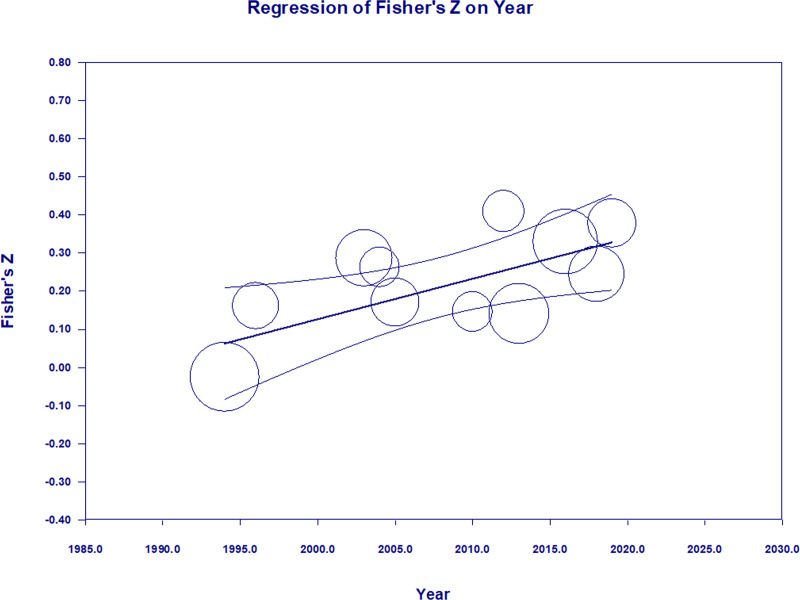
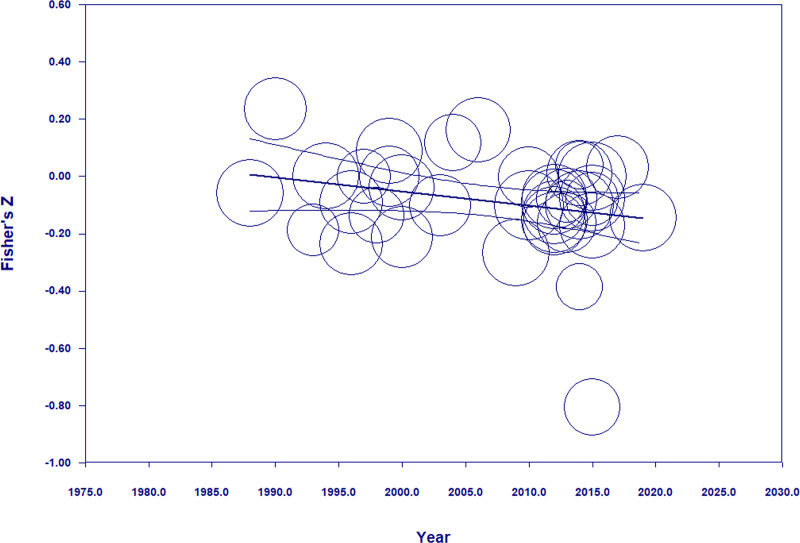
Does time management work? We conducted a meta-analysis to assess the impact of time management on performance and well-being. Results show that time management is moderately related to job performance, academic achievement, and wellbeing. Time management also shows a moderate, negative relationship with distress. Interestingly, individual differences and contextual factors have a much weaker association with time management, with the notable exception of conscientiousness. The extremely weak correlation with gender was unexpected: women seem to manage time better than men, but the difference is very slight. Further, we found that the link between time management and job performance seems to increase over the years: time management is more likely to get people a positive performance review at work today than in the early 1990s. The link between time management and gender, too, seems to intensify: women’s time management scores have been on the rise for the past few decades. We also note that time management seems to enhance wellbeing—in particular, life satisfaction—to a greater extent than it does performance. This challenges the common perception that time management first and foremost enhances work performance, and that wellbeing is simply a byproduct.
Overview
CoChat Summary
TL;DR
This meta-analysis of 158 studies finds that time management has moderate positive associations with job performance, academic achievement, and wellbeing, and a moderate negative association with distress. It challenges the common view that time management mainly boosts performance, finding stronger links with wellbeing, especially life satisfaction.
Key findings
- Across 158 studies and 490 effect sizes (53,957 participants), time management correlated with job performance *r* = .259, academic achievement *r* = .262, wellbeing *r* = .313, and distress *r* = -.222 (all *p* < .001).
- Conscientiousness was the strongest individual-difference correlate (*r* = .451), while gender was very weak (*r* = -.087, women higher) and age, education, number of children, marital status, and job autonomy were mostly nonsignificant.
- Time management was more strongly related to wellbeing than performance: life satisfaction *r* = .426 versus job satisfaction *r* = .248, described as 72% stronger. The link with job performance increased over the years (*B* = .0106, *p* < .01).
- In academic settings, behavior-based performance *r* = .430 exceeded results-based performance *r* = .196; standardized tests were nonsignificant (*r* = .011).
Methods
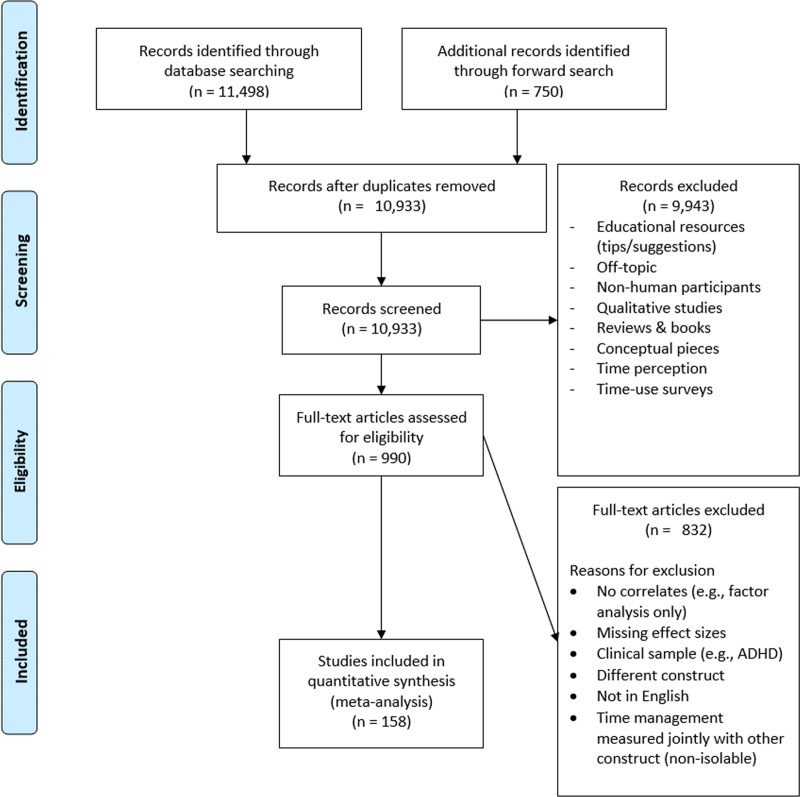
- Meta-analysis of quantitative empirical studies; searched EBSCO databases and forward-searched the three main time management measures, with no country/year restrictions and peer-reviewed articles up to 2019. The initial search yielded 10,933 hits, narrowing to 158 eligible studies and 490 effect sizes.
- Correlates were coded into professional/academic performance, positive wellbeing, distress, individual differences, and contextual factors. Analyses used random-effects models in Comprehensive Meta-Analysis v.3, transformed correlations to Fisher’s *z*, and averaged subscales or multiple outcomes when needed.
Limitations
- Stated in the paper: most time management studies are cross-sectional, so causal direction is often unclear; time management training interventions are often opaque, making comparisons difficult; high heterogeneity suggests moderators need more attention; publication bias was moderate for job performance and distress; time management ability may depend on income, education, and privilege.
- Evident from the text: the meta-analysis is correlational and cannot establish causation across all included studies; some categories had very few studies (e.g., contextual factors had 3–7 studies, and some variables had only 1–2 effect sizes), limiting precision; heterogeneity was often very high (e.g., *I²* = 96.18 for conscientiousness), complicating interpretation.
Model-written summary. Check it against the paper before relying on it.
Integrity signals
Registry
Cites
Statistics
Figures
Verification
Claims the paper makes
2 Valid · 0 Not valid · 21 Not checked · 65 Own results and interpretations
A result the paper reports from its own data — it cites no other source for it, so there is none to check. The quote shows it is in the paper.
In the paper
“Results show that time management is moderately related to job performance, academic achievement, and wellbeing.”
- Also stated in: § Time management and performance in academic settings · hedged
“Overall, the effect of time management on performance seems to be slightly higher in academic settings compared to work settings, although the magnitude of the effect remains moderate (see Table 5).”
§ Does time management work? A meta-analysis > Abstract
plainstates an association- Asserted: passes — The authors put it forward as true.
- Checkable: passes — It can be checked against evidence.
- Load-bearing: passes — The paper’s conclusions depend on it.
- Based: passes — The paper gives a reason why it holds.
- Also stated in: § Time management and performance in academic settings · hedged
A result the paper reports from its own data — it cites no other source for it, so there is none to check. The quote shows it is in the paper.
In the paper
“Corroborating this, note how, in Table 6 below, the link between time management and job satisfaction (I2 = 58.70) is much less heterogeneous than the one between time management and life satisfaction (I2 = 95.45).”
§ Does time management work? A meta-analysis > Results > Time management and performance in professional settings
plainstates an association- Asserted: passes — The authors put it forward as true.
- Checkable: passes — It can be checked against evidence.
- Load-bearing: unclear — It is unclear whether the paper’s conclusions depend on it.
- Based: passes — The paper gives a reason why it holds.
A result the paper reports from its own data — it cites no other source for it, so there is none to check. The quote shows it is in the paper.
In the paper
“Studies that measured contextual factors were fewer still—between 3 and 7 (depending on the contextual factor).”
§ Does time management work? A meta-analysis > Results > Overall description of the literature
plain- Asserted: passes — The authors put it forward as true.
- Checkable: passes — It can be checked against evidence.
- Load-bearing: unclear — It is unclear whether the paper’s conclusions depend on it.
- Based: passes — The paper gives a reason why it holds.
A result the paper reports from its own data — it cites no other source for it, so there is none to check. The quote shows it is in the paper.
In the paper
“The alleviating effect on psychological distress is particularly strong (r = -0.358; see Table 7).”
§ Does time management work? A meta-analysis > Results > Time management and distress
boostedstates a cause- Asserted: passes — The authors put it forward as true.
- Checkable: passes — It can be checked against evidence.
- Load-bearing: passes — The paper’s conclusions depend on it.
- Based: passes — The paper gives a reason why it holds.
A result the paper reports from its own data — it cites no other source for it, so there is none to check. The quote shows it is in the paper.
In the paper
“As further evidence, notice how in Table 6 the effect of time management on life satisfaction is 72% stronger than that on job satisfaction.”
§ Does time management work? A meta-analysis > Results > Time management and wellbeing
plainstates a cause- Asserted: passes — The authors put it forward as true.
- Checkable: passes — It can be checked against evidence.
- Load-bearing: unclear — It is unclear whether the paper’s conclusions depend on it.
- Based: passes — The paper gives a reason why it holds.
47 more claims
Create a free account to see all 88 claims and every source verdict.
- It may state two separate claims as one. 23
- Probably not a substantial claim. 12
- The quote only partly states this claim. 4
Citations
Cites
Preferred Reporting Items for Systematic Reviews and Meta-Analyses: the PRISMA statement
Moher, D., Liberati, A., Tetzlaff, J., Altman, D. G., & for the PRISMA Group (2009) · BMJ · doi:10.1136/bmj.b2535 · Cited by 83,823
Preferred reporting items for systematic reviews and meta-analyses: The PRISMA statement
Moher, D., Liberati, A., Tetzlaff, J., Altman, D. G., & the PRISMA Group* (2009) · Annals of Internal Medicine · doi:10.7326/0003-4819-151-4-200908180-00135 · Cited by 37,554
Borenstein, M., Hedges, L. V., Higgins, J. P. T., & Rothstein, H. R. (2009) · doi:10.1002/9780470743386 · Cited by 14,225
Borenstein, M., Hedges, L. V., Higgins, J. P. T., & Rothstein, H. R. (2021) · doi:10.1002/9781119558378 · Cited by 9,799
The Principles of Scientific Management.
Woolf, L. S., Taylor, F. W., Scott, W. D., & Goldmark, J. (1912) · The Economic Journal · doi:10.2307/2221959 · Cited by 5,256
Principles of Scientific Management, The
(2015) · The SAGE Encyclopedia of Economics and Society · doi:10.4135/9781452206905.n541 · Cited by 5,038
TIME, WORK-DISCIPLINE, AND INDUSTRIAL CAPITALISM
Thompson, E. P. (1967) · Past and Present · doi:10.1093/past/38.1.56 · Cited by 3,810 · cited 1×
“It is only with relatively recent events, such as the Industrial Revolution and waves of corporate downsizing, that time management has become synonymous with productivity [43, 65].”
BackgroundYeager, D. S., & Dweck, C. S. (2012) · Educational Psychologist · doi:10.1080/00461520.2012.722805 · Cited by 2,334
Cognitive control in media multitaskers
Ophir, E., Nass, C., & Wagner, A. D. (2009) · Proceedings of the National Academy of Sciences · doi:10.1073/pnas.0903620106 · Cited by 1,810 · cited 1×
“It has almost become commonsense that multitasking does not lead to performance [97].”
BackgroundCollege students' time management: Correlations with academic performance and stress.
Macan, T. H., Shahani, C., Dipboye, R. L., & Phillips, A. P. (1990) · Journal of Educational Psychology · doi:10.1037/0022-0663.82.4.760 · Cited by 933 · cited 3×
“These books inspired early modern time management research [21, 58, 88].”
BackgroundMethodSuurmond, R., van Rhee, H., & Hak, T. (2017) · Research Synthesis Methods · doi:10.1002/jrsm.1260 · Cited by 881 · cited 1×
“3 [84], a program considered highly reliable and valid in various systematic assessments [85, 86].”
BackgroundEffects of time-management practices on college grades.
Britton, B. K., & Tesser, A. (1991) · Journal of Educational Psychology · doi:10.1037/0022-0663.83.3.405 · Cited by 858 · cited 2×
“To enhance comprehensiveness, we also ran a forward search on the three main time management measures: the Time Management Behavior Scale [21], the Time Structure Questionnaire [19], and the Time Management Questionnaire [20].”
BackgroundMethodA review of the time management literature
Claessens, B. J. C., van Eerde, W., Rutte, C. G., & Roe, R. A. (2007) · Personnel Review · doi:10.1108/00483480710726136 · Cited by 792 · cited 5×
“Furthermore, scholars’ attempts to synthesize the literature have so far been qualitative, precluding a quantitative overall assessment [18, 32, 33].”
BackgroundResultInfluentialJacobs, J. A., & Gerson, K. (2004) · Cited by 792
Taking Time to Integrate Temporal Research
Ancona, D. G., Okhuysen, G. A., & Perlow, L. A. (2001) · The Academy of Management Review · doi:10.2307/3560239 · Cited by 760
Time management: Test of a process model
Macan, T. H. (1994) · Journal of Applied Psychology · doi:10.1037/0021-9010.79.3.381 · Cited by 601 · cited 2×
“A critical gap in time management research is the question of whether time management works [28, 29].”
BackgroundIn the Meantime: Temporality and Cultural Politics
Sharma, S. (2013) · doi:10.1515/9780822378334 · Cited by 567
Classifying Work in the New Economy
Cappelli, P., & Keller, Jr. (2013) · Academy of Management Review · doi:10.5465/amr.2011.0302 · Cited by 563
Huppert, F. A., & Whittington, J. E. (2003) · British Journal of Health Psychology · doi:10.1348/135910703762879246 · Cited by 536 · cited 1×
“Although related, wellbeing and distress are distinct [93].”
BackgroundCritical Theory and Postmodernism Approaches to Organizational Studies
Alvesson, M., & Deetz, S. A. (2006) · The SAGE Handbook of Organization Studies · doi:10.4135/9781848608030.n8 · Cited by 494
Revolution in Time: Clocks and the Making of the Modern World
Brown, R. D., & Landes, D. S. (1984) · The American Historical Review · doi:10.2307/1866424 · Cited by 426
Duckworth, A. L., Quinn, P. D., & Tsukayama, E. (2012) · Journal of Educational Psychology · doi:10.1037/a0026280 · Cited by 416 · cited 1×
“Evidence from other studies bears this out: middle school students’ IQ predicts standardized achievement tests scores better than self-control while self-control predicts report card grades better than IQ [92].”
ResultScrum: The Art of Doing Twice the Work in Half the Time
Sutherland, J. (2014) · Cited by 410
In the Meantime: Temporality and Cultural Politics
Sharma, S. E. (2014) · Project Muse (Johns Hopkins University) · Cited by 402
Calendars and keys: The classification of “home” and “work”
Nippert-Eng, C. (1996) · Sociological Forum · doi:10.1007/bf02408393 · Cited by 393 · cited 1×
“Protecting refers to how people set boundaries around their time to repel intruders [78, 79].”
BackgroundSome correlates of structure and purpose in the use of time.
Bond, M. J., & Feather, N. T. (1988) · Journal of Personality and Social Psychology · doi:10.1037//0022-3514.55.2.321 · Cited by 345 · cited 3×
“More recently, empirical studies in the 1980s examined the effect of time management on depressive symptoms that often plague unemployed people [19, 73].”
BackgroundMethodSteel, P., & Ferrari, J. (2013) · European Journal of Personality · doi:10.1002/per.1851 · Cited by 343
“There Just Aren't Enough Hours in the Day’: The Mental Health Consequences of Time Pressure
Roxburgh, S. (2004) · Journal of Health and Social Behavior · doi:10.1177/002214650404500201 · Cited by 326 · cited 1×
“What’s more, the pressure induced by thinking of time as money may ultimately undermine psychological and physical health [52].”
BackgroundEducational Gradients in Parents' Child‐Care Time Across Countries, 1965–2012
Dotti Sani, G. M., & Treas, J. (2016) · Journal of Marriage and Family · doi:10.1111/jomf.12305 · Cited by 323
Accelerating dynamics of collective attention
Lorenz-Spreen, P., Mønsted, B. M., Hövel, P., & Lehmann, S. (2019) · Nature Communications · doi:10.1038/s41467-019-09311-w · Cited by 304
How to Get Control of Your Time and Your Life
Lakein, A. (1973) · Medical Entomology and Zoology · Cited by 279
Why time poverty matters for individuals, organisations and nations
Giurge, L. M., Whillans, A. V., & West, C. (2020) · Nature Human Behaviour · doi:10.1038/s41562-020-0920-z · Cited by 265
Productivity Orientation and the Consumption of Collectable Experiences
Keinan, A., & Kivetz, R. (2011) · Journal of Consumer Research · doi:10.1086/657163 · Cited by 263
Flexible Work Schedules: Which Workers Get Them?
GOLDEN, L. (2001) · American Behavioral Scientist · doi:10.1177/00027640121956700 · Cited by 263
`Squeezing Time': Allocating Practices, Coordinating Networks and Scheduling Society
Southerton, D. (2003) · Time & Society · doi:10.1177/0961463x03012001001 · Cited by 259
The decline in adult activities among U.S. adolescents, 1976–2016
Twenge, J. M., & Park, H. (2019) · Child Development · doi:10.1111/cdev.12930 · Cited by 240
Shipp, A. J., & Cole, M. S. (2015) · Annual Review of Organizational Psychology and Organizational Behavior · doi:10.1146/annurev-orgpsych-032414-111245 · Cited by 240 · cited 1×
“This trend is consistent with the one Shipp and Cole identified, revealing a surge in time-related papers in organizational behavior around the end of the 1980s [87].”
ResultRelationships between time management, control, work–family conflict, and strain.
Adams, G. A., & Jex, S. M. (1999) · Journal of Occupational Health Psychology · doi:10.1037/1076-8998.4.1.72 · Cited by 228 · cited 2×
“Research has, furthermore, addressed several important aspects of time management, such as its relationship with work-life balance [22], whether gender differences in time management ability develop in early childhood [23], and whether organizations that encourage employees to manage their time experience less stress…”
BackgroundGetting Things Done: The Art of Stress-Free Productivity
Blau, S. (2001) · New England Journal of Entrepreneurship · doi:10.1108/neje-04-02-2001-b008 · Cited by 218
Sternberg, R. J., & Kaufman, J. C. (1998) · Annual Review of Psychology · doi:10.1146/annurev.psych.49.1.479 · Cited by 213
Getting Things Done: The Art of Stress-Free Productivity
Allen, D. E. (2001) · Cited by 211
A systematic comparison of software dedicated to meta-analysis of causal studies
Bax, L., Yu, L.-M., Ikeda, N., & Moons, K. G. (2007) · BMC Medical Research Methodology · doi:10.1186/1471-2288-7-40 · Cited by 210
Discretionary Time: A New Measure of Freedom
Goodin, R. E., Rice, J. M., Parpo, A., & Eriksson, L. (2008) · Cambridge University Press eBooks · doi:10.1017/cbo9780511611452 · Cited by 206
Ramey, G., & Ramey, V. (2009) · National Bureau of Economic Research · doi:10.3386/w15284 · Cited by 203
Time structure and purposeful activity among employed and unemployed university graduates
FEATHER, N. T., & BOND, M. J. (1983) · Journal of Occupational Psychology · doi:10.1111/j.2044-8325.1983.tb00131.x · Cited by 198 · cited 2×
“More recently, empirical studies in the 1980s examined the effect of time management on depressive symptoms that often plague unemployed people [19, 73].”
BackgroundIt’s about time: New perspectives and insights on time management
Aeon, B., & Aguinis, H. (2017) · Academy of Management Perspectives · doi:10.5465/amp.2016.0166 · Cited by 197
Self-citationGoffman, I. W., & Doob, L. W. (1973) · Contemporary Sociology · doi:10.2307/2062120 · Cited by 194
Time, Consumption and Everyday Life: Practice, Materiality and Culture
Berdelmann, K. (2012) · Vierteljahrsschrift für wissenschaftliche PÄdagogik · doi:10.1163/25890581-088-04-90000014 · Cited by 190
Positive and negative aspects of well-being: Common and specific predictors
Karademas, E. C. (2007) · Personality and Individual Differences · doi:10.1016/j.paid.2006.11.031 · Cited by 188 · cited 1×
“is a distinct predictor of wellbeing while neuroticism and life events in general are distinct predictors of distress [94].”
BackgroundDiscretionary Time: A New Measure of Freedom
Goodin, R. E., Rice, J. M., Parpo, A., & Eriksson, L. (2008) · Cited by 188
Ramey, G., & Ramey, V. A. (2010) · Brookings Papers on Economic Activity · doi:10.1353/eca.2010.0003 · Cited by 188
Kearns, H., & Gardiner, M. (2007) · Higher Education Research & Development · doi:10.1080/07294360701310839 · Cited by 170
Timetables and Scheduling: On the Social Organization of Time*
Zerubavel, E. (1976) · Sociological Inquiry · doi:10.1111/j.1475-682x.1976.tb00753.x · Cited by 168
Wegman, L. A., Hoffman, B. J., Carter, N. T., Twenge, J. M., & Guenole, N. (2018) · Journal of Management · doi:10.1177/0149206316654545 · Cited by 155
When Plans Change: Examining How People Evaluate Timing Changes in Work Organizations
Blount, S., & Janicik, G. A. (2001) · The Academy of Management Review · doi:10.2307/3560242 · Cited by 154 · cited 1×
“Finally, adapting one’s time to changing conditions means, simply put, to be responsive and flexible with one’s time structure [80, 81].”
BackgroundTime management as a moderator of relations between stressors and employee strain
Jex, S. M., & Elacqua, T. C. (1999) · Work & Stress · doi:10.1080/026783799296138 · Cited by 153 · cited 1×
“Subsequent studies surmised that the effective use of time might prevent a host of ills, such as work-life conflict and job stress [22, 74].”
BackgroundHamermesh, D. S. (1999) · The Economic Journal · doi:10.1111/1468-0297.00390 · Cited by 152
'Squeezing Time': Allocating practices, coordinating networks and scheduling society
Southerton, D. (2003) · Time & Society · doi:10.1177/0961463x03012001356 · Cited by 142 · cited 1×
“Indeed, time management’s effectiveness is often taken for granted, presumably because time management offers a seemingly logical solution to a lifestyle that increasingly requires coordination and prioritization skills [39, 40].”
BackgroundParke, M. R., Weinhardt, J. M., Brodsky, A., Tangirala, S., & DeVoe, S. E. (2018) · Journal of Applied Psychology · doi:10.1037/apl0000278 · Cited by 141 · cited 1×
“Finally, adapting one’s time to changing conditions means, simply put, to be responsive and flexible with one’s time structure [80, 81].”
BackgroundTime-management training: effects on time behaviors, attitudes, and job performance
Macan, T. H. (1996) · The Journal of Psychology · doi:10.1080/00223980.1996.9915004 · Cited by 135 · cited 2×
“Initial academic forays into addressing this question challenged those claims: time management didn’t seem to improve job performance [29, 30].”
BackgroundWhen time is money: The effect of hourly payment on the evaluation of time
DeVoe, S. E., & Pfeffer, J. (2006) · Organizational Behavior and Human Decision Processes · doi:10.1016/j.obhdp.2006.05.003 · Cited by 133
Time management training and perceived control of time at work
Häfner, A., & Stock, A. (2010) · The Journal of Psychology · doi:10.1080/00223980.2010.496647 · Cited by 131 · cited 4×
“In this case, however, the fact that time management is generally expected to lead to positive outcomes offers an incentive to publish nonsignificant or negative results, which would be counterintuitive [89].”
BackgroundInfluentialTime is tight: How higher economic value of time increases feelings of time pressure.
DeVoe, S. E., & Pfeffer, J. (2011) · Journal of Applied Psychology · doi:10.1037/a0022148 · Cited by 130
Time management and achievement striving interact to predict car sales performance.
Barling, J. I., Cheung, D., & Kelloway, E. K. (1996) · Journal of Applied Psychology · doi:10.1037//0021-9010.81.6.821 · Cited by 128 · cited 1×
“Such studies occasionally did find an association between time management and performance, but only in highly motivated workers [59]; instances establishing a more straightforward link with performance were comparatively rare [31].”
BackgroundOrganizational Time: Temporal Demands and the Experience of Work in Restaurant Kitchens
Fine, G. A. (1990) · Social Forces · doi:10.1093/sf/69.1.95 · Cited by 128
Heintzelman, S. J., & King, L. A. (2019) · Personality and Social Psychology Bulletin · doi:10.1177/0146167218795133 · Cited by 123
Organizational time: Temporal demands and the experience of work in restaurant kitchens
Fine, G. A. (1990) · Social Forces · doi:10.2307/2579609 · Cited by 123
Does time management training work? An evaluation
Green, P., & Skinner, D. (2005) · International Journal of Training and Development · doi:10.1111/j.1468-2419.2005.00226.x · Cited by 122 · cited 1×
“A critical gap in time management research is the question of whether time management works [28, 29].”
BackgroundHourly Payment and Volunteering: The Effect of Organizational Practices on Decisions About Time Use
DeVoe, S. E., & Pfeffer, J. (2007) · Academy of Management Journal · doi:10.5465/amj.2007.26279171 · Cited by 122
Counterproductive: Time Management in the Knowledge Economy
Gregg, M. (2018) · doi:10.1215/9781478002390 · Cited by 121
Wajcman, J. (2019) · New Media & Society · doi:10.1177/1461444818820073 · Cited by 119
Avoiding procrastination through time management: an experimental intervention study
Häfner, A., Oberst, V., & Stock, A. (2014) · Educational Studies · doi:10.1080/03055698.2014.899487 · Cited by 114 · cited 1×
“some of them featured experimental designs that established a causal effect of time management on reducing procrastination [90].”
BackgroundZerubavel, E. (1979) · Social Forces · doi:10.1093/sf/58.1.38 · Cited by 113 · cited 1×
“Protecting refers to how people set boundaries around their time to repel intruders [78, 79].”
BackgroundTime structure and unemployment: A longitudinal investigation
Wanberg, C. R., Griffiths, R. F., & Gavin, M. B. (1997) · Journal of Occupational and Organizational Psychology · doi:10.1111/j.2044-8325.1997.tb00632.x · Cited by 109
A child's day: trends in time use in the UK from 1975 to 2015
Mullan, K. (2018) · British Journal of Sociology · doi:10.1111/1468-4446.12369 · Cited by 109 · cited 1×
“Students who manage their time likely have well-defined intentions, and trends suggest those intentions will target education over work because, it is hoped, education offers larger payoffs over the long-term [99].”
BackgroundTime, money, and happiness: How does putting a price on time affect our ability to smell the roses?
DeVoe, S. E., & House, J. (2011) · Journal of Experimental Social Psychology · doi:10.1016/j.jesp.2011.11.012 · Cited by 103
The assessment of time management in middle-school students
Liu, O. L., Rijmen, F., MacCann, C., & Roberts, R. D. (2009) · Personality and Individual Differences · doi:10.1016/j.paid.2009.02.018 · Cited by 99 · cited 1×
“Research has, furthermore, addressed several important aspects of time management, such as its relationship with work-life balance [22], whether gender differences in time management ability develop in early childhood [23], and whether organizations that encourage employees to manage their time experience less stress…”
BackgroundStress prevention through a time management training intervention: an experimental study
Häfner, A., Stock, A., Pinneker, L., & Ströhle, S. (2014) · Educational Psychology · doi:10.1080/01443410.2013.785065 · Cited by 98
An Evaluation of the Effects of a Time Management Training Program on Work Efficiency
Hall, B. L., & Hursch, D. E. (1982) · Journal of Organizational Behavior Management · doi:10.1300/j075v03n04_08 · Cited by 97 · cited 1×
“These books inspired early modern time management research [21, 58, 88].”
BackgroundThings to Do Today . . . : A Daily Diary Study on Task Completion at Work
Claessens, B. J. C., Van Eerde, W., Rutte, C. G., & Roe, R. A. (2010) · Applied Psychology · doi:10.1111/j.1464-0597.2009.00390.x · Cited by 87
Time, Capitalism and Alienation: A Socio-Historical Inquiry into the Making of Modern Time
Martineau, J. (2015) · BRILL eBooks · doi:10.1163/9789004249745 · Cited by 87
The effect of time-management training on employee attitudes and behavior: A field experiment
Orpen, C. (1994) · The Journal of Psychology · doi:10.1080/00223980.1994.9712743 · Cited by 74 · cited 2×
“Such studies occasionally did find an association between time management and performance, but only in highly motivated workers [59]; instances establishing a more straightforward link with performance were comparatively rare [31].”
BackgroundVillain or Savior? The American Discourse on Homework, 1850-2003
Gill, B., & Schlossman, S. (2004) · Theory Into Practice · doi:10.1207/s15430421tip4303_2 · Cited by 71
Personality and time attitudes
Calabresi, R., & Cohen, J. (1968) · Journal of Abnormal Psychology · doi:10.1037/h0026196 · Cited by 70
Thinking about time as money decreases environmental behavior
Whillans, A. V., & Dunn, E. W. (2015) · Organizational Behavior and Human Decision Processes · doi:10.1016/j.obhdp.2014.12.001 · Cited by 66
Re-ordering Temporal Rhythms: Coordinating Daily Practices in the UK in 1937 and 2000
Southerton, D. (2009) · doi:10.5040/9781474215862-ch-003 · Cited by 60
Zerubavel, E. (1979) · Social Forces · doi:10.2307/2577783 · Cited by 59
Sabelis, I. (2001) · Time & Society · doi:10.1177/0961463x01010002013 · Cited by 58 · cited 1×
“For instance, time management manuals beguile readers with promises of boundless productivity that may not be accessible to women, whose disproportionate share in care work, such as tending to young children, may not fit with typically male-oriented time management advice [45].”
BackgroundMacan, T. M., Gibson, J. M., & Cunningham, J. (2010) · Personality and Individual Differences · doi:10.1016/j.paid.2010.01.015 · Cited by 58
Time management: An experimental investigation
Woolfolk, A. E., & Woolfolk, R. L. (1986) · Journal of School Psychology · doi:10.1016/0022-4405(86)90059-2 · Cited by 57 · cited 1×
“These books inspired early modern time management research [21, 58, 88].”
BackgroundEmployment Skills for 21st Century Workplace: The Gap Between Faculty and Student Perceptions
Hodge, K. A., & Lear, J. L. (2011) · Journal of Career and Technical Education · doi:10.21061/jcte.v26i2.523 · Cited by 53
Seneca, L. A., Fantham, E., Hine, H. M., Ker, J., Williams, G. D., Hine, H. M., Ker, J., & Williams, G. G. (2014) · University of Chicago Press eBooks · doi:10.7208/chicago/9780226108353.001.0001 · Cited by 52
The Benedictine Ethic and the Modern Spirit of Scheduling: on Schedules and Social Organization*
Zerubavel, E. (1980) · Sociological Inquiry · doi:10.1111/j.1475-682x.1980.tb00383.x · Cited by 48
Getting Things Done: Productivity, Self-Management, and the Order of Things
Gregg, M. (2015) · The MIT Press eBooks · doi:10.7551/mitpress/9715.003.0016 · Cited by 46
Time, Capitalism, and Alienation: A Socio-Historical Inquiry into the Making of Modern Time
Martineau, J. (2016) · Cited by 45
Snyder, B. H. (2013) · Sociological Theory · doi:10.1177/0735275113502482 · Cited by 43
Disciplined freedom: The productive self and conspicuous busyness in “free” time
Shir-Wise, M. (2018) · Time & Society · doi:10.1177/0961463x18769786 · Cited by 36 · cited 1×
“Over time, people have internalized a duty to be productive and now see time management as a personal responsibility at work [43, 66, 67].”
BackgroundThe benefits and costs of speed watching video lectures.
Wilson, K. E., Martin, L., Smilek, D., & Risko, E. F. (2018) · Scholarship of Teaching and Learning in Psychology · doi:10.1037/stl0000127 · Cited by 34
An investigation of the dispositional nature of the time management construct
Shahani, C., Weiner, R., & Streit, M. K. (1993) · Anxiety, Stress & Coping · doi:10.1080/10615809308248382 · Cited by 31
Richards, J. H. (1987) · Work & Stress · doi:10.1080/02678378708258485 · Cited by 28 · cited 1×
“Furthermore, scholars’ attempts to synthesize the literature have so far been qualitative, precluding a quantitative overall assessment [18, 32, 33].”
BackgroundSeneca, L. A. (2021) · ourheritage.ac.nz | OUR Heritage, University of Otago Library, Dunedin, New Zealand · Cited by 27
Development of the time management environment (TiME) scale
Burt, C. D. B., Weststrate, A., Brown, C., & Champion, F. (2010) · Journal of Managerial Psychology · doi:10.1108/02683941011056978 · Cited by 26 · cited 1×
“Research has, furthermore, addressed several important aspects of time management, such as its relationship with work-life balance [22], whether gender differences in time management ability develop in early childhood [23], and whether organizations that encourage employees to manage their time experience less stress…”
BackgroundLabor Market Trends and the Changing Value of Time
Boerma, J., & Karabarbounis, L. (2019) · Journal of Economic Dynamics and Control · doi:10.1016/j.jedc.2020.103885 · Cited by 26
Changes in American Daily Life: 1965–2005
Robinson, J. P., & Martin, S. P. (2009) · Social Indicators Research · doi:10.1007/s11205-008-9370-0 · Cited by 24 · cited 1×
“Work is intensifying—in 1965 about 50% of workers took breaks; in 2003, less than 2% [7].”
BackgroundFirst things first: Family activities and routines, time management and attention
Malatras, J. W., Israel, A. C., Sokolowski, K. L., & Ryan, J. (2016) · Journal of Applied Developmental Psychology · doi:10.1016/j.appdev.2016.09.006 · Cited by 21
Røberg, K. I. K., & Helland, H. (2016) · Journal of Education and Work · doi:10.1080/13639080.2016.1187265 · Cited by 20
(2019) · Cited by 17
Korhonen, A. (2017) · Journal of Early Modern Studies · doi:10.13128/jems-2279-7149-20389 · Cited by 14 · cited 1×
“Nevertheless, even though modern time management can be traced to scientific management in male-dominated work settings, a feminist reading of time management history reveals that our modern idea of time management also descends from female time management thinkers of the same era, such as Lillian Gilbreth, who wrote…”
BackgroundFive decades of US, UK, German and Dutch music charts show that cultural processes are accelerating
Stelz, L., & Gros, C. (2019) · Royal Society Open Science · doi:10.1098/rsos.190944 · Cited by 14
Getting Things Done: Productivity, Self-Management, and the Order of Things
Hillis, K., Paasonen, S., & Petit, M. (2015) · Cited by 10
When Will Jesus Bring the Pork Chops
Carlin, G. (2004) · Medical Entomology and Zoology · Cited by 8
Butterfield, R. D. (2015) · วารสารวิชาการมหาวิทยาลัยอีสเทิร์นเอเชียฉบับวิทยาศาสตร์และเทคโนโลยี EAU Heritage Journal:Science and Technology · Cited by 7
Time, money, and happiness: Does putting a price on time affect our ability to smell the roses?
Campbell, L., Connors, S. W., Henderson, C., et al. (2016) · Knowledge Commons (Lakehead University) · doi:10.17613/m6bc2s · Cited by 7
Time, money, and happiness: Does putting a price on time affect our ability to smell the roses?
Campbell, L., Connors, S., Henderson, C., Khamitov, M., & Moroz, S. (2016) · Knowledge Commons (Lakehead University) · doi:10.17613/q0nq8-w7d22 · Cited by 7
What Does Time Management Mean to You? Exploring Measures of Time Management and Group Differences.
Burrus, A. (2019) · IRL - University of Missouri, St. Louis (University of Missouri–St. Louis) · Cited by 6
Lewis, S., & O'Kun, L. (1982) · Medical Entomology and Zoology · Cited by 4
Outsourcing your Life: Exploitation and Exploration in “the 4-Hour Workweek”
Costas, J., & Grey, C. (2012) · Research in the Sociology of Organizations · doi:10.1108/s0733-558x(2013)0000037012 · Cited by 4 · cited 2×
“Some manuals, for instance, recommend delegating trivial tasks to private virtual assistants, who often work out of developing countries for measly wages [46].”
Background‘If You Desire to Enjoy Life, Avoid Unpunctual People’
Rich, R. (2015) · Cultural and Social History · doi:10.2752/147800415x14135484867225 · Cited by 4
Labor Market Trends and the Changing Value of Time
Boerma, J., & Karabarbounis, L. (2019) · National Bureau of Economic Research · doi:10.3386/w26301 · Cited by 3
Time, money, and happiness: Does putting a price on time affect our ability to smell the roses?
Connors, S. W., Khamitov, M., Moroz, S., Campbell, L., & Henderson, C. (2016) · Journal of Experimental Social Psychology · doi:10.1016/j.jesp.2015.08.005 · Cited by 2
Research works printed but not linked: 8
- M. Garber, 2015, The Rise of ‘Speed-Listening.’, The Atlantic
- C. Mele, 2016, Too many shows? Just speed them up, The New York Times, B7
- B. Clinton, 2004, My life
- T Lorenz, 2019, The Slackification of the American Home, The Atlantic
- Google Ngram Viewer, 2016, The rise of time management
- O. Burkeman, 2016, Why time management is ruining our lives., The Guardian
- M Aurelius, 1909, Harvard Classics, 193
- M Borenstein, 2013, Comprehensive Meta-Analysis Version 3
Cited by
Xu, J. (2022) · Contemporary Educational Psychology · doi:10.1016/j.cedpsych.2022.102087 · Cited by 55
Trentepohl, S., Waldeyer, J., Fleischer, J., Roelle, J., Leutner, D., & Wirth, J. (2022) · Sustainability · doi:10.3390/su14095097 · Cited by 98
“Time management is considered an integral component of self-regulated learning [4,14] and is correlated with higher academic performance [15,16].”
BackgroundThe aging mind: A complex challenge for research and practice
Zihl, J., & Reppermund, S. (2022) · Aging Brain · doi:10.1016/j.nbas.2022.100060 · Cited by 44
“However, the adaptation of the individual time schedule allows a personalized prospective time-pressure management [147] and can also enhance wellbeing [2].”
BackgroundHow Personality Matters for Education Research
Jach, H. K., Bardach, L., & Murayama, K. (2023) · Educational Psychology Review · doi:10.1007/s10648-023-09807-4 · Cited by 50
“…and low effort (Conard, 2006; Cuadrado et al., 2021; Rijavec & Miljkovic, 2015), and tend to display better time management/less procrastination (Aeon et al., 2021; Steel, 2007; Theobald et al., 2018), complete their homework on time, and have higher engagement and more positive attitudes…”
BackgroundPetcu, M. A., Sobolevschi-David, M. I., Creţu, R. F., Curea, Ș. C., Hristea, A. M., Negescu, M. D. O., & Țuțui, D. (2023) · International Journal of Environmental Research and Public Health · doi:10.3390/ijerph20031811 · Cited by 42
“This raises the perception of many researchers [34] that time management primarily improves performance in the workplace and that wellbeing at work is simply a by-product.”
Background
Metadata
- Authors
- Aeon, B., Faber, A., & Panaccio, A.
- Affiliations
- Concordia University (CA)
- Université Laval (CA)
- Corresponding author
- Aeon, Brad
- Venue
- PLOS ONE
- Publisher
- Public Library of Science (PLoS)
- Published
- 2021-01-11
- Volume
- 16
- Issue
- 1
- Pages
- e0245066
- ISSN
- 1932-6203 (ISSN-L)
- PMC
- PMC7799745
- OpenAlex
- W3119885646
- Cited by
- 172
- References
- 124
- Citations by year
- 2026: 43 · 2025: 50 · 2024: 33 · 2023: 23 · 2022: 22 · 2021: 1
- FWCI
- 2.63
- Type
- journal article
- Language
- en
- Open access
- gold
- doi.org
- Licence
- Locations
- PLoS ONE (publishedVersion, cc-by)
- Europe PMC (PubMed Central) (publishedVersion, cc-by)
- PubMed Central (publishedVersion, cc-by)
- PubMed (publishedVersion)
- RePEc: Research Papers in Economics (submittedVersion)
- DOAJ (DOAJ: Directory of Open Access Journals) (submittedVersion, cc-by-sa)
- Topics
- Social Sciences › Psychology › Clinical Psychology › Perfectionism, Procrastination, Anxiety Studies
- Social Sciences › Psychology › Social Psychology › Psychological Well-being and Life Satisfaction
- Social Sciences › Education › Educational Outcomes and Influences
- Keywords
- time management, employee performance, academic performance, well-being, life satisfaction, distress, conscientiousness, gender differences, individual differences, temporal trends
- MeSH terms
- Adult, Female, Humans, Job Satisfaction, Male, Stress, Psychological, Time Management
About these checks
Registry, retraction, Cites and statistics results are computed, not judged, with one exception: a printed reference that no index lists is read once by a model before it counts as a citation error. Claims are extracted by a model and kept only when their quote appears verbatim in the text; each cited source is then checked, with a model’s help, for whether it says what the claim relies on. Those verdicts can be wrong — read the claim’s quote and the cited source before relying on one.
The claim verdicts this report counts are experimental: their accuracy is not yet measured.
A language model drew the claims from the paper on 2026-10-01, under version 3 of the claim definition (model deepseek-v4.1-flash, prompt extract-v3).
A second model labelled each claim on 2026-10-01 (model jev-1.13-20260917, definition revision gold-guideline-v0.2).
Statistics and arithmetic are recomputed, not judged.
Confidence bands are shown only for fields calibrated on our annotated test set. None is calibrated yet, so no band is shown.
What counts as a claim ›How we measure confidence ›How we check this ›
Are you an author, or do you see a problem with this page? Request a review
Data sources
Bibliographic data: Semantic Scholar, OpenAlex, Crossref.
Contains information from the Semantic Scholar Academic Graph Datasets, made available under the ODC Attribution License (ODC-BY 1.0).
Semantic Scholar’s data is described in: Kinney, R., et al. (2023). The Semantic Scholar Open Data Platform. arXiv:2301.10140.
