

The Russian Aphasia Test: The first comprehensive, quantitative, standardized, and computerized aphasia language battery in Russian
Open accessThe DOI matches its Crossref record; 50 of the 51 references it cites were found in a registry or an index, and 1 are not checked yet.
Abstract
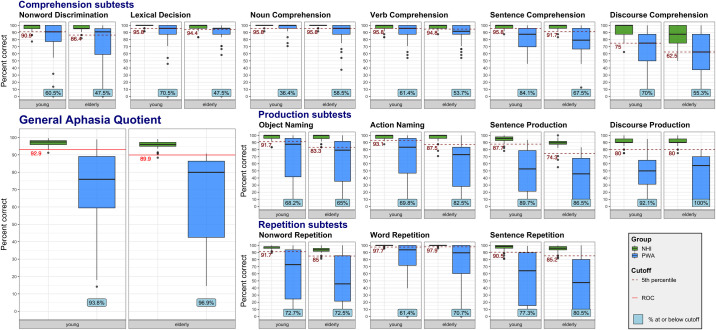
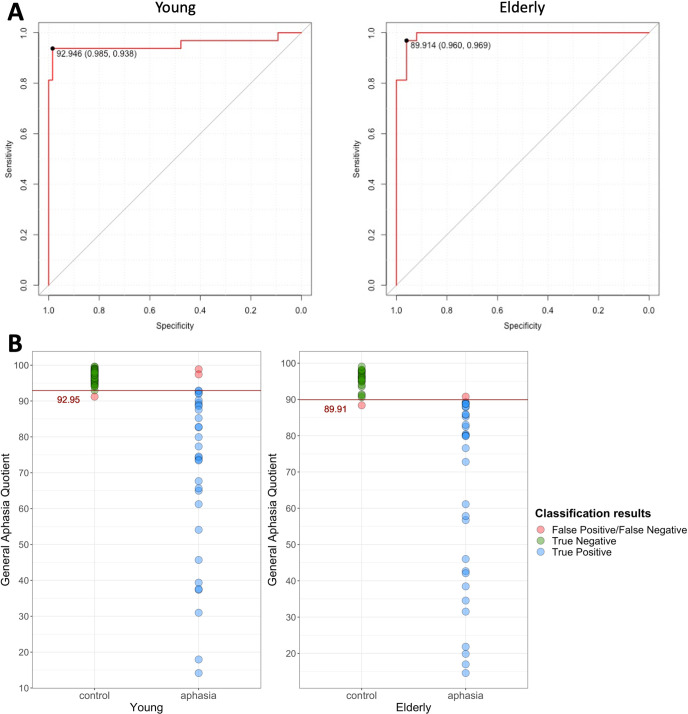
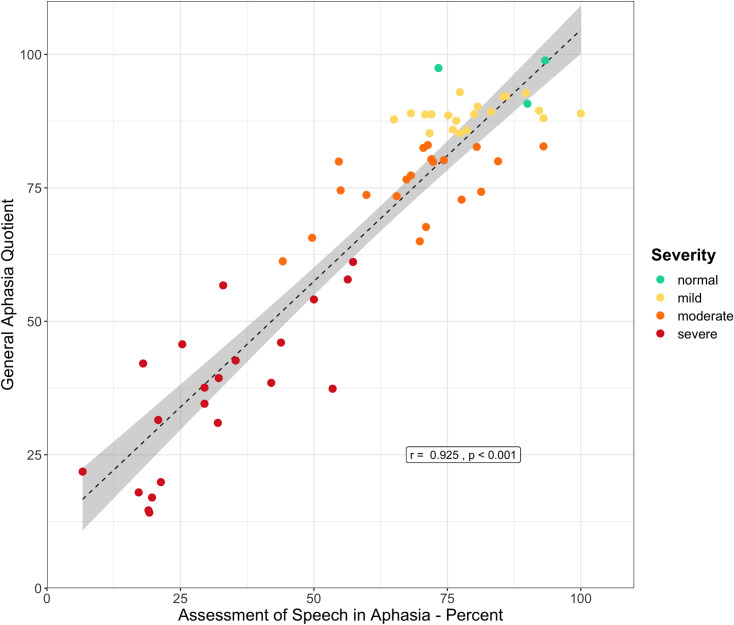
The lack of standardized language assessment tools in Russian impedes clinical work, evidence-based practice, and research in Russian-speaking clinical populations. To address this gap in assessment of neurogenic language disorders, we developed and standardized a new comprehensive assessment instrument–the Russian Aphasia Test (RAT). The principal novelty of the RAT is that each subtest corresponds to a specific level of linguistic processing (phonological, lexical-semantic, syntactic, and discourse) in different domains: auditory comprehension, repetition, and oral production. In designing the test, we took into consideration various (psycho)linguistic factors known to influence language performance, as well as specific properties of Russian. The current paper describes the development of the RAT and reports its psychometric properties. A tablet-based version of the RAT was administered to 85 patients with different types and severity of aphasia and to 106 age-matched neurologically healthy controls. We established cutoff values for each subtest indicating deficit in a given task and cutoff values for aphasia based on the Receiver Operating Characteristic curve analysis of the composite score. The RAT showed very high sensitivity (> .93) and specificity (> .96), substantiating its validity for determining presence of aphasia. The test’s high construct validity was evidenced by strong correlations between subtests measuring similar linguistic processes. The concurrent validity of the test was also strong as demonstrated by a high correlation with an existing aphasia battery. Overall high internal, inter-rater, and test-retest reliability were obtained. The RAT is the first comprehensive aphasia language battery in Russian with properly established psychometric properties. It is sensitive to a wide range of language deficits in aphasia and can reliably characterize individual profiles of language impairments. Notably, the RAT is the first comprehensive aphasia test in any language to be fully automatized for administration on a tablet, maximizing further standardization of presentation and scoring procedures.
Overview
The claims and statistics of this paper haven’t been checked yet.
Free: it reads the open-access text and checks the first 5 claims that cite a source we can check. Create a free account to check every claim.
Integrity signals
Registry
Cites
Statistics
Figures
Verification
Claims the paper makes
The claims and statistics of this paper haven’t been checked yet.
Free: it reads the open-access text and checks the first 5 claims that cite a source we can check. Create a free account to check every claim.
Claims other papers make about this one
Each is checked against this paper’s own text: does it say what the citing paper says it does?
The source backs part of the claim, not all of it — or backs it for a different population, condition or comparison.
In the citing paper
“Studies examining tablet‐based and computer‐delivered versions of tools such as the Philadelphia Naming Test (Fergadiotis et al. 2019), the Western Aphasia Battery (Vallila‐Rohter et al. 2018) and the Russian Aphasia Test (Ivanova et al. 2021) consistently demonstrated strong agreement with their pen‐and‐paper counterparts”
From Exploring the Effectiveness of Technology‐Based Interventions in Aphasia Rehabilitation: A Systematic Review (2026) · cites this paper as Ivanova et al. 2021
Experimental — accuracy not yet measured
Self-check
Percentages, sums and reported differences re-computed from the paper’s own numbers.
The self-check needs the paper’s full text.
Citations
Cites
Wickham, H. (2016) · Use R! · doi:10.1007/978-3-319-24277-4 · Cited by 33,115
A guideline of selecting and reporting intraclass correlation coefficients for reliability research
Koo, T. K., & Li, M. Y. (2016) · Journal of Chiropractic Medicine · doi:10.1016/j.jcm.2016.02.012 · Cited by 31,709
An introduction to ROC analysis
Fawcett, T. (2006) · Pattern Recognition Letters · doi:10.1016/j.patrec.2005.10.010 · Cited by 21,879
ggplot2: Elegant Graphics for Data Analysis
Wickham, H. (2009) · doi:10.1007/978-0-387-98141-3 · Cited by 14,447
pROC: an open-source package for R and S+ to analyze and compare ROC curves
Robin, X., Turck, N., Hainard, A., Tiberti, N., Lisacek, F., Sanchez, J.-C., & Müller, M. (2011) · BMC Bioinformatics · doi:10.1186/1471-2105-12-77 · Cited by 13,697
What is coefficient alpha? An examination of theory and applications
Cortina, J. M. (1993) · Journal of Applied Psychology · doi:10.1037/0021-9010.78.1.98 · Cited by 8,810
psych: Procedures for Psychological, Psychometric, and Personality Research
Revelle, W. (2007) · CRAN: Contributed Packages · doi:10.32614/cran.package.psych · Cited by 2,965
Ethnologue. Languages of the World
(2014) · African Studies Companion Online · doi:10.1163/_afco_asc_441 · Cited by 2,162
The handbook of aging and cognition
Craik, F. I. M., & Salthouse, T. A. (1992) · doi:10.4324/9781410601988 · Cited by 2,003
Western Aphasia Battery--Revised
Kertesz, A. (2012) · PsycTESTS Dataset · doi:10.1037/t15168-000 · Cited by 1,367
Higher Cortical Functions in Man
Luria, A. R. (1980) · Springer eBooks · doi:10.1007/978-1-4615-8579-4 · Cited by 1,319
Ethnologue: Languages of the World
(2015) · Choice Reviews Online · doi:10.5860/choice.192005 · Cited by 1,176
Normative Data and Screening Power of a Shortened Version of the Token Test
De Renzi, E., & Faglioni, P. (1978) · Cortex · doi:10.1016/s0010-9452(78)80006-9 · Cited by 1,121
Higher Cortical Functions in Man
Luria, A. R. (1995) · Springer eBooks · doi:10.1007/978-1-4684-7741-2 · Cited by 881
Swinburn, K., Porter, G., & Howard, D. (2012) · PsycTESTS Dataset · doi:10.1037/t13733-000 · Cited by 601
irr: Various Coefficients of Interrater Reliability and Agreement
Matthias Gamer <m.gamer@uke.uni-hamburg.de>, J. L. <. C. A. (2005) · CRAN: Contributed Packages · doi:10.32614/cran.package.irr · Cited by 540
Peters, G.-J. (2014) · DSpace (Open University in the Netherlands) · doi:10.17605/osf.io/tnrxv · Cited by 334
Psycholinguistic assessments of language processing in aphasia (PALPA): An introduction
Kay, J., Lesser, R., & Coltheart, M. (1996) · Aphasiology · doi:10.1080/02687039608248403 · Cited by 272
Ivanova, M. V., Isaev, D. Y., Dragoy, O. V., Akinina, Y. S., Petrushevskiy, A. G., Fedina, O. N., Shklovsky, V. M., & Dronkers, N. F. (2016) · Cortex · doi:10.1016/j.cortex.2016.04.019 · Cited by 221
Self-citationBurke, D. M., & Shafto, M. A. (2015) · The Handbook of Aging and Cognition · doi:10.4324/9780203837665.ch8 · Cited by 218
Cho-Reyes, S., & Thompson, C. K. (2012) · Aphasiology · doi:10.1080/02687038.2012.693584 · Cited by 206
Wilson, S. M., Eriksson, D. K., Schneck, S. M., & Lucanie, J. M. (2018) · PLOS ONE · doi:10.1371/journal.pone.0192773 · Cited by 174
CLACK, T. D. (1979) · Archives of Otolaryngology - Head and Neck Surgery · doi:10.1001/archotol.1979.00790220063015 · Cited by 153 · cited 1×
“With regards to tests targeting specific language domains, Hallowell and Ivanova [17] normed the Russian multiple-choice version of the Revised Token Test [18] in both healthy controls and PWA.”
Thompson, C. K., Lukic, S., King, M. C., Mesulam, M. M., & Weintraub, S. (2012) · Aphasiology · doi:10.1080/02687038.2012.676852 · Cited by 148
A proposed reinterpretation and reclassification of aphasic syndromes
Ardila, A. (2010) · Aphasiology · doi:10.1080/02687030802553704 · Cited by 146
(2007) · Choice Reviews Online · doi:10.5860/choice.44-5394 · Cited by 145
Crawford, J. R., & Garthwaite, P. H. (2006) · Neuropsychology · doi:10.1037/0894-4105.20.3.259 · Cited by 110
Thompson, C. K., Bonakdarpour, B., & Fix, S. C. (2010) · Journal of Cognitive Neuroscience · doi:10.1162/jocn.2009.21334 · Cited by 102
Ivanova, M. V., & Hallowell, B. (2013) · Aphasiology · doi:10.1080/02687038.2013.805728 · Cited by 101
Self-citationThe role of frequency in the retrieval of nouns and verbs in aphasia
Bastiaanse, R., Wieling, M. B., & Wolthuis, N. (2015) · Aphasiology · doi:10.1080/02687038.2015.1100709 · Cited by 95 · cited 1×
“Finally, the Verb and Sentence Test (VAST) [19–21] has been adapted to Russian [12].”
Spreen, O., & Risser, A. H. (1998) · Elsevier eBooks · doi:10.1016/b978-012619322-0/50007-5 · Cited by 93
Trizano-Hermosilla, Í., Gálvez-Nieto, J. L., Alvarado, J. M., Sáiz, J. L., & Salvo-Garrido, S. I. (2021) · Frontiers in Psychology · doi:10.3389/fpsyg.2021.508287 · Cited by 87
Luria’s classification of aphasias and its theoretical basis
Akhutina, T. V. (2015) · Aphasiology · doi:10.1080/02687038.2015.1070950 · Cited by 80
Self-citationAssessing comprehension and production of verbs and sentences: The Verb and Sentence Test (VAST)
Bastiaanse, R., Edwards, S., Mass, E., & Rispens, J. (2003) · Aphasiology · doi:10.1080/729254890 · Cited by 80 · cited 1×
“…Examination [23], Comprehensive Aphasia Test [24], Northwestern Assessment of Verbs and Sentences [25], Northwestern Naming Battery [26], Psycholinguistic Assessments of Language Processing in Aphasia [27], Verb and Sentence Test [19, 20], Western Aphasia Battery-Revised [28]; see also [29]).”
Linguistic deficits in the acute phase of stroke
Doesborgh, S., van de Sandt‐Koenderman, W. M. E., Dippel, D. W. J., van Harskamp, F., Koudstaal, P. J., & Visch-Brink, E. G. (2003) · Journal of Neurology · doi:10.1007/s00415-003-1134-9 · Cited by 74
Psychometric properties of discourse measures in aphasia: acceptability, reliability, and validity
Pritchard, M., Hilari, K., Cocks, N., & Dipper, L. T. (2018) · International Journal of Language & Communication Disorders · doi:10.1111/1460-6984.12420 · Cited by 72
The Aphasia Rapid Test: an NIHSS-like aphasia test
Azuar, C., Léger, A., Arbizu, C., Henry-Amar, F., Chomel-Guillaume, S., & Samson, Y. (2013) · Journal of Neurology · doi:10.1007/s00415-013-6943-x · Cited by 72
Russian normative data for 375 action pictures and verbs
Akinina, Y., Malyutina, S., Ivanova, M., Iskra, E., Mannova, E., & Dragoy, O. (2015) · Behavior Research Methods · doi:10.3758/s13428-014-0492-9 · Cited by 71
Self-citationBishop, P. J., Graham, D., Lamas, L. P., Hutchinson, J. R., Rubenson, J., Hancock, J. A., Wilson, R. S., Hocknull, S. A., Barrett, R., Lloyd, D. G., et al. (2018) · PLoS ONE · doi:10.1371/journal.pone.0192172 · Cited by 70
On the reliability and standard errors of measurement of contrast measures from the D-KEFS
CRAWFORD, J. R., SUTHERLAND, D., & GARTHWAITE, P. H. (2008) · Journal of the International Neuropsychological Society · doi:10.1017/s1355617708081228 · Cited by 63
Drug Use and the Role of Homelessness in the Process of Marginalization
Coumans, M., & Spreen, M. (2003) · Substance Use & Misuse · doi:10.1081/ja-120017376 · Cited by 61
The contribution of working memory to language comprehension: differential effect of aphasia type
Ivanova, M. V., Dragoy, O., Kuptsova, S. V., Ulicheva, A., & Laurinavichyute, A. (2014) · Aphasiology · doi:10.1080/02687038.2014.975182 · Cited by 43
Self-citationLanguage and Communication in Aging
Clark-Cotton, M. R., Williams, R. K., Goral, M., & Obler, L. K. (2007) · Elsevier eBooks · doi:10.1016/b0-12-370870-2/00103-7 · Cited by 36
Short form of the Bilingual Aphasia Test in Russian: Psychometric data of persons with aphasia
Ivanova, M. V., & Hallowell, B. (2008) · Aphasiology · doi:10.1080/02687030701800784 · Cited by 30
Self-citationWerkwoorden- en zinnentest (WEZT)
Bastiaanse, Y. R. M., & Maas, E. (2000) · University of Groningen research database (University of Groningen / Centre for Information Technology) · Cited by 13
Opposites in Reasoning Processes: Do We Use Them More Than We Think, but Less Than We Could?
Branchini, E., Capitani, E., Burro, R., Savardi, U., & Bianchi, I. (2021) · Frontiers in Psychology · doi:10.3389/fpsyg.2021.715696 · Cited by 12
Prevalence of Verb and Sentence Impairment in Aphasia as Demonstrated by Cluster Analysis
Akinina, Y. S., Buivolova, O. V., Андреевна, С. О., Artemova, A. A., Zyryanov, A., & Bastiaanse, R. (2020) · Aphasiology · doi:10.1080/02687038.2020.1812045 · Cited by 12
Self-citationThe Aphasia Rapid Test: adaptation and standardisation for Russian
Buivolova, O. V., Vinter, O., Bastiaanse, R., & Dragoy, O. (2020) · Aphasiology · doi:10.1080/02687038.2020.1727836 · Cited by 11
Self-citationHallowell, B., & Ivanova, M. V. (2009) · Journal of medical speech-language pathology · Cited by 5
Self-citationPsychometric properties of the Token Test App
Yulia, A., Buivolova, O. V., Андреевна, С. О., & Roelien, B. (2019) · Stem- Spraak- en Taalpathologie · Cited by 3
Self-citation(1950) · doi:10.1002/1097-0142(1950)3:1<32::aid-cncr2820030106>3.0.co;2-3
Research works printed but not linked: 8
- Tsvetkova L, Akhutina T, Pylaeva N. Metodika otsenki rechi pri afazii. Moscow: Izdatelstvo Moskovskogo Gosudarstvennogo Universiteta; 1981.
- Vasserman LI, Dorofeeva SA, Meerson YA. Metody nejropsihologicheskoj diagnostiki. Prakticheskoe rukovodstvo [Methods of neuropsychological diagnostics. A practical guide]. St. Petersburg: Strojlespechat’; 1997.
- Paradis M, Zeiber T. Bilingual Aphasia Test (Russian version). Hillsdale, NJ: Lawrence Erlbaum Associates Inc.; 1987.
- Paemeleire F. De Afasie Bedside Check (ABC). Een nieuwe hulp voor het detecteren van afasie door artsen. Wat zeg je? 2014; 6: 2– 4.
- Goodglass H, Kaplan E, Barresi B. BDAE-3: Boston Diagnostic Aphasia Examination–Third Edition. Philadelphia, PA: Lippincott Williams & Wilkins; 2001.
- Akinina Y, Iskra E, Ivanova MV, Grabovskaya M, Isaev D, Korkina I, et al. Biblioteka stimulov «Sushhestvitel’noe i ob”ekt»: normirovanie psiholingvisticheskih parametrov [Stimulus database ‘Noun and object’: normative data collection for psycholinguistic variables]. In: Kibrik A, et al., editors. Sixth International Conference on Cognitive Science: Abstracts. Kaliningrad; 2014. p. 112–4.
- Akinina Y, Grabovskaya M, Vechkaeva A, Ignatyev G, Isaev D, Khanova A. Biblioteka psiholingvisticheskih stimulov: novye dannye dlja russkogo i tatarskogo jazyka. In: Alexandrov Y, Anokhin K, editors. Seventh International Conference on Cognitive Science: Abstracts. Svetlogorsk: Institut Psikhologii RAN.; 2016. p. 93– 5.
- Lyashevskaya ON, Sharoff SA. Frequency dictionary of the modern Russian language (the Russian National Corpus). Moscow: Azbukovnik.; 2009.
Cited by
The Moroccan Arabic Bedside Western Aphasia Battery–Revised: Linguistic and Psychometric Properties
Ouardi, L. E., Yeou, M., Rami, Y., & Belahsen, F. (2023) · Journal of Speech Language and Hearing Research · doi:10.1044/2023_jslhr-22-00475 · Cited by 15
Language disorders in understudied languages: Opening editorial
García, A. M., Tee, B. L., Deleon, J., Alladi, S., & Gorno‐Tempini, M. L. (2025) · Cortex · doi:10.1016/j.cortex.2025.05.009 · Cited by 13
Zyryanov, A., Stupina, E., Gordeyeva, E., Buivolova, O. V., Novozhilova, E., Akinina, Y. S., Бронов, О., Эдуардовна, Г. Н., Gunenko, G., Вячеславовна, И. Е., et al. (2021) · Brain and Language · doi:10.1016/j.bandl.2021.105057 · Cited by 6
Self-citationMorkovina, O. I., Manukyan, P. A., & Sharapkova, A. A. (2024) · Frontiers in Psychology · doi:10.3389/fpsyg.2024.1332391 · Cited by 6
“Some attempts have already been made: the Russian Aphasia Test (RAT: Ivanova et al., 2021) and the standardized Russian Child Language Assessment Battery (RuCLAB: Gomozova et al., 2021), the Russian Intraoperative Naming Test (Dragoy et al., 2016) etc. Unlike earlier batteries, these PNTs aim at…”
BackgroundPicture naming test: Linguistic challenges of the method and ways to solve them
Morkovina, O. I., Гишкаева, Л. Н., & Sharapkova, A. A. (2023) · Russian Journal of Linguistics · doi:10.22363/2687-0088-34934 · Cited by 7
Metadata
- Authors
- Ivanova, M. V., Akinina, Y. S., Soloukhina, O. A., Iskra, E. V., Buivolova, O. V., Chrabaszcz, A. V., Stupina, E. A., Khudyakova, M. V., Akhutina, T. V., & Dragoy, O.
- Affiliations
- National Research University Higher School of Economics (RU)
- Lomonosov Moscow State University (RU)
- Corresponding author
- Ivanova, Maria V.
- Akinina, Yulia S.
- Buivolova, Olga V.
- Chrabaszcz, Anna V.
- Stupina, Ekaterina A.
- Khudyakova, Maria V.
- Akhutina, Tatiana V.
- Dragoy, Olga
- ORCID
- Venue
- PLOS ONE
- Publisher
- Public Library of Science (PLoS)
- Published
- 2021-11-18
- Volume
- 16
- Issue
- 11
- Pages
- e0258946
- ISSN
- 1932-6203 (ISSN-L)
- PMC
- PMC8601577
- OpenAlex
- W3211579048
- Semantic Scholar
- 22eb2c6b67fa5569c1b4636b4c0142273d5a3b07
- Cited by
- 25
- References
- 51
- Citations by year
- 2026: 10 · 2025: 4 · 2024: 2 · 2023: 5 · 2022: 2 · 2021: 2
- FWCI
- 1.45
- Type
- journal article
- Language
- en
- Open access
- gold
- doi.org
- Licence
- Locations
- PLoS ONE (publishedVersion, cc-by)
- PubMed Central (publishedVersion, cc-by)
- PubMed (publishedVersion)
- DOAJ (DOAJ: Directory of Open Access Journals) (submittedVersion, cc-by-sa)
- eScholarship (California Digital Library) (submittedVersion, cc-by)
- University of Groningen research database (University of Groningen / Centre for Information Technology) (submittedVersion, cc-by)
- Funders
- МЕГАГРАНТЫ (14.641.31.0004)
- National Institute on Deafness and Other Communication Disorders (R01-DC016345)
- Topics
- Life Sciences › Neuroscience › Cognitive Neuroscience › Neurobiology of Language and Bilingualism
- Social Sciences › Psychology › Developmental and Educational Psychology › Language Development and Disorders
- Social Sciences › Psychology › Clinical Psychology › Historical and Modern Theater Studies
- Keywords
- aphasia assessment, Russian-speaking population, neurogenic language disorders, aphasia diagnosis, psychometric properties, test-retest reliability, inter-rater reliability, construct validity, concurrent validity, tablet-based assessment
- MeSH terms
- Adolescent, Adult, Aphasia, Computers, Female, Humans, Language, Language Tests, Male, Middle Aged, Psychometrics, Reference Standards, Russia, Semantics, Comprehension, Young Adult
About these checks
Registry, retraction, Cites and statistics results are computed, not judged, with one exception: a printed reference that no index lists is read once by a model before it counts as a citation error. Claims are extracted by a model and kept only when their quote appears verbatim in the text; each cited source is then checked, with a model’s help, for whether it says what the claim relies on. Those verdicts can be wrong — read the claim’s quote and the cited source before relying on one.
Statistics and arithmetic are recomputed, not judged.
Confidence bands are shown only for fields calibrated on our annotated test set. None is calibrated yet, so no band is shown.
What counts as a claim ›How we measure confidence ›How we check this ›
Are you an author, or do you see a problem with this page? Request a review
Data sources
Bibliographic data: Semantic Scholar, OpenAlex, Crossref.
Contains information from the Semantic Scholar Academic Graph Datasets, made available under the ODC Attribution License (ODC-BY 1.0).
Semantic Scholar’s data is described in: Kinney, R., et al. (2023). The Semantic Scholar Open Data Platform. arXiv:2301.10140.
