

Environment, subsistence strategies and settlement seasonality in the Negev Highlands (Israel) during the Bronze and Iron Ages: The palynological evidence
Open accessThe DOI matches its Crossref record; 64 of the 65 references it cites were found in a registry or an index, and 1 are not checked yet; none of the 114 sources its claims cite is checked for support yet.
Abstract
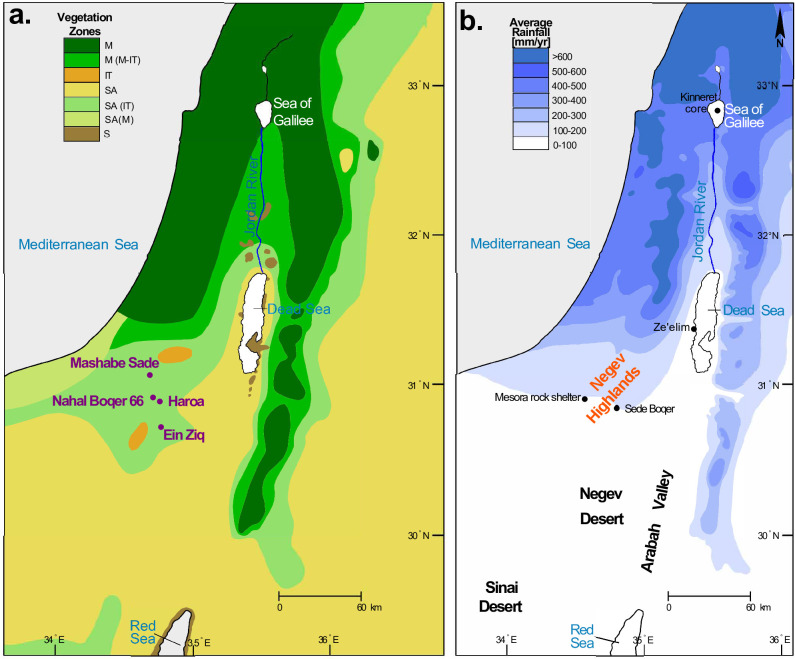
The Negev Highlands arid region (southern Levant) shows evidence of sharp settlement fluctuations, with several periods of strong human activity separated by centuries with no evidence of sedentary life. In this study, we used the palynological method in order to shed light on the region’s demographic history in the Bronze and Iron Ages. Fifty-four samples of pollen were collected and analyzed from secure archaeological contexts in four Negev Highlands sites: Nahal Boqer 66, dated to the Early Bronze Age and Early Intermediate Bronze Age (ca. 3200–2200 BCE); Ein Ziq, dated to the Early Intermediate Bronze Age (ca. 2500–2200 BCE); Mashabe Sade, dated to the Intermediate Bronze Age (ca. 2500–2000 BCE); and Haroa, dated to the Iron Age IIA (ca. late 10th through 9th centuries BCE). Our study revealed no evidence of cereal cultivation, with some hints that the inhabitants’ diets may have included plants gathered from the wild. Only one of the sites, Nahal Boqer 66, showed micro-indicators of animal dung remains, suggesting that the inhabitants herded animals. The palynological evidence did, however, emphasize that the livestock there were not fed or supplemented with agricultural by-products but rather grazed freely on wild vegetation. The pollen data also suggest that all four sites were occupied only during late winter and spring. The activity in the Negev Highlands during the third millennium BCE was probably related to the copper industry in the Arabah and to copper transportation to settled neighboring lands, especially Egypt. A relatively humid climate supported the trade through the Negev Highlands. Deterioration in both climate conditions and settlement activity was documented in the second half of the Intermediate Bronze Age.
Checked 2026-11-27 · 1 reference not checked yet
Overview
CoChat Summary
TL;DR
Palynological analysis of 54 samples from four Bronze and Iron Age Negev Highlands sites found no cereal cultivation and evidence for free-grazing pastoralism, with occupation only in late winter and spring. The authors link third-millennium BCE activity to copper trade and a relatively humid climate, and its decline in the second half of the Intermediate Bronze Age to drying beginning ca. 2200 BCE.
Key findings
- Of 54 analyzed samples, only 31 contained well-preserved pollen; no cereal pollen was found at the four sites except 1.9% cereal pollen in one Ein Ziq sample (P19), which the authors interpret as grass inflorescences used as tinder rather than domestic cereals.
- Only Nahal Boqer 66 showed micro-indicators of animal dung remains; its dung pollen spectra were dominated by Asteraceae Asteroideae and Chenopodiaceae, indicating livestock free-grazed on wild vegetation and were not fed agricultural by-products.
- Seasonality: overlap of blooming months of dominant wild taxa (aster-like: February–May; goosefoot: March–November) and near-absence of autumn bloomers such as Artemisia and acacia suggest occupation only in late winter and spring.
- Mashabe Sade sample P23 had the highest taxa diversity and edible plants (Vicia, Crocus, Limonium, Gundelia, Erodium, Bunium type), plus desert sunrose pollen and desert truffle spores, hinting at plant gathering; Ein Ziq and Mashabe Sade lacked herding markers and are interpreted as trading hubs tied to third-millennium BCE copper transport.
Methods
- Fifty-four pollen samples were collected from secure archaeological contexts at four sites: Nahal Boqer 66 (Early Bronze Age and Early Intermediate Bronze Age, ca. 3200–2200 BCE), Ein Ziq (Early Intermediate Bronze Age, ca. 2500–2200 BCE), Mashabe Sade (Intermediate Bronze Age, ca. 2500–2000 BCE), and Haroa (Iron Age IIA, late 10th–9th centuries BCE), plus modern/sub-recent control samples.
- Pollen extraction used Lycopodium spore tablets, HCl, ZnBr2 density separation, sonication, sieving (150 μm), acetolysis, and light microscopy at 200X, 400X, and 1,000X; entire residues were counted and identified using the Tel Aviv University reference collection and pollen atlases.
- Archaeological pollen spectra were compared with modern pollen rain and dung controls, and interpreted for taxa, concentrations, pollen clumps, seasonality, and long- versus short-distance transport.
Limitations
- Stated: only 31 of 54 samples yielded well-preserved pollen; there is no high-resolution paleoclimatological record from the Negev itself, so climate context relies on Lake Kinneret and Dead Sea pollen records.
- Stated: some samples were pollen barren, and control samples are modern or sub-recent, limiting direct comparison with ancient contexts.
- Evident from the text: sample sizes are uneven across sites, and subsistence and seasonality inferences rely partly on absence of cereal pollen and autumn-blooming taxa, which could be affected by preservation or context.
Model-written summary. Check it against the paper before relying on it.
Integrity signals
Registry
Cites
Statistics
Figures
Verification
Claims the paper makes
0 Valid · 2 Not valid · 64 Not checked · 81 Own results and interpretations
A result the paper reports from its own data — it cites no other source for it, so there is none to check. The quote shows it is in the paper.
In the paper
“Only one of the sites, Nahal Boqer 66, showed micro-indicators of animal dung remains, suggesting that the inhabitants herded animals.”
§ Environment, subsistence strategies and settlement seasonality in the Negev Highlands (Israel) during the Bronze and Iron Ages: The palynological evidence > Abstract
plain- Asserted: passes — The authors put it forward as true.
- Checkable: passes — It can be checked against evidence.
- Load-bearing: passes — The paper’s conclusions depend on it.
- Based: passes — The paper gives a reason why it holds.
A result the paper reports from its own data — it cites no other source for it, so there is none to check. The quote shows it is in the paper.
In the paper
“The pollen data also suggest that all four sites were occupied only during late winter and spring.”
§ Environment, subsistence strategies and settlement seasonality in the Negev Highlands (Israel) during the Bronze and Iron Ages: The palynological evidence > Abstract
hedgedn = 4- Asserted: passes — The authors put it forward as true.
- Checkable: passes — It can be checked against evidence.
- Load-bearing: passes — The paper’s conclusions depend on it.
- Based: passes — The paper gives a reason why it holds.
A result the paper reports from its own data — it cites no other source for it, so there is none to check. The quote shows it is in the paper.
In the paper
“Our study revealed no evidence of cereal cultivation, with some hints that the inhabitants’ diets may have included plants gathered from the wild.”
§ Environment, subsistence strategies and settlement seasonality in the Negev Highlands (Israel) during the Bronze and Iron Ages: The palynological evidence > Abstract
plainn = 4- Asserted: passes — The authors put it forward as true.
- Checkable: passes — It can be checked against evidence.
- Load-bearing: passes — The paper’s conclusions depend on it.
- Based: passes — The paper gives a reason why it holds.
A result the paper reports from its own data — it cites no other source for it, so there is none to check. The quote shows it is in the paper.
In the paper
“The palynological evidence did, however, emphasize that the livestock there were not fed or supplemented with agricultural by-products but rather grazed freely on wild vegetation.”
§ Environment, subsistence strategies and settlement seasonality in the Negev Highlands (Israel) during the Bronze and Iron Ages: The palynological evidence > Abstract
plainSingle case- Asserted: passes — The authors put it forward as true.
- Checkable: passes — It can be checked against evidence.
- Load-bearing: passes — The paper’s conclusions depend on it.
- Based: passes — The paper gives a reason why it holds.
A result the paper reports from its own data — it cites no other source for it, so there is none to check. The quote shows it is in the paper.
In the paper
“Our study revealed no evidence of cereal cultivation, with some hints that the inhabitants’ diets may have included plants gathered from the wild.”
§ Environment, subsistence strategies and settlement seasonality in the Negev Highlands (Israel) during the Bronze and Iron Ages: The palynological evidence > Abstract
hedgedstates a possible cause- Asserted: passes — The authors put it forward as true.
- Checkable: passes — It can be checked against evidence.
- Load-bearing: passes — The paper’s conclusions depend on it.
- Based: passes — The paper gives a reason why it holds.
108 more claims
Create a free account to see all 147 claims and to verify the 106 references still open.
- It may state two separate claims as one. 28
- Probably not a substantial claim. 10
Self-check
Percentages, sums and reported differences re-computed from the paper’s own numbers.
Each contradiction between two passages listed here was confirmed by an independent check.
Rated minor: it would not touch a result — a value no result rests on, a p-value that stays on the same side of the significance level, or a conflict that is clerical, resolved elsewhere in the paper, or outside its own findings.
In the paper
§ Environment, subsistence strategies and settlement seasonality in the Negev Highlands (Israel) during the Bronze and Iron Ages: The palynological evidence > 4. Results > 4.2 Characterization and interpretation of the palynological assemblages
“Within the section composed of fifteen samples collected from the rock shelter, only the six uppermost samples (from the surface to a depth of 50 cm; P36-P50) included well-preserved pollen grains (S1 Fig).”
§ Environment, subsistence strategies and settlement seasonality in the Negev Highlands (Israel) during the Bronze and Iron Ages: The palynological evidence > 3. Materials and method > 3.1 Field sampling
“Fifteen samples were extracted along a 1.4 m sediment sequence at a 10 cm interval (P36-P50).”
Rated minor: it would not touch a result — a value no result rests on, a p-value that stays on the same side of the significance level, or a conflict that is clerical, resolved elsewhere in the paper, or outside its own findings.
In the paper
“Convolvulaceae (bindweeds) | | 0.0 | | 0.0 | | 0.0 | | 0.0 | | 0.0 | | 0.0 | 11 | 0.7”
§ Environment, subsistence strategies and settlement seasonality in the Negev Highlands (Israel) during the Bronze and Iron Ages: The palynological evidence > 4. Results > 4.1 Pollen preservation
Reported 0.7 · recomputed 1.713396
Rated minor: it would not touch a result — a value no result rests on, a p-value that stays on the same side of the significance level, or a conflict that is clerical, resolved elsewhere in the paper, or outside its own findings.
In the paper
§ Environment, subsistence strategies and settlement seasonality in the Negev Highlands (Israel) during the Bronze and Iron Ages: The palynological evidence > 4. Results > 4.2 Characterization and interpretation of the palynological assemblages
“Samples P4-P6 that derived from Early Bronze Age III and early Intermediate Bronze Age contexts are dominated by Asteraceae Asteroideae pollen type (aster-like) and are characterized by medium pollen concentrations (40,213–18,816 g/sediment).”
§ Environment, subsistence strategies and settlement seasonality in the Negev Highlands (Israel) during the Bronze and Iron Ages: The palynological evidence > 4. Results > 4.1 Pollen preservation
“Concentrations (gram/sediment) | 40,213 | | 18,816 | | 3,424”
Citations
Cites
Tablets with spores used in absolute pollen analysis
Stockmarr, J. (1971) · Pollen et spores · Cited by 2,880
The Genesis and Collapse of Third Millennium North Mesopotamian Civilization
Weiss, H., Courty, M. A., Wetterstrom, W., Guichard, F., Senior, L., Meadow, R., & Curnow, A. (1993) · Science · doi:10.1126/science.261.5124.995 · Cited by 1,104
Bar-Matthews, M., & Ayalon, A. (2011) · The Holocene · doi:10.1177/0959683610384165 · Cited by 364
The 4.2 ka BP Event in the Mediterranean region: an overview
Bini, M., Zanchetta, G., Perşoiu, A., Cartier, R., Català, A., Cacho, I., Dean, J. R., Di Rita, F., Drysdale, R. N., Finnè, M., et al. (2019) · Climate of the Past · doi:10.5194/cp-15-555-2019 · Cited by 259
Synoptic climatology of major floods in the Negev Desert, Israel
Kahana, R., Ziv, B., Enzel, Y., & Dayan, U. (2002) · International Journal of Climatology · doi:10.1002/joc.766 · Cited by 252
Climate and the Late Bronze Collapse: New Evidence from the Southern Levant
LANGGUT, D., FINKELSTEIN, I., & LITT, T. (2013) · Tel Aviv · doi:10.1179/033443513x13753505864205 · Cited by 241 · cited 1×
“The driest conditions in the entire Bronze and Iron Age timespan were recorded towards the end of the Late Bronze Age (ca. 1250–1100 BCE), and this has been suggested as a contributing factor to the Late Bronze Age collapse [39, 40].”
Self-citationChronology of the Early Bronze Age in the Southern Levant: New Analysis for a High Chronology
Regev, J., De Miroschedji, P., Greenberg, R., Braun, E., Greenhut, Z., & Boaretto, E. (2012) · Radiocarbon · doi:10.1017/s003382220004724x · Cited by 233
Horowitz, A. (1992) · Cited by 205
Holocene climate variability in the Levant from the Dead Sea pollen record
Litt, T., Ohlwein, C., Neumann, F. H., Hense, A., & Stein, M. (2012) · Quaternary Science Reviews · doi:10.1016/j.quascirev.2012.06.012 · Cited by 187
The oldest ever brush hut plant remains from Ohalo II, Jordan Valley, Israel (19,000 BP)
Nadel, D., & Werker, E. (1999) · Antiquity · doi:10.1017/s0003598x00065509 · Cited by 137
Langgut, D., Finkelstein, I., Litt, T., Harald Neumann, F., & Stein, M. (2015) · Radiocarbon · doi:10.2458/azu_rc.57.18555 · Cited by 134
Self-citationShahack-Gross, R., & Finkelstein, I. (2008) · Journal of Archaeological Science · doi:10.1016/j.jas.2007.06.019 · Cited by 131
Self-citationThe Social Response to Environmental Change in Early Bronze Age Canaan
Rosen, A. M. (1995) · Journal of Anthropological Archaeology · doi:10.1006/jaar.1995.1002 · Cited by 128
Langgut, D., Neumann, F. H., Stein, M., Wagner, A., Kagan, E. J., Boaretto, E., & Finkelstein, I. (2014) · Palynology · doi:10.1080/01916122.2014.906001 · Cited by 103
Self-citationHolocene vegetation and climate history of the northern Golan heights (Near East)
Neumann, F., Schölzel, C., Litt, T., Hense, A., & Stein, M. (2007) · Vegetation History and Archaeobotany · doi:10.1007/s00334-006-0046-x · Cited by 103
Quaternary lake levels in the Dead Sea basin: Two centuries of research
Bookman, R., Bartov, Y., Enzel, Y., & Stein, M. (2006) · Geological Society of America eBooks · doi:10.1130/2006.2401(10 · Cited by 97
Vaks, A., Woodhead, J., Bar-Matthews, M., Ayalon, A., Cliff, R. A., Zilberman, T., Matthews, A., & Frumkin, A. (2013) · Earth and Planetary Science Letters · doi:10.1016/j.epsl.2013.02.027 · Cited by 86
Pollen et spores d'Europe et d'Afrique du Nord (2e éd.) / Maurice Reille
Reille, M. (1999) · Gallica (Bibliothèque nationale de France) · Cited by 82
The 4.2 ka BP event in the Levant
Kaniewski, D., Marriner, N., Cheddadi, R., Guiot, J., & Van Campo, E. (2018) · Climate of the Past · doi:10.5194/cp-14-1529-2018 · Cited by 81
Haiman, M. (1996) · Bulletin of the American Schools of Oriental Research · doi:10.2307/1357468 · Cited by 72
Golodets, C., Sternberg, M., Kigel, J., Boeken, B., Henkin, Z., Seligman, N. G., & Ungar, E. D. (2013) · Climatic Change · doi:10.1007/s10584-013-0758-8 · Cited by 72
Drought and societal collapse 3200 years ago in the Eastern Mediterranean: a review
Kaniewski, D., Guiot, J., & Van Campo, E. (2015) · WIREs Climate Change · doi:10.1002/wcc.345 · Cited by 70
Dead Sea Levels during the Bronze and Iron Ages
Joy Kagan, E., Langgut, D., Boaretto, E., Herald Neumann, F., & Stein, M. (2015) · Radiocarbon · doi:10.2458/azu_rc.57.18560 · Cited by 58
Self-citationFinkelstein, I., & Langgut, D. (2014) · Journal of Near Eastern Studies · doi:10.1086/677300 · Cited by 54
Self-citationSubsistence economy in the Negev Highlands: the Iron Age and the Byzantine/Early Islamic period
Shahack-Gross, R., Boaretto, E., Cabanes, D., Katz, O., & Finkelstein, I. (2014) · Levant · doi:10.1179/0075891413z.00000000034 · Cited by 52
Self-citationBoaretto, E., Finkelstein, I., & Shahack-Gross, R. (2010) · Radiocarbon · doi:10.1017/s0033822200044982 · Cited by 50
Self-citationUpper air trough axis orientation and the spatial distribution of rainfall over Israel
Zangvil, A., & Druian, P. (1990) · International Journal of Climatology · doi:10.1002/joc.3370100107 · Cited by 50
Dunseth, Z. C., Fuks, D., Langgut, D., Weiss, E., Melamed, Y., Butler, D. H., Yan, X., Boaretto, E., Tepper, Y., Bar-Oz, G., et al. (2019) · Quaternary Science Reviews · doi:10.1016/j.quascirev.2019.03.010 · Cited by 49
Self-citationArabian Trade and Socio-Political Conditions in the Negev in the Twelfth-Eleventh Centuries B. C. E.
Finkelstein, I. (1988) · Journal of Near Eastern Studies · doi:10.1086/373318 · Cited by 43
Self-citationNew Vistas on the EB IV ("MB I") Horizon in Syria-Palestine
Dever, W. G. (1980) · Bulletin of the American Schools of Oriental Research · doi:10.2307/1356506 · Cited by 40
Late Quaternary history of Qadesh Barnea, Northeastern Sinai
Goldberg, P. S. (1984) · Zeitschrift für Geomorphologie · doi:10.1127/zfg/28/1984/193 · Cited by 38
Iron IIA slag-tempered pottery in the Negev Highlands, Israel
Martin, M. A. S., Behar, A. E., Anenburg, M., Goren, Y., & Finkelstein, I. (2013) · Journal of Archaeological Science · doi:10.1016/j.jas.2013.04.024 · Cited by 36
Self-citationDemographic Trends in the Negev Highlands: Preliminary Results from the Emergency Survey
Rosen, S. A. (1987) · Bulletin of the American Schools of Oriental Research · doi:10.2307/1356930 · Cited by 35
Basic Instabilities? Climate and Culture in the Negev over the Long Term
Rosen, S. A. (2016) · Geoarchaeology · doi:10.1002/gea.21572 · Cited by 34
Bruins, H. J., & van der Plicht, J. (2017) · Radiocarbon · doi:10.1017/rdc.2016.95 · Cited by 34
Environmental change and settlement at Tel Lachish, Israel
Rosen, A. M. (1986) · Bulletin of the American Schools of Oriental Research · doi:10.2307/1356910 · Cited by 33
Baruch, U., & Goring-Morris, N. (1997) · Vegetation History and Archaeobotany · doi:10.1007/bf01370446 · Cited by 32
The southern steppe of the Levant ca. 1050–750 BCE: a framework for a territorial history
Finkelstein, I. (2014) · Palestine Exploration Quarterly · doi:10.1179/0031032814z.00000000092 · Cited by 29
Self-citationBen-Yosef, E., Langgut, D., & Sapir-Hen, L. (2017) · Journal of Archaeological Science Reports · doi:10.1016/j.jasrep.2016.12.010 · Cited by 27 · cited 3×
“…in the gatehouse of "Slave’s Hill" at Timna (one of the largest copper smelting camps in the Timna Valley, dated to the 10th century BCE; [84]) enabled us to differentiate between the practices of free-grazing and feeding animals with agricultural byproducts as the main component in…”
InfluentialSelf-citationBen-Yosef, E., Gidding, A., Tauxe, L., Davidovich, U., Najjar, M., & Levy, T. E. (2016) · Journal of Archaeological Science · doi:10.1016/j.jas.2016.05.010 · Cited by 27
Finkelstein, I., Adams, M. J., Dunseth, Z. C., & Shahack-Gross, R. (2018) · Tel Aviv · doi:10.1080/03344355.2018.1412054 · Cited by 24
Self-citationSettlement Oscillations in the Negev Highlands Revisited: The Impact of Microarchaeological Methods
Shahack‐Gross, R., & Finkelstein, I. (2015) · Radiocarbon · doi:10.2458/azu_rc.57.18561 · Cited by 24
Self-citationDunseth, Z. C., Junge, A., Lomax, J., Boaretto, E., Finkelstein, I., Fuchs, M., & Shahack-Gross, R. (2017) · Journal of Arid Environments · doi:10.1016/j.jaridenv.2017.05.006 · Cited by 22
Self-citationLate Quaternary Nile flows as recorded in the Levantine Basin: The palynological evidence
Langgut, D. (2017) · Quaternary International · doi:10.1016/j.quaint.2017.07.006 · Cited by 21
Self-citationCavanagh, M., Ben-Yosef, E., & Langgut, D. (2022) · Scientific Reports · doi:10.1038/s41598-022-18940-z · Cited by 20
Self-citationGeoarchaeological Investigation at the Intermediate Bronze Age Negev Highlands Site of Mashabe Sade
Dunseth, Z. C., Junge, A., Fuchs, M., Finkelstein, I., & Shahack-Gross, R. (2016) · Tel Aviv · doi:10.1080/03344355.2016.1161372 · Cited by 19
Self-citationJunge, A., Lomax, J., Shahack‐Gross, R., Dunseth, Z. C., Finkelstein, I., & Fuchs, M. (2016) · Geoarchaeology · doi:10.1002/gea.21578 · Cited by 19
Self-citationPreliminary Report of the Western Negev Highlands Emergency Survey
Haiman, M. (1989) · Cited by 19
The new atlas of Israel : the national atlas
Yiśraʾel, M. L.-M., Srebro, H., & le-geʾografyah, U. H.-ʿ. B.-Y. Ḥ. (2011) · Cited by 18
Babenko, A. N., Kiseleva, N. K., Plakht, I., Rosen, S., Savinetskii, A. B., & Khasanov, B. F. (2007) · Russian Journal of Ecology · doi:10.1134/s1067413607060033 · Cited by 17
Climate, settlement history and olive cultivation in the Iron Age Southern Levant
Finkelstein, I., & Langgut, D. (2018) · Bulletin of the American Schools of Oriental Research · doi:10.5615/bullamerschoorie.379.0153 · Cited by 16
Self-citationLate Pleistocene palynological sequence from Ohalo II, Sea of Galilee, Israel
Weinstein-Evron, M., Langgut, D., Chaim, S., Tsatskin, A., & Nadel, D. (2015) · Transactions of the Royal Society of South Africa · doi:10.1080/0035919x.2015.1053554 · Cited by 16
Self-citationAncient Settlement of the Negev Highlands Volume II
Authority, I. A., Cohen, R., & Cohen-Amin, R. (2004) · Israel Antiquities Authority eBooks · doi:10.69704/iaarepv000.1996.77 · Cited by 15
Dating of Iron Age Agriculture in the Negev Highlands: A Response to Shahack-Gross and Finkelstein
Bruins, H. J., & van der Plicht, J. (2017) · Radiocarbon · doi:10.1017/rdc.2017.57 · Cited by 14
Shemer, M., Boaretto, E., Greenbaum, N., Mayer, D. E. B., Tejero, J.-M., Langgut, D., Gnezdilov, D. L., Barzilai, O., Marder, O., & Marom, N. (2023) · Journal of Human Evolution · doi:10.1016/j.jhevol.2023.103342 · Cited by 13
Self-citationAncient Settlement of the Central Negev I
Authority, I. A., & Cohen, R. (1999) · Israel Antiquities Authority eBooks · doi:10.69704/iaarepv000.1996.75 · Cited by 13
Desert Settlement through the Iron Age: Radiocarbon dates from Sinai and the Negev Highlands
Bruins, H. J., & van der Plicht, J. (2005) · University of Groningen research database (University of Groningen / Centre for Information Technology) · Cited by 12
Vardi, J., Yegorov, D., Degen-Eisenberg, D., Boaretto, E., Langgut, D., Avni, Y., & Caracuta, V. (2023) · Journal of Arid Environments · doi:10.1016/j.jaridenv.2022.104906 · Cited by 9
Self-citationDunseth, Z. C., Finkelstein, I., & Shahack-Gross, R. (2018) · Journal of Archaeological Science: Reports · doi:10.1016/j.jasrep.2018.03.025 · Cited by 9
Self-citationIntermediate Bronze Age crescent-headed figures in the Negev Highlands
Schwimer, L., & Yekutieli, Y. (2021) · Bulletin of the American Schools of Oriental Research · doi:10.1086/712920 · Cited by 9
Shahack-Gross, R., & Finkelstein, I. (2017) · Radiocarbon · doi:10.1017/rdc.2017.56 · Cited by 8
Self-citationThe Archaeology and History of Rock-cut Cisterns and Open Water Reservoirs in the Negev Highlands
Junge, A., Dunseth, Z. C., Shahack‐Gross, R., Finkelstein, I., & Fuchs, M. (2023) · Bulletin of the American Society of Overseas Research · doi:10.1086/724457 · Cited by 6
Self-citation(1983)
(1958)
Warnock, P. J. (2014) · Excavations at the Early Bronze IV Sites of Jebel Qa'aqir and Be'er Resisim · doi:10.1163/9789004370159_027
Research works printed but not linked: 17
- Rosen SA. The desert and the pastoralist: an archaeological perspective on human-landscape interaction in the Negev over the millennia. Ann Arid Zone. 2011; 50: 1– 15.
- Finkelstein I. Living on the fringe: the archaeology and history of the Negev, Sinai and neighboring regions in the Bronze and Iron Ages. Sheffield: Sheffield Phoenix Press; 1995.
- Bruins HJ. Desert environment and agriculture in the central Negev and Kadesh-Barnea during historical times [dissertation]. Wageningen: Wageningen University & Research; 1986.
- Bruins HJ, van der Plicht J. Desert settlement through the Iron Age. In: Levy T, editor. The Bible and radiocarbon dating. London: Equinox Publishing; 2005. p. 349– 66.
- Haiman M. Copper trade and the settlement rise in the South Levantine deserts in the EB IV. In: Ben Yosef E, editor. Mining for ancient copper. essays in memory of Beno Rothenberg. Monograph Series of the Sonia and Marco Nadler Institute of Archaeology; 37. University Park, PA: Eisenbrauns; 2018. p. 270– 5.
- Levy T. Pastoral nomads and Iron Age metal production in ancient Edom. In: Szuchman J, editor. Nomads, tribes and the state in the ancient near east, cross-disciplinary perspectives. Chicago: University of Chicago Press; 2009. p. 147– 77.
- Greener A, Finkelstein I, Langgut D. Settlement oscillations along the desert fringes of the Southern Levant: impact of climate versus economic and historical factors. Ugarit-Forschungen. 2018; 49: 195– 226.
- Laugomer B. High resolution climate reconstruction during the Bronze and Iron ages from Soreq Cave speleothems [thesis]. Tel Aviv: Tel Aviv University; 2017.
- Noy T, Cohen R. Nahal Boqer: an early pre-pottery Neolithic B site. J Isr Prehist Soc. 1971; 13: 15– 25. Hebrew.
- Segal D, Carmi I. Rehovot radiocarbon date list V. ‘Atiqot. 1996; 29: 79– 106.
- Baruch U. Identification of wood remains from Horbat ‘En Ziq. In: Cohen R, editor. Ancient settlement of the central Negev, vol. 1: the Chalcolithic period, the Early Bronze Age and the Middle Bronze Age I. Israel Antiquities Authority Reports; 6. Jerusalem: Israel Antiquities Authority; 1999. p. * 7–* 11.
- Hakker Orion D. Faunal remains from Middle Bronze Age I sites in the Negev Highlands. In: Cohen R, editor. Ancient settlement of the central Negev, vol. I: the Chalcolithic Period, the Early Bronze Age and the Middle Bronze Age I. Israel Antiquities Authority Reports; 6. Jerusalem: Israel Antiquities Authority; 1999. p. 327– 35. Hebrew.
- Horowitz A, Baum B. The arboreal pollen flora of Israel. Pollen Spores. 1967; 9: 71– 93.
- Rosen AM. Past environments and farming potential at Horbat ‘En Ziq. In: Cohen R, editor. Ancient settlement of the central Negev, vol. 1: the Chalcolithic Period, the Early Bronze Age and the Middle Bronze Age I. Israel Antiquities Authority Reports; 6. Jerusalem: Israel Antiquities Authority; 1999. p. *17-*21.
- Kochavi M. The settlement of the Negev in the Middle Bronze (Canaanite) I Age [dissertation]. Jerusalem: Hebrew University of Jerusalem; 1967. Hebrew with English summary.
- Dever WG. Village planning at Be’er Resisim and socio-economic structure in Early Bronze Age IV Palestine. Eretz Isr. 1985; 18: 18– 28*.
- Dever WG. Excavations at the Early Bronze IV sites of Jebel Qa’aqir and Be’er Resisim. Studies in the Archaeology and History of the Levant; 6. Winona Lake: Brill; 2014.
Cited by
Polisca, F., Corso, M. D., Baldan, M., Bortolini, M., Battistel, D., Sasso, G. D., Gherardi, F., Canti, M. G., Piazzalunga, G., & Nicosia, C. (2025) · Journal of Archaeological Science · doi:10.1016/j.jas.2025.106207 · Cited by 11
Nicosia, C., Corso, M. D., D’Aquino, S., Baldan, M., Bortolini, M., Battistel, D., & Polisca, F. (2025) · PLoS ONE · doi:10.1371/journal.pone.0323724 · Cited by 10
“Pollen clumps are present also in ovicap-rine droppings at the pile-dwelling of Lavagnone, Brescia (Appendix 5a in [80]) and likely correspond to the ingestion of inflorescences by animals, often found in dung (see also, e.g., [81–83]).”
The V-shaped desert kites and their contribution to the Timnian economy
Nadel, D., Bar‐Oz, G., Perevolotsky, A., & Malkinson, D. (2024) · Journal of Arid Environments · doi:10.1016/j.jaridenv.2023.105120 · Cited by 6
Climate and Environment in the Southern Levant, 1300–300 BCE
Langgut, D. (2026) · Cambridge University Press eBooks · doi:10.1017/9781009558341 · Cited by 3
Self-citationSeasonal and multi-functional use of industrial space at Iron Age Tel Shiqmona, Israel
Ramírez, I. O., Shalvi, G., Pinsky, S., Jacobson, M., Zuckerman‐Cooper, R., Gilboa, A., & Friesem, D. E. (2026) · PLoS ONE · doi:10.1371/journal.pone.0355104 · Cited by 2
“Beyond these isolated hints, empirical studies have focused on environmental extremes: either the opportunistic mobility of semi-nomadic societies in arid regions, driven by seasonal precipitation patterns (e.g. [23,48]), or the biological constraints of crops like olives [15].”
Metadata
- Authors
- Langgut, D., & Finkelstein, I.
- Affiliations
- Tel Aviv University (IL)
- University of Haifa (IL)
- Corresponding author
- Langgut, Dafna
- Venue
- PLOS ONE
- Publisher
- Public Library of Science (PLoS)
- Published
- 2023-05-24
- Volume
- 18
- Issue
- 5
- Pages
- e0285358
- ISSN
- 1932-6203 (ISSN-L)
- PMC
- PMC10208521
- OpenAlex
- W4377970615
- Cited by
- 9
- References
- 65
- Citations by year
- 2026: 4 · 2025: 3 · 2024: 2
- FWCI
- 3.80
- Type
- journal article
- Language
- en
- Open access
- gold
- doi.org
- Licence
- Locations
- PLoS ONE (publishedVersion, cc-by)
- PubMed Central (publishedVersion, cc-by)
- PubMed (publishedVersion)
- DOAJ (DOAJ: Directory of Open Access Journals) (submittedVersion)
- Funders
- Neubauer Family Foundation
- Topics
- Social Sciences › Archeology › Archaeology and ancient environmental studies
- Social Sciences › Arts and Humanities › Religious studies › Biblical Studies and Interpretation
- Life Sciences › Agricultural and Biological Sciences › Soil Science › Soil and Environmental Studies
- Keywords
- Negev Highlands, Bronze Age, Iron Age, subsistence strategies, palynology, cereal cultivation, wild plant harvesting, animal husbandry, free-ranging livestock, climate change, copper trade, Southern Levant
- MeSH terms
- Agriculture, Animals, Archaeology, Climate, Copper, Humans, Israel
About these checks
Registry, retraction, Cites and statistics results are computed, not judged, with one exception: a printed reference that no index lists is read once by a model before it counts as a citation error. Claims are extracted by a model and kept only when their quote appears verbatim in the text; each cited source is then checked, with a model’s help, for whether it says what the claim relies on. Those verdicts can be wrong — read the claim’s quote and the cited source before relying on one.
A language model drew the claims from the paper on 2026-11-27, under version 3 of the claim definition (model deepseek-v4.1-flash, prompt extract-v3).
A second model labelled each claim on 2026-11-27 (model jev-1.13-20260917, definition revision gold-guideline-v0.2).
Statistics and arithmetic are recomputed, not judged.
Confidence bands are shown only for fields calibrated on our annotated test set. None is calibrated yet, so no band is shown.
What counts as a claim ›How we measure confidence ›How we check this ›
Are you an author, or do you see a problem with this page? Request a review
Data sources
Bibliographic data: Semantic Scholar, OpenAlex, Crossref.
Contains information from the Semantic Scholar Academic Graph Datasets, made available under the ODC Attribution License (ODC-BY 1.0).
Semantic Scholar’s data is described in: Kinney, R., et al. (2023). The Semantic Scholar Open Data Platform. arXiv:2301.10140.
