

The DOI matches its Crossref record; 5 of the 5 references it cites were found in a registry or an index.
Tasting to preserve: An educational activity to promote children’s positive attitudes towards intraspecific diversity conservation
Open accessPublished version of a preprint
Abstract
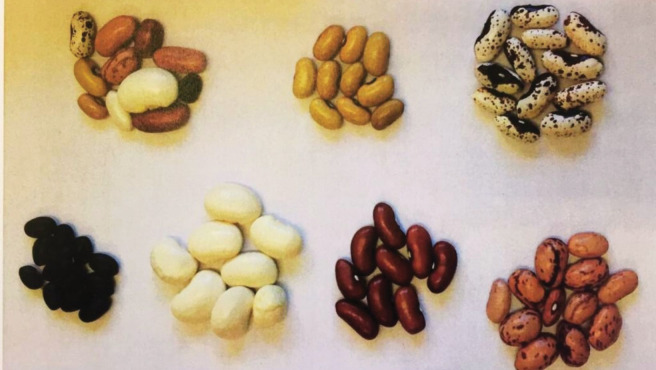
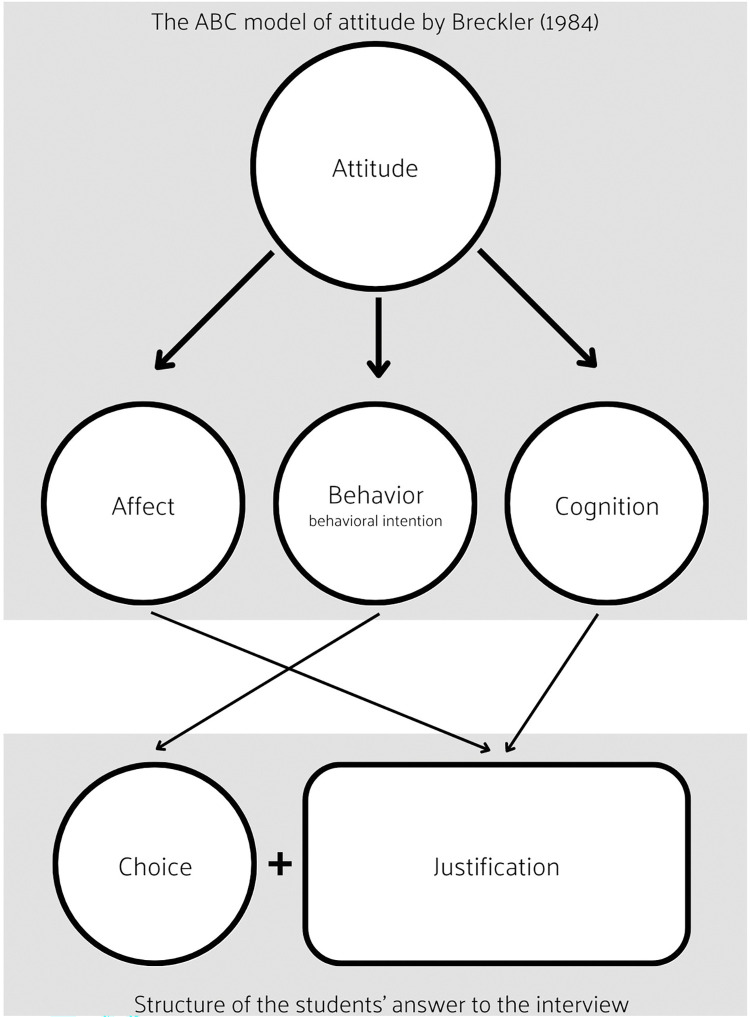
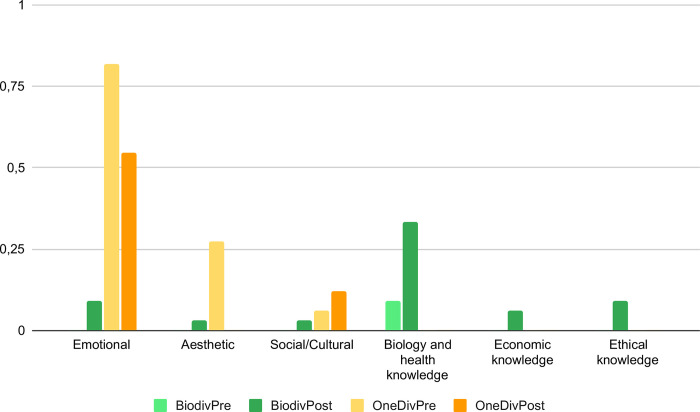
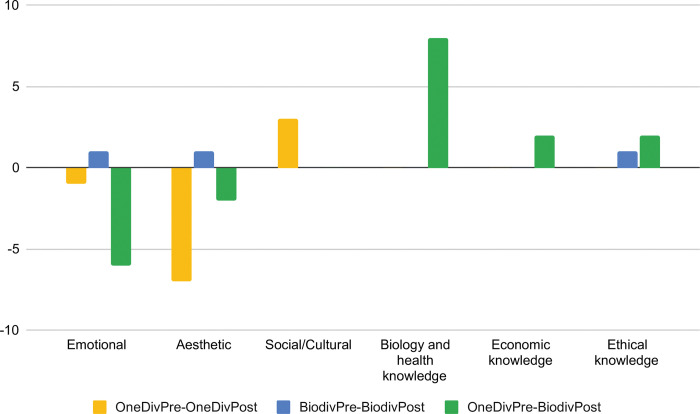
On the edge of causing the sixth big mass extinction event, the development of positive attitudes towards the conservation of intraspecific diversity from early ages is essential to overcome the biodiversity crisis we currently face. However, there is no information available on elementary school students’ attitudes toward intraspecific diversity conservation nor is there a framework available to perform such analysis. For this study we designed, implemented, and evaluated an educational activity planned for third graders (8 to 13 years old) to explore the intraspecific diversity of vegetables and promote healthy eating habits. Additionally, a framework was developed to evaluate students’ attitudes towards intraspecific diversity conservation and applied to semi-structured interviews conducted with students before and after engaging in the educational activity. In this paper we present a reliable framework, developed aligned with the ABC model of attitudes, based on literature, and adapted to elementary school students’ responses, to evaluate students’ attitudes toward intraspecific diversity. Our results show that, before the educational activity, most students choose a non-biodiverse option, justifying this choice with the affective component of attitudes: mostly emotional factors but also aesthetic and social/cultural factors. After the educational activity, we observed a significant increase in the frequency of students that choose the biodiverse option and that justified it with the cognitive component of attitudes: mainly with biology and health knowledge factors, but also with economic and ethical knowledge factors. Our findings support the positive impact of educational activities that explore vegetable varieties on students’ attitudes toward intraspecific diversity conservation. This activity may also be used to foster education for sustainability and address socioscientific issues aligned with diverse sustainable development goals.
Overview
The claims and statistics of this paper haven’t been checked yet.
Run the check — free, no account needed. It reads the open-access text and checks the sources it cites.
Integrity signals
Registry
Cites
Statistics
Figures
Verification
Claims the paper makes
The claims and statistics of this paper haven’t been checked yet.
Run the check — free, no account needed. It reads the open-access text and checks the sources it cites.
Self-check
Percentages, sums and reported differences re-computed from the paper’s own numbers.
The self-check needs the paper’s full text.
Citations
Cites
Biodiversity loss and its impact on humanity
Cardinale, B. J., Duffy, J. E., Gonzalez, A., Hooper, D. U., Perrings, C., Venail, P., Narwani, A., Mace, G. M., Tilman, D., Wardle, D. A., et al. (2012) · Nature · doi:10.1038/nature11148 · Cited by 7,457 · cited 1×
“…affects ecosystems’ equilibrium and may compromise our own survival, negatively impacting the services provided by ecosystems, such as the supply of food and other goods or the regulation of ecosystem functioning, leading to feedback loops that further increase the rate of environmental change [9].”
Has the Earth’s sixth mass extinction already arrived?
Barnosky, A. D., Matzke, N., Tomiya, S., Wogan, G. O. U., Swartz, B., Quental, T. B., Marshall, C., McGuire, J. L., Lindsey, E. L., Maguire, K. C., et al. (2011) · Nature · doi:10.1038/nature09678 · Cited by 4,400
Ceballos, G., Ehrlich, P. R., & Dirzo, R. (2017) · Proceedings of the National Academy of Sciences · doi:10.1073/pnas.1704949114 · Cited by 2,663
Phases of inquiry-based learning: Definitions and the inquiry cycle
Pedaste, M., Mäeots, M., Siiman, L. A., de Jong, T., van Riesen, S. A. N., Kamp, E. T., Manoli, C. C., Zacharia, Z. C., & Tsourlidaki, E. (2015) · Educational Research Review · doi:10.1016/j.edurev.2015.02.003 · Cited by 2,119 · cited 2×
“The educational activity was designed for third-grade students following an inquiry based learning and experiential approach [49].”
Scientists’ warning to humanity on the freshwater biodiversity crisis
Albert, J. S., Destouni, G., Duke-Sylvester, S. M., Magurran, A. E., Oberdorff, T., Reis, R. E., Winemiller, K. O., & Ripple, W. J. (2021) · Ambio · doi:10.1007/s13280-020-01318-8 · Cited by 943
Research works printed but not linked: 64
- S Mammola, 2019, Scientists’ Warning on the Conservation of Subterranean Ecosystems, BioScience, 69, 641, 10.1093/biosci/biz064 · DOI
- EA Williams‐Subiza, 2021, Drivers of biodiversity loss in freshwater environments: A bibliometric analysis of the recent literature., Aquat Conserv Mar Freshw Ecosyst., 31, 2469, 10.1002/aqc.3627 · DOI
- A. Gray, 2019, The ecology of plant extinction: rates, traits and island comparisons, Oryx, 53, 424, 10.1017/S0030605318000315 · DOI
- CA Hallmann, 2017, More than 75 percent decline over 27 years in total flying insect biomass in protected areas., PLOS ONE, 12, e0185809, 10.1371/journal.pone.0185809 · DOI · Paper page
- WJ Ripple, 2017, World Scientists’ Warning to Humanity: A Second Notice, BioScience, 67, 1026, 10.1093/biosci/bix125 · DOI
- United Nations, 2015, Sustainable Development Goals—United Nations.
- L Glowka, 1994, A guide to the Convention on Biological Diversity., 161
- GMA Bermudez, 2020, “What Matters Is Species Richness”—High School Students’ Understanding of the Components of Biodiversity., Res Sci Educ., 50, 2159, 10.1007/s11165-018-9767-y · DOI
- P Lindemann‐Matthies, 2009, The integration of biodiversity education in the initial education of primary school teachers: four comparative case studies from Europe., Environ Educ Res., 15, 17, 10.1080/13504620802613496 · DOI
- S Menzel, 2009, The Loss of Biodiversity as a Challenge for Sustainable Development: How Do Pupils in Chile and Germany Perceive Resource Dilemmas?, Res Sci Educ., 39, 429, 10.1007/s11165-008-9087-8 · DOI
- R Campos, 2013, Early evolution of evolutionary thinking: teaching biological evolution in elementary schools., Evol Educ Outreach, 6, 25, 10.1186/1936-6434-6-25 · DOI
- S Des Roches, 2021, Conserving intraspecific variation for nature’s contributions to people., Nat Ecol Evol., 5, 574, 10.1038/s41559-021-01403-5 · DOI · Paper page
- K Gormley, 2022, Same, same but different! Exploring children’s understandings of within-species variation, J Biol Educ., 1, 10.1080/00219266.2022.2081244 · DOI
- R Frankham, 2002, Introduction to conservation genetics, 617, 10.1017/CBO9780511808999 · DOI
- B Hallgrímsson, 2005, Variation and Variability. In: Variation, Elsevier, 1
- S Des Roches, 2017, The ecological importance of intraspecific variation., Nat Ecol Evol, 2, 57, 10.1038/s41559-017-0402-5 · DOI
- I Morales-Castilla, 2020, Diversity buffers winegrowing regions from climate change losses, Proc Natl Acad Sci, 117, 2864, 10.1073/pnas.1906731117 · DOI
- J Baniszewski, 2021, Wheat intraspecific diversity suppressed diseases with subdued yield, economic return and arthropod predation services, Agric Ecosyst Environ, 315, 107438, 10.1016/j.agee.2021.107438 · DOI
- LD Snyder, 2020, Crop Varietal Mixtures as a Strategy to Support Insect Pest Control, Yield, Economic, and Nutritional Services., Front Sustain Food Syst., 4, 60, 10.3389/fsufs.2020.00060 · DOI
- S de Haan, 2019, The Nutritional Contribution of Potato Varietal Diversity in Andean Food Systems: a Case Study., Am J Potato Res., 96, 151, 10.1007/s12230-018-09707-2 · DOI
- R Nankya, 2021, Diversity in Nutrient Content and Consumer Preferences of Sensory Attributes of Peanut (Arachis hypogaea L.) Varieties in Ugandan Agroecosystems, Sustainability, 13, 2658, 10.3390/su13052658 · DOI
- WC Kyle, 2020, Youth are demanding action regarding climate change: will educators have the wisdom and courage to respond?, APEduC Rev-Investig E Práticas Em Educ Em Ciênc Matemática E Tecnol, 1, 150
- SJ Breckler, 1984, Empirical validation of affect, behavior, and cognition as distinct components of attitude., J Pers Soc Psychol, 47, 1191, 10.1037/0022-3514.47.6.1191 · DOI · Paper page
- R Gifford, 2014, Personal and social factors that influence pro-environmental concern and behaviour: A review, Int J Psychol, 49, 141
- A Kollmuss, 2002, Mind the Gap: Why do people act environmentally and what are the barriers to pro-environmental behavior?, Environ Educ Res., 8, 239, 10.1080/13504620220145401 · DOI · Paper page
- D Li, 2019, What influences an individual’s pro-environmental behavior? A literature review, Resour Conserv Recycl., 146, 28, 10.1016/j.resconrec.2019.03.024 · DOI
- NJ Jalil, 2018, Factors Affecting the Awareness of Biodiversity Conservation Among Students in Malaysia Private University., Int J Eng Technol., 7, 791, 10.14419/ijet.v7i4.35.23109 · DOI
- DS Levine, 2012, Environmental Attitudes, Knowledge, Intentions and Behaviors Among College Students., J Soc Psychol.May, 152, 308, 10.1080/00224545.2011.604363 · DOI
- RE Petty, 1999, Dual process theories in social psychology, 41
- R Asshoff, 2020, Teaching changes interest and attitudes of students towards bedbugs., Int J Sci Educ., 42, 1818, 10.1080/09500693.2020.1788745 · DOI
- RL White, 2018, Birds in the playground: Evaluating the effectiveness of an urban environmental education project in enhancing school children’s awareness, knowledge and attitudes towards local wildlife., PLOS ONE, 13, e0193993, 10.1371/journal.pone.0193993 · DOI
- CA Fonseca, 2021, Shooting skinks for good: Producing a movie improves attitudes towards a threatened species, Sci Total Environ, 791, 148356, 10.1016/j.scitotenv.2021.148356 · DOI
- N Špur, 2020, Influence of experience, interest, knowledge and learning source on children’s attitudes towards extensive grassland conservation, Environ Conserv, 47, 130, 10.1017/S0376892920000119 · DOI
- J Schlegel, 2015, Local Insects as Flagship Species to Promote Nature Conservation? A Survey among Primary School Children on Their Attitudes toward Invertebrates, Anthrozoös, 28, 229, 10.1080/08927936.2015.11435399 · DOI
- LM Rosalino, 2017, Conservation priorities for elementary school students: Neotropical and European perspectives., Biodivers Conserv., 26, 2675, 10.1007/s10531-017-1380-2 · DOI
- T Bruckermann, 2021, Identifying precursory concepts in evolution during early childhood–a systematic literature review, Stud Sci Educ, 57, 85, 10.1080/03057267.2020.1792678 · DOI
- J Pinela, 2012, Ferreira ICFR. Nutritional composition and antioxidant activity of four tomato (Lycopersicon esculentum L.) farmer’ varieties in Northeastern Portugal homegardens, Food Chem Toxicol, 50, 829, 10.1016/j.fct.2011.11.045 · DOI
- A Podsędek, 2000, Compositional characterisation of some apple varieties, Eur Food Res Technol, 210, 268, 10.1007/s002179900101 · DOI
- Education Ministry, 2001, Primary education national curriculum–essential skills
- L Afonso, 2021, The taste of biodiversity: science and sensory education with different varieties of a vegetable to promote acceptance among primary school children., Public Health Nutr, 24, 2304, 10.1017/S1368980020004371 · DOI
- M Vadiveloo, 2019, Sensory variety in shape and color influences fruit and vegetable intake, liking, and purchase intentions in some subsets of adults: A randomized pilot experiment., Food Qual Prefer., 71, 301, 10.1016/j.foodqual.2018.08.002 · DOI
- L Cohen, 2018, Research Methods in Education.
- RA Duschl, 2007, Taking science to school: learning and teaching science in grades K-8, 387
- National Research Council (U.S.), 2012, A framework for K-12 science education: practices, crosscutting concepts, and core ideas., 385
- C Darbellay, 2004, Changes in flavour and texture during the ripening of strawberries, Eur Food Res Technol, 218, 167, 10.1007/s00217-003-0822-0 · DOI
- A Thomas, 2017, The Bitter Taste Receptor TAS2R16 Achieves High Specificity and Accommodates Diverse Glycoside Ligands by using a Two-faced Binding Pocket., Sci Rep., 7, 7753, 10.1038/s41598-017-07256-y · DOI
- Z Conrad, 2018, Greater vegetable variety and amount are associated with lower prevalence of coronary heart disease: National Health and Nutrition Examination Survey, 1999–2014., Nutr J., 17, 67, 10.1186/s12937-018-0376-4 · DOI
- JA Mennella, 2014, Ontogeny of taste preferences: basic biology and implications for health, Am J Clin Nutr, 99, 704S, 10.3945/ajcn.113.067694 · DOI
- Y He, 2022, Current Perspectives on Food Oral Processing., Annu Rev Food Sci Technol., 13, 167, 10.1146/annurev-food-052720-103054 · DOI
- N. Rogers, 2015, Why illness might leave a bitter taste in the mouth, Nature. 2015 Apr 29;nature, 17415
- CJ van Riper, 2017, Toward an integrated understanding of perceived biodiversity values and environmental conditions in a national park., Ecol Indic., 72, 278, 10.1016/j.ecolind.2016.07.029 · DOI
- AK Verma, 2016, Biodiversity: Its Different Levels and Values, Int J Environ Sci, 7, 143
- UH Graneheim, 2004, Qualitative content analysis in nursing research: concepts, procedures and measures to achieve trustworthiness., Nurse Educ Today., 24, 105, 10.1016/j.nedt.2003.10.001 · DOI · Paper page
- ML McHugh, 2012, Interrater reliability: the kappa statistic., Biochem Medica., 276, 10.11613/BM.2012.031 · DOI · Paper page
- SE Stemler, 2004, A Comparison of Consensus, Consistency, and Measurement Approaches to Estimating Interrater Reliability.
- K. Lahm, 2007, The blackwell encyclopedia of sociology
- A Miralles, 2019, Empathy and compassion toward other species decrease with evolutionary divergence time., Sci Rep., 9, 19555, 10.1038/s41598-019-56006-9 · DOI · Paper page
- VJ Kontsiotis, 2022, Public attitudes towards venomous and non-venomous snakes, Sci Total Environ, 831, 154918, 10.1016/j.scitotenv.2022.154918 · DOI
- DCI Koh, 2006, Snake venom components and their applications in biomedicine, Cell Mol Life Sci, 63, 3030, 10.1007/s00018-006-6315-0 · DOI
- DP Pandey, 2016, Public perceptions of snakes and snakebite management: implications for conservation and human health in southern Nepal., J Ethnobiol Ethnomedicine., 12, 22, 10.1186/s13002-016-0092-0 · DOI
- Directorate General of Education, 2016, Curricular Guidelines for Pre-School Education, Ministry of Education
- E MacDonald, 2016, Applying the Elaboration Likelihood Model to increase recall of conservation messages and elaboration by zoo visitors., J Sustain Tour., 24, 866, 10.1080/09669582.2015.1091464 · DOI
- Nancy M. Wells, 2006, Nature and the Life Course: Pathways from Childhood Nature Experiences to Adult Environmentalism., Child Youth Environ, 16, 1, 10.1353/cye.2006.0031 · DOI
- CD Rosa, 2018, Nature Experiences and Adults’ Self-Reported Pro-environmental Behaviors: The Role of Connectedness to Nature and Childhood Nature Experiences., Front Psychol, 9, 1055, 10.3389/fpsyg.2018.01055 · DOI
Metadata
- Authors
- Pessoa, P., Aboim, S., Afonso, L., Lopes, J. B., & Sá-Pinto, X.
- Affiliations
- University of Trás-os-Montes and Alto Douro (PT)
- Centro de Investigação e Inovação em Educação (PT)
- Universidade do Porto (PT)
- Corresponding author
- Pessoa, Patrícia
- Aboim, Sara
- Afonso, Lisa
- Lopes, J. Bernardino
- Venue
- PLOS ONE
- Publisher
- Public Library of Science (PLoS)
- Published
- 2024-01-10
- Volume
- 19
- Issue
- 1
- Pages
- e0285649
- ISSN
- 1932-6203 (ISSN-L)
- PMC
- PMC10781109
- OpenAlex
- W4390693787
- Cited by
- 4
- References
- 5
- Citations by year
- 2026: 1 · 2024: 3
- FWCI
- 1.90
- Type
- journal article
- Language
- en
- Open access
- gold
- doi.org
- Licence
- Locations
- PLoS ONE (publishedVersion, cc-by)
- bioRxiv (Cold Spring Harbor Laboratory) (acceptedVersion, cc-by)
- PubMed Central (publishedVersion, cc-by)
- PubMed (publishedVersion)
- DOAJ (DOAJ: Directory of Open Access Journals) (submittedVersion, cc-by-sa)
- Portuguese National Funding Agency for Science, Research and Technology (RCAAP Project by FCT) (submittedVersion, other-oa)
- Funders
- Fundação para a Ciência e a Tecnologia (2020.05634.BD, UIDB/00194/2020)
- Topics
- Social Sciences › Education › Animal and Plant Science Education
- Physical Sciences › Environmental Science › Management, Monitoring, Policy and Law › Pro-Environmental Behavior and Attitudes
- Social Sciences › Education › Science Education and Pedagogy
- Keywords
- intraspecific variation, biodiversity conservation, children's attitudes, educational activities, vegetable varieties, healthy eating habits, ABC model of attitudes, elementary school students, sustainability education, socioscientific issues, biodiversity crisis
- MeSH terms
- Optimism, Adolescent, Child, Educational Status, Emotions, Humans, Students, Vegetables, Biodiversity
About these checks
Registry, retraction, Cites and statistics results are computed, not judged, with one exception: a printed reference that no index lists is read once by a model before it counts as a citation error. Claims are extracted by a model and kept only when their quote appears verbatim in the text; each cited source is then checked, with a model’s help, for whether it says what the claim relies on. Those verdicts can be wrong — read the claim’s quote and the cited source before relying on one.
Statistics and arithmetic are recomputed, not judged.
Confidence bands are shown only for fields calibrated on our annotated test set. None is calibrated yet, so no band is shown.
What counts as a claim ›How we measure confidence ›How we check this ›
Are you an author, or do you see a problem with this page? Request a review
