

Constitutive ALS3 expression in Candida albicans enhances adhesion and biofilm formation of efg1, but not cph1 mutant strains
Open accessThe DOI matches its Crossref record; 36 of the 37 references it cites were found in a registry or an index.
Abstract
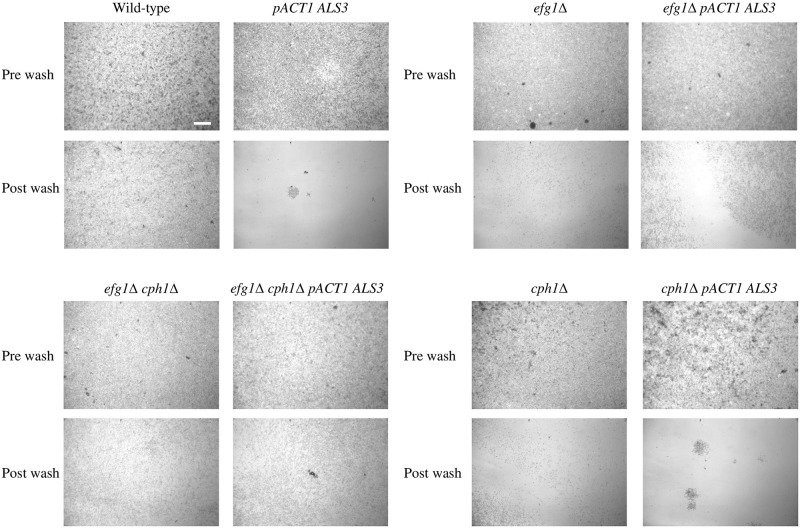
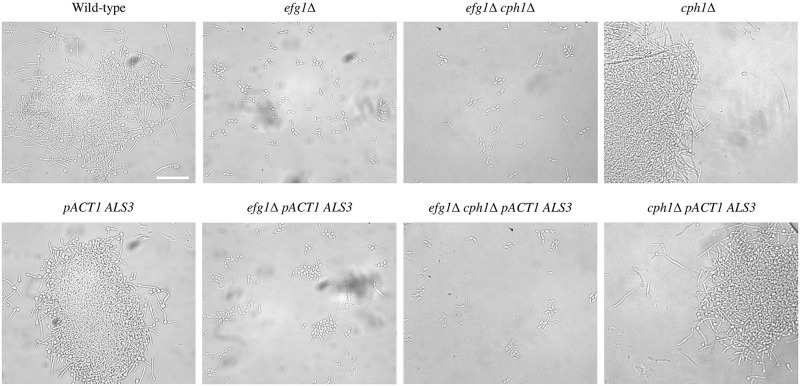
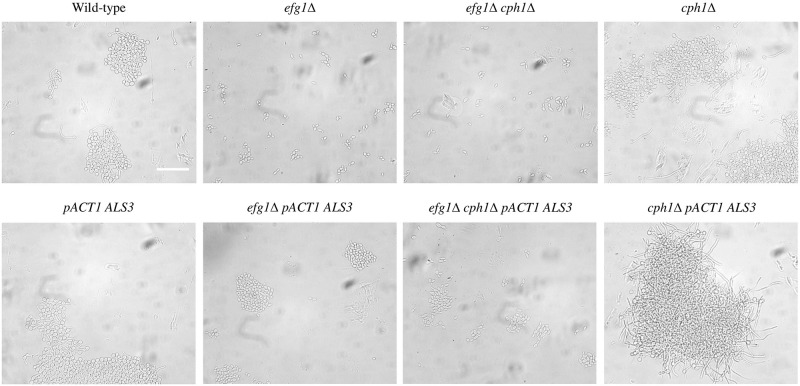
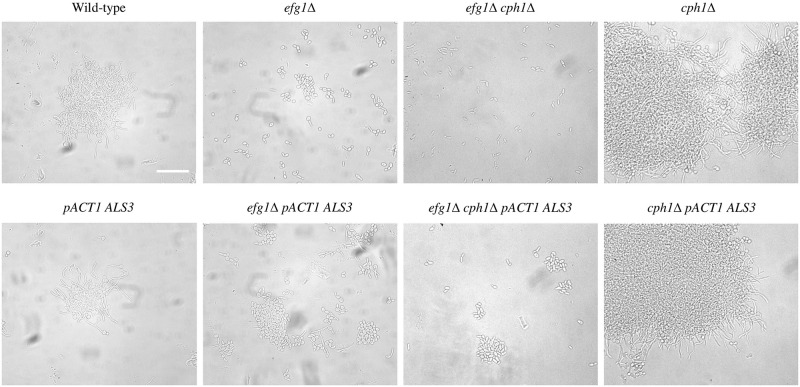
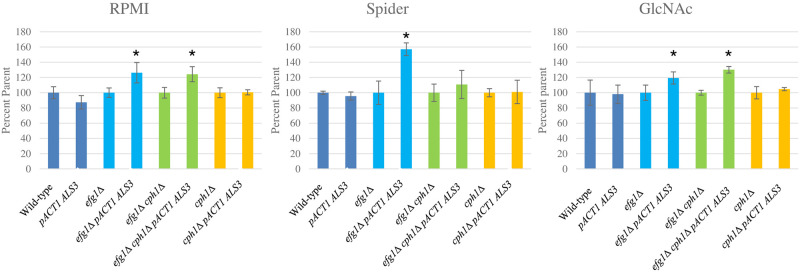
Adhesion to living and non-living surfaces is an important virulence trait of the fungal pathogen Candida albicans. Biofilm formation in this organism depends on the expression of a number of cell surface proteins including the hypha-specific protein Als3p. Loss of ALS3 impairs biofilm formation and decreases cell-cell adhesion. We wanted to test whether constitutively expressing ALS3 could compensate for defects in adhesion and biofilm formation observed in mutant strains that lack key transcriptional regulators of biofilm formation Efg1p and Cph1p. We found that ALS3 improved adhesion and biofilm formation in the efg1 Δ and efg1 Δ cph1 Δ mutant strains, but had less effect on the cph1 Δ strain.
Overview
The claims and statistics of this paper haven’t been checked yet.
Free: it reads the open-access text and checks the first 5 claims that cite a source we can check. Create a free account to check every claim.
Integrity signals
Registry
Cites
Statistics
Figures
Verification
Claims the paper makes
The claims and statistics of this paper haven’t been checked yet.
Free: it reads the open-access text and checks the first 5 claims that cite a source we can check. Create a free account to check every claim.
Claims other papers make about this one
Each is checked against this paper’s own text: does it say what the citing paper says it does?
The source backs part of the claim, not all of it — or backs it for a different population, condition or comparison.
In the citing paper
“A reduced expression of EFG1 and FLO8 decreases the synthesis of adhesion proteins (such as the Als family and Sap proteases) (33, 34).”
From Mitochondrial complex III subunit Qcr8 regulates the virulence and adhesion of Candida albicans by modulating mitochondrial function (2026) · cites this paper as [33]
Experimental — accuracy not yet measured
Self-check
Percentages, sums and reported differences re-computed from the paper’s own numbers.
The self-check needs the paper’s full text.
Citations
Cites
Epidemiology of Invasive Candidiasis: a Persistent Public Health Problem
Pfaller, M. A., & Diekema, D. J. (2007) · Clinical Microbiology Reviews · doi:10.1128/cmr.00029-06 · Cited by 4,174 · cited 1×
“Introduction Candida albicans is an opportunistic fungal pathogen that is a major threat to human health, particularly through its ability to cause disseminated, potentially fatal, infections in immune compromised patients [1].”
BackgroundNonfilamentous C. albicans Mutants Are Avirulent
Lo, H.-J., Köhler, J. R., DiDomenico, B., Loebenberg, D., Cacciapuoti, A., & Fink, G. R. (1997) · Cell · doi:10.1016/s0092-8674(00)80358-x · Cited by 1,809
Gillum, A. M., Tsay, E. Y. H., & Kirsch, D. R. (1984) · Molecular and General Genetics MGG · doi:10.1007/bf00328721 · Cited by 1,251 · cited 1×
“Strain Parent Genotype(1) Reference Wild-type (SC5314) Wild-type [26] pACT1 ALS3 SC5314 RPS1/RPS1::SAT1- pACT1-ALS3 This study.”
Growth of Candida albicans hyphae
Sudbery, P. E. (2011) · Nature Reviews Microbiology · doi:10.1038/nrmicro2636 · Cited by 1,110 · cited 5×
“EFG1 encodes a transcription factor that is the focus of the cAMP pathway although it is also involved in responses to pH and N-acetyl glucosamine [4].”
BackgroundInfluentialMicrotiter Dish Biofilm Formation Assay
O'Toole, G. A. (2011) · Journal of Visualized Experiments · doi:10.3791/2437 · Cited by 1,108 · cited 1×
“Biofilms were washed with sterile water to remove excess stain, then destained with 33% acetic acid [32].”
MethodPierce, C. G., Uppuluri, P., Tristan, A. R., Wormley, F. L., Mowat, E., Ramage, G., & Lopez-Ribot, J. L. (2008) · Nature Protocols · doi:10.1038/nprot.2008.141 · Cited by 1,041 · cited 1×
“Biofilm formation was assessed using the 96-well plate model described in [31].”
MethodAndes, D. R., Safdar, N., Baddley, J. W., Playford, G., Reboli, A. C., Rex, J. H., Sobel, J. D., Pappas, P. G., Kullberg, B. J., & for the Mycoses Study Group (2012) · Clinical Infectious Diseases · doi:10.1093/cid/cis021 · Cited by 793 · cited 1×
“Biofilms on indwelling venous catheters can be a source and reservoir for disseminated infection [2].”
BackgroundSuppression of Hyphal Formation in Candida albicans by Mutation of a STE12 Homolog
Liu, H., Köhler, J., & Fink, G. R. (1994) · Science · doi:10.1126/science.7992058 · Cited by 786 · cited 4×
“(RPMI-1640 buffered with MOPS, Spider [18] or GlcNAc [30]) and grown shaking for at 37ºC for 4h. Cells were then removed and photographed.”
BackgroundMethodInfluentialThe SAT1 flipper, an optimized tool for gene disruption in Candida albicans
Reuß, O., Vik, Å., Kolter, R., & Morschhäuser, J. (2004) · Gene · doi:10.1016/j.gene.2004.06.021 · Cited by 742
A Recently Evolved Transcriptional Network Controls Biofilm Development in Candida albicans
Nobile, C. J., Fox, E. P., Nett, J. E., Sorrells, T. R., Mitrovich, Q. M., Hernday, A. D., Tuch, B. B., Andes, D. R., & Johnson, A. D. (2012) · Cell · doi:10.1016/j.cell.2011.10.048 · Cited by 711
Cited by
Tuan, D. A., & Masák, J. (2026) · Current Microbiology · doi:10.1007/s00284-025-04713-0 · Cited by 10
Berberine Interferes with the Molecular Landscape of Biofilm-Driven Pathogenicity
Duda-Madej, A., Bazan, H., Łabaz, J. P., & Viscardi, S. (2026) · Pathogens · doi:10.3390/pathogens15020194 · Cited by 9
“Yeasts devoid of the correct ALS3 or HWP1 gene cannot form a proper biofilm and their cell-to-cell adhesion is decreased [146,147].”
dos Santos, A. T. L., de Freitas, M. A., da Silva, M. L. Q., Silva, F. D. S., dos Santos, A. G., Menêses, A. V. S., Farias, N. S., Carneiro, J. N. P., Fonseca, V. J. A., dos Santos, H. S., et al. (2025) · Biochimie · doi:10.1016/j.biochi.2025.03.004 · Cited by 8
The unfolded protein response is a potential therapeutic target in pathogenic fungi
Zhou, H., Zhang, J., Wang, R., Huang, J., Xin, C., & Song, Z. (2025) · FEBS Journal · doi:10.1111/febs.70100 · Cited by 8
Rahbari, F. Z., Shams‐Ghahfarokhi, M., Baheiraei, N., & Razzaghi‐Abyaneh, M. (2025) · Journal of Drug Delivery Science and Technology · doi:10.1016/j.jddst.2025.107451 · Cited by 5
Engineering Saccharomyces cerevisiae for continuous secretory production of hEGF in biofilm
Zhi, K., Zhou, X. D., Gao, T., Liu, K., Wang, Z., Cai, Y., Wang, Z., Wang, S., Liu, D., Liu, D., et al. (2024) · Journal of Biotechnology · doi:10.1016/j.jbiotec.2024.11.007 · Cited by 3
Schena, N. C., Baker, K. M., Stark, A. A., Thomas, D. P., & Cleary, I. A. (2026) · Folia Microbiologica · doi:10.1007/s12223-025-01288-y · Cited by 1
“…the transcriptional regulator EFG1 was able to improve adhesion to surfaces and biofilm formation, but in a wild-type strain, this decreased adhesion to surfaces (Schena et al. 2023), indicating the importance not only of the presence of Als3p but also its context with other surface proteins.”
InfluentialSelf-citationTamjidtash, S., Brose, L., Stiesch, M., Hahnel, S., Doll‐Nikutta, K., & Kommerein, N. (2026) · Colloids and Surfaces B Biointerfaces · doi:10.1016/j.colsurfb.2026.116252 · Cited by 1
Zhao, Q., Huang, X., Liu, Q., Cao, Y., Yu, X., Liu, Y., Hu, N., Han, Z., Tan, J., Li, X., et al. (2026) · Microbiology Spectrum · doi:10.1128/spectrum.01672-25
Hassan, N., Das, A. K., & Ali, A. (2026) · Medical Hypotheses · doi:10.1016/j.mehy.2026.111885
Ismail, I., Pratiwi, S. U. T., Damayanti, E., Widada, J., Ysrafil, Y., Nur, S., Umar, A. H., Handayani, I., & Ratnakomala, S. (2026) · Network Modeling Analysis in Health Informatics and Bioinformatics · doi:10.1007/s13721-026-00806-3
“Within this context, PPI topology consistently high-lighted ALS3, TEC1, and FGR27 as high-ranking nodes across multiple centrality measures (Mancera et al. 2020; Schena et al. 2023).”
Tamjidtash, S., Brose, L., Stiesch, M., Doll-Nikutta, K., Hahnel, S., & Kommerein, N. (2026) · Research Square · doi:10.21203/rs.3.rs-9967429/v1
Sukumaran, K. S., Giribabu, N., & Salleh, N. (2026) · European Cytokine Network · doi:10.32604/ecn.2026.078477 · Cited by 1
“The interaction of ALS3 with host cell cadherins induces epithelial cell endocytosis and is associated with activation of EGFR and downstream MAPK signalling pathways [31,33,34].”
Carneiro, J. N. P., dos Santos, A. G., Santos, E. D. S., Silva, F. D. S., de Freitas, M. A., da Silva, M. L. Q., dos Santos, A. T. L., Fonseca, V. J. A., Souza, G. G. D. O., da Silva, M. I., et al. (2026) · Microbial Pathogenesis · doi:10.1016/j.micpath.2026.108725
Javaid, A., Tabassum, N., Siddiqui, Y. M., Karthikeyan, A., Charway, G. N. A., Hassan, M. I., Kim, Y., & Khan, F. (2026) · Critical Reviews in Microbiology · doi:10.1080/1040841x.2026.2727092
“…that target N-terminal epitopes of Als3 stop C. albicans from binding human buccal epithelial cells, block the endocytosis that follows cad-herin binding, and prevent S. gordonii and S. aureus from co-aggregating with fungal hyphae in two-species biofilms (todd et al. 2019; Schena et al. 2023).”
Kim, Y., Nithyanand, P., Sim, M., Lee, J., & Lee, J. (2026) · Antioxidants · doi:10.3390/antiox15111398
Metadata
- Authors
- Schena, N. C., Baker, K. M., Stark, A. A., Thomas, D. P., & Cleary, I. A.
- Affiliations
- Grand Valley State University (US)
- Corresponding author
- Cleary, Ian A.
- Venue
- PLOS ONE
- Publisher
- Public Library of Science (PLoS)
- Published
- 2023-07-13
- Volume
- 18
- Issue
- 7
- Pages
- e0286547
- ISSN
- 1932-6203 (ISSN-L)
- PMC
- PMC10343153
- OpenAlex
- W4384161762
- Cited by
- 15
- References
- 37
- Citations by year
- 2026: 9 · 2025: 5 · 2024: 1
- FWCI
- 3.09
- Type
- journal article
- Language
- en
- Open access
- gold
- doi.org
- Licence
- Locations
- PLoS ONE (publishedVersion, cc-by)
- PubMed Central (publishedVersion, cc-by)
- PubMed (publishedVersion)
- DOAJ (DOAJ: Directory of Open Access Journals) (submittedVersion, cc-by-sa)
- Funders
- Grand Valley State University
- Topics
- Health Sciences › Medicine › Infectious Diseases › Antifungal resistance and susceptibility
- Life Sciences › Biochemistry, Genetics and Molecular Biology › Molecular Biology › Fungal and yeast genetics research
- Health Sciences › Medicine › Infectious Diseases › Fungal Infections and Studies
- Keywords
- ALS3, Candida albicans, cell adhesion, biofilm formation, constitutive expression, transcription factors, virulence
- MeSH terms
- Candida albicans, Cell Adhesion, Fungal Proteins, Membrane Proteins, Biofilms
About these checks
Registry, retraction, Cites and statistics results are computed, not judged, with one exception: a printed reference that no index lists is read once by a model before it counts as a citation error. Claims are extracted by a model and kept only when their quote appears verbatim in the text; each cited source is then checked, with a model’s help, for whether it says what the claim relies on. Those verdicts can be wrong — read the claim’s quote and the cited source before relying on one.
Statistics and arithmetic are recomputed, not judged.
Confidence bands are shown only for fields calibrated on our annotated test set. None is calibrated yet, so no band is shown.
What counts as a claim ›How we measure confidence ›How we check this ›
Are you an author, or do you see a problem with this page? Request a review
Data sources
Bibliographic data: Semantic Scholar, OpenAlex, Crossref.
Contains information from the Semantic Scholar Academic Graph Datasets, made available under the ODC Attribution License (ODC-BY 1.0).
Semantic Scholar’s data is described in: Kinney, R., et al. (2023). The Semantic Scholar Open Data Platform. arXiv:2301.10140.
