

Constitutive ALS3 expression in Candida albicans enhances adhesion and biofilm formation of efg1, but not cph1 mutant strains
Open accessThe DOI matches its Crossref record; 36 of the 37 references it cites were found in a registry or an index.
Abstract
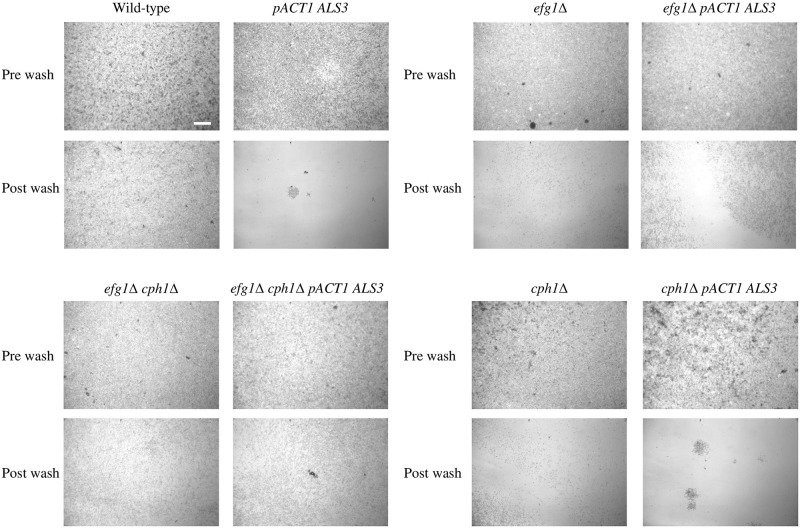
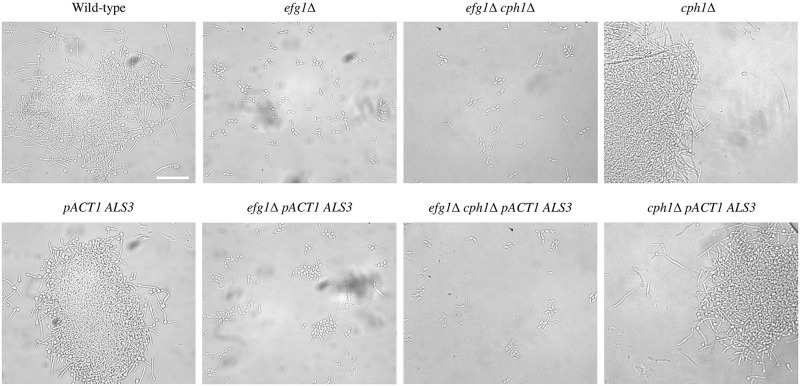
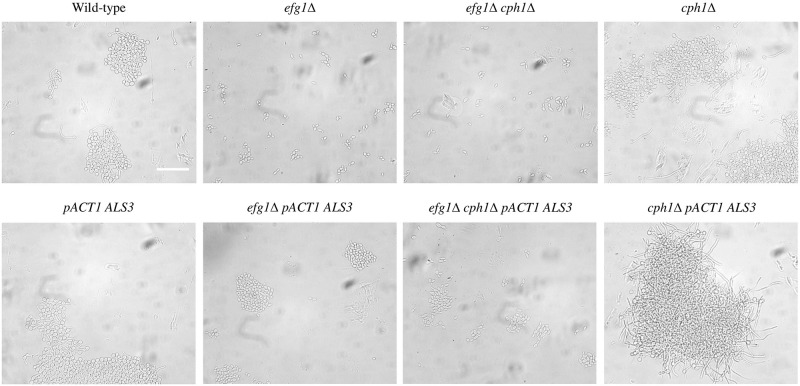
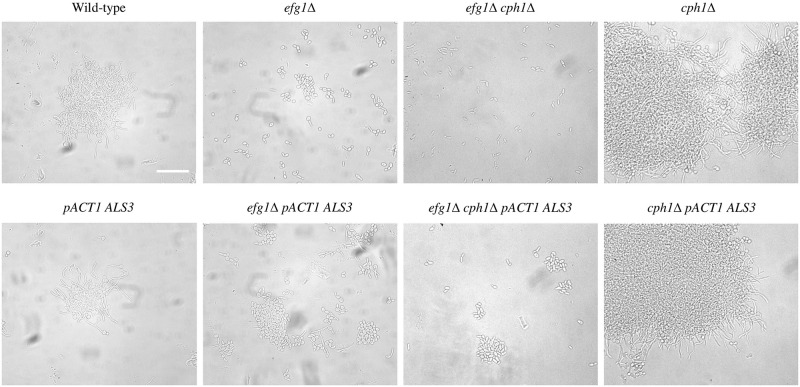
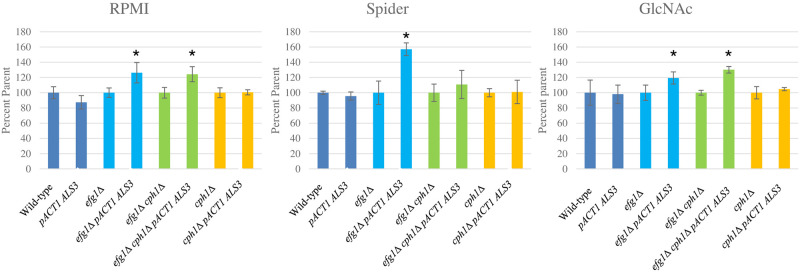
Adhesion to living and non-living surfaces is an important virulence trait of the fungal pathogen Candida albicans. Biofilm formation in this organism depends on the expression of a number of cell surface proteins including the hypha-specific protein Als3p. Loss of ALS3 impairs biofilm formation and decreases cell-cell adhesion. We wanted to test whether constitutively expressing ALS3 could compensate for defects in adhesion and biofilm formation observed in mutant strains that lack key transcriptional regulators of biofilm formation Efg1p and Cph1p. We found that ALS3 improved adhesion and biofilm formation in the efg1 Δ and efg1 Δ cph1 Δ mutant strains, but had less effect on the cph1 Δ strain.
Overview
The claims and statistics of this paper haven’t been checked yet.
Free: it reads the open-access text and checks the first 5 claims that cite a source we can check. Create a free account to check every claim.
Integrity signals
Registry
Cites
Statistics
Figures
Verification
Claims the paper makes
The claims and statistics of this paper haven’t been checked yet.
Free: it reads the open-access text and checks the first 5 claims that cite a source we can check. Create a free account to check every claim.
Claims other papers make about this one
Each is checked against this paper’s own text: does it say what the citing paper says it does?
The source backs part of the claim, not all of it — or backs it for a different population, condition or comparison.
In the citing paper
“A reduced expression of EFG1 and FLO8 decreases the synthesis of adhesion proteins (such as the Als family and Sap proteases) (33, 34).”
From Mitochondrial complex III subunit Qcr8 regulates the virulence and adhesion of Candida albicans by modulating mitochondrial function (2026) · cites this paper as [33]
Experimental — accuracy not yet measured
Self-check
Percentages, sums and reported differences re-computed from the paper’s own numbers.
The self-check needs the paper’s full text.
Citations
Cites
Epidemiology of Invasive Candidiasis: a Persistent Public Health Problem
Pfaller, M. A., & Diekema, D. J. (2007) · Clinical Microbiology Reviews · doi:10.1128/cmr.00029-06 · Cited by 4,174 · cited 1×
“Introduction Candida albicans is an opportunistic fungal pathogen that is a major threat to human health, particularly through its ability to cause disseminated, potentially fatal, infections in immune compromised patients [1].”
BackgroundNonfilamentous C. albicans Mutants Are Avirulent
Lo, H.-J., Köhler, J. R., DiDomenico, B., Loebenberg, D., Cacciapuoti, A., & Fink, G. R. (1997) · Cell · doi:10.1016/s0092-8674(00)80358-x · Cited by 1,809
Gillum, A. M., Tsay, E. Y. H., & Kirsch, D. R. (1984) · Molecular and General Genetics MGG · doi:10.1007/bf00328721 · Cited by 1,251 · cited 1×
“Strain Parent Genotype(1) Reference Wild-type (SC5314) Wild-type [26] pACT1 ALS3 SC5314 RPS1/RPS1::SAT1- pACT1-ALS3 This study.”
Growth of Candida albicans hyphae
Sudbery, P. E. (2011) · Nature Reviews Microbiology · doi:10.1038/nrmicro2636 · Cited by 1,110 · cited 5×
“EFG1 encodes a transcription factor that is the focus of the cAMP pathway although it is also involved in responses to pH and N-acetyl glucosamine [4].”
BackgroundInfluentialMicrotiter Dish Biofilm Formation Assay
O'Toole, G. A. (2011) · Journal of Visualized Experiments · doi:10.3791/2437 · Cited by 1,108 · cited 1×
“Biofilms were washed with sterile water to remove excess stain, then destained with 33% acetic acid [32].”
MethodPierce, C. G., Uppuluri, P., Tristan, A. R., Wormley, F. L., Mowat, E., Ramage, G., & Lopez-Ribot, J. L. (2008) · Nature Protocols · doi:10.1038/nprot.2008.141 · Cited by 1,041 · cited 1×
“Biofilm formation was assessed using the 96-well plate model described in [31].”
MethodAndes, D. R., Safdar, N., Baddley, J. W., Playford, G., Reboli, A. C., Rex, J. H., Sobel, J. D., Pappas, P. G., Kullberg, B. J., & for the Mycoses Study Group (2012) · Clinical Infectious Diseases · doi:10.1093/cid/cis021 · Cited by 793 · cited 1×
“Biofilms on indwelling venous catheters can be a source and reservoir for disseminated infection [2].”
BackgroundSuppression of Hyphal Formation in Candida albicans by Mutation of a STE12 Homolog
Liu, H., Köhler, J., & Fink, G. R. (1994) · Science · doi:10.1126/science.7992058 · Cited by 786 · cited 4×
“(RPMI-1640 buffered with MOPS, Spider [18] or GlcNAc [30]) and grown shaking for at 37ºC for 4h. Cells were then removed and photographed.”
BackgroundMethodInfluentialThe SAT1 flipper, an optimized tool for gene disruption in Candida albicans
Reuß, O., Vik, Å., Kolter, R., & Morschhäuser, J. (2004) · Gene · doi:10.1016/j.gene.2004.06.021 · Cited by 742
A Recently Evolved Transcriptional Network Controls Biofilm Development in Candida albicans
Nobile, C. J., Fox, E. P., Nett, J. E., Sorrells, T. R., Mitrovich, Q. M., Hernday, A. D., Tuch, B. B., Andes, D. R., & Johnson, A. D. (2012) · Cell · doi:10.1016/j.cell.2011.10.048 · Cited by 711
Als3 Is a Candida albicans Invasin That Binds to Cadherins and Induces Endocytosis by Host Cells
Phan, Q. T., Myers, C. L., Fu, Y., Sheppard, D. C., Yeaman, M. R., Welch, W. H., Ibrahim, A. S., Edwards, J. E., & Filler, S. G. (2007) · PLoS Biology · doi:10.1371/journal.pbio.0050064 · Cited by 641 · cited 1×
“Als3p has been implicated in a variety of virulence roles including binding to host cadherins [6], binding to ferritin [7] and biofilm formation [8], but is dispensable for virulence in a murine tail-vein injection model of disseminated candidiasis where biofilm formation may be less important [9].”
BackgroundStoldt, V. R. (1997) · The EMBO Journal · doi:10.1093/emboj/16.8.1982 · Cited by 598 · cited 1×
“An efg1Δ mutant is unable to form hyphae in most inducing conditions [14] and is defective in biofilm formation [15], although it is hyperfilamentous in embedded conditions [16].”
BackgroundCritical Role of Bcr1-Dependent Adhesins in C. albicans Biofilm Formation In Vitro and In Vivo
Nobile, C. J., Andes, D. R., Nett, J. E., Smith, F. J., Yue, F., Phan, Q.-T., Edwards, J. E., Filler, S. G., & Mitchell, A. P. (2006) · PLoS Pathogens · doi:10.1371/journal.ppat.0020063 · Cited by 507
García-Sánchez, S., Aubert, S., Iraqui, I., Janbon, G., Ghigo, J.-M., & d'Enfert, C. (2004) · Eukaryotic Cell · doi:10.1128/ec.3.2.536-545.2004 · Cited by 353
Ramage, G., VandeWalle, K., López-Ribot, J. L., & Wickes, B. L. (2002) · FEMS Microbiology Letters · doi:10.1016/s0378-1097(02)00853-4 · Cited by 334 · cited 5×
“The efg1Δ cph1Δ double mutant has a strong defect in hypha formation [20] and biofilm formation [15], although it retains some ability to adhere to glass [21].”
BackgroundInfluentialAlmeida, R. S., Brunke, S., Albrecht, A., Thewes, S., Laue, M., Edwards, J. E., Filler, S. G., & Hube, B. (2008) · PLoS Pathogens · doi:10.1371/journal.ppat.1000217 · Cited by 330 · cited 1×
“Als3p has been implicated in a variety of virulence roles including binding to host cadherins [6], binding to ferritin [7] and biofilm formation [8], but is dispensable for virulence in a murine tail-vein injection model of disseminated candidiasis where biofilm formation may be less important [9].”
BackgroundZhao, X., Oh, S.-H., Cheng, G., Green, C. B., Nuessen, J. A., Yeater, K., Leng, R. P., Brown, A. J. P., & Hoyer, L. L. (2004) · Microbiology · doi:10.1099/mic.0.26943-0 · Cited by 254 · cited 1×
“While loss of Als3p has a strong effect on biofilm formation on silicone elastomer, expression of other adhesins is not upregulated to compensate [9] and other members of the ALS family, while sharing some sequence similarity, have different patterns of expression [12] and appear to have specialized function [13].”
Staphylococcus aureus adherence to Candida albicans hyphae is mediated by the hyphal adhesin Als3p
Peters, B. M., Ovchinnikova, E. S., Krom, B. P., Schlecht, L. M., Zhou, H., Hoyer, L. L., Busscher, H. J., van der Mei, H. C., Jabra-Rizk, M. A., & Shirtliff, M. E. (2012) · Microbiology · doi:10.1099/mic.0.062109-0 · Cited by 250
Hoyer, L. L., & Cota, E. (2016) · Frontiers in Microbiology · doi:10.3389/fmicb.2016.00280 · Cited by 213 · cited 2×
“While loss of Als3p has a strong effect on biofilm formation on silicone elastomer, expression of other adhesins is not upregulated to compensate [9] and other members of the ALS family, while sharing some sequence similarity, have different patterns of expression [12] and appear to have specialized function [13].”
BackgroundKöhler, G. A., White, T. C., & Agabian, N. (1997) · Journal of Bacteriology · doi:10.1128/jb.179.7.2331-2338.1997 · Cited by 190 · cited 1×
“To construct constitutive ALS3 expression strains, Candida albicans strains were transformed using a modified electroporation transformation method [28] using linearized plasmid CIpSATSAALS3 to integrate a constitutively-expressed copy of ALS3 at an ectopic site.”
MethodCandida albicans Als3p is required for wild-type biofilm formation on silicone elastomer surfaces
Zhao, X., Daniels, K. J., Oh, S.-H., Green, C. B., Yeater, K. M., Soll, D. R., & Hoyer, L. L. (2006) · Microbiology · doi:10.1099/mic.0.28959-0 · Cited by 173
Argimón, S., Wishart, J. A., Leng, R., Macaskill, S., Mavor, A., Alexandris, T., Nicholls, S., Knight, A. W., Enjalbert, B., Walmsley, R., et al. (2007) · Eukaryotic Cell · doi:10.1128/ec.00340-06 · Cited by 128 · cited 3×
“We wanted to test whether constitutively expressing ALS3 in strains lacking EFG1 and/or CPH1 could rescue adhesion or biofilm formation defects in various media.”
BackgroundLane, S., Zhou, S., Pan, T., Dai, Q., & Liu, H. (2001) · Molecular and Cellular Biology · doi:10.1128/mcb.21.19.6418-6428.2001 · Cited by 119 · cited 1×
“Loss of CPH1 results in hypha formation defects in some conditions, such as on solid Spider and Lee media [18] and synthetic succinate [19], but does not impair hypha formation in others, like liquid Lee medium [18].”
BackgroundThe Transcriptional Regulator Nrg1p Controls Candida albicans Biofilm Formation and Dispersion
Uppuluri, P., Pierce, C. G., Thomas, D. P., Bubeck, S. S., Saville, S. P., & Lopez-Ribot, J. L. (2010) · Eukaryotic Cell · doi:10.1128/ec.00111-10 · Cited by 110 · cited 1×
“yeast form have substantially reduced biofilm forming ability [15, 35] as do mutants in surface adhesins like Als3p [8].”
BackgroundSelf-citationGiusani, A. D., Vinces, M., & Kumamoto, C. A. (2002) · Genetics · doi:10.1093/genetics/160.4.1749 · Cited by 96
Plasticity of Candida albicans Biofilms
Soll, D. R., & Daniels, K. J. (2016) · Microbiology and Molecular Biology Reviews · doi:10.1128/mmbr.00068-15 · Cited by 78 · cited 1×
“Biofilm formation is important for growing on implanted medical devices and causing disease, and also for mating [34].”
BackgroundAdhesion of Candida albicans to Endothelial Cells under Physiological Conditions of Flow
Grubb, S. E. W., Murdoch, C., Sudbery, P. E., Saville, S. P., Lopez-Ribot, J. L., & Thornhill, M. H. (2009) · Infection and Immunity · doi:10.1128/iai.00518-09 · Cited by 66
Van Dyck, K., Viela, F., Mathelié-Guinlet, M., Demuyser, L., Hauben, E., Jabra-Rizk, M. A., Vande Velde, G., Dufrêne, Y. F., Krom, B. P., & Van Dijck, P. (2021) · Frontiers in Cellular and Infection Microbiology · doi:10.3389/fcimb.2020.624839 · Cited by 61
Cleary, I. A., Reinhard, S. M., Miller, C. L., Murdoch, C., Thornhill, M. H., Lazzell, A. L., Monteagudo, C., Thomas, D. P., & Saville, S. P. (2011) · Microbiology · doi:10.1099/mic.0.046326-0 · Cited by 56 · cited 2×
“While loss of Als3p has a strong effect on biofilm formation on silicone elastomer, expression of other adhesins is not upregulated to compensate [9] and other members of the ALS family, while sharing some sequence similarity, have different patterns of expression [12] and appear to have specialized function [13].”
Self-citationGlazier, V. E., Murante, T., Murante, D., Koselny, K., Liu, Y., Kim, D., Koo, H., & Krysan, D. J. (2017) · PLOS Genetics · doi:10.1371/journal.pgen.1006948 · Cited by 56
Cota, E., & Hoyer, L. L. (2015) · Future Microbiology · doi:10.2217/fmb.15.79 · Cited by 45 · cited 1×
“Alternatively, since different members of the Als family have different temporal and physical distributions [36], perhaps constitutive Als3p production disrupts the normal distribution of cell wall proteins in a way that actually causes a decrease in adhesion.”
BackgroundJung, P., Mischo, C. E., Gunaratnam, G., Spengler, C., Becker, S. L., Hube, B., Jacobs, K., & Bischoff, M. (2020) · Virulence · doi:10.1080/21505594.2020.1836902 · Cited by 36 · cited 1×
“albicans adhesion to surfaces and to other cells is mediated by surface proteins [3].”
BackgroundPseudohyphal Regulation by the Transcription Factor Rfg1p in Candida albicans
Cleary, I. A., Mulabagal, P., Reinhard, S. M., Yadev, N. P., Murdoch, C., Thornhill, M. H., Lazzell, A. L., Monteagudo, C. C., Thomas, D. P., & Saville, S. P. (2010) · Eukaryotic Cell · doi:10.1128/ec.00088-10 · Cited by 34 · cited 2×
“The two pieces were sequentially cloned into plasmid CIpSATSA [27] using the restriction sites in the primers and an internal BSP14071 site in the overlapping region of the two fragments.”
MethodSelf-citationMorphological studies of N-acetylglucosamine induced germ tube formation by Candida albicans
Hubbard, M. J., Sullivan, P. A., & Shepherd, M. G. (1985) · Canadian Journal of Microbiology · doi:10.1139/m85-132 · Cited by 29 · cited 9×
“(RPMI-1640 buffered with MOPS, Spider [18] or GlcNAc [30]) and grown shaking for at 37oC for 4h.”
MethodInfluentialA role for Efg1p in Candida albicans interactions with extracellular matrices
Saville, S. P., Thomas, D. P., & López Ribot, J. L. (2006) · FEMS Microbiology Letters · doi:10.1111/j.1574-6968.2006.00109.x · Cited by 24 · cited 1×
“Interestingly, the efg1Δ mutant cells retain invasive characteristics in spite of their reduced adhesive properties [17].”
BackgroundSelf-citationOh, S.-H., & Hoyer, L. L. (2022) · Frontiers in Cellular and Infection Microbiology · doi:10.3389/fcimb.2022.890839 · Cited by 12
Cited by
Tuan, D. A., & Masák, J. (2026) · Current Microbiology · doi:10.1007/s00284-025-04713-0 · Cited by 10
Berberine Interferes with the Molecular Landscape of Biofilm-Driven Pathogenicity
Duda-Madej, A., Bazan, H., Łabaz, J. P., & Viscardi, S. (2026) · Pathogens · doi:10.3390/pathogens15020194 · Cited by 9
“Yeasts devoid of the correct ALS3 or HWP1 gene cannot form a proper biofilm and their cell-to-cell adhesion is decreased [146,147].”
dos Santos, A. T. L., de Freitas, M. A., da Silva, M. L. Q., Silva, F. D. S., dos Santos, A. G., Menêses, A. V. S., Farias, N. S., Carneiro, J. N. P., Fonseca, V. J. A., dos Santos, H. S., et al. (2025) · Biochimie · doi:10.1016/j.biochi.2025.03.004 · Cited by 8
The unfolded protein response is a potential therapeutic target in pathogenic fungi
Zhou, H., Zhang, J., Wang, R., Huang, J., Xin, C., & Song, Z. (2025) · FEBS Journal · doi:10.1111/febs.70100 · Cited by 8
Rahbari, F. Z., Shams‐Ghahfarokhi, M., Baheiraei, N., & Razzaghi‐Abyaneh, M. (2025) · Journal of Drug Delivery Science and Technology · doi:10.1016/j.jddst.2025.107451 · Cited by 5
Metadata
- Authors
- Schena, N. C., Baker, K. M., Stark, A. A., Thomas, D. P., & Cleary, I. A.
- Affiliations
- Grand Valley State University (US)
- Corresponding author
- Cleary, Ian A.
- Venue
- PLOS ONE
- Publisher
- Public Library of Science (PLoS)
- Published
- 2023-07-13
- Volume
- 18
- Issue
- 7
- Pages
- e0286547
- ISSN
- 1932-6203 (ISSN-L)
- PMC
- PMC10343153
- OpenAlex
- W4384161762
- Cited by
- 15
- References
- 37
- Citations by year
- 2026: 9 · 2025: 5 · 2024: 1
- FWCI
- 3.09
- Type
- journal article
- Language
- en
- Open access
- gold
- doi.org
- Licence
- Locations
- PLoS ONE (publishedVersion, cc-by)
- PubMed Central (publishedVersion, cc-by)
- PubMed (publishedVersion)
- DOAJ (DOAJ: Directory of Open Access Journals) (submittedVersion, cc-by-sa)
- Funders
- Grand Valley State University
- Topics
- Health Sciences › Medicine › Infectious Diseases › Antifungal resistance and susceptibility
- Life Sciences › Biochemistry, Genetics and Molecular Biology › Molecular Biology › Fungal and yeast genetics research
- Health Sciences › Medicine › Infectious Diseases › Fungal Infections and Studies
- Keywords
- ALS3, Candida albicans, cell adhesion, biofilm formation, constitutive expression, transcription factors, virulence
- MeSH terms
- Candida albicans, Cell Adhesion, Fungal Proteins, Membrane Proteins, Biofilms
About these checks
Registry, retraction, Cites and statistics results are computed, not judged, with one exception: a printed reference that no index lists is read once by a model before it counts as a citation error. Claims are extracted by a model and kept only when their quote appears verbatim in the text; each cited source is then checked, with a model’s help, for whether it says what the claim relies on. Those verdicts can be wrong — read the claim’s quote and the cited source before relying on one.
Statistics and arithmetic are recomputed, not judged.
Confidence bands are shown only for fields calibrated on our annotated test set. None is calibrated yet, so no band is shown.
What counts as a claim ›How we measure confidence ›How we check this ›
Are you an author, or do you see a problem with this page? Request a review
Data sources
Bibliographic data: Semantic Scholar, OpenAlex, Crossref.
Contains information from the Semantic Scholar Academic Graph Datasets, made available under the ODC Attribution License (ODC-BY 1.0).
Semantic Scholar’s data is described in: Kinney, R., et al. (2023). The Semantic Scholar Open Data Platform. arXiv:2301.10140.
