

Optimal selection of resampling methods for imbalanced data with high complexity
Open accessThe DOI matches its Crossref record; 33 of the 33 references it cites were found in a registry or an index.
Abstract
Class imbalance is a major problem in classification, wherein the decision boundary is easily biased toward the majority class. A data-level solution (resampling) is one possible solution to this problem. However, several studies have shown that resampling methods can deteriorate the classification performance. This is because of the overgeneralization problem, which occurs when samples produced by the oversampling technique that should be represented in the minority class domain are introduced into the majority-class domain. This study shows that the overgeneralization problem is aggravated in complex data settings and introduces two alternate approaches to mitigate it. The first approach involves incorporating a filtering method into oversampling. The second approach is to apply undersampling. The main objective of this study is to provide guidance on selecting optimal resampling methods in imbalanced and complex datasets to improve classification performance. Simulation studies and real data analyses were performed to compare the resampling results in various scenarios with different complexities, imbalances, and sample sizes. In the case of noncomplex datasets, undersampling was found to be optimal. However, in the case of complex datasets, applying a filtering method to delete misallocated examples was optimal. In conclusion, this study can aid researchers in selecting the optimal method for resampling complex datasets.
Overview
The claims and statistics of this paper haven’t been checked yet.
Free: it reads the open-access text and checks the first 5 claims that cite a source we can check. Create a free account to check every claim.
Integrity signals
Registry
Cites
Statistics
Figures









Verification
Claims the paper makes
The claims and statistics of this paper haven’t been checked yet.
Free: it reads the open-access text and checks the first 5 claims that cite a source we can check. Create a free account to check every claim.
Claims other papers make about this one
Each is checked against this paper’s own text: does it say what the citing paper says it does?
The cited source says what the claim attributes to it.
In the citing paper
“Random Under-Sampling, on the other hand, risks discarding potentially valuable data from the majority class, leading to information loss60.”
From Bias recognition and mitigation strategies in artificial intelligence healthcare applications (2025) · cites this paper as [60]
The check wasn’t confident either way, so it gives no verdict — never disputed.
In the citing paper
“However, the application of these approaches can result in a “fairness-accuracy trade-off”, as striving for equitable treatment across different groups may result in a reduction in overall model accuracy59,60.”
From Bias recognition and mitigation strategies in artificial intelligence healthcare applications (2025) · cites this paper as [60]
Experimental — accuracy not yet measured
Self-check
Percentages, sums and reported differences re-computed from the paper’s own numbers.
The self-check needs the paper’s full text.
Citations
Cites
SMOTE synthetic minority over-sampling technique
Chawla, N. V., Bowyer, K. W., Hall, L. O., & Kegelmeyer, W. P. (2002) · Journal of Artificial Intelligence Research · doi:10.1613/jair.953 · Cited by 32,865
UCI Machine Learning Repository
Asuncion, A. (2007) · Medical Entomology and Zoology · Cited by 25,410
Saito, T., & Rehmsmeier, M. (2015) · PLOS ONE · doi:10.1371/journal.pone.0118432 · Cited by 5,309
Borderline-SMOTE : A New Over-Sampling Method in Imbalanced Data Sets Learning
Han, H., Wang, W.-Y., & Mao, B.-H. (2005) · Lecture notes in computer science · doi:10.1007/11538059_91 · Cited by 4,331 · cited 1×
“Borderline SMOTE determines the best candidates for oversampling in the entire dataset prior to oversampling [20].”
BackgroundA study of the behavior of several methods for balancing machine learning training data
Batista, G. E. A. P. A., Prati, R. C., & Monard, M. C. (2004) · ACM SIGKDD Explorations Newsletter · doi:10.1145/1007730.1007735 · Cited by 4,203
The class imbalance problem: A systematic study1
Japkowicz, N., & Stephen, S. (2002) · Intelligent Data Analysis · doi:10.3233/ida-2002-6504 · Cited by 3,295
Addressing the Curse of Imbalanced Training Sets: One-Sided Selection.
Kubát, M., & Matwin, S. (1997) · Cited by 2,230
The condensed nearest neighbor rule (Corresp.)
Hart, P. (1968) · IEEE Transactions on Information Theory · doi:10.1109/tit.1968.1054155 · Cited by 1,733
CLASSIFICATION OF IMBALANCED DATA: A REVIEW
SUN, Y., WONG, A. K. C., & KAMEL, M. S. (2009) · International Journal of Pattern Recognition and Artificial Intelligence · doi:10.1142/s0218001409007326 · Cited by 1,692 · cited 1×
“The class imbalance problem is defined as the classification of datasets with unequal class distributions [1].”
BackgroundImproving imbalanced learning through a heuristic oversampling method based on k-means and SMOTE
Douzas, G., Bacao, F., & Last, F. (2018) · Information Sciences · doi:10.1016/j.ins.2018.06.056 · Cited by 1,277
Research works printed but not linked: 8
- H He, Imbalanced learning: foundations, algorithms, and applications, 187
- T Herawan, 2013, Proceedings of the first international conference on advanced data and information engineering
- XW Chen, 2005, Pruning support vectors for imbalanced data classification. InProceedings. 2005, IEEE International Joint Conference on Neural Networks, 3, 1883
- R Yan, 2003, On predicting rare classes with SVM ensembles in scene classification. In2003, IEEE International Conference on Acoustics, Speech, and Signal Processing, 3, III
- H He, 2008, ADASYN: Adaptive synthetic sampling approach for imbalanced learning. In2008, IEEE international joint conference on neural networks, 1322
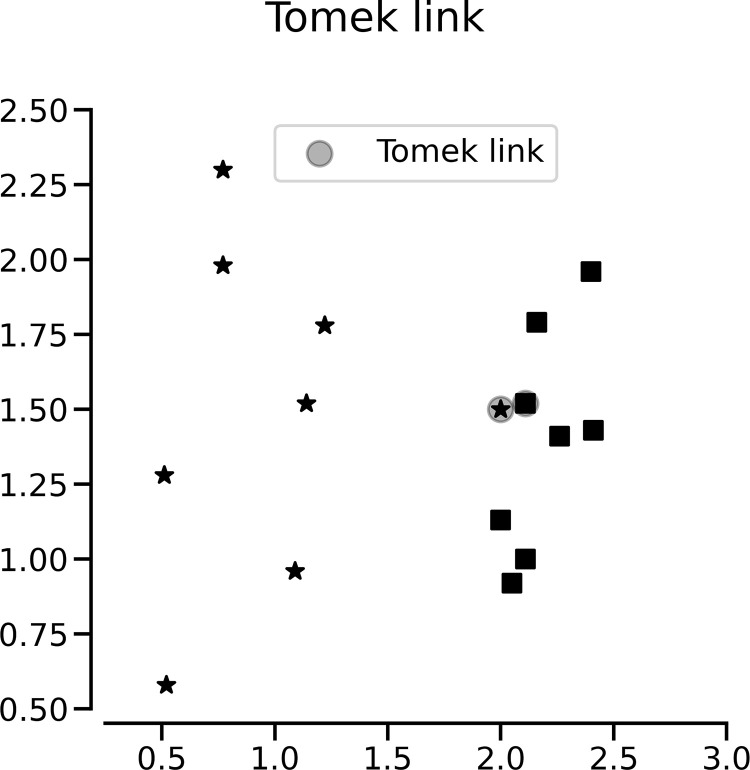
- I. Tomek, 1976, Two modifications of CNN,” In Systems, Man, and Cybernetics, IEEE Transactions on, 6, 769
- D. Wilson, 1972, Asymptotic” Properties of Nearest Neighbor Rules Using Edited Data,” In IEEE Transactions on Systems, Man, and Cybernetrics, 2, 408
- J Davis, 2006, The relationship between Precision-Recall and ROC curves. InProceedings of the 23rd international conference on, Machine learning, 233
Cited by
Bias recognition and mitigation strategies in artificial intelligence healthcare applications
Hasanzadeh, F., Josephson, C. B., Waters, G., Adedinsewo, D., Azizi, Z., & White, J. A. (2025) · npj Digital Medicine · doi:10.1038/s41746-025-01503-7 · Cited by 320
“However, the application of these approaches can result in a “ fairness-accuracy trade-off ” , as striving for equitable treatment across different groups may result in a reduction in overall model accuracy 59,60 .”
Advancements and future outlook of Artificial Intelligence in energy and climate change modeling
Shobanke, M., Bhatt, M., & Shittu, E. (2025) · Advances in Applied Energy · doi:10.1016/j.adapen.2025.100211 · Cited by 105
Modern Deep Learning Techniques for Big Medical Data Processing in Cloud
Shakor, M. Y., & Khaleel, M. I. (2025) · IEEE Access · doi:10.1109/access.2025.3556327 · Cited by 32
“Some of these methodologies therefore range from oversampling-including replication of underrepresented classes-to undersampling, including a reduction in frequency of overrepresented classes, as a way of reducing this effect [82].”
Amanollahi, M., Jameie, M., Looha, M. A., Basti, F. A., Cattarinussi, G., Moghaddam, H. S., Camillo, F. D., Akhondzadeh, S., Pigoni, A., Sambataro, F., et al. (2024) · Journal of Affective Disorders · doi:10.1016/j.jad.2024.06.061 · Cited by 27
Farinella, R., Felici, A., Peduzzi, G., Testoni, S. G. G., Costello, E., Aretini, P., Blázquez‐Encinas, R., Oz, E., Pastore, A., Tacelli, M., et al. (2025) · Seminars in Cancer Biology · doi:10.1016/j.semcancer.2025.03.004 · Cited by 18
Metadata
- Authors
- Kim, A., & Jung, I.
- Affiliations
- Yonsei University (KR)
- Corresponding author
- Jung, Inkyung
- Venue
- PLOS ONE
- Publisher
- Public Library of Science (PLoS)
- Published
- 2023-07-27
- Volume
- 18
- Issue
- 7
- Pages
- e0288540
- ISSN
- 1932-6203 (ISSN-L)
- PMC
- PMC10374143
- OpenAlex
- W4385322723
- Cited by
- 28
- References
- 31
- Citations by year
- 2026: 9 · 2025: 13 · 2024: 6
- FWCI
- 2.64
- Type
- journal article
- Language
- en
- Open access
- gold
- doi.org
- Licence
- Locations
- PLoS ONE (publishedVersion, cc-by)
- PubMed Central (publishedVersion, cc-by)
- PubMed (publishedVersion)
- RePEc: Research Papers in Economics (submittedVersion)
- YUHSpace (Yonsei University Medical Library) (submittedVersion, cc-by-nc-nd)
- Topics
- Physical Sciences › Computer Science › Artificial Intelligence › Imbalanced Data Classification Techniques
- Physical Sciences › Computer Science › Artificial Intelligence › Machine Learning and Data Classification
- Social Sciences › Business, Management and Accounting › Marketing › Customer churn and segmentation
- Keywords
- class imbalance, resampling, oversampling, undersampling, overgeneralization, complex data, minority class, classification performance
- MeSH terms
- Algorithms, Computer Simulation, Sample Size
About these checks
Registry, retraction, Cites and statistics results are computed, not judged, with one exception: a printed reference that no index lists is read once by a model before it counts as a citation error. Claims are extracted by a model and kept only when their quote appears verbatim in the text; each cited source is then checked, with a model’s help, for whether it says what the claim relies on. Those verdicts can be wrong — read the claim’s quote and the cited source before relying on one.
Statistics and arithmetic are recomputed, not judged.
Confidence bands are shown only for fields calibrated on our annotated test set. None is calibrated yet, so no band is shown.
What counts as a claim ›How we measure confidence ›How we check this ›
Are you an author, or do you see a problem with this page? Request a review
How to cite
Cite CoChat for the checks on this page, and the paper for its own findings.
- This page
- CoChat. (2026). Citation check: Optimal selection of resampling methods for imbalanced data with high complexity. https://app.cochat.ai/papers/10.1371/journal.pone.0288540
- The paper
- Kim, A., & Jung, I. (2023). Optimal selection of resampling methods for imbalanced data with high complexity. PLOS ONE. https://doi.org/10.1371/journal.pone.0288540
Data sources
Bibliographic data: Semantic Scholar, OpenAlex, Crossref.
Contains information from the Semantic Scholar Academic Graph Datasets, made available under the ODC Attribution License (ODC-BY 1.0).
Semantic Scholar’s data is described in: Kinney, R., et al. (2023). The Semantic Scholar Open Data Platform. arXiv:2301.10140.
