

Artificial intelligence in medicine: A comprehensive survey of medical doctor’s perspectives in Portugal
Open accessThe DOI matches its Crossref record; 110 of the 111 references it cites were found in a registry or an index.
Abstract
Artificial Intelligence (AI) is increasingly influential across various sectors, including healthcare, with the potential to revolutionize clinical practice. However, risks associated with AI adoption in medicine have also been identified. Despite the general understanding that AI will impact healthcare, studies that assess the perceptions of medical doctors about AI use in medicine are still scarce. We set out to survey the medical doctors licensed to practice medicine in Portugal about the impact, advantages, and disadvantages of AI adoption in clinical practice. We designed an observational, descriptive, cross-sectional study with a quantitative approach and developed an online survey which addressed the following aspects: impact on healthcare quality of the extraction and processing of health data via AI; delegation of clinical procedures on AI tools; perception of the impact of AI in clinical practice; perceived advantages of using AI in clinical practice; perceived disadvantages of using AI in clinical practice and predisposition to adopt AI in professional activity. Our sample was also subject to demographic, professional and digital use and proficiency characterization. We obtained 1013 valid, fully answered questionnaires (sample representativeness of 99%, confidence level (p< 0.01), for the total universe of medical doctors licensed to practice in Portugal). Our results reveal that, in general terms, the medical community surveyed is optimistic about AI use in medicine and are predisposed to adopt it while still aware of some disadvantages and challenges to AI use in healthcare. Most medical doctors surveyed are also convinced that AI should be part of medical formation. These findings contribute to facilitating the professional integration of AI in medical practice in Portugal, aiding the seamless integration of AI into clinical workflows by leveraging its perceived strengths according to healthcare professionals. This study identifies challenges such as gaps in medical curricula, which hinder the adoption of AI applications due to inadequate digital health training. Due to high professional integration in the healthcare sector, particularly within the European Union, our results are also relevant for other jurisdictions and across diverse healthcare systems.
Overview
The claims and statistics of this paper haven’t been checked yet.
Free: it reads the open-access text and checks the first 5 claims that cite a source we can check. Create a free account to check every claim.
Integrity signals
Registry
Cites
Statistics
Figures
Verification
Claims the paper makes
The claims and statistics of this paper haven’t been checked yet.
Free: it reads the open-access text and checks the first 5 claims that cite a source we can check. Create a free account to check every claim.
Claims other papers make about this one
Each is checked against this paper’s own text: does it say what the citing paper says it does?
The source backs part of the claim, not all of it — or backs it for a different population, condition or comparison.
In the citing paper
“Furthermore, the professionals believe that AI would increase their efficiency in managing medical information and knowledge, by being granted quick access to vast amounts of knowledge with the ability to scan and summarize relevant information effectively with the help of AI [29, 30, 46–49] or being able to handle big-data records in real-time [50, 51].”
From Healthcare professionals’ perspectives on artificial intelligence in patient care: a systematic review of hindering and facilitating factors on different levels (2025) · cites this paper as [47]
Experimental — accuracy not yet measuredThe cited source says what the claim attributes to it.
In the citing paper
“Ten studies describe factors relating to AI’s impact on their clinical tasks, such as an overall decreased time spent on repetitive medical and non-medical tasks [30, 40, 46, 52–55] and the possibility to delegate other tasks to AI [47], which in turn could allow them to focus more time and focus on direct interaction with their patients or other perceived critical tasks [45, 56].”
Self-check
Percentages, sums and reported differences re-computed from the paper’s own numbers.
The self-check needs the paper’s full text.
Citations
Cites
3 retracted
Influential Usage of Big Data and Artificial Intelligence in Healthcare
Yang, Y. C., Islam, S. U., Noor, A., Khan, S., Afsar, W., & Nazir, S. (2021) · Computational and Mathematical Methods in Medicine · doi:10.1155/2021/5812499 · Cited by 68
RetractedKamruzzaman, M. M., Alrashdi, I., & Alqazzaz, A. (2022) · Journal of Healthcare Engineering · doi:10.1155/2022/2950699 · Cited by 68
RetractedDeep Learning in Healthcare System for Quality of Service
Bordoloi, D., Singh, V. B., Sanober, S., Buhari, S. M., Ujjan, J. A., & Boddu, R. (2022) · Journal of Healthcare Engineering · doi:10.1155/2022/8169203 · Cited by 45
RetractedHigh-performance medicine: the convergence of human and artificial intelligence
Topol, E. J. (2019) · Nature Medicine · doi:10.1038/s41591-018-0300-7 · Cited by 10,450
Trust in Automation: Designing for Appropriate Reliance
Lee, J. D., & See, K. A. (2004) · Human Factors: The Journal of the Human Factors and Ergonomics Society · doi:10.1518/hfes.46.1.50_30392 · Cited by 6,605
Artificial intelligence in healthcare: past, present and future
Jiang, F., Jiang, Y., Zhi, H., Dong, Y., Li, H., Ma, S., Wang, Y., Dong, Q., Shen, H., & Wang, Y. (2017) · Stroke and Vascular Neurology · doi:10.1136/svn-2017-000101 · Cited by 4,837 · cited 2×
“AI technology is capable of highlighting hidden health information in large databases in order to aid clinical decision-making, which can help reduce misdiagnoses that are inevitable to human practice [5, 14, 94, 95].”
BackgroundKaplan, A., & Haenlein, M. (2019) · Business Horizons · doi:10.1016/j.bushor.2018.08.004 · Cited by 3,140
Zeng, X., Zhang, Y., Kwong, J. S. W., Zhang, C., Li, S., Sun, F., Niu, Y., & Du, L. (2015) · Journal of Evidence-Based Medicine · doi:10.1111/jebm.12141 · Cited by 2,082
Precision medicine, AI, and the future of personalized health care
Johnson, K. B., Wei, W., Weeraratne, D., Frisse, M. E., Misulis, K., Rhee, K., Zhao, J., & Snowdon, J. L. (2021) · Clinical and Translational Science · doi:10.1111/cts.12884 · Cited by 1,854
Privacy in the age of medical big data
Price, W. N., & Cohen, I. G. (2019) · Nature Medicine · doi:10.1038/s41591-018-0272-7 · Cited by 1,522
Research works printed but not linked: 11
- Bryson JJ. The Past Decade and Future of AI’s Impact on Society. Towards a New Enlightenment? A Transcendent Decade. Madrid: Turner; 2019.
- Mendes RD. Artificial Intelligence: expert systems in information management. Ciência da Informação. 1997; 26(1).
- Dean AG, Sullivan KM SM. OpenEpi Menu [Internet]. OpenEpi: Open Source Epidemiologic Statistics for Public Health. 2013 [cited 2022 Jun 10]. Available from: https://www.openepi.com/Menu/OE_Menu.htm
- Lorenzetti J, Trindade LL, de Pires DEP, Ramos FRS. Technology, technological innovation and health: A necessary reflection. Texto e Context Enferm. 2012; 21(2).
- Hall JA. Affective and Nonverbal Aspects of the Medical Visit. In: The Medical Interview Frontiers of Primary Care. New York: Springer; 1995.
- Topol EJ. Deep medicine. New York: Basic Books; 2019.
- Grant M, Hill S. Improving outcomes through personalised medicine: Working at the cutting edge of science to improve patients’ lives. 2016.
- European Commission. Study on eHealth, interoperability of health data and artificial intelligence for health and care in the European Union. Lot 2: artificial intelligence for health and care in the EU. Final study report. First edit. Brussels: Luxembourg: Publications Office of the European Union; 2021. 66 p.
- European Commission. Study on eHealth, interoperability of health data and artificial intelligence for health and care in the European Union. Lot 2: artificial intelligence for health and care in the EU. Country Factsheets. First edit. Brussels: Luxembourg: Publications Office of the European Union, 2021; 2021. 66 p.
- Kanheman D. “Thinking: Fast and Slow.” New York: Farrar, Straus and Giroux; 2011.
- Matheny M., Israni S. T., Ahmed M. WD. Artificial Intelligence in health care—the hope, the hype, the promise, the peril. Nor Cent E-health Res. 2019; 39146448
Cited by
Gala, D., Behl, H., Shah, M., & Makaryus, A. N. (2024) · Healthcare · doi:10.3390/healthcare12040481 · Cited by 183
“Overall, the integration of AI into medical record documentation promises to streamline administrative tasks, enhance data accuracy, and free up valuable time for healthcare professionals to focus on providing high-quality patient-centered care [42].”
Abdelwanis, M., Simsekler, M. C. E., Gabor, A. F., Sleptchenko, A., & Omar, M. (2025) · Safety Science · doi:10.1016/j.ssci.2025.107028 · Cited by 102
Nia, M. F., Ahmadi, M., & Irankhah, E. (2025) · Frontiers in Dental Medicine · doi:10.3389/fdmed.2024.1456208 · Cited by 82
Al-Balushi, H. A. A., Singh, H., & Saleem, I. (2025) · Society and Business Review · doi:10.1108/sbr-07-2024-0249 · Cited by 66
Henzler, D., Schmidt, S., Koçar, A., Herdegen, S., Lindinger, G. L., Maris, M. T., Bak, M. A. R., Willems, D. L., Tan, H. L., Lauerer, M., et al. (2025) · BMC Health Services Research · doi:10.1186/s12913-025-12664-2 · Cited by 54
“AI's lack of empathy and human touch, considered essential in healthcare, can diminish this relationship [30, 32, 46, 47, 52, 77, 78, 82, 83].”
InfluentialYousif, M., Asghar, S., Akbar, J., Masood, I., Arshad, M. R., Naeem, J., Azam, A., & Iqbal, Z. (2024) · BMC Health Services Research · doi:10.1186/s12913-024-11667-9 · Cited by 53
“The result is similar to a study conducted by Ana Rita Pedro in Portugal [32].”
ResultExploring geriatric nurses' perspectives on the adoption of AI in elderly care a qualitative study
Badawy, W., & Shaban, M. (2024) · Geriatric Nursing · doi:10.1016/j.gerinurse.2024.10.078 · Cited by 49
Healthcare ethics and artificial intelligence: a UK doctor survey
Warrington, D. J., & Holm, S. (2024) · BMJ Open · doi:10.1136/bmjopen-2024-089090 · Cited by 28
“15 Due to these new types of AI being so readily available and the potential multitude of uses in healthcare and by doctors, we designed this research survey to understand how doctors in the UK are using AI after the easy availability of LLMs and their opinions on its use, their concerns, how they…”
Pedersen, M. R. V., Kusk, M. W., Lysdahlgaard, S., Mork-Knudsen, H., Malamateniou, C., & Jensen, J. (2024) · Radiography · doi:10.1016/j.radi.2024.04.020 · Cited by 28
A survey analysis of the adoption of large language models among pathologists
Laohawetwanit, T., Pinto, D. G., & Bychkov, A. (2024) · American Journal of Clinical Pathology · doi:10.1093/ajcp/aqae093 · Cited by 21
The Role of Artificial Intelligence in Shaping the Doctor–Patient Relationship: A Narrative Review
Merlo, E. M., Sparacino, G., Silvestro, O., Giacobello, M. L., Meduri, A., Casciaro, M., Gangemi, S., & Martino, G. (2026) · Healthcare · doi:10.3390/healthcare14040481 · Cited by 18
“In total, 10 studies adopted a cross-sectional quantitative design [87,89,91,92, 94,99,101,104,106,107], 6 studies a qualitative cross-sectional design [88,90,95,96,103,105], three were prospective studies [93,98,102], one was a pilot randomised controlled trial [97], and one was an interventional…”
Future Implications of Artificial Intelligence in Medical Education
Bohler, F., Aggarwal, N., Peters, G., & Taranikanti, V. (2024) · Cureus · doi:10.7759/cureus.51859 · Cited by 17
Artificial Intelligence in Eye Movements Analysis for Alzheimer’s Disease Early Diagnosis
Maleki, S. F., Yousefi, M., Sobhi, N., Jafarizadeh, A., Alizadehsani, R., & Górriz, J. M. (2024) · Current Alzheimer Research · doi:10.2174/0115672050322607240529075641 · Cited by 19
Artificial intelligence utilization in the healthcare setting: perceptions of the public in the UAE
Jarab, A. S., Al-Qerem, W. A., Al‐Hajjeh, D. M., Heshmeh, S. A., Mukattash, T. L., Naser, A. Y., Alwafi, H. H., & Hamarneh, Y. N. A. (2024) · International Journal of Environmental Health Research · doi:10.1080/09603123.2024.2363472 · Cited by 19
“…of AI technology in healthcare among different populations, including medical students (Ahmad et al. 2023; Allam et al. 2023; Buabbas et al. 2023; Al Hadithy et al. 2023), healthcare professionals (Catalina et al. 2023; Pedro et al. 2023), and patients (Fritsch et al. 2022; Schaarup et al. 2023).”
Alomran, A. K., Alomar, M. F., Akhdher, A. A., Qanber, A. R. A., Albik, A. K., Alumran, A. K., & Abdulwahab, A. H. (2024) · World Journal of Orthopedics · doi:10.5312/wjo.v15.i11.1023 · Cited by 14
Breaking Barriers: AI’s Influence on Pathology and Oncology in Resource-Scarce Medical Systems
Vigdorovits, A., Köteles, M. M., Olteanu, G., & Pop, O. L. (2023) · Cancers · doi:10.3390/cancers15235692 · Cited by 13
“Several innovations, such as the advent of deep learning (DL), the increased digitalization Cancers 2023 , 15 , 5692 2 of 14 of patient data, and cloud computing, have swayed expert opinion and generated a greater level of openness towards to the adoption of AI [3].”
BackgroundPurohit, R., Saineni, S., Chalise, S., Mathai, R., Sambandam, R., Medina-Perez, R., & Bhanusali, N. (2024) · Rheumatology International · doi:10.1007/s00296-024-05737-8 · Cited by 14
Zavaleta‐Monestel, E., Anchía-Alfaro, A., Rojas-Chinchilla, C., Quesada-Loría, D., & Arguedas‐Chacón, S. (2025) · Cureus · doi:10.7759/cureus.78416 · Cited by 14
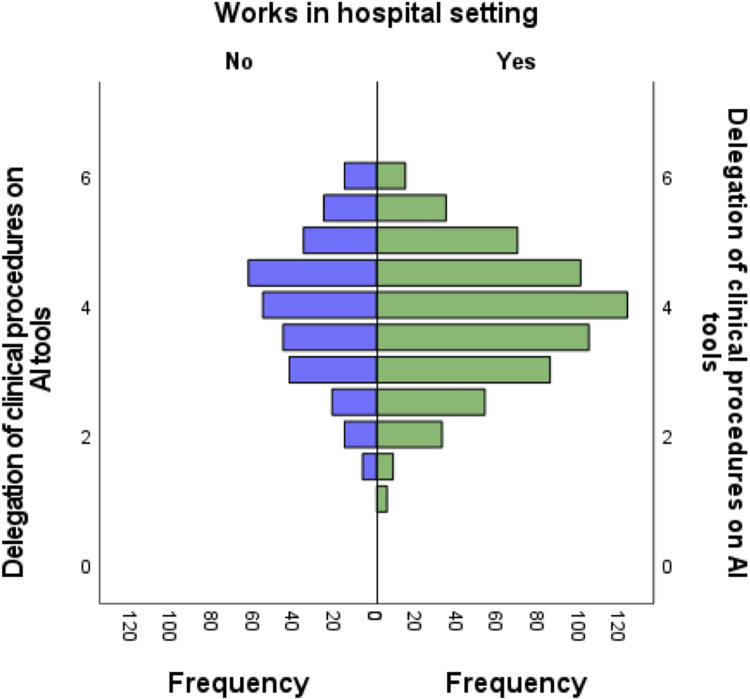
“In a study conducted in Portugal, where healthcare professionals were surveyed, participants indicated that most tasks, especially in hospital settings, could be delegated to AI tools[27].”
Nzeako, T. R., Elendu, C., Echefu, G. C., Olanisa, O., Kiladejo, A., & Bob-Manuel, E. D. (2025) · Annals of Medicine and Surgery · doi:10.1097/ms9.0000000000003602 · Cited by 11
“These advancements contribute to a more human-centered approach to medicine, enabling physicians to dedicate more time to direct patient care [ 46 ] .”
ChatGPT und die deutsche Facharztprüfung für Augenheilkunde: eine Evaluierung
Yaïci, R., Cieplucha, M., Bock, R., Moayed, F., Bechrakis, N., Berens, P., Feltgen, N., Friedburg, D., Gräf, M., Guthoff, R., et al. (2024) · Die Ophthalmologie · doi:10.1007/s00347-024-02046-0 · Cited by 10
Artificial Intelligence in Healthcare: University Students’ Perceptions and Level of Confidence
Péres, P., Castro, L., & Duarte, I. (2025) · Healthcare · doi:10.3390/healthcare13182312 · Cited by 11
“Specifically among Portuguese doctors, the influence of age on the perception of the impact of AI stands out, as does the importance of training for its use during undergraduate medical education [14].”
Gigola, F., Amato, T., Riccio, M. D., Raffaele, A., Morabito, A., & Coletta, R. (2025) · BMJ Health & Care Informatics · doi:10.1136/bmjhci-2025-101456 · Cited by 8
Knowledge, attitudes and perceptions of AI in medicine among Indian doctors
Rahul, C., Karunakaran, S., Karthikeyan, V., Varadharajan, S., & Chandru, S. (2025) · Bioinformation · doi:10.6026/973206300211061 · Cited by 8
Serin, O., Yıldırım, B. F., Duman, F., Ercorumlu, K., Yavas, R., Taşar, M. A., & Celik, M. S. (2025) · International Journal of Medical Informatics · doi:10.1016/j.ijmedinf.2025.106003 · Cited by 8
Platz, J. J., Bryan, D. S., Ferguson, M. K., & Naunheim, K. S. (2025) · The Annals of Thoracic Surgery · doi:10.1016/j.athoracsur.2025.08.036 · Cited by 7
Simão, B. L. P., Pereira, C. M., Jácome, M., de Oliveira, C. M., Ferreira, L. M., Paiva, J. M., Braga, C., & Cardoso, C. S. (2025) · BMC Family Practice · doi:10.1186/s12875-025-02963-2 · Cited by 8
“The goal is to leverage both AI and human expertise, orchestrating a harmonious symphony of humans and technology [3, 10, 11].”
Karaferis, D. C., Balaska, D., Karaferi, M. E., & Pollalis, Y. (2025) · Hygiene · doi:10.3390/hygiene5040044 · Cited by 9
Grosek, Š., Štivić, S., Borovečki, A., Ćurković, M., Lajovic, J., Marušić, A., Mijatović, A., Miksić, M., Mimica, S., Škrlep, E., et al. (2024) · PLoS ONE · doi:10.1371/journal.pone.0310599 · Cited by 9
Artificial Intelligence (AI) and Men’s Health Clinic Efficiency and Clinic Billing
Kinachtchouk, N., & Canes, D. (2024) · Current Urology Reports · doi:10.1007/s11934-024-01252-2 · Cited by 6
Shaikh, M. F. W., Mama, M. S., Proddaturi, S. H., Vidal, J., Gnanasekaran, P., Kumar, M. S., Clarke, C. J., Reddy, K. S., Bello, H. M., Raquib, N., et al. (2025) · Cureus · doi:10.7759/cureus.81332 · Cited by 9
“It is believed that using medical record recording utilizing AI would improve data accuracy, simplify administrative procedures, and give healthcare providers more time to concentrate on patient-centered, high-quality treatment [35].”
The I-KAPCAM-AI-Q: a novel instrument for evaluating health care providers’ AI awareness in Italy
Cofini, V., Piccardi, L., Benvenuti, E., Pangrazio, G. D., Cimino, E., Mancinelli, M., Muselli, M., Petrucci, E., Picchi, G., Palermo, P., et al. (2025) · Frontiers in Public Health · doi:10.3389/fpubh.2025.1655659 · Cited by 5
Hearing health professionals’ attitudes and perceived skills toward artificial intelligence
Ferland, J., Guitton, M. J., & Sharp, A. (2026) · BMC Medical Education · doi:10.1186/s12909-025-08505-9 · Cited by 6
“Spearheaded by their use in radiology, AI tools have been developed and proposed to assist health professionals in decision-making or diagnosis for various health conditions, or even as an auxiliary under the form of a chatbot [2–7].”
Karnwal, A., Nesterova, N., Saklani, N., Rehman, A.-U., Pant, G., Garg, N., Mishra, S., Ghorai, T. K., Kumar, G., & Kumar, D. (2026) · Informatics in Medicine Unlocked · doi:10.1016/j.imu.2026.101769 · Cited by 4
Cardiac imaging for the detection of ischemia: current status and future perspectives
Rodríguez, C., Pappas, L., Hong, Q. L., Baquero, L., & Nagel, E. C. (2025) · Expert Review of Medical Devices · doi:10.1080/17434440.2025.2500631 · Cited by 4
“In a survey conducted by Pedro et al in 2023, more than 80% of participants viewed intelligent data extraction using AI positively [91].”
Küçüker, K., Akıncı, A., Duran, M. B., GUZELLER, M., TURKTUR, O., çelen, S., Özlülerden, Y., & Burgu, B. (2026) · Therapeutic Advances in Urology · doi:10.1177/17562872261422939 · Cited by 3
“5,6 Despite their potential, concerns remain regarding the accuracy, transparency, and ethical implications of relying on such tools, particularly in high-stakes specialties like pediatric surgery.”
Is anthropomorphizing AI worth it? The role of hands-on experience in shaping advice uptake
Li, S., He, Q., Qi, Y., & Turel, O. (2026) · Computers in Human Behavior · doi:10.1016/j.chb.2026.108983 · Cited by 7
Daus, Z., Howard, M., Reeder, S. C., Foster, E., Ge, Z., Sparrow, R., & Kwan, P. (2026) · Health and Technology · doi:10.1007/s12553-026-01066-x · Cited by 3
Zhu, R., Huo, Z., Li, Y., Gao, B., & Krever, R. (2026) · Healthcare · doi:10.3390/healthcare14081096 · Cited by 3
Vella, F., Senia, P., Filetti, V., Vitale, E., Sferrazzo, G., Privitera, L., Rapisarda, V., Indelicato, G., Ζαγοριανάκου, Ν., Durante, S., et al. (2026) · Frontiers in Public Health · doi:10.3389/fpubh.2026.1815316 · Cited by 6
“AI systems are already used in reading X-rays, CT scans, ECGs and other tests to detect occupational pathologies, such as musculo-skeletal injuries or pneumoconiosis, early (45, 46).”
Idakwo, V. O. (2025) · BMC Digital Health · doi:10.1186/s44247-025-00187-z · Cited by 4
“In a survey of 1,013 doctors across various clinical specialties, Pedro et al. [12] identified limited knowledge and minor skepticism about using AI for certain tasks as key challenges in medical care.”
Shy, B. D., Baloescu, C., Faustino, I. V., Taylor, R. A., Gottlieb, M. A., Sangal, R. B., Hood, C., Genes, N. G., & Rabin, E. (2025) · Journal of the American College of Emergency Physicians Open · doi:10.1016/j.acepjo.2025.100308 · Cited by 7
Personalized Communication: AI-Driven Solutions for Enhanced Collaboration
Yadav, S., & Kaur, J. (2024) · Advances in computational intelligence and robotics book series · doi:10.4018/979-8-3693-3775-2.ch010 · Cited by 3
Medical students’ perception of the role of artificial intelligence in healthcare
Mikić, D., Glomazić, H., & Mikić, A. (2023) · Medicinski pregled · doi:10.2298/mpns2310269m · Cited by 2
Kandany, V. N., Vásquez, L. A. F., Valdez, P. R., Arias, J. J., & Disla, A. V. (2026) · Revista Española de Educación Médica · doi:10.6018/edumed.685291 · Cited by 2
Correia, G. S. D. C., Hazim, A. Z., Zheng-Lin, B., Gannon, N., Boyle, A. W. R., Crowe, S., Jones, J. C., & Manochakian, R. (2026) · JCO Clinical Cancer Informatics · doi:10.1200/cci-25-00296 · Cited by 2
Wiedermann, C. J., Piccoliori, G., Prainsack, D. H. V. S., & Ausserhofer, D. (2026) · Medical Sciences · doi:10.3390/medsci14020276 · Cited by 2
AI-Driven Content Developing and Designing for Teaching Materials of Digital Healthcare
Muthmainnah, M., Yakin, A. M. A., Nurjannah, N., Mursidin, M., & Aqad, M. H. A. (2024) · Advances in medical diagnosis, treatment, and care (AMDTC) book series · doi:10.4018/979-8-3693-3679-3.ch015 · Cited by 2
Insights into artificial intelligence and our intelligence—on the frontier of lung cancer screening
Bowers, P. J. T., & Kirk, F. (2024) · Journal of Thoracic Disease · doi:10.21037/jtd-24-1077 · Cited by 2
“An inability to understand the AI model poses a significant barrier to clinicians accepting its use in practice (6).”
InfluentialMonoSparse-CAM: Efficient Tree Model Processing via Monotonicity and Sparsity in CAMs
Molom-Ochir, T., Taylor, B., Li, H. H., & Chen, Y. (2025) · IEEE International Symposium on Circuits and Systems proceedings · doi:10.1109/iscas56072.2025.11043997 · Cited by 2
Artificial intelligence in internal medicine: knowledge, clinical use and training needs
Alegría, J. G., Tortosa, C. G., Escalante, M. D. M., Miralles-Linares, F., de Arellano, R. P.-R., & Viñas, M. M. C. (2025) · Revista Clínica Española (English Edition) · doi:10.1016/j.rceng.2025.502421 · Cited by 2
Lukas, C. (2025) · arXiv · doi:10.48550/arxiv.2502.00005 · Cited by 1
AI Algorithms in Sustainable Healthcare
Vișan, A. I., & Neguț, I. (2025) · Advances in computational intelligence and robotics book series · doi:10.4018/979-8-3693-9725-1.ch001 · Cited by 1
Chantre, T., Moreira, I., Oliveira, M. C., & Sousa, H. (2025) · European Archives of Oto-Rhino-Laryngology · doi:10.1007/s00405-025-09578-4 · Cited by 1
“Artificial Intelligence (AI) is often heralded as a poten - tial disruptor that will transform the way we do medicine [1–4].”
Transforming Ageing Healthcare: AI in Wearable Health Monitoring Technology
Aprilianty, F., Takahashi, M., Matsuura, Y., & Wambi, J. M. (2025) · Intelligent systems reference library · doi:10.1007/978-3-031-95044-5_2 · Cited by 1
Galdames, I. S., & Gil, A. M. C. (2025) · Lecture notes in networks and systems · doi:10.1007/978-3-031-99699-3_21 · Cited by 3
ERTAŞ, M. F., & YILMAZ, M. E. (2025) · Konuralp Tıp Dergisi · doi:10.18521/ktd.1616541 · Cited by 1
Akdeniz, C., & Doğru, A. G. (2026) · BMC Oral Health · doi:10.1186/s12903-026-09315-1 · Cited by 1
“Similarly, surveys conducted among physicians indicate that most do not expect their profession to be fully replaced by AI; instead, they anticipate a transformation of their roles and view AI as a tool that needs to be learned and integrated into clinical practice [44, 45].”
Robea, M. A. (2024) · The Medical-Surgical Journal · doi:10.22551/msj.2024.01.07 · Cited by 1
Kuzhivilayil, S. A., George Skariah, P., & Dilna, S. (2025) · BULLETIN OF STOMATOLOGY AND MAXILLOFACIAL SURGERY · doi:10.58240/1829006x-2025.21.5-333 · Cited by 1
Inteligencia artificial en medicina interna: conocimiento, uso clínico y necesidades formativas
Alegría, J. G., Tortosa, C. G., Martín-Escalante, M. D., Miralles-Linares, F., de Arellano, R. P.-R., & Viñas, M. M. C. (2025) · Revista Clínica Española · doi:10.1016/j.rce.2025.502421 · Cited by 4
Sides, T., Ismail, D. K. B., Farrell, T., & Third, A. (2023) · Preprints.org · doi:10.20944/preprints202311.0995.v1 · Cited by 1
Exploring Trust In Artificial Intelligence Among Primary Care Stakeholders: A Mixed-Methods StudyPreprint
Sides, T., Ismail, D. K. B., Farrell, T., & Third, A. (2024) · Research Square · doi:10.21203/rs.3.rs-4945818/v1 · Cited by 1
Artificial Intelligence in Healthcare Literacy: Promise, Gaps, and Guardrails
Medina, D. (2025) · Acta Médica Portuguesa · doi:10.20344/amp.23286 · Cited by 2
Maoujoud, A., Asserraji, M., Laboudi, F., Ahid, S., & Parks, R. F. (2024) · Blood Purification · doi:10.1159/000536074
“This might include tasks such as communicating with patients, providing emotional support, complex clinical decision-making, and vascular access management [5 – 7 , 14 ].”
BackgroundMaviya, A., & Maranda, T. (2025) · International Journal of Latest Technology in Engineering Management & Applied Science · doi:10.51583/ijltemas.2025.140600073
Artificial intelligence in medicine: a cross-sectional study of knowledge and attitudes
Gupta, I., Garg, A., Varadarajan, A., Jain, S., & Wig, N. (2026) · BMC Medical Education · doi:10.1186/s12909-026-10052-w · Cited by 1
Ribeiro, S., & Ventura, S. M. R. (2025) · Research Square · doi:10.21203/rs.3.rs-7801540/v1
Multimorbidity measurement strategies for predicting hospital visits
Neves, B. D., Moreira, J. M., Gonçalves, S., Cerejo, J., Mota, I., Silva, N. A., Leite, F., & Silva, M. J. (2025) · BMC Health Services Research · doi:10.1186/s12913-025-13817-z
Desafios na implementação da inteligência artificial na medicina : uma revisão narrativa
Nogueira, C. A. V. (2024) · Portuguese National Funding Agency for Science, Research and Technology (RCAAP Project by FCT) · Cited by 1
(2024) · UpSpace Institutional Repository (University of Pretoria)
Sharma, H. (2024) · TRAP@NCI (National College of Ireland)
Tekoäly terveydenhuollossa : ammattilaisten käsityksiä
Venho, E. (2025) · Theseus (Ammattikorkeakoulujen) · Cited by 1
de Oliveira, F. D. F. (2025) · Portuguese National Funding Agency for Science, Research and Technology (RCAAP Project by FCT)
Rosyifah, H., Arzeta, R. S., Thennida, S., & Wiryawan, D. (2025) · International Conference on Computer, Control, Informatics and its Applications · doi:10.1109/ic3ina68387.2025.11325606
“Thus, automation will accelerate healthcare services without compromising the quality or security of patient data [9].”
Curiello, S., Chapman, A. P., & Wyatt, J. C. (2026) · Journal of Medical Internet Research · doi:10.2196/92392
Mut, N. A. I. C., Ali, O., & Zain, N. M. (2025) · International Journal of Education Psychology and Counseling · doi:10.35631/ijepc.1061001
Cordero-Franco, H. F., Carrillo-García, J. M., Romero-García, M. A., & Garza, F. (2026) · Nigerian Postgraduate Medical Journal · doi:10.4103/npmj.npmj_389_25
Bridge, B., Alasmar, A. Y., Gunn-Sandell, L. B., Fink, R. M., Fischer, S. M., Juarez-Colunga, E., Campbell, E. G., & DeCamp, M. W. (2026) · Annals of Palliative Medicine · doi:10.21037/apm-2025-1-137
Alhindi, Y. Z., Almoqati, H. M., Alsaadi, R., Alabbas, L., Alhuzali, M., Alamoudi, R., Khawaji, H., Alharbi, A., Fallatah, A., Muharrij, A., et al. (2026) · International Journal of General Medicine · doi:10.2147/ijgm.s591213
“4,6,19 Structured training programs emphasizing clinical safety, patient communication, and ethical awareness can reduce misconceptions and build trust among practitioners.”
Molina, M. B., Parra, P. A. M., & López, G. A. M. (2026) · Inge CUC · doi:10.17981/ingecuc.22.1.2026.04
Trust in Artificial Intelligence Physicians among Turkish Adults
Kantarcıoğlu, A. Ç. (2026) · Social medicine · doi:10.71164/socialmedicine.v19i2.2026.1965
Applications of Artificial Intelligence of Things (AIoT): An Overview
Vishnu, S., Rajagopal, V., Kirubaraj, A. A., Sirimella, P., Abu-Mahfouz, A. M. I., & Ramson, S. R. J. (2026) · International Conference on Devices, Circuits and Systems (ICDCS) · doi:10.1109/icdcs68853.2026.11510800
Li, Y., Li, J., Yan, J., Li, Y., & Li, Q. (2026) · Journal of Craniofacial Surgery · doi:10.1097/scs.0000000000013217
Artificial Intelligence in Prehospital Tele-Emergency Medicine: A Survey of Acceptance and Attitudes
Durdova, N., Schmidt, M., Schröder, H., Thoma, P., Groß, D., & Wilhelmy, S. (2026) · Healthcare · doi:10.3390/healthcare14172753
“As AI lacks empathy [71,75], its implementation could lead to the dehumanization of healthcare [72,73,75].”
InfluentialBIYIK, E. (2026) · İstanbul Gelişim Üniversitesi Sağlık Bilimleri Dergisi · doi:10.38079/igusabder.1870403
Shazia Agha, A. N., Nawaz, A., Shamim, H., Iqbal, S., Abid, F., & Maqsood, S. (2025) · South Eastern European Journal of Public Health
AI IN EDUCATION: REVOLUTIONIZING LEARNING THROUGH PERSONALIZATION
Anil Pandurang Gaikwad, D. K. A. M. (2023) · Journal Of Advanced Zoology
Bennett, A., Zhao, F., Yeomans, H., Hall, A. C., & Jiang, W. (2026) · Audiology Research · doi:10.3390/audiolres16050157
Artificial Intelligence in Public Health: A Boon or Bane
Jaiswal, A. (2026) · Indian Journal of Preventive & Social Medicine
Metadata
- Authors
- Pedro, A. R., Dias, M. B., Laranjo, L., Cunha, A. S., & Cordeiro, J. V.
- Affiliations
- Comprehensive Health Research Centre (PT)
- Universidade Nova de Lisboa (PT)
- The University of Sydney (AU)
- Corresponding author
- Cordeiro, João V.
- Venue
- PLOS ONE
- Publisher
- Public Library of Science (PLoS)
- Published
- 2023-09-07
- Volume
- 18
- Issue
- 9
- Pages
- e0290613
- ISSN
- 1932-6203 (ISSN-L)
- PMC
- PMC10484446
- OpenAlex
- W4386523232
- Cited by
- 74
- References
- 111
- Citations by year
- 2026: 19 · 2025: 32 · 2024: 20 · 2023: 3
- FWCI
- 2.96
- Type
- journal article
- Language
- en
- Open access
- gold
- doi.org
- Licence
- Locations
- PLoS ONE (publishedVersion, cc-by)
- PubMed Central (publishedVersion, cc-by)
- PubMed (publishedVersion)
- RePEc: Research Papers in Economics (submittedVersion)
- DOAJ (DOAJ: Directory of Open Access Journals) (submittedVersion, cc-by-sa)
- Portuguese National Funding Agency for Science, Research and Technology (RCAAP Project by FCT) (submittedVersion, cc-by)
- Funders
- Fundação para a Ciência e a Tecnologia (Comprehensive Health Research Center (CHRC)(UIDP/04923/2020))
- Topics
- Health Sciences › Medicine › Health Informatics › Artificial Intelligence in Healthcare and Education
- Physical Sciences › Computer Science › Artificial Intelligence › Artificial Intelligence Applications
- Health Sciences › Medicine › Public Health, Environmental and Occupational Health › Technology and Human Factors in Education and Health
- Keywords
- artificial intelligence in healthcare, physician perceptions, physicians, artificial intelligence adoption, clinical practice, digital health education, medical curriculum, artificial intelligence in medical education, Portugal
- MeSH terms
- Artificial Intelligence, Cross-Sectional Studies, European Union, Humans, Medicine, Portugal
About these checks
Registry, retraction, Cites and statistics results are computed, not judged, with one exception: a printed reference that no index lists is read once by a model before it counts as a citation error. Claims are extracted by a model and kept only when their quote appears verbatim in the text; each cited source is then checked, with a model’s help, for whether it says what the claim relies on. Those verdicts can be wrong — read the claim’s quote and the cited source before relying on one.
Statistics and arithmetic are recomputed, not judged.
Confidence bands are shown only for fields calibrated on our annotated test set. None is calibrated yet, so no band is shown.
What counts as a claim ›How we measure confidence ›How we check this ›
Are you an author, or do you see a problem with this page? Request a review
Data sources
Bibliographic data: Semantic Scholar, OpenAlex, Crossref.
Contains information from the Semantic Scholar Academic Graph Datasets, made available under the ODC Attribution License (ODC-BY 1.0).
Semantic Scholar’s data is described in: Kinney, R., et al. (2023). The Semantic Scholar Open Data Platform. arXiv:2301.10140.
