

Enhancing network stability in VANETs using nature inspired algorithm for intelligent transportation system
Open accessThe DOI matches its Crossref record; 47 of the 47 references it cites were found in a registry or an index.
Abstract
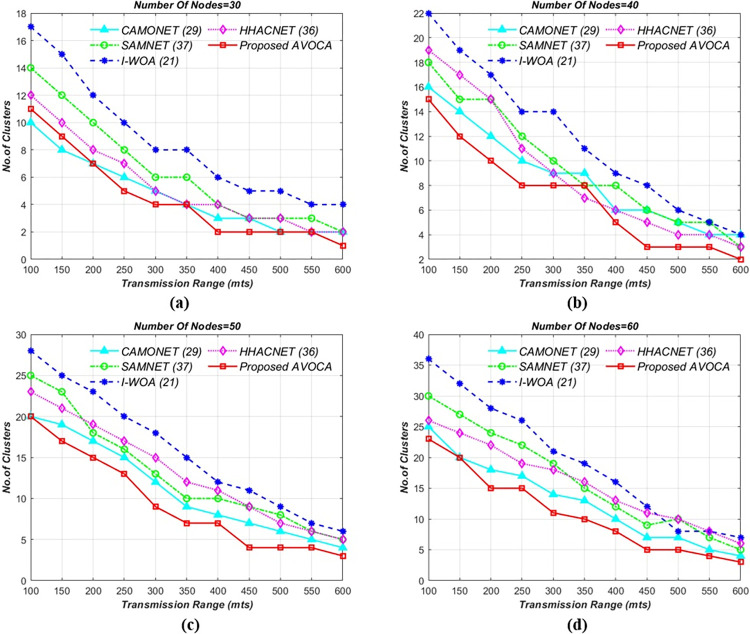
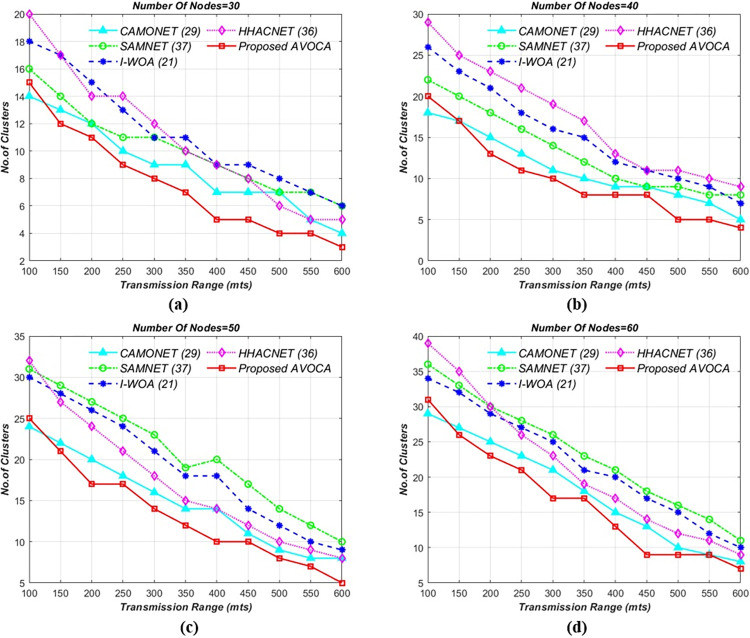
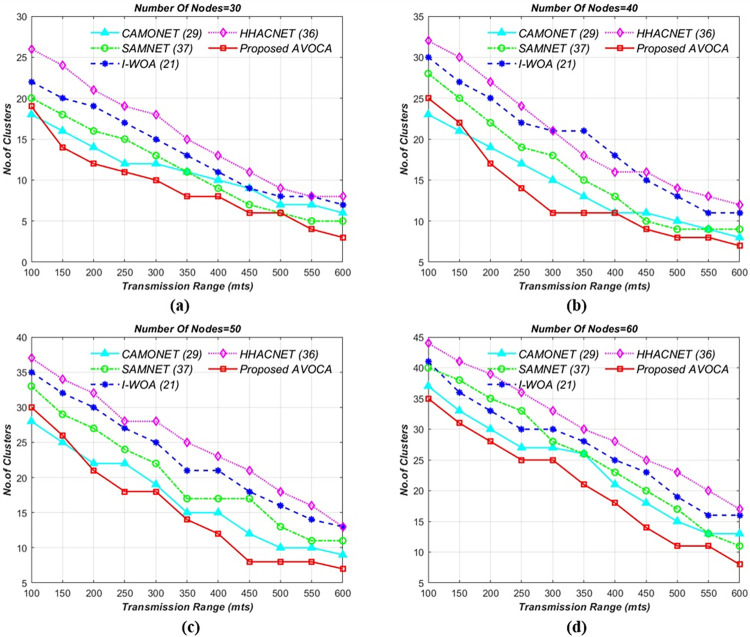
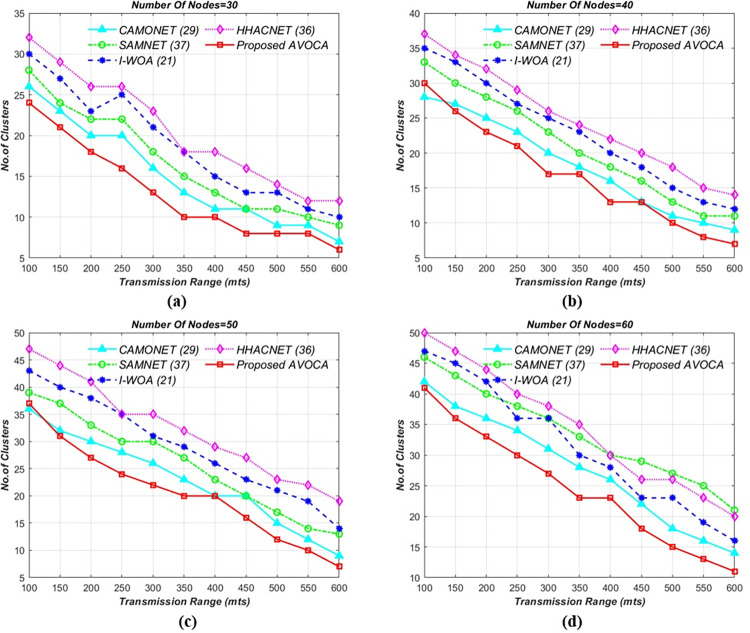
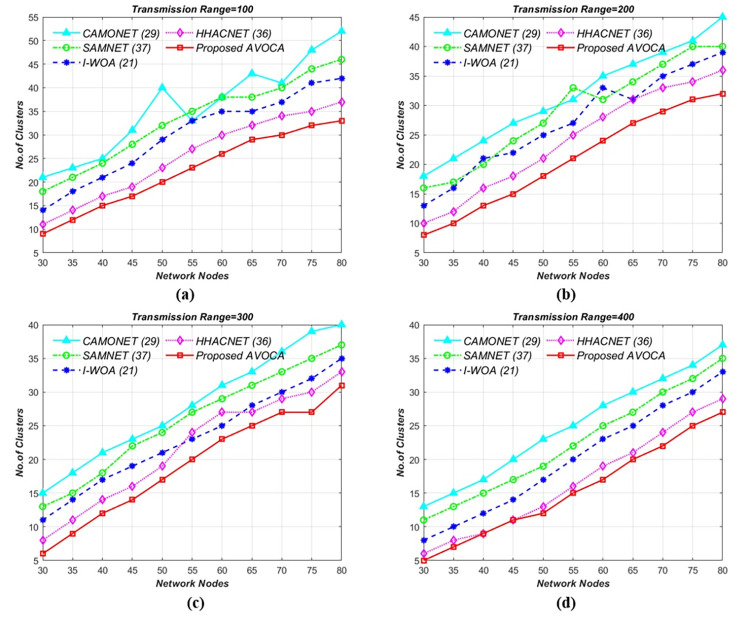
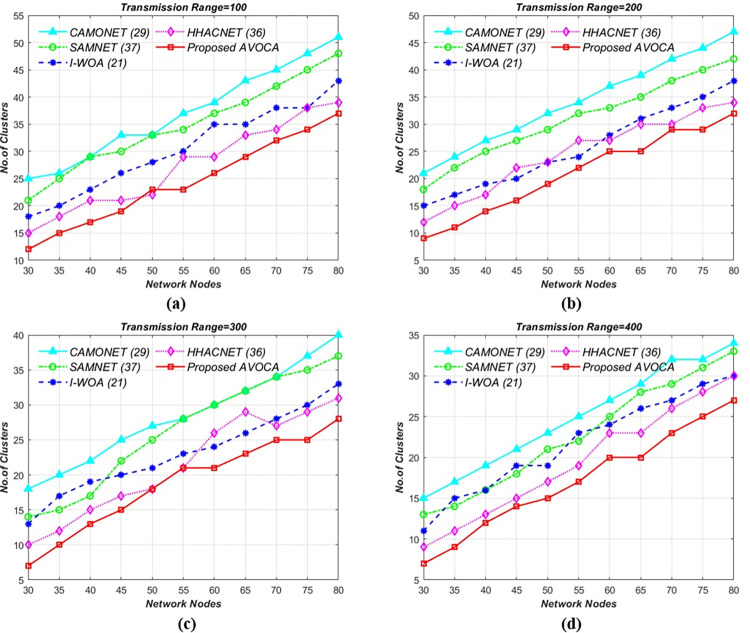
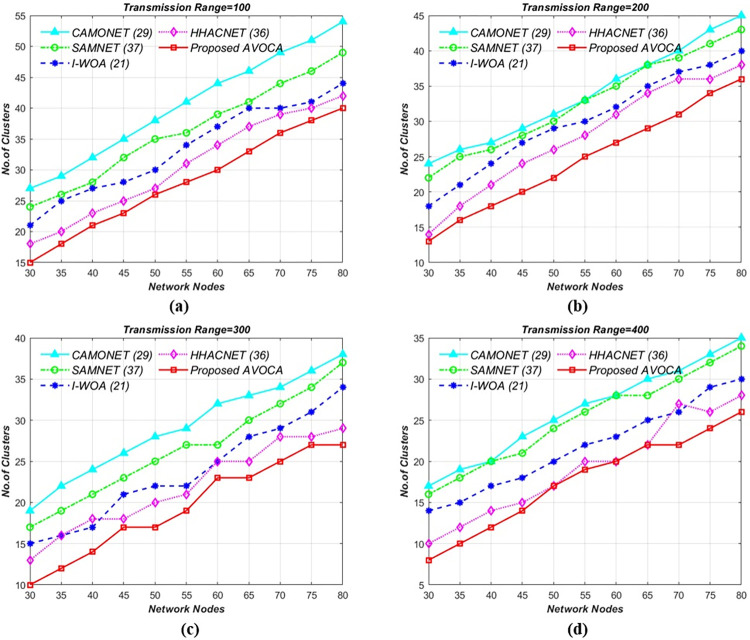
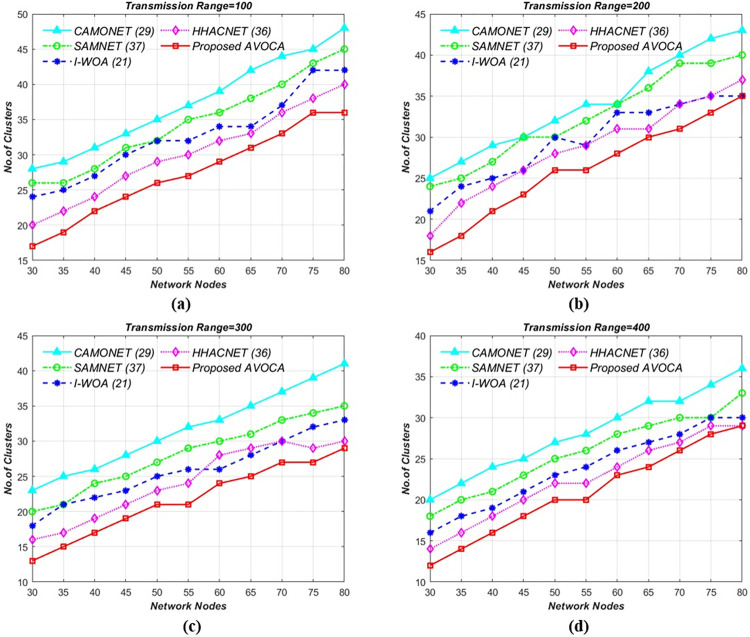
The Internet of Vehicles (IoV) is one of the developing paradigms that integrates the automotive industry with the Internet of Things (IoT). The evolution of traditional Vehicular Ad-hoc Networks (VANETs), which are a layered framework for Intelligent Transportation Systems (ITS), is employed to provide Quality of Service (QoS) to end users in hazardous situations. VANETs can set up ad-hoc networks and share information among themselves using Peer-to-Peer (P2P) communication. Dynamic properties in VANETs such as dynamic topology, node mobility, sparse vehicle distribution, and bandwidth constraints can have an impact on scalability, routing, and security. This can result in frequent link failures, instability, reliability, and QOS concerns, as well as the inherent complexity of NP-hard problems. Researchers have proposed several techniques to achieve stability; the most prominent one is clustering, which relies on mobility metrics. However, existing clustering techniques generate overwhelming clusters, resulting in greater resource consumption, communication overhead, and hop count, which may lead to increased latency. Therefore, the primary objective is to achieve stability by increasing cluster lifetime, which is accomplished by generating optimal clusters. A nature-inspired meta-heuristic algorithm titled African Vulture Optimization Based Clustering Algorithm (AVOCA) is implemented to achieve it. The proposed algorithm can achieve load optimization with efficient resource utilization by mitigating hidden node challenges and ensuring communication proficiency. By maintaining an equilibrium state between the exploration and exploitation phases, AVOCA avoids local optima. The paper explores a taxonomy of the techniques used in Cluster Head (CH) selection, coordination, and maintenance to achieve stability with lower communication costs. We evaluated the effectiveness of AVOCA using various network grid sizes, transmission ranges, and network nodes. The results show that AVOCA generates 40% less clusters when compared to the Clustering Algorithm Based on Moth-Flame Optimization for VANETs (CAMONET). AVOCA generates 45% less clusters when compared to Self-Adaptive Multi-Kernel Clustering for Urban VANETs (SAMNET), AVOCA generates 43% less clusters when compared to Intelligent Whale Optimization Algorithm (i-WOA) and AVOCA generates 38% less clusters when compared to Harris Hawks Optimization (HHO). The results show that AVOCA outperforms state-of-the-art algorithms in generating optimal clusters.
Overview
The claims and statistics of this paper haven’t been checked yet.
Free: it reads the open-access text and checks the first 5 claims that cite a source we can check. Create a free account to check every claim.
Integrity signals
Registry
Cites
Statistics
Figures
Verification
Claims the paper makes
The claims and statistics of this paper haven’t been checked yet.
Free: it reads the open-access text and checks the first 5 claims that cite a source we can check. Create a free account to check every claim.
Self-check
Percentages, sums and reported differences re-computed from the paper’s own numbers.
The self-check needs the paper’s full text.
Citations
Cites
Abdollahzadeh, B., Gharehchopogh, F. S., & Mirjalili, S. (2021) · Computers & Industrial Engineering · doi:10.1016/j.cie.2021.107408 · Cited by 1,438
New Multi-Hop Clustering Algorithm for Vehicular Ad Hoc Networks
Zhang, D., Ge, H., Zhang, T., Cui, Y.-Y., Liu, X., & Mao, G. (2019) · IEEE Transactions on Intelligent Transportation Systems · doi:10.1109/tits.2018.2853165 · Cited by 395
Ali, H., Shahzad, W., & Khan, F. A. (2012) · Applied Soft Computing · doi:10.1016/j.asoc.2011.05.036 · Cited by 159
A mobility-based scheme for dynamic clustering in vehicular ad-hoc networks (VANETs)
Ren, M., Khoukhi, L., Labiod, H., Zhang, J., & Vèque, V. (2016) · Vehicular Communications · doi:10.1016/j.vehcom.2016.12.003 · Cited by 156 · cited 1×
“(d) Furthermore, VANETs constitute large-scale networks that impose limitations on the communication radius of a vehicle due to limited spectral bandwidth, resulting in poor connectivity among vehicles [16].”
BackgroundCACONET: Ant Colony Optimization (ACO) Based Clustering Algorithm for VANET
Aadil, F., Bajwa, K. B., Khan, S., Chaudhry, N. M., & Akram, A. (2016) · PLoS ONE · doi:10.1371/journal.pone.0154080 · Cited by 131 · cited 1×
“Key parameters for assessing clustering stability include (a) the number of times the Cluster Head (CH) changes, (b) the duration of the CH, (c) the rate at which Cluster Nodes (CNs) change their CH, and (d) state transitions over the network’s lifetime [20].”
BackgroundEfficient clustering V2V routing based on PSO in VANETs
Bao, X., Li, H., Zhao, G., Chang, L., Zhou, J., & Li, Y. (2019) · Measurement · doi:10.1016/j.measurement.2019.107306 · Cited by 103 · cited 2×
“To ensure secure and sustainable travel, VANETs have evolved from conventional means of transportation into a network for information gathering and forwarding [8].”
BackgroundCAMONET: Moth-Flame Optimization (MFO) Based Clustering Algorithm for VANETs
Shah, Y. A., Habib, H. A., Aadil, F., Khan, M. F., Maqsood, M., & Nawaz, T. (2018) · IEEE Access · doi:10.1109/access.2018.2868118 · Cited by 92 · cited 3×
“Other MFO variants, ICMFO and CAMONET, are proposed by different authors in [28, 29], respectively.”
BackgroundMethodSharma, S., & Kaul, A. (2018) · Vehicular Communications · doi:10.1016/j.vehcom.2017.12.003 · Cited by 91 · cited 1×
“[41] HF-MCDM Integration of two phases.”
Husnain, G., & Anwar, S. (2021) · PLoS ONE · doi:10.1371/journal.pone.0250271 · Cited by 83
An enhanced whale optimization algorithm for vehicular communication networks
Kittusamy, S. R. V., Elhoseny, M., & Shankar, K. (2019) · International Journal of Communication Systems · doi:10.1002/dac.3953 · Cited by 82
Research works printed but not linked: 1
- Albashir A. Youssef, Aadaptive LDPC coded high data rate based IR-UWB combined with VMIMO system for vehicular communication links., AEU—Int J Electron Commun
Cited by
Tariq, U., & Ahanger, T. A. (2025) · World Electric Vehicle Journal · doi:10.3390/wevj16010024 · Cited by 19
“The rapid advancement of ITSs is closely tied to the effectiveness of VANETs, which are crucial for secure and efficient vehicle-to-infrastructure communications [1].”
Rambabu, B., Anupkant, S., Archana, M., Swathi, V. N. V. L. S., Mallareddy, A., & Nimmala, S. (2024) · International Conference on Technological Advancements in Computational Sciences (ICTACS) · doi:10.1109/ictacs62700.2024.10840908 · Cited by 16
“Another work analyzed the improvement of network stability for intelligent transportation systems in VANETs, using nature-inspired meta-heuristic algorithms such as GA and PSO for cluster and communication configuration [12].”
Meera, V. K., Balasubramanian, C., & Praveen, R. (2025) · International Journal of Communication Systems · doi:10.1002/dac.70171 · Cited by 11
“Yerrathi and Pakala [30] proposed an African Vulture Optimization–Based Clustering Algorithm (AVOCA) for minimizing the number of generated clusters, which targets achieving better resource management with maximized energy stability in vehicular networks.”
Husnain, G., Zafar, W., Iqbal, A., Khan, A., Alzahrani, A. S., & Al-Naeem, M. (2026) · IET Intelligent Transport Systems · doi:10.1049/itr2.70170 · Cited by 10
Clustering in Vehicular Ad Hoc Network: A Bibliometric Analysis
Kumari, A., Kumar, S., Raw, R. S., & Bohra, N. (2025) · SN Computer Science · doi:10.1007/s42979-024-03638-y · Cited by 5
“The algorithms consider vehicle density, velocity, geographical location, and dynamic cluster size adjustments based on network conditions [9, 46].”
Metadata
- Authors
- Yerrathi, S., & Pakala, V.
- Affiliations
- Vellore Institute of Technology University (IN)
- Corresponding author
- Pakala, Venugopal
- Venue
- PLOS ONE
- Publisher
- Public Library of Science (PLoS)
- Published
- 2024-01-11
- Volume
- 19
- Issue
- 1
- Pages
- e0296331
- ISSN
- 1932-6203 (ISSN-L)
- PMC
- PMC10783730
- OpenAlex
- W4390776947
- Cited by
- 15
- References
- 42
- Citations by year
- 2026: 7 · 2025: 6 · 2024: 2
- FWCI
- 1.55
- Type
- journal article
- Language
- en
- Open access
- gold
- doi.org
- Licence
- Locations
- PLoS ONE (publishedVersion, cc-by)
- PubMed Central (publishedVersion, cc-by)
- PubMed (publishedVersion)
- RePEc: Research Papers in Economics (submittedVersion)
- DOAJ (DOAJ: Directory of Open Access Journals) (submittedVersion, cc-by-sa)
- Greater South Information System
- Topics
- Physical Sciences › Engineering › Electrical and Electronic Engineering › Vehicular Ad Hoc Networks (VANETs)
- Physical Sciences › Engineering › Control and Systems Engineering › Traffic control and management
- Physical Sciences › Computer Science › Computer Networks and Communications › Mobile Ad Hoc Networks
- Keywords
- vehicular ad hoc networks, network stability, cluster head selection, cluster formation, nature-inspired metaheuristics, clustering algorithms, hidden terminal problem, quality of service, intelligent transportation systems, Internet of Vehicles, swarm intelligence
- MeSH terms
- Algorithms, Computer Communication Networks, Reproducibility of Results, Cluster Analysis, Internet
About these checks
Registry, retraction, Cites and statistics results are computed, not judged, with one exception: a printed reference that no index lists is read once by a model before it counts as a citation error. Claims are extracted by a model and kept only when their quote appears verbatim in the text; each cited source is then checked, with a model’s help, for whether it says what the claim relies on. Those verdicts can be wrong — read the claim’s quote and the cited source before relying on one.
Statistics and arithmetic are recomputed, not judged.
Confidence bands are shown only for fields calibrated on our annotated test set. None is calibrated yet, so no band is shown.
What counts as a claim ›How we measure confidence ›How we check this ›
Are you an author, or do you see a problem with this page? Request a review
How to cite
Cite CoChat for the checks on this page, and the paper for its own findings.
- This page
- CoChat. (2026). Citation check: Enhancing network stability in VANETs using nature inspired algorithm for intelligent transportation system. https://app.cochat.ai/papers/10.1371/journal.pone.0296331
- The paper
- Yerrathi, S., & Pakala, V. (2024). Enhancing network stability in VANETs using nature inspired algorithm for intelligent transportation system. PLOS ONE. https://doi.org/10.1371/journal.pone.0296331
Data sources
Bibliographic data: Semantic Scholar, OpenAlex, Crossref.
Contains information from the Semantic Scholar Academic Graph Datasets, made available under the ODC Attribution License (ODC-BY 1.0).
Semantic Scholar’s data is described in: Kinney, R., et al. (2023). The Semantic Scholar Open Data Platform. arXiv:2301.10140.
