

No-reference image quality assessment based on global awareness
Open accessThe DOI matches its Crossref record; 54 of the 54 references it cites were found in a registry or an index.
Abstract
In the field of computer vision, the application of hand-crafted as well as computer-learning-based methods in the field of image quality assessment has yielded remarkable results. However, in the field of no-reference image distortion, it is still challenging to accurately perceive and determine the quality of an image. To address the difficulties of Image Quality Assessment (IQA) in the field of authentic distorted images, we consider the use of the Swin Transformer (ST) to extract features. To enable the model to focus on both spatial and channel information of features, we design a plug-and-play Global Self-Attention Block (GSAB). At the same time, we introduce a Transformer block in the model to enhance the model’s ability to capture long-range dependencies. Finally, we derive the prediction of image quality scores through a Dual-Branching structure. Our method is experimented on four synthetic datasets as well as two authentic datasets, and the results of the experiments are weighted according to the size of the datasets, and the results show that our method outperforms all the current methods and works well in the Generalization ability test, which proves that our method has a good generalization ability. The code will be posted subsequently at https://github.com/yanggege-new/NR-IQA-based-on-global-awareness.
Overview
The claims and statistics of this paper haven’t been checked yet.
Free: it reads the open-access text and checks the first 5 claims that cite a source we can check. Create a free account to check every claim.
Integrity signals
Registry
Cites
Statistics
Figures


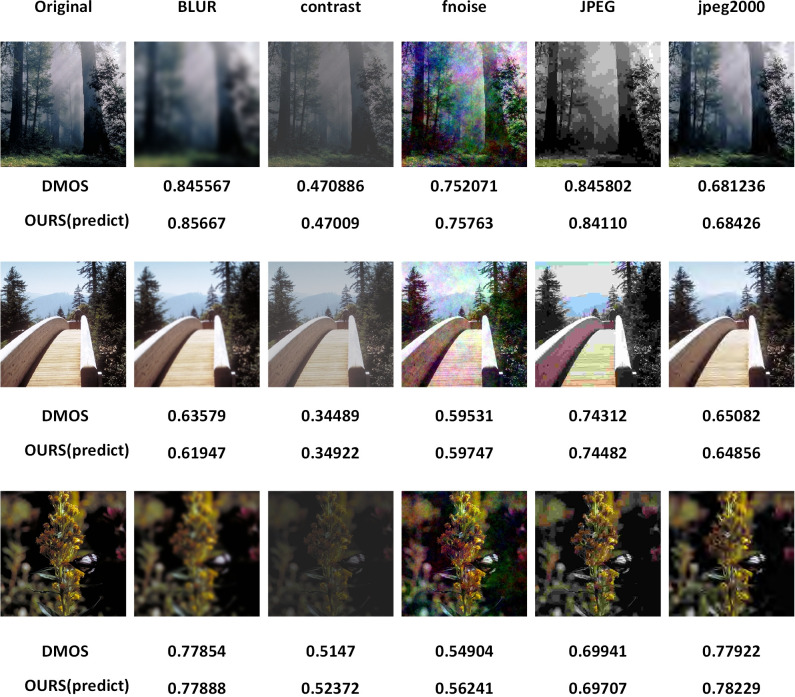
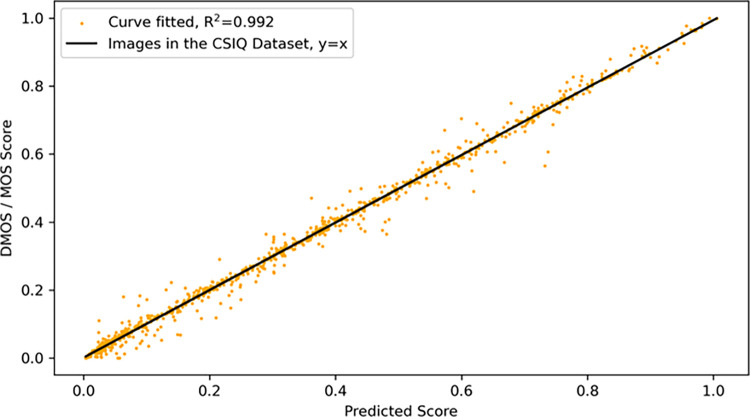


Verification
Claims the paper makes
The claims and statistics of this paper haven’t been checked yet.
Free: it reads the open-access text and checks the first 5 claims that cite a source we can check. Create a free account to check every claim.
Claims other papers make about this one
Each is checked against this paper’s own text: does it say what the citing paper says it does?
The check wasn’t confident either way, so it gives no verdict — never disputed.
In the citing paper
“Pixel-based similarity [4-14]: These full-reference (FR) metrics, such as the PSNR and the mean squared error (MSE), are widely used for their computational simplicity. However, they lack a perceptual basis and often fail to capture spatial dependencies.”
From A Survey and Tutorial on Image Quality Assessment with a Contrast-Weighted Structural Similarity Framework (2026) · cites this paper as [13]
Experimental — accuracy not yet measured
Self-check
Percentages, sums and reported differences re-computed from the paper’s own numbers.
The self-check needs the paper’s full text.
Citations
Cites
1 retracted
Single image super-resolution via Image Quality Assessment-Guided Deep Learning Network
Xiong, Z., Lin, M., Lin, Z., Sun, T., Yang, G., & Wang, Z. (2020) · PLoS ONE · doi:10.1371/journal.pone.0241313 · Cited by 10
Self-citationRetractedVaswani, A., Shazeer, N., Parmar, N., Uszkoreit, J., Jones, L., Gomez, A. N., Kaiser, L., & Polosukhin, I. (2017) · arXiv · doi:10.48550/arxiv.1706.03762 · Cited by 120,404
Adam: A Method for Stochastic Optimization
Kingma, D. P., & Ba, J. (2014) · arXiv · doi:10.48550/arxiv.1412.6980 · Cited by 98,946
Exploiting Generative AI to Scale up Intelligent Tutoring Systems
Jakubův, J., Chvalovský, K., Goertzel, Z., Kaliszyk, C., Olšák, M., Piotrowski, B., Schulz, S., Suda, M., & Urban, J. (2023) · DROPS (Schloss Dagstuhl – Leibniz Center for Informatics) · doi:10.4230/lipics.itp.2023.19 · Cited by 76,658
An Image is Worth 16x16 Words: Transformers for Image Recognition at Scale
Dosovitskiy, A., Beyer, L., Kolesnikov, A., Weissenborn, D., Zhai, X., Unterthiner, T., Dehghani, M., Minderer, M., Heigold, G., Gelly, S., et al. (2020) · arXiv · doi:10.48550/arxiv.2010.11929 · Cited by 47,472
Swin Transformer: Hierarchical Vision Transformer using Shifted Windows
Liu, Z., Lin, Y., Cao, Y., Hu, H., Wei, Y., Zhang, Z., Lin, S., & Guo, B. (2021) · 2021 IEEE/CVF International Conference on Computer Vision (ICCV) · doi:10.1109/iccv48922.2021.00986 · Cited by 35,534
CBAM: Convolutional Block Attention Module
Woo, S., Park, J., Lee, J.-Y., & Kweon, I. S. (2018) · Lecture Notes in Computer Science · doi:10.1007/978-3-030-01234-2_1 · Cited by 25,853
Making a “Completely Blind” Image Quality Analyzer
Mittal, A., Soundararajan, R., & Bovik, A. C. (2013) · IEEE Signal Processing Letters · doi:10.1109/lsp.2012.2227726 · Cited by 6,766
No-Reference Image Quality Assessment in the Spatial Domain
Mittal, A., Moorthy, A. K., & Bovik, A. C. (2012) · IEEE Transactions on Image Processing · doi:10.1109/tip.2012.2214050 · Cited by 6,064
Restormer: Efficient Transformer for High-Resolution Image Restoration
Zamir, S. W., Arora, A., Khan, S., Hayat, M., Khan, F. S., & Yang, M.-H. (2022) · 2022 IEEE/CVF Conference on Computer Vision and Pattern Recognition (CVPR) · doi:10.1109/cvpr52688.2022.00564 · Cited by 4,143
Research works printed but not linked: 8
- T-Y Chiu, 2020, editors. Assessing image quality issues for real-world problems., proceedings of the IEEE/CVF conference on computer vision and pattern recognition, 3646
- S Yang, 2022, editors. Maniqa: Multi-dimension attention network for no-reference image quality assessment, Proceedings of the IEEE/CVF Conference on Computer Vision and Pattern Recognition, 1191
- T. Chandra Mohan, 2021, Blind Image Quality Assessment of Smartphone-captured Images in the Wild: University of Twente
- IEEE, 2012, editors. Unsupervised feature learning framework for no-reference image quality assessment., 2012 IEEE conference on computer vision and pattern recognition;
- P Ye, 2014, editors. Beyond human opinion scores: Blind image quality assessment based on synthetic scores, Proceedings of the IEEE Conference on Computer Vision and Pattern Recognition, 4241
- H Zhu, 2020, editors. MetaIQA: Deep meta-learning for no-reference image quality assessment, Proceedings of the IEEE/CVF conference on computer vision and pattern recognition, 14143
- D Liu, 2017, editors. Robust video super-resolution with learned temporal dynamics, Proceedings of the IEEE International Conference on Computer Vision, 2507
- IEEE, 2021, editors. Transformer for image quality assessment., 2021 IEEE International Conference on Image Processing (ICIP);
Cited by
Nam, W., Youn, T., & Ha, C. (2025) · Vehicles · doi:10.3390/vehicles7010008 · Cited by 9
“( 3) No-Reference IQA (NR-IQA): evaluate the quality with only a given image without referencing the original image [3].”
Synergistic dual and efficient additive attention network for No-Reference Image Quality Assessment
Fang, Z., Feng, B., & Li, N. (2025) · Computer Vision and Image Understanding · doi:10.1016/j.cviu.2025.104516 · Cited by 2
Tbaileh, I., & Ashqar, H. I. (2026) · Multimedia Systems · doi:10.1007/s00530-026-02528-y · Cited by 1
Agaian, S. S., Grigoryan, A. M., & Ayunts, H. (2026) · Information · doi:10.3390/info17070632
No-reference image quality assessment via degraded-content inference for sewer inspection images
Chen, X., Wang, Z., He, J., Ran, Y., Chen, M., Hu, J., & Li, C. (2025) · Automation in Construction · doi:10.1016/j.autcon.2025.106727
Metadata
- Authors
- Hu, Z., Yang, G., Du, Z., Huang, X., Zhang, P., & Liu, D.
- Affiliations
- Henan University of Science and Technology (CN)
- First Affiliated Hospital of Henan University of Science and Technology (CN)
- Corresponding author
- Liu, Dechun
- Venue
- PLOS ONE
- Publisher
- Public Library of Science (PLoS)
- Published
- 2024-10-07
- Volume
- 19
- Issue
- 10
- Pages
- e0310206
- ISSN
- 1932-6203 (ISSN-L)
- PMC
- PMC11457998
- OpenAlex
- W4403183724
- Cited by
- 5
- References
- 52
- Citations by year
- 2026: 2 · 2025: 3
- FWCI
- 0.70
- Type
- journal article
- Language
- en
- Open access
- gold
- doi.org
- Licence
- Locations
- PLoS ONE (publishedVersion, cc-by)
- PubMed Central (publishedVersion, cc-by)
- PubMed (publishedVersion)
- RePEc: Research Papers in Economics (submittedVersion)
- DOAJ (DOAJ: Directory of Open Access Journals) (submittedVersion)
- Funders
- Henan Province Medical Science and Technology Tackle Key Problems Project (LHGJ20230459)
- Topics
- Physical Sciences › Computer Science › Computer Vision and Pattern Recognition › Image and Video Quality Assessment
- Physical Sciences › Computer Science › Computer Vision and Pattern Recognition › Digital Media Forensic Detection
- Physical Sciences › Computer Science › Computer Vision and Pattern Recognition › Image Retrieval and Classification Techniques
- Keywords
- no-reference image quality assessment, image distortion, Swin Transformer, global self-attention, long-range dependencies, dual-branch network, model generalization
- MeSH terms
- Algorithms, Humans, Image Processing, Computer-Assisted
About these checks
Registry, retraction, Cites and statistics results are computed, not judged, with one exception: a printed reference that no index lists is read once by a model before it counts as a citation error. Claims are extracted by a model and kept only when their quote appears verbatim in the text; each cited source is then checked, with a model’s help, for whether it says what the claim relies on. Those verdicts can be wrong — read the claim’s quote and the cited source before relying on one.
Statistics and arithmetic are recomputed, not judged.
Confidence bands are shown only for fields calibrated on our annotated test set. None is calibrated yet, so no band is shown.
What counts as a claim ›How we measure confidence ›How we check this ›
Are you an author, or do you see a problem with this page? Request a review
How to cite
Cite CoChat for the checks on this page, and the paper for its own findings.
- This page
- CoChat. (2026). Citation check: No-reference image quality assessment based on global awareness. https://app.cochat.ai/papers/10.1371/journal.pone.0310206
- The paper
- Hu, Z., Yang, G., Du, Z., Huang, X., Zhang, P., & Liu, D. (2024). No-reference image quality assessment based on global awareness. PLOS ONE. https://doi.org/10.1371/journal.pone.0310206
Data sources
Bibliographic data: Semantic Scholar, OpenAlex, Crossref.
Contains information from the Semantic Scholar Academic Graph Datasets, made available under the ODC Attribution License (ODC-BY 1.0).
Semantic Scholar’s data is described in: Kinney, R., et al. (2023). The Semantic Scholar Open Data Platform. arXiv:2301.10140.
