

The DOI matches its Crossref record; 3 of the 3 references it cites were found in a registry or an index.
Zebrafish Polymerase Theta and human Polymerase Theta: Orthologues with homologous function
Open accessPublished version of a preprint
Abstract
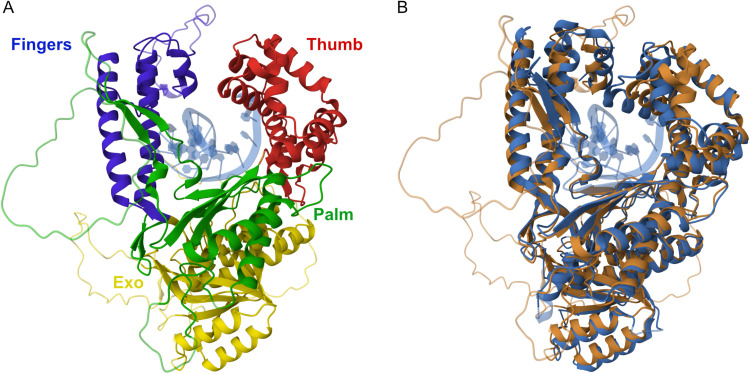
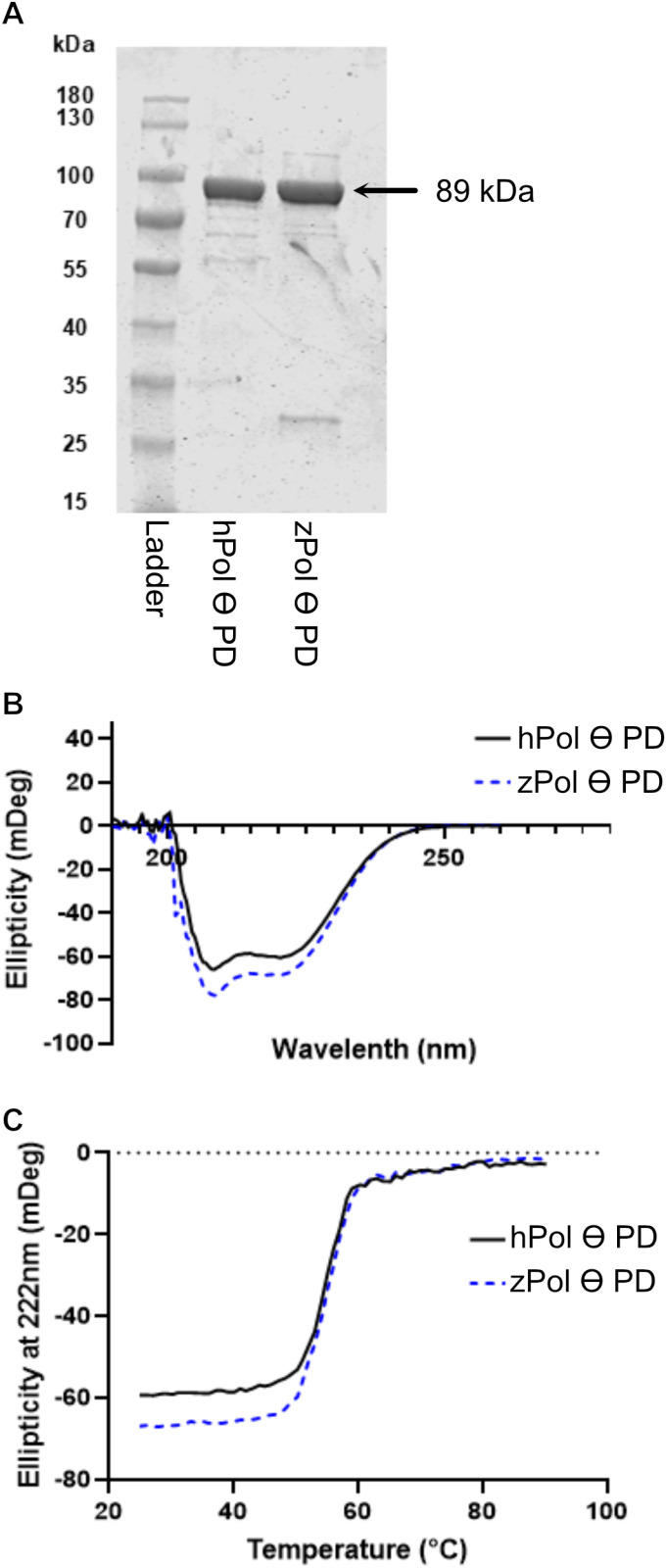
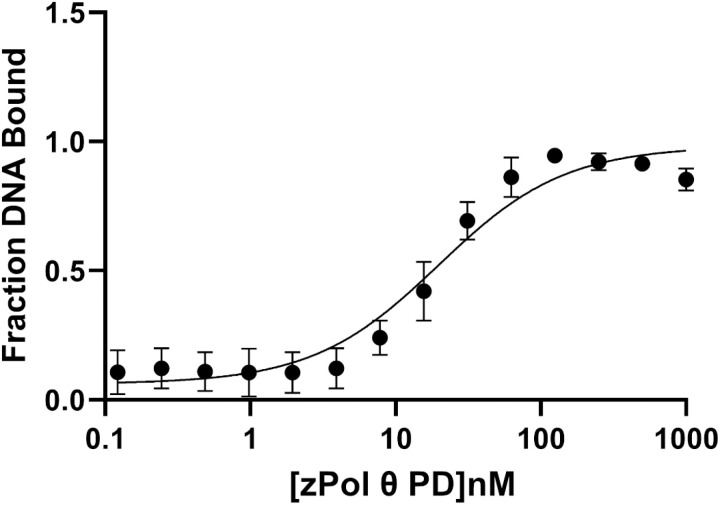
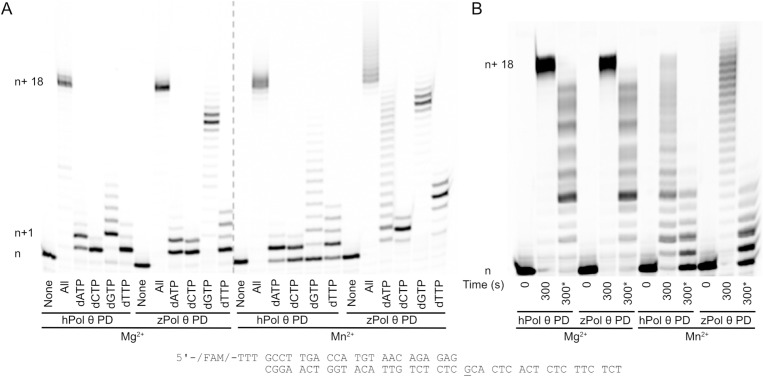
DNA Polymerase Theta (Pol θ) is a conserved an A-family polymerase that plays an essential role in repairing double strand breaks, through micro-homology end joining, and bypassing DNA lesions, through translesion synthesis, to protect genome integrity. Despite its essential role in DNA repair, Pol θ is inherently error-prone. Recently, key loop regions were identified to play an important role in key functions of Pol θ. Here we present a comparative structure-function study of the polymerase domain of zebrafish and human Pol θ. We show that these two proteins share a large amount of sequence and structural homology. Using a classical biochemical approach we observe that zebrafish Pol θ displays behavior characteristic of human Pol θ, including DNA template extension in the presence of different divalent metals, microhomology-mediated end joining, and translesion synthesis. These results will support future studies looking to gain insight into Pol θ function on the basis of evolutionarily conserved features.
Overview
The claims and statistics of this paper haven’t been checked yet.
Run the check — free, no account needed. It reads the open-access text and checks the sources it cites.
Integrity signals
Registry
Cites
Statistics
Figures
Verification
Claims the paper makes
The claims and statistics of this paper haven’t been checked yet.
Run the check — free, no account needed. It reads the open-access text and checks the sources it cites.
Self-check
Percentages, sums and reported differences re-computed from the paper’s own numbers.
The self-check needs the paper’s full text.
Citations
Cites
Highly accurate protein structure prediction with AlphaFold
Jumper, J., Evans, R., Pritzel, A., Green, T., Figurnov, M., Ronneberger, O., Tunyasuvunakool, K., Bates, R., Žídek, A., Potapenko, A., et al. (2021) · Nature · doi:10.1038/s41586-021-03819-2 · Cited by 43,764
DNA Polymerases: Structural Diversity and Common Mechanisms
Steitz, T. A. (1999) · Journal of Biological Chemistry · doi:10.1074/jbc.274.25.17395 · Cited by 848
FATCAT 2.0: towards a better understanding of the structural diversity of proteins
Li, Z., Jaroszewski, L., Iyer, M., Sedova, M., & Godzik, A. (2020) · Nucleic Acids Research · doi:10.1093/nar/gkaa443 · Cited by 231
Research works printed but not linked: 50
- LA Loeb, 2003, Multiple mutations and cancer, Proc Natl Acad Sci U S A, 100, 776, 10.1073/pnas.0334858100 · DOI
- C Vaziri, 2021, Unravelling roles of error-prone DNA polymerases in shaping cancer genomes, Oncogene, 40, 6549, 10.1038/s41388-021-02032-9 · DOI
- SS Lange, 2011, DNA polymerases and cancer, Nat Rev Cancer, 11, 96, 10.1038/nrc2998 · DOI · Paper page
- TA Kunkel, 2003, Considering the cancer consequences of altered DNA polymerase function, Cancer Cell, 3, 105, 10.1016/S1535-6108(03)00027-8 · DOI
- F Farshidfar, 2022, Integrative molecular and clinical profiling of acral melanoma links focal amplification of 22q11.21 to metastasis, Nature Communications, 13, 898, 10.1038/s41467-022-28566-4 · DOI
- SB Thyme, 2016, Polq-mediated end joining is essential for surviving DNA double-strand breaks during early zebrafish development, Cell Rep, 15, 707, 10.1016/j.celrep.2016.03.072 · DOI
- A Brambati, 2020, DNA polymerase theta (Polθ) - an error-prone polymerase necessary for genome stability, Curr Opin Genet Dev, 60, 119, 10.1016/j.gde.2020.02.017 · DOI
- J-H Yoon, 2019, Error-prone replication through UV lesions by DNA polymerase θ protects against skin cancers, Cell, 176, 1295-1309.e15
- SH Chan, 2010, Dual roles for DNA polymerase theta in alternative end-joining repair of double-strand breaks in Drosophila, PLoS Genet, 6, e1001005, 10.1371/journal.pgen.1001005 · DOI
- T Kent, 2015, Mechanism of microhomology-mediated end-joining promoted by human DNA polymerase θ, Nat Struct Mol Biol, 22, 230, 10.1038/nsmb.2961 · DOI
- MJ Yousefzadeh, 2014, Mechanism of suppression of chromosomal instability by DNA polymerase POLQ, PLoS Genet, 10, e1004654, 10.1371/journal.pgen.1004654 · DOI
- M Hogg, 2011, Lesion bypass activity of DNA polymerase θ (POLQ) is an intrinsic property of the pol domain and depends on unique sequence inserts, J Mol Biol, 405, 642, 10.1016/j.jmb.2010.10.041 · DOI
- AM Yu, 2010, Synthesis-dependent microhomology-mediated end joining accounts for multiple types of repair junctions, Nucleic Acids Res, 38, 5706, 10.1093/nar/gkq379 · DOI
- R Ceccaldi, 2015, Homologous-recombination-deficient tumours are dependent on Polθ-mediated repair, Nature, 518, 258, 10.1038/nature14184 · DOI
- J Goff, 2009, Lack of DNA Polymerase θ (POLQ) radiosensitizes bone marrow stromal cells in vitro and increases reticulocyte micronuclei after total-body irradiation, Radiation Research, 172, 165, 10.1667/RR1598.1 · DOI
- T Goullet de Rugy, 2016, Excess Polθ functions in response to replicative stress in homologous recombination-proficient cancer cells, Biol Open, 5, 1485, 10.1242/bio.018028 · DOI
- C Allera-Moreau, 2012, DNA replication stress response involving PLK1, CDC6, POLQ, RAD51 and CLASPIN upregulation prognoses the outcome of early/mid-stage non-small cell lung cancer patients, Oncogenesis, 1, e30, 10.1038/oncsis.2012.29 · DOI
- F Lemée, 2010, DNA polymerase theta up-regulation is associated with poor survival in breast cancer, perturbs DNA replication, and promotes genetic instability, Proc Natl Acad Sci U S A, 107, 13390, 10.1073/pnas.0910759107 · DOI
- K Howe, 2013, The zebrafish reference genome sequence and its relationship to the human genome, Nature, 496, 498, 10.1038/nature12111 · DOI · Paper page
- M Mirdita, 2022, ColabFold: making protein folding accessible to all, Nat Methods, 19, 679, 10.1038/s41592-022-01488-1 · DOI · Paper page
- KE Zahn, 2015, Human DNA polymerase θ grasps the primer terminus to mediate DNA repair, Nat Struct Mol Biol, 22, 304, 10.1038/nsmb.2993 · DOI
- K Johnson, 1992, Transient-state kinetic analysis of enzyme reaction pathways, Enzymes, 20, 1
- T Kent, 2016, Polymerase θ is a robust terminal transferase that oscillates between three different mechanisms during end-joining, eLife, 5, e13740, 10.7554/eLife.13740 · DOI
- CM Joyce, 2010, Techniques used to study the DNA polymerase reaction pathway, Biochim Biophys Acta, 1032, 10.1016/j.bbapap.2009.07.021 · DOI
- SJ Black, 2019, Molecular basis of microhomology-mediated end-joining by purified full-length Polθ, Nat Commun, 10, 4423, 10.1038/s41467-019-12272-9 · DOI
- C Li, 2023, Structural basis of DNA polymerase θ mediated DNA end joining, Nucleic Acids Res, 51, 463, 10.1093/nar/gkac1201 · DOI
- G Chandramouly, 2023, Polλ promotes microhomology-mediated end-joining, Nat Struct Mol Biol, 30, 107, 10.1038/s41594-022-00895-4 · DOI
- D Carvajal-Maldonado, 2024, Dynamic stem-loop extension by Pol θ and templated insertion during DNA repair, J Biol Chem, 300, 107461, 10.1016/j.jbc.2024.107461 · DOI
- M Seki, 2004, High-efficiency bypass of DNA damage by human DNA polymerase Q, EMBO J, 23, 4484, 10.1038/sj.emboj.7600424 · DOI
- DJ Laverty, 2017, The A-rule and deletion formation during abasic and oxidized abasic site bypass by DNA polymerase θ, ACS Chem Biol, 12, 1584, 10.1021/acschembio.7b00211 · DOI
- J-H Yoon, 2020, Genetic evidence for reconfiguration of DNA polymerase θ active site for error-free translesion synthesis in human cells, J Biol Chem, 295, 5918, 10.1074/jbc.RA120.012816 · DOI
- BD Freudenthal, 2013, Observing a DNA polymerase choose right from wrong, Cell, 154, 157, 10.1016/j.cell.2013.05.048 · DOI
- T Nakamura, 2012, Watching DNA polymerase η make a phosphodiester bond, Nature, 487, 196, 10.1038/nature11181 · DOI
- D-S Pei, 2011, A novel regulatory circuit in base excision repair involving AP endonuclease 1, Creb1 and DNA polymerase beta, Nucleic Acids Res, 39, 3156, 10.1093/nar/gkq1142 · DOI
- S Fortier, 2009, Base excision repair in early zebrafish development: evidence for DNA polymerase switching and standby AP endonuclease activity, Biochemistry, 48, 5396, 10.1021/bi900253d · DOI
- R Brañas Casas, 2024, Zebrafish polg2 knock-out recapitulates human POLG-disorders; implications for drug treatment, Cell Death Dis, 15, 281, 10.1038/s41419-024-06622-9 · DOI
- N Plaster, 2006, p53 deficiency rescues apoptosis and differentiation of multiple cell types in zebrafish flathead mutants deficient for zygotic DNA polymerase delta1, Cell Death Differ, 13, 223, 10.1038/sj.cdd.4401747 · DOI
- T Ishido, 2011, Characterization of DNA polymerase β from Danio rerio by overexpression in E. coli using the in vivo/in vitro compatible pIVEX plasmid, Microb Cell Fact, 10, 84, 10.1186/1475-2859-10-84 · DOI
- C Thomas, 2024, Melanoma-derived DNA polymerase theta variants exhibit altered DNA polymerase activity, Biochemistry, 63, 1107, 10.1021/acs.biochem.3c00670 · DOI
- JB Towle-Weicksel, 2014, Fluorescence resonance energy transfer studies of DNA polymerase β: the critical role of fingers domain movements and a novel non-covalent step during nucleotide selection, J Biol Chem, 289, 16541, 10.1074/jbc.M114.561878 · DOI
- BG Werneburg, 1996, DNA polymerase beta: pre-steady-state kinetic analysis and roles of arginine-283 in catalysis and fidelity, Biochemistry, 35, 7041, 10.1021/bi9527202 · DOI
- DL Murphy, 2008, The Asp285 variant of DNA polymerase beta extends mispaired primer termini via increased nucleotide binding, Biochemistry, 47, 8048, 10.1021/bi702104y · DOI
- C Ralec, 2017, Calcium-driven DNA synthesis by a high-fidelity DNA polymerase, Nucleic Acids Res, 45, 12425, 10.1093/nar/gkx927 · DOI
- AJ Guerin, 2024, High-resolution freshwater dissolved calcium and pH data layers for Canada and the United States, Sci Data, 11, 370, 10.1038/s41597-024-03165-8 · DOI
- F Madeira, 2024, The EMBL-EBI Job Dispatcher sequence analysis tools framework in 2024, Nucleic Acids Res, 52, W521, 10.1093/nar/gkae241 · DOI
- M Mirdita, 2019, MMseqs2 desktop and local web server app for fast, interactive sequence searches, Bioinformatics, 35, 2856, 10.1093/bioinformatics/bty1057 · DOI · Paper page
- M Mirdita, 2017, Uniclust databases of clustered and deeply annotated protein sequences and alignments, Nucleic Acids Res, 45, D170, 10.1093/nar/gkw1081 · DOI
- AL Mitchell, 2019, MGnify: the microbiome analysis resource in 2020, Nucleic Acids Res
- S Bittrich, 2024, RCSB protein Data Bank: exploring protein 3D similarities via comprehensive structural alignments, Bioinformatics, 40, btae370, 10.1093/bioinformatics/btae370 · DOI
- R Prasad, 2009, Human DNA polymerase theta possesses 5’-dRP lyase activity and functions in single-nucleotide base excision repair in vitro, Nucleic Acids Res, 37, 1868, 10.1093/nar/gkp035 · DOI
Metadata
- Authors
- Thomas, C., Green, S., Kimball, L., Schmidtke, I. R., Rothwell, L., Griffin, M., Par, I., Schobel, S., Palacio, Y., Towle-Weicksel, J. B., & Weicksel, S. E.
- Affiliations
- Rhode Island College (US)
- Bryant University (US)
- Corresponding author
- Weicksel, Steven E.
- Venue
- PLOS One
- Publisher
- Public Library of Science (PLoS)
- Published
- 2025-04-29
- Volume
- 20
- Issue
- 4
- Pages
- e0321886
- ISSN
- 1932-6203 (ISSN-L)
- PMC
- PMC12040184
- OpenAlex
- W4409915590
- Cited by
- 3
- References
- 3
- Citations by year
- 2026: 1 · 2025: 1
- FWCI
- 0.60
- Type
- journal article
- Language
- en
- Open access
- gold
- doi.org
- Licence
- Locations
- PLoS ONE (publishedVersion, cc-by)
- bioRxiv (Cold Spring Harbor Laboratory) (acceptedVersion, cc-by-nc)
- PubMed Central (publishedVersion, cc-by)
- PubMed (publishedVersion)
- PubMed Central (submittedVersion, cc-by-nc)
- DOAJ (DOAJ: Directory of Open Access Journals) (submittedVersion, cc-by-sa)
- Funders
- Rhode Island IDeA Networks of Biomedical Research Excellence (P20GM103430)
- National Institute of General Medical Sciences (R15GM144903-01)
- Topics
- Life Sciences › Biochemistry, Genetics and Molecular Biology › Molecular Biology › DNA Repair Mechanisms
- Life Sciences › Biochemistry, Genetics and Molecular Biology › Structural Biology › Enzyme Structure and Function
- Health Sciences › Medicine › Oncology › PARP inhibition in cancer therapy
- Keywords
- DNA polymerase theta, zebrafish, human, microhomology-mediated end joining, translesion synthesis, DNA double-strand break repair, divalent metal ions, structure functions, evolutionary conservation, genome stability
About these checks
Registry, retraction, Cites and statistics results are computed, not judged, with one exception: a printed reference that no index lists is read once by a model before it counts as a citation error. Claims are extracted by a model and kept only when their quote appears verbatim in the text; each cited source is then checked, with a model’s help, for whether it says what the claim relies on. Those verdicts can be wrong — read the claim’s quote and the cited source before relying on one.
Statistics and arithmetic are recomputed, not judged.
Confidence bands are shown only for fields calibrated on our annotated test set. None is calibrated yet, so no band is shown.
What counts as a claim ›How we measure confidence ›How we check this ›
Are you an author, or do you see a problem with this page? Request a review
How to cite
Cite CoChat for the checks on this page, and the paper for its own findings.
- This page
- CoChat. (2026). Citation check: Zebrafish Polymerase Theta and human Polymerase Theta: Orthologues with homologous function. https://app.cochat.ai/papers/10.1371/journal.pone.0321886
- The paper
- Thomas, C., Green, S., Kimball, L., Schmidtke, I. R., Rothwell, L., Griffin, M., Par, I., Schobel, S., Palacio, Y., Towle-Weicksel, J. B., & Weicksel, S. E. (2025). Zebrafish Polymerase Theta and human Polymerase Theta: Orthologues with homologous function. PLOS One. https://doi.org/10.1371/journal.pone.0321886
