

The DOI matches its Crossref record; 31 of the 31 references it cites were found in a registry or an index.
Data-driven personalized marketing strategy optimization based on user behavior modeling and predictive analytics: Sustainable market segmentation and targeting
Open accessAbstract
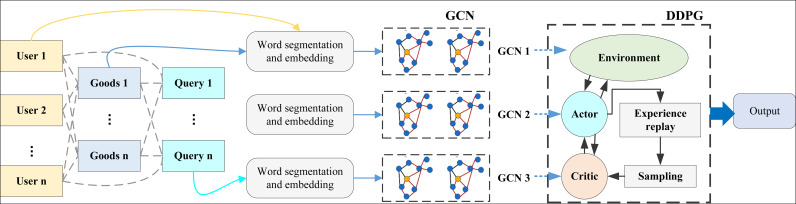
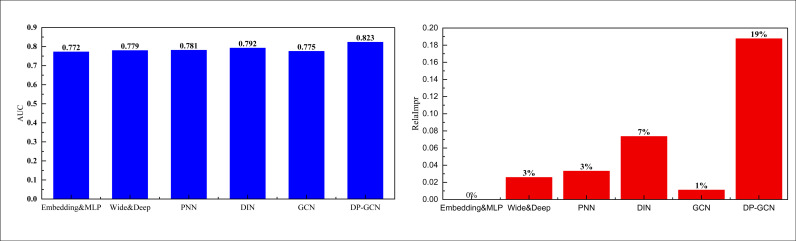
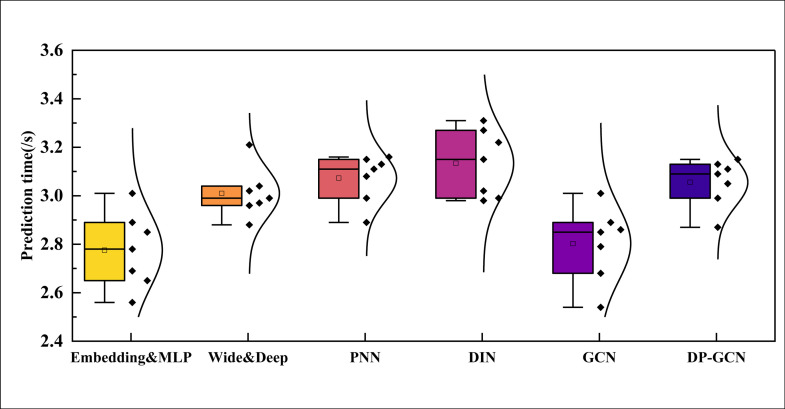
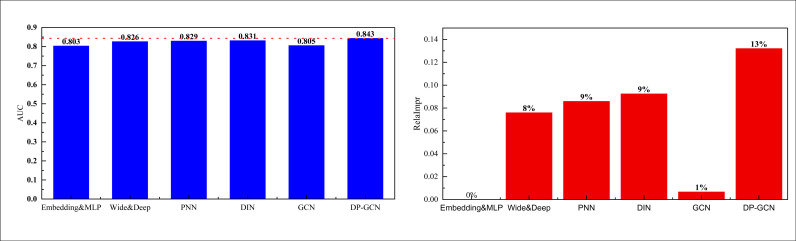
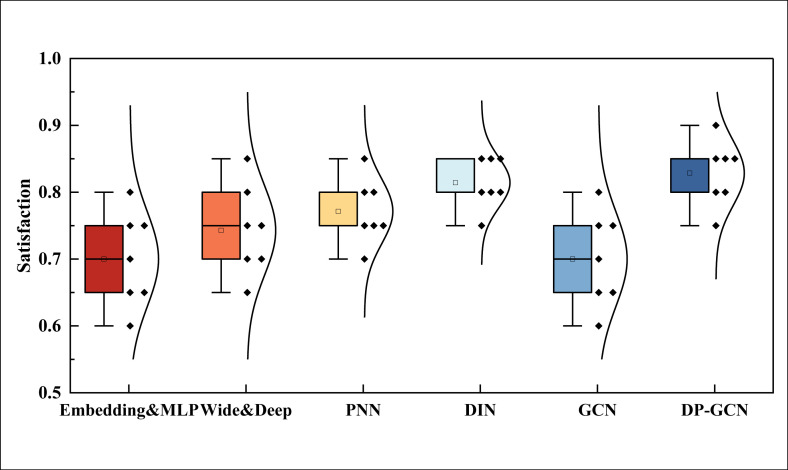
Personalized recommendation remains a central challenge in modern marketing systems due to the complexity of user-product-query interactions. In this study, we propose a novel framework called DP-GCN (Deterministic Policy Graph Convolutional Network), which integrates multi-level Graph Convolutional Networks (GCNs) with Deep Deterministic Policy Gradient (DDPG) reinforcement learning to model heterogeneous information networks composed of users, products, and search queries. The proposed framework consists of three key components: (1) a graph-based embedding module to capture multi-relational structures; (2) a fusion layer that integrates dynamic and static features from users and items; and (3) a reinforcement learning layer that adaptively updates recommendation policies based on user feedback. We evaluate our model on several public benchmark datasets and a real-world dataset collected from a local e-commerce platform. Results demonstrate that DP-GCN consistently outperforms state-of-the-art baselines in AUC, Precision@K, and NDCG@K. The findings highlight the effectiveness of combining graph-based relational modeling with reinforcement learning for improving both the accuracy and adaptability of personalized recommendation systems.
Overview
The claims and statistics of this paper haven’t been checked yet.
Run the check — free, no account needed. It reads the open-access text and checks the sources it cites.
Integrity signals
Registry
Cites
Statistics
Figures
Verification
Claims the paper makes
The claims and statistics of this paper haven’t been checked yet.
Run the check — free, no account needed. It reads the open-access text and checks the sources it cites.
Claims other papers make about this one
Each is checked against this paper’s own text: does it say what the citing paper says it does?
The check wasn’t confident either way, so it gives no verdict — never disputed.
In the citing paper
“The 1-10-100 rule illustrates that prevention ($1) is far cheaper than correction ($10) or failure costs ($100) [33,73].”
From Data Quality in the Age of AI: A Review of Governance, Ethics, and the FAIR Principles (2025) · cites this paper as [73]
Experimental — accuracy not yet measured
Self-check
Percentages, sums and reported differences re-computed from the paper’s own numbers.
The self-check needs the paper’s full text.
Citations
Cites
Deep Interest Network for Click-Through Rate Prediction
Zhou, G., Zhu, X., Song, C., Fan, Y., Zhu, H., Ma, X., Yan, Y., Jin, J., Li, H., & Gai, K. (2018) · Proceedings of the 24th ACM SIGKDD International Conference on Knowledge Discovery & Data Mining · doi:10.1145/3219819.3219823 · Cited by 2,128
Collaborative Deep Learning for Recommender Systems
Wang, H., Wang, N., & Yeung, D.-Y. (2015) · Proceedings of the 21th ACM SIGKDD International Conference on Knowledge Discovery and Data Mining · doi:10.1145/2783258.2783273 · Cited by 1,657
Session-based Recommendations with Recurrent Neural NetworksPreprint
Hidasi, B., Karatzoglou, A., Baltrunas, L., & Tikk, D. (2015) · arXiv (Cornell University) · doi:10.48550/arxiv.1511.06939 · Cited by 1,604
Joint Deep Modeling of Users and Items Using Reviews for Recommendation
Zheng, L., Noroozi, V., & Yu, P. S. (2017) · ACM International Conference on Web Search and Data Mining (WSDM) · doi:10.1145/3018661.3018665 · Cited by 1,162
Collaborative Denoising Auto-Encoders for Top-N Recommender Systems
Wu, Y., DuBois, C., Zheng, A. X., & Ester, M. (2016) · ACM International Conference on Web Search and Data Mining (WSDM) · doi:10.1145/2835776.2835837 · Cited by 1,025
Predicting the Next Location: A Recurrent Model with Spatial and Temporal Contexts
Liu, Q., Wu, S., Wang, L., & Tan, T. (2016) · Proceedings of the AAAI Conference on Artificial Intelligence · doi:10.1609/aaai.v30i1.9971 · Cited by 1,023
Deep content-based music recommendation
van den Oord, A., Dieleman, S., & Schrauwen, B. (2013) · Ghent University Academic Bibliography (Ghent University) · Cited by 962
Uncertainty in Artificial Intelligence
Kanal, L. N., Lemmer, J. F., & Sage, A. P. (1987) · IEEE Transactions on Systems Man and Cybernetics · doi:10.1109/tsmc.1987.4309045 · Cited by 950
Recurrent Recommender Networks
Wu, C.-Y., Ahmed, A. A., Beutel, A., Smola, A. J., & Jing, H. (2017) · ACM International Conference on Web Search and Data Mining (WSDM) · doi:10.1145/3018661.3018689 · Cited by 745
Huang, A. Y. Q., Lu, O. H. T., & Yang, S. J. H. (2023) · Computers & Education · doi:10.1016/j.compedu.2022.104684 · Cited by 605
Research works printed but not linked: 1
- Y Zhang, 2022, PICASSO: Unleashing the Potential of GPU-centric Training for Wide-and-deep Recommender Systems[C]//2022 IEEE 38th International Conference on Data Engineering (ICDE, 3453
Cited by
Sorted by citations
Data Quality in the Age of AI: A Review of Governance, Ethics, and the FAIR Principles
Guillen-Aguinaga, M., Aguinaga-Ontoso, E., Guillen-Aguinaga, L., Guillen-Grima, F., & Aguinaga-Ontoso, I. (2025) · Data · doi:10.3390/data10120201 · Cited by 37
Li, L., & Jiang, Y. (2026) · AIMS Mathematics · doi:10.3934/math.2026130 · Cited by 4
Alsayat, A., Alshardan, A., Baihan, M., Alshakhs, A., Althobaiti, T., Maray, M., Hasanin, T., & Duhayyim, M. A. (2026) · Engineering Applications of Artificial Intelligence · doi:10.1016/j.engappai.2026.114806
Yadav, M., Banerji, P., & Malik, N. (2026) · SN Business & Economics · doi:10.1007/s43546-026-01178-6
Komara, S., Čvirik, M., & Kuchta, M. (2026) · International Scientific Conference Central and Eastern Europe in the Changing Business Environment · doi:10.18267/pr.2026.vol.2587.16
Farida, I. (. (2026) · Neliti
Les Customer Data Platforms (CDP) : un nouveau paradigme du marketing digital
Hachimi, I. E., & Belamhitou, M. (2026) · Revue Internationale de la Recherche Scientifique (Revue-IRS) · doi:10.5281/zenodo.22069074
Beyond Traditional Sales Training: An AI Driven Experiential Learning Framework
Singh, P. P., Saran, A., Khan, I., & Kalliny, M. (2026) · Marketing Education Review · doi:10.1080/10528008.2026.2729466
Research on User Behavior Analysis and Precision Marketing Strategy Based on Deep Learning
Hu, S. (2026) · Guangdong-Hong Kong-Macao Greater Bay Area International Conference on Digital Economy and Artificial Intelligence (DEAI) · doi:10.1145/3837873.3838075
Elhatrea, M. H. R., & Elgammal, I. (2026) · International Journal of Research in Entrepreneurship and Business Studies · doi:10.47259/ijrebs.2026.721
Ravbar, M. (2026) · Repository of the University of Ljubljana (University of Ljubljana)
Metadata
- Authors
- Sun, B.
- Affiliations
- Changchun Finance College (CN)
- Corresponding author
- Sun, Bin
- ORCID
- Sun, Bin
- Venue
- PLOS One
- Publisher
- Public Library of Science (PLoS)
- Published
- 2025-07-24
- Volume
- 20
- Issue
- 7
- Pages
- e0328151
- ISSN
- 1932-6203 (ISSN-L)
- PMC
- PMC12288996
- OpenAlex
- W4412629852
- Cited by
- 6
- References
- 31
- Citations by year
- 2026: 5 · 2025: 1
- FWCI
- 6.24
- Type
- journal article
- Language
- en
- Open access
- gold
- doi.org
- Licence
- Locations
- PLoS ONE (publishedVersion, cc-by)
- PubMed Central (publishedVersion, cc-by)
- PubMed (publishedVersion)
- DOAJ (DOAJ: Directory of Open Access Journals) (submittedVersion, cc-by-sa)
- Funders
- People's Government of Jilin Province
- Topics
- Physical Sciences › Computer Science › Information Systems › Recommender Systems and Techniques
- Physical Sciences › Computer Science › Information Systems › Information Retrieval and Search Behavior
- Social Sciences › Business, Management and Accounting › Marketing › Customer churn and segmentation
- Keywords
- personalized recommendation, personalized marketing, user behavior modeling, market segmentation, market targeting, graph convolutional networks, deep deterministic policy gradient, reinforcement learning, heterogeneous graphs, e-commerce recommendation, feature fusion
- MeSH terms
- Algorithms, Humans, Neural Networks, Computer, Marketing
About these checks
Registry, retraction, Cites and statistics results are computed, not judged, with one exception: a printed reference that no index lists is read once by a model before it counts as a citation error. Claims are extracted by a model and kept only when their quote appears verbatim in the text; each cited source is then checked, with a model’s help, for whether it says what the claim relies on. Those verdicts can be wrong — read the claim’s quote and the cited source before relying on one.
Statistics and arithmetic are recomputed, not judged.
Confidence bands are shown only for fields calibrated on our annotated test set. None is calibrated yet, so no band is shown.
What counts as a claim ›How we measure confidence ›How we check this ›
Are you an author, or do you see a problem with this page? Request a review
