

The Human Fungal Pathogen Cryptococcus neoformans Escapes Macrophages by a Phagosome Emptying Mechanism That Is Inhibited by Arp2/3 Complex-Mediated Actin Polymerisation
Open accessThe DOI matches its Crossref record; 35 of the 35 references it cites were found in a registry or an index.
Abstract
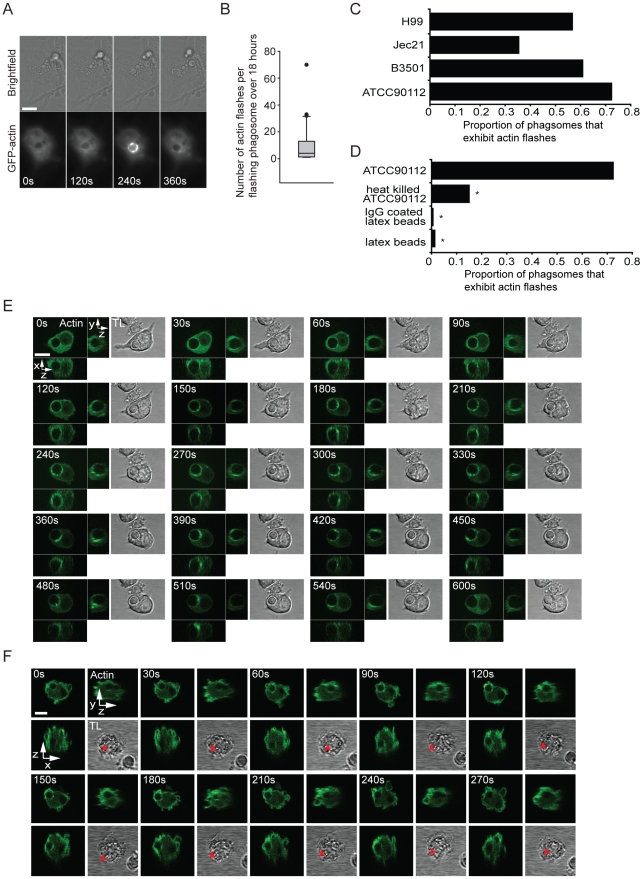
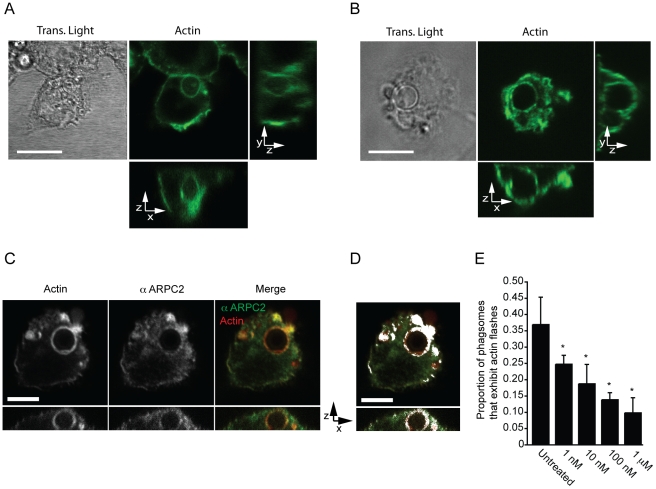
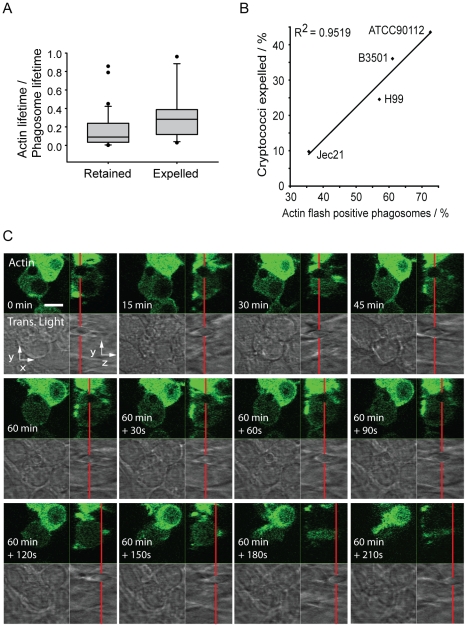
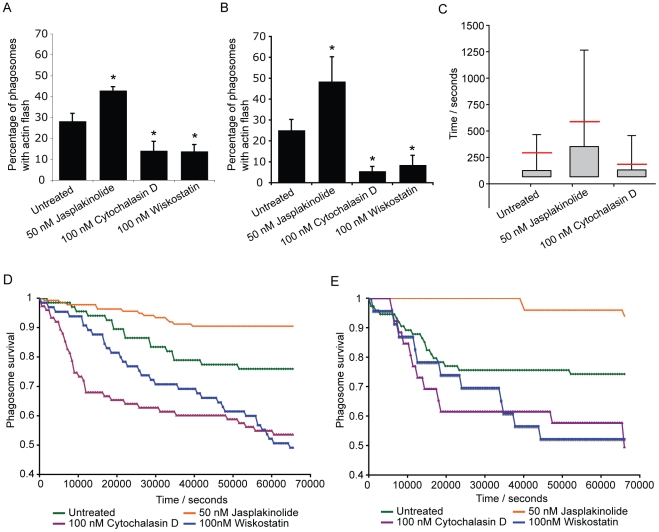
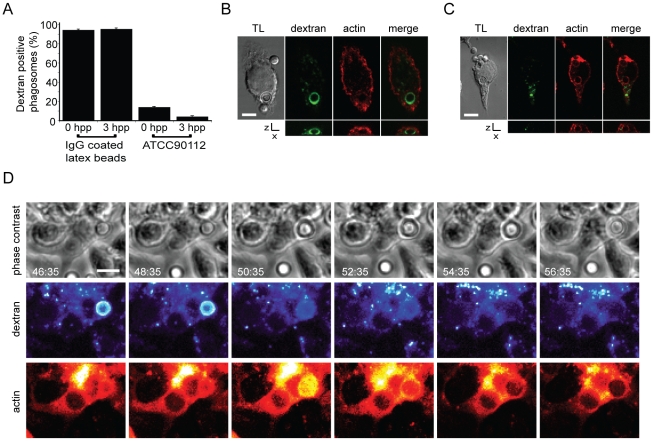
The lysis of infected cells by disease-causing microorganisms is an efficient but risky strategy for disseminated infection, as it exposes the pathogen to the full repertoire of the host's immune system. Cryptococcus neoformans is a widespread fungal pathogen that causes a fatal meningitis in HIV and other immunocompromised patients. Following intracellular growth, cryptococci are able to escape their host cells by a non-lytic expulsive mechanism that may contribute to the invasion of the central nervous system. Non-lytic escape is also exhibited by some bacterial pathogens and is likely to facilitate long-term avoidance of the host immune system during latency. Here we show that phagosomes containing intracellular cryptococci undergo repeated cycles of actin polymerisation. These actin 'flashes' occur in both murine and human macrophages and are dependent on classical WASP-Arp2/3 complex mediated actin filament nucleation. Three dimensional confocal imaging time lapse revealed that such flashes are highly dynamic actin cages that form around the phagosome. Using fluorescent dextran as a phagosome membrane integrity probe, we find that the non-lytic expulsion of Cryptococcus occurs through fusion of the phagosome and plasma membranes and that, prior to expulsion, 95% of phagosomes become permeabilised, an event that is immediately followed by an actin flash. By using pharmacological agents to modulate both actin dynamics and upstream signalling events, we show that flash occurrence is inversely related to cryptococcal expulsion, suggesting that flashes may act to temporarily inhibit expulsion from infected phagocytes. In conclusion, our data reveal the existence of a novel actin-dependent process on phagosomes containing cryptococci that acts as a potential block to expulsion of Cryptococcus and may have significant implications for the dissemination of, and CNS invasion by, this organism.
Overview
The claims and statistics of this paper haven’t been checked yet.
Free: it reads the open-access text and checks the first 5 claims that cite a source we can check. Create a free account to check every claim.
Integrity signals
Registry
Cites
Statistics
Figures
Verification
Claims the paper makes
The claims and statistics of this paper haven’t been checked yet.
Free: it reads the open-access text and checks the first 5 claims that cite a source we can check. Create a free account to check every claim.
Claims other papers make about this one
Each is checked against this paper’s own text: does it say what the citing paper says it does?
In the citing paper
“Conversely, C. neoformans can exit macrophages via non-lytic exocytosis, or vomocytosis. Vomocytosis is mediated by phagosomal extrusion: a process in which mature phagosomes containing cryptococcal cells fuse with the plasma membrane and release fungi into the extracellular milieu [43–46].”
From Mechanisms of fungal dissemination (2021) · cites this paper as [46]
Self-check
Percentages, sums and reported differences re-computed from the paper’s own numbers.
The self-check needs the paper’s full text.
Citations
Cites
Lifeact: a versatile marker to visualize F-actin
Riedl, J., Crevenna, A. H., Kessenbrock, K., Yu, J. H., Neukirchen, D., Bista, M., Bradke, F., Jenne, D., Holak, T. A., Werb, Z., et al. (2008) · Nature Methods · doi:10.1038/nmeth.1220 · Cited by 2,189
Park, B. J., Wannemuehler, K. A., Marston, B. J., Govender, N., Pappas, P. G., & Chiller, T. M. (2009) · AIDS · doi:10.1097/qad.0b013e328322ffac · Cited by 2,014
Rohatgi, R., Ma, L., Miki, H., Lopez, M., Kirchhausen, T., Takenawa, T., & Kirschner, M. W. (1999) · Cell · doi:10.1016/s0092-8674(00)80732-1 · Cited by 1,348
Tilney, L. G., & Portnoy, D. A. (1989) · The Journal of cell biology · doi:10.1083/jcb.109.4.1597 · Cited by 1,263
Gaillard, J. L., Berche, P., Mounier, J., Richard, S., & Sansonetti, P. (1987) · Infection and Immunity · doi:10.1128/iai.55.11.2822-2829.1987 · Cited by 715
Phagocytosis and the actin cytoskeleton
May, R. C., & Machesky, L. M. (2001) · Journal of Cell Science · doi:10.1242/jcs.114.6.1061 · Cited by 715
Self-citationListeria monocytogenes — from saprophyte to intracellular pathogen
Freitag, N. E., Port, G. C., & Miner, M. D. (2009) · Nature Reviews Microbiology · doi:10.1038/nrmicro2171 · Cited by 577
Mycobacterium tuberculosis and the Macrophage: Maintaining a Balance
Pieters, J. (2008) · Cell Host & Microbe · doi:10.1016/j.chom.2008.05.006 · Cited by 503
Mechanisms of host cell exit by the intracellular bacterium Chlamydia
Hybiske, K., & Stephens, R. S. (2007) · Proceedings of the National Academy of Sciences · doi:10.1073/pnas.0703218104 · Cited by 489
Combination antifungal therapies for HIV-associated cryptococcal meningitis: a randomised trial
Brouwer, A. E., Rajanuwong, A., Chierakul, W., Griffin, G. E., Larsen, R. A., White, N. J., & Harrison, T. S. (2004) · The Lancet · doi:10.1016/s0140-6736(04)16301-0 · Cited by 470
Cited by
Items 101–165 of 165
Loss of the scavenger receptor MARCO results in uncontrolled vomocytosis of fungi from macrophages
Onyishi, C. U., Jeon, Y., Fejér, G., Mukhopadhyay, S., Gordon, S., & May, R. C. (2024) · European Journal of Immunology · doi:10.1002/eji.202350771 · Cited by 11
Self-citationThe role of lipids in regulating macrophage antifungal immunity
Rouvray, S., & Drummond, R. A. (2024) · mBio · doi:10.1128/mbio.03057-23 · Cited by 12
Movahed, E., Cheok, Y. Y., Tan, G. M. Y., Lee, C. Y. Q., Cheong, H. C., Velayuthan, R. D., Tay, S. T., Chong, P. P., Wong, W. F., & Looi, C. Y. (2018) · BMC Immunology · doi:10.1186/s12865-018-0269-5 · Cited by 11
Chukwuanukwu, R. C., Uchenna, N., Mbagwu, S. I., Chukwuanukwu, T., & Onyenekwe, C. (2019) · Journal of Infection and Public Health · doi:10.1016/j.jiph.2019.10.011 · Cited by 11
Cryptococcus and Cryptococcosis
Godinho, R. M. D. C., Oliveira, D. L., Albuquerque, P. C., Dutra, F. F., Almeida‐Paes, R., Rodrigues, M. L., & Fonseca, F. L. (2017) · Springer eBooks · doi:10.1007/978-3-319-64113-3_6 · Cited by 10
Innate Pulmonary Phagocytes and Their Interactions with Pathogenic Cryptococcus Species
Conn, B. N., & Wozniak, K. L. (2023) · Journal of Fungi · doi:10.3390/jof9060617 · Cited by 9
Ding, S., Yang, J. H., Feng, X., Pandey, A., Barhoumi, R., Zhang, D., Bell, S. L., Liu, Y., da Costa, L. F., Rice‐Ficht, A. C., et al. (2021) · iScience · doi:10.1016/j.isci.2021.102192 · Cited by 9
Warfare and defense: The host response to Cryptococcus infection
Dutra, F. F., Albuquerque, P. C., Rodrigues, M. L., & Fonseca, F. L. (2017) · Fungal Biology Reviews · doi:10.1016/j.fbr.2017.09.002 · Cited by 8
New technology and resources for cryptococcal research
Zhang, N., Park, Y., & Williamson, P. R. (2014) · Fungal Genetics and Biology · doi:10.1016/j.fgb.2014.11.001 · Cited by 8
Fang, B., Yang, T., Chen, Y., Duan, Z., Hu, J., Wang, Q., He, Y., Zhang, Y., Dong, W., Zhang, Q., et al. (2024) · Biomolecules · doi:10.3390/biom14080901 · Cited by 7
Berry, S. B., Haack, A. J., Theberge, A. B., Brighenti, S., & Svensson, M. (2020) · Frontiers in Medicine · doi:10.3389/fmed.2020.00537 · Cited by 8
Stukes, S. A., & Casadevall, A. (2014) · Journal of Visualized Experiments · doi:10.3791/52084 · Cited by 8
Negash, M., Wondmagegn, T., & Tajebe, F. (2020) · Canadian Journal of Infectious Diseases and Medical Microbiology · doi:10.1155/2020/5017120 · Cited by 6
Yeast–amoeba interaction influences murine cryptococcosis
Carvalho, J. H. D. S., Nascimento, J. K. C., Silva, K. G. V., Neto, S. S., de Macedo, A. T., França, H. L., Ferreira, L. D. R., Silva, R. D. S., Sousa, J. C. D. S., Ramos, D. G., et al. (2023) · Microbes and Infection · doi:10.1016/j.micinf.2023.105153 · Cited by 6
Mahadevan, A., & Krishna, S. S. (2019) · Springer eBooks · doi:10.1007/978-3-030-06088-6_12 · Cited by 4
Phagosome maturation during fungal infection
McFadden, M. J., O’Riordan, M. X., & O’Meara, T. R. (2026) · Current Opinion in Microbiology · doi:10.1016/j.mib.2026.102710 · Cited by 3
A Multi-Fluorophore Staining Scheme for Identification and Quantification of Vomocytosis
Pacifici, N. J., Rojalin, T., Carney, R. P., & Lewis, J. S. (2023) · Chemical & Biomedical Imaging · doi:10.1021/cbmi.3c00050 · Cited by 3
Cryptococcus neoformans: life cycle, morphogenesis, and virulence
He, G., Zhang, L., Ma, S., Ding, H., Xu, X., Yang, Y., Liao, G., Chen, M., Zhao, Y., Liu, T., et al. (2024) · Elsevier eBooks · doi:10.1016/b978-0-12-818619-0.00003-4 · Cited by 3
A subset of neutrophil phagosomes is characterised by pulses of Class I PI3K activity
Muir, C. F., Reyes‐Aldasoro, C. C., Prajsnar, T. K., Michno, B. J., Cholewa-Waclaw, J., Ho, Y. X., Bernut, A., Loynes, C. A., Elworthy, S., Bowden, K. A., et al. (2025) · Disease Models & Mechanisms · doi:10.1242/dmm.052042 · Cited by 3
A Model CNS Fungal Infection: Cryptococcal Meningitis
Beardsley, J., Thanh, L. T., & Day, J. (2015) · Current Clinical Microbiology Reports · doi:10.1007/s40588-015-0016-0 · Cited by 2
Cellular homeostasis in theDrosophilaretina requires the lipid phosphatase Sac1
Griffiths, N. W., Bel, L. M. D., Wilk, R., & Brill, J. A. (2020) · Molecular Biology of the Cell · doi:10.1091/mbc.e20-02-0161 · Cited by 2
Host Immune Responses Against Pulmonary Fungal Pathogens
Karen, L., Olszewski, M. A., & Wormley, F. L. (2012) · InTech eBooks · doi:10.5772/30280 · Cited by 2
Basso, A. M. M. (2017) · RIUnB Institutional Repository (University of Brasília) · doi:10.26512/2017.02.t.23541 · Cited by 2
Manipulation of macrophage phagocytosis - development of an endogenous delivery system
Visser, J. G. (2020) · SUNScholar (Stellenbosch University) · Cited by 2
Vomocytosis of Cryptococcus neoformans from Macrophages: from discovery to current understanding
Onyishi, C. U. (2025) · Biomedical Journal · doi:10.1016/j.bj.2025.100891 · Cited by 1
Virulence factors of Cryptococcus neoformans and Cryptococcus gattii : two sides of the same coin
de Jesus, D. F. F., Brujas, L. D., Barreto, T. L., da Costa, L. S., Spadari, C. D. C., & Ishida, K. (2026) · Future Microbiology · doi:10.1080/17460913.2026.2722813 · Cited by 1
5 Macrophages in the Immune Response Against Cryptococcus
Evans, R. J., & May, R. C. (2013) · Springer eBooks · doi:10.1007/978-3-642-39432-4_5 · Cited by 1
Self-citationCellular Exit Strategies of Intracellular Bacteria
Hybiske, K., & Stephens, R. S. (2016) · ASM Press eBooks · doi:10.1128/9781555819286.ch25 · Cited by 1
Nano-sized Polymeric Particles for Safe Delivery of Vaccine Adjuvants to Combat Fungal Pathogens
Reid, S. M. (2018) · OhioLink ETD Center (Ohio Library and Information Network) · Cited by 1
Influência das proteínas ARP2, Septina 4 e 14 na invasão e multiplicação de Trypanosoma cruzi
de Araújo, K. C. L. (2014) · doi:10.14393/ufu.di.2014.256 · Cited by 1
In vivo imaging and analysis of host-pathogen interactions of intracellular pathogens
Gibson, J. F. (2017) · White Rose eTheses Online (University of Leeds, The University of Sheffield, University of York) · Cited by 1
Bürgel, P. H. (2018) · RIUnB Institutional Repository (University of Brasília) · doi:10.26512/2018.12.t.34845 · Cited by 1
Blancett, L. T. (2019) · Aquila Digital Community (University of Southern Mississippi) · Cited by 1
Pline, K., & Johnston, S. A. (2020) · bioRxiv (Cold Spring Harbor Laboratory) · doi:10.1101/2020.02.05.936427 · Cited by 1
Self-citationAvaliação da ocorrência de exocitose não-lítica em isolados clínicos de Cryptococcus spp
Frazão, S. D. O. (2018) · RIUnB Institutional Repository (University of Brasília) · doi:10.26512/2018.02.d.41423 · Cited by 1
Biological activities of Lavandula angustifolia Mill. essential oil
Meireles, F. A. M. F. D. C. (2012) · Portuguese National Funding Agency for Science, Research and Technology (RCAAP Project by FCT) · Cited by 1
Investigating phagosome dynamics of microbial pathogens
Smith, L. M. (2015) · University of Birmingham Institutional Research Archive (University of Birmingham) · Cited by 1
Mechanisms of brain infection by the human fungalpathogen Cryptococcus neoformans
Sabiiti, W. (2012) · University of Birmingham Institutional Research Archive (University of Birmingham)
The role of Cryptococcus neoformans derived phospholipase B1 during host infection
Evans, R. J. (2016) · University of Birmingham Institutional Research Archive (University of Birmingham)
Investigating Host and Environmental Influences of Fusarium solani Using a Novel Monoclonal Antibody
Al-Maqtoofi, M. Y. (2016) · Figshare · doi:10.13140/rg.2.2.21771.28963
Papel da homeostase de cálcio na patogênese e sinalização celular de Cryptococcus neoformans
Squizani, E. D. (2016) · Lume (Universidade Federal do Rio Grande do Sul)
Homeostase de zinco na virulência de cryptococcus gattii e na interação com hospedeiro
Schneider, R. (2016) · Lume (Universidade Federal do Rio Grande do Sul)
Investigating the molecular mechanisms of vomocytosis
Gilbert, A. S. (2017) · University of Birmingham Institutional Research Archive (University of Birmingham)
Stimulation of innate immune resistance leads to clearance of C. neoformans infection in zebrafish
Kamuyango, A. A. (2017) · White Rose eTheses Online (University of Leeds, The University of Sheffield, University of York)
Piffer, A. C. (2017) · LA Referencia (Red Federada de Repositorios Institucionales de Publicaciones Científicas)
Choo, K. K., Chin, V. K., Chong, P. P., Ho, S. H., & Yong, P. V. C. (2019) · Journal of Health and Translational Medicine · doi:10.22452/jummec.vol22no2.4
The Essential Role of Carbon Metabolism in the Virulence of Cryptococcus neoformans
Weigner, M. (2019) · Digital Commons (Liberty University)
Anti-Cryptococcal activity of a furanone derivative–antibiofilm and opsonophagocytic potential
Rathore, S. S., Raman, T., Lalitha, C., Ramar, M., Munusamy, A., & Ramakrishnan, J. (2020) · Journal de Mycologie Médicale · doi:10.1016/j.mycmed.2020.100924
Leveraging Open Microfluidics for Platform Development and Cell-Signaling Studies In Vitro
Berry, S. B. (2020) · ResearchWorks at the University of Washington (University of Washington)
Amal, A. (2012) · InTech eBooks · doi:10.5772/1494
Cowen, L. E., & Polvi, E. J. (2020) · Faculty Opinions – Post-Publication Peer Review of the Biomedical Literature · doi:10.3410/f.737633112.793573927
Túlélési faktor 1 (svf1) gének funkciójának vizsgálata Mucor lusitanicus -ban
Jáger, O. (2025) · SZTE Repository of Dissertations (University of Szeged) · doi:10.14232/phd.12342
Santos, F. M. D. (2017) · Lume (Universidade Federal do Rio Grande do Sul)
Estudo funcional do fator de transcrição Pdr802 na biologia do patógeno Cryptococcus neoformans
Reuwsaat, J. C. V. (2021) · Lume (Universidade Federal do Rio Grande do Sul)
Papel do ergosterol na ativação de macrófagos infectados in vitro com o Cryptococcus neoformans
Simões, V. C. R. (2023) · LA Referencia (Red Federada de Repositorios Institucionales de Publicaciones Científicas)
Onyishi, C. U. (2023) · University of Birmingham Institutional Research Archive (University of Birmingham)
Schiefermeier-Mach, N., Polleux, J., Heinrich, L., Lechner, L., Levytska, I., Lass‐Flörl, C., & Perkhofer, S. (2026) · PLoS ONE · doi:10.1371/journal.pone.0341448
Investigating Candida albicans epithelial infection using a high-throughput microscopy-based assay
Pascault, A. (2023) · theses.fr (ABES) · doi:10.70675/ff2492b1za253z4230zb90eze50f1e817aff
Calegari-Alves, Y. P., Cardozo, L. C., Beys‐da‐Silva, W. O., & Santi, L. (2026) · ACS Omega · doi:10.1021/acsomega.6c04202
The Mononuclear Phagocyte System: A Dispersed Organ; Introduction and Comments
Lin, H., Sivasubramanian, K., Roberti, A., & Gordon, S. (2026) · Biomedical Journal · doi:10.1016/j.bj.2026.101041
Nelson, B. N., Daugherty, C. S., Sharp, R. R., Booth, J. L., Patel, V. I., Metcalf, J. P., Jones, K. L., & Wozniak, K. L. (2022) · doi:10.3389/fimmu.2022.1054477.s013
Calverley, M. (2013) · Montana State University ScholarWorks (Montana State University)
Voltan, A. R. (2013) · Americanae (AECID Library)
Cryptococcus neoformans complex: molecular, clinical and in-vitro studies.
Zaragozí, M. T. I. (2014) · Radboud Repository (Radboud University)
Metadata
- Authors
- Johnston, S. A., & May, R. C.
- Affiliations
- University of Birmingham (GB)
- Corresponding author
- May, Robin C.
- Venue
- PLoS Pathogens
- Publisher
- Public Library of Science (PLoS)
- Published
- 2010-08-12
- Volume
- 6
- Issue
- 8
- Pages
- e1001041
- ISSN
- 1553-7366 (ISSN-L)
- 1553-7374
- PMC
- PMC2920849
- OpenAlex
- W2037266934
- Cited by
- 141
- References
- 34
- Citations by year
- 2026: 5 · 2025: 3 · 2024: 6 · 2023: 7 · 2022: 10 · 2021: 5 · 2020: 16 · 2019: 10 · 2018: 12 · 2017: 9 · 2016: 13 · 2015: 7 · 2014: 13 · 2013: 6 · 2012: 10
- FWCI
- 5.82
- Type
- journal article
- Language
- en
- Open access
- gold
- doi.org
- Locations
- PLoS Pathogens (publishedVersion, cc-by)
- Europe PMC (PubMed Central) (publishedVersion, cc-by)
- PubMed Central (publishedVersion, cc-by)
- PubMed (publishedVersion)
- University of Birmingham Institutional Research Archive (University of Birmingham) (acceptedVersion)
- DOAJ (DOAJ: Directory of Open Access Journals) (submittedVersion, cc-by-sa)
- Figshare (submittedVersion, cc-by)
- University of Birmingham Research Portal (University of Birmingham) (submittedVersion, other-oa)
- Funders
- Wellcome Trust (088148MF)
- Advantage West Midlands
- Medical Research Council
- Topics
- Health Sciences › Medicine › Infectious Diseases › Fungal Infections and Studies
- Life Sciences › Biochemistry, Genetics and Molecular Biology › Cell Biology › Cellular transport and secretion
- Life Sciences › Biochemistry, Genetics and Molecular Biology › Endocrinology › Legionella and Acanthamoeba research
- Keywords
- Cryptococcus neoformans, macrophages, Arp2/3 complex, actin polymerization, wasps, fungal dispersal, central nervous system infiltration, cryptococcal meningitis
- MeSH terms
- Actins, Animals, Cryptococcosis, Cryptococcus neoformans, Cytoskeleton, Humans, Image Processing, Computer-Assisted, Macrophages, Phagosomes, Microscopy, Confocal, Green Fluorescent Proteins, Actin-Related Protein 2-3 Complex, Mice, Immune Evasion
About these checks
Registry, retraction, Cites and statistics results are computed, not judged, with one exception: a printed reference that no index lists is read once by a model before it counts as a citation error. Claims are extracted by a model and kept only when their quote appears verbatim in the text; each cited source is then checked, with a model’s help, for whether it says what the claim relies on. Those verdicts can be wrong — read the claim’s quote and the cited source before relying on one.
Statistics and arithmetic are recomputed, not judged.
Confidence bands are shown only for fields calibrated on our annotated test set. None is calibrated yet, so no band is shown.
What counts as a claim ›How we measure confidence ›How we check this ›
Are you an author, or do you see a problem with this page? Request a review
Data sources
Bibliographic data: Semantic Scholar, OpenAlex, Crossref.
Contains information from the Semantic Scholar Academic Graph Datasets, made available under the ODC Attribution License (ODC-BY 1.0).
Semantic Scholar’s data is described in: Kinney, R., et al. (2023). The Semantic Scholar Open Data Platform. arXiv:2301.10140.
